Atwood Magazine is excited to share our Editor’s Picks column, written and curated by Editor-in-Chief Mitch Mosk. Every week, Mitch will share a collection of songs, albums, and artists who have caught his ears, eyes, and heart. There is so much incredible music out there just waiting to be heard, and all it takes from us is an open mind and a willingness to listen. Through our Editor’s Picks, we hope to shine a light on our own music discoveries and showcase a diverse array of new and recent releases.
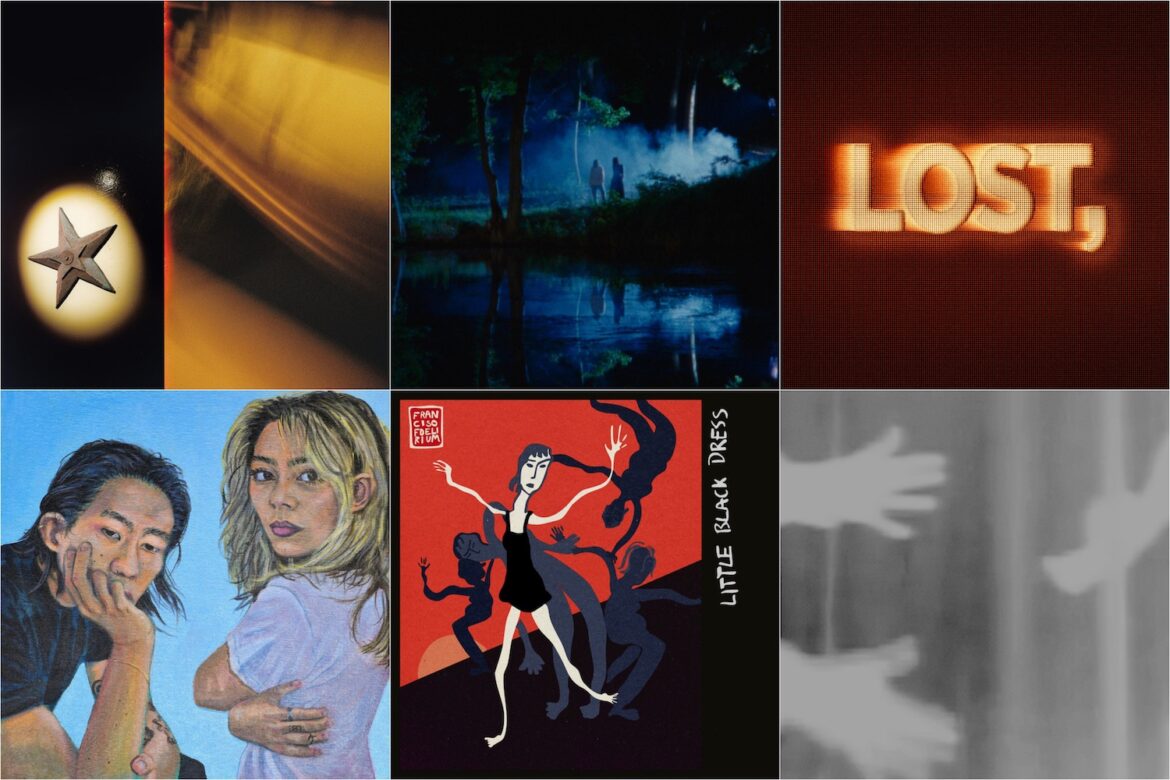
This week’s Editor’s Picks features spill tab ft. boylife, praise., Francis of Delirium, Boyish, Quarters, and Wishlist!

 follow EDITOR’S PICKS on Spotify

“Paranoia”
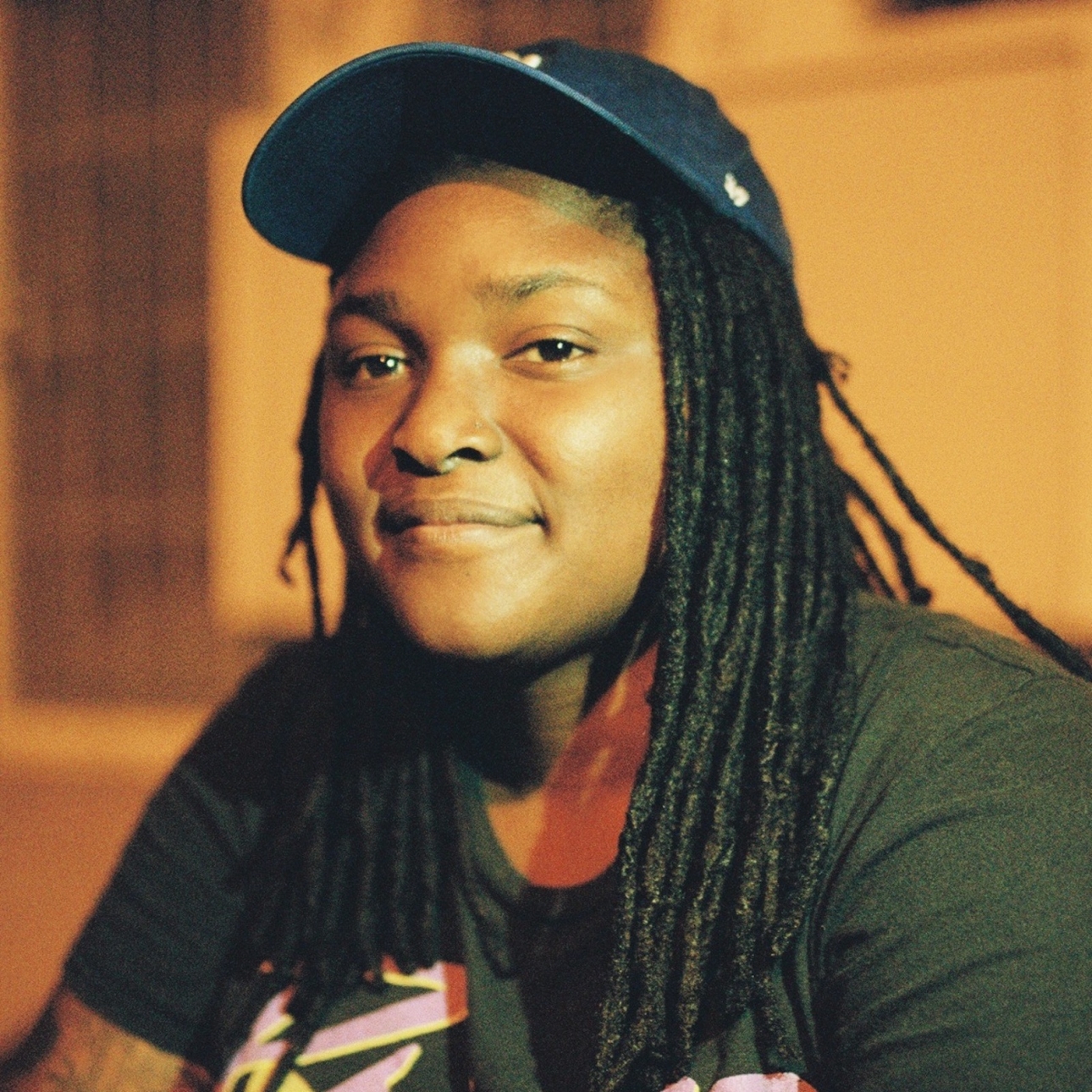
by spill tab & boylifeTender and hushed, bold and quietly smoldering, “Paranoia” unfolds like a feeling you’re afraid to say out loud for fear it might come true. Anchored by a hypnotic, low-slung bass line that seems to breathe on its own, the song moves with a slow, magnetic pull – intimate, haunted, and deeply all-consuming. The production feels hazy and lo-fi without ever losing its emotional clarity, gently glitching at the edges as if the song itself is fraying under the weight of what it’s trying to hold.
At the center of it all is spill tab’s Claire Chicha, whose vocal performance is nothing short of breathtaking. She sings softly but decisively, every line delivered with a restraint that makes the ache feel heavier. “I don’t wanna lead you on / I don’t wanna make me another woman gone,” she admits early on, her voice hovering just above the instrumentation, fragile and resolute at once. The song never rushes its emotions – it lets paranoia pool slowly, naming the fear without trying to outrun it. As Chicha has said, she wrote “Paranoia” almost entirely in one go, a rare moment where everything surfaced at once, capturing “everything that had accumulated on my chest.” That immediacy is palpable – nothing here feels sanded down or second-guessed.

I don’t wanna lead you on
I don’t wanna make me
another woman gone
I lost her to the night
when we were walking home
I don’t really need to
I don’t really need to
know more than I already do, it
It don’t make it easier if both of us lose
Won’t be the paranoia
why won’t you
say what is going on?
Calling me California
reaching for
something already lost
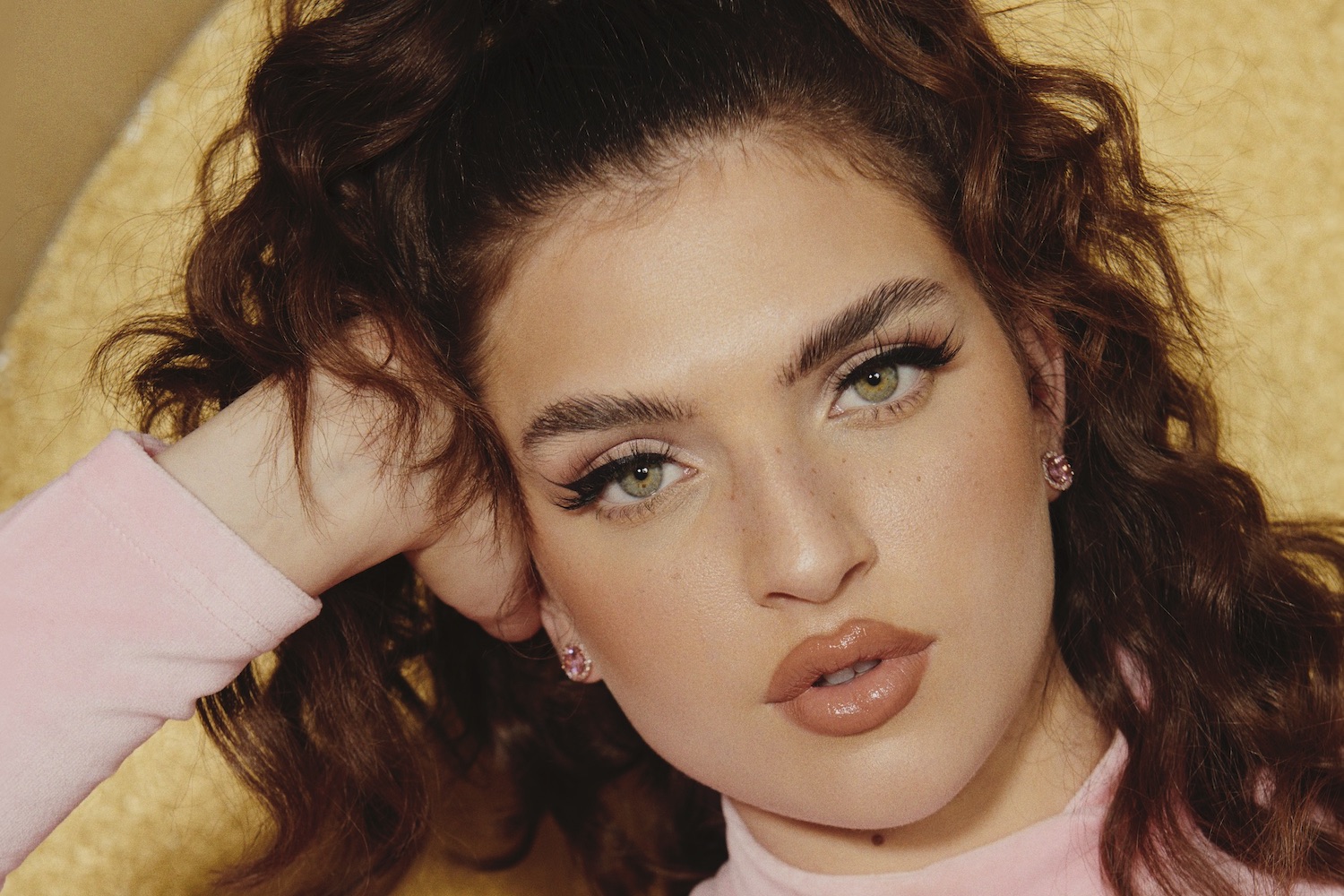
For listeners familiar with spill tab’s world, “Paranoia” feels like a natural – if more exposed – evolution. A French-Korean-American, LA-based artist known for her playful experimentation, genre-fluid instincts, and vivid emotional storytelling, Chicha has spent years building a universe where curiosity and honesty coexist. Her debut album ANGIE introduced that world in widescreen, shaped by collaboration, visual imagination, and an unwavering commitment to emotional truth. With “Paranoia,” she turns that lens in toward herself, trusting stillness and restraint as much as expansion.
There’s a cinematic quality to the way “Paranoia” unfolds, reminiscent of the dusky, emotional immediacy of Mk.gee and Dijon, but filtered through spill tab’s own dreamy, neo-soul-tinged lens. It aches and glows at the same time, shimmering with warmth even as it spirals inward. When she sings, “Won’t be the paranoia / why won’t you say what is going on?” it lands like a whispered confrontation – not accusatory, just aching for clarity. Chicha has described the song as emerging from the emotional aftermath of a breakup – “any kind of breakup will reaaaallllyy do it,” she admits – but what lingers here isn’t drama so much as the quiet terror of sitting inside uncertainty.
Say
when you leave
you don’t want me
‘cause how you gonna
make me cry now
Say what you mean
when you’re walking
away so I can give a
standing ovation
for what we’ve created
That emotional tension deepens with the arrival of boylife, whose verse brings a rougher, more grounded energy into the song’s soft-focus world. Originally invited to add vocal harmonies, he instead wrote an entire verse, reshaping the song’s emotional arc. Chicha has spoken about how much that shift mattered to her, noting that boylife brought “a sort of roughness to the song, both lyrically and texturally,” adding depth, texture, and perspective without breaking its spell. His presence feels less like a feature and more like a shared confession – two voices circling the same fear from different angles, expanding the song’s emotional vocabulary to reach its fullest potential. “You could be savage too, it’s not just something I do,” he offers, his delivery understated but charged, grounding the song’s anxiety in mutual vulnerability.
I’ll be the one that’s on your mind
If you’ll have me
Maybe we could take our time
to get nasty
You could be savage too
It’s not just something I do
I know that you feel it too
For spill tab, the song came pouring out all at once. “I wrote ‘Paranoia’ for the most part all the way through in one go,” she shares, describing it as everything that “had accumulated on my chest.” That immediacy is palpable – the lyrics don’t feel revised or overthought, just lived-in and exposed. “Ultimately it really encapsulates that slice of my life in this preserved way. When I sing it I get to relive this little bubble, I really love that,” she shares. “Those feelings were so raw and painful at the time, but within all that emotion I felt really alive and in tune with myself.” Even the quietest moments carry weight, especially in the outro, where Chicha confesses, “No one else makes me feel alive, and I can’t hide that,” her voice barely rising above the track’s gentle pulse.
“Paranoia” also serves as a bridge between eras. The song opens the door to AngieAngieAngie, the upcoming deluxe edition of her debut album ANGIE, expanding the emotional and sonic world she began building last year. spill tab describes the deluxe as a way of stretching those stories a little further – leaning into new influences while staying rooted in honesty and thoughtful production. “I wanted to explore what a spill tab song can sound like,” she explains, and “Paranoia” feels like a fearless step forward in that exploration.
So say
when you leave
you don’t want me
‘cause how you gonna
make me cry now
Say what you mean
when you’re walking
away so I can give a
standing ovation
for what we’ve created
What makes this music linger is its refusal to resolve the feeling it names. There’s a quiet ache running through every second of “Paranoia” – the sense that speaking the emotions aloud might make them real, but staying silent might be worse. “Say… what you mean… when you’re walking… away,” spill tab pleads, asking for truth even if it hurts. The song doesn’t offer closure, only presence – the act of sitting with the anxiety instead of smoothing it over.
As haunting as it is hypnotic, “Paranoia” feels like one of those songs you return to in moments of transition – late at night, headphones on, vulnerable and unguarded. It’s tender without being fragile, soulful without being showy, and deeply affecting in its restraint. In capturing the quiet fear of loving someone who might be slipping away, spill tab and boylife have created something intimate and enduring – a song that aches, shimmers, and stays with you long after it fades.
I wanna keep you in the morning
but you fight back
I could’ve stayed like this forever
but you spite that
Telling me I keep you down and that
everyone around you says that’s bad
Cut the cord when I need to but
no one else makes me feel alive
and I can’t hide that
I swear I’m coming right back
“matters to me.”
by praise.Tender and slow-burning, smoldering with a low, cinematic warmth, “matters to me.” unfolds like a late-night confession you weren’t sure you were ready to say out loud – heavy, intimate, and quietly devastating in its honesty. Built on warm keys, hushed percussion, and a low-glow atmosphere that feels cinematic without ever tipping into excess, the song aches from the inside out. It moves slowly, deliberately, letting each thought land before the next one arrives. Lines like “phone filled with voice memos, tears fall on the pages” and “I need validation, I’m filled with jealousy” don’t perform vulnerability – they sit inside it, tracing the unease of being seen and the fear of asking for reassurance at all.
That intimacy deepens as New York-born, Charlotte-based singer/songwriter praise. lets the song drift into memory and lineage. “Talked to grandma today, she said around the neighborhood you’re famous. I said I wish that mattered, she said praise, well it matters to me,” he sings, landing on a moment that reframes success entirely. It’s a lyric that glows with quiet gravity – fame reduced to noise, validation narrowed down to one voice that actually counts. When he follows it with “I forgot, that’s the whole point of this shit anyway,” it feels less like a punchline than a realization finally arriving.

know it’s been a long, long time
I feel that way
all of my problems
you can see on my face
no I’m not hiding
or scared the water
fell in love with her fragrance
perfume mixed
with marijuana
I ain’t baby no more momma
tell me you’re proud of me
I need validation
I’m filled with jealousy
don’t know why i never say it
something inside of me
won’t ever let me say it
There’s something fitting about the way “matters to me.” almost didn’t exist. “This song was not gonna be on the project and it was probably the LAST song we made that day after making four songs,” praise. shares. “It was not supposed to be this deep, fun, storytelling song.” Originally meant as a simple intro, unfinished and unassuming, it wasn’t meant to carry this much weight. But that looseness is exactly what gives it power. “The day after on the way to the studio I had headphones in, and I was making the rest of the song,” he explains, “and I took the let me say more and let me let people know, ‘hey this is who I am, where I’m from, and this what I been going through’ – and it matters to me.” You can hear that shift happen in real time, the way the song opens itself up as it goes, moving from fragments into something fully formed and deeply human.
feel like ja
I’m good in the west
I’m from Charlotte I’m good on the web
she don’t want me
she want my last name
she don’t want me
she said she good off praise
she don’t want me to get in the way
I understand that
I understand that
I forgot
that’s the whole point of
this shit anyway
Released as part of his new EP LOST,, out now via Atlantic Records, the track plays a crucial role in framing the project’s emotional center. “It’s what happens when you’re done crashing out,” praise. says of the record. “LOST, is about finding you again and being comfortable on the journey that it takes to get back.” Following the diaristic intimacy of last year’s me and my friend named he(art)., “matters to me.” feels like a deepening rather than a departure – heavier in subject matter, more confident in its stillness. Where earlier releases captured grief in stark relief, this song reads like an update written in real time: an artist taking stock, naming insecurities, honoring the people who keep him grounded, and refusing to let his own story become background noise.
I find an issue with anything
Hannah hit my phone
said she like song
so i might as well
finish it anyway
long way from
on the block selling lemonade
keep going
milo hand me the water
done with this music
when i have a daughter
hit up Atlantic like
give me my pension
I’m better than everybody
that’s the difference
As one of the emotional entry points into LOST,, “matters to me.” doesn’t just introduce the project – it establishes its stakes. “It’s like, ‘aye bro this is what’s on my mind, listen to this rq,’” praise. says of his writing style, pointing to the power of letting real life and real names live inside the music. It’s diaristic without being indulgent, specific without closing itself off, and anchored in the belief that honesty, even when unfinished, is worth saying out loud.
By the time the song reaches its final refrain – “that’s the whole point of this shit anyway” – it lands as both a reminder and a release. “matters to me.” doesn’t chase resolution; it finds meaning in the act of telling the truth while it’s still unfolding. In doing so, praise. offers one of his most affecting songs to date: a portrait of growth, doubt, gratitude, and self-reckoning, glowing softly in the dark and refusing to be rushed.
can’t nobody f*** with me
not, not to mention
meant to say that at the start of the song
but
jimi tell me im good on hook
taylor love when i read her like book
sharon tell me she loves and she needs me
i got my support system im good
all this talk about which genre am i
guess im fine with being misunderstood
say that baby but truly im not
gotta keep telling all of my story
i can’t let that shit
keep being the plot
“Little Black Dress”
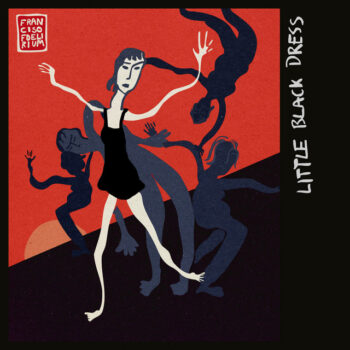
by Francis of DeliriumFrom its first vocal harmonies and jangling guitar line, “Little Black Dress” feels like a shot of adrenaline – heart racing, lights flickering, expectation buzzing just a little too loud. It’s a song built on excitement and anticipation, on the charged seconds before a night tips one way or another, and Francis of Delirium lean fully into that tension. Dynamic and feverish, full of heart and heat, fire and fury, “Little Black Dress” crackles with the kind of restless energy that only really comes alive when it’s meant to be shouted back at a stage.
That sense of urgency lives in the music itself. Guitars ring and scrape with purpose, drums hit hard and loose, and Jana Bahrich sings like she’s chasing a feeling she already knows won’t last. “All dressed up, going out tonight / head rush, flick of blush / fading daylight hue,” she opens, instantly placing us inside the ritual of it all – the preparation, the hope, the quiet belief that maybe this night will be different. Her voice moves between confidence and collapse, pushing forward even as doubt creeps in around the edges.
All dressed up, going out tonight
Head rush, flick of blush
Fading daylight hue
I – I – undo
Everyone is screaming to a different tune
There’s dancers on the ceiling
Can you show me how to move?
Cause baby I’m moving to you
Released September 25th via Dalliance Recordings, “Little Black Dress” marks Francis of Delirium’s first new single since last year’s debut album Lighthouse, which Atwood previously featured on our Best Albums of 2024 list – a record that found Bahrich and her bandmates stepping into warmth, connection, and light without ever losing the raw ache at the center of her songwriting.
A year and change later, this return feels intentional. Written and shaped on the road, the song reflects a band deeply attuned to how their music lives and breathes in real time. “I was inspired to return with ‘Little Black Dress’ because we were playing it live and people seemed to be responding to it,” Bahrich tells Atwood Magazine. “It felt good to return with something that feels a bit different to what we did on Lighthouse.”
Lyrically, the song zeroes in on a familiar emotional spiral – the thrill of going out, the possibility it promises, and the inevitable letdown when fantasy collides with reality. Bahrich doesn’t romanticize that arc; she interrogates it. “Going out is a tightrope walk of great freedom and also great shame,” she says. “It is potential and excitement and the risk of meeting new people, until you risk a little too close to the sun and end up a sad little version of yourself by the end of the night or the next morning.” You can hear that tension snap in the chorus, where desire curdles into fixation: “Out of the corner of my eye, a little black dress, your pale blue eyes / now all I can think of is you.”
Cause you got a real one
Back at home
Wrapped round your fingers and
Round your thumb
My mind is sickened
My mind sickened by you
Out of the corner
Of my eye
A little black dress
Your pale blue eyes
Now all I can think of
All I can think of is you
What makes “Little Black Dress” hit as hard as it does is how physical it feels. Bahrich has always chased the electricity of being onstage, and here she lets that impulse lead. “This song is about jangly guitars,” she laughs. “It is about the 400 pound Futurama guitar I bought in Glasgow because it looked cool and now I regret it… The song is about Denis banging wildly on the drums. The song is about that fantastic fill he does in the bridge. Regret and energy. Those are the things that live in the song.” That blend of humor and honesty mirrors the track itself – messy, loud, alive, and unafraid of its own contradictions.
Out on the hunt for Saturdays best
Lately I’ve been losing
But I think I’ll get in next
Just a break across the line
The signs all point to a real disappointment
I got lost but I’m sure you exploited the truth
Now darling I’m heading for you
As the night wears on, the song grows more unhinged and more vulnerable. “My mind is sickened, my mind is sickened by you,” Bahrich repeats, the line landing harder each time, less accusation than admission. By the outro, the bravado has fully cracked: “Just my head in my hands / just say you’ll take me how I am.” It’s a moment of quiet devastation tucked inside a song that otherwise refuses to slow down – a reminder that even at our most performative, we’re still just hoping to be seen.
Even though you got a real one
Back at home
Wrapped round your fingers
And around your thumb
My mind is sickened
My mind is sickened by you
Out of the corner
Of my eye
A little black dress
Just a little white lie
Now all I can think of
All I can think of is you
That balance between catharsis and camaraderie is what Bahrich hopes listeners carry with them. “That it’s okay to feel like you’ve been a bit of an idiot,” she says. “It will be alright. You will probably forget sooner than you expect. Some sort of camaraderie maybe – that’s what I hope they take away.” It’s a generous sentiment, and one that runs through every crashing chord and breathless hook of “Little Black Dress.”
As fiery as it is fun, “Little Black Dress” feels like a reaffirmation of everything Francis of Delirium do best – channeling lived emotion into songs that burn bright, hit hard, and linger long after the night ends. It’s a return that doesn’t retreat or soften, but sharpens its edge, reminding us why this project has always thrived on feeling everything at full volume.
Ooh, just a little black dress
Just my head in my hands
Just say you’ll take me how I am
Ooh she tells me she can’t
With my head in my hands
Just say you’ll let me be your man
“Prom”
by BoyishSlow-burning and cinematic, Boyish’s “Prom” feels like the moment a night tips from possibility into consequence – all glow, tension, and yearning held in a single breath. Built on swelling guitars, patient drums, and a vocal that never rushes its feelings, the song moves with a quiet confidence, letting emotion gather before it crests. Lines like “How’s it feel to know I’m holding on too” and “In the dark I could be anyone” land with an ache that’s intimate rather than grandiose, tracing the soft panic of wanting something more and not knowing how to ask for it. There’s romance here, but it’s fragile – kissed by doubt, lit by streetlights, and always on the edge of slipping away.
That push and pull is what makes “Prom” such a defining moment for Boyish, and a standout off their recently-released third studio album, Gun (September 12 via R&R). The track glows with warmth and restraint at once – lush without being indulgent, dramatic without ever forcing the feeling. As the chorus returns to “You and I don’t wanna die, but we don’t wanna suffer,” it becomes less a lyric than a thesis, echoing the album’s broader fixation on longing, survival, and the ache of ordinary lives brushed by something just out of reach.

How’s it feel to know
I’m holding on too
Ordinary girl
I wanted you to be mine
She’s gonna eat me alive
And if she breaks my heart tonight
It’s not fair but it’s alright
I’ll be kind
In the dark
I could be anyone
And who do you think
is the right kind?
If we’re gonna die, yeah
It’s kissing in front of these lights
It’s easy to hear why India Shore has pointed to “Prom” as the heart of Boyish: “If you want to really know what the heart of this project is, I would listen to ‘Prom,’” she says. Her bandmate Claire Altendahl agrees – “The core of Boyish really shines through on songs like ‘Prom,’” she adds – and that shared conviction matters, because this is where the band’s world-building and emotional truth finally lock into place.
A three-time Atwood Magazine Editor’s Pick, indie rock duo Boyish arrive at “Prom” from a place of hard-won clarity. Gun is, by design, a place you can enter – a surreal small-town America of their own invention, unfolding like a love story with its own cast of characters and internal logic – fictional in form, but emotionally honest in impact. “We wanted it to run like a play, where if there’s a gun on the wall at the beginning of a play, by the end of it, it has to go off,” the band have said of the project’s narrative pull (referencing Chekhov’s Gun). That sense of inevitability – the feeling that everything is moving toward something, that desire always carries consequence – hums beneath “Prom” in particular, turning its shimmer into tension and its warmth into ache.
As immersive as it is breathtakingly dreamy, “Prom” also marks a clear arrival. Recorded live to tape and steeped in atmosphere, the track captures Shore and Altendahl at their most assured – trusting space, trusting feeling, and trusting the song to unfold in its own time. It doesn’t beg for attention; it earns it, glowing steadily as it pulls you deeper into Boyish’s world. By the time it fades, you’re not just listening anymore – you’re standing in that imagined town, feeling the night hum around you, wondering what it might cost to reach for something more.
“Out in her front lawn
Twirling her baton”
She said
I’m not evil but
I kinda got this desire
It’s gonna burn me alive
There’s nothing wrong
with an ordinary life but
If i don’t leave I’ll lose my mind
I replied
You can hear that cinematic lens in the way the song frames its scenes. The opening feels like a camera pan across a room full of light and possibility – “Ordinary girl, I wanted you to be mine” – before the emotional stakes sharpen into something more dangerous: “She’s gonna eat me alive.” The lyric is simple, almost tossed off, and yet it lands like a gut punch – the moment you realize you’re walking into a situation you can’t control. “Prom” is full of those small, devastating turns: “If I don’t leave I’ll lose my mind,” Shore sings, a line that carries the claustrophobia of staying and the terror of going in the same breath. The song doesn’t posture; it confesses.
In the dark
I could be anyone
And who do you think is the right kind?
If we’re gonna die, yeah
It’s kissing in front of these lights
You and I don’t wanna die
But we don’t wanna suffer
Musically, “Prom” is the lushest kind of slow-build – a glistening reverie that keeps widening its frame. The guitars don’t just decorate the melody; they glow around it, soft at the edges but insistent in their pull, while the rhythm section holds a steady, late-night pulse. Shore’s vocal delivery is what makes it feel so achingly emotive: Intimate, present, and quietly undone, like she’s speaking from inside the moment rather than recounting it afterward. Even at its most dramatic, the song stays grounded in human longing – the ache of being seen, chosen, wanted, held.
Altendahl has described “Prom” as the turning point – the song that made everything else make sense. “I think it all really kind of clicked into place once we wrote ‘Prom’,” she says. Before it, they thought they were nearing the finish line; after it, they cleared the board. “We wrote ‘Prom,’ and I think we got rid of nearly everything,” she recalls – keeping “BIG” and “Jumbos,” and rebuilding the album around the new sonic world the song introduced. “It took that song to put the key in place.” That’s what “Prom” feels like when you listen: Not just a highlight, but a hinge – the moment the album’s emotional architecture reveals itself.
The story behind it only deepens that sense of hard-won clarity. Shore and Altendahl have spoken candidly about how “Prom” emerged from a stretch of writer’s block and creative despair – “writing terrible, terrible music for months straight,” as Shore puts it – until something finally cracked open. The chorus arrived, Shore says, almost fully formed: “With the words and melodies… kind of all at once,” and when Altendahl suggested bringing back “You and I don’t wanna die, but we don’t wanna suffer,” it hit like lightning. “It just felt like magic,” Shore says – “the closest thing I’ve ever felt to what people talk about who make songs.” For her, it was rare and life-giving: “Writing that song was one of the highlights of my life, honestly.”
That context matters, because you can hear it in the song’s emotional temperature – the way it trembles with need without collapsing under it, the way it reaches and reaches and still finds a kind of grace. “Prom” understands that an ordinary life can be beautiful, and still feel unbearable if you’re trapped inside it – “There’s nothing wrong with an ordinary life, but if I don’t leave I’ll lose my mind.” It understands the ache of wanting to be the “right kind” of person in someone else’s eyes, and the freedom of realizing you don’t have to audition for love. Rather than resolving that tension, the song learns to live inside it and illuminate it, turning longing into something you can hold, even briefly, under these lights.
As shimmering as it is devastating, “Prom” feels like Boyish stepping fully into what they’ve been reaching for – a song that doesn’t just soundtrack desire, but maps its cost. It’s the emotional core of Gun for a reason: It glows, it burns, it breaks your heart softly, and it leaves you staring at the night like you might finally understand what you’ve been chasing.
All of the things I’d do
he’d never do for you
All of the things I’d do
he’d never do for you
All of the things he did
I’d never do to you
I know better
I know you better
“STAR”
by QuartersFrom its opening surge of guitars and crashing drums, “STAR” feels like a release valve blown wide open – loud with feeling, heavy with want, and impossible to ignore. It begins with momentum already in motion, guitars surging and drums snapping into place like the start of something unavoidable, and from there it never lets up. Quarters’ latest release roars with a kind of widescreen urgency – cinematic, aching, and unapologetically bold – a song built to be felt in the chest, in the throat, in the bones. This is passion with teeth, and it demands your full attention.
Searching through the waves,
are they with you?
I can feel the sun
when it’s breathing down my neck
Everywhere I go, it’s an odd future
And you can be yourself, yourself
That intensity lives first and foremost in Ben Roter’s voice. He sings like he’s carrying the weight of every line as it leaves his body, pushing raw emotion through reverb-soaked chords and towering arrangements that feel both polished and feral. “Say what you want, say what you want right now, I’ve been alone, I’ve been alone right now,” he repeats, the words landing like a confrontation and a confession all at once. The band’s synced rhythm section drives everything forward with purpose, while the guitars swell and crash around him – a constant churn of feeling that never quite resolves, only deepens.

Say what you want,
say what you want right now
I’ve been alone,
I’ve been alone right now
I’m in the city,
and here’s what you wanted
You loved me like a pornstar
Then blamed it on your co-star
We’ve been stuck here for a long while
And I’ve made peace
with your cold heart, cold heart
For Quarters, that tension is the point. Recently reemerging under a streamlined moniker and entering a new creative chapter, the New York–based band – formerly known as Quarters of Change, and comprised of Benjamin Orlen Roter, Jasper Gee Harris, and Attila Lee Anather – are writing with renewed clarity and conviction. “We’ve never identified with any one genre or niche,” Roter explains. “What’s been consistent over the years is a relentless focus on guitar-based music, live drums, and vocals. Whatever that produces is our ‘sound.’” That philosophy courses through “STAR,” which balances classic rock heft with a modern, emotionally charged sheen – expansive without losing its edge.
Released in mid-November, “STAR” arrives at a moment of reinvention for Quarters. Much of their new material has been self-produced by guitarist Jasper Harris, signaling a deeper trust in their instincts and a tighter creative core. After years spent touring alongside acts like Two Door Cinema Club, Bad Suns, and the Jonas Brothers – and following a recent EU/UK run supporting The Band Camino – Quarters are now setting their sights firmly on what comes next, including a 2026 North American headline tour anchored by a two-night homecoming at Irving Plaza and a third record slated for spring 2026.
You’re searching for your friends,
are they with you?
Well, you can’t blame the moon
for causing all this mess
And you can have it all if you just picture
Somewhere to be yourself, yourself
Say what you want,
say what you want right now
I’ve been alone,
I’ve been alone right now
I’m in the city,
and here’s what you wanted
“STAR” arrives alongside “PLUMMET” as the first releases of this new era, and together they outline who Quarters are becoming. “These two songs started our album cycle well because they combine our traditional rock sound with something new,” Roter says. “We’re definitely experimenting, but our roots are also stronger than ever.” You can hear that push and pull throughout the track – the way its glossy exterior masks something darker underneath, the way its hooks pull you in even as the lyrics bristle with resentment and reckoning.
At the center of the song is a sharp, unsettling metaphor. “You loved me like a pornstar, then blamed it on your co-star,” Roter sings in the chorus, turning celebrity language into an indictment of emotional irresponsibility. For him, “STAR” is “an angry ode to people who turn natural relationships into transactional ones, and how that makes me feel gross.” He adds, “It’s about people who don’t take accountability for their actions, and blame their behavior on star signs.” That frustration bleeds into every line – the bitterness of “give me back my summer” echoing like a demand for stolen time, the repeated refrain of “cold heart” settling in with chilling finality.
You loved me like a pornstar
Then blamed it on your co-star
We’ve been stuck here for a long while
And I’ve made peace
with your cold heart, cold heart
‘Cause you played me like you made it
Just to turn around and fake it
Give me back my summer
I know you feel the same way
So blame it on your co-star
And hide me like an old scar
Musically, Quarters lean fully into the drama of it all. The song’s reverb-heavy palette and layered guitars give it a sweeping, late-night scale, while its dynamics rise and fall like emotional aftershocks. There’s a softness to its atmosphere, but never a lack of force – the kind of track that swells higher with each pass, revealing new fractures and flashes of vulnerability beneath its surface-level shine. That duality is intentional. “I hope people hear the darker undertones, not just the surface-level shininess,” Roter says. “I hope it empowers people to break away from things that aren’t serving them and to find something better.”
What makes this song hit as hard as it does is its refusal to soften its message. “You played me like you made it, just to turn around and fake it,” Roter sings, his voice climbing higher as the track barrels forward. It’s confrontation without apology, catharsis without neat closure – a reminder that sometimes the most powerful thing a song can do is tell the truth at full volume.
With “STAR,” Quarters don’t just reintroduce themselves – they ignite. This song aches and explodes in equal measure, marrying scale and sincerity into something thrillingly alive. This is rock music that still believes in impact.
You loved me like a pornstar
Then blamed it on your co-star
We’ve been stuck here for a long while
And I’ve made peace
with your cold heart, cold heart
‘Cause you played me like you made it
Just to turn around and fake it
Give me back my summer
I know you feel the same way
So blame it on your co-star
And hide me like an old scar
“Even When I'm Leaving”
by WishlistOn their best first days, new bands don’t chase a sound – they build a shared language, one instinctive layer at a time, until something clicks and suddenly it feels a little bit magical.
That spark is the beating heart of Wishlist, the Naarm/Melbourne duo of longtime friends and collaborators Stella Farnan and Soren Maryasin, whose debut single “Even When I’m Leaving” blooms from process, presence, and trust. “We are two best friends who have been making music together for years, but previously never as a duo,” they tell Atwood Magazine. “We love great songwriting, and the magic of hearing a new sound come out of the speakers. We also both love pop music.” Both artists bring years of experience as touring musicians, session players, and producers – performing on stages from the Sydney Opera House to the Forum, touring with Angie McMahon, Mallrat, and Gretta Ray, and contributing to Grammy-nominated and ARIA-winning projects – but Wishlist feels like their most personal, focused work yet: Experimental pop built not around hierarchy, but reciprocity.
Watch me in stop motion
Shapes in the high tide
Back to the wall
Don’t you know that I
I want you honest
So I hold your promise tight
Don’t forget
That you’re in
every step I take

This ethos began with a deliberate reset. “On the first of January, 2024, we tried an experiment,” they explain, reflecting on their frustrations with the conventional artist/producer dynamic – “where one person is designated to the computer chair and the other to the couch. It’s often super gendered, creatively stifling, and ultimately antithetical to the kind of music we’re interested in making together.” So they built a dual production station: Two mirrored setups facing each other, each with a laptop, guitar, MIDI keyboard, microphone, and interface, all fed into a third “digital tape machine” laptop that let them record ideas in real time and layer each other’s sounds on top. “It blew things wide open for us,” they say. “We’ve been writing that way ever since.”
Their shared process is why Wishlist’s music feels less like a product and more like a place you can step into. “Our writing has really been driven by process and headspace, rather than any specific vision of what we want to make or sound like,” they tell me. “We’re honestly just trying to have fun, and avoid limiting our musical palette by strict references or aesthetic guidelines. Everything is meant to be an experiment.” They’ve gravitated toward sampling for exactly that reason – a way to veer away from the obvious and find a more surprising emotional contour. “It’s much more of a throw-paint-at-the-wall approach,” they add, “where we eventually take a step back to see what we made.”
Throw your arms around
All the love that you have found
Tied up in blanket bows
Block it out to pull you close
Independently released August 20th, “Even When I’m Leaving” is the first time that open-ended, co-piloted world fully crystallized. “‘Even When I’m Leaving’ was the first song where both of us looked each other in the eye and felt like it was something we’d truly made together,” they share. “All of the parts that we made came together very organically and the sounds that we each made were varied. We each made different drum parts, vocal parts and synth parts, and it felt a bit magical.” The song “stems from a feeling of transition and change,” they add – one of the earliest pieces they made together as Wishlist, created before there was an aesthetic blueprint to follow. “We had no references or plan for how we wanted to sound,” they explain. “The inspiration came more from an experimental production set up, and musical language that we had developed over years as friends and collaborators.”
You can hear that origin story in the track’s hypnotic tenderness – the way it feels simultaneously gentle and buoyant, lilting and lush, like it’s floating forward even as it’s holding on. The duo’s behind-the-scenes details only deepen that sense of living, breathing discovery: “We made this one out in the trees in a room with big windows that kind of makes it feel like you’re outside,” they recall. “We plugged into Soren’s old ns10s, which can sound a bit wooden and crappy.” With their laptops set up across a trestle table, they started pulling “random audio files” into Logic’s quick sampler, letting sound lead story. “We just sat there pressing buttons and reacting to what we heard – if we liked it, if it made our eyes widen, then we recorded it.” Stella resampled and pitched down drums; Soren played piano; they “chopped up” their voices; acoustic guitars arrived in the afternoon; and “as the sun set,” they leaned into darker, moodier details. “We just reacted to what felt good,” they say, returning later to shape the song and “collaboratively write lyrics until the story felt clear.”
In the dying light
We both laugh until we cry
Quarter slipping through the cracks
Deep shout
Something I can’t leave without
So I can keep it til
the very last second we get
I should throw my arms around you
At its core, the song is about devotion that doesn’t deny transformation – closeness that can stretch without breaking. “‘Even When I’m Leaving’ is about the tension between devotion and the urge to change,” they explain. “There’s a push and pull in our attachments to others, and this song lives in that state of transformation, trust and surrender.” It’s not easy, they admit, “to hold things together through the changing passage of time,” but the song offers a kind of soft, steady faith: “We offer each other hope, possibility and growth.”
That’s what makes Wishlist’s debut feel so quietly striking – not just the hypnotic, dreamy indie pop shimmer of it all, but the philosophy underneath: Two artists refusing creative hierarchy, choosing play and experimentation, and letting the music be a record of real collaboration. “It has felt like a huge joy to put out something we both really, really love,” they share. “We’ve both wanted to make pop music that has all of the sonic features and emotions that we love in all the music we listen to for a while now, so it feels great to make that real and share a little piece of it with everyone.” And in the most Wishlist move possible, they don’t overdetermine how it should land. “We generally try to avoid thinking about how our music will be heard while we’re making it,” they add. “We hope that, in a roundabout way, the escapism we get from that creative process is what comes across in the music.”
As dreamy as it is deliberate, “Even When I’m Leaving” feels less like a debut statement than an arrival – a first glimpse of a wonderful world built slowly, instinctively, and together.
Throw your arms around
The fact that every time I hit the ground
You relieve my bleeding
(You relieve my bleeding)
Don’t forget
That you’re in every
single step I take
Even when I’m leaving
(Even when I’m leaving)
— — — —

Connect to us on
Facebook, Twitter, Instagram
Discover new music on Atwood Magazine
Editor’s Picks
follow EDITOR’S PICKS on Spotify