Actor, director, and musician Adam Goldberg delivers a deceptively warm, lyrically unflinching meditation on cultural collision, competing realities, and the erosion of shared ground with The Goldberg Sisters’ “The Great Resignation” – a sharply observed portrait of American unease still unfolding in real time.
“The Great Resignation” – The Goldberg Sisters
You came for my god / You came for my guns / You came to my town, then everyone…
* * *
The Goldberg Sisters’ latest single doesn’t arrive gently – it lands with a thud, charged and unignorable.
From its opening moments, “The Great Resignation” plants its feet in the emotional wreckage of a country mid-transformation, capturing the unease that settles in when familiar places no longer feel familiar, and the idea of “community” begins to fracture under the weight of change.
Written from the perspective of locals watching their small towns absorb waves of newcomers over the past five years, the song traces the quiet, complicated fallout of that collision – the resentment, the misunderstandings, the grief for one’s sense of place and belonging slipping away, and the fear of what replaces it. Though written in response to a very specific moment, its resonance feels painfully present amid today’s political climate, where conversations around masks, misinformation, and public protest continue to divide communities rather than unite them. What makes “The Great Resignation” so chilling is its refusal to editorialize; instead, it documents the emotional static left behind, letting discomfort speak for itself.
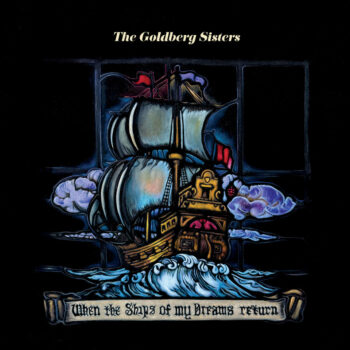
Atwood Magazine is proud to be premiering “The Great Resignation,” the eerie, Beatles-tinged new single from The Goldberg Sisters, the long-running musical project of actor, director, and musician Adam Goldberg. For many, Goldberg is a deeply familiar presence – instantly recognizable as Chandler’s volatile, unforgettable roommate Eddie on Friends, or from formative films like Saving Private Ryan and Dazed and Confused, where he helped define an era of American indie cinema. Others may know him as Nicky Rubinstein on Entourage, or from his work on Fargo and The Equalizer – roles that reflect a career spent inhabiting the edges of chaos, contradiction, and human messiness.
Music, however, has long been Goldberg’s most private and enduring outlet. Across multiple releases under The Goldberg Sisters moniker, he has quietly built a body of work defined by intimate songwriting, meticulous craftsmanship, and an unwavering commitment to emotional honesty. His forthcoming fifth album, When the Ships of My Dreams Return (independently out February 20) – his first since 2018’s Home: A Nice Place to Visit – marks a new creative chapter, written and recorded during Goldberg’s move from Los Angeles to New York’s Hudson Valley, that finds him performing, recording, and mixing the entire record himself. The result is music that feels tactile and lived-in, shaped by memory, relocation, and the uneasy act of taking stock – of a life, a country, and the spaces in between.

“The Great Resignation” follows November’s lead single “Our Kind of Love,” which hinted at the upcoming record’s intimate, home-built spirit.
Musically, the track glows with a deceptive lightness. There’s a lilting, McCartney-esque ease to its melody, paired with a high, delicate vocal that recalls the lush intimacy of John Lennon’s solo work in the ‘70s. Shimmering piano chords drift beneath rich, radiant harmonies – provided in part by The Chapin Sisters’ Abigail and Lily Chapin – adding warmth and drama to the arrangement. That saccharine beauty only sharpens the song’s impact, creating an almost eerie contrast between sound and subject matter, sweetness and social unease.
You came for my god
You came for my guns
You came to my town
Then everyone
It’s not what you think
It’s the great resignation
From its opening lines through the first refrain, “The Great Resignation” establishes its worldview with startling economy. The repetition of “You came for my…” functions less as accusation than inventory – a tally of perceived losses stacked one atop another until the song tips into something heavier than grievance. God, guns, town – faith, identity, home – each carries cultural weight on its own, but together they form a portrait of a worldview under siege. When Goldberg lands on “It’s not what you think / It’s the great resignation,” the phrase feels deliberately slippery, resisting a single interpretation. Is it departure or displacement? Choice or consequence? The ambiguity is the point. Rather than define the moment, his music inhabits the confusion of living through it, where intent and impact blur and no one feels fully understood.
“This is one of those rare songs wherein the idea for the song came to me before any of the musical elements,” Goldberg tells Atwood Magazine. “Generally, I tend to find something I like the sound of, and it inspires the lyrics. In this case, I knew I wanted to write a song about the ‘The Great Resignation’ of 2020, in which many urban dwellers fled for the country. While our fleeing from Los Angeles to the Hudson Valley in New York, where my wife grew up, was more a byproduct of my work, we did opt for living outside of the city in part because of COVID and because I may have overidealized the concept of a simpler life. What I didn’t expect was the culture clash that awaited us in our particular neck of the woods.”

That culture clash hums beneath every verse – not as accusation, but as observation.
The song doesn’t take sides so much as it captures the emotional static left behind when ideals collide with lived reality, when escape turns into entanglement.
He continues, “I wrote this song over a long stretch as other songs were coming easier and being recorded. It’s always been more challenging for me to have something I want to say and figure out a way to express that musically, especially being self-taught (‘taught’ being a generous descriptor). All I really knew was that it needed to be written on the piano, so that’s where I started.
That sense of difficulty – of working slowly toward clarity – mirrors the song’s emotional tension. Even its smallest details feel intentional. “You can hear my kids yelling in the background upstairs at the end of the tune, on the piano track,” he adds, a fleeting moment of domestic life bleeding into the recording, grounding the song’s broader societal questions in something unmistakably human.
We came for you air
And lowered our masks
We’re starting brand new
And you showed us the past
It’s not what you think
It’s the great resignation
As the song unfolds, Goldberg’s lyrics continue to operate in that uneasy in-between – never fully aligning with one side of the cultural divide, yet refusing to smooth over its fractures.
Lines like “We came for your air / And lowered our masks / We’re starting brand new / And you showed us the past” seem to flip perspective mid-verse, complicating the narrative by implicating both newcomers and locals in the cycle of misunderstanding. The song’s brilliance lies in this constant reframing: Every assertion is met with its mirror image, every certainty undercut by doubt. No one emerges unscathed, and no position is granted moral high ground for long.
That tension sharpens as the language grows more pointed. “You littered our lawns with alternative facts” lands with quiet venom, its domestic imagery shrinking abstract political discourse down to something invasive and personal. Even humor – “We didn’t come for your guns / But we gave it a shot” – arrives barbed, exposing how easily irony curdles into resentment when economic pressure and cultural anxiety collide. Throughout, Goldberg resists catharsis. The repeated attempts to “fly away,” only to have wings clipped on either side, suggest a nation trapped in proximity – unable to coexist peacefully, yet unable to separate cleanly.
We tried to fly away
But they clipped our wings to stay
In the greatest resignation
You came for our air
But you left on your masks
You littered our lawns with alternative facts
It’s not what you say
In the world’s greatest nation
What makes all of this land with such force is the song’s sonic restraint. Set against buoyant piano lines and harmonies that border on lullaby-sweet, the lyrics feel almost dangerously calm, as if sung from the eye of the storm. That contrast – dreamy sound, unsettled subject matter – gives the song its eerie power. The listener is lulled even as the words describe a country coming apart at the seams, where coexistence feels compulsory and belonging increasingly conditional.
“It seemed fitting to ask our friends Abigail and Lily Chapin of The Chapin Sisters who also moved back to their hometown, to add some vocals,” Goldberg adds. “It was Lily, in fact, whose house and incredible vintage recording studio we visited years before we had any inkling about leaving LA, that got me thinking: Hmmm…”
The Chapin Sisters’ voices add warmth and dimension, softening the song’s edges without dulling its impact – a reminder that even within rupture, connection persists. In that balance between sweetness and unease, “The Great Resignation” finds its power: Not as a statement meant to resolve anything, but as a document of a moment we’re still very much living through.
You tried to fly away
But we clipped your wings
So you’d stay in the greatest resignation
Did you come to this place
just to write this song?
Hey man can’t we all get just along
And all live by the
sparkling sea of indignation
Goldberg’s own sense of reflection – of looking backward while standing firmly in the present – runs throughout “The Great Resignation.” Its extended instrumental passages swell and shimmer, flirting with psychedelia while never losing their emotional center. The song doesn’t offer easy answers or tidy conclusions; instead, it sits with discomfort, tracing how good intentions can curdle into misunderstanding, and how shared spaces can become contested ground.

That resonance is only amplified by the timing of the song’s release. Arriving today, January 20, “The Great Resignation” lands on the same day as the Free America Walkout, a nationwide day of protest led by Women’s March in response to growing concerns around civil liberties, bodily autonomy, and democratic erosion. The alignment feels less like coincidence than echo. Goldberg’s song doesn’t document this moment directly (it was written years before), but it speaks fluently in its emotional language – one of fracture, distrust, and communities pulled taut by competing realities. In a landscape where public dialogue feels increasingly polarized and people are once again taking to the streets to make themselves heard, “The Great Resignation” reads as both reflection and warning: A reminder of how quickly shared ground can erode, and how urgently we’re being asked to reckon with what it means to live together when consensus feels impossible.
As When the Ships of My Dreams Return approaches its February 20 release, “The Great Resignation” stands as one of its most devastating moments – a portrait of change, disillusionment, and the uneasy coexistence of hope and loss.
Soak up this song’s gentle beauty and uneasy truth, and let yourself sit with the questions it leaves behind. The Goldberg Sisters’ “The Great Resignation” is streaming exclusively on Atwood Magazine.
We just wanted our chicks to soar
Over the bridge and yonder yore
To the greatest destination
We didn’t come for your guns
But we gave it a shot
Now we’re priced out
of our downtown loft
It’s not what we thought
It’s the great resignation
— —
:: stream/purchase When the Ships of My Dreams Return here ::
:: connect with Adam Goldberg here ::
— —
“The Great Resignation” – The Goldberg Sisters
— — — —
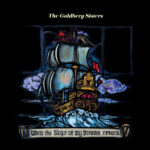
Connect to Adam Goldberg on
Facebook, 𝕏, Instagram
Discover new music on Atwood Magazine
© Daniel Silbert
 © Daniel Silbert
:: Stream The Goldberg Sisters ::