Atwood Magazine is excited to share our Editor’s Picks column, written and curated by Editor-in-Chief Mitch Mosk. Every week, Mitch will share a collection of songs, albums, and artists who have caught his ears, eyes, and heart. There is so much incredible music out there just waiting to be heard, and all it takes from us is an open mind and a willingness to listen. Through our Editor’s Picks, we hope to shine a light on our own music discoveries and showcase a diverse array of new and recent releases.
This week’s Editor’s Picks features The Temper Trap, Lola Blue, Mount St. Helen, Eliza Edens, Radium Dolls, and Local the Neighbour!

 follow EDITOR’S PICKS on Spotify

“Giving Up Air”
by The Temper Trap“Givin’ up air, layin’ it bare, hopin’ my dreams will reappear…” Losing someone doesn’t arrive all at once – it unfolds in waves: Shock, sorrow, anger, and, if you’re lucky, fleeting glimmers of light breaking through the dark. On “Giving Up Air,” The Temper Trap channel that emotional arc into an expansive and overwhelming experience – a song that doesn’t just process grief, but moves through it in real time. Spirited and dynamic yet deeply human, it captures the disorienting push and pull of loss with a clarity that cuts straight through.
Disarm
Disarm my heart
Disarm, lay it down
All of the visions of you are fading
Where have they gone?
And this house feels like it’s sinking
(Ooh-ooh, ooh-ooh-ooh)
Feels like it’s sinking
(Ooh-ooh, ooh-ooh-ooh)
And it’s hard to breathe in
Originally released late last September, “Giving Up Air” continues to resonate months later – and now, with the announcement of the Australian indie rock band’s fourth studio album Sungazer (out July 10), it feels newly charged with purpose. The song stands as both a bridge and a breakthrough: A reminder of everything The Temper Trap have always done so well, and a signal of where they’re headed next.
Formed in Melbourne in the mid-2000s, The Temper Trap quickly became one of indie rock’s defining voices of the late 2000s and early 2010s, breaking through with their landmark debut Conditions and the era-defining single “Sweet Disposition.” Their music – expansive, cinematic, and emotionally immediate – resonated far beyond their home country, earning global acclaim, chart success, and a lasting place in the cultural fabric of a generation.
Over the years, the band have evolved without losing that core sense of emotional urgency, releasing two more studio albums while touring some of the world’s biggest stages and festivals. Even through periods of distance and reinvention, their sound has remained unmistakable – anchored in frontman Dougy Mandagi’s soaring, expressive voice and a gift for turning deeply personal experiences into something communal and universal. Today comprised of Dougy Mandagi, bassist Jonathon Aherne, drummer Toby Dundas, and guitarist Joseph Greer, The Temper Trap step into their next chapter with a renewed purpose and creative clarity – all brought to life through their refreshingly energized and invigorating new singles.
At its core, “Giving Up Air” is one of Dougy Mandagi’s most personal songs to date. “This song is about a life-changing moment and the unimaginable pain of losing a loved one in tragic circumstances – from the initial shock to sorrow and then anger, and finding glimmers of hope somewhere in between,” he shares. What makes that perspective even more powerful is its distance: “This song isn’t about loss through my eyes but through the eyes of a mother losing her child… I wasn’t a parent when I wrote the song but now that I am, I understand it on a much deeper level.”
Givin’ up air, layin’ it bare
Hopin’ my dreams will reappear
When everything I know
is hangin’ on a prayer
(Oh-oh-oh-oh-oh, oh-oh-oh-oh-oh)
Givin’ up air, layin’ it bare
Hopin’ my dreams will reappear
When everything I know
is hangin’ on a prayer
(Oh-oh-oh-oh-oh, oh-oh-oh-oh-oh)
That emotional layering gives the track its uncompromising weight. Built on propulsive drumbeats and a sweeping, synth- and guitar-driven foundation, “Giving Up Air” swells and surges with restless urgency, pairing atmospheric textures with eruptive, full-bodied release. It’s classic Temper Trap in its scale – cinematic, larger-than-life, instantly immersive – yet there’s an emboldened sharpness, an intention that pushes their sound forward rather than simply revisiting it.
The story behind the song only deepens that feeling. Some listeners may recognize “Giving Up Air” from Mandagi’s solo project BLOODMOON, where it first appeared in an earlier form. But as he tells it, the track always seemed destined for something more: “I think I was always meant to write that song for The Temper Trap,” he remarks. “It just so happens I was off doing my own thing when it came to me but now it honestly feels like the song is where it’s supposed to be. As soon as we jammed it as a band it made sense… it felt magical, like it had found its true home.”
Disarm, no use resisting
Disarm, break it down
Holding on tight, choking the life out
‘Til nothing was left
And this house is surely sinking
(Ooh-ooh, ooh-ooh-ooh)
Feels like it’s sinking
(Ooh-ooh, ooh-ooh-ooh)
And it’s hard to breathe in
That sense of rediscovery mirrors the band’s own journey. After a decade between albums, The Temper Trap return this July with Sungazer, their fourth studio record and first in ten years – a gap that, rather than stalling their momentum, seems to have reshaped it entirely. “That 10-year gap really makes this feel like a clean slate,” Mandagi shares. “To a lot of people, this record will be their first introduction to us, and that’s exciting! It reminds me of [being] back in the day, [when] we had to really work the room and win people over.”

There’s a palpable excitement in that reset. “Compared to our past albums, this one was way more fun to make,” he adds. “The energy and vibes were high in the studio, and I think you can feel it in the songs.” That fiery spirit runs straight through “Giving Up Air,” where the band’s signature emotional intensity meets a renewed air of freedom and exploration.
It’s a feeling that extends far beyond a single song. Sungazer promises a journey that stretches from intimate reflection to full-throttle catharsis, distilling years of personal growth, distance, and reconnection into a body of work that feels both immediate and lived-in. In many ways, it reads as a second beginning: Not a reinvention, but a reintroduction to who they are now.
For Mandagi, that evolution has been years in the making. His BLOODMOON project opened up new creative pathways – “an open frontier… a blank canvas to explore creative ideas that I otherwise wouldn’t be able to in The Temper Trap,” he previously told Atwood Magazine – and those lessons now bleed into the band’s current music, expanding its scope without losing its core.
That’s what makes “Giving Up Air” land so powerfully. It holds both past and present at once – a song that carries the DNA of everything The Temper Trap have been, while pushing toward everything they’re becoming. It’s immersive, emotional, and unafraid to sit inside the hardest moments, trusting that something brighter might still emerge on the other side.
And if this is what The Temper Trap sound like now, ten years on, then Sungazer isn’t just a return – it’s a reminder of why they mattered in the first place, and why they still do.
Givin’ up air, layin’ it bare
Hopin’ my dreams will rеappear
When evеrything I know
is hangin’ on a prayer
(Oh-oh-oh-oh-oh, oh-oh-oh-oh-oh)
Givin’ up air, layin’ it bare
Hopin’ my dreams will reappear
When everything I know
is hangin’ on a prayer
(Oh-oh-oh-oh-oh, oh-oh-oh-oh-oh)
“Heartbeat”
by Lola BlueA crush can turn the whole world electric – every glance charged, every touch magnified, every ordinary moment suddenly full of motion, meaning, and possibility. On “Heartbeat,” Lola Blue bottles that infectious intensity with irresistible charm, turning young love, innocence, and freedom into a dreamy indie pop rush that feels as buoyant as it is intimate. It’s a song about the thrill of feeling everything all at once, and the quiet, magnetic pull of wanting to stay inside that feeling just a little longer.
Released in late February as her debut single with slowplay, “Heartbeat” introduces Lola Blue as a voice rooted in sweetness, playfulness, and emotional immediacy. The LA-based singer/songwriter (née Lola Blue Koepke) crafts a vivid, coming-of-age world shaped by girlhood, creative curiosity, and a deep connection to memory and imagination – a space where feelings are allowed to bloom freely, before the weight of the world sets in. “I’m just a girl, standing in front of a boy, asking him to love her,” Blue says with a wink – a line that captures the disarming sincerity and playful self-awareness at the heart of her music.
I know you hear my heartbeat
I know it could go hard
I see you in the backseat
I know we could go far
They’re trying to take me away from you
They’re trying to kick us out
They think I’m way too good for you
They’re trying to shut it down

That ethos runs through every layer of the song. Produced by Day Wave (Jackson Phillips), “Heartbeat” shimmers with bright, intoxicating melodies and soft, spoken flourishes, its gentle groove carrying a steady, peppy pulse that feels impossible to resist. There’s an ease to it – a lightness that lets the song glide – while still grounding its emotional core in real, recognizable moments and emotions.
“I really try to keep things as sweet and playful as possible in my life,” Blue shares. “With every bone in my body, I try to hold on to the feelings I had when I was a teenager just in terms of my mind and what I felt was possible.”
That sense of possibility defines “Heartbeat.” At its core, the song is about having a crush – simple, immediate, and all-consuming in the way only early feelings can be. “Heartbeat is about the innocence and excitement that comes with being young. Experiencing sweet feelings like a crush with no real consequences, just the joy of the moment,” she explains, embracing the fleeting, carefree nature of those experiences without overcomplicating them.
Give me a reason to cut my hair
Anything you’d like
Just give me a reason to be somewhere
I’ll go wherever you’d like
I can’t help myself, I’m all about you
Just like that
I can’t help myself, I’m all about you
Just like that
You can hear that intimacy right from the opening line – “I know you hear my heartbeat / I know it could go hard” – a tender, close-up moment that captures the physical closeness of two bodies physically and emotionally in sync with each other, listening, feeling, reading everything without a word. It’s a small detail, but it carries the full weight of the song’s emotional world: Connection without explanation, vulnerability without fear.
“This line is about the intimacy of laying your head on someone’s chest, hearing a heartbeat and being able to read someone’s emotion from such a simple moment,” Blue explains – grounding her song’s dreamy atmosphere in something deeply human, relatable, and real.
From there, Lola Blue leans fully into that feeling. Her freeing, boldly sung declaration, “I can’t help myself, I’m all about you / just like that” becomes both a confession and a release – a line that lands with effortless sincerity, as if there’s no point in resisting it. There’s no second-guessing, no hesitation – just the simple, undeniable truth of being pulled toward someone, and choosing to follow that instinct.
Even as “Heartbeat” floats on its breezy, feel-good surface, there’s a deeper thread running underneath: A commitment to holding onto wonder. Lola Blue doesn’t treat these feelings as fleeting or trivial; she elevates them, framing them as essential, formative, and worth preserving. In doing so, she creates a song that feels both immediate and lasting – a snapshot of youth that continues to resonate long after the moment has passed.
I know you feel my heartbeat
You never say it out loud
We’re laying on the concrete
Your lips on the ground
They’re trying to take us away from here
They’re trying to kick us out
They want to make us disappear
They’re trying to shut it down
“I hope listeners see themselves in this song because it’s such a relatable experience – everyone has a crush,” the artist shares. “I want my music to be something people go to, to find comfort in their feelings. I’ve made art for as long as I can remember, exploring different visual mediums in art school, most of which I never shared with the outside world. Everything I’ve made was always for myself. It’s kind of surreal sharing my music. Releasing always feels so special.”
In the end, “Heartbeat” isn’t trying to be anything more than what it is – and that’s exactly what makes it so undeniably special. It moves with a light step and an open heart, inviting listeners to remember what it felt like to care this freely, this fully, without overthinking it. In Lola Blue’s hands, that feeling becomes its own sacred permanence – a reminder that even the simplest emotions can leave the deepest imprint.
I can’t help myself – I’m all about Lola Blue, just like that.
Give me a reason to cut my hair
Anything you’d like
Just give me a reason to be somewhere
I’ll go wherever you’d like
I can’t help myself, I’m all about you
Just like thatI can’t help myself, I’m all about you
Just like that
I can’t help myself, I’m all about you
Just like that
I can’t help myself, I’m all about you
Just like that
“Nineteen”
by Mount St. HelenAge nineteen is a fuzzy, undefined nexus – not quite adulthood, not quite youth, but a strange, fleeting threshold in-between where everything feels heightened, uncertain, and on the verge of slipping away. Mount St. Helen captures that emotional limbo with unrelenting intensity on his latest single, turning nostalgia, longing, and young romance into a feverish, full-body experience. “Nineteen” packs every punch it can, refusing to hold back; it’s a song about standing at the edge of who you were and who you’re becoming all at once – and the overwhelming rush of trying to hold onto both.
I saw the news today
You still look the same
Heard the pastor say ‘you may’
As you toss the white bouquet
I watch the screen
‘do you remember me
Back from when we were nineteen?’
When we were nineteen

Independently released in mid-February, “Nineteen” is the long-awaited third single from Mount St. Helen – a surging, cataclysmic swell of sound and feeling, where overdriven guitars and pounding drums blur into a cathartic haze of liminal identity, emotional whiplash, and unfiltered urgency. First introduced through 2023’s breathtakingly expansive debut single “Pariahs” and later returning midway through 2025 with the cinematic outpouring “Helpless,” Mount St. Helen is the musical alias of Oxford-based multi-instrumentalist Aris Sabetai, who writes, records, and produces his songs independently, blending a deep love of ‘90s guitar music with dramatic arrangements and radio-ready alt-pop sensibilities. What began as a dorm-room project during lockdown has steadily evolved into a fully realized sonic world – one shaped as much by shoegaze and post-rock textures as it is by widescreen ambition and classical influence.
That duality defines “Nineteen.” Built on a sweltering wall of overdriven guitars and driving, full-bodied drums, the song roars forward with relentless momentum, its dense, immersive soundscape blurring the line between clarity and chaos. There’s a heat to it – a kind of sonic saturation that feels all-consuming – as if the song itself is caught in the same emotional loop it’s trying to process.
Sabetai describes nineteen as a “twilight zone” age – “not quite eighteen… and not quite in your twenties either” – a strange in-between that looks both backwards and forwards at once. That tension runs through every line of his song, where longing, regret, and fleeting flashes of joy collide in rapid succession. Memories don’t arrive neatly; they flicker, overlap, and distort, pulling the listener deeper into the song’s fevered emotional landscape.
“Musically, I wanted to write a set opener for the live show that pays homage to my musical influences, before embarking on a setlist of originals,” he explains. “Deciding on how to do this, I was faced with a similar ‘twilight zone’ of wanting to say thanks to bands and artists that have preceded Mount St. Helen stylistically, before getting on with our live show. I had just gone through a break-up at the time, and my ex had given me the Patti Smith memoir ‘Just Kids’ as a parting gift. The compound emotions that emanated from the book – especially nostalgia as being both bitter and sweet – seemed to fit with the musical duplex of the song. The original chorus lyric was actually ‘would you remember me from when we were just kids’ in an attempt to further pay homage to Smith and further the song’s dual nature.”
At the heart of it all are the lyrics themselves – direct, disarming, and quietly devastating in their specificity. Sabetai doesn’t hide behind abstraction; he leans into memory, letting small, vivid moments carry the emotional weight. “Do you remember me back from when we were nineteen?” he asks, a question that feels less like a reach outward and more like a confession spoken into the void. Elsewhere, lines like “Sing it louder, they’re playing our song, we danced together” and “Holy father, forgive my sins / I didn’t mean to hurt her or make a scene” blur guilt and tenderness, romance and regret, grounding the song’s swirling soundscape in something achingly human. These aren’t grand declarations – they’re fragments, flashes of feeling that linger just long enough to leave a mark.
Sing it louder
They’re playing our song
We danced together
Holy father
Forgive my sins
I never meant to hurt her
Or make a scene
But I’m on my knees
You break my apathy
Thinking about when we were nineteen
And what could’ve been
What gives “Nineteen” its weight is the way it refuses to settle into a single feeling. One moment it aches with tenderness, the next it surges with urgency – romance giving way to guilt, nostalgia twisting into something sharper and more unsettled. “There’s a whole mix of emotions… ranging from bittersweetness to anger, romance to ecstasy,” Sabetai shares, a reflection that mirrors the song’s restless emotional current.
That volatility finds its release in the chorus, where Sabetai’s voice rises above the distortion, cutting through the haze with a desperate clarity. As the band pushes forward, the track expands outward, transforming its internal tension into something communal and cathartic – a moment built not just for reflection, but for release.
Even within that surge, there’s a lingering sense of fragility. “Nineteen” never fully resolves the feelings it excavates; it lets them exist in their full complexity, murky and muddy and wholly abrasively alive. In doing so, Mount St. Helen turns a deeply personal reflection into a shared experience – a reminder that nostalgia isn’t static, but constantly shifting, reshaping itself as we move further away from who we once were.
By the time the wall of sound subsides, “Nineteen” feels less like a memory revisited and more like a memory relived – vivid, overwhelming, and impossible to hold onto. It’s a wash of fire and feeling, a song that doesn’t just recall the past, but burns through it, leaving only the emotional residue behind.
Mount St. Helen’s return can’t come soon enough. A cinematic, soul-stirring flicker of light cutting through 2026’s noisy fray, Aris Sabetai’s musical project is a reminder that there are still artists willing to push this far and feel this deeply – to challenge the boundaries of genre and let their humanity shine through.
In my dreams we meet
Reminisce and speak
You look so clear in my sleep
That it feels like just last week
That you kissed me on the cheek
told me I’m unique
Now you’d hardly skip a beat
If you passed me on the street
“Leash”
by Eliza Edens“I’m a goddamn killer.” The hardest parts of ourselves rarely announce their arrival – they slip in quietly, disguised as instinct, defense, or desire. The urge to say the wrong thing, to sabotage a good thing, to lean into the chaos instead of resisting it – these impulses don’t make us broken, but they do make us human. Living with them means learning not to silence them entirely, but to understand their place, their pull, and their limits.
That push and pull lives at the core of “Leash,” a song that doesn’t try to resolve contradiction so much as sit inside it. With a wink and a steady pulse, Eliza Edens turns inward reckoning into something bright, buoyant, and unexpectedly freeing – a portrait of self-awareness that dances as much as it confesses.
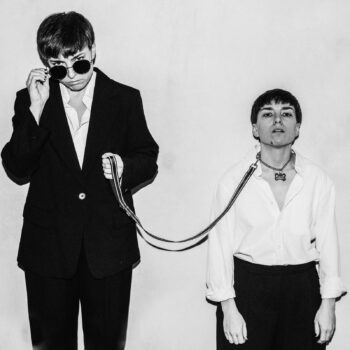
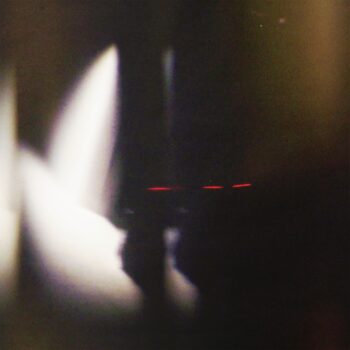
Released earlier this week and premiered right here on Atwood Magazine, “Leash” finds Edens embracing a breezy, tongue-in-cheek indie rock palette, marking their first studio release in three years and signaling a subtle reinvention – trading the lush, fingerpicked textures of their earlier work for a more playful, full-band palette of bouncy bass lines, watery keys, and off-kilter guitars. It’s a shift that feels both deliberate and instinctual, opening the door to a brighter, more rhythm-forward sound while still holding onto the emotional depth that’s long defined their songwriting. Edens leans into that duality with both curiosity and playfulness, embracing the contradictions that live just beneath the surface. “‘Leash’ celebrates the shadow self – our darker impulses, the devil on our shoulder, and the cynic inside us all,” they tell Atwood Magazine.
This comes to life across the song’s tight two-minute run as Edens slips deftly between confession and character, stacking sharp, self-aware lines that blur the line between truth and exaggeration. “I’m a goddamn killer,” they open, before unraveling a string of contradictions – a “double-timer,” a “hypocrite liar” who “stole your parents’ wedding ring,” someone caught between impulse and intention, chaos and control. Even at its most biting, there’s a looseness in the delivery, a rhythmic buoyancy that keeps everything in motion. The tension isn’t heavy-handed; it flickers, dances, and reshapes itself in real time, mirroring the very push and pull the song sets out to explore.
“I came up with the first line of the song when I had a horrible roach infestation in my previous apartment (thank goodness I’ve moved since),” they share. “I was killing them all the time, so honestly the first line is very true. Then I sort of went off from there.”
“It’s about a lot of different things at the same time,” they add. “I wanted to play around with a more rhythmic style of singing, and so this song is as much about how the words sound in the song as it is about any kind of narrative.”
This fluidity finds its anchor in the chorus, where Edens distills the song’s inner tension into a single, striking plea: “Don’t wanna be my enemy / Just keep the killers on a leash.” It’s a line that lands with clarity and weight – less about erasing those darker instincts than learning how to live alongside them without letting them take control. The image itself is vivid and immediate: Not destruction, not denial, but restraint. Awareness over avoidance.
There’s a quiet power in that framing, in the choice to acknowledge the parts of yourself that feel volatile or unruly and still claim ownership over them. Sung with a lightness that almost masks its gravity, the chorus becomes the song’s emotional center – a moment of feel-good, fearless self-recognition that doesn’t ask for perfection, only balance.
As catchy as it is cathartic, “Leash” hits with an easy, infectious charm, all bounce and bite from the very first note. What makes this song linger, long after the final note, is the way Edens reframes self-awareness as something expansive rather than restrictive. There’s a freedom in naming the parts of ourselves we’re taught to suppress, in letting them exist without letting them lead. Edens doesn’t tidy those impulses up or turn them into a lesson; they let them breathe, let them move, and in doing so, frame self-awareness as an ongoing practice rather than a fixed state.
In that sense, “Leash” feels less like a confession and more like an invitation – to loosen our grip, to listen a little closer, and to hold ourselves with a touch more compassion, even when things feel messy. It’s a small shift, but a meaningful one, and it’s carried here with a lightness that makes it all the more lasting. The hardest parts of ourselves don’t need to be silenced – only seen, understood, and maybe – just maybe – kept on a leash.
“Moving”
by Radium DollsBreaking up is rarely a clean cut – it lingers in the smallest, most mundane moments, in the quiet, necessary acts that force two people to confront the end of what they built together. On “Moving,” Brisbane rock band Radium Dolls capture that fragile in-between with devastating clarity, turning the act of packing up a shared life into a brutally intimate portrait of love unraveling in real time. This is not a song about the fight or the fallout, but about what comes after – the tenderness, the shock, and the quiet grace of two people still showing up for each other as everything falls apart.
She helped me move to a new place
When we were moving on
She saw the look on my face
When I saw her stuff was gone
And she stayed just a little bit longer
She let me take anything that I wanted
All the while her heart was
breaking just like mine was
Just like mine was
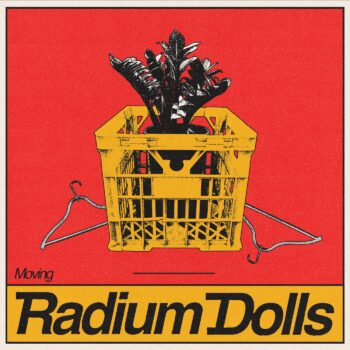
Taken from Radium Dolls’ sophomore album Wound Up (out now), “Moving” arrives as one of the record’s most emotionally exposed moments – a stark contrast to the band’s reputation for high-octane, ‘70s-tinged rock ‘n’ roll. Known for their explosive live presence and gritty, guitar-driven sound, the Australian four-piece – frontman Will Perkins, guitarist Tom Perkins, bassist Ewan Day, and drummer Bryce Equinox – have steadily carved out a space defined by both swagger and sincerity, pairing sharp lyricism with a raw, lived-in intensity that hits just as hard on record as it does on stage.
That balance – between force and fragility – has defined their rise. From early EPs like Bel-Haven to their debut album Legal Speed, Radium Dolls have built a following on unfiltered storytelling and dynamic musicianship, earning national acclaim and selling out shows across Australia. With Wound Up, they push that ethos further, embracing both urgency and vulnerability as they navigate life’s shifting pressures and personal upheavals.
She saw me choked up,
dragging our old mattress
Up the stairs and into nothingness
She lifted the other end
I thought that she was doing fine
But her heart was breaking
just like mine was
Just like mine
She stayed just a little bit longer
She let me take anything that I wanted
And all the while
Her heart was breaking just like mine was
Just like mine was
Just like mine
All the while…
“Moving” sits at the emotional core of that journey. Centered on the act of leaving a home after a breakup, the song traces the strange intimacy of two people dismantling their shared world piece by piece – carrying boxes, lifting mattresses, lingering just a little longer than necessary. It’s a scene rendered with painful precision, where every gesture feels loaded with meaning, and every silence speaks louder than words.
What makes “Moving” hit as hard as it does is the way Radium Dolls let the story unfold in plain sight, resisting metaphor in favor of lived detail. Will Perkins doesn’t obscure the moment – he walks us through it, step by step, dragging mattresses, carrying pieces of a shared life up and out, each line feeling like a memory you can’t quite shake. There’s a rawness to that approach that leaves no room to hide; every word lands with the weight of experience, exposing not just the end of a relationship, but the quiet, complicated care that lingers in its aftermath.
That vulnerability crests in the chorus, where the song’s restraint gives way to release. Perkins’ voice stretches and strains as he holds onto the word “while,” letting it unravel into a sustained, aching cry – a single syllable transformed into an all-consuming feeling. Around him, guitars roar and swell, drums crash and pulse, and the entire arrangement surges forward, capturing the intimate gravity of two people breaking side by side. It’s not just a climax; it’s a moment of emotional overflow, where everything that’s been held in finally spills out.
Frontman Will Perkins draws directly from lived experience: “Having recently moved out of my house… my long-term ex-partner and I had just split, and it was a difficult and tumultuous time for both of us,” he shares. “Despite this, we remained supportive of each other and she came to help me with my things when I was struggling emotionally and physically with the workload and new beginnings.”
That shared weight defines the song’s emotional pull. “It’s still about the same thing: A past love of mine,” Perkins adds. “She’s one of the greatest people I know – it just didn’t work out. In the end, we parted ways, but we’ll always be friends and care deeply about each other.” There’s no villain here, no dramatic rupture – just two hearts breaking in parallel, each carrying their own version of the same loss.

Musically, Radium Dolls translate that quiet devastation into a slow-burning alternative rock swell – overdriven guitars ringing out like echoes in an empty room, heavy drums grounding each moment with a sense of finality. The song builds patiently, its raw, exposed vocal performance feeling less like entertainment and more like a diary entry set to sound. Every note lands with intention, every shift in intensity mirroring the emotional undercurrent that threatens to spill over at any moment.
In the end, “Moving” doesn’t try to resolve the pain it holds – it honors it. It recognizes the rare, complicated beauty of a goodbye handled with care, where love doesn’t disappear so much as change shape. Radium Dolls capture that fleeting, fragile grace with unflinching honesty, turning a deeply personal memory into a universal reckoning: Even as we let go, part of us is always still holding on, stretching that moment out just a little bit longer – all the while.
She helped me move to a new place
When we were moving on
She saw the look on my face
When I saw her stuff was gone
And she stayed just a little bit longer
She let me take anything that I wanted
And all the while
Her heart was breaking just like mine was
Just like mine was
Just like mine
“Hard”
by Local the Neighbour“I’m crying to myself on another bench stand.” With a single line, Local the Neighbour’s David Quested cuts straight to the core of what his song “Hard” is really about: The quiet, unglamorous cost of chasing a dream that once felt like everything. The Melbourne-based artist doesn’t romanticize the road or dress ambition up as triumph – he sits inside the tension between movement and longing, between forward momentum and the pull of home. It’s an achingly expressive, tender, and emotionally charged song about sacrifice in its most human form: Leaving behind the people and places that steady you, only to realize how much you needed them all along.
Left my girl and dog at home and now
I don’t want this dream anymore so
When I’m home standing at my back porch
I won’t complain about
watering the plants no more
Ooooh, you’re only in the band
‘cause no one understands
Ooooh, just sticking to your post
to make it all flow
Released in late January via G.Y.R.O., “Hard” is the second single taken from Local the Neighbour’s upcoming EP Sword, out April 29 – a project that finds Quested widening his lens while digging deeper into the emotional terrain that’s come to define his work. Active for over five years now, Local the Neighbour exists as both a personal outlet and a communal effort – a space where Quested can step outside his roots as a drummer and take full control of his songwriting and production, while still inviting close collaborators into the process. Originally from Darwin and later trained in jazz at the Victorian College of the Arts and UCLA, Quested’s path has been anything but linear: A former session player who performed alongside ARIA-winning musicians and toured internationally, he ultimately made what he calls a “jexit,” stepping away from jazz to reconnect with the rock and indie music that first shaped him. Where earlier releases introduced his blend of introspective songwriting and DIY production, “Hard” sharpens that identity into a more expansive and emotionally exposed statement.
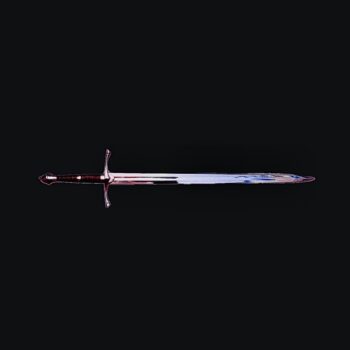
A sense of movement – of searching, shifting, and recalibrating – lives inside “Hard.” Built on dusty guitars, slow-burning textures, and a steady, swelling intensity, the song unfolds like a long exhale, its dreamy surface giving way to something heavier and more unsettled underneath. It’s tender and feverish all at once, soft in its delivery but smoldering with emotional weight and underlying friction, gradually rising toward a breaking point that mirrors the internal unraveling at its center.
Twice on the plane, and twice in the van
I’m crying to myself on another bench stand
Phone is slipping out of my hands,
she says she understands
When I say that my friends are all I am
Ooooh, try to make it the length
without showing your break
Ooooh, the gift is always
wrapped with strings hard attached
“This song is about chasing your dreams all while missing home and acknowledging the sacrifices,” Quested explains. “When things get tough, you begin to miss the simple things in life that keep you grounded. You try to be brave and push through, but chasing the dream is ‘hard’ and not for the faint of heart.”
That push and pull is more than thematic; it’s lived experience. “Honestly it’s really about being homesick,” he adds. “Since I was in high school, I’d dreamed of touring and playing shows with my friends. I’m really lucky to have done a bunch of touring in Australia and even in the US and UK. The thing is, the more serious things get – the longer you’re away. It’s crazy tough out there – you’re broke and tired, and it starts to get brutal. ‘Hard’ is basically a song about that. As amazing as these opportunities are, they come with a price.”
You can feel that price in every corner of the song – in the ragged exhaustion of its verses, in the way its melodies stretch and strain, and especially in the way it builds toward its final moments, where everything seems to crest and spill over at once. “Musically I just heard the song getting heavier with all that guitar feedback,” Quested says. “Emotionally it’s similar – everything is fine until you one day realise everything is not fine.”
You’ll find a way
You’ll find a way
Maybe you’ll find a way
Ooooh, you’re lying to yourself
if you call this hope
Ooooh, try to hide it but
you already know you’ve let go
Ooooh, try to make it the length
without showing your break, c’mon
Ooooh, this gift is always
wrapped with strings hard attached
That realization lingers long after the final note fades. “Hard” doesn’t offer resolution or easy answers; it doesn’t try to justify the sacrifices or soften their edges. Instead, it holds space for the contradiction – for the beauty of chasing something bigger than yourself, and the ache that comes with it. In doing so, Local the Neighbour turns a deeply personal reckoning into a quietly universal, timeless anthem: A reminder that even the most meaningful pursuits can leave us untethered, and that sometimes, the hardest part of moving forward is everything we leave behind. “This gift is always wrapped with strings hard attached,” he sings in the chorus – a stark, poetic acknowledgment that every opportunity carries its own weight, and every dream asks something in return.
— — — —

Connect to us on
Facebook, 𝕏, Instagram
Discover new music on Atwood Magazine
Editor’s Picks
follow EDITOR’S PICKS on Spotify