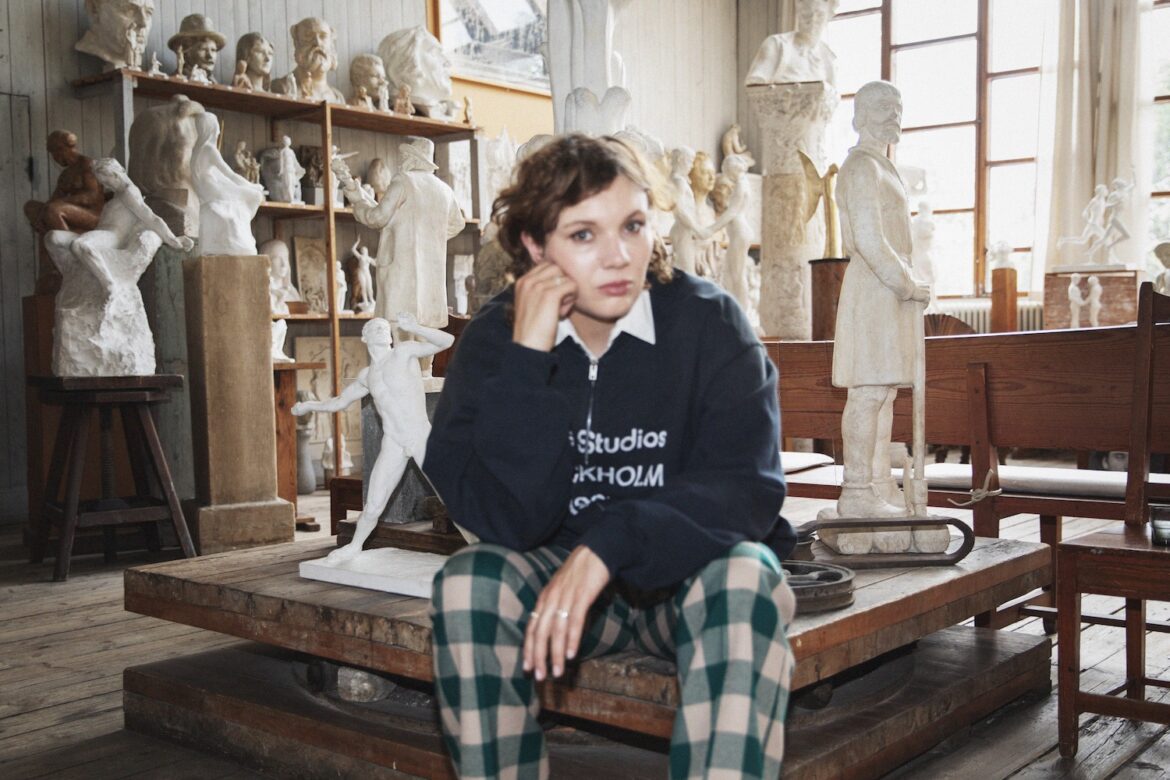
Tender, haunting, and quietly defiant, Amanda Bergman’s “grasp” is the doorway into her bold new era – a breathtaking meditation on fear, love, and survival that cements her as one of 2026’s most essential artists to watch. Together with the sweeping, intimate world of ‘embraced for a second as we die,’ it sets the stage for a record that confronts global instability with raw human clarity, turning political vertigo, grief, and spiritual disorientation into something quietly hopeful and deeply alive.
Stream: “grasp” – Amanda Bergman
Soft winds, black skies, and the uneasy tremor of a world tilted off its axis. Streets feel lawless and strangely hushed, as if the air itself is holding its breath while harm ripples outward – blood in the seas, blood on their sunny beaches, seeping into everything. Conversations break apart, the wrong people win overnight, and the horizon blurs in a kind of vertigo that’s both surreal and quietly devastating. It is a landscape where dread, fear, and uncertainty blur – unraveling at the edges, pulling apart at the seams, yet still lit by a faint, stubborn ember refusing to go out – a hope that flickers even when all feels hopeless.
Singer/songwriter Amanda Bergman paints it all with a tenderness that feels both otherworldly and painfully human. “grasp” is haunting in the way only she can be – that slow, smoky ache that wraps itself around you like late–night air, warm and trembling, full of sorrow and seduction. It’s comfort defined, catharsis distilled, a soft flame in a dark room. Her first new single of the year, and her first release since winning two Swedish GRAMMYs for Your Hand Forever Checking On My Fever, “grasp” arrives like sustenance – musical nourishment for a world coming undone. It’s dreamy, bruised and intimate, the sonic equivalent of pulling a heavy blanket up to your chin on a cold night. And beneath its simmering beauty lives something fiercer: A powerful take on the times we’re living through and a refusal to let despair hollow us out.
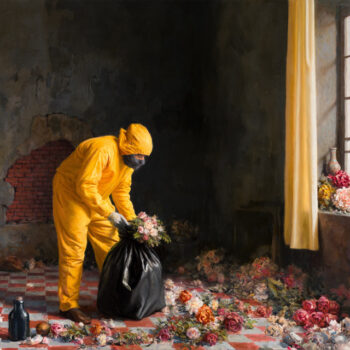
Lawless on the streets
I keep holding on
a black colored sky
and a crazy god
Warm winds won’t fly in
so don’t waste your time and
I heard nobody answer
for a little while
I heard the wild applauses
in their minds
I had no guardian angel
coming forth this time
I heard no sounds
With a heart of fire and a voice like pure seductive smoke, Sweden’s Amanda Bergman has long been one of the quiet pillars of modern indie music – a songwriter who moves between worlds with disarming ease, grounding vast emotional terrain in melodies that feel intimate, elemental, and lived-in. From her early work as Idiot Wind to her place in the beloved Swedish collective Amason, to two spellbinding solo albums that earned her both critical acclaim and two Swedish GRAMMYs, Bergman has steadily carved out a space that is wholly her own. Her songs rarely shout; they smolder, ache, and glow, tending to the fragile corners of human experience with clarity and care. Coming off the luminous Your Hand Forever Checking on My Fever and its rapturous reception, she now steps into a striking new chapter – one that widens the lens from the personal to the planetary without losing an ounce of her unmistakable warmth.
The arrival of “grasp” also cracks open the emotional universe of embraced for a second as we die, Bergman’s forthcoming third LP and the boldest, most expansive work of her career (out January 16, 2026 via The Satchi Six & Arketyp). Where her previous album explored grief, identity, and the quiet recalibrations of adulthood, this new record turns its gaze outward – toward destabilized systems, generational memory, ancestral threads, and the delicate acts of love that tether us to one another when the world tilts. Written alongside her partner Petter Winnberg and recorded largely live at Stockholm’s iconic Atlantis Metronome studio, the album leans into immediacy and instinct, capturing performances that feel warm, unvarnished, and deeply human. Its palette stretches from smoldering ballads to panoramic, slow-burn epics, held together by a through-line Bergman calls “love as resistance” – the belief that heart, truth, and presence are radical acts in a moment defined by fear and fracture.
“Across relationships – romantic, familial, ancestral – love is portrayed as/assumed to be the only force that still feels real amid chaos,” she shares. “embraced for a second as we die isn’t about death so much as it’s about that imagined moment of clarity – the second when everything, for once, makes sense. For me, that’s the image. In my own search for answers, there’s also a kind of realisation – or maybe comfort – in knowing that, okay, whether I choose to become a pirate or a Buddhist, there’s still a pretty good chance it’ll all end the same way anyway.”
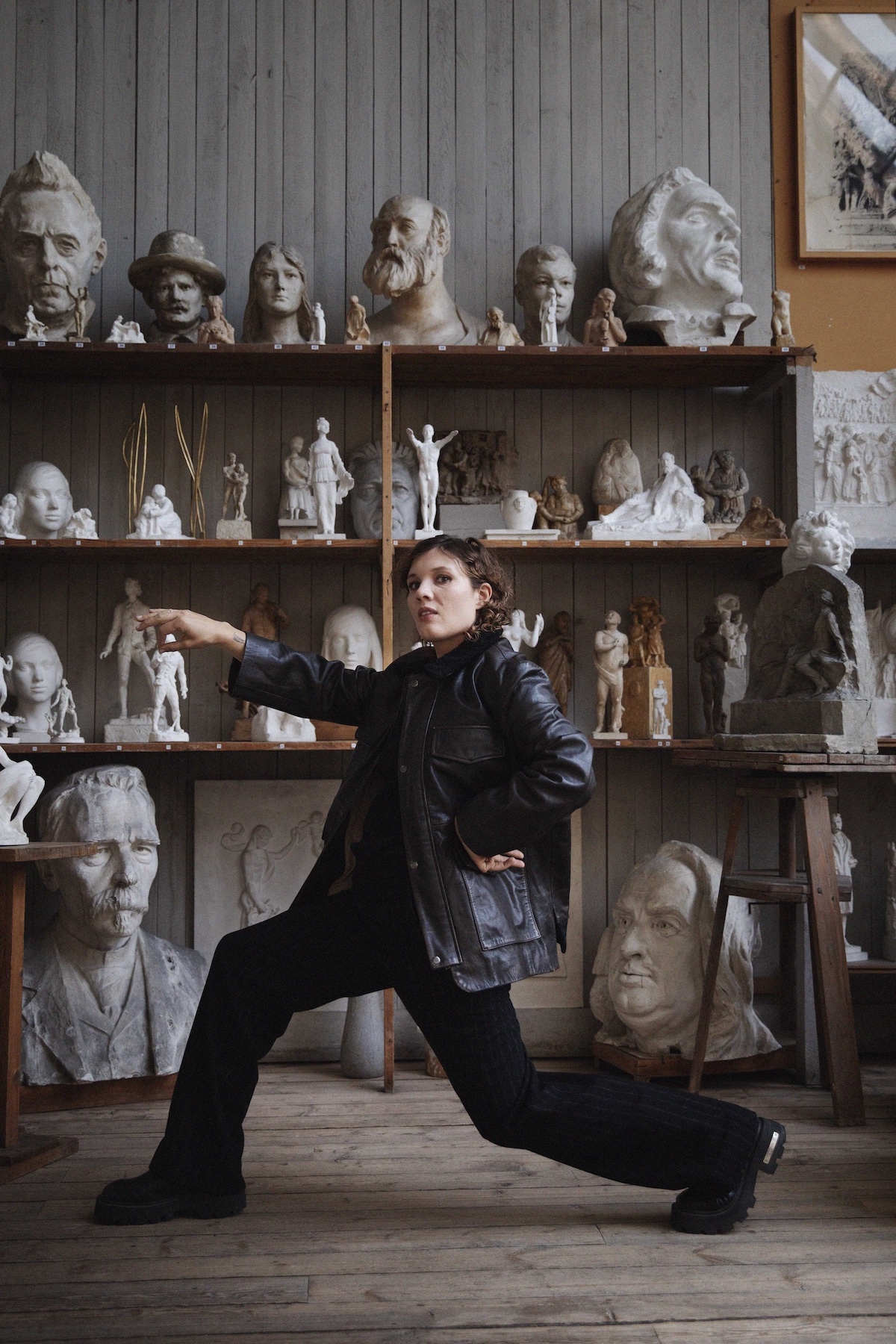
And it’s through “grasp” that her vision sharpens into something immediate, visceral, and undeniable – making it the perfect entry point for the record and an instantly memorable reintroduction.
Bergman wrote “grasp” the day after Donald Trump and Elon Musk took over the White House earlier this year – a moment she describes as surreal, dizzying, and destabilizing. “I think I was just trying to make sense of a kind of absurd panic,” she says. It wasn’t simply about them as individuals, but what they represented: “This idea that the world keeps handing the wheel to people who thrive on chaos and spectacle. Who are simply dangerous.” Writing became survival. “I didn’t want to sit in that despair or let it rot in my head,” she explains. “Writing ‘grasp’ was my way of catching that moment mid-fall – turning confusion into something musical instead of just endlessly scrolling and spiraling.”
Recorded largely live at Atlantis Metronome – the old ABBA studio in Stockholm – the track breathes with an almost fragile hum, its natural groove carrying Bergman’s voice in waves. That voice – warm, mysterious, astoundingly expressive – moves through the song like smoke curling upward from a match. Beneath its softness lies a grave knowing. She sings of world-shaking fear with disarming tenderness: “Blood in the seas, blood on their sunny beaches… blood in their tracks…” The imagery is stark, devastating. “It’s about the ripple effect,” she says. “How the actions of a few people in power can shape the lives of millions… The fact that they seem unaware – or indifferent – leaves me with a mix of sadness and fear.”
Blood in the seas
blood on their sunny beaches
blood in their tracks
can’t keep a conversation light
you’re mad as a dream
Yet for Bergman, protest doesn’t always look like shouting. “Protest can be as simple as refusing to go numb,” she says. “Being political is so much more than governments and voting. It’s about how I deal with my thoughts and feelings and beliefs and how that affects my life choices.” In that sense, “grasp” becomes a small but clear act of resistance – naming what feels wrong without letting chaos claim her inner world. “It’s about not surrendering your imagination to the ongoing madness,” she explains. “And still daring to make something meaningful out of it.”
That tension – between dread and clarity, despair and composure – gives “grasp” its hypnotic pull. Bergman describes the emotional world of the song as vertigo: the disorientation of watching familiar structures collapse overnight. “You’re not sure what’s up or down anymore,” she says. “I suppose ‘grasp’ then sits in that freefall – it doesn’t fix it, but it gives it shape.” Parenthood has sharpened that need for equilibrium. “There’s an instinct to be present and ‘in service,’” she reflects. “I want to partake, but these thoughts can’t rule me completely.”
And over one night
they come into the picture all the time
over one night
they fantasize
over one night
they command ”more decay”
and they win every time
over one night
they terrorize
blood in the seas
blood on their sunny beaches
blood in their tracks
can’t keep a conversation now
you’re mad like a dream
you’re not sleeping, huh
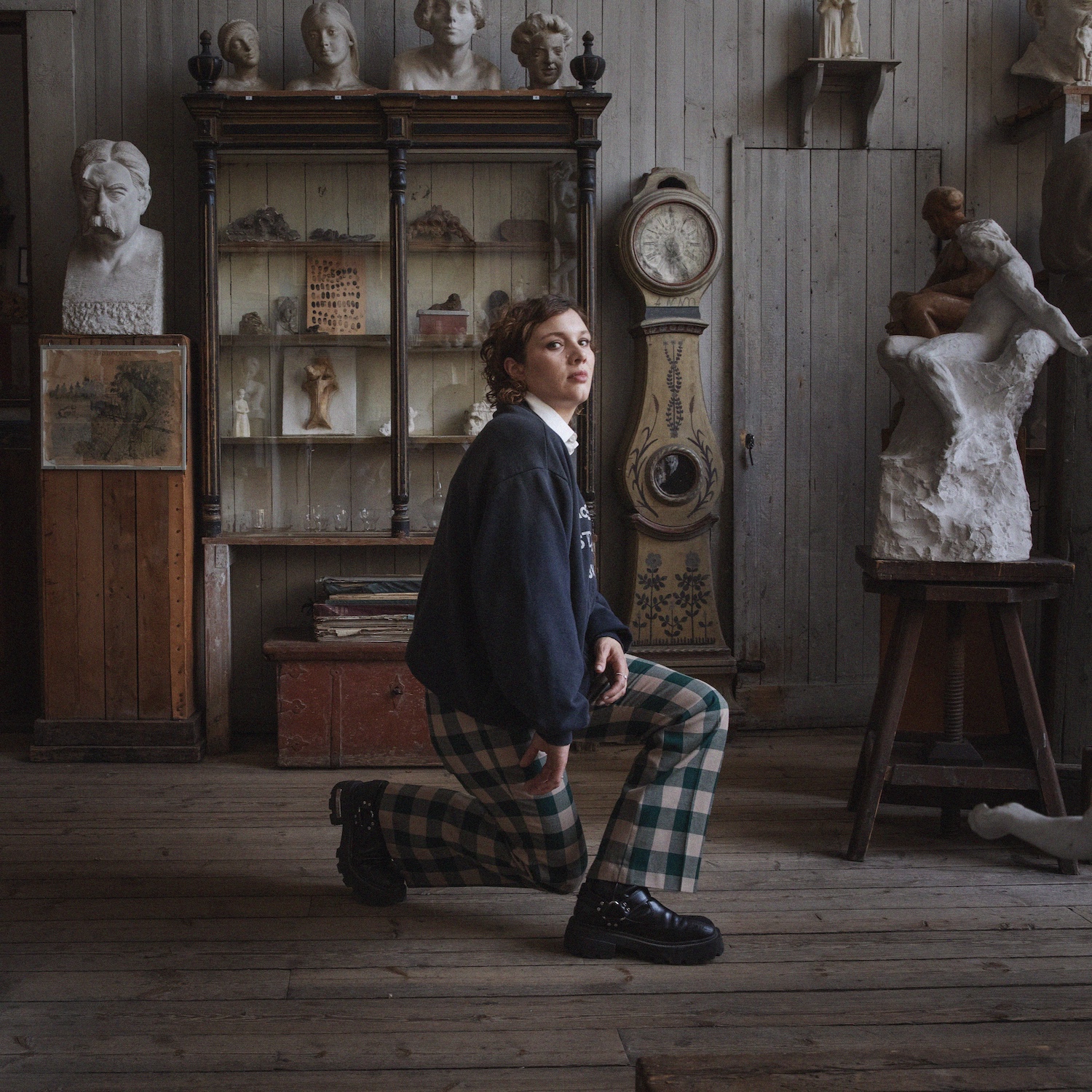
Nine months after writing it, the song only feels more urgent. “I wish the song had aged badly,” she admits. “But the patterns keep repeating – the speed, the spectacle, the disinformation… It’s devastating to witness so much destabilization.”
And still, she finds glimmers of light in the people quietly preparing for a better world, the ones turning their wheels “in other directions.”
As heavy as it is, “grasp” is also astonishingly gentle – a reminder that hope isn’t a blaze but a flicker, kept alive through connection, creativity, and the refusal to turn away from humanity. “Hope isn’t this constant flame,” she says. “It flickers a bit. Sometimes it’s just the act of creating something, or sharing a meal, or laughing at how absurd it all is. I think hope is in those small refusals to give up on being human.”
It’s this rare combination of vision, vulnerability, and visceral clarity that makes Amanda Bergman one of 2026’s essential artists to watch. There is no one else operating on quite the same frequency – no one who threads the personal and the political with such softness, or who can take the disorientation of the present moment and translate it into something so strangely consoling, so achingly beautiful. Her writing feels prophetic not because it predicts catastrophe, but because it refuses to look away from humanity’s quieter truths: Our grief, our devotion, our bewilderment, our stubborn hope. Bergman has always been a singular voice, but as she enters this new era, she feels not just influential, but necessary.
And that’s ultimately the gift of “grasp.” It makes room for confusion, grief, vertigo, and fear – but also for clarity, grounding, and the instinct to move forward anyway. Bergman hopes listeners feel “less alone in their confusion,” and to remember that “even if the world is messy right now, it may not be true forever.”
“grasp” holds all of that with remarkable grace. It’s smoke and soul, ache and ember – a song that steadies you even as it mirrors your trembling. In a world that feels like it’s spinning too fast, Amanda Bergman has given us something to hold on to.
Taken together, “grasp” and brand new songs “mexico” and “is this how you said you’d be gone” sketch the opening contours of a record that feels urgent and devotional in equal measure – an album reaching for balance in a world without it, and finding fleeting flashes of clarity in the process. Bergman doesn’t offer easy answers, nor does she pretend to transcend the disorientation she’s singing about. Instead, she lets the contradictions breathe: Dread alongside tenderness, sorrow beside stubborn joy, chaos against the quiet disciplines of care. It’s a body of work shaped by someone who is fully awake to the times we’re living in yet unwilling to let cynicism calcify her heart. As embraced for a second as we die approaches, it’s clear that Bergman is not just returning – she is widening her orbit, deepening her stakes, and offering one of the most resonant, humane artistic statements of the coming year.
— —
:: stream/purchase embraced for a second as we die here ::
:: connect with Amanda Bergman here ::
— —
Stream: “grasp” – Amanda Bergman
A CONVERSATION WITH AMANDA BERGMAN

Atwood Magazine: Amanda, you wrote “grasp” the day after Trump and Elon Musk took over the White House earlier this year – a moment you’ve described as surreal, causing a deep reckoning within. What compelled you to respond through song, and what emotional space were you writing from?
Amanda Bergman: I think I was just trying to make sense of a kind of absurd panic. It wasn’t just about Trump or Musk as individuals – it was more about what they represented. This idea that the world keeps handing the wheel to people who thrive on chaos and spectacle. Who are simply dangerous. I didn’t want to sit in that despair or let it rot in my head. Writing “grasp” was my way of catching that moment mid-fall – turning confusion into something musical instead of just endlessly scrolling and spiraling.
You’ve described the song as a “small but clear” act of protest. What does protest look and feel like to you in this moment, and how does “grasp” embody that?
Amanda Bergman: For me, protest doesn’t always mean shouting slogans or making something overtly political. It can be as simple as refusing to go numb. Simply being alive is political, from the moment we are born up until our last breath. maybe even prior and after. Partaking in juggling and throwing opinions is just a fraction of how we connect and interact with society. Sometimes it’s more important and more “political” what we choose not to do in our lives than what we do. What I’m trying to say is that, to me, being political is so much more than governments and voting for a specific party. It’s more about how I deal with my thoughts and feelings and beliefs and how that affects my life choices. “grasp” is protest through naming what feels wrong and chaotic and still daring to make something meaningful out of it. It’s about not surrendering your imagination to the ongoing madness.
The repeated images of “blood in the seas, blood on their sunny beaches” are stark and haunting. What does “grasp” mean to you personally, and what were you trying to express through that vivid imagery?
Amanda Bergman: That image is about the ripple effect, how the actions of a few people in power can shape the lives of millions. what happens at the top filters down to those already living with the effects from structural racism, inherited powerlessness, and poverty. tha fact that they (the white men with a lot of influence) seem unaware — or indifferent – to the chaos they stir up leaves me with a mix of sadness and fear.
“Blood in the seas” came from that feeling I guess, how harm seeps into everything. And “grasp” just happened to be the random name of the Pro Tools session, but it stuck, because the song ended up being exactly that: An attempt to grasp the world on a certain day.
Lyrics like “over one night / they command ‘more decay’ and they win every time / over one night / they terrorize” evoke a world coming undone. I hear you sing this, and I feel your dread. Nine months after Trump took office, do your words still resonate with you – do they feel prophetic, cautionary, vindicated, or perhaps even more urgent now?
Amanda Bergman: Sadly, more urgent. I wish the song had aged badly, you know? But the patterns keep repeating – the speed, the spectacle, the disinformation. The “one night” in the song isn’t just about a single event – it’s about the constant overnight unraveling of things we thought were stable. It’s devastating to witness so much destabilization. But I find comfort in imagining all the rooms where sane people are preparing for a time coming when he’s no longer in power. And so many beautiful things are emerging from this push down. there are a lot of places where the wheels are turning to other directions. it’s important sometimes to remind oneself that the world is complex rather than complicated and what happens in the media is most likely not the only real story.
You’ve said you felt a sense of vertigo and powerlessness in the wake of these (we’ll call them) global political power shifts. What made those vivid descriptions (“vertigo and powerlessness”) feel right to you, and how do they reflect the emotional world of “grasp”?
Amanda Bergman: In a way, vertigo is the perfect metaphor because it’s not just fear – it’s disorientation. You’re not sure what’s up or down anymore. That’s how those days felt: fast-moving, disorienting, and a bit unreal. I suppose ‘grasp’ then sits in that freefall – it doesn’t fix it, but it gives it shape. sometimes that gives some calm and clarity. I have one condition in my life right now that governs a lot of my thought structure, and it’s the fact that I’m a parent, not to say parents are not allowed to be confused or devastated – I’m fifty-fifty saint and out of hand – but there’s an instinct to be present and ‘in service’ that can sometimes act as a shapeshifter. I know that by 4 p.m., they’ll be home, and I’d better have my body and mind in neutral, because god knows what they’ll throw on me after a day out in the world. that’s why I’m specifically interested in finding ways to manage my thoughts and feelings caused by the outer world. they are welcome, cause I want to partake, but they can’t rule me completely.
Your 2024 album earned significant recognition, including two Swedish GRAMMYs. Did stepping into this new song feel like a continuation of that chapter, or the beginning of something new?
Amanda Bergman: Probably both. The 2024 album was more inward – about identity and loss. “grasp” is outward-facing – it’s looking at the world and trying not to go insane. But I think both come from the same place: Trying to find coherence in chaos. About allowing oneself to feel the sadness of the child version of you, and letting that merge with a version that might even be older and a bit wiser than the current self – and finding an expression through songwriting that represents both. That’s therapeutic and cleansing.
You and I both seem to have similar feelings about the tension and changes going on, at the global stage. This is a personal question from me now, because I’ve found it hard to see any light, or any way back from this. How do you find hope in dark times like these?
Amanda Bergman: Honestly, I don’t always. But I’ve had a strong sense throughout my adulthood that it is kind of a price I should pay for all my privileges, to damn sure have some belief. otherwise it’d all be too cynical for my heart to process. But hope isn’t this constant flame; it flickers a bit. Sometimes it’s just the act of creating something, or sharing a meal, or laughing at how absurd it all is. I think hope is in those small refusals to give up on being human.
What do you hope listeners take away from “grasp,” and what have you taken away from creating it and now putting it out?
Amanda Bergman: I’m not sure, I guess I hope people hear it and feel less alone in their confusion. and even if the world is messy right now, it may not be true forever. I live for the hope of being surprised.
Why did you choose “grasp” as the lead single and entry point for your upcoming album, embraced for a second as we die? What makes this song a good ambassador for the album as a whole?
Amanda Bergman: It felt like a good entry point because I found comfort in it and it holds many of the album’s central tensions at once – the collapse of systems, the sense of spiritual disorientation, and the unsettling feeling sometimes that the world has slipped out of any hopeful structures. I see it as apocalyptic, but not necessarily cynical, maybe more sorrowful in a quiet, murmuring way – which mirrors how many of us actually experience global instability. not as explosions, but as a constant low-frequency dread.
You've now announced the album with two new songs, “mexico” and “is this how you said you’d be gone.” Can you share a bit about these tracks, what makes them special for you, and why they've come out together?
Amanda Bergman: I like “mexico” because it captures the essence of so much of the music I’ve loved and listened to over the years. It’s about the internal push and pull between self-erasure and adaptive surrender – a tension I think many of us experience in intimate relationships, whether they’re healthy or damaging. Never ending story.
“Is this how you said you’d be gone,” damn it I regret the title, it takes a long time to say and think, but too late. It’s about sudden loss and how grief can rearrange your life and its very infrastructure. Some relationships – even when someone has died or drifted away – can feel just as vivid, sometimes more so than those still present. I still have conversations in my head with important people in my life, that died. And I’ve stopped questioning it and instead try to make the most of it, and use it – not unlike how I’d honor my children’s fantasies, not for their content but for their sense of truth. Sometimes the body and the mind agree on a kind of truth that logic can’t touch.
I released them together for no other reason than just wanting to be generous to the nerds. I myself wait for albums all the time and I always get annoyed when there’s just one song or two to listen to, I want at least three.
The album title itself is incredibly poetic and evocative - the phrase embraced for a second as we die conjures up a certain humanity and vulnerability many of us know all too well. What's the story behind this album name?
Amanda Bergman: I guess it sounds like it’s about death but to me it’s not only that. It’s from that theory – unproven but strangely comforting – that the brain may release a flood of DMT in our final moments. Whether or not that’s biologically true is less important, I think, than what the idea symbolizes. that even at the brink of death, the body itself might offer one last hallucination of love as a final gesture of mercy. I find it easier too, to think about the people I’ve seen dying imagining that something like this might have played out. And I think in certain moments in life we’re probably getting a hint of that feeling that everything makes sense for just a second, tiny flickers of complete consolation. And that’s a very important ingredient in life.
What can fans of your last album, Your Hand Forever Checking on My Fever, expect from this new record? Can you give us any sneak peeks of previews of what's to come?
Amanda Bergman: I wish I knew exactly – there’s a good chance my view on it is a bit distorted. But trying to be objective, I’d say they’re siblings, though Embraced for a Second as We Die is broader, more panoramic both sonically and thematically, and a bit more urgent in its relationship to the world. The last album dealt much more with personal loss.
Musically, this record leans heavily into live, intuitive recording with very minimal post-production. all built around the simple idea of using two contrasting drum kits and moving straight from voice memos to trying just a few takes of each song before moving on to the next one. We only kept the songs that took shape that way and let the rest go.
— —
:: stream/purchase embraced for a second as we die here ::
:: connect with Amanda Bergman here ::
— —
Stream: “grasp” – Amanda Bergman
— — — —

Connect to Amanda Bergman on
Facebook, Instagram
Discover new music on Atwood Magazine
© Julia Mård
 © Julia Mård
:: Stream Amanda Bergman ::