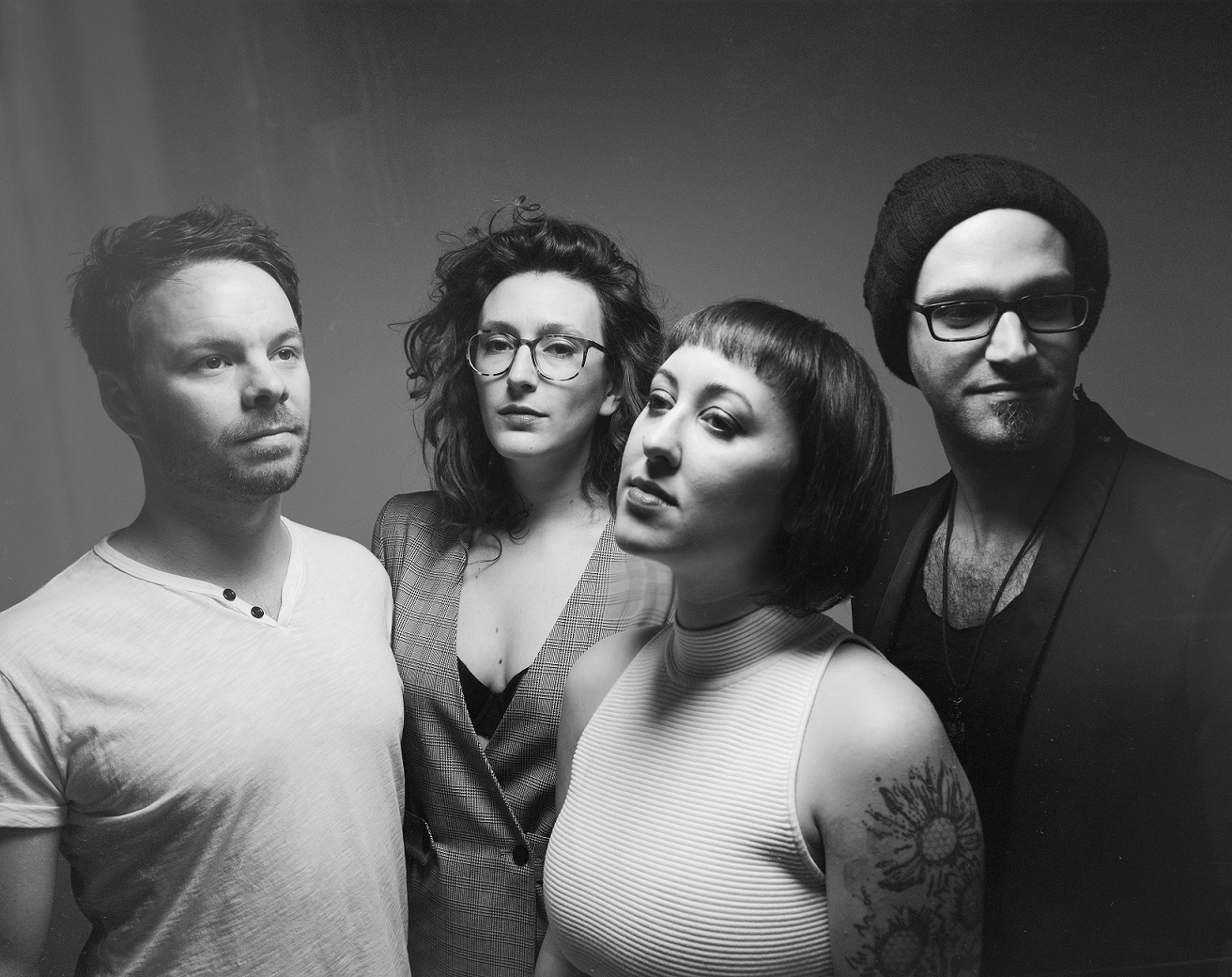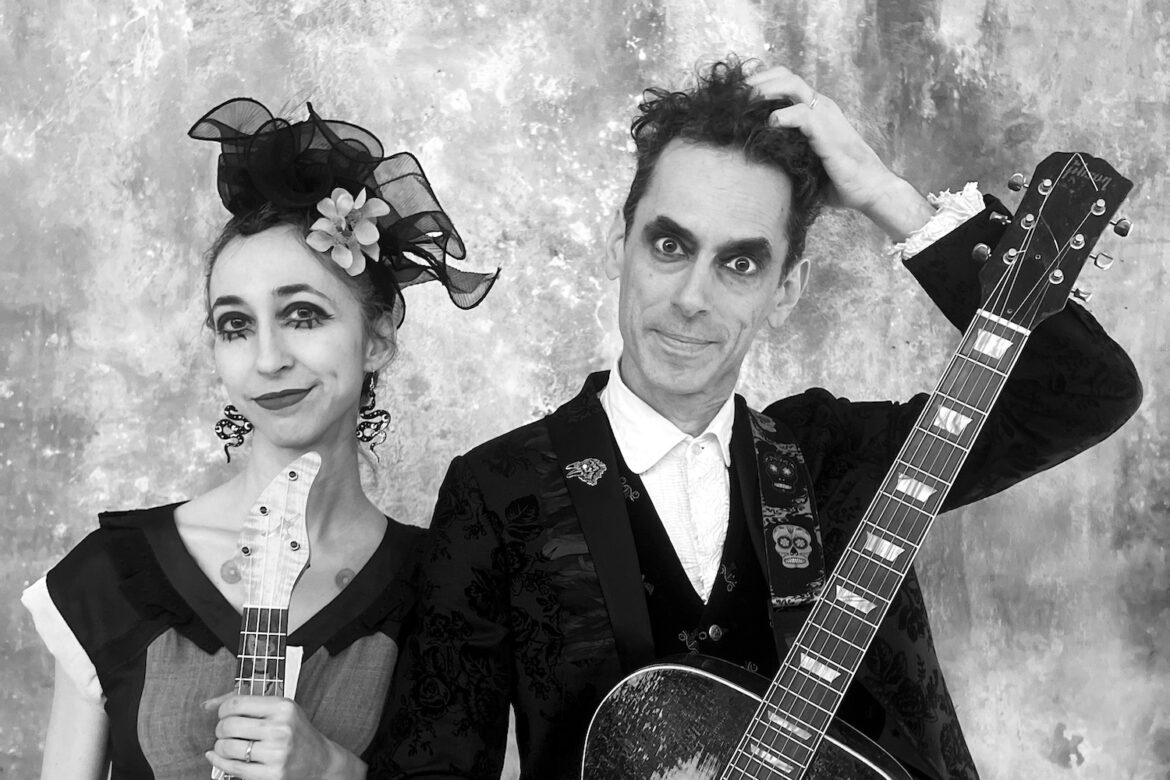
More than a decade into their creative partnership, Brooklyn-based goth-folk duo Charming Disaster are still finding new places to play, new stories to tell, and unexpected ways to keep their strange little universe growing.
Stream: “Haunted Lighthouse” – Charming Disaster
Mortality is also what makes this life precious. This is all we have. These are the only moments we get, and isn’t it beautiful?
* * *
Ellia Bisker and Jeff Morris have an effortless rapport.
They joke, laugh and finish each other’s sentences the same way they trade verses in their songs. After more than a decade of creating side by side, the ease between them feels like an extension of the music they make together.
Their story began in a New York City bar. Morris was performing with his former band Kotorino when Bisker, who had her own project called Sweet Soubrette, caught the set. She had never asked a stranger to collaborate before, but something about what he was doing felt immediately familiar. She suggested they write songs together.
There is a certain synchronicity to their origin story, especially for two artists who would become fascinated with coincidence, superstition and unseen connections. That invitation became Charming Disaster, a goth-folk duo whose earliest songs were passed back and forth almost like correspondence. Today, they write side by side, following “what if?” wherever it leads.
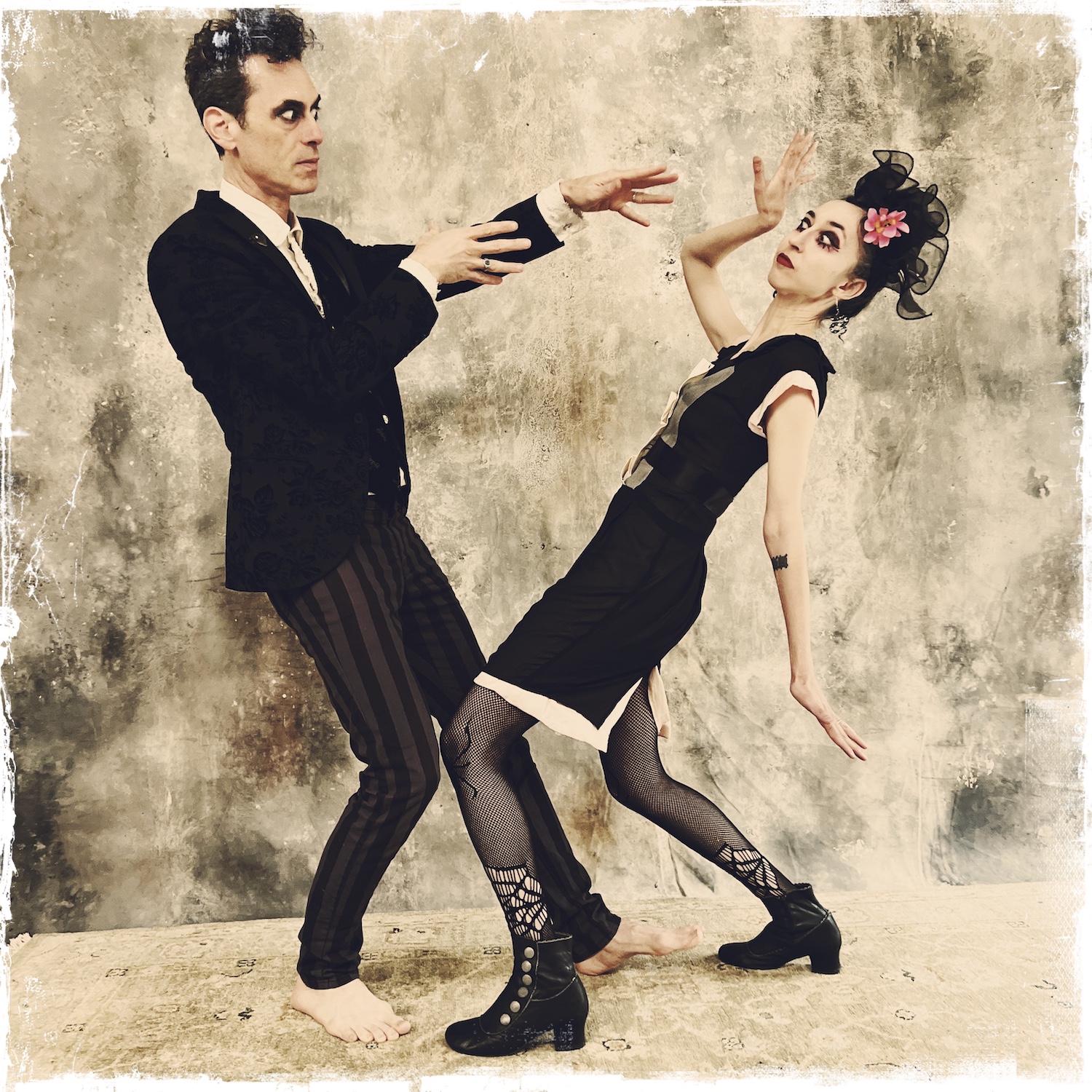
They have taken a similarly unconventional approach to performing. When traditional venues were difficult to book, Bisker and Morris sought out other possibilities, eventually playing caves, museums and other unexpected spaces.
What began as a practical solution became part of Charming Disaster’s identity and speaks to the persistence that has kept them going.
Their songs draw from folklore, science, murder ballads, strange histories and mortality. Death comes up often, though Morris sees contemplating it as a way of appreciating being alive. Knowing our time is finite can make even the ordinary parts of life feel precious. Their 2025 album The Double explores nature, doppelgängers, altered realities and the sense that another version of the world may be waiting just out of sight.
Atwood Magazine caught up with Charming Disaster to talk about The Double, their community of “lovely weirdos,” their creative partnership and the strange places their music has taken them. We also discussed tarot, mortality, their upcoming tour, the biblical story of King Solomon and why sometimes the best creative solution is simply to “cut the baby in half.”
— —
:: stream/purchase The Double here ::
:: connect with Charming Disaster here ::
— —
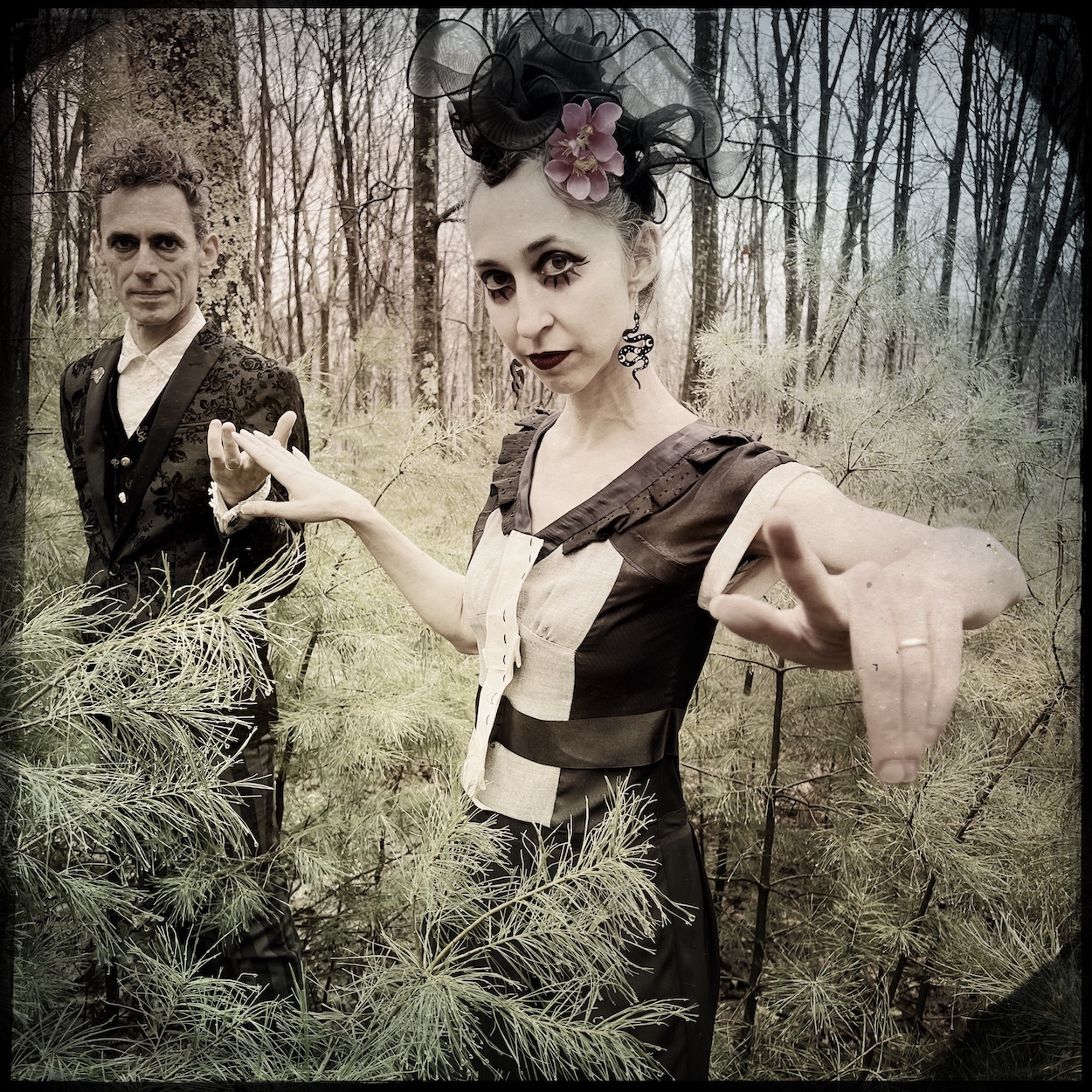
A CONVERSATION WITH CHARMING DISASTER
Atwood Magazine: For people just learning about your music from this interview, what do you want them to know about this project?
Ellia Bisker: Charming Disaster is a goth-folk duo. Goth-folk is the genre we use when pressed to provide a genre. “Goth” because of the subject matter we like to explore, and “folk” because we’re making largely acoustic music with real instruments that move real air around a real space, with close harmonies. If you like spooky stuff or nerdy stuff, or some combination of those things, we might be your band.
Jeff Morris: With a touch of humor.
Bisker: A whimsical humor.
Morris: Our live show is very engaging, interactive, and theatrical. Our recordings have other musicians playing on them. They have full, lush arrangements. So the live performance is different from the recordings, but it’s a very cool experience. We like to think that each of our songs creates a little universe to be in. Our shows and recordings create universes where we can all be strange together.
How did you meet exactly?
Morris: We met in a bar.
Bisker: Like you do.
Morris: My band at the time was called Kotorino. It was a large band. I think seven to nine people. I was the bandleader and songwriter, and we were playing at Barbès in Park Slope, Brooklyn. After our set, some person came up to me and started talking to me.
Bisker: Yeah. Barbès was my local bar, and I happened to go there that night. I saw there was a band setting up, and I also had a large band at the time. My band was called Sweet Soubrette. I thought, “Oh, I wonder if this is people I know.” I peeked into the back room, and it didn’t seem to be anybody I knew, but I caught the set and really, really liked it. I felt a kind of kinship with the songwriting, so I struck up a conversation with the band afterward to see if maybe we wanted to play a show together sometime.
Morris: That’s what I said. I was like, “Oh, great. You have a large band. That’s really complicated. Lots of people in it. We should play a show together. We can do a double bill.” I had all these ideas about how we could do it. And Ellia just stopped me right there. She said, “Well, that’s fine, but what we should really do is write songs together!” I was like, “Oh… sure. Yeah. Cool.”
Bisker: Yeah, not a thing that I’d ever suggested to anybody before, let alone a stranger I’d just met. But I felt like I understood what Jeff was doing. We were speaking a similar language. Then he came to see my band a few weeks later, and afterward he said, “Oh… I see.” We had our first band meeting the next day, and then it was like a snowball rolling down a hill. It gained momentum quickly and very soon consumed our other projects…
Morris: …and our lives.
Bisker: And here we are.
You recently funded Belladonna Melodrama, the graphic novella, which adapts your song into a 24-page comic book. What was it like translating the narrative and atmosphere?
Bisker: Well, we were working with a comic artist named Joe Haines, who approached us last year with the idea to do this adaptation. Joe really drove that creative process, although we were pretty hands-on in terms of helping stay focused on the project.
Morris: Yeah, helping kind of stay focused on the project. But it was super cool to see his interpretations of things and see how he saw it in his brain. He would come to us with a couple of ideas, and we’d say, “Oh, we like this one better.” But, as Ellia said, it was mostly his creative baby on that one, and it was just so cool to see it kind of in 2D.
Bisker: Yeah. We weighed in on things. We had opinions, and we did some quality control. Occasionally we’d say, “Oh, that panel doesn’t read,” or, “It doesn’t communicate the idea that’s coming across.” But, for the most part, we just got to enjoy seeing another artist interpret our work through their own vision.
It depicts your own theatrical personas, right?
Morris: I would say so.
Bisker: A little bit. That song involves two characters who are named in the song as Isabella and Alexander. So it’s very much like a stage play, almost, with two characters. But those characters look an awful lot like us.
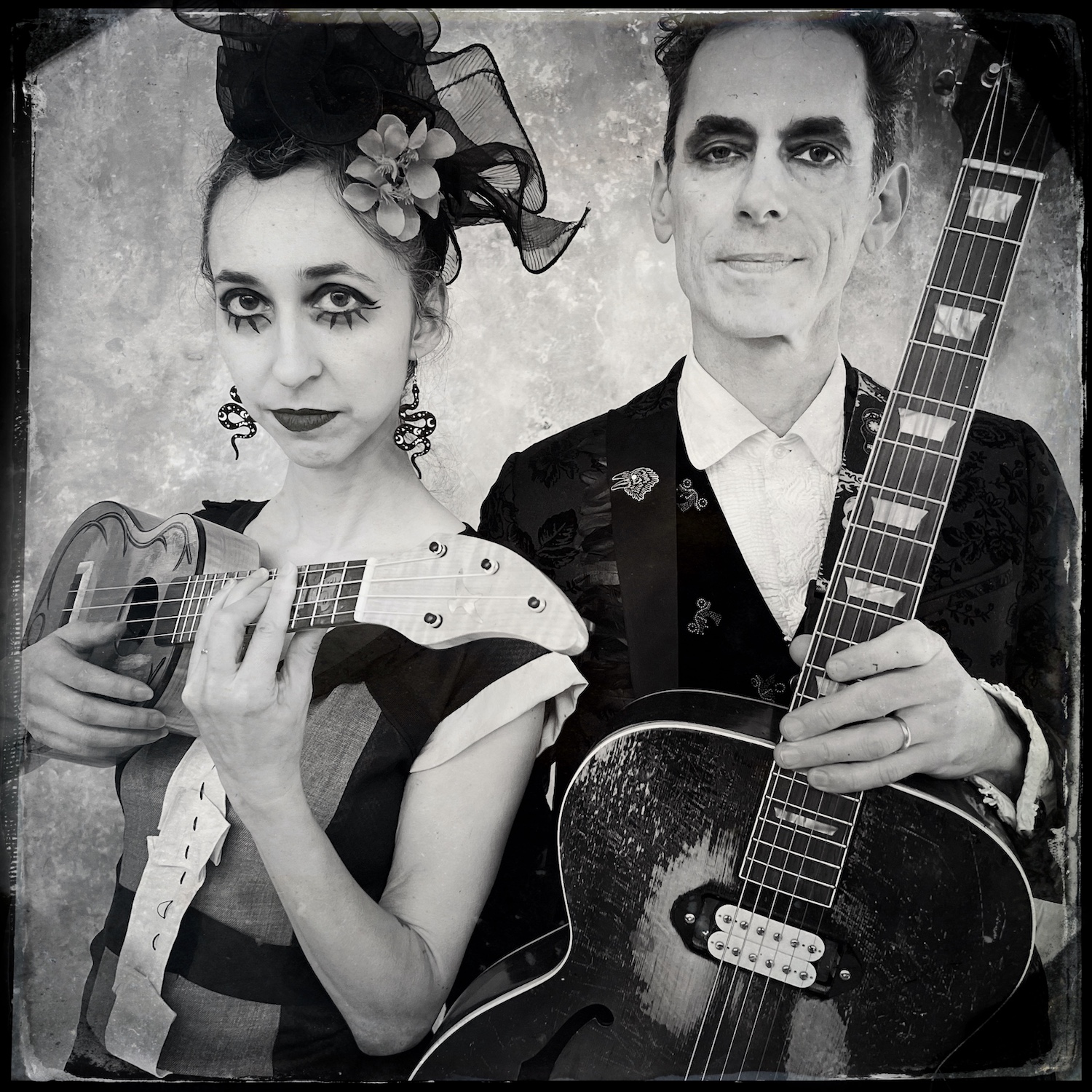
You’ve spent more than a decade writing together. How has your creative relationship changed since the first song? What do you understand about each other’s instincts now that you couldn’t have known in the beginning?
Bisker: It’s evolved a lot, as you can imagine. We’re actually about to celebrate our 14th band anniversary next month.
Morris: Well, in the beginning, when we first started writing together, we didn’t know each other at all. So we had these writing prompts to kind of get us started in ways that we could become characters and tell stories from these characters’ points of view. That was very exciting.
Bisker: Our writing process then was very much like a pen-pal style, epistolary process. One of us would start something, write and record a little bit of it, and send it to the other. So you’d get this very exciting email in your inbox with an attachment that was the next verse of the song. It was almost like a relay race, or an exquisite corpse, or a pen-pal sort of thing. Our first album was largely written that way.
Morris: Yeah, and there was very little adjusting of what the other person had done. It was like, “Okay, that’s yours.” Very hands-off with each other, almost out of politeness.
Bisker: I remember saying, “Oh, there’s a lot of syllables in that line.”
Morris: And you’d say, “But it’s great. We’ll just stick them all in.”
Bisker: Yeah, yeah. Nowadays, it’s much more that we write side by side. One of us will have an idea, either a subject idea or a musical idea, but just a germ of something. We’ll show the other person and ask, “Is this a thing? Is this a song? Is this something?” We spend a lot of time sitting side by side at the computer or with our instruments, just trying a bunch of things. It’s nice because there’s a quality-control element to it. If something’s not working, the other person will catch it or improve it. We still write songs alone, but a song that I might have gotten frustrated with writing alone, if the chord progression wasn’t quite doing it for me, I can bring it to Jeff, and we’ll figure it out together. He’ll throw different chords on it or whatever.
Morris: I really enjoy the collaborative process with Ellia, or just with her, because I don’t write songs with anyone else. If I have an idea for a song, I’ll start it, but I almost won’t finish it on purpose because I think, “Oh, I’ll get Ellia in on this, and we can work on it together and make it better.” I enjoy that process so much that I want to save it for us to collaborate on.
Bisker: There’s a real sense of play, the way kids play, especially the way kids play pretend. The question we ask the most is, “What if?” “What if we went to the minor here?” “What if we did it twice as fast?” “What if we did it half as fast?” We spend a lot of time experimenting and exploring. The other thing we say a lot is, “Let’s cut the baby in half.” Are you familiar with the Bible story about King Solomon and the baby?
I don’t think so?
Bisker: Okay. The story is that two women are fighting over a baby, and each claims it’s hers. King Solomon suggests, “We’ll cut the baby in half, and each of you can have half the baby.” The woman who’s not the real mother says, “That’s fine.” The real mother says, “Never. Don’t cut the baby in half. Better to give the baby to the other woman than to harm the child.” So the thing we like to say is, “Let’s cut the baby in half,” which is our shorthand for, “We both have good ideas, so let’s do both of them.” It’s actually the opposite message of the biblical tale, but that’s our thing.
Morris: Just cut the baby in half. Two bass lines? Sure.
Bisker: Two good ideas? We’ll do them at the same time.
Morris: One thing that has developed over time is trust. I think that’s obvious when we talk about it, but I really trust Ellia. It’s about being vulnerable and being able to trust, and that has developed a lot over these years.
Bisker: You also have to be slightly detached from your own ideas. You have to be willing for somebody else to interfere with something you came up with. That’s an important part of the collaborative process, too. It goes along with the trust.
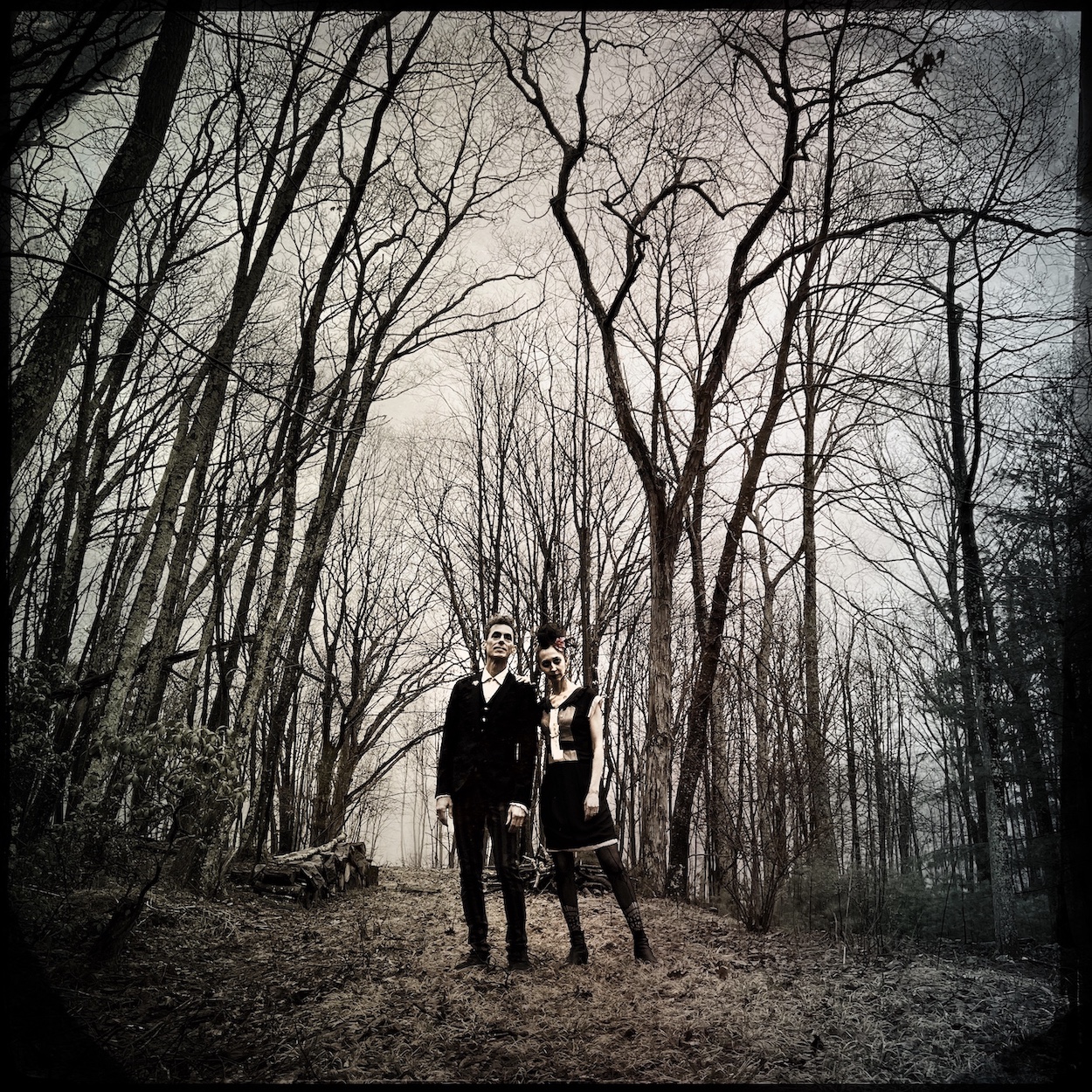
What was your last tour like?
Bisker: Yeah. We were last on tour in March. I guess we had some dates through early April. We would have been on tour later into the spring, except I’ve had some health stuff going on. So we’ve actually been off the road for the last couple of months. The West Coast tour was fantastic. It was among our best tours ever. Oh my gosh, I love going out to the West Coast.
Morris: The West Coast is special.
Bisker: I say that about every place we go, really. We love being on tour. We love showing up somewhere and being in a room with people. We love connecting face-to-face.
Morris: We played new venues, saw old friends, and met new people. As far as driving goes, I’m the designated driver. I love driving on the West Coast. Driving from L.A. to Seattle is so beautiful. The scenery is incredible. There’s the ocean, forests, mountains.
Bisker: The shows were wonderful, and we love our fans. We’re extremely lucky to have a really wonderful community of fans who are kind and curious. We’ve got a lot of lovely weirdos in our community, and it’s really nice to create a space where those people can come together, connect with us, and connect with each other. People give us weird gifts on the road. We played our first show in Fresno, and there was a teenager who drove all the way from San Francisco with their mom because our San Francisco show wasn’t all ages, so they couldn’t come in their hometown. They drove several hours just to see us in Fresno and gave us a drawing they’d made of us. We were holding the moon with these long fingers. It was so cool. We have many experiences like that, where we get to connect face-to-face with people who’ve connected with our music. We just feel so lucky to travel, meet people, and experience both the beautiful places and even the less beautiful ones.
And Ellia, you had kind of a full-circle moment with your English teacher, right?
Bisker: That was amazing! When I was a senior in high school, I was the editor of the school literary magazine, and the faculty advisor was Mr. Dollard. He also taught creative writing. Senior year, I really wanted to take creative writing, but everybody kept telling me, “You have to take AP English.” I was a big English nerd, if that’s not obvious. My guidance counselor and everyone else kept saying, “You have to take AP English.” I finally said, “Fine, but can I also take creative writing?” They said, “Nobody takes two English classes.” I asked again, “Okay… but can I?” And Mr. Dollard made it happen, basically. He was really a mentor to me. He was also responsible for an event called the Coffee House, which was a poetry-reading event. It was where I had my first experience performing my own original work in front of a room full of people. It was also the first time I experienced the exquisite pleasure of a room full of noisy people suddenly going quiet because you’re performing.
That moment, when the entire cafeteria became silent, was a core moment for me. It was an early red flag that I was probably going to be doing this. So, we were in Rochester, and this man appears while we’re getting ready to go onstage. He looked sort of like an elderly leprechaun. He said, “Ellia!” I thought, “Who is this?” Then he said, “It’s Phil Dollard.” I said, “Oh my God.” It was my high school English teacher. He had moved to Rochester to care for his elderly parents, stayed there, retired, and now occasionally performs his own music at that very venue. He stood in the front row for our whole set. It was surreal. Afterward, I got to tell him that he was partly responsible for what he had just witnessed.
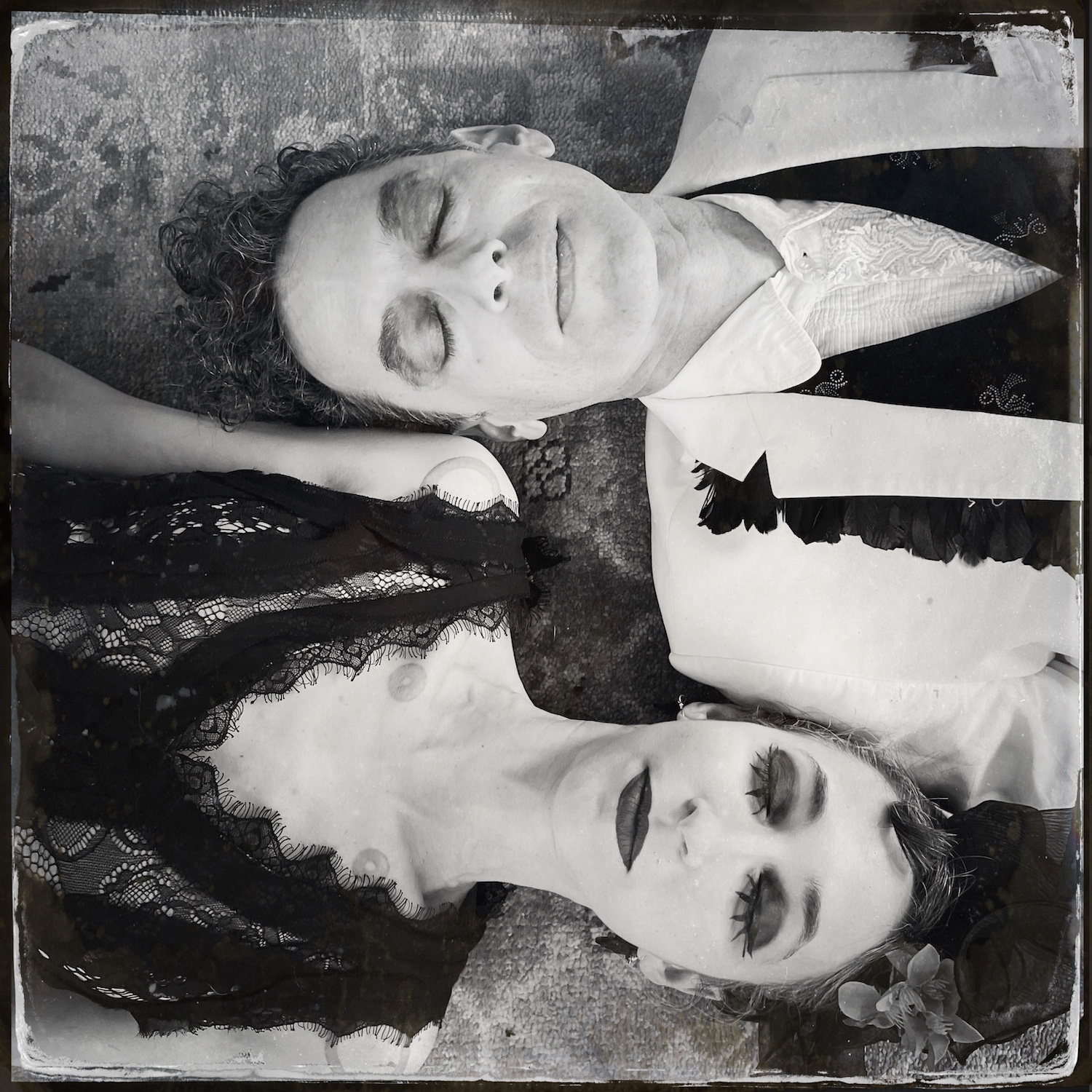
You’ve performed everywhere from traditional venues to caves, cemeteries, sideshows, and other unusual performance spaces. How do those environments change the way a story is received by an audience? And what draws you to those spaces?
Morris: Well, because we’re just two people and we have our own sound equipment, we’re pretty self-sufficient, and it opens up a lot of possibilities as far as performance spaces. We can play in a bookstore…
Bisker: …or a museum after hours. Somebody’s living room. A taxidermy shop.
Morris: We can go to a taxidermy shop and say, “I know you’ve never had shows here, but would you be interested? We can set up over here in the corner. We have everything we need, and we can bring people into your space.”
Bisker: Sometimes that comes out of necessity because we’re striking out trying to book traditional venues. So we reach out to cultural spaces, oddity shops, or other places that have an affinity with the kind of subject matter that we like to write about. Any bookstore, for example, is a perfect fit. Often it works out really well because it’s a more intimate environment where there’s less separation between the audience and the performers.
Morris: Sometimes we get chosen by places that are a little different. They’ll reach out and say, “Oh, you’d love to play here. You should play here.” That’s how we ended up playing in a cave. The cave actually has a music series, and they invited us. It had incredible acoustics, as you can imagine. It was very different because we weren’t performing with microphones right in front of our faces. We had the freedom to walk around more. You could walk through the audience and almost serenade them a little more. We do a little of that anyway, but there it felt especially direct in a good way.
Bisker: The cave is the Widow Jane Mine in Rosendale, New York. It’s a former cement mine. They used to cut limestone out of the hill, and some of it was underground. Now what remains is this enormous cave space. Because limestone is porous, when the mine was active they had to pump water out of the rock. Now that it’s no longer an active mine, they don’t do that anymore, so there’s what looks like a huge underground lake directly behind where the bands perform. It’s an incredibly creepy experience to stand there with your back to this creepy subterranean lake while performing songs about the underworld, hoping a giant tentacle isn’t about to emerge and suck you down.
Morris: Because the limestone is porous, it had rained a couple of days earlier, and it takes a while for the moisture to come through. So it was actually raining inside the mine. It was perfectly clear outside, but little drops of water kept falling on us. We didn’t use our electric gear in there, which forced us to sing directly to folks.
Bisker: I think it was a really memorable experience for the audience. It was challenging acoustically, but I think it made for an unforgettable experience.
Morris: Yeah, and it gave us an opportunity to sing all of our underworld songs.
When did each of you individually get into music?
Morris: I got an acoustic guitar for my fourteenth birthday. My mom plays guitar, and it was very exciting to get my own instrument. I took lessons and very quickly started identifying myself as a musician. That became part of who I was. It’s helped guide my path through life ever since. Whenever I haven’t known what to do, I’ve just focused on music, and that has led me from one thing to the next. It’s always been a part of me, who I am, and how I identify. I’ve picked up some piano and a few other instruments along the way, but I’ve always identified that way.
Bisker: I was always very musical. I always wrote songs, but I identified as a writer through college and afterward. I was in my early twenties when I started my first band. It was sort of a jokey performance-art project. I didn’t play an instrument. I just wrote the songs, sang them, and hammed it up. When that band imploded, as bands tend to do after about a year, I was really bereft without having a band. Someone I met gave me a ukulele, and I quickly taught myself how to play. It completely transformed my life because, for the first time, I could write a song and perform it without needing anyone else. That was huge. I’d taken piano lessons as a kid and had some singing lessons here and there, but I was never really serious about it or thought of myself as a musician until I picked up the ukulele. More recently, I’ve started playing bass a little bit.
Morris: More than a little bit.
Bisker: Right. I feel really lucky to have worked with and played alongside so many excellent musicians over the years. I’ve learned so much from them. Now I feel like a real musician. I have those skills now, but I feel very lucky that I got to acquire them kind of as a late bloomer.
How did your quarantine livestream series begin?
Bisker: It was March of 2020. We had a million tour dates scheduled for that spring. The last thing we had done in 2019 was open for the band Rasputina, which felt like a huge break for us. It was pretty amazing to be on tour with them every night. We were heading into 2020 thinking, “Great! We’re going into 2020 strong. We’ve got all these tour dates lined up.” Then March 2020 happened. As New York was shutting down, we thought, “Well… what can we do?” We decided to do a little virtual concert just so we could be together with people virtually. A lot of our fans tuned in, and a lot of the fans we’d made on the Rasputina tour tuned in too.
Morris: Luckily, we’d just started renting this rehearsal space. We weren’t even sure how much we’d use it. Then the pandemic hit, and suddenly we had a place to come and do our livestreams.
Bisker: After the first livestream, so many people tuned in, and it became such a comfort to us and, it seemed, to them. In the livestreams, there’s an active comment feed where people can comment and interact. People were connecting through the live chat while we were performing. We thought, “We’ll just do these every week until the pandemic is over. How long could that be?” So we did them every week for months. Later we took a break, then started them up again. As things reopened, we kept doing them, though not every week anymore. It became such a great vehicle for connecting with people in places where we would never get to tour.
Morris: And to collaborate with people we never would have performed with otherwise. It wasn’t just musicians. It kind of opened it up from playing with another band to having someone do a lecture or having someone talk about cocktails.
Bisker: We’d meet all these fascinating people while traveling and think, “We should invite them onto the livestream.” We once had paleontologists we met in Cleveland come on and give a presentation about dinosaurs. It was fantastic. It became a place where we could share all these interesting people we’d met with our audience.
We made the livestreams donation-based, similar to the house concerts we’ve done over the years. It’s a nice model because it’s accessible to people who are financially stressed while still allowing others to support us at a higher level. The livestreams helped us in every possible way. They helped us spiritually and financially during a time when we couldn’t tour. They also feel much more informal than a concert. We talk a lot. There’s a lot of silliness. Sometimes we’ll do a science experiment. Sometimes we’ll get the giggles. We’ll do something completely weird.
Morris: People can make requests. Over time, the community became vibrant all on its own.
Bisker: People became friends with each other outside the livestreams. We still do them today. If we’re on tour and have an off day, we’ll often do a livestream from wherever we happen to be. When we’re home, we do them from here. We just did one a couple of weeks ago, and we’ll do another one soon. It’s nice to stay connected.
Can you talk a little bit about the concept behind The Double? It dives into doppelgängers, time travel, and blurring the lines of reality. What sparked your fascination with the concept of the double?
Bisker: It’s funny because the title of the album came to us and really asserted itself and stuck. We had to sort of decipher it ourselves. The album really wanted to be called The Double, and we had to figure out why that was and what the thread was that connected everything under that concept.
Morris: When we start writing, we have songs that we’re constantly working on, so they kind of collect. Eventually it’s like, “Oh, we have enough for an album.”
Bisker: We gather them together and look at them and ask, “What is this? What is this, exactly?” We had some nature songs. There are a lot of songs about trees and nature. There’s “Green Things” and “Black Locust.” Those are both tree songs. There are magical ritual songs like “Vitriol,” “Scavengers,” and “New Moon.” There’s also this running theme of two people facing some kind of peril.
Morris: That’s every album, right?
Bisker: Yeah. With The Double, we realized there was this world and the other world. There’s the ordinary, everyday world, and then there’s this heightened reality that you find through some kind of portal. Maybe the album itself is that portal. The songs represent different approaches to getting there.
Morris: Somewhere that doesn’t seem apparent, it could be alternate timelines, like “Time Machine,” or a haunted lighthouse. These are stories, but they’re stories that exist just on the other side of our reality.
Bisker: There’s also the two of us as each other’s double.
Morris: And, of course, we had to make it a double album on vinyl because—
Bisker: You can’t have an album called The Double and not make it a double album!
In a culture that often tries to avoid or ignore mortality, what do you think audiences find comforting or meaningful in your death narratives?
Morris: I think there’s talking about death, and there’s a humor in our work. It’s kind of tongue-in-cheek. There’s a lot of metal bands that talk about death where it can be frightening.
Bisker: We’re more lighthearted about it, while also not being afraid to contemplate death. We’re interested in the Victorians, not just because they had good fashion sense, but because of the way they incorporated death and mortality into everyday life. Death was simply more present then. Everybody seemed to be mourning someone, and people had to deal with it.
Morris: Mortality is also what makes this life precious. This is all we have. These are the only moments we get, and isn’t it beautiful? If you were told you were going to die tomorrow, and then someone suddenly said, “Actually, you’re going to live,” and you get a reprieve, you’d be overwhelmed with gratitude. Every ordinary little thing would suddenly feel extraordinary. You’d think, “I love this pen. I love this paperclip. I love this backache because I’m alive to experience it.” That’s a very life-affirming perspective. It’s not morbid. It’s really about life. It’s actually a more Buddhist perspective. Everything passes away. This body will die. That impermanence makes life more special and more vibrant.
Bisker: It’s actually a pretty frequent occurrence that after shows people come up to us and share their own stories about loss. Especially with our song “Ghost Story.” More than once, someone has told us, “I lost someone I loved, and I still feel like they’re with me. That song really speaks to me.” Even though we wrote that song in a spirit of playfulness, I think we tapped into something that really matters to people.
You play murder ballads. What draws you to that tradition?
Morris: I think the storytelling and the ballad aspect of it, the darkness, sure, the murder part. There’s also a certain relish in the grim and gory side of things that murder ballads embrace. The storytelling, the multiple verses, the way the story unfolds. I just love a good ballad. The fact that it has murder in it is kind of fun.
Bisker: Traditionally, murder ballads were almost like reporting the news of the day. It’s a little like people’s fascination with true crime now. Murder ballads in their own time were basically the true crime podcasts of their time. People have always liked the dark stories.
You often use a custom card deck drawn by the audience to generate your live set list on the spot. Where did that idea come from?
Bisker: We’ve used a traditional tarot deck in our own creative process for a long time. When we’re doing an artist residency or retreat, we’ll often draw a card to give us a lens through which to look at that day’s work. Eventually we started applying that idea to our shows. We created a concordance between the Major Arcana and our songs. So we knew, if someone drew The High Priestess, we’d play “Black Snake.” Over time we wrote more songs and kept adding them to the deck. Eventually we ran out of cards that felt meaningful for the new songs, and we thought, “Wouldn’t it be nice to create our own custom deck that was actually designed to symbolize the songs?” When we launched the Kickstarter for Supernatural History, we realized that was the perfect time to make it happen. Creating a deck is a huge undertaking. Neither of us is really a visual artist, so although we each designed a couple of cards, we knew that neither one of us was up to the task of illustrating an entire deck ourselves. We also know a lot of wonderful artists, and it felt like a great opportunity to collaborate. It involved a lot of project management, coordinating artists, paying people, and printing the decks, which is expensive. So it became part of the album’s production project. In the end, it’s actually not a tarot deck. It’s an oracle deck, which means that the cards and archetypes are our own design. We have a card called The Showgirl and a card called The Secretary. Now we have seventy-two cards created by three dozen artists from around the world, and we’re already on the second printing.
Morris: Then, when we did the Kickstarter for The Double, we made expansion cards for all the new songs because we needed more cards again. I guess we’ll just keep doing that forever until the deck gets bigger and bigger. Eventually we’ll probably have to make an entirely new deck.
Do people ever think you are together, romantically speaking?
Morris: Yes, often.
Bisker: Yeah, I think because we’re usually together in a place doing a thing. We spend a lot of time together, and we travel together because we’re a band.
Morris: But we are married to different people.
Bisker: We are married to different people.
Morris: That’s the secret of our success.
Bisker: Indeed.
How do your significant others feel about this creative bond that you have? Are they very supportive?
Morris: Yes. They’re artists as well, and they understand.
Bisker: They’re very supportive. We also have creative relationships with our spouses, so it’s not like all the creative energy is just here. It’s not all the creative juices here. Eighty percent?
Morris: Maybe eighty percent.
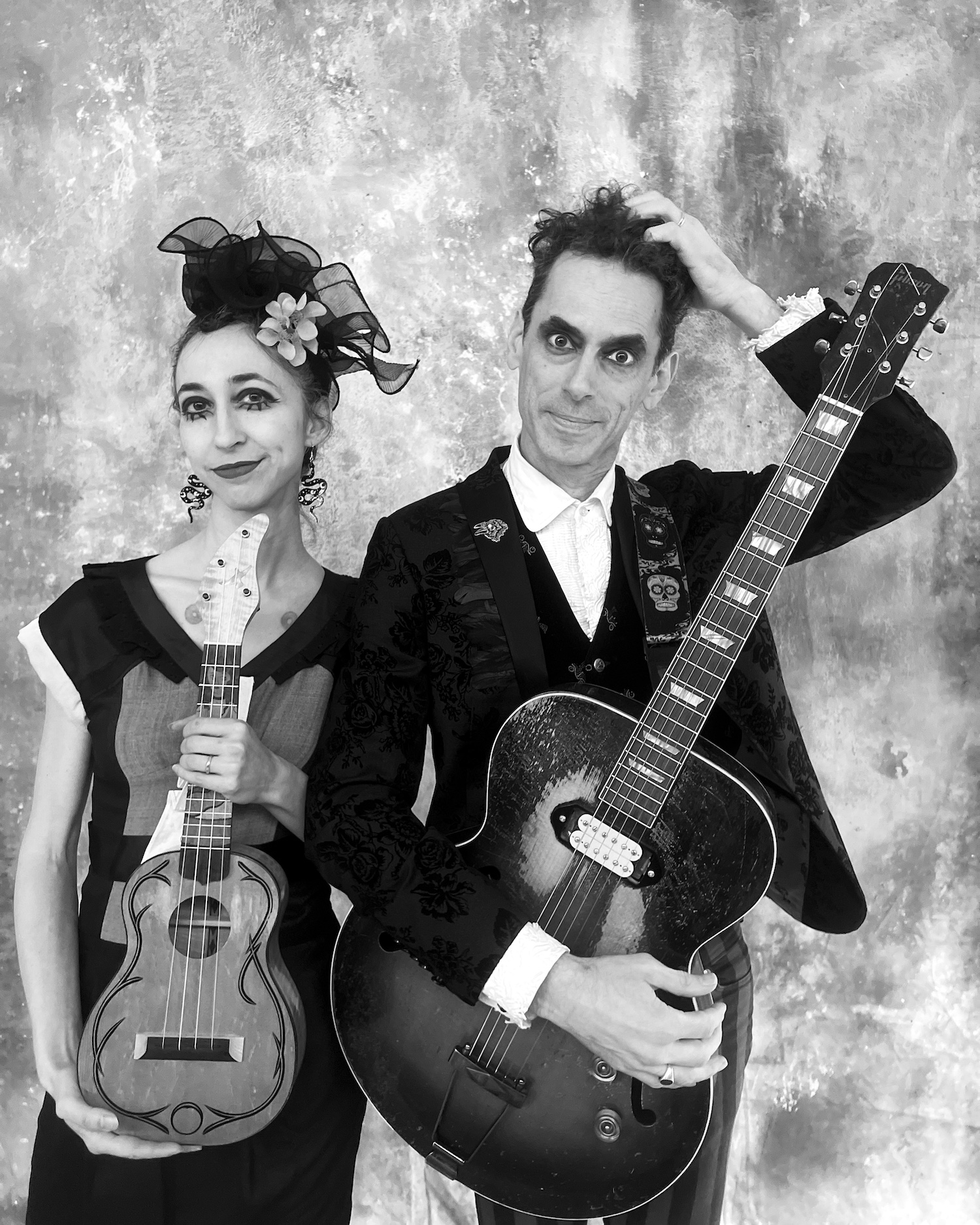
What are some of the influences behind the band?
Bisker: A lot of books.
Morris: Yeah, a lot of books.
Bisker: Authors that we read. Myths and fairy tales. Some authors we love include Kelly Link, Joan Aiken, and Edward Gorey. Visual artists, too. Musically, there’s PJ Harvey and Led Zeppelin. Led Zeppelin is a big one.
Morris: Yeah, it’s a big influence.
Bisker: I know it seems like a weird influence, but it’s true. Joanna Newsom is a big musical hero. I think we’re always trying to stay curious and open to being influenced by the things we’re feeding ourselves with, artistically speaking. You read a book about trees that’s interesting, and suddenly you might start writing songs about trees.
Morris: We went to see the Leonora Carrington exhibit, which is an artist that we both enjoy very much, in New York.
Bisker: Yeah. We try to do cultural field trips to feed the creative source a bit.
Looking back at your earliest material, what themes have remained constant and what parts have changed?
Morris: Some of the things that have changed, as we discussed before, are the songwriting style. It went from being a back-and-forth, a relay race, to where we’re actually sitting down side by side and working together on a project. But everything else has remained the same.
Bisker: I mean, we have certain interests that we keep circling back to, witch things, like seances, and the permeable veil between this world and some other kind of world. We’re interested in a specific time period, not exclusively, but we do have a strong interest in the late nineteenth and early twentieth centuries. There were so many scientific discoveries and artistic and literary movements during that period. It was a time when science and what we think of now as magic or the occult were harder to distinguish from each other, and that’s interesting to us. During that time there was also Prohibition, and there were all these scientific discoveries happening. We do return again and again to that historical period for inspiration.
Morris: I would say we’ve allowed ourselves to become more oblique or abstract. We’ve allowed ourselves to step away from the very obvious narratives of a storytelling ballad into something that’s a little more obscure, more about a feeling. Rather than, “This happened, and then this happened, and then this person did this,” it’s become more about creating an atmosphere. I think it’s gone from telling stories about the occult to becoming actual practitioners.
Bisker: That’s the danger of telling stories about the occult. We can give you some examples of song subjects that will be on the next album, what we’re working on now. We have a song about scurvy, which is very much in our wheelhouse. It seems like science, but it’s also about healing and trauma, while also specifically being about scurvy. We have a song about camouflage in the animal kingdom. Another science song, but it’s kind of creepy and ominous. We have a folklore-inspired song about a witch who hides her heart in a series of…
Morris: Yeah, definitely not autobiographical.
Bisker: We also have a song inspired by The Cabinet of Dr. Caligari about a guy under hypnosis who has to do terrible things. Just regular things for us. I feel like all of these are things we could have written songs about at any point in our history.
Morris: That’s true.
[both laugh]
Bisker: Although we do have a song about the body and its decay, and that does seem like a very “right now” thing. As our bodies fall apart. That one is more autobiographical. Jeff also gave me a synthesizer for my birthday, so we need to start exploring some synthesizer stuff.
What album would you recommend for somebody stepping into the world of Charming Disaster for the first time?
Bisker: Spells + Rituals is a pretty good place to start.
Morris: And/or Super Natural History.
Bisker: I agree. Those are the two I would give people as a “come into our world” starting point, and then expand from there.
What have been some of your favorite music videos that you’ve done over the years together?
Morris: The current one, the one that’s out now, is my current favorite.
Bisker: We just released “Haunted Lighthouse” a couple of weeks ago. It was a full production with a full film crew and many extras. It’s in black and white, and it looks beautiful. I think it’s our most artistically ambitious video to date. It also has some good physical comedy in it.
What’s next for Charming Disaster?
Morris: We are excited to be headed back on tour this September, so check out www.charmingdisaster.com for dates, locations, and tickets.
— —
:: stream/purchase The Double here ::
:: connect with Charming Disaster here ::
— —
— — — —
Connect to Charming Disaster on
Facebook, 𝕏, TikTok, Instagram
Discover new music on Atwood Magazine
© Kim Meinelt
 © Kim Meinelt
:: Stream Charming Disaster ::