Atwood Magazine’s writers dive into Maya Hawke’s intimate and inventive fourth album ‘MAITREYA CORSO,’ a poetic folk portrait of love tested by fear and imperfection – unpacking its alter-ego storytelling, Hawke’s willingness to own her mistakes, and the difficult beauty of choosing connection without trying to control it.
Featured here are Atwood writers Ashley Littlefield, Emily Weatherhead, Jack Batt, Josh Weiner, and Olivia Martinez!
— —
To start, what is your relationship with Maya Hawke’s music?
Emily Weatherhead: I would say I’m a casual listener of Maya Hawke! I was introduced to her through her acting career, and the first song of hers I heard was “To Love a Boy.” Her writing style caught my attention; I’m intrigued by musicians who write like poets, and Hawke’s narrative style comes across as poetry in motion.
Olivia Martinez: I discovered Maya Hawke’s music through another artist, Samia, whose songs I listened to frequently in my late teens/early twenties. The two seemed to be friends and were sharing each other’s music on social media. I fell in love with Maya’s first singles “To Love a Boy” and “Stay Open.” I’ve listened to many of her releases since then, but still have songs I am unfamiliar with.
Jack Batt: “Luna Moth” was my introduction to Maya Hawke. I had known of Hawke from her acting career, and I was surprised at how sincere and lowkey her music was. When I realized that Christian Lee Hutson had writing credits on some of her songs, I did more of a deep dive into her discography. That said, MAITREYA CORSO is the first album of hers I’ve really gotten into.
Ashley Littlefield: Maya Hawke is a new artist for me. As I explored her discography, I was especially drawn to her acoustic tracks and the way she pushes beyond folk traditions. Her songwriting is honest and evocative, making each song feel like a small discovery. I’m glad to have found her music, even if it’s a bit late!
Josh Weiner: To be honest, I don’t have any relationship to Maya Hawke’s music because I haven’t listened to her sing yet. I only really know her from Stranger Things. But hey, she was good in that series, so I’m open-minded about seeing whether she is as good a singer as she is an actress.
What are your initial impressions and reactions to MAITREYA CORSO?
Emily: Initially, MAITREYA CORSO comes off as a very reflective album that takes life’s mundane moments and gives them intense emotional depth. There’s also a certain emotional dissonance between the lyrics and the instrumentals that underscore them. Some tracks, like “Bring Home My Man,” could sound like love songs if you weren’t paying attention to the words Hawke is singing.
Olivia: I find it interesting that Maya Hawke created an alter ego in order to write MAITREYA CORSO. As Emily mentioned, the album feels very reflective, as though Hawke has taken the time and space needed to gain a bird’s eye view of the situations she is singing about. This contrasts with her Chaos Angel character, who seemed more intensely reactive to her situations at hand. I also immediately gravitated towards the guitars and the distinct acoustic sound they were able to capture across the album.
Jack: I was so impressed by the album on my first listen. I think she’s found an interesting way to throw her hat into the indie singer-songwriter scene without sounding derivative. I was surprised by how much I liked the more spoken-word style tracks. I’m also a huge fan of Christian Lee Hutson, and I think they’re becoming quite the unstoppable writing duo, leaning on each other’s strengths without losing their own individual voices. My favorite singer-songwriter records are collaborative, and I always appreciate when an artist brings other people in to help them find their voice. I sometimes see comments online that put down songwriters who have multiple people credited in the writing, but I personally think it’s a sign of humility and dedication to the craft. I don’t think it’s a good thing to have a bunch of yes men in the writers room, and Hawke clearly doesn’t.
I’m also surprised to read that Emily doesn’t think “Bring Home My Man” is a love song! Personally, I’d argue that a lot of the songs on this album are about a deeply secure love. It reminds me a lot of Lucy Dacus’ Forever Is A Feeling, where both artists seem to be accepting the uncertainty that comes with healthy relationships. For instance, I think the line from Dacus’ record “nothing lasts forever, so let’s see how far we get, so when it comes my turn to lose you, I’ll have made the most of it” would fit onto Hawke’s album perfectly. The two could function as sister albums. In a sense, the love they’re both describing is almost more vulnerable and exposing than being in an unhealthy relationship, because it’s acknowledging the impermanence of love. On “Bring Home My Man,” Hawke is accepting that her partner will grow apart from her, sometimes want to leave, and feel lonely by her side, and she is still choosing him and trusting that he will come back around. While it would be nice to live in a world where love comes without hardship and uncertainty, that is frankly just a fantasy, and choosing to stay in spite of all of that is what actually creates a long-lasting relationship. I can’t think of anything that feels more honest and loving than that!
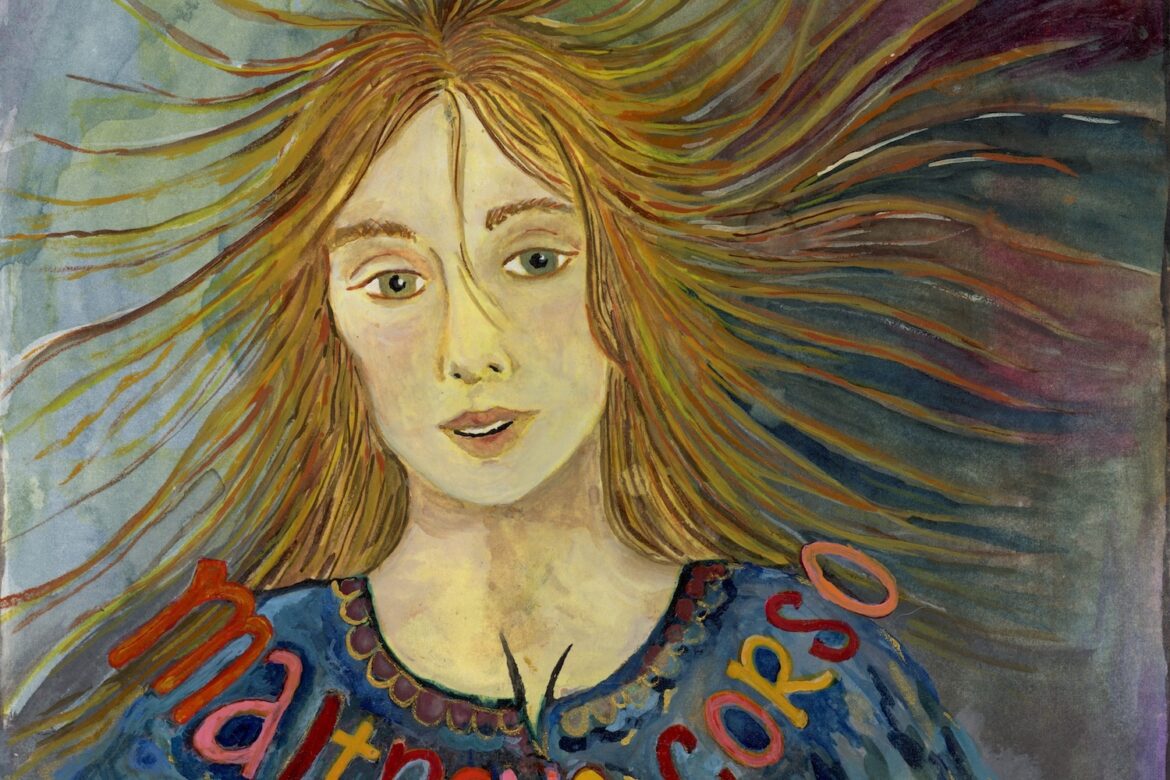
Ashley: The opening track immediately drew me in with its vivid narrative, especially the line “Riding the elevator down to reception.” Both the sound and the album art evoke the creative spirit of Joni Mitchell, but Maya Hawke’s style remains distinctly her own. Throughout MAITREYA CORSO, there are lush layers of acoustic instrumentation that invite me to really listen, not just to the lyrics, but also to the intricate melodies woven throughout her art.
Josh: Everyone else has put a lot on the floor, so I’ll just add that it’s a well-crafted and well-sung record, and I’m glad that I now know Maya Hawke from more places than just Stranger Things (which just concluded, after all).
How does this album compare to 2024’s Chaos Angel – what are the most striking similarities or differences?
Josh: I still need to listen to that one! But I’m glad we have four experienced Maya Hawke connoisseurs who are able to weigh in on this one effectively in my place.
Emily: Sonically, the albums are quite similar. Hawke has maintained her low-key, alternative instrumental sound and her signature narrative lyrics across both albums. Their main difference lies in their themes. While Chaos Angel also dealt with love and heartbreak, MAITREYA CORSO is much more cohesive and follows the turmoil of one specific relationship.
Olivia: I think Maya Hawke’s music has gotten more stylized with every album, MAITREYA CORSO being the most cohesive representation of her experimental side. I am glad to see her leaning into bolder production choices on these songs, the unique energy of which flow quite nicely together. I prefer the quirky sonic elements of songs like “Green Dragon” and “Devil You Know” to the folksy autotuned harmonies on the similarly quirky “Better” from Chaos Angel. Lyrically, this album feels much more detail-oriented, pulling small moments from what seem to be actual memories, as opposed to the more general emotional examinations and extended metaphors of her previous record.
Jack: I agree with Emily and Olivia’s comments that MAITREYA CORSO is much more well-rounded and cohesive despite the sonic similarities to her previous record. I also think she has clearly done a lot of work on herself, both emotionally and as a songwriter, and MAITREYA CORSO is the fruits of her labor.
Ashley: Chaos Angel features more sweeping melodies and opens with layered horns in the background on “Black Ice.” Throughout that album, Hawke’s vocal tone remains soft and gentle, culminating in a beautiful piano ballad for the title track, “Chaos Angel.” There’s more experimentation with vocal cadence and effects, especially in “Devil You Know,” where the chorus stands out for its stylistic choices. In comparison, MAITREYA CORSO builds on the production choices of Chaos Angel but introduces even more acoustic textures and a greater sense of intimacy, allowing Hawke’s songwriting and emotional delivery to take center stage.
Hawke teased MAITREYA CORSO with “Devil You Know,” Bring Home My Man,” and “Lioness.” Are these singles faithful representations of the album?
Emily: Yes, I think these singles represent the themes of the album well and prime you for what type of sound to expect. “Bring Home My Man” really captures the spirit of the album; the instrumentation is beautifully romantic, but the melancholic lyrics capture the sadness that underscores the entire album.
Olivia: I think “Bring Home My Man” acts as more of a bridge to her previous music, which was generally more mellow and sparse sonically. “Devil You Know” and “Lioness” are better representations of the bolder production choices on the album to come. I think all three were fitting singles to introduce the project.
Jack: Definitely. I think Hawke and her team did a great job at picking singles that each show a different slice of the musical range that is on this album. “Devil You Know” has an instantly catchy hook, “Bring Home My Mand” has razor sharp, melancholic writing, and “Lioness” has a bit of the witty humor that appears across the album.
Ashley: “Devil You Know” offers a different energy with its faster tempo and stands out as one of the strongest tracks on the album. Overall, these singles are strong representations of MAITREYA CORSO’s sound and themes. “Bring Home My Man” is a vivid ballad, painting imagery with lines like: “There is no end to knowing you, like blue bleeding into blue / The ocean pulls the sky in close, the horizon line, the highs and lows.” Hawke’s lyrics blend seamlessly with the melodies, mirroring the cohesive rhythm found throughout the singles and the album – blending like watercolor on a page, sharing the atmosphere across the record.
Josh: Yes, inasmuch as these songs got me thinking, “Oh nice, the girl who plays Robin in Stranger Things is also a good singer, as it turns out,” and then the rest of the album confirmed that initial impression for me.
Hawke was quoted saying, “This album generally is about learning to protect the precious from the poisonous. Protect creation from pride. Protect love from control. Protect collaboration from jealousy.” Does this description capture the spirit of these songs, and where do you hear or feel it most?
Emily: I think the final song, “Dream House,” really captures the spirit of this quote. It explores the idea of building something precious with someone you love, with lyrics like “What grows in the shade / Will thrive in the sunshine.” The most interesting part of this quote to me is “protect collaboration from jealousy.” Hawke co-wrote this album with her longtime collaborator (and now husband) Christian Lee Hutson, which adds a compelling depth to the intimacy and vulnerability of the lyrics.
Olivia: In “Lioness” we see Maya acknowledge the multitudes in her character. At this point in the album, she doesn’t seem to know what to do with these multitudes: “Tell me where to stand. Tell Me what to say. Tell me who I am.” By the time we get to “Maitreya and the Way Back,” Maya’s self-awareness has shifted to that of a more decisive nature. “Don’t wanna build you an alter ego that’ll last you a month or so,” she sings, recognizing the choice she has in how she approaches the relationships in her life and making the decision to treat them with care. To me, this feels like the epitome of protecting love from control.
Jack: I completely agree with Emily and Olivia’s comments. “What grows in the shade / Will thrive in the sunshine” is the exact kind of lyric that encapsulates the depth Hawke is referring to with that quote. It’s interesting, because Hawke isn’t trying to dismiss or get rid of things like jealousy, poison, control, and pride. Across the entire album, she acknowledges the difficult feelings that come up in relationships, and chooses to validate them without letting them run the show. My interpretation of that line from “Dream House” is that she’s actually showing some appreciation for these difficult emotions, acknowledging that her ability to work through them is what creates a solid enough foundation to enjoy the good times.
Ashley: I hear the description most often in “Bring Home My Man,” in the line “learning to protect the precious from the poisonous.” Especially throughout the song’s lyrics, there’s a strong sense of beauty and a pure approach to seeing a relationship without constraints. I hear this the most in the lyrics, “Kissing’s free, it’s all we’ve got, you touch me where time cannot.” It’s a real, raw confession about wanting authentic moments to be real and simple. Another track is in “Great Minds” – “Protect collaboration from jealousy”; the song holds true in the lyrics: “You say you see yourself in me / Sometimes great minds think differently.” The song explores the friction that may arise from accepting differences, showing how collaboration can grow stronger through that acceptance and with mutual partnership.
Josh: If I interpret this line as “you gotta overcome the bad stuff in life and focus on the good stuff while you can,” I guess I can see that in the chorus of the song “Devil You Know.” In this section of the song, Maya Hawke acknowledges that we’ll encounter difficult people and situations in our life, but in the end, “None of that’s a good reason to stop.” We just gotta keep on plugging away, all the same! It’s a positive message and consistent with her mentality that we have “to protect the precious from the poisonous” as we go along in life.
Hawke has also likened the album experience to the “journey of a fantasy heroine.” How do you feel that comes across in her songwriting?
Emily: This is such an interesting way to describe the album. To me, it doesn’t follow the pattern of a typical heroine’s journey. We start at a low point with “Love of My Life,” where Hawke paints a melancholic portrait of an unbalanced relationship, singing “What if I got what I wanted?” The album continues to depict the deterioration of this relationship from both sides. “Slacker in the Rye” feels like the culmination of this hurt, where Hawke sings “We had a couple good years though, didn’t we?” But unexpectedly, the last two songs on the album have the heroine seemingly fall back into the same relationship she has been struggling through since the beginning. “Maitreya and the Way Back” circles back into the opening song, echoing “What if I got what I wanted? Now I want you more.” The album definitely takes its heroine on a journey, but she doesn’t end up where you would expect.
Olivia: Reading about the heroine’s journey, I learned about the heroine’s structural shift from feminine to masculine, followed by a road of trials, a descent during which the heroine has to learn how to fail, and a yearning to reconnect with the feminine until she has united both her feminine and masculine side. I am not sure whether this is the same heroine’s journey that Maya was referencing, but I definitely see some through lines. I sense her disconnecting with her feminine side on the front half of the album while her relationship is in flux, until she makes a mistake that seemingly hurts the people she cares about in “Last Thoughts on Morning Star.” This seems to be the turning point in the album, when she has to learn how to fail and apologize for her mistakes. By the end of the album, she seems as though she has reconnected her masculine and feminine side by utilizing the newfound wisdom acquired through the highs and lows of the relationship, which has finally come to fruition as a healthier and more peaceful version of itself.
Jack: Honestly, I didn’t liken the album to anything fantastical or even metaphorical. To me, the album is very intimate and grounded in reality. But after looking more into the heroine’s journey, I completely see what she’s saying. Throughout the album, Hawke seems to be learning how to embrace the imperfect parts of her personality. She acknowledges her ability to change, but she is also clearly trying to love herself and empathize with the flaws that arise in difficult moments. It makes sense to me that she would compare this to a heroine’s journey, as she ultimately learns more about herself through the highs and lows of being in a relationship.
Ashley: Throughout the record, there is a sense of independence in Hawke’s songwriting. I hear it most in “Last Thoughts on Morning Star,” with her almost-spoken story and her taking the listener through her perspective on all the choices that led her to her journey by the end of the album.
Josh: I agree with Jack – I couldn’t really find any references to fantasy tales or characters in the lyrics (other than maybe “Green Dragon”), so it’s hard for me to point out moments in which this album literally embodies a “fantasy heroine’s journey.” But maybe that description isn’t meant to be so literal; instead, it could be a stylized way of saying that Maya Hawke’s been on a major progression as a person and a performer in recent years, and MAITREYA CORSO is where it’s led her thus far.
Which song(s) stand out for you on the album, and why?
Emily: “Last Living Lost Cause” is a standout because of its intricately layered instrumental background. It’s very rhythmically interesting; the percussion line is really exciting to listen to, especially during the outro. It also has some great lyrics, like “You run in circles, spend the day dizzy / Making enemies just to stay busy” and “I have known (known) happy geniuses / Maybe nothing matters / But maybe nothing’s meaningless.”
Olivia: “Green Dragon” stands out as a song that has a layer of darkness to the chord progression in the chorus that I really enjoy. It makes me happy when Maya pairs her snarkier witty lyrics with a sonic edge. “Last Thoughts on Morning Star” also stands out to me, both because the verses highlight Maya’s detail-oriented lyrical prowess while the chorus highlights her wisdom itself. There aren’t enough songs in which the narrator takes full accountability for their mistakes, so it feels somewhat refreshing to hear a chorus hook that simply states “I’m really sorry, I’m mad at me too. Wish I could say I didn’t know better, but I knew.”
Jack: “Bring Home My Man” is without a doubt the standout of the album for me. I have probably listened to it a hundred times by now, and it’s one of those rare songs that have helped me to learn more about myself and come to terms with something I’d been struggling with. There is something about the tenderness and ease of Hawke’s voice singing these lines about the very scary parts of being in a relationship that is so immensely comforting. Dealing with relationship anxiety can feel so lonely, when in reality, nearly everyone struggles with the same sorts of fears. Hearing Hawke sing “there will be pain up ahead as bad as we remember it / you’ll feel lonely by my side and dream about a different life” with such calm acceptance makes it easier to acknowledge these fears as more of a neutral reality than something ominous. In a way, it takes the power away from them, and reminds us that yes, there are likely some scary things up ahead, but that’s just a part of life. Rather than avoiding those difficult times, that sort of acceptance is actually what creates enough safety to enjoy the good that is happening in the present moment. I think this concept ties back into the general themes from the album, specifically to that lyric from “Dream House” that Emily mentioned (“What grows in the shade / Will thrive in the sunshine.”) Something in me definitely breathed a sigh of relief when I first heard this song.
Ashley: The three that stand out to me are “Love of My Life,” “Great Minds,” and “Bring Home, My Man.” I enjoy the storytelling in her opening track, the lyrical contemplation she stages for her listeners, and the gentle, raw, and authentic poetry she provides in “Bring Home, My Man.”
Josh: I haven’t really settled on what I consider to be the “standout track” of this album just yet, but we’ll see what I land on eventually. I’m glad everyone else has been able to select and defend some stellar candidates, though.
Do you have any favorite lyrics so far? Which lines stand out?
Emily: Some of my favorite lyrics are on “Terms of Estrangement,” which has some hard hitters about the aftermath of the unravelling of a relationship. “Every time you said you loved me, it got a little less true” and “You don’t get to come back and know what / It would have been like if you were still in my life” are two standouts that really deliver a relatable gut-punch.
Olivia: “Dragged you right across the line I drew” stands out as an impactful lyric in “Maitreya and the Way Back.” I like the metaphor in relation to the lyrics that surround it in the context of the song. It is an interesting way for her to describe a moment of changing her mind about the focal relationship of the album. I also like “Don’t think they knew it was my birthday” from “Green Dragon” because it creates an added emotional depth to the lyrics that precede it. We as listeners do not know she has been singing about an experience that happened on her birthday until she sings that line, which inspires us to re-listen to the song with this knowledge in mind. Lastly, my favorite one-liner was “That’s as true as half the story ever is” from the song “Terms of Estrangement.” This line deserves a rightful place as a disclaimer before every story ever told.
Jack: “I’m really sorry, I’m mad at me too / wish I could say I didn’t know better, but I knew” from “Last Thoughts On A Morning Star” is so clever and honest. I think this ties back to Hawke’s description of the album being a heroine’s journey. She’s letting us into her most vulnerable parts, where she isn’t trying to convince anyone that she should be let off the hook for something hurtful, but fully acknowledging her wrongdoings. It is very difficult to admit that there was some intention after hurting someone, but it is also incredibly human, and ultimately brings Hawke closer to herself and closer to the people around her. By acknowledging that she’s capable of harm in difficult moments, she becomes open to change and true intimacy, letting people see her most authentic and imperfect self.
This theme of accepting her imperfections is not isolated to just that track. On “Heavy Rain,” she gets even closer to the root, singing “I talk to my toughest critic, say, ‘join the club, you’re one of us now.’” My personal interpretation is that Hawke’s toughest critic is an internal part of herself rather than anything external. Or at least, even if she is referring to a literal person, she’s allowing her “toughest critic” to have a voice without immediately dismissing it. There is a book “No Bad Parts” by Dr. Richard C. Schwartz, the founder of a therapy modality called Internal Family Systems, which quite literally argues that this sort of acceptance and intimacy with the self is what heals trauma. The theory is that the human mind is made up of multiple sub-personalities (“parts”), and that even the most disruptive or destructive parts are not inherently evil; rather, they are merely stuck carrying out extreme, protective roles to shield us from past harm. Whether consciously or not, Hawke’s entire album is basically the lyrical form of this, and in my opinion, a remarkable record of an artist healing and doing the difficult work of integration.
Ashley: In “Green Dragon,” I enjoy the imagery she uses to describe remembering a place, especially in the lyric: “Taking blurry pictures of all the street signs.” I have to say my favorite is still the opening of “Bring Home My Man” – the acoustic composition is so soothing and visual; it feels like a sonic daydream.
Josh: I liked “Lioness” and how she described herself as being “like a lioness with a thorn in her paw.” There’s got to be a metaphor going on here and a representation of Maya Hawke’s current life/career standing– worthy of some unpacking.
Where do you feel MAITREYA CORSO sits in the pantheon of Maya Hawke’s discography?
Emily: MAITREYA CORSO is a bold addition to Maya Hawke’s discography. I think that framing this album as a semi-autobiographical narrative based on an alter-ego has given her a lot of freedom in her writing. Her lyrics are direct and raw, and her honesty is refreshing even when it’s uncomfortable. I think MAITREYA CORSO is the strongest evolution of her sound so far.
Olivia: This is my favorite Maya Hawke album to listen to from front to back so far. It feels more confident than her previous works, which makes me hopeful that we will continue to see her confidently evolve as an artist in her albums to come!
Jack: MAITREYA CORSO is the culmination of the personal growth Hawke brings us into on the album itself. I think this is her most fully formed album to date, and is the result of an artist who has truly gotten to know herself and allowed herself to be so vulnerable sharing these intimate details with her listeners. I truly hope that more people will give her music a chance, because Hawke’s voice is one that deserves to be heard.
Ashley: It’s undeniably a unique and new direction. It has a faster cadence and energy. Although I am new to her music, I look forward to what Maya Hawke creates next!
Josh: It’s the first album of hers I’ve listened to, so by definition it’s my favorite of hers, but I’m motivated now to investigate more of her music and form a more thorough impression of her overall catalogue.
— —
:: stream/purchase MAITREYA CORSO here ::
:: connect with Maya Hawke here ::
— —
— — — —
Connect to Maya Hawke on
Facebook, TikTok, Instagram
Discover new music on Atwood Magazine
© Maya Hawke
 © Maya Hawke
MAITREYA CORSO
an album by Maya Hawke