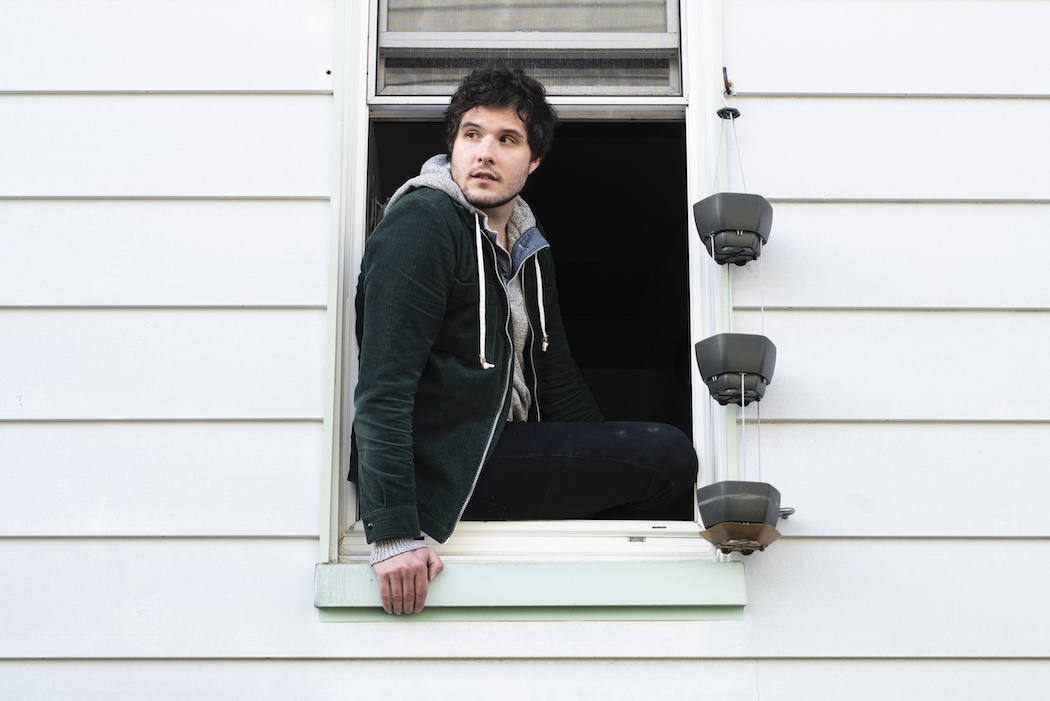
Standing at the crossroads of uncertainty, Brooklyn-based artist Dash Hammerstein marvelously expresses a familiar tension between fear and possibility with “The Hammer,” a radiant standout off his recently-released self-titled album.
Stream: “The Hammer” – Dash Hammerstein
At first listen, Dash Hammerstein’s “The Hammer” feels light on its feet.
The song exudes a quirky, wistful, and deceptively easygoing air. But beneath its playful exterior, he wrestles with a far more unsettled idea. What happens when you’re standing on the brink of something you can’t quite see? At its core, the song asks, “Can I pull back the hammer, or am I waiting on a train around the bend?” So many of us desperately long to step into the next chapter of our lives, yet feel terrified to take that leap. Through his earnest tone and gentle backdrop, listeners can strongly connect to his vulnerable portrayal of indecision.
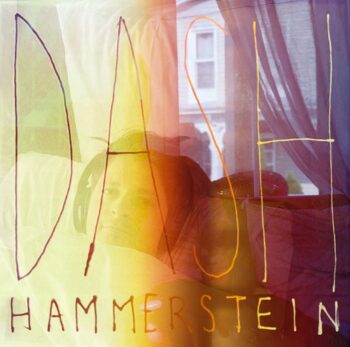
Active since 2016, Dash Hammerstein is a folk pop singer/songwriter and composer recognized for creating scores that fuse contemporary production techniques with distinctive, melodic sensibilities. Other offerings such as “Working in a Steel Factory” and “Mr. Resistance” possess the same dream-like, breezy charm as his latest current concoction. “The Hammer” is a highlight off his self-titled album, Dash Hammerstein.
“No more word salad psychedelia – each song is about something specific and meaningful, be it death, uncertainty, old friends or new biotech,” Hammerstein recently shared upon his album’s release this February. “With sobriety, my songwriting hours shifted from the night to the morning and much of what is on the album was written very quickly over coffee – a lot of first thought/best thought material. There are some wonderful guest contributions on there as well – Michael Sachs plays woodwinds and brass, Jordi Nus plays strings and Alden Harris-McCoy plays some guest guitar. Everything recorded and mixed by me in a few studios around Brooklyn.”
The music video for “The Hammer” reflects the song’s eccentric, offbeat essence, resulting in a piece equally as transfixing. It may be hard to fully understand the meaning, but that’s what makes it so striking and complex. Then it’s all about the feeling it gives you, and there is profound beauty from that. Each viewer can take away something unique. This creates a visual experience seeped with discovery.
Atwood Magazine got a glimpse of Dash Hammerstein’s oddball side and his deep, contemplative side in a candid conversation about creative uncertainty, embracing the in-between, and the courage it takes to step into the unknown. Read our conversation below, and discover the heart behind “The Hammer.”
— —
:: stream/purchase Dash Hammerstein here ::
:: connect with Dash Hammerstein here ::
— —
Stream: ‘Dash Hammerstein’ – Dash Hammerstein
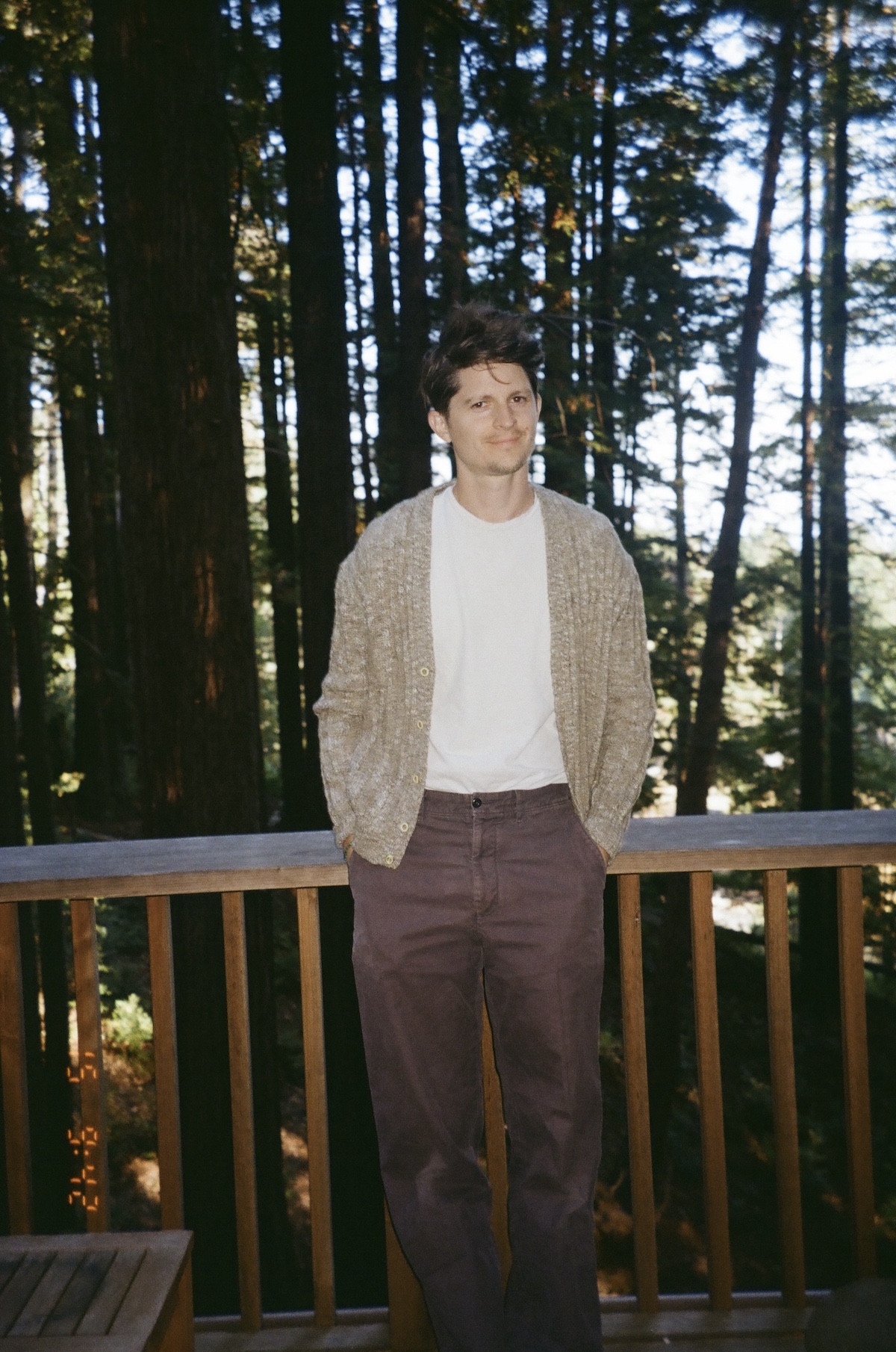
A CONVERSATION WITH DASH HAMMERSTEIN
Atwood Magazine: “The Hammer” centers on uncertainty and the unknown. What drew you to that theme?
Dash Hammerstein: It was sort of drawn to me. I find that going into a song with a thing I want to say usually results in clumsy lyrics. So I’ll usually start with a few images and phrases I like the sound of (I have a very long running doc on my phone for such an occasion), step back, see how they fit together as a whole and let the song tell me what it’s about. When I stepped back from this one, it seemed very clearly to reflect some unknowns in my life, and my need to relinquish expectations and control. It’s therapy, and I thank the public for letting me subject them to it.
The track exudes an effortless ease that is wholly comforting. How did you develop your captivating, warm tone?
Dash Hammerstein: Unintentionally. Making up for a repellent and cold personality. That’s a joke. I hope.
How did the central metaphor of the hammer first come to you, and did it shape the song from the start or evolve over time?
Dash Hammerstein: The imagery of pulling back the hammer of a gun is so evocative to me. Loaded, if you will. There’s something so cinematic about it – I see westerns, police procedurals. I see it happening in slow motion. When I wrote it, I imagined it as a starter pistol, harkening a possible beginning. But when I played it for someone at my apartment, they imagined something darker, the makings of a possible ending. I suppose it’s both. Schrodinger’s hammer.

Your music video features people exercising and mowing the lawn alongside a headless robot dog. What inspired this surreal combination, and what story or feeling were you hoping to convey through these visuals?
Dash Hammerstein: The video was made by Haoyan of America, an incredible visionary of music videos. I loved his work and gave him carte blanche. When I asked what it was about, he simply pointed me to a poem by Richard Brautigan called “All Watched Over By Machines Of Loving Grace.” I suppose that, like the song itself, it’s open to interpretation.
As both a singer/songwriter and composer, how do those two sides of your creative identity influence a track like “The Hammer”?
Dash Hammerstein: Despite being a very singer-songwriter-y song, it was the film composer in me that started it. It’s barely audible but the first track I laid down was just a loop of ambience – you can hear it in the beginning – might be the clacking of a piano pedal, I don’t remember. But it was much more an element I might use in a score than on a song. I think it gave me the liberty to write something very straightforward on top of it.
“The Hammer” is off of your newly released album Dash Hammerstein, which came out of a period of newfound creative sobriety and experimentation. Can you explain that awakening in more detail?
Dash Hammerstein: The experimentation was about process. Many of these songs came out of a song club I had going with a few friends, each of us trying to write and record a song a day. It helped me eschew the urge to be clever, a tendency which can be a real emotion-annihilator. I leaned into more traditional chord progressions, and focused more on the lyrics, often writing them in the morning before my judgmental mind has been fully turned on.
I understand you’ve recently started writing and consulting on musicals in development. What has the transition into this role been like, and what is it about theatre that you find most inspiring?
Dash Hammerstein: I have been writing songs basically the same way for almost twenty years – writing musicals has completely flipped it. When you’re writing lyrics for a musical, clarity comes before all else. You can have some interpretable imagery here or there but every song has got to have a point and has got to reinforce that point and develop it over time. So when I go back to writing my own songs, I let myself get away with less.
What is your favorite song?
Dash Hammerstein: “First Girl I Loved” by The Incredible String Band.
What's next for Dash Hammerstein?
Dash Hammerstein: A few documentary scores are in the works. Rehearsing for an album release show March 5th. Pushing a few shows forward, one inch at a time.
Who have you been listening to on repeat lately? Any artists you can recommend to our readers?
Dash Hammerstein: Dry Cleaning is my favorite band of this decade. They just came out with another stunning LP. I got my record player working again, which means lots of Lee Hazlewood and Waylon Jennings.
— —
:: stream/purchase Dash Hammerstein here ::
:: connect with Dash Hammerstein here ::
— —
Stream: “The Hammer” – Dash Hammerstein
— — — —
Connect to Dash Hammerstein on
Facebook, Instagram
Discover new music on Atwood Magazine
© courtesy of the artist
 © courtesy of the artist
:: Stream Dash Hammerstein ::