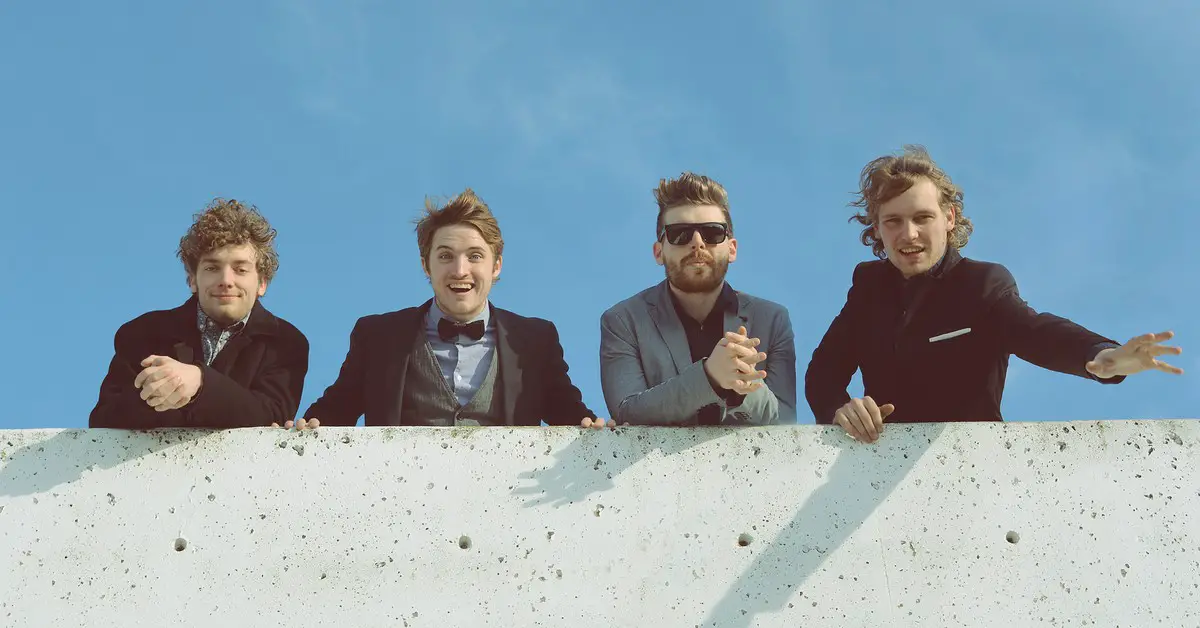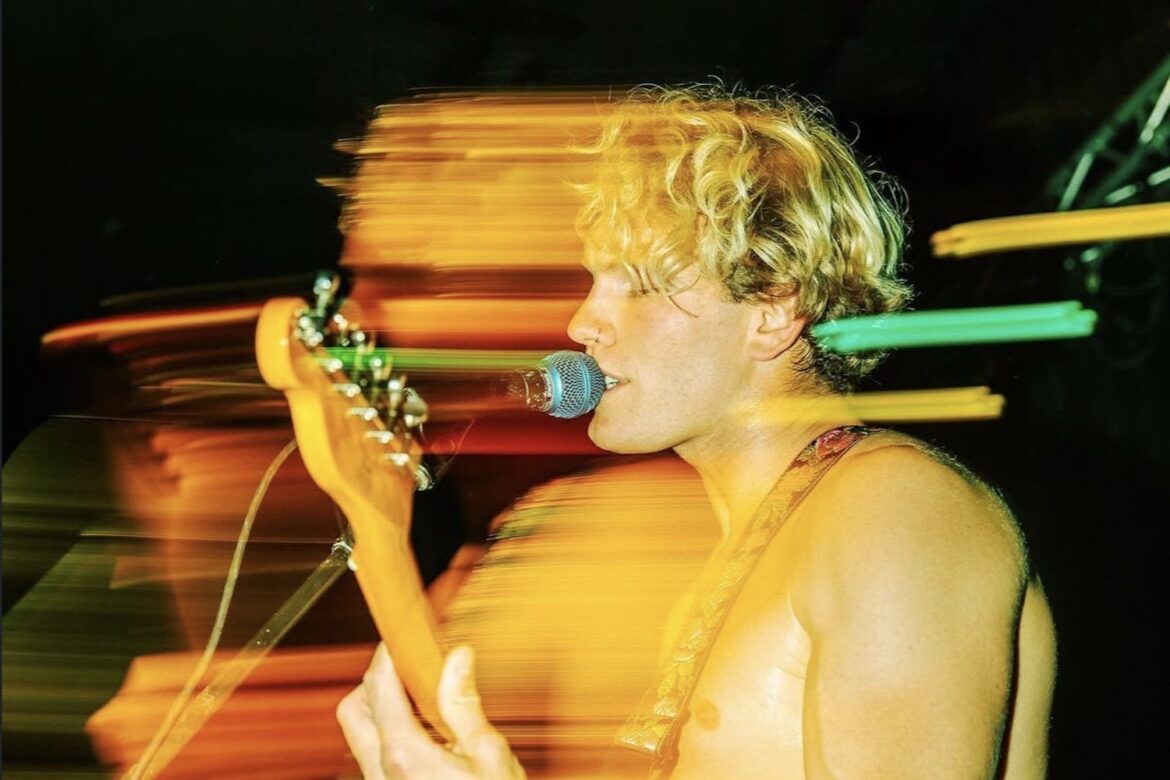
Dolphins on Acid’s lead singer and guitarist Max Wayland sits down with Atwood Magazine to discuss his band’s uncompromisingly authentic upcoming album and the raw, live-first ethos that defines their surf rock sound.
Stream: “Killer Whale” – Dolphins on Acid
The members of San Diego’s Dolphins on Acid pride themselves on their carefree attitudes and loud presence.
Since debuting three years ago, they have garnered a vivacious following in Southern California thanks to their high energy shows and old-school performances. As 26-year-old frontman Max Wayland puts it, “if you come to a live show, we’re as raw as it gets. There’s just three of us up there, no synths, no backing tracks, no in-ears. We just get up there and play.” Citing classic rock n’ roll bands like Led Zeppelin, AC/DC, and Guns and Roses as major influences, he admires music that relies solely on guitar, drums, bass, and vocals – and his band is no exception.
Wayland admits that Dolphins on Acid’s discography to date, although still a collection he is proud of, has failed to properly capture this stripped-back live sound – with the freedom to alter songs in studio a crutch as much as it is a benefit. The band’s previous work employs noticeable audio equalization effects in order to create a more unique, swelling atmosphere. Their 2024 track, “Caffeine,” for instance, distorts and layers Wayland’s vocals, with his words washing over the instruments like the crest of a wave engulfing a surfer’s body. Although this edited tone can provide more sonic depth to the song, as Wayland sees it, overanalyzing the details of a track often pushes it further away from the scrappy, down-to-earth feeling Dolphins on Acid aim to achieve.
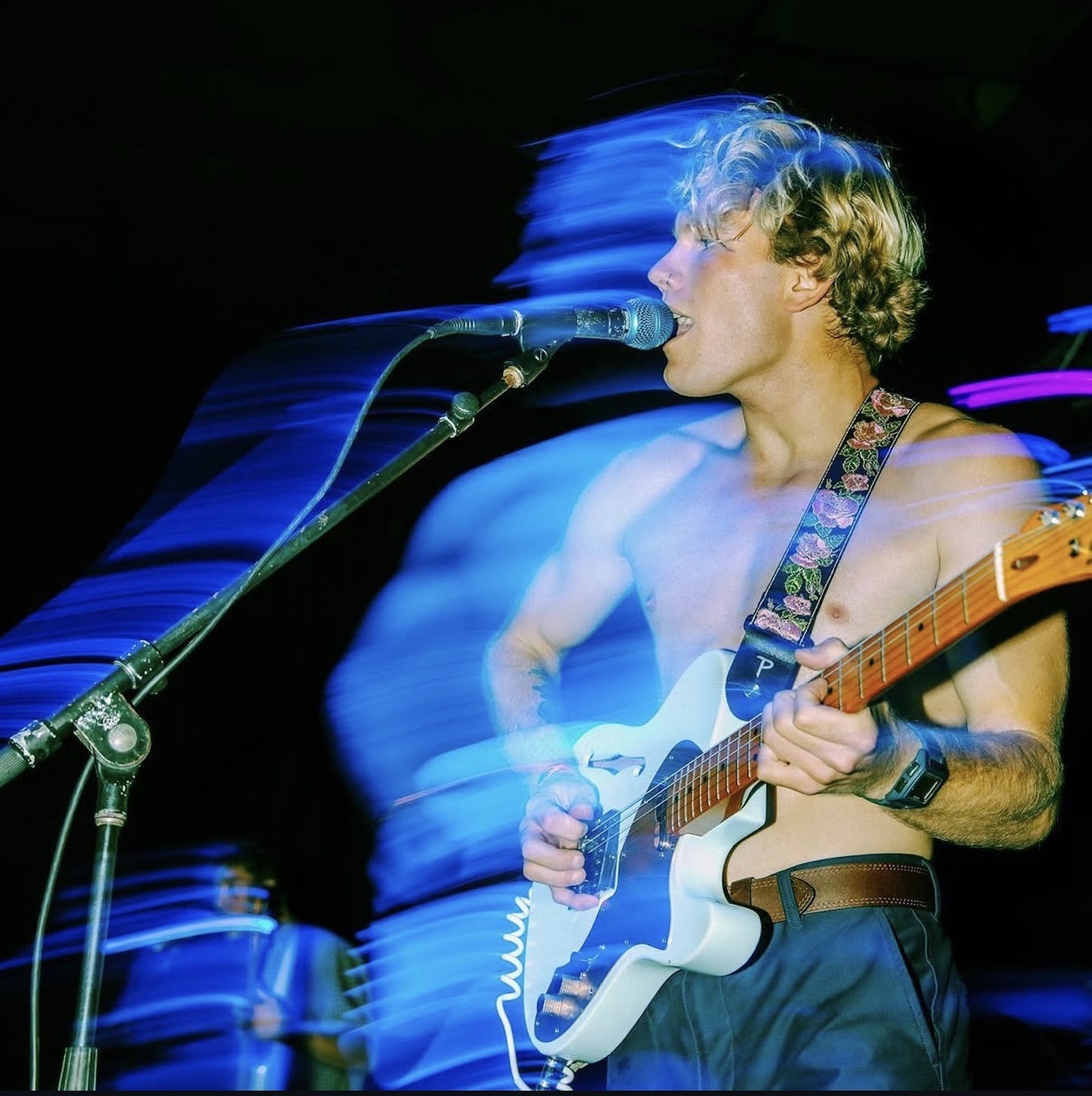
Foregoing that polish, the surf rock trio consisting of lead singer and guitarist Max Wayland, drummer Danny Cozmos, and bass player Koosha Jones recently finished an untitled album – one that will be both Dolphins on Acid’s debut, and Cozmos’ and Jones’ last project with the group. The impending split comes with no bad blood, with Cozmos moving to Texas with his wife and Jones moving on to other new endeavors. Two new members will be taking their place in the near future, with Wayland slyly refusing to reveal their names just yet. The incoming departure of two-thirds of the band only builds suspense and anticipation for their album, with it acting as the final embodiment of years of tiresome work and camaraderie.
Wayland talks openly about its unique recording process, recalling how they recorded all nine songs in one 48-hour stretch. The three pulled multiple consecutive all-nighters, recording and producing the entire album themselves in one sitting from Cozmos’ family home. This process differed significantly from their previous recording experiences, with them spending more time on individual tracks in the past, allowing for a more detail-oriented recording process. He emphasizes this matter, claiming to have over thirty different mixings of last May’s single, “Petals” – in contrast to the looser recent session.
Wayland is proud of that fact, saying it was an incredibly fun, albeit exhausting process, and reckoning, “these songs are more raw and representative of imperfection. I think they sound the best out of anything we’ve done. They’re pretty true to how we sound live, which is, I think, a pretty good thing and pretty exciting.”
The album’s first single, “Rotten,” was released in July 2025. The piece has a hypnotic rhythmic and understated mellowness, slowly building momentum as the song progresses. Wayland’s vocal tone maintains a composed detachment as his guitar builds from a smooth, clean tone to an overdriven, chaotic climax.
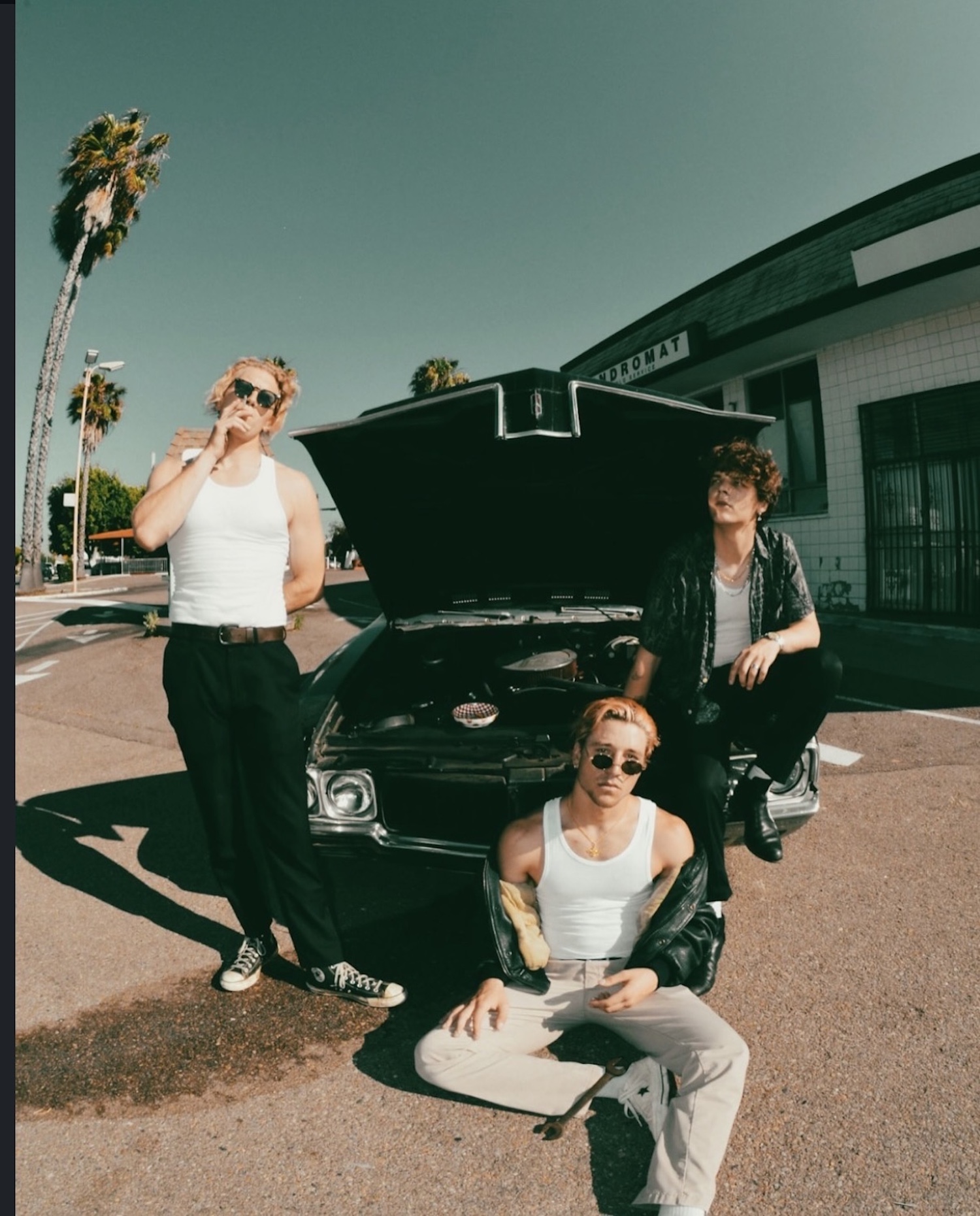
He elaborates on why the album is so pivotal for the band, beyond it being a send off for Jones and Cosmos, saying he looks forward to exploring different dynamics in their music. Wayland has always loved “moshing” at concerts, and wants to give fans an opportunity to do the same at their shows. Dolphins on Acid’s current discography and much of their upcoming album allows for just that, with a high energy and head-bobbing simplicity, but Wayland’s desire to create slower, more reflective pieces has grown with age. The album gave him an opportunity to do just that, as he hints at a song titled “Time Ticks By” that will be their most reserved and introspective to date. He adds that “Rotten” is also a divergence from their typical uptempo style, with a uniquely structured track and no clear chorus. The exploration of fresh sounds and structures is important in showing a new side of Dolphins on Acid and providing a more well-rounded album experience. The band’s commitment to simplicity while traversing uncharted waters is refreshing, returning to the groundbreakingly simple three-man approach that brought bands like Rush, Cream, and the Jimi Hendrix Experience riveting success in the past – all while finding a loose and joyful sound of their own.
The writing process for most of the album, and the majority of Dolphins on Acid’s music, began just as much of Hendrix’s discography, with their fiery frontman experimenting on guitar. Wayland considers himself a more confident guitar player than singer, playing professionally for nearly a decade, and only beginning to sing during COVID when he formed Dolphins on Acid. Because of this, he prefers to begin the songwriting process on his six-string. From there, he will hum along to form the vocal melody and write lyrics as an accompaniment.
As an example of his process, Wayland touches on Dolphins on Acid’s first single, 2022’s “Doane Valley.” That song was particularly special, since it was his first attempt at writing a song for himself to sing. Around that time, he had been toying with major and minor 7th chords (four note chords that include a seventh interval above the root note) and bar chords (chords played on the guitar by placing the pointer finger across the fret board in order to play several notes) in order to create a fuller, dreamlike sound. He developed the hazy, echoing track after finding a progression from Cmaj7 to A minor that scratched the itch he was looking for.
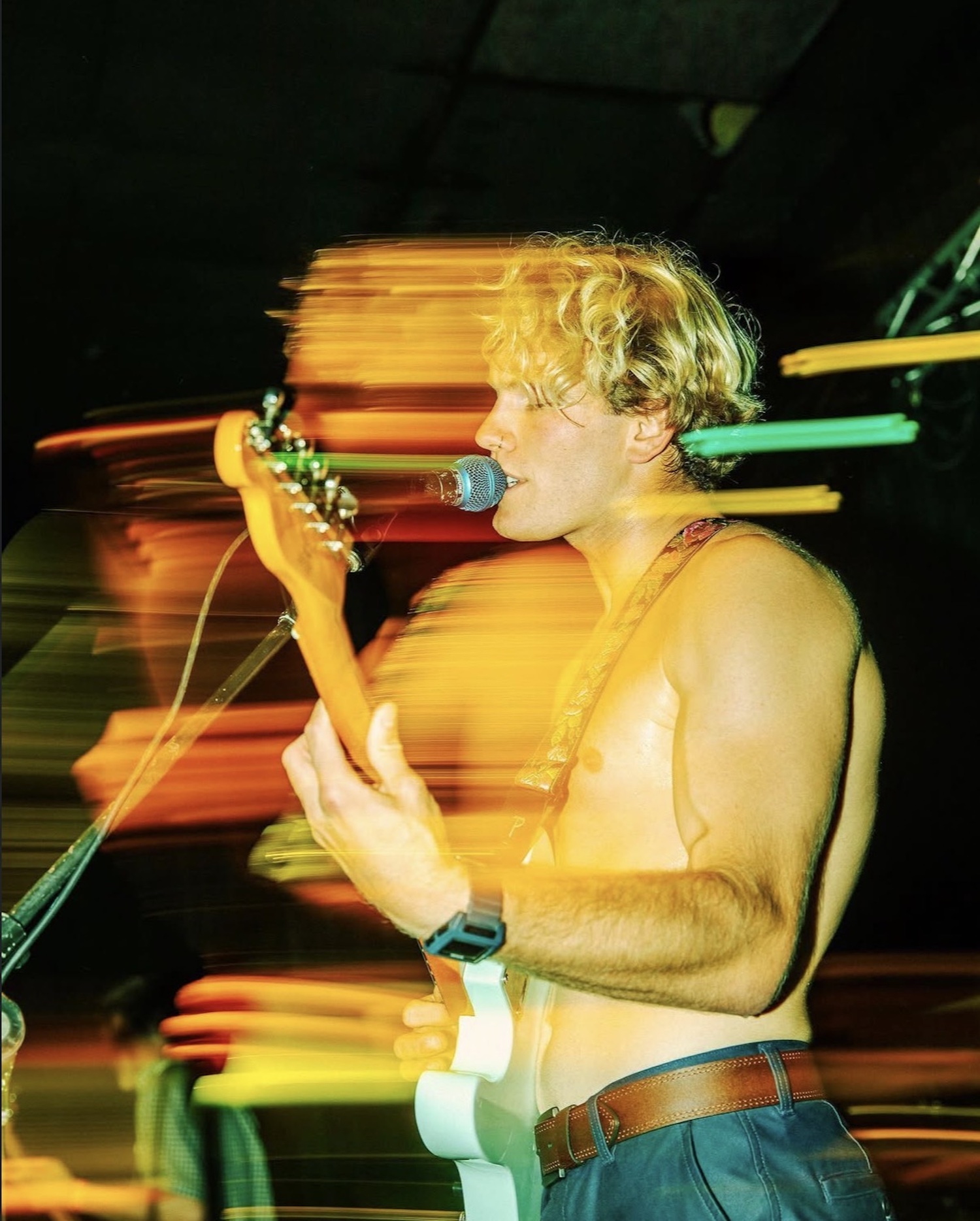
When asked what makes Dolphins on Acid special, Wayland’s eyes widen a bit.
For him, it’s the fun and upbeat energy they bring to shows that he hopes to continue spreading. Their genre of indie surf rock is somewhat niche, but their music is more easily digestible and versatile than many others in the space. He continues expressing his vigor and gratitude, thanking the fans who come to shows, sing along to songs, and reciprocate the joy and energy of the band. “Rotten” is just the beginning, as Dolphins on Acid will continue to expand the space between classic rock and San Diegan juvenility for a long time to come.
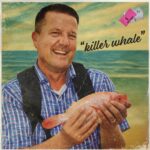
The album cover of their latest single, “Killer Whale,” illustrates this sentiment perfectly. The spirited track is represented by a faded image of a middle aged man holding a fish while gleaming with pride in front of a vibrantly surreal ocean backdrop. The image appears to have damage from wear over time and a vinyl price tag in the upper right corner. It seems to be an homage to both the relics of rock history that have inspired Dolphins on Acid’s creative process and the absurd, passionate energy that they bring to shows and that represents them deeply.
Wayland says it best himself. “We’re just doing us. We’re just some San Diegans who like to go outside and surf and hang out, and when we play music it’s alsoail an embodiment of who we are as people. We’re not polished people.”
— —
:: connect with Dolphins on Acid here ::
— —
Stream: “Killer Whale” – Dolphins on Acid
— — — —
Connect to Dolphins on Acid on
TikTok, Instagram
Discover new music on Atwood Magazine
© courtesy of the band
 © courtesy of the band
:: Stream Dolphins on Acid ::