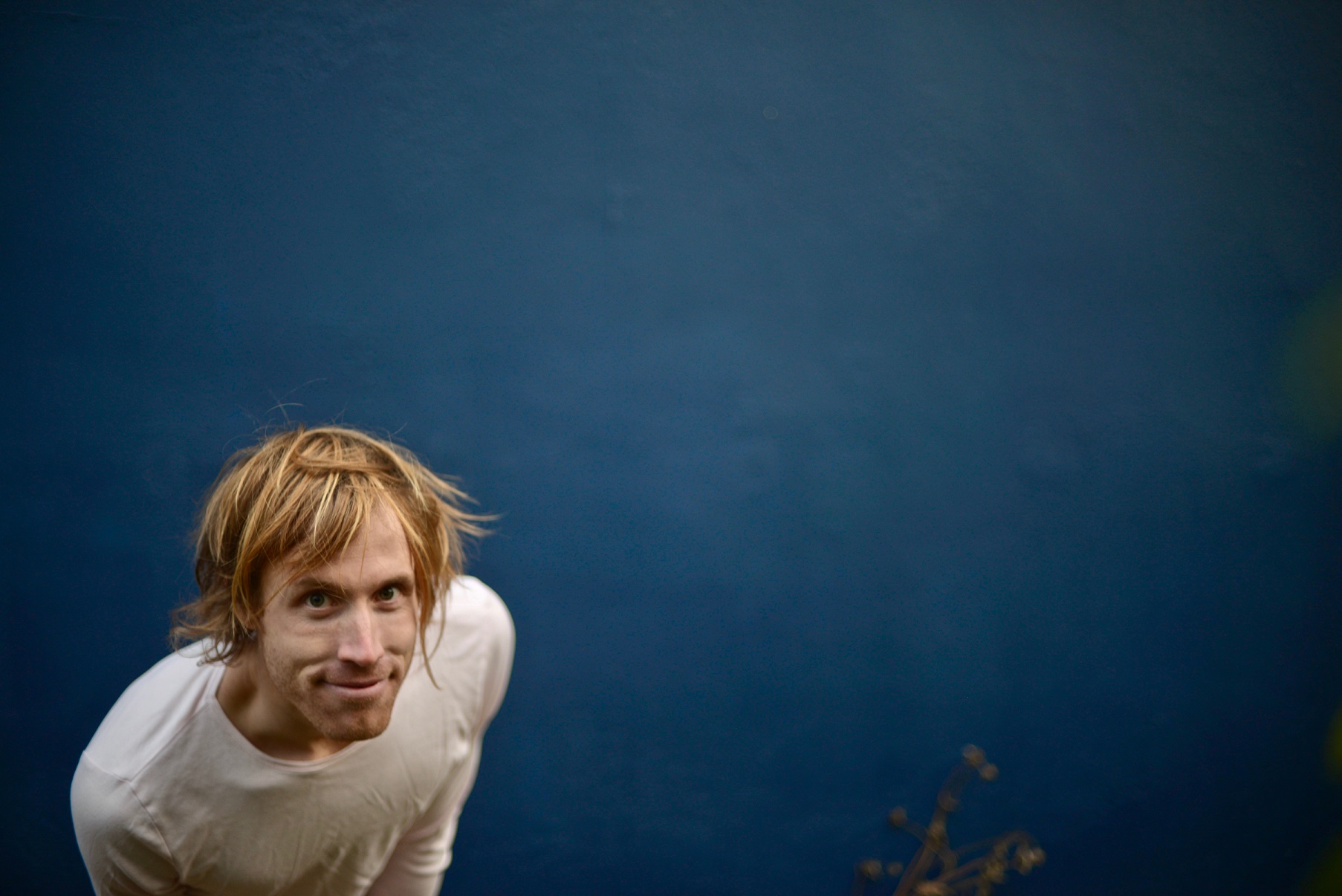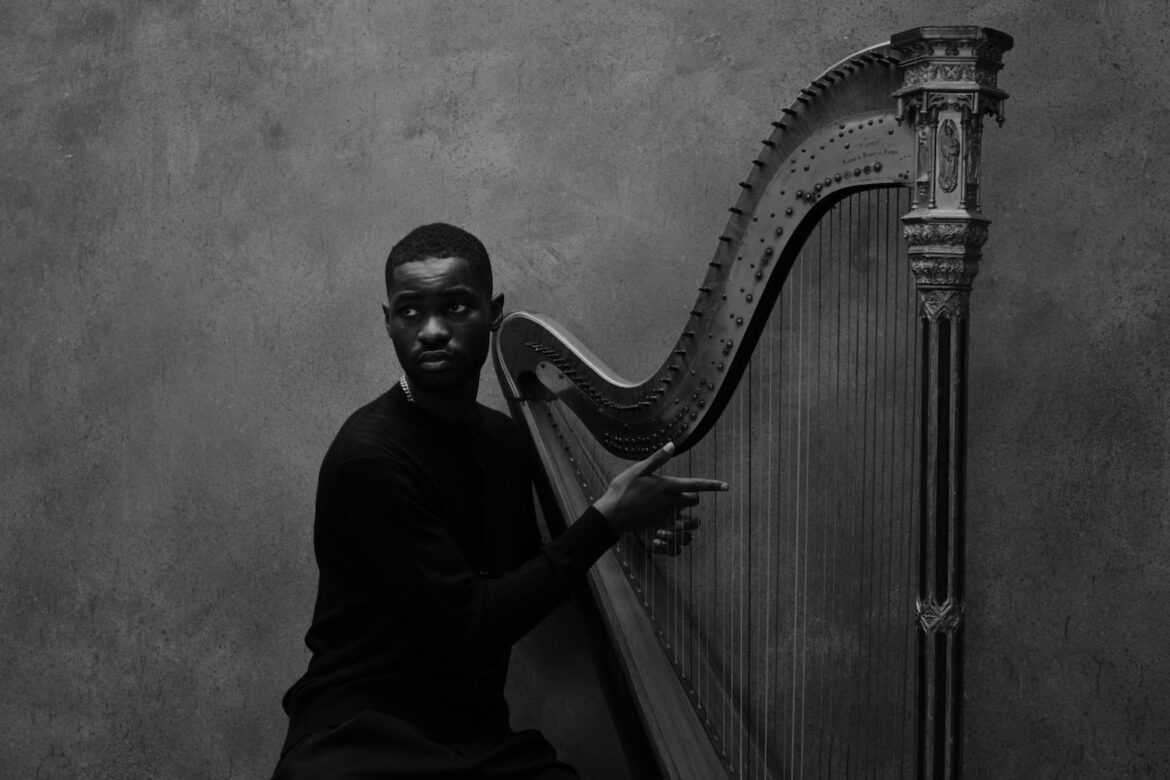
‘The Boy Who Played the Harp’ shows Dave channeling anxiety into creativity. Moving fast with dense and witty lyricism, you’re dared to follow Dave into dark corners of your own reality.
TW: assault, abuse, femicide
‘The Boy Who Played the Harp’ – Dave
David Orobosa Michael Omoregie, or the artist known as Dave, has released one of the most poignant, culturally modern, and politically active albums of the year.
For those aware of modern conscious lyricists or the new wave of UK rap, this will not be a surprise. Dave’s prior projects, PSYCHODRAMA (2019) and We’re All Alone in This Together (2021), were exceptionally well received for their dynamic lyrical content. Coming into his third record, Dave had already situated himself at the forefront of self-produced UK rap.
For even the most avid follower, the level of internal struggle Dave anguishes through will provide shock and awe. The Boy Who Played the Harp was released on October 24, 2025, and will be regarded as one of the most important releases of the decade. There are few words to describe the themes and content of the release. Rather, it’s recommended to experience a listen and embrace Dave’s ideas as he shares them, allowing the music to speak for itself. Through Dave’s eyes, you’ll learn how deep the wells of anxiety truly are.

The first half of the record will welcome you with sensational features, memorable choruses, incredible wordplay, and exceptionally vivid storytelling. From “History” to “Rain Dance” you’ll find numerous moments to hum along, dance, and bob your head. Many of these songs have Dave lamenting about his goals for himself or vying for a greater relationship with family and the church. Wishing the best for others is intrinsic in Dave’s music, and the optimism is palpable. Many of these early songs will be a lyricism display and promote the intent of individual growth. Savor these songs on your listen. Lighter cuts will be welcomed on re-listens, while denser songs only ramp up as the album continues.
The first chords on “Selfish” warn you of the tone shift for the latter half. Dave repeats:
“I tried this therapy shit”
It’s a refrain amid continued confessions, searching for absolution within his own anxieties. The pardons Dave pleads for can only be given in the most divine of circumstances: The confession booth, in the church’s pew, from the dearest loved ones, and most challenging – within the mirror. It’s impossible to define when that wave of relief will wash over us, yet Dave agonizes himself, wondering when both he and we will be absolved of our cultural sins.
The 8-minute showpiece, “My 27th Birthday,” makes even the most secure feel as though they’re unstable. Over a continued, repeated, and soft hymn, Dave contorts himself through every tribulation he felt early in his career.
“But when I’m all alone I won’t lie I question myself”
Dave is alone, professing his woes to anyone who will listen. It falls on deaf ears as his first verse ends with:
This shit used to be spiritual
We don’t need no commentators,
we could leave that to sports
Just listen to the music,
why do you need somebody’s thoughts?
And some of it constructive,
but most of it is forced
And why we countin’ the numbers,
how the music make you feel?
Each of the bars on the record could be directed at your fav, any stan, or the legions of online commentators – I recognize the irony. It’s a continued and contrived song filled with more passion than a poetry slam at an art’s college. For many, it’d be the peak of an album or career. For Dave, it’s a warning to a listener for what’s left on the project.
It’s hard to conceptualize The Boy Who Played the Harp without discussing “Fairchild.” Akin to Adolescence, Dave brings light one of the most harrowing aspects of our modern times, how individually easy it is for men to cause extreme societal damage. The prior 30 minutes has Dave on his hands and knees, pleading for guidance or a relief of our societal pressures. Underneath all the weight, the album’s penultimate tune has a two-minute delivery from Nicole Blakk outlining an assault, the cultural behaviors that empower men to sexually harass women, and the self-preservations women go through to simply exist. It’s a haunting listen. The song is five minutes long. It feels like forever, it will never end. Seconds feel like minutes, minutes feel like hours. By the time you’re welcomed to the conclusion, Dave bravely asks,
“Am I one of them?”
It’s intrinsic, it’s the work thousands of young boys are demanded of themselves. To close out the emotional climax, Dave issues his ultimatum:
“Can’t sit on the fence,
that’s hardly an option.
You either part of the solution
or part of the problem.”
Change is possible, it can happen, and it’s demanded the individual starts it.
The title track ends the record. It’s a barrage of political and cultural grievances past and present. Words fail to summarize the topics succinctly: [military drafts, survival instincts, societal martyrs, white adoption of black music, the occupation of Palestine, the Palestinian Genocide, artistic risk to discuss topical issues, illegal occupation of stolen land, the rape and pillage of Africa, failure of African leaders to share wealth, continued generational protests for civil rights, affluent partying while the poor struggle, and biblical expectations of the name David] are packed into the 4:37 long conclusion. Somehow landing optimistic, the grand struggles we all face will one day be stories of progress. Change never starts on the grandest scale, progress is always painfully incremental, yet a new world is continually and optimistically possible. Dave ends the album with:
“My ancestors, my ancestors
told me that my life is prophecy
And it’s not just me,
it’s a whole generation of people
gradually makin’ change
There ain’t a greater task
Shift that, make a name, make a start”
It’s exceptionally heavy. Reading the lyrics or discussing them is difficult. You’re challenging yourself, your own comforts, and your own patterns. For many, it won’t be a pleasant listen. For some, the presentation and packaging of The Boy Who Played the Harp will be one of the most memorable listening experiences of the year.
Underneath the depth and topical lyrics, the production is sublime. It’s mostly self-produced by Dave himself, leveraging watery chords and numerous vocal chops. It never feels claustrophobic despite the content. It’s contrived innit, welcoming instrumentals allowing yourself to be vulnerable enough for the lyrical themes. James Blake is featured twice, on the opener and on the aforementioned “Selfish.” A few tunes were written to be more welcoming, “175 Months” or “No Weapons,” yet even those demand the listener to confront racism-infused violence, and the biblical path of life.
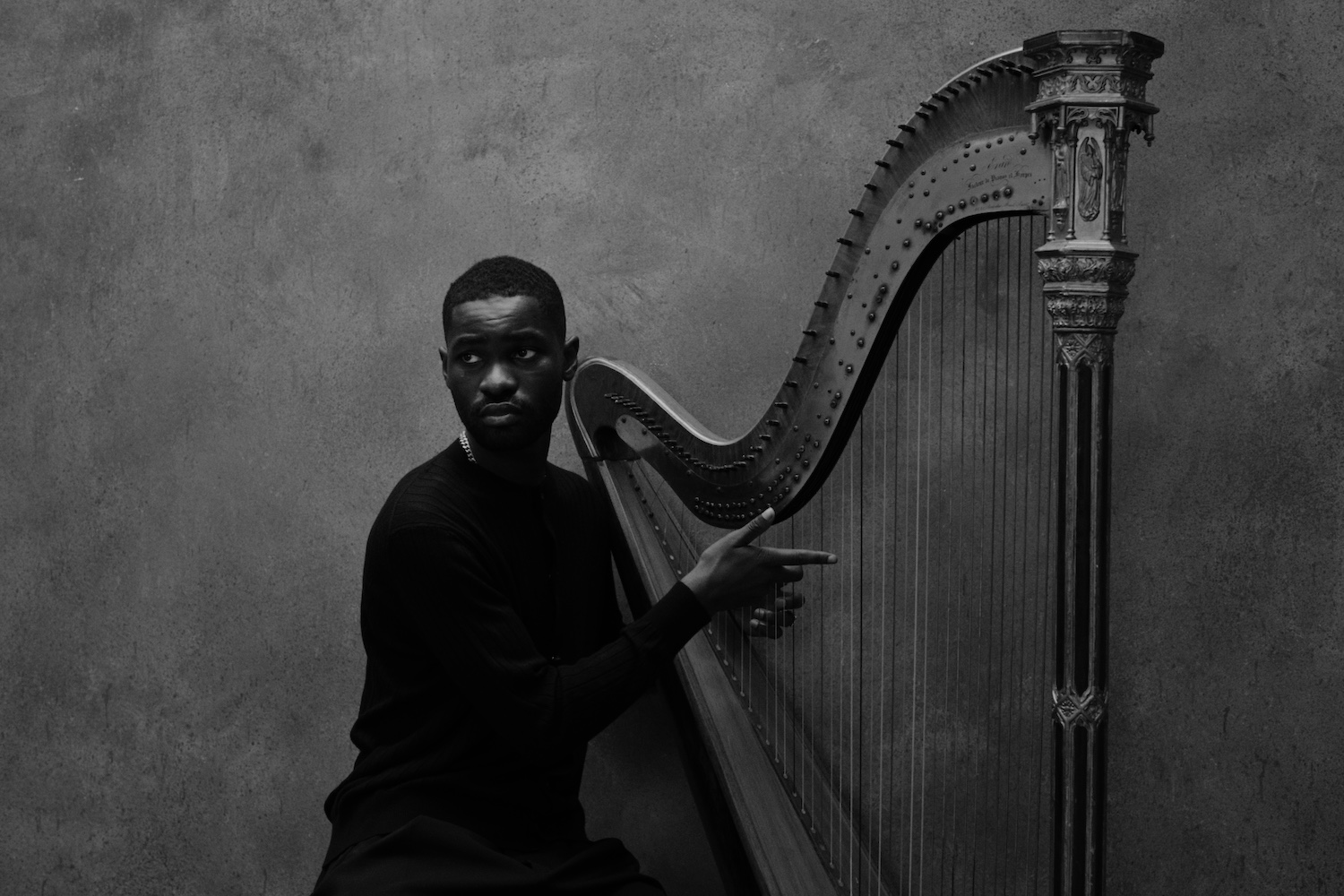
The Boy Who Played the Harp is a monumental release, and shows the progress of Dave as a rapper, artist, and producer.
In a post-Blonde, To Pimp a Butterfly, and Sometimes I Might Be Introvert world, Dave’s introduced the newest culturally charged opus that demands listener growth. We’re forced to hear the cultural atrocities we accept and also understand the societal expectations we place on ourselves and others. Can you accept yourself for your shortcomings? Can you forgive your neighbor for the crimes in their name? Do you strive for a better self? For a better other? If you can’t answer those questions, that’s fine. It’s a perfunctory question from Dave, rather than confessing your own answers. You’re the only on that can confront those answers, when you’re ready.
— —
:: stream/purchase The Boy Who Played the Harp here ::
:: connect with Dave here ::
— —
— — — —

Connect to Dave on
Facebook, 𝕏, TikTok, Instagram
Discover new music on Atwood Magazine
© Gabriel Moses
 © Gabriel Moses
:: Stream Dave ::