For The Kasambwe Brothers, it’s their first time outside the small African nation of Malawi. For Mass MoCA, it’s an early chance to see whether they can get their new record label up and running. On both accounts, some exciting new developments have been occurring in northwestern Massachusetts as of late!
‘The Kasambwe Brothers’ – The Kasambwe Brothers
The apple doesn’t fall far from the tree, as they say. Neither do mangoes, papayas, baobabs, guavas, or any other of the various fruits that grow in Malawi.
Demonstrating that much are native Malawian musicians the Kasambwe Brothers, a multi-generational group that now features three sons of musical parents looking to make their elders proud in the current era.
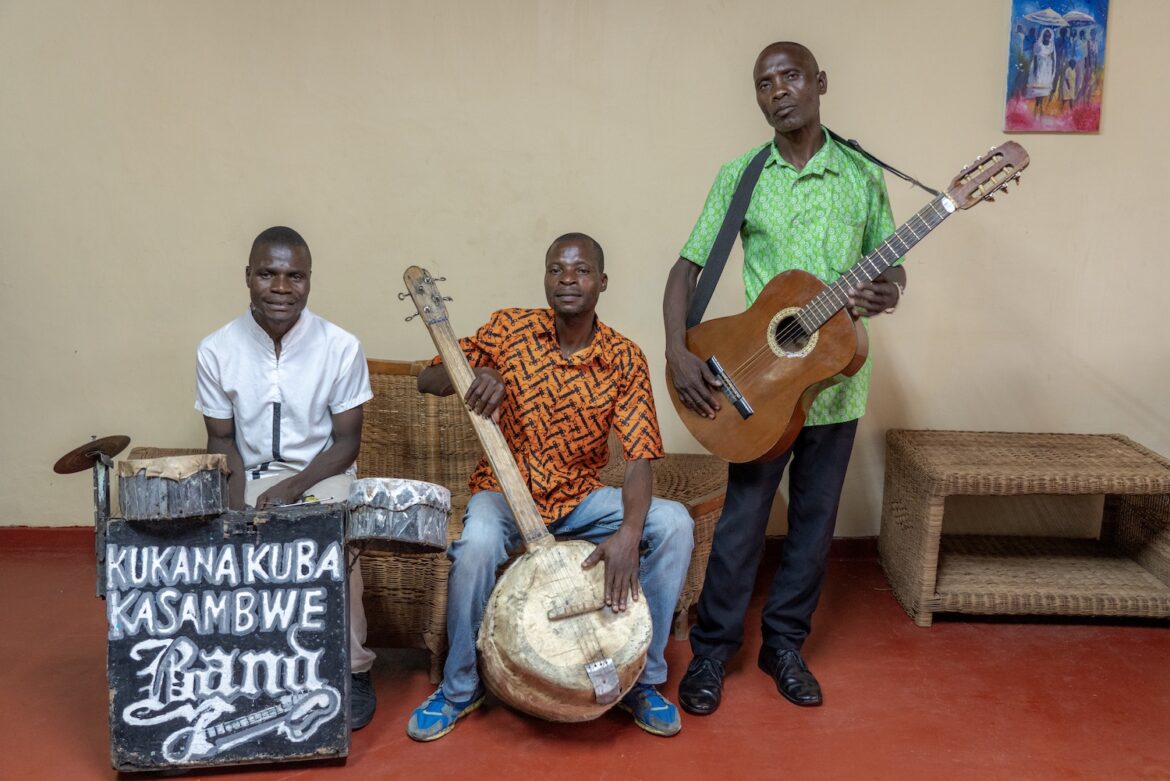
Originally from the Ndirande township in southern Malawi, the Kasambawe Brothers got their start in the late 1980s when brothers Isaac and Frank Chiwata, along with their cousin, Kennedy Nagopa, began performing in local markets while singing in Chihewa, the most common indigenous language in the country. After several decades’ worth of street performances, the original members of the band eventually passed the proverbial baton on to some younger musicians. Currently, the group is steered by Joseph Msofi, the lead singer and guitarist; Fatsani Kennedy, who plays his homemade drum kit made from wood, sticks, bottle tops and old pots; and Konzani Chikwata, who plays the babatone, a sort of giant sub-Saharan banjo.

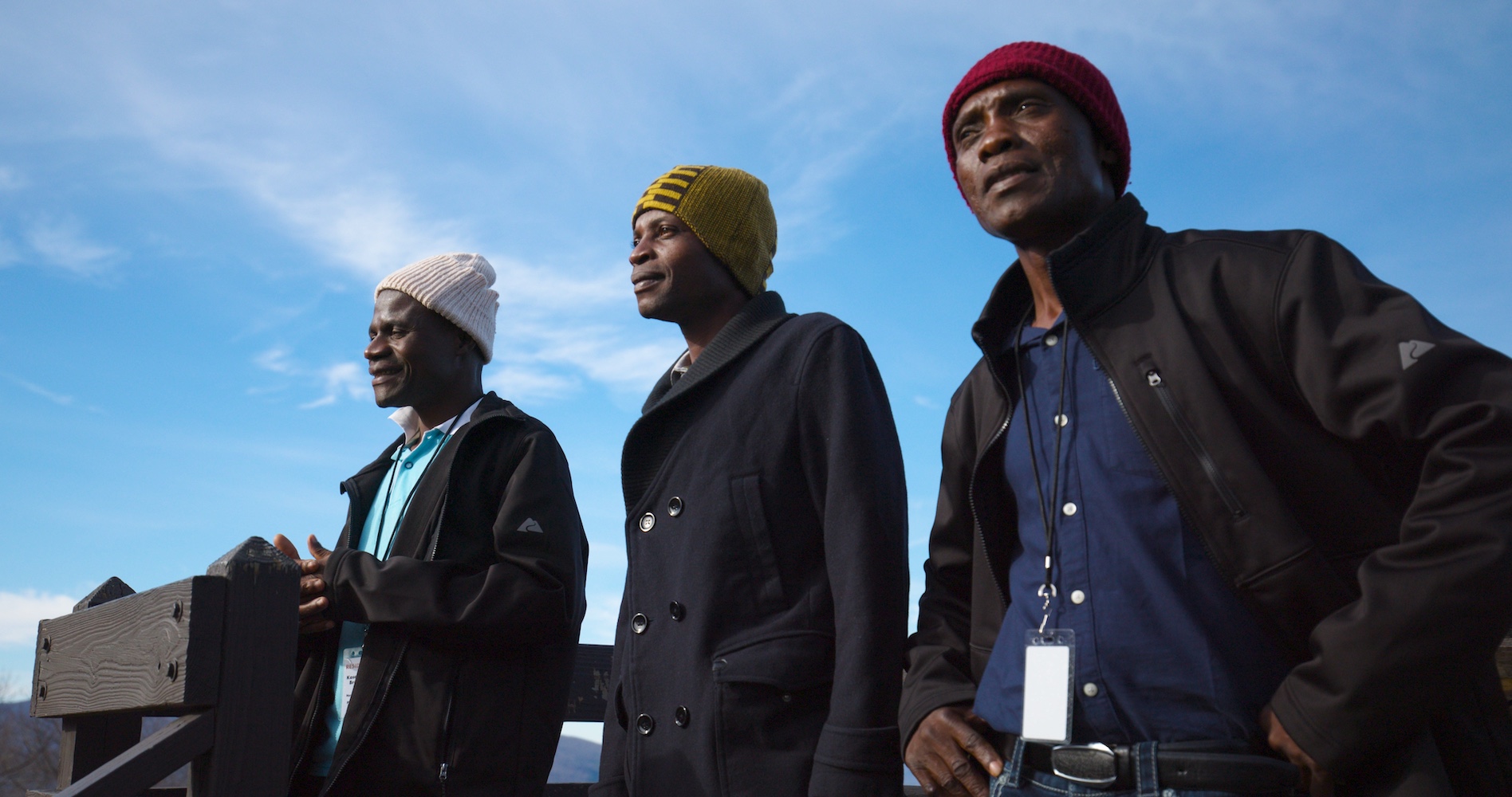
Even after nearly forty years of music-making, there’s still plenty of surprises in store for the Kasambwe Brothers, and this past fall proved to be a true season of firsts for the group. Having never ventured outside of Malawi before, the three members made their first-ever trip outside of their home country and continent and flew all the way to the United States this past fall, ultimately setting up shop in North Adams, Massachusetts. This small town is home to the massive Massachusetts Museum of Contemporary Art, which is currently testing out a brand new endeavor: Mass MoCA Records, a joint project with Hen House Studios in Los Angeles, with a mission to “establish a unique framework for record-making by centering artistic creativity, museum residencies, and live music-making.”
The Kasambwe Brothers were selected as the first group to put this pilot project to the test. They spent the fall in residency at Mass MoCA, during which time they managed to formally record their first full-length album at the museum’s recording center, Studio 9, while also giving a series of concerts at the Hunter Center. With the help of their friend Aaron, who translated their words from the original Chichewa language, the Kasambwe Brothers reflect on their long-term commitment to each other and how that paved their way for this groundbreaking career development at Mass MoCA.
— —
:: stream/purchase The Kasambwe Brothers here ::
:: connect with The Kasambwe Brothers here ::
— —
‘The Kasambwe Brothers’ – The Kasambwe Brothers
A CONVERSATION WITH THE KASAMBWE BROTHERS
This interview has been edited for purposes of length and clarity.
Atwood Magazine: You guys come from Malawi, and got started performing at the marketplace of your hometown of Ndirande. What was it about the spirit and culture of these locations that provided you with early inspiration as developing musicians?
The Kasambwe Brothers: Yes, it’s true that we got inspiration from being in Ndirande, where the atmosphere contributed to our group dynamics. But we also inherited this band from our parents, who used to sing as well. We wanted to continue that family tradition. We wanted to entertain, reinstruct, and inform our audiences through music. We have to make sure that our culture is going smoothly and that everyone is behaving according to the way the culture dictates.
The Kasambawe Brothers have been performing together for nearly 40 years. How does its current music give the band a fresh identity for the 2020’s crowd, all while staying true to its roots?
The Kasambwe Brothers: We try to preserve our identity to have it be the same as it was 40 years ago. We try not to use too much modern technology – some people suggest we use electrical equipment, computers, keyboards and so on, but we avoid that. It’s not essential to our identity. In terms of lyrics, we try to present the group’s old message in a way that allows it to still be relevant today.
Please talk about your recent residency at Mass MoCA. What was it like being long-term guest artists at the museum and getting to connect with American audiences through your shows?
The Kasambwe Brothers: We have to thank all those who were involved in making this trip possible, including the staff and the employees of this museum. Being at MASS MoCA was indeed the realization of a dream. We reached such a wide horizon– it’s what every artist aspires to do.
We never would have thought we’d do an international residency like that. So when it was announced to us that it would happen, it felt like a dream come true. It was like we had reached a new plateau as a band. We were looking forward to bringing our music to a whole new audience and seeing their reaction. It was too great of an opportunity to refuse.
It was our first time performing for an all-American audience. They had never heard our music. At first, we had a children’s show, and then we had one for all audiences, including adults. It was very thrilling to see the show gain a positive reaction on both occasions. Each time, it was a packed house. Apart from the fact that there were so many people, the enthusiasm could be easily felt, and this is what gave us the encouragement to play at our best.
It was a good experience – something we had never experienced before. Here, whenever we perform, people tend to enjoy it. In America, although they do not understand our language, they react positively to the songs. That is a good thing.
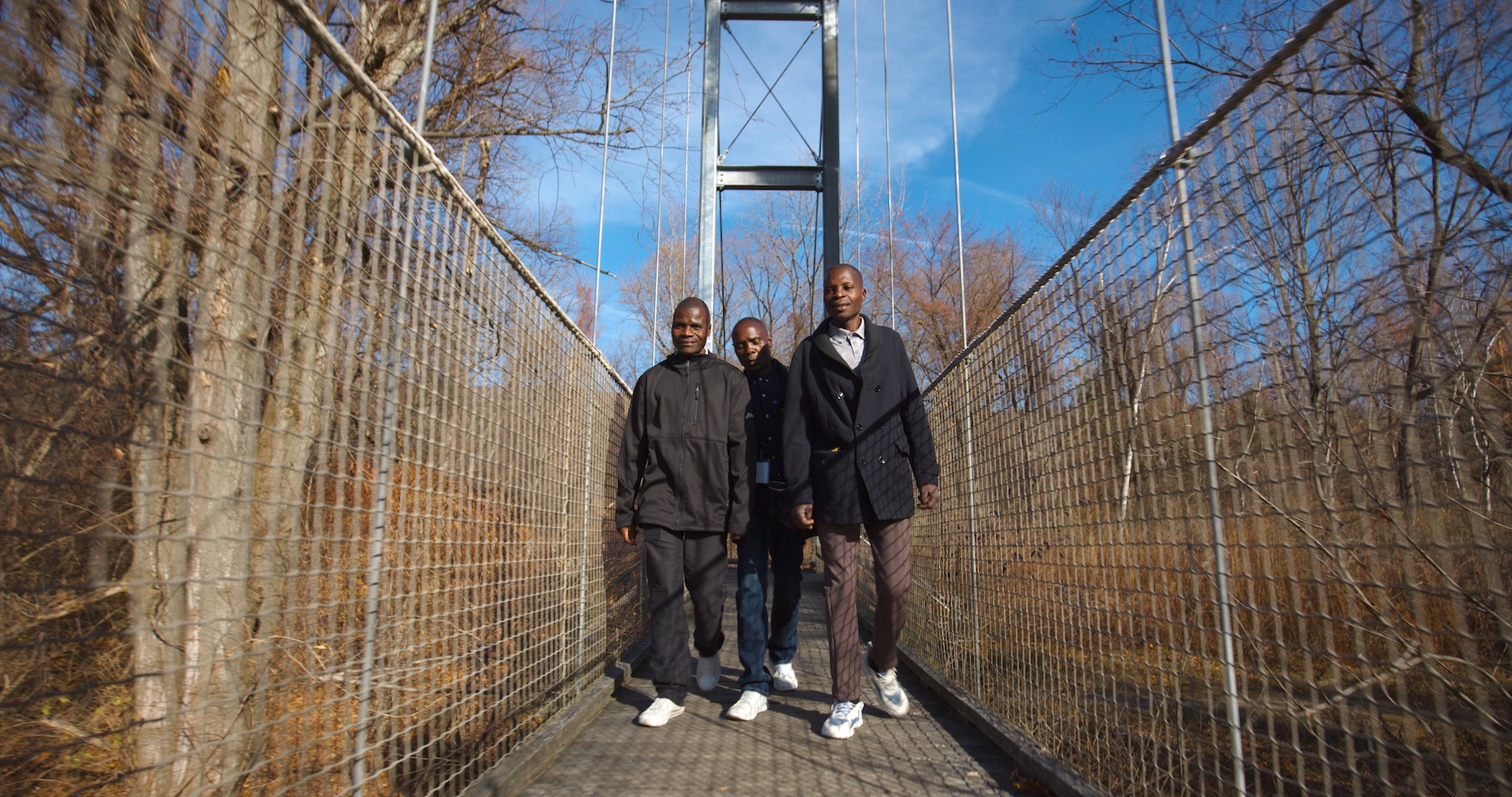
Did you also get to explore the museum some? How did you like the art there?
The Kasambwe Brothers: It was fascinating. Mass MoCA is one of the biggest museums in America; we visited different departments of it and saw amazing objects each time. One of the objects had a lot of big heads [When by Ledelle Moe], and another had a huge clock tower [The Clocktower Project by Christina Kubisch] that you would just sit and observe in silence. That was very fascinating.
What went into the creative process of producing your new album, The Kasambwe Brothers? What sort of impact do you hope it will have on listeners once it finally gets released in a few days?
The Kasambwe Brothers: The recording process is different here from what it’s like in Malawi. We take turns performing individually in the studio, rather than doing it all together, and then our instrumentals are fused together afterwards. The recording rooms at Maa MoCA are all connected, so that each musician knows what the other is doing, and we have a producer observing us and offering feedback. If something goes wrong, they can let us know – “Okay, wait, this guitar is out of tune, let’s redo it,” or “the rhythm of this instrumental is not the same as the other – can you speed it up and get them synchronized?” This sort of interaction is very special to us because it facilitates the whole process of recording in a way that’s different from how we do it in Malawi.
Now, let’s talk about what effect the album will have on our audience – not only the audience in Malawi, you know, but also in America and the world at large. To begin with, Malawian audiences know that we have gone to the US to do this album, but they have not heard the result. So, there are high expectations already, so far as the Malawian audiences are concerned. There are different messages in these songs that we hope people will appreciate in the world at large, including in America and Europe. The album’s messages are catch-all and universal.
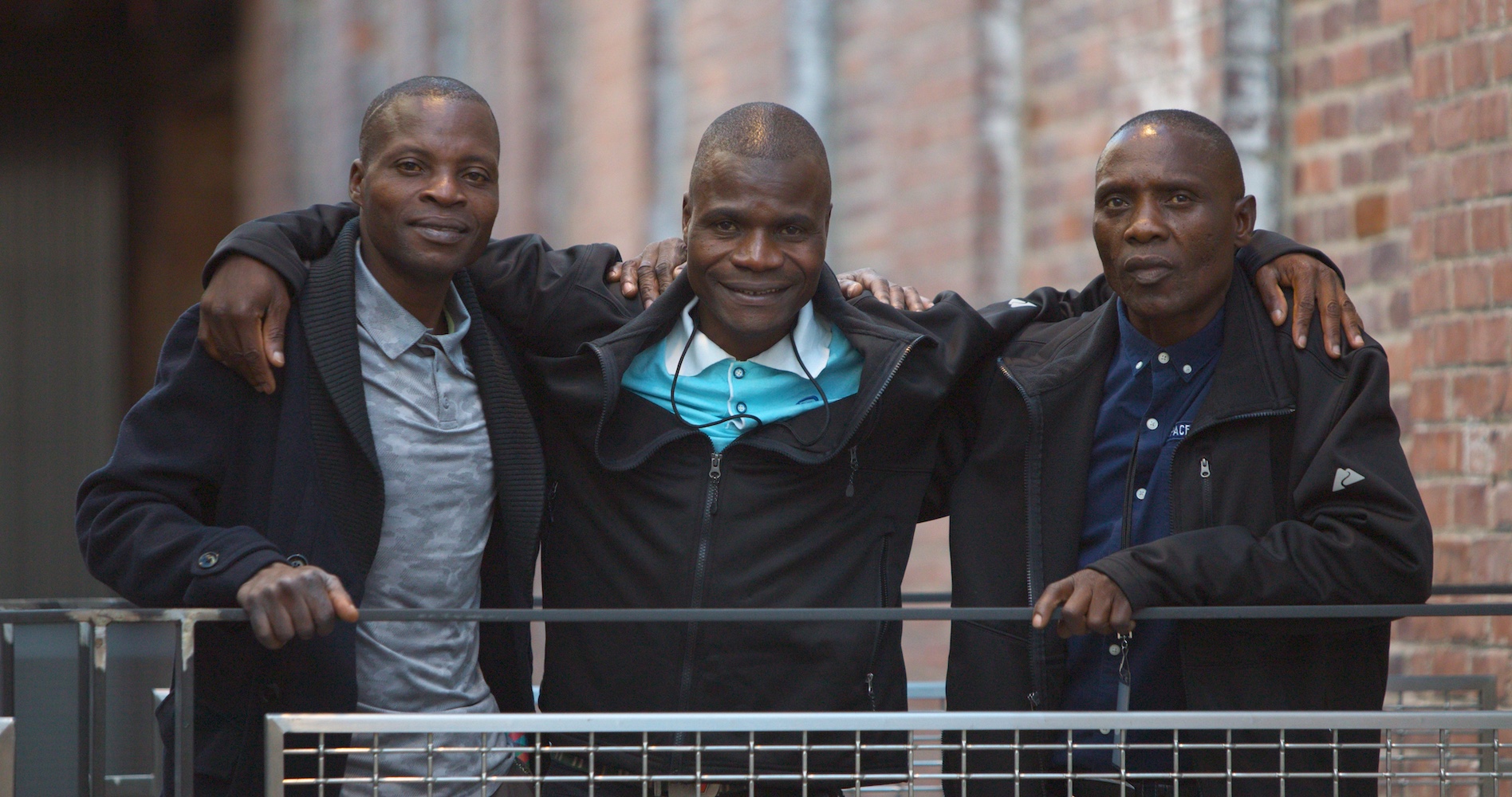
You guys play multiple instruments (the African guitar, homemade drums, the babatone, etc.). How do all of these come together to give your music its own distinct, Malawian sound?
The Kasambwe Brothers: It is a question of being adaptable to different situations. We have our bass, the babatone, and the drum. For us to perform properly, it depends on the kind of audience that we’re playing for. If it’s a reggae audience, they’ll go along with the reggae tunes. If it’s just a traditional audience, we’ll make sure our music fits that situation. It’s always a question of seeing what type of audience we’re playing for, and then adapting ourselves to that.
What new territory would you like to explore as you continue to make music and perform together?
The Kasambwe Brothers: As far as the future is concerned and how we see ourselves moving forward – just remember, we are artists working in our territory in the way that we have always done. But when we have outside intervention, it starts to make a difference. Our future will be influenced by continued collaboration, like the kind we’ve gotten here in the United States. On our own, we don’t have the capacity to reach as many different roads. Our new audience and our new collaborators really have to still be present to make sure that we move to another level. We cannot move to another level on their own.
— —
:: stream/purchase The Kasambwe Brothers here ::
:: connect with The Kasambwe Brothers here ::
— —
— — — —
Connect to The Kasambwe Brothers on Instagram
Discover new music on Atwood Magazine
© Randi Steinberger
 © Randi Steinberger
The Kasambwe Brothers
an album by The Kasambwe Brothers