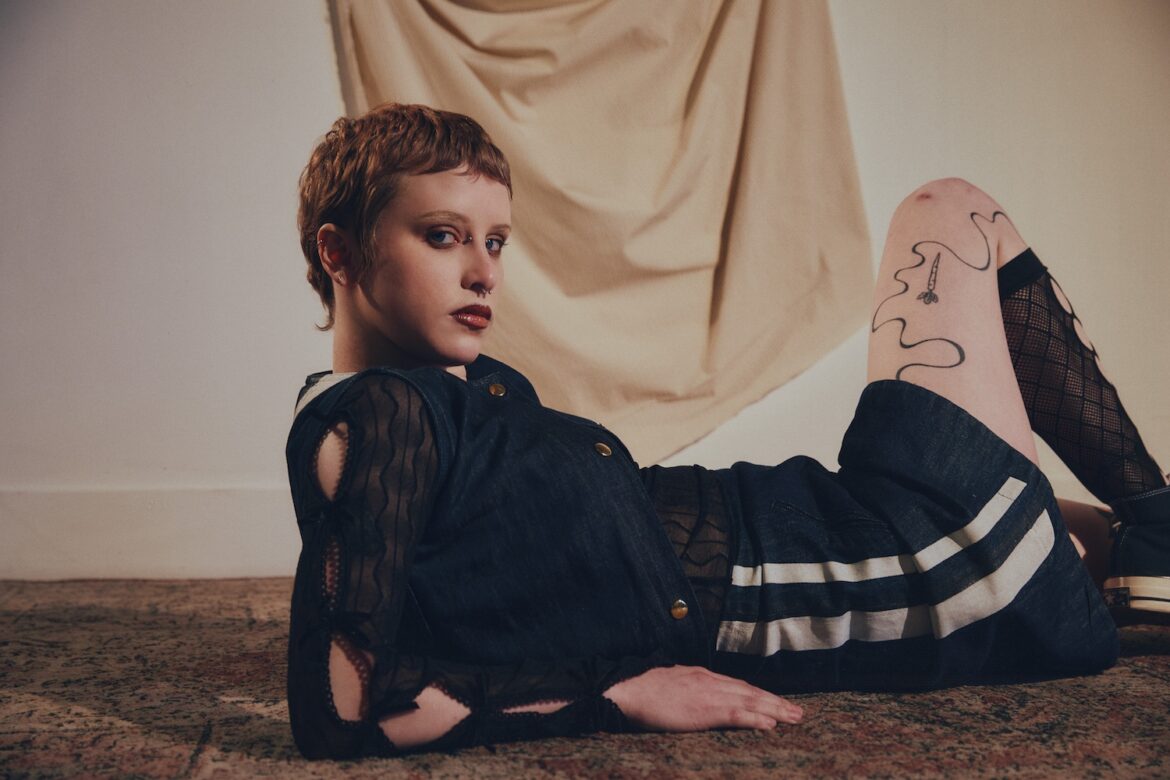
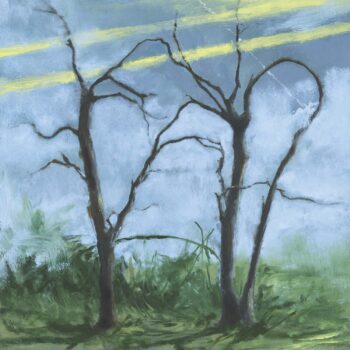
‘Where the Earth Bends’ is the monumental debut full length album from Gabi Gamberg, better known as Daffo. Gamberg proves they can explore new sonic territory while keeping true to their roots with a record that is as carefully crafted as it is biting and honest.
Stream: ‘Where the Earth Bends’ – Daffo
Maybe I’m proud of it. Maybe I’m just f*ing vulnerable.
* * *
When I met Gabi Gamberg for the first time, we were standing at the mouth of a hiking trail.
It was my friend’s 23rd birthday, and we were looking for a waterfall to quell the heavy blanket of LA heat. After exchanging pleasantries and sweaty side-hugs, we formed a winding trail of ill-equipped hikers, weighed down by thick denim and jangly carabiners. We chatted about their work, which I had been a fan of for the past few years. They tell me about their adjustment to LA and their complicated feelings towards touring, I tell them this is my first time in southern California but I don’t feel like leaving.
I realized even when they weren’t singing, Gamberg’s voice had a uniquely musical quality, peaking and dipping in all the right places. They embodied music, and something in their movements was uniquely instrumental, from the way they stooped to tie their shoe to a gentle touch on my friend’s shoulder. The second time I met Gamberg was over Zoom for our interview, and despite being on opposite coasts, our conversation transported me back to the Malibu skyline. Their stark honesty and vulnerability is unwavering, regardless of the context, and even the most basic of interview questions became thoughtful meditations.
Gamberg started training on violin at age six. A few years later, their dad introduced them to the guitar, and they quickly surpassed him in skill. “I got good enough at it that I can play my own songs well,” Gamberg admits to me with a chuckle. After struggling with undiagnosed ADHD in high school, they transferred to Idyllwild, a residential music school in California. Idyllwild was a long ways away from the daffodil-dotted yard of their childhood home in the Philadelphia suburbs, but it was a needed change.
“It was very much so a survival mechanism,” they assert, admitting that they Googled “music school” and went with the first search result. Suddenly, Gamberg was faced with the discipline and structure that had pushed them away from the violin, but this time, it was different. They learned both technical and conceptual skills that guided their work in a new direction. “One of the things I learned at songwriting school was finding what lines are necessary. If you can make every single line necessary, then you’ve got yourself a great f*ing song.”
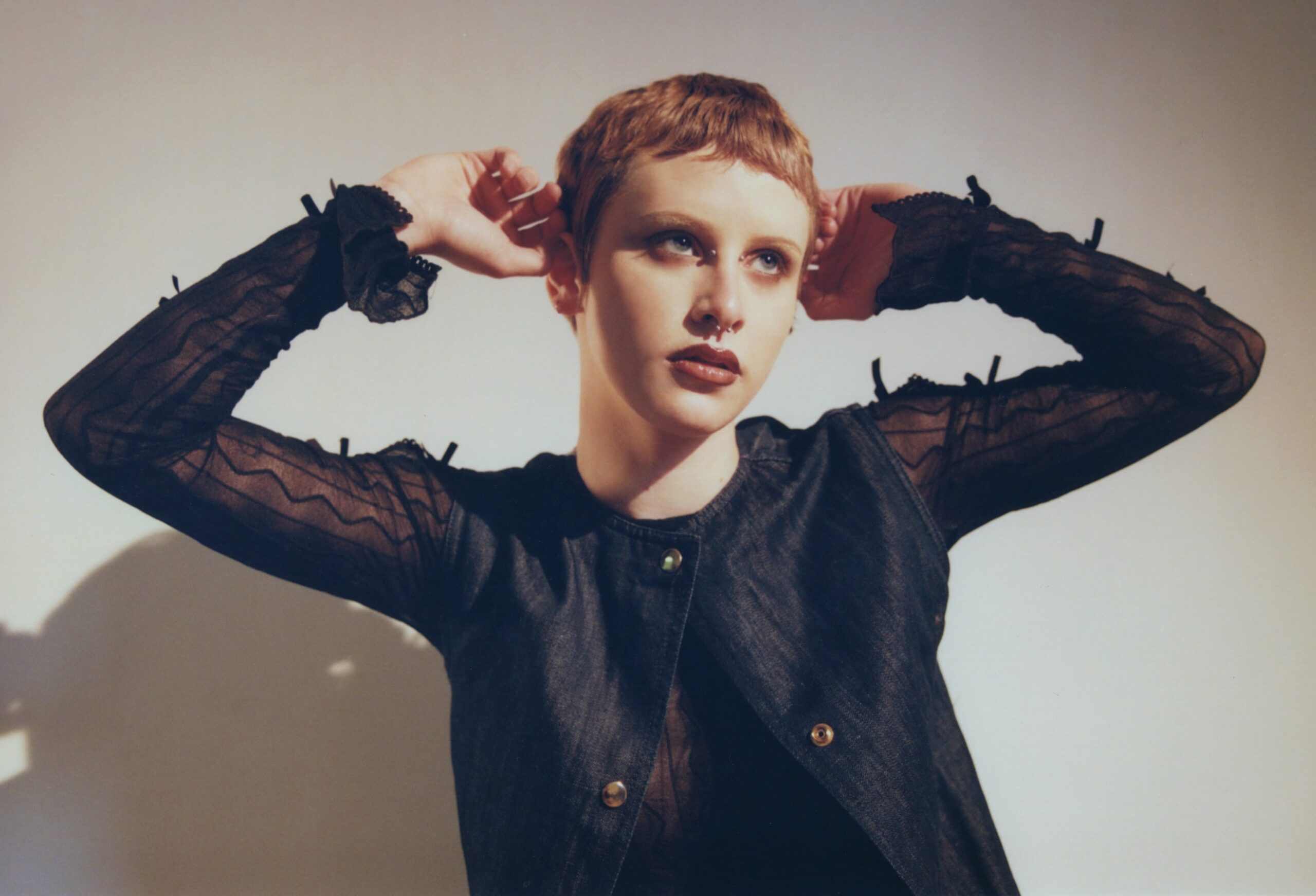
The music of Gabi Gamberg, better known by their stage name Daffo, is laden with necessity.
Every chord change, pick slide, and vague metaphor is imbued with a sense of purpose that results from the intensely personal relationship Gamberg has with their work. This raw quality can be partially attributed to the connection they seek to forge between audience and artist through transparency.
In their second TikTok, which has now amassed 1.3 million views more than two years later, Gamberg is in a warmly lit bedroom wearing a pointy green cap. Leaning towards the camera, they breathlessly declare, “I was having this crazy dream last night where my body was expanding and then I woke up with this song in my head and it makes no sense.” They lean back, gripping an acoustic guitar, frenetically launching into the first verse of “The Experiment,” the track that would catapult their music career.
@daffoband this is what my mind is like at 4am (calling this song “the slit expiriment”) #indie #physics #music #bigthief
Now, at 21, Gamberg is still that eager musician that went viral a day before their nineteenth birthday.
The difference is that they now play sold-out shows with the likes of illuminati hotties, Annie DiRusso, and Blondshell, with their next venture will be joining Wednesday on their upcoming tour, and just released their debut album Where the Earth Bends, through Concord Records. The record provides refreshingly honest reflections on growing up, mental health struggles, and confronting your vices accompanied by earthy strings, otherworldly Mellotron, and punchy drums.
This is their first full length album, and was produced by Rob Schnapf, who has worked with the likes of Elliott Smith, Beck, and Cat Power. After releasing their critically acclaimed EPs Crisis Kit (2021) and Pest (2023), Gamberg stays true to their folksy, melancholy sound with a new sense of vigor. Between soulful ballads and rumbling bass, Gamberg shows their truest self.
The album comes in swinging with “Get a Life,” a spiteful yet tender ode to rumination. The rough riffs of electric guitar lead us into the track, and quickly, the drums kick in with a sense of urgency. “The flower at your feet was alive until you stepped on it,” Gamberg spits. “But you were in a rush on your way to nowhere / Now when you find yourself looking back on all the paths you’ve been / There will be no flower there.”
As Gamberg sings, their voice flips over hi-hats and tumbles down back beats, trembling and solidifying at all the right moments. When they reach the chorus, they let go of all reservations, demanding themself and the listener to “Slow down!” The music builds on top of itself, then suddenly comes crashing down around Gamberg’s warbling croons.
The second track, “Habit,” is a heavy-handed grappling with their OCD. “It’s about cyclical thinking and getting high off of your thoughts,” they tell me. The dark, earthy strings coupled with discordant whines and pulsating drums provide a stark contrast to Gamberg’s light, effortless harmonies, punctuated by relentless cymbals. As the track continues, Gamberg’s voice becomes more strained as they admit they are desperate for a release from this repetition, while acknowledging maybe they just can’t let go.
The first half of the album investigates this phenomenon, delving into intrusive thoughts and the perils of an overactive mind. “I could bite my finger off like a carrot,” Gamberg opens with in “Carrot Fingers.” In subsequent tracks, they invoke repeating metaphors, like that of a “bad dog” or a dagger, to paint this picture.
This expert lyricism is most apt in “Quick Fix,” where the use of assonance and vocal inflection weave a somber sonnet. To Gamberg, a cigarette is a “Cancerous candle fuming,” while they admit, “I’m a whore for a quick fix.” This track deviates from some of the heavier production in previous tracks due to the sheer power of Gamberg’s writing. Just shy of two minutes long, they manage to weave in images of spoon-feeding and dissociative sex atop a repetitive, muted guitar. With “Absence Makes the Heart Grow,” Gamberg has abandoned all sentiment, turning angry and vengeful. This track marks the second half of the album, which slowly devolves into absolute despair. “This second half of the record is just like, ow,” they tell me.
“Ow” is one way to describe it. The absolute masterpiece that is the pairing of “Unveiling” and “Sideways” may be the highlight of the entire record. The duo shifts the album in a darker direction, with less room for self-pity or spite. Gamberg’s vocals twist at the end of every line, sounding like a half-question, and the lyrics themselves are heavy and tactile. The song describes Gamberg and their father attending an unveiling for an extended family member Gamberg never knew, meeting a pregnant cousin, and feeling hope for new connections. The somber underpinnings of the first verse lighten, and the violin sings.
“There is still a part of this family that’s untouched, that I can be a part of,” they say when reflecting on that moment. The song takes a sudden turn with rough strings and Gamberg quietly humming, “Found out Tuesday that the baby died.” After this line, you can hear their breath catch before they continue. “I don’t know if I can say her name now … Adalie,” The track ends with a litany of grief as they repeat her name over and over, their voice gentle and weighted. “Sideways” carries this grief sonically, and scribes an epic poem lyrically. The track is smooth, and allows listeners the room to sit with the rest of the album.
Overall, Where the Earth Bends is a phenomenal proof of the growth Gamberg has made while keeping the integrity of their previous work.
Its reception has been outstanding, and Far Out Magazine dubbed the latest record as “the best of a new generation.” Daffo is an artist to watch, with a unique flavor of folk that is hard to come by. You can catch them on a stacked tour bill that starts in October, where they will play headline shows before supporting the likes of Wednesday, Jay Som, and Mali Velasquez.
Though the first time I met Gamberg I was a bit starstruck, our most recent conversation confirmed what I had felt at the time: to Gamberg, there is no hierarchy of musician over fan. In order to create this work, they must build a relationship with their listeners that is deeply personal without room for shame or separation.
To listen to Daffo’s music is to know Gamberg, and all their quirks and vices. To listen to Daffo’s music, you must disidentify from embarrassment and become the most real version of yourself. This has never been more true than with Where the Earth Bends, a raw masterpiece about what it means to be human.
— —
:: stream/purchase Where the Earth Bends here ::
:: connect with Daffo here ::
— —
Stream: “Habit” – Daffo
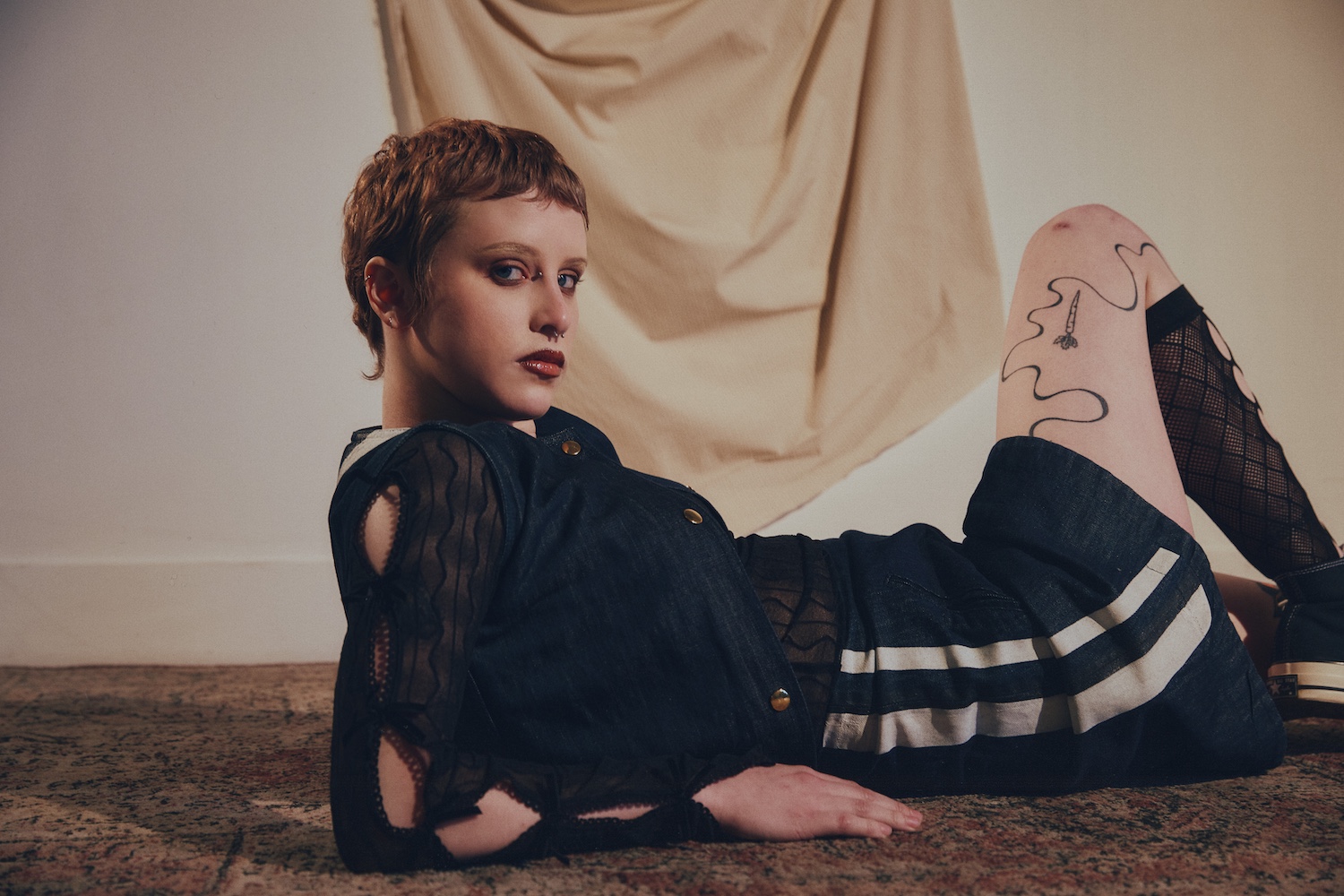
A CONVERSATION WITH DAFFO

Atwood Magazine: You were classically trained on violin, then mostly self-taught on guitar, and then went to a music school. What was this progression like, and did you find that you preferred one method of learning over the other?
Daffo: I guess starting at the beginning, I’ve always been musical. With the violin, I really did love it, but the discipline I didn’t really like. I liked playing in the school orchestra, but I didn’t like to practice. I do actually love classical music, but just not as much as I love other music. I started playing guitar when I was eight or nine, but I never took lessons. My dad taught me. So when I was going to play guitar and write songs, it was just me alone exploring, and I felt like it was easier, or more fruitful, for me to explore on guitar. I got good enough at it that I can play my own songs well. I can’t really play much else. Then I went to high school. I had ADHD, undiagnosed, and it was really tough. I wasn’t really that interested in anything. All I was interested in was the next weekend when I was going to go play a show. That’s what I would think about to get me through.
It was a very desperate thing to go to music school. I literally Googled songwriting school and then went to the first place on the list. It was very much so a survival mechanism because I knew I needed to change something. I wanted to drop out of school but my parents wouldn’t let me. [Idyllwild] posed this tough thing where, all of a sudden, I was getting that discipline and structure that I was getting originally with violin lessons, where people were telling me what to do with my songwriting. That was tough at first. I remember I had a really big writer’s block for a few months. And then, eventually, something clicked and I realized that I had gotten this vocabulary that I was able to pull from without really thinking about it.
Different ideas of why a song works and also my editing skills became a lot better. I could go and write a song the same way that I always did, and then go back and be like, ‘How can I make this more effective.’ Even though I was being taught pop methods, it was helpful in whatever genre you wanted to write in. Then everybody was going to college, so I decided to go and then dropped out.
Yeah, I was gonna say you recently dropped out and made the move to LA to focus on music. How are you adjusting, and do you have anything on the horizon aside from touring?
Daffo: Adjustment has been strange. Although I hated school, it was the first time in my life I wasn’t in school. And school definitely offered me structure. As a neurodivergent person, that is really helpful for me. It’s been tough to figure out what to do with my downtime. The thing that I wanted for so long [was] to be able to write my music and f* off and do whatever I wanted. But now it’s been so poisonous to just kind of sit around.
I’m still trying to figure out what to do with myself because I really can’t just do music. Then I’m in some sort of echo chamber and I’m not that type of person. I need to have a break otherwise I kind of lose my mind.
And then on the horizon, I’ve just finished making a cover that’s going to come out after the record, an Arthur Russell song. So that’s going to be fun. But I mainly did that just because my label wanted me to do something after the record. I didn’t want to do an acoustic version of one of the songs. That’s just so silly to me. I made the songs the way that they are and that’s how they are.
Since I finished the record, I’ve just been having trouble writing because I feel like I’m a lemon. I squeezed so much of myself out, so I’m trying to sponge back up right now.
Well, you touched some on neurodivergence. I feel like “Get a Life” especially really reminds me of how important mindfulness and being present are when you do have OCD, and the whole album seems to be pushing to be present and pulling against “quick fixes.” Is that something like you were practicing and struggling with while making this record?
Daffo: Absolutely. It’s kind of cool that you caught on to that. “Habit” is about my OCD. It’s about cyclical thinking and getting high off of your thoughts because it’s not all bad. It’s mostly bad. It’s mostly bad thoughts, but you kind of get into this rhythm that feels comforting in a way. It’s a habit to start doing that. And then you come off of it and it feels bad. And then you’re trying so hard to fix everything in your mind. That’s what “Get a Life” is about. I have a lot of trouble feeling my emotions a lot of the time. I’ve been in therapy for so long that I just intellectualize everything
I’ll just be like, oh God, I feel like shit. Why do I feel like shit? What’s causing it? Did I do something? Did I do this? Instead of just sitting there and being like, I feel like shit. I always think I can think my way out of something and I can’t, it never works. Or it just keeps coming back if I try to do that.
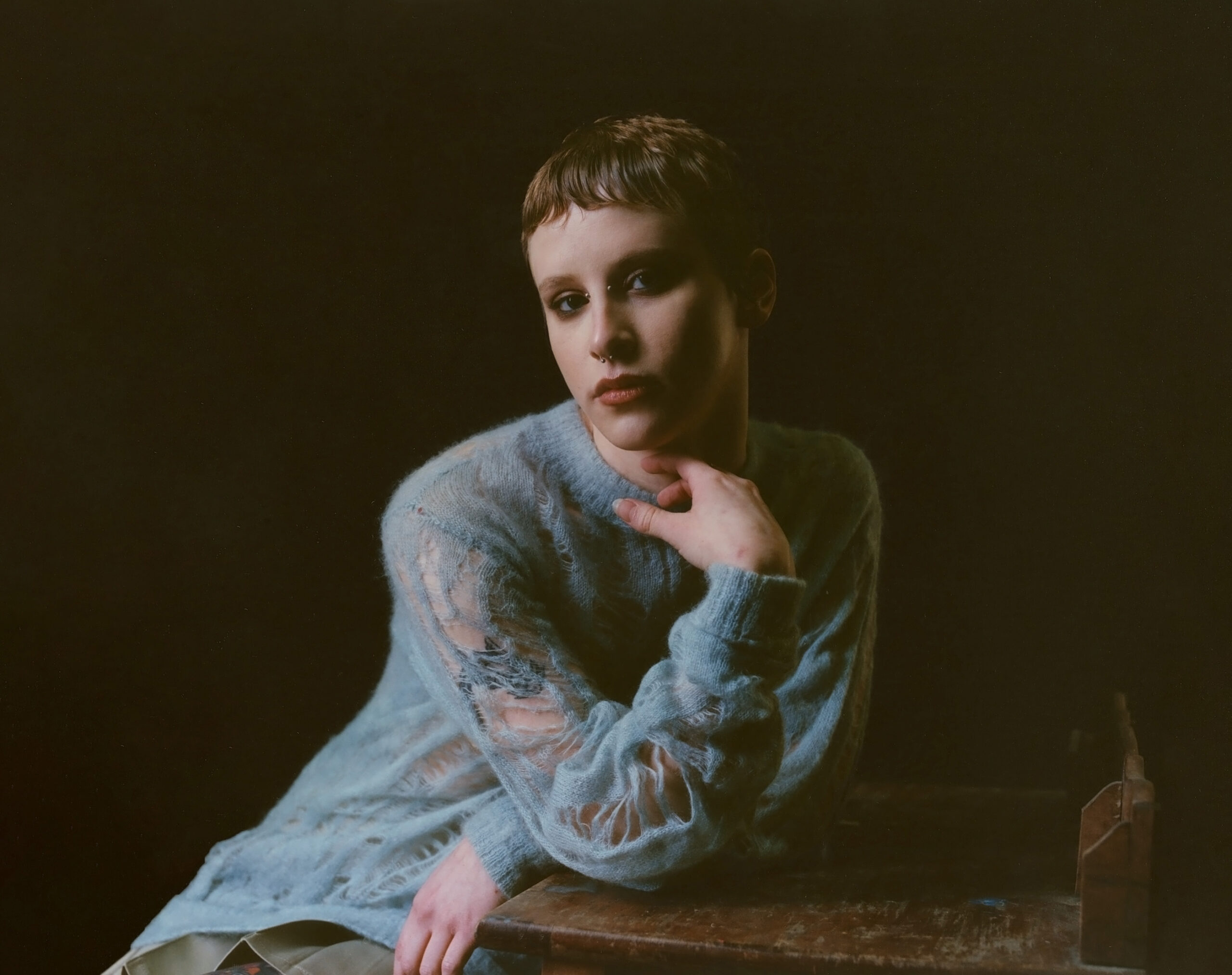
I always think I can think my way out of something and I can’t, it never works. Or it just keeps coming back if I try to do that.
* * *
I was reading in one interview, you were talking about how you shaved your head and you changed your stage name and your whole trajectory kind of shifted. How did it feel to have sort of created this persona, or this Daffo version of yourself?
Daffo: I think I honestly just kind of stepped into myself. I had laid the groundwork. I was playing shows every weekend. I had the songs. I was ready to take a step. I wanted to have a career and I wanted to change my band name and whatever. The head shaving was completely unrelated. It all just kind of happened at the same time. It was so interesting because I shaved my head and then all of a sudden I had all this attention, these eyes on me, and I felt so vulnerable. I couldn’t do anything but just be myself because I was so naked.
I think I was just growing up. I was just ready to take a step with my music and my career. I had laid the groundwork in a way that I was ready. I was ready to do that. And I also just got f*ing lucky. If I had posted that first song at a different time of day, or if I wasn’t wearing a bright enough color, or I didn’t start the video with me saying, “I wrote a dumb song”… for some reason, everything was right and I just got lucky, you know?
The second TikTok I’d ever posted was “The Experiment.” I had just downloaded the app a week before. I’m lucky. I’m lucky and maybe I’m a little smart, but I’m also very stupid.
I shaved my head and then all of a sudden I had all this attention, these eyes on me, and I felt so vulnerable. I couldn’t do anything but just be myself because I was so naked.
* * *
You've gained popularity super quickly. How do you grapple with suddenly having a platform?
Daffo: It’s tough. Having more people listening to your music and having expectations. I met all these people on tour that really resonate with my music and it means a lot to them. Now I feel like I have a responsibility to them to make something worth their time. The thing I’ve been struggling with is sitting down to write a song and I’m not writing it alone. I have other people in mind when I’m writing my songs and it’s been causing trouble for me, but it also is really cool.
I’m still at the whims of the algorithm. I may have like 50,000 TikTok followers, but I still will only get a thousand views on a video. It definitely feels very futile until I’m playing a show and people are showing up. There’s also a lot of people who don’t even follow me, which I love. I’d rather you not follow me and you just like my music.
How do you work to keep your music authentic to you?
Daffo: I think it’s kind of the nature of it. This is very cheesy, but I’m literally just publishing my journal. When I write a song that’s posing as something else, I don’t like it. It’s not a good song. I don’t necessarily have to work so hard to be authentic because it just is. That’s why I’m so nervous about this record, because I feel so naked. In another interview, I said, “Putting out this record feels like I’m running naked in front of a bunch of people.” Maybe I’m proud of it. Maybe I’m just f*ing vulnerable.
What are some of the sonic moments in the record that you're most excited about?
Daffo: Oh, I got you on this. In “Sideways,” there’s that little break where the piano goes, [vocalizes]. That’s one of my favorite parts of the record. We were basically done with “Sideways.” And then I was like, “It just needs something. Can we just put some piano on it?” And we had this guy, Jerry, come in and he’s f*ing fantastic. He sat down and he was just like, I’m going to be f*ing Vince Graldi on this thing. It was so good. It just made it breathe. I love the beginning of “Unveiling.” When the upright bass comes in, it just hits you. It’s like you’re floating, uncertain, and it brings in the floor. I love that moment.
There’s a really funny moment in “Habit.” There was a pick slide. We were doing it as a joke, but we ended up keeping it because it was fun and it made it in.
“Carrot Fingers” is so simple, but it also almost got like a little Bowie. It wasn’t my intention, it was very much so raw, but it that song floats in a way that I like. The spoons in “Get Alive.”
This is very cheesy, but I’m literally just publishing my journal. When I write a song that’s posing as something else, I don’t like it. It’s not a good song.
* * *
You definitely have so many of these fun sonic moments that help lighten very heart-wrenching lyrics, but I didn't feel like that was as present in “Unveiling.” I think it's such a beautiful raw depiction of different forms of grief. I don’t really have a question, I just want you to talk about it.
Daffo: That song, I think, might be one of the best songs I’ve ever written. And it’s so unfortunate because everything is true. I actually wrote the first half of the song before the baby died. Like right before. So I feel like there was this element of hope in the first half, and then it kind of just turns into plain grief. It started out being about my dad and his family that I didn’t really know. There was a funeral. It was an unveiling. It’s when you unveil the grave after a funeral. The funeral happened during COVID on Zoom. So they had an unveiling where you go and you unveil the grave. They’re all Jewish. We did these prayers. I’m not particularly religious, but I was following the prayers. It was very interesting, it was for somebody that died, that I didn’t know. It was my dad’s aunt, and all of his cousins were there, or my cousins, apparently, and I really hit it off with these two people, the parents of the child.
It was very hopeful. It was like, “Oh, there’s new life. There is still a part of this family that’s untouched, that I can be a part of.” It’s tough to talk about the song.
How was working with Rob Schnapf?
Daffo: It’s funny when in your head, you’re like, “Oh my God, oh my God.” And then you meet the guy and he’s just a f*ing goofball. I love him. He is so fun to work with, but also very, very good at what he does. I think he really knows how to give a song what it needs, no more, no less. I feel like that allowed the songs to really speak and have the voice that they need. They’re not overshadowed by production. They’re just kind of held, supported. That felt really good because these songs especially are just tough ones, except for maybe “Go Fetch.”
The way that he approaches his work process is very relaxed. We spent so much time on it because we were sitting around letting things sink in. A lot of time was spent hanging out because he never wanted to force anything. You just let things happen and I think that’s a very cool way of doing it. I feel like in the past when I’ve worked on a song, I’m like, “Okay we have one day to track this and this, and then tomorrow we have to finish this and this, and with Rob, we’re just going to make a song and hang out. I had time to breathe and to really think about things and be more intentional with the production.
And then I also met this engineer. [Matt Schuessler] was a huge part of the process as well, cultivating the energy in the room. Making the record with the two of them, I felt so supported and loved and safe.
How has your process changed with a whole team of people who are working with you as opposed to just making music on your own?
Daffo: It’s so much less stressful, but also so much more stressful because I have people relying on me.
But I love everybody that I work with. I am so lucky. I have the best team in the world. I love my managers. I love my label. Everybody is just looking out for me and there to support me, but also there to push me. There are certain things I don’t have to do anymore. Like, I don’t have to read my emails. They’re basically doing their best to make it so that I can focus on making music, and that is really great.
As I sit down to write a song, all these people join me, you know? And that’s been tough to navigate, still figuring that out.
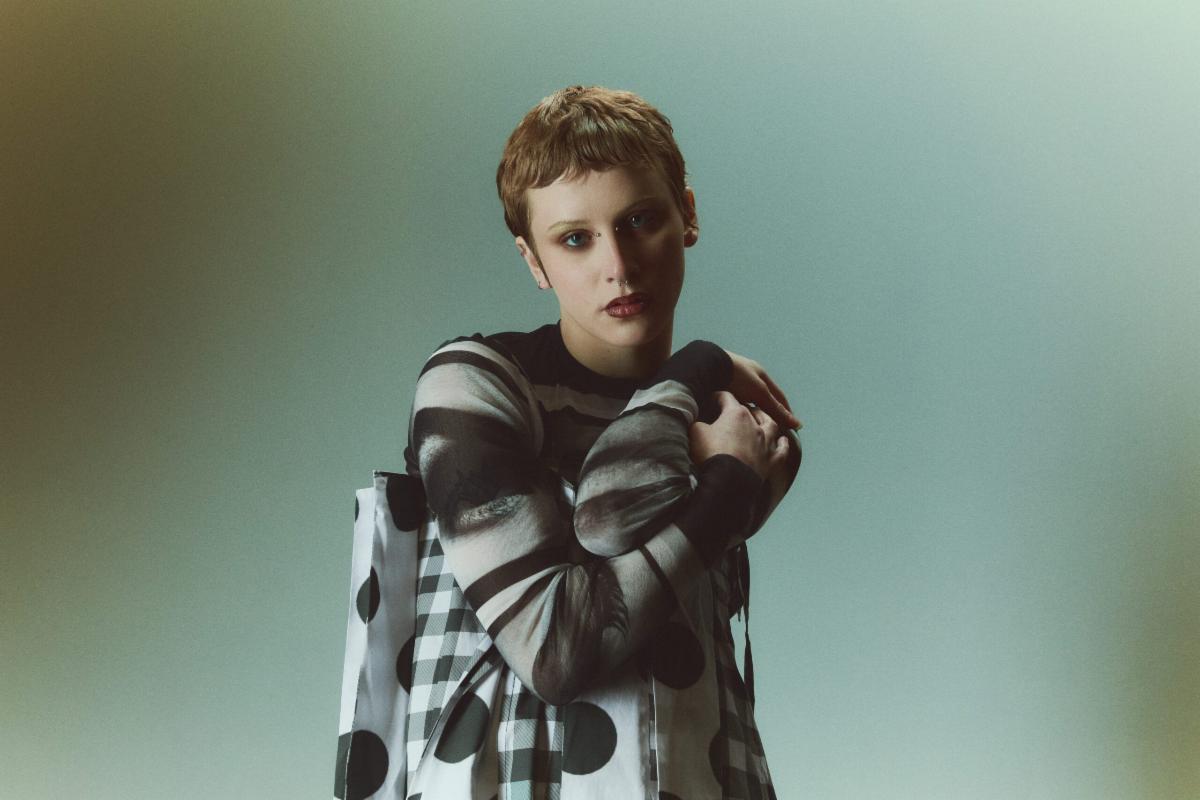
What was touring with Blondshell like? And are you excited to be supporting Wednesday?
Daffo: I am so f*ing excited to be able to see that show every night. That record, their new record, is f*ing incredible. They’re one of my favorite bands. I’m really so excited. It makes me dread tour less. People aren’t lying when they say tour is hard. I’m a very sensitive person all around. My body is not at peak health. So traveling and not eating well and not getting enough rest is really tough on my body and therefore my mind. The good part of it is I get to play music and meet people. The shows make it worth it. But everything in between basically sucks.
I’m really excited to get to at least be with one of my favorite bands, doing my first headline tour, going to Europe for the first time. There’s all this novelty that makes my ADHD brain go like, “Oh, this is going to be different.”
Touring with Blondshell was great, but also tough. It was such a short run. I wish we could have gotten to know each other a little better, but it was cool. Every new band that you open for is a different crowd. It was interesting.
I feel like ADHD and OCD must make touring difficult.
Daffo: Oh my God, that’s the worst part. The worst part is sitting in the van for hours thinking. It is so bad. ADHD, hyperactivity isn’t necessarily outward. It’s not like I’m bouncing off the walls. It’s mental. I have hyperactivity in my brain. And with OCD, it’s just cyclical thoughts and intrusive thoughts. It’s just brutal. That is the worst. That is the worst part of the tour, too much thinking. So if anybody has any good hobbies, I think I need it. The problem with listening to music is it allows too much room for thought. And I can’t watch anything in the van because I get car sick. So I need some audio books or podcasts or something. That’s what I need to tap into. I think that’ll make a huge difference.
I'm interested in how you arranged the songs. Did they come out in the order they’re arranged?
Daffo: That was so tough, actually, because all of the songs are so different and some of these songs need to be padded in a way. I can’t have “Go Fetch” go into “Unveiling,” you know? So it was really tough. You have to focus on, how do you want to open the record? How do you want to close the record?
This second half of the record is just like, f**k. It’s like, ow. I actually made note cards of all of the songs to see all of the possible combinations. I really wanted “Unveiling” to go into “Sideways,” but I needed something before “Unveiling.” I would draw lines from the bottom of one card to the top of the other card in different colors so that you could see which ones matched up. It was really methodical. I tried to figure out every possible combination. And then I was on a plane and I was just like, like, “F* it, let me try this.” And I put them in that order, just on the plane. This is the only way it works. Any other way does not work.
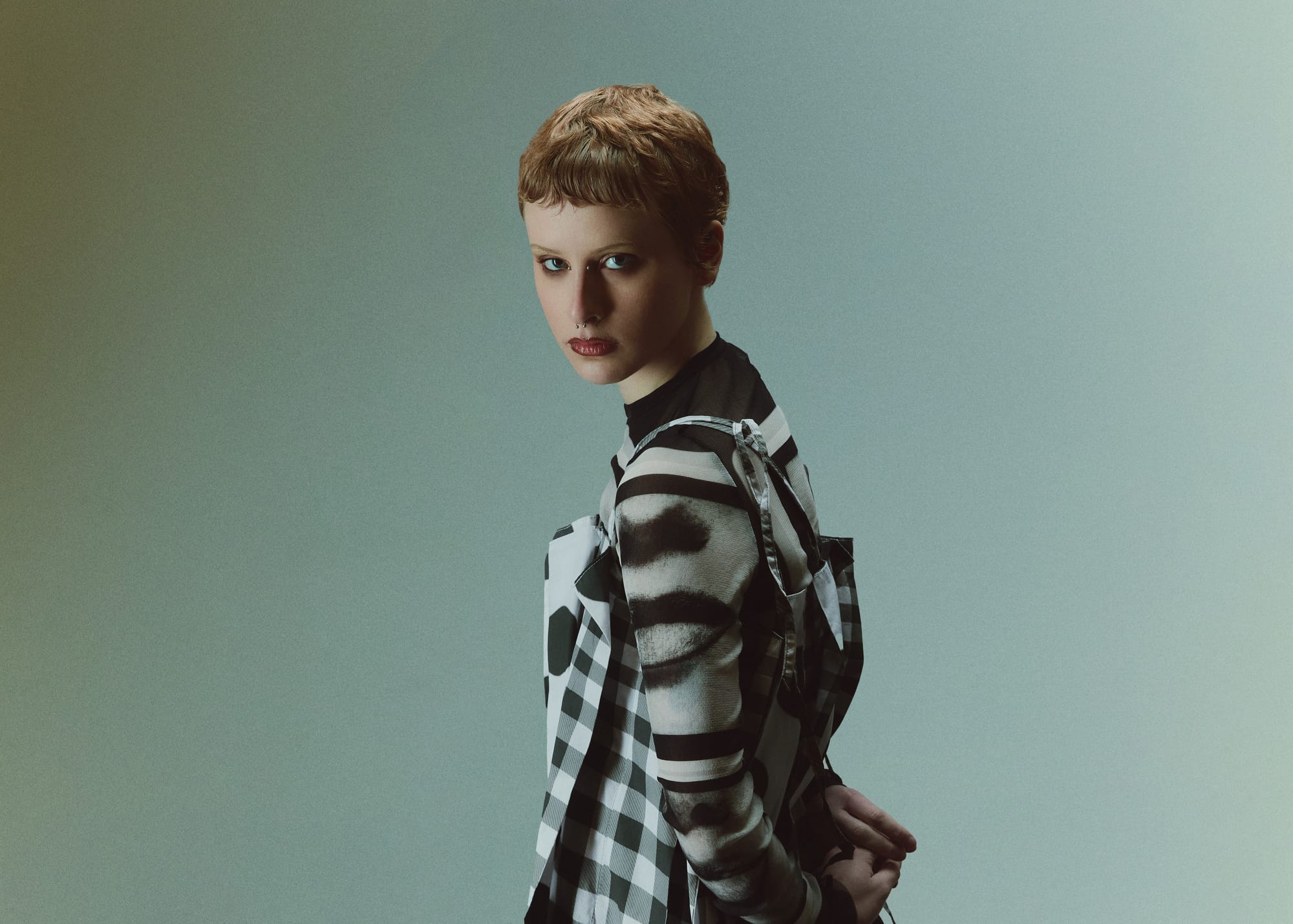
Before we wrap up, I just want to know the story behind these lyrics from “Absence Makes the Heart Grow”: “I've been burning for you for five raining years / I've come to learn that I might be a chandelier.”
Daffo: So that line, you’re burning but it’s raining. Everything has kind of been against us, and the chandelier part is like, I burn for other things too. I burn for other people. I have many flames.
I made that metaphor and I was like, “Oh, this is perfect. This is so obvious.” And then there was a comment that was like, “What does the chandelier line mean?” And then people were like putting all of their meanings in. It’s a little bit more basic. Everything has been against us, and then also this isn’t the only thing that I burn for. I don’t know how to maintain it like, it’s not the only thing. I was also at the time exploring non-monogamy.
Well, I'm glad I could bring some clarity to those lyrics for people who are curious.
Daffo: One of the things I learned at songwriting school was finding what lines are necessary. If you can make every single line necessary, then you’ve got yourself a great f*ing song.
— —
:: stream/purchase Where the Earth Bends here ::
:: connect with Daffo here ::
— —
— — — —
Connect to Daffo on
Facebook, TikTok, Instagram
Discover new music on Atwood Magazine
© Nolan Knight
 © Nolan Knight
:: Stream Daffo ::