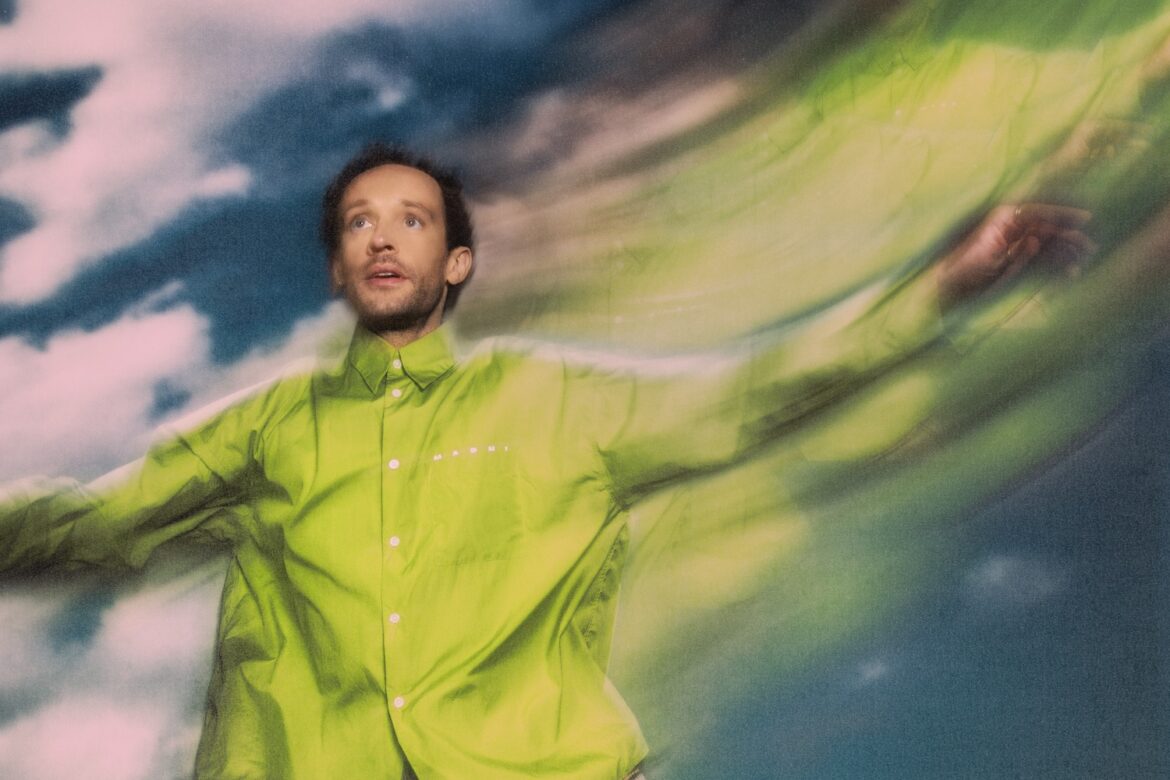
Fueled by surrealism and the specter of nuclear war, Stephen Wrabel finds light in the darkest places – an idea he explores on WRABEL’s forthcoming third album ‘Up Above,’ a sobering, strikingly human record that pairs emotional clarity with cinematic soundscapes.
Stream: “up above” – Wrabel
“Flowers still bloom in spite of everything.”
That quote, printed on a piece by British artist David Shrigley, hangs on WRABEL’s living room wall. It quietly overlooked the very space where much of his upcoming album Up Above took shape.
“I don’t think it’s just coincidence that that piece was within eyeshot,” he says. “As cliché as it may sound or be, I believe that to be true.”
From that simple sentiment – hope against the odds – WRABEL spiraled outward, taking the idea to its most existential extremes.
“We won’t be here forever,” he reflects. “We don’t even know how long ‘forever’ would or could possibly be. And yet, here we are. What are we gonna do? How much sweeter does something become when you really realize it’s fleeting?”
That kind of tension runs throughout Up Above, WRABEL’s third studio album, set for release on February 13, 2026. It all started, oddly enough, with a love song about nuclear war.
While reading Nuclear War: A Scenario by Annie Jacobsen, a book detailing how a global catastrophe could unfold, WRABEL felt a strange inspiration strike. He picked up his guitar, recorded a rough voice memo, and texted his longtime collaborator Drew Pearson: “Hey, do you wanna write a song about nuclear war?”
The result became “Up Above,” a sweeping, slow-building track that would eventually name – and shape – the entire record. Originally titled “Meteor Shower,” the song reframes personal emotion in existential terms. WRABEL describes it as “beautiful chaos,” a piece that “zoomed out from the personal to the existential, dissolving and reforming as it goes.” It redefined the emotional stakes of everything he’d been working on.
And with that, Up Above began to take form.
Co-produced by WRABEL and Austin Ward, with additional production and mixing by Damian Taylor (Björk, Frou Frou, Arcade Fire), the album marks WRABEL’s first time fully in the producer’s chair. It’s also a notable shift in his storytelling approach. While his 2023 album Based on a True Story leaned on autobiographical narratives, Up Above is more abstract, dreamlike, and surreal; built on fragmented imagery and philosophical questioning.
“If you knew the world was ending tomorrow,” WRABEL asks, “how much more would the person you love matter today?”
That existential curiosity plays out across songs like the luminous “future” and the cinematic title track. There’s a searching quality to the music; a need to find meaning, hope, or even just clarity in the face of overwhelming uncertainty.
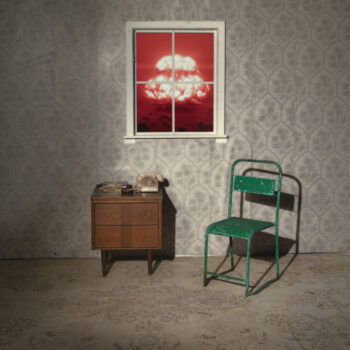
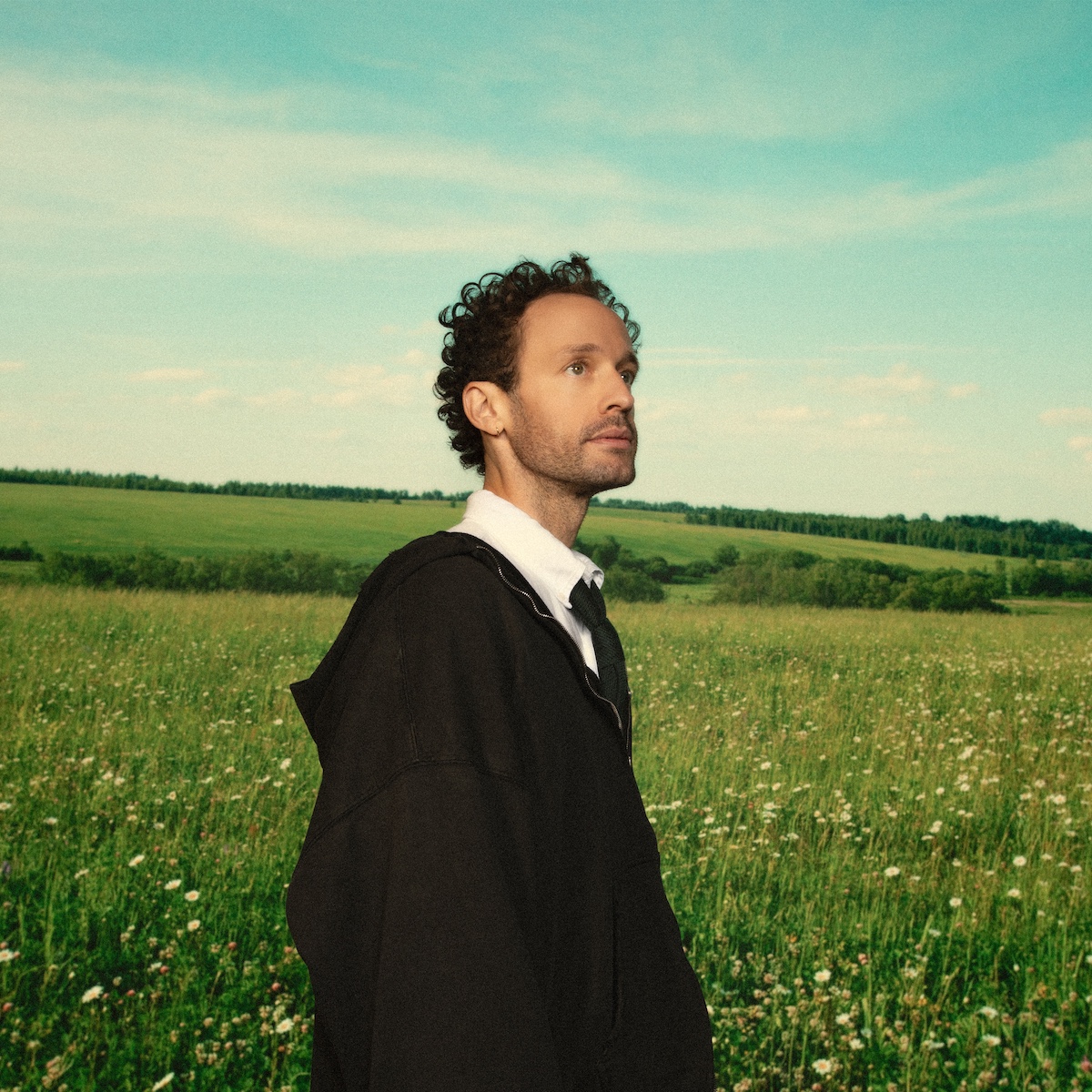
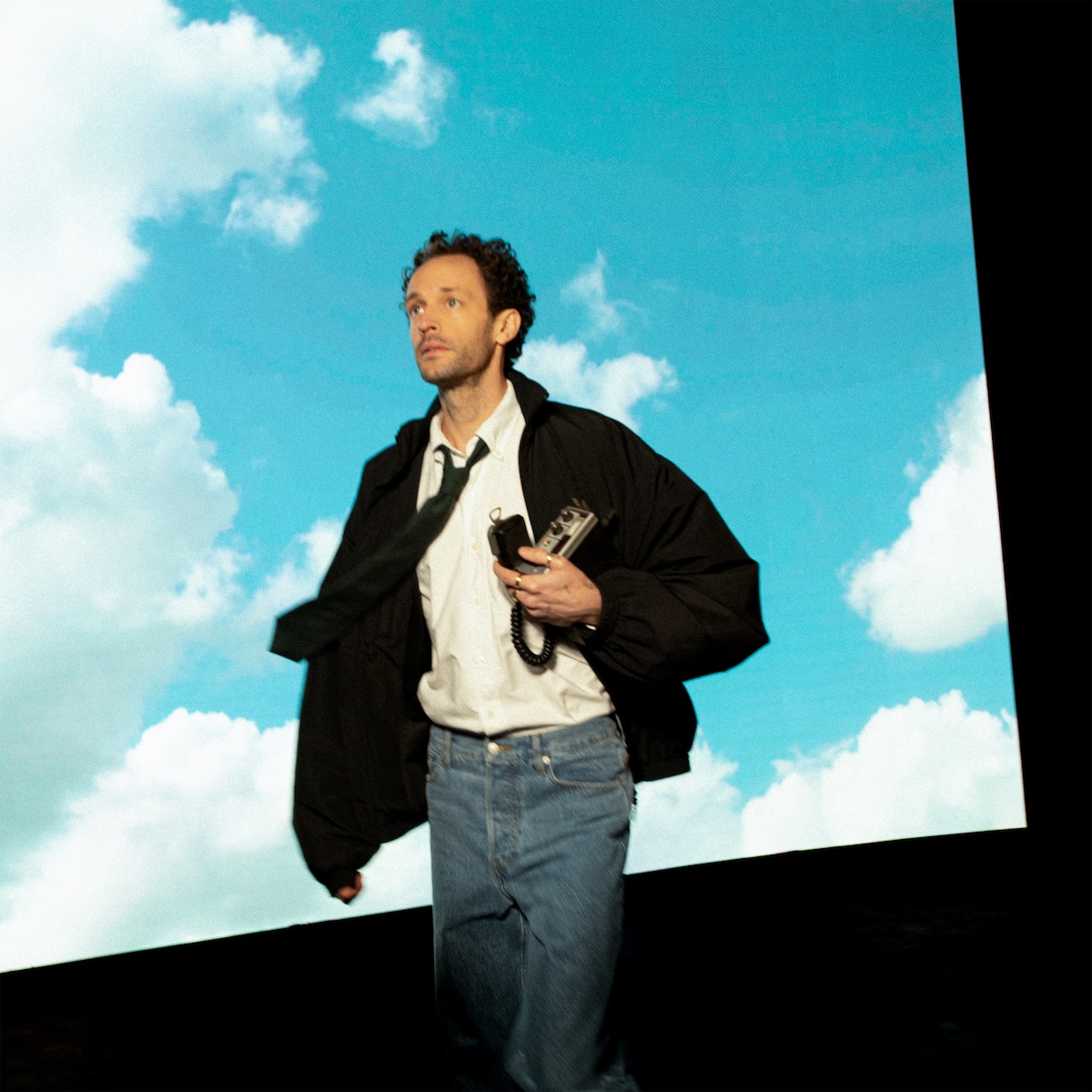
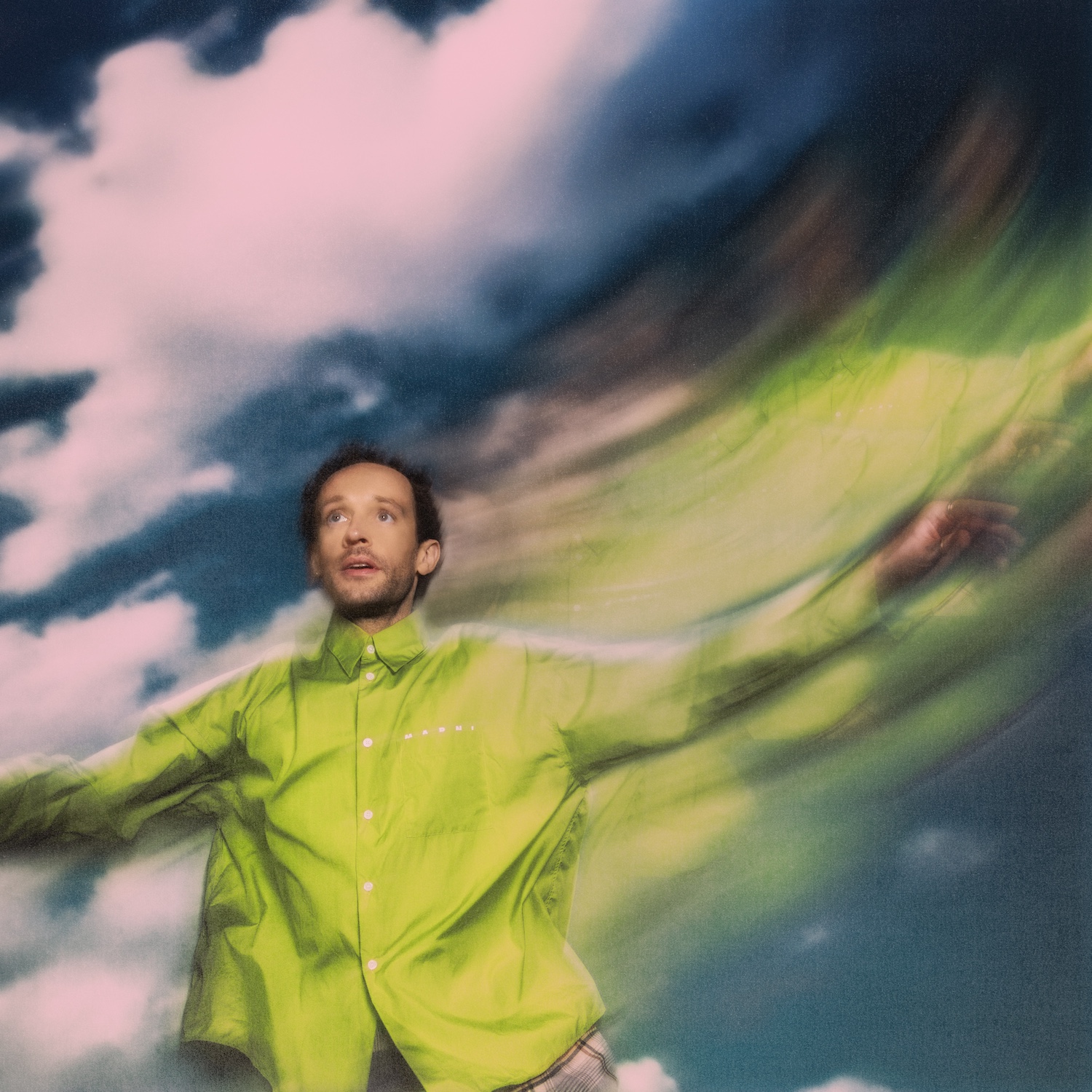
Visually, the album leans even more into surrealism. Directed and photographed by Dana Trippe (Janelle Monáe, Weyes Blood), the imagery features post-apocalyptic dreamscapes: mushroom clouds, decaying landscapes, eerie stillness. WRABEL, closely involved in the visual direction for the first time, found inspiration in the works of René Magritte and the chilling silence that follows imagined devastation.
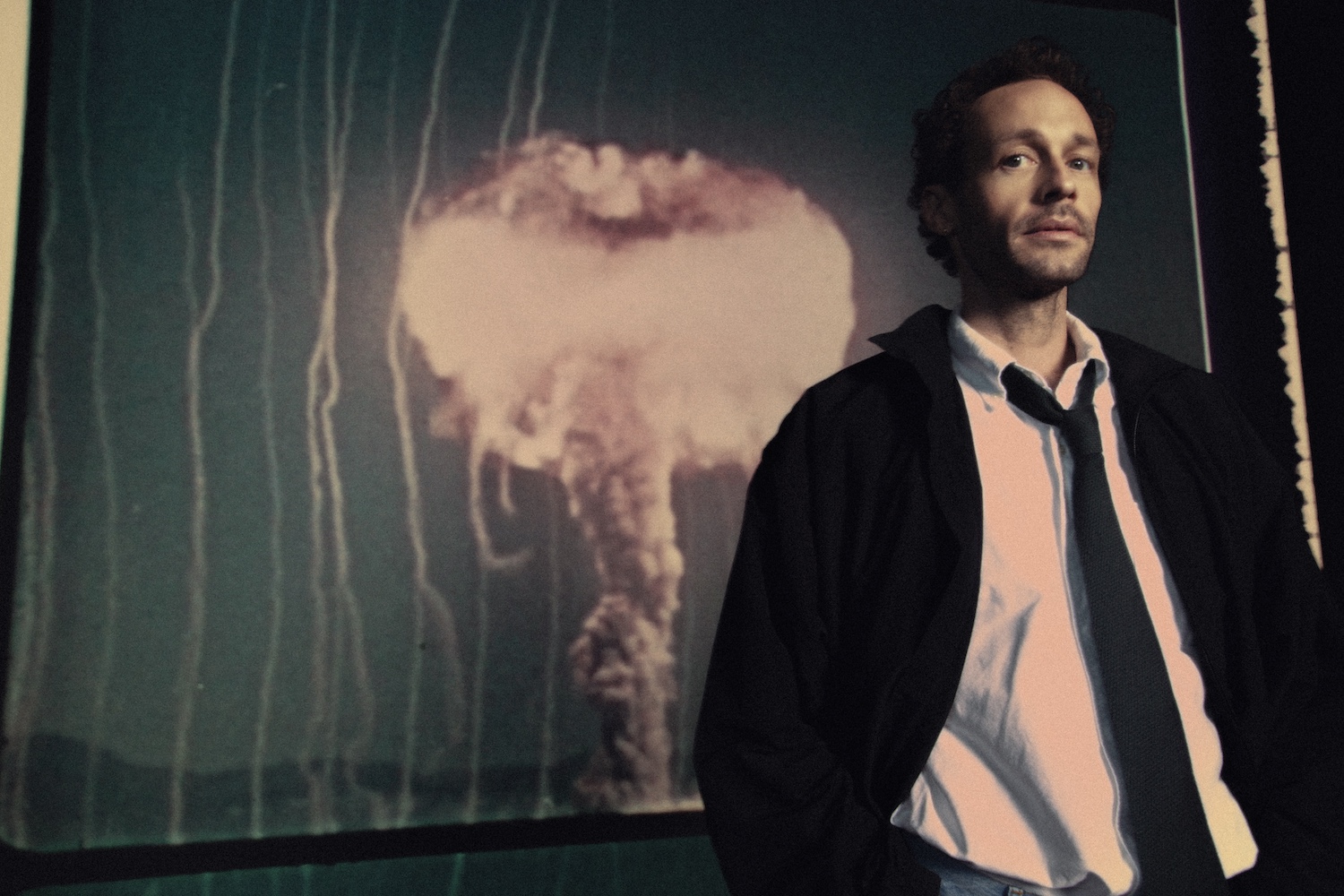
Yet for all the looming dread, Up Above reaches toward the light. Its core message is not despair but defiance; insisting that love, beauty, and meaning can still exist, even (or especially) in the shadow of an ending.
With a career spanning over a decade, WRABEL has quietly become one of pop’s most emotionally incisive voices – not just through his own music, but behind the scenes as a sought-after songwriter. His writing credits include collaborations with major artists like Kesha, Teddy Swims, Celeste, Ellie Goulding, Madi Diaz, and more. His 2017 breakout single “The Village” became a defining LGBTQ+ anthem, celebrated for its raw empathy and enduring resonance. That same emotional honesty continues to drive his work today, only now, the lens has widened from the deeply personal to the existential.
Up Above offers listeners an interesting perspective of choosing wonder and meaning in the face of chaos.
“I tried to find some sort of peace in that, and a deep appreciation for what we are, and what we can be,” WRABEL says.
Atwood Magazine connected with the singer/songwriter about leaning into surrealism, confronting the fragility of life, and building a sonic world that balances dread and hope.
— —
:: stream/purchase up above here ::
:: connect with Wrabel here ::
— —
A CONVERSATION WITH WRABEL
Atwood Magazine: This is your first time co-producing an album. What made you want to jump into that side of things, and what was that like?
WRABEL: It is indeed! I think it started in the Zoom days of the early pandemic. I had to either learn to adapt and do simple enough things like record my own rough vocal for a demo, etc. That sort of sparked the idea that maybe I could sit down and build something of my own.
I’ve been so lucky to have worked with so many incredible producers over the years, and I feel like many of them have built my confidence in my own ideas as we’ve made songs and albums together. I just started experimenting and exploring, and sent early demos to my A&R Tom Gates at Nettwerk, who really gave me such a boost of confidence and encouraged me to trust my own creative gut — just follow it where it leads, even if just to see where it goes and what comes out.
Once things started shaping up, I was quite surprised, to be honest! I’m so grateful for Austin Ward and Damian Taylor, who both really understood the world I wanted to build and have such strong creative guts of their own.
You’ve said the title track, “Up Above,” really helped shape the whole album. Do you remember the moment it all clicked?
WRABEL: It clicked the day I started the idea. It was called “Meteor Shower,” but I knew it was about nuclear war. I also knew who to call – Drew Pearson, a longtime close friend and collaborator. I texted him the little start of an idea (guitar/vocal) and a message like, “Hey, do you wanna write a song about nuclear war?!”
It was such a special day making that song together, and he really knocked it out of the park with the drums – that was added after I left, and I was shocked to say the least, in the absolute best way. One of my favorite parts of collaborating is this idea I have of a Venn diagram: we share some inspirations or natural inclinations, and on either side is a whole world of other. I love when someone does something I would never do; something I would never even think of. And on “Up Above,” Drew did just that. It added such beautiful chaos and really captured what the song is all about. That song re-contextualized the body of work I had been creating and heightened the emotional stakes all around.
This record feels way more existential and dreamy compared to your last one. Was that a conscious shift or did the songs just kind of take you there?
WRABEL: I think the songs led me there. I will say that this is the closest record to some of my biggest inspirations: Aqualung, Dan Black, Mr. Hudson, Apparat, etc. So much of my career has been spent with one foot in the EDM/dance/electronic world through features I’ve been part of. I think I’ve always wanted to express that part of my creativity in a bigger way, and I think this record did that.
It definitely was an intentional decision to veer away from literal narrative writing – something I’ve done extensively in my past work. I found myself, at best, telling stories I felt were special and unique, and at worst, trying to (whether consciously or subconsciously) recreate things I’d done in the past. I really wanted to do something wholly new with this record. And in a totally non-ego way, I’m so confident I’ve done that – with the massive help of the amazing creatives that worked on it alongside me.
I saw you were inspired by Nuclear War: A Scenario, which is an intense book. What about it got your wheels turning creatively?
WRABEL: I think the fragility of, well, everything. How this world – big and small – could be turned to dust oh-so-easily and oh-so-quickly. In the entering of a few codes from a laminated piece of paper and the pressing of a little button. Dust.
That really re-contextualized an album about love and wants and needs and desires and just existence. I’ve always drawn a lot from nature, and in many ways pulling from Nuclear War: A Scenario felt like an extension of that. A “what if?”
You worked with Austin Ward and Damian Taylor on this. What did they each bring to the project that really pushed things forward?
WRABEL: Wow, I don’t know that I can put that into words, but alas I shall try! Austin and I had worked together a bit on my last album, and it’s not often I meet someone new that I am magnetically drawn to in my work life. I tend to be an island, and I will say I can be stubborn in not wanting to work with people I don’t know. But from our first session, I felt he was just so singular and so special. Our Venn diagram was Venn diagramming! Ha.
Pretty early on I showed him some of the things I’d been working on and asked if he’d be open to co-producing the things I’d started, as well as the songs we were writing together, and help build the world of up above. It was a really exciting partnership; it felt so natural and creatively aligned.
Damian was introduced to me by Tom Gates. Tom showed up to lunch (at Crossroads Kitchen, as always) with handwritten notes in his notebook – notes on my songs, and on ideas for the album. The first name on the shortlist was Damian Taylor.
We got together – Damian, Austin, and I – and talked about what we were doing. We then got in Austin’s studio for a listen-through. Damian is the only person in the world I’ve ever let challenge me. I say that and I mean that. LOL. Like, he said something in our first meeting like, “I’m gonna take you and your record and grab it by the ankles and shake it out,” and I replied something like, “Well, I hate that – let’s go!!”
He had such strong convictions and ideas and has a guru-like understanding of sound. Working with him really changed me to the core. The challenge was a challenge, but it was not only accepted, it was greatly appreciated. He pushed us to seek what was important in every measure of every song – every vocal, every synth, every instrument.
There were countless moments where he did something or questioned something and cracked a code. And it was a really human and beautiful experience – three creative people with strong convictions and zero ego. There was no room for ego. What a beautiful and rare thing.
You’re diving into some big themes here: meaning, love, dread, beauty… How do you personally balance all those heavy thoughts day to day?
WRABEL: I ignore them! Ha. But really… I mean, I don’t completely ignore them, but I really do see music as a way of expressing things so they’re out of my head and heart and psyche. I tend to live every day like a kid – like, okay, what should we (I) do today? I try to keep a childlike naïveté about everything. Maybe from getting sober a few times and struggling with mental health issues, I try to leave a lot of room for surprise and awe and wonder. And I think in that, I can see the flipside of those wonderful things: existential dread, apathy, etc. But I can’t allow myself to get lost in those things, because I’ve been there, and it scares me. I try to stay away from scary feelings and experiences – for better or for worse.
The visuals for this project are stunning! How involved were you in that creative direction, and what vibe were you going for?
WRABEL: Thank you! This was definitely the most involved I’ve ever been. I had a lot of ideas and general vibes, and I knew I wanted a mushroom cloud/nuclear bomb in it. The finality of that image, and also the sort of disturbing beauty of it – the colors, etc. I had also referenced my favorite artist René Magritte – I love the odd surrealism of his work.
Dana Trippe is absolutely incredible and brought so much to the visuals. I know it’s not out yet, but the cover art gives me goosebumps. The world she built and the choices she made — it just felt like exactly what it should be, if that makes sense.
“Future” feels so hopeful and light – it’s a beautiful opener for the album. Was that always your vision for the first single?
WRABEL: To be honest, this whole album came by surprise..! “Future” was the first thing that came out of me, but the whole thing sort of took me by surprise. I definitely wanted to do something that felt true in its feeling and lyric, and I tend to be an optimist – sometimes naively so. “Future” is an ode to building something from the ground up – even beneath the ground. Holding onto and trusting the roots of a relationship, to be able to look up. To look forward into what could be and what we hope will be.
You’ve created such powerful, personal anthems in the past. Do you feel like Up Above still holds space for identity and connection in that way?
WRABEL: Thank you! I think this is a different album, but I am and will always be the same artist. For me, this has been a development: another angle, another side, a deeper dive, some sort of exploration. But I always write first and foremost from a true space.
This album lacks the narrative and literal storytelling of a lot of my past work, but the feelings are true. And I think that’s really what connects us all – feelings. So, in that big-picture sense, I hope and believe that when you listen, you’ll hear yourself in the record.
At the end of the day, what’s the one feeling or thought you’d love people to walk away with after listening to Up Above?
WRABEL: Hmm, that’s a hard one. I’d say hope. In the midst of everything, hope. A light at the end of the tunnel, a break in the clouds.
As I type this, I see on my wall one of my favorite pieces by one of my favorite artists, David Shrigley, that says, “Flowers still bloom in spite of everything.” I don’t think it’s just coincidence that that piece was within eyeshot, hanging on my living room wall, while – and where – a lot of this record was created.
As cliché as that may sound or be, I believe that to be true. I took it a few steps further – to the possible end of the world, perhaps – but I tried to do it all in a hopeful way. Holding two contradictory things true at the same time.
We won’t be here forever. We don’t even know how long “forever” would or could possibly be. And yet, here we are – what are we gonna do? How much sweeter does something become when you really realize it’s fleeting? Maybe not gone in an hour or a day or weeks or months or even years, but we will all reach the end. And eventually, this whole wide world we think of as so big and vast (which is quite small and random in the grand scheme of all that is) will be dust.
I tried to find some sort of peace in that – and a deep appreciation for what we are, and what we can be.
— —
:: stream/purchase up above here ::
:: connect with Wrabel here ::
— —
— — — —
Connect to Wrabel on
Facebook, 𝕏, TikTok, Instagram
Discover new music on Atwood Magazine
© Dana Trippe
 © Dana Trippe
:: Stream Wrabel ::