Paris Paloma opens up about power, protest, and poetic rage in her bold new era – led by the haunting single “Good Boy.”
Few artists have redefined the landscape of modern indie folk the way Paris Paloma has.
In the span of a year, she’s become both a poet of pain and a prophet of power – an artist whose songs don’t just resonate, but reverberate. With unnerving storytelling, haunting vocals, and a fiercely feminine perspective, Paloma’s work echoes the emotional depth of Hozier and the theatrical intensity of Florence Welch. Her Gold-certified single “Labour” – a chilling dissection of emotional servitude and structural inequality – didn’t just go viral; it became a cultural rallying cry, soundtracking billions of TikToks and feminist protests alike. Featured by outlets from Billboard to The Late Show with Stephen Colbert, Paloma’s meteoric rise culminated in her critically-acclaimed debut album Cacophony, a gothic, myth-soaked meditation on grief, womanhood, and survival.

Now, as she steps into her “Good Boy” era, Paloma isn’t softening her edges – she’s sharpening them. Her new single, featuring the commanding voice of Emma Thompson and starring Tom Blyth (The Hunger Games, The Gilded Age) in its cinematic video, is both political and personal: A searing response to the modern manosphere and the misogyny that tried – and failed – to silence her. “Good Boy” isn’t a continuation of “Labour”; it’s the next evolution. If Cacophony was the exorcism, “Good Boy” is the reckoning – a thunderous reminder that feminism is not a phase, but a force.
From performing at Glastonbury and supporting Florence + The Machine on her 2026 arena tour to releasing her new short film The Space Between Claps, Paloma stands at the precipice of her most ambitious chapter yet. Her art has become a living ecosystem – where mythology meets protest, and tenderness meets defiance.
In this intimate conversation with Atwood Magazine, Paris Paloma opens up about fear and fury, softness and strength, and how the world of “Good Boy” transforms pain into power.
— —
:: stream/purchase Good Boy here ::
:: connect with Paris Paloma here ::
— —
Stream: “Good Boy” – Paris Paloma
A CONVERSATION WITH PARIS PALOMA

Atwood Magazine: You’ve said “Good Boy” is a message to men about recognizing their proximity to power. What response do you hope “Good Boy” provokes in male listeners?
Paris Paloma: I hope it serves as a calling to men who haven’t given much thought to who actually is benefitting from far-right, manosphere content. I’m not under any illusion that it would convert the red-pilled but also hopefully it inspires a lot more men to talk about it, who have been on the fringes of the manosphere and that dog-eat-dog mentality that so many men in those environments push so hard on young men. I hope they feel inspired to talk to their fellow men, their friends and sons about how to have a happier and kinder existence.
The spoken word introduction (delivered by Emma Thompson, no less!) immediately frames the song as both political and personal. What was the process behind choosing her voice, and what did that moment mean to you?
Paris Paloma: When I’d decided that I wanted to use the title from Rebecca Shaw’s article, it was difficult to not hear it in Emma’s voice. She has the mix of exasperation and humour, undercut with the knowledge that she’s been through it, she’s seen these powerful men, and been so thoroughly disappointed and disdainful of them, so I suppose I asked Emma because I knew it would be true coming from her. It meant so much to have a figure like her lend her voice to the song. The represents so much power and empathy to women everywhere, I felt it set the right tone.
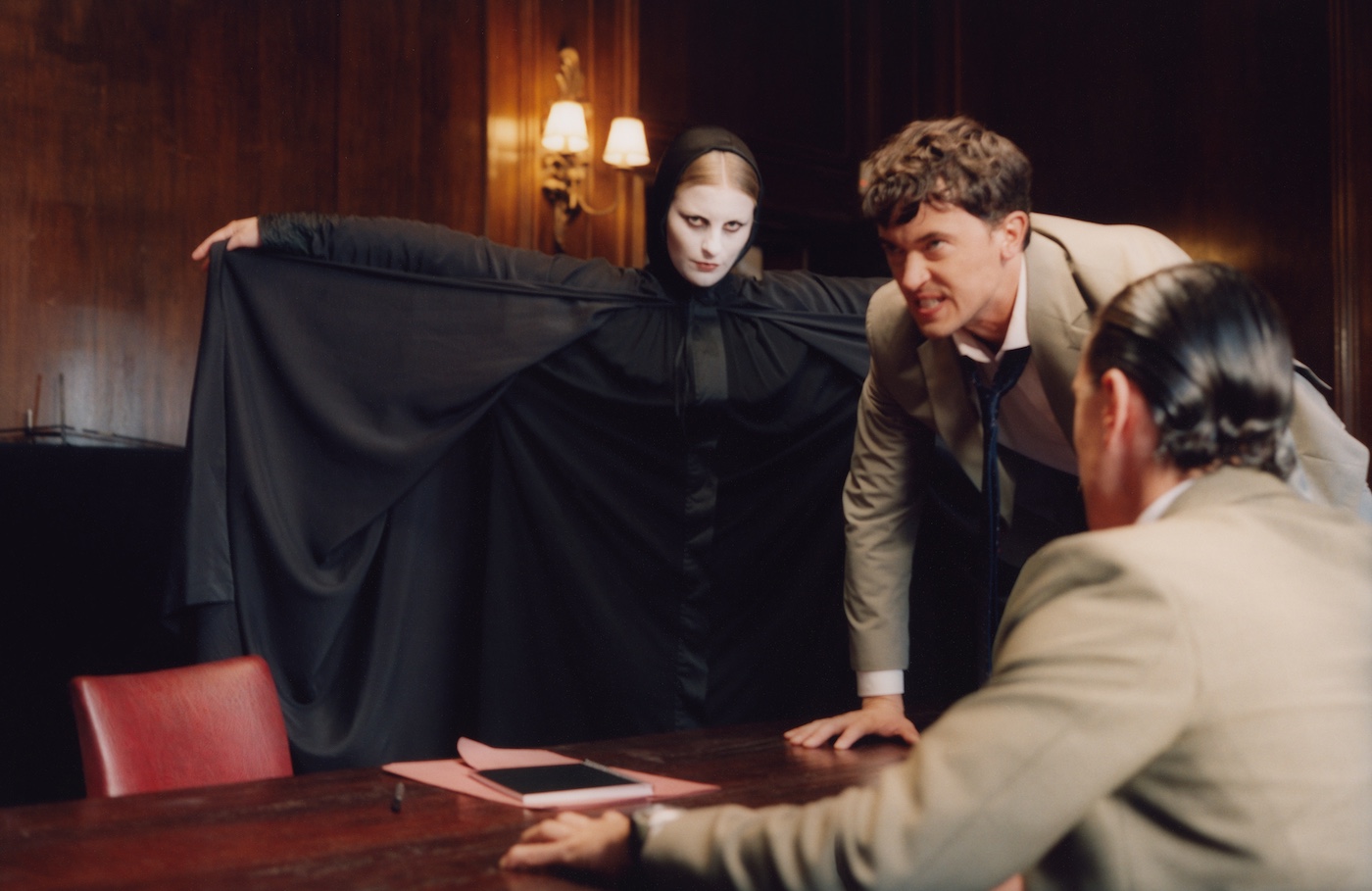
The music video has such haunting, cinematic energy (and Tom Blyth’s presence doesn’t hurt). What story were you telling through those visuals – and how do they expand the meaning of the track?
Paris Paloma: I really wanted there to be no doubt of the themes of the song and the story once you walked away from the music video. I had the idea to make it feel like something between “Macbeth” and “A Christmas Carol,” taking the corruption, ambition and downfall of the Shakespeare play with the cautionary tale, delivered by a spirit-aspect of Dickens’ novel. Tom played the sympathetic-turned-corrupted character so well, I wanted any men who watched it to really see themselves in him.
Do you see “Good Boy” as a continuation of the themes in “Labour,” or is it the start of something entirely new?
Paris Paloma: Rather than a continuation of “Labour,” it’s very much the new wave of misogyny that’s been dominating my life. At the time I wrote “Labour,” all I was feeling was this exploitation within relationship, this imbalance in love that the song details, and then the response to that song online from misogynistic men was this tidal wave of hate and manosphere rhetoric, so much so that it partially inspired me to write “Good Boy.” So they are linked in that way. “Good Boy” is part of the back and forth between me and those men, it’s me directly addressing them, after a period of receiving their vitriol and watching their behaviour.
You write like a poet and sing like a prophet. What writers or artists shaped your storytelling voice? Are there any literary influences that sneak into your lyrics?
Paris Paloma: Literary influences are definitely front and centre. I was massively inspired by key works of gothic and Romantic literature in my teens, like Dracula, Frankenstein, Rebecca, the imagery that is called into those works made me want to do that in song, in terms of musical voices, people like Aurora, Florence and the Machine, Hozier, Alt J, they’ve all been so key for me.
Cacophony felt like a siren’s wail from the depths of womanhood – fierce, grief-stricken, and mythic. Where do you feel your song writing is heading now, thematically or emotionally?
Paris Paloma: My songwriting is definitely expanding. Parts of it feel a lot more mature, in that there’s more room for nuance than in some of my earlier songs, whilst parts of it feel rawer as I’ve got more confident with vulnerability. Sonically, I’ve loved exploring new genres and instruments, with some songs taking a more orchestral direction, I can’t wait for everyone to hear.
Greek mythology, gothic literature, and womanhood under patriarchy often swirl in your lyrics – what draws you to these specific motifs?
Paris Paloma: I really don’t know, why is anyone drawn to anything? The honesty and profundity of gothic imagery moved me since I discovered it, it gives a safety to exploring the darkness rather than hiding from it, so you can make art from life’s full emotional spectrum. “Womanhood under Patriarchy” more so because I am a woman writing about my life, and unfortunately patriarchy features like a great rip in the map of my life, creasing many elements of it and changing the landscape. It’s impossible to not write about.
“Labour” became a cultural anthem – shared billions of times, soundtracking everything from feminist TikToks to personal breakdowns. What was it like watching your song become a movement?
Paris Paloma: It was very humbling, I take no credit for it, I think it says a lot more about the power and collective feeling of women, how we all very much felt the same and I’m grateful that it served as a lightning rod for that, to expose how long we’d all been living with this and still do.
Do you ever feel pressure to represent feminism in a certain way because of how much your music has become part of the discourse?
Paris Paloma: I think it’s certainly pressurising when people are looking up to you, but as a child and in my teens learning about the world and its issues, I felt so unbearably helpless to do anything about it. To have a platform where I can write songs like this means the world to that part of me. That being said I hope people do know that I’m a very fallible person with all my own issues.
You have such a distinct sonic world – do you build songs around visuals, or do the visuals come after the music’s already haunting the room?
Paris Paloma: I come from visuals really so it’s hard to separate, I’ll often write songs that-as I’m writing them-I’ll be imagining really specific aesthetics and worlds that they belong to. I can certainly think of some upcoming music that that’s definitely the case for.
If you could time-travel and play one of your songs to a younger version of yourself, which would it be – and what do you think she’d say?
Paris Paloma: I think very young me, ages 5-8 would be really enchanted by it, I think any older would be absolutely freaked out at the prospect of doing what I do now. She would think she couldn’t do it, it’s been a journey convincing myself I can.
How do you see your music contributing to the wider conversation about gender and power? And what has the response from your audience – especially young women and queer fans – meant to you?
Paris Paloma: I’m always really encouraged to see “Labour” used as a tool to bring women together, whether online, or at protests, for any movements that involve working for women’s safety and empowerment. It’s meant an awful lot to me, too much even for me to process. And I sort of don’t ever want to process it, I don’t think you should be able to process something that big.
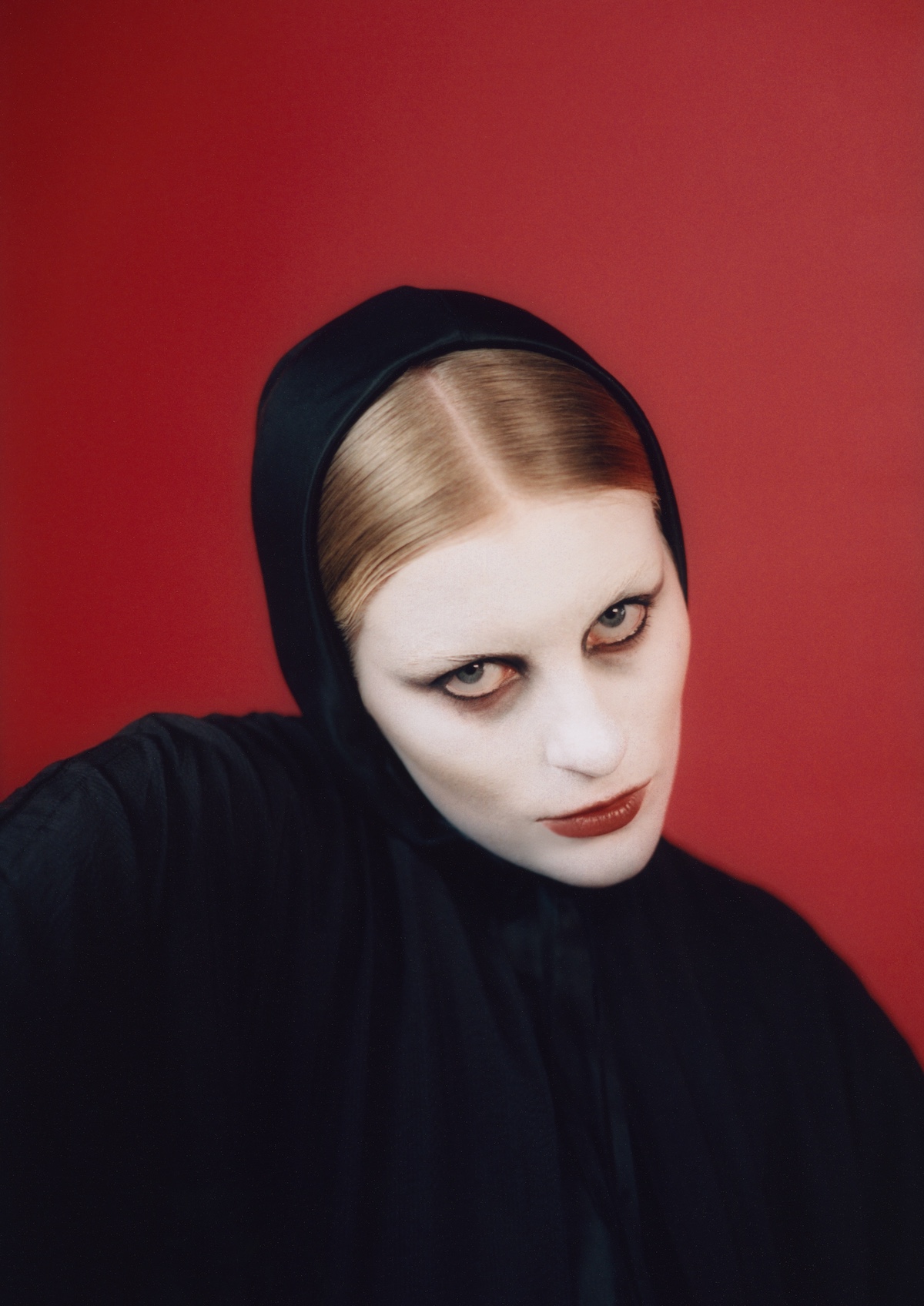
Your visual aesthetic feels so rooted in folklore and romanticism, but the lyrical content is razor sharp and modern. How do you balance softness and rage, beauty and protest, in your creative process?
Paris Paloma: I think I want to make really honest and beautiful things. And to be honest, I am very angry about a lot, I’m very melancholic about a lot, but ultimately I want people to feel comforted, cathartic, seen when listening to my music, so the softness and beauty is such an essential part of that, although I rarely think about it in those terms. I more think “what world do I want this song to take someone to” and make it sound like that.
* * *
As “Good Boy” signals the start of a new chapter, it’s clear that Paris Paloma is not simply releasing music – she’s shaping cultural memory.
Her voice, both literal and lyrical, holds the weight of centuries of silenced stories and the clarity of someone who refuses to flinch in the face of systemic injustice. “Labour” might have cracked open the door, but “Good Boy” kicks it off its hinges. It’s bold, theatrical, disarmingly vulnerable – and deeply necessary. Paloma dares to say what many are still afraid to whisper, packaging radical empathy and righteous rage in a way that feels like both confession and call-to-action.
What makes her work so compelling isn’t just the subject matter – it’s the way she threads it through the mythic and the mundane. Whether invoking Shakespeare or Greek tragedy, gothic literature or protest chants, Paloma is building an entire sonic and visual universe that centers womanhood in all its holy contradiction: Fierce and fragile, broken and boundless, furious and full of love. She doesn’t offer neat conclusions or easy redemption – but rather, a mirror. One that reflects back the ache and beauty of being alive, especially as a woman in a world that still demands so much and offers so little.
If Cacophony was a hymn of mourning, “Good Boy” is a battle cry laced in velvet. And as Paris Paloma continues to write, sing, and rage on behalf of a generation still learning how to survive itself, one thing becomes undeniable: she’s not just part of the conversation – she is the conversation.
— —
:: stream/purchase Good Boy here ::
:: connect with Paris Paloma here ::
— —
Stream: “Good Boy” – Paris Paloma
— — — —
Connect to Paris Paloma on
Facebook, TikTok, Instagram
Discover new music on Atwood Magazine
© Phoebe Fox
 © Phoebe Fox
:: Stream Paris Paloma ::