St. Panther turns empathy into action on their soulful, seductive ‘Strange World’ EP, a breathtakingly bold and deeply intentional record whose six tracks cut through numbness, awaken the heart, affirm our own humanity, and pull us closer to ourselves and one another. In an intimate conversation that spans activism, artistic evolution, trans visibility, and the quiet radicalism of feeling in a distracted world, Dani Bojorges-Giraldo reveals the heart, vision, and lived experience behind one of the year’s most necessary and resonant releases.
Stream: ‘Strange World’ – St. Panther
I want this strange world and these hard times to change. And change always starts with yourself.
* * *
St. Panther’s Dani Bojorges-Giraldo built their latest EP from a quiet, unwavering mission:
To make music that activates empathy and brings people back to one another; to turn their lived experience – their humanity – into a vessel for connection, clarity, and communal care; and to confront numbness with truth, heart, and feeling. Strange World unfolds with the warmth and glow of a guiding light, resisting the pull of apathy and leaning instead into presence, accountability, and hope. Across its 16-minute arc, the record becomes both mirror and offering – an invitation to pause, to feel, and to imagine a future shaped not by detachment, but by the everyday act of seeing and caring for one another. It’s a spirited reminder that transformation, personal and collective, begins with the courage to feel.
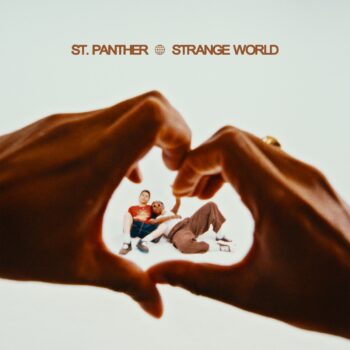
The world of St. Panther is the world of Dani Bojorges-Giraldo – a Mexican/Colombian artist, producer, singer, rapper, and multi-instrumentalist living in East Los Angeles, whose songs move fluidly between soul, R&B, jazz, hip-hop, and alt-pop without ever losing their unmistakable voice. Out November 7th, Strange World marks their first release with art-forward label drink sum wtr, and their first full project since 2020’s breakout EP These Days – a five-year stretch they used to grow, record, and, as they put it, “become a part of my village,” listening closely to the needs of their community and the weight everyone is carrying. It’s a return and a reset at once, reigniting the early spark around St. Panther while widening the frame to hold everything they’ve learned about themselves and the world since. It also arrives, as they note, at yet another “critical moment in our time,” continuing a pattern where their major releases seem to meet the world right when they’re needed most.
That evolution stretches back even further than their breakout EP. Before St. Panther, Bojorges-Giraldo released music under multiple monikers – Quiet Girl, Dan Universe – treating their catalog like a crate to be dug through, each alias holding a different facet of their creative identity. St. Panther became the home for their most intentional, present-tense work, the place where instinct, purpose, and identity could finally come together.
And that convergence is exactly what shapes this new era. “I think the way I interact with my gift is now so clear,” they reflect, describing Strange World as the moment where intention finally caught up with instinct. In earlier eras, they were told to keep moving “further,” without much guidance on what “further” really meant; this time, the direction is self-defined and deeply grounded. Across this project, St. Panther is no longer just chasing opportunity – they’re choosing their path with care, centering humble but powerful visions of getting music like this to people “in a timely way,” in a world that needs both comfort and disruption in equal measure.
Part of that clarity comes from a widening sense of community – not just locally, but globally – as they’ve watched listeners from Japan, Russia, Brazil, and beyond find themselves reflected in the music. What began in their apartment studio now moves across continents, building unlikely bridges between people who may never meet but somehow understand each other through sound.
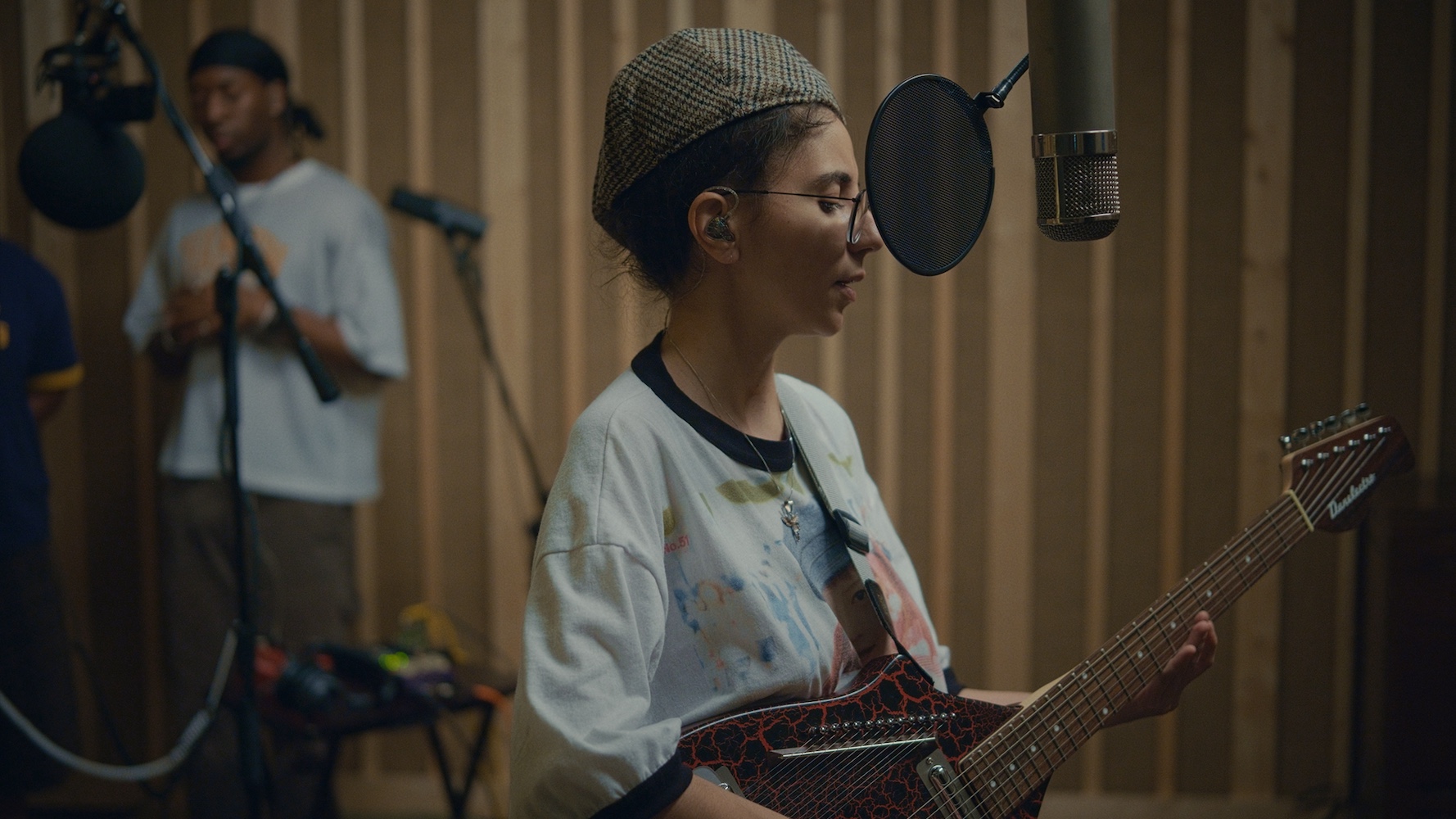
Empathy is the thread that ties everything together.
Listeners kept telling them that their music felt familiar, like it was reaching into something they already knew how to feel, and over time they recognized that feeling as empathy – that hard, necessary work of holding space for more than one truth at a time. With Strange World, St. Panther leans fully into that role. They talk about wanting these songs to give listeners “a moment of pause, of tuning into yourself,” a kind of meditation that helps you take emotional inventory – not as an escape from the world, but as a way of re-entering it more awake, more open, and more accountable to the people around you.
That philosophy extends to how they think about activism itself: A blend of accountability and what one activist taught them to call “radical compassion,” a willingness to understand even those whose worldviews may clash sharply with their own. St. Panther has seen unlikely conversations spark empathy, seen people with privilege move closer to understanding through the gateway of music. That belief – that dialogue and humanity still matter – runs quietly but unmistakably beneath the EP’s surface.
“The most important thing music does is that it gives you a private moment with yourself to tune into things about your universe, about our collective universe,” they explain. “So I think that’s just the intention of this project – prompting people to have personal meditations. Change always starts with yourself, so I think something as simple as that was what we went into it with, and I think we accomplished 16 good minutes of meditation on what’s going on.”
That mission shows up in the music’s feel as much as in its words. St. Panther’s catalog has always moved between modes – raspy and silky, crooning and rapping, soul-drenched and modern – but here, everything is in service of clarity. “Brand New,” the EP’s opener, began in 2021 as a kind of R&B and soul statement piece, built around piano, voice, and an auto-tuned vocal that briefly jumps an octave – a subtle but striking way of twisting something familiar into something futuristic. Throughout the EP, organic and electronic textures blend seamlessly – warm keys, clean basslines, swelling instrumentation, and modern vocal processing – creating a sound that pays homage to soul greats while pushing toward something more exploratory. “American Dreams” rides a slow, head-nodding bounce in the spirit of Frank Ocean’s “Super Rich Kids,” where the groove leans back so the vocal – and everything it’s saying – can sit front and center. The title track “Strange World,” co-written with Erik Bodin of Little Dragon and featuring Rae Khalil, threads punchy percussion, organ, and bass through a minimal, breathing arrangement that makes every word land.
Lyrically, too, the EP moves from the deeply personal into the broadly political without ever losing its sense of intimacy. “If you ask me, I don’t get half the love I’ve been owed,” St. Panther sings at the start of “Brand New,” setting the stage for a project that insists on visibility for music made by trans people of color – art that has so often been pushed to the back of the line. That opener feels like a door swinging wide, an introduction not just to a record, but to a person and a community that deserves to be seen in full color.
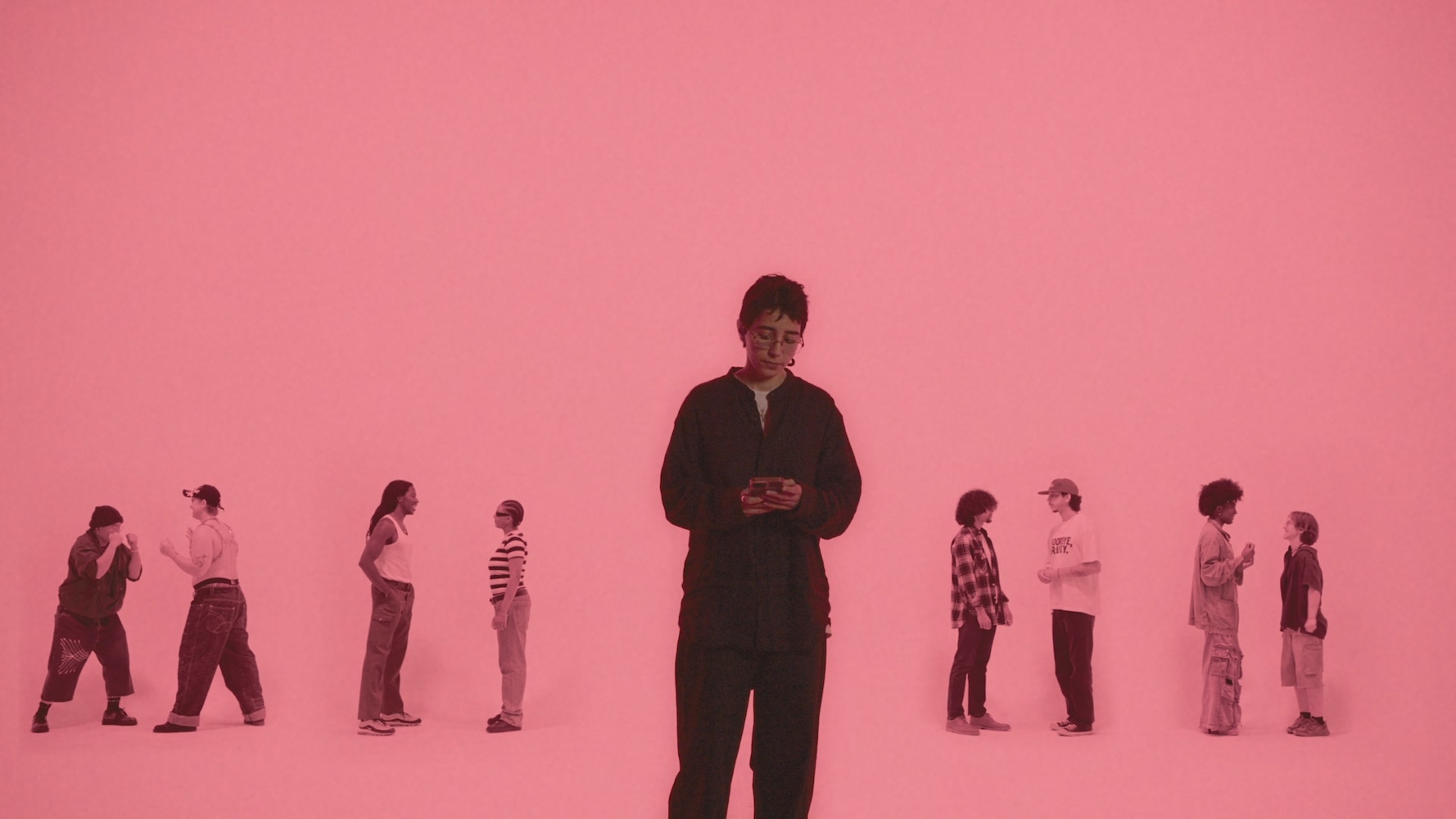
From there, “American Dreams” digs into the numbness and distance that screens have put between us and each other. It’s the EP’s sharpest scalpel – a protest song you can dance to, built to slip under the skin. Over a rubbery, unhurried groove, St. Panther sketches out a life lived through debt, doomscrolling, and distraction: “American lover, American debt, American greed / As long as I got all of my comforts, American things.” They trace that familiar scene of trying to talk to someone whose eyes never leave their phone, the way it feels when people you love – people who otherwise care about justice – can’t seem to engage with a genocide they’re watching in real time. “I saw so many of my friends have difficulty engaging with this,” they recall, talking about Palestine and the fear so many artists feel about using their platforms. “It was like this whisper in the room that I was like, let’s just cut through the whisper and just say this shit on a mic.”
The song’s second verse zooms in further, shifting from broad critique to a single, specific story: A trans woman commuting, doing sex work, navigating danger, and simply trying to survive. St. Panther describes this section, inspired by a news clipping, as a way of honoring a trans sister who was attacked on a New York train, and of pulling one life out of the blur of headlines and into the light. “We all just live very different walks of life,” they say, “so drawing attention to just even one community member, I think, was the focus.” In the “American Dreams” video, a QR code at the end directs viewers to fundraisers for multiple Gazan families they’ve built relationships with online – turning attention into aid, and reminding us that connection through a screen doesn’t have to be passive.
If “American Dreams” is the reckoning, “Strange World” is the response. The title track arrived last in the process, and it feels like the project’s emotional north star – the moment where St. Panther and Rae Khalil, after laying everything heavy on the table, choose to write toward a future anyway. The hook centers on a line that has quickly become a mantra for both artists and listeners alike: “We’re living in such a strange world… but I’m still rooting for us.” St. Panther talks about the song as capturing “the spirit of what a hopeful future looks like after acknowledging all these things in our world,” and about “strange” as a word that can hold both the ugliness of the moment and the beauty of what queer people create. It’s a song about friendship and romance, yes – but also about the faith it takes to keep showing up for each other when the odds feel stacked.
The EP closes on “Whoever Said Silence Is Peace,” a piano-driven meditation that lingers in the gap between what we feel and what we say. Here, St. Panther is thinking about cognitive dissonance, ghosting, and all the ways we try to avoid the hardest conversations – in our relationships, in our communities, in our politics. “You’re doing a lot more emotional labor and work to avoid than to confront,” they reflect. “In that song, I’m like, we share something, the ones who are silent and the ones who aren’t.” That closing line – “Whoever said silence is peace is probably out there dreaming as big as me” – lands like a gentle challenge, calling out both disengagement and idealism in the same breath. It’s the kind of line that distills the EP’s entire ethos – a reminder that avoidance is its own labor, and that facing each other, even imperfectly, is where real change begins.
Taken together, Strange World feels less like a collection of songs and more like a small, concentrated practice – 16 minutes of empathy, accountability, and imagination that ask you to sit with yourself and then step back into the world a little more awake. It’s the sound of an artist who has found new clarity in their purpose, fresh depth in their craft, and novel ways to extend radical care beyond the studio – through relationships with families in Gaza, through the trans community, through the quiet but powerful work of bringing unlikely listeners into the same emotional room. It is music built for this moment, and perhaps because of that, it manages to hold both grief and possibility in a way that feels especially invigorating, noteworthy, and alive.
In our conversation, St. Panther talks about all of this and more – from finding their footing after a decade of making music under multiple monikers, to building a truly global village around their songs, to trusting that music can still move people toward action in a time when it’s never been easier to look away. They speak with the same mix of candor, softness, and conviction that runs through Strange World itself. If the record is an invitation to feel, to notice, to care, then what follows is an invitation to understand the heart and mind behind it.
— —
:: stream/purchase Strange World here ::
:: connect with St. Panther here ::
— —
Stream: ‘Strange World’ – St. Panther
A CONVERSATION WITH ST. PANTHER

Atwood Magazine: We're just a few days out from your new EP’s release. What is it like to have Strange World finally out, and especially right now in this moment, that you couldn't have predicted when you were first making it? But it feels like we really do live in strange times.
St. Panther: Yeah. To have it come out at such a timely moment in our history is definitely making it more of a meaningful experience for me. I feel like when I first started this music, like you said, I couldn’t have predicted the moment it was going to come out. But the more I was making the music, the more it feels like it’s just about our time. It’s resonating with people in that way that’s just so true to all of us, I think. It just couldn’t have been a better result for me putting out the music.
You've been releasing music for over 10 years now – but for those who are just discovering you today, what do you want them to know about you and your musical project?
St. Panther: My music project has always touched all genres. It’s been a fusion of many genres. Since the beginning, I’ve had many different monikers and styles of music, so I feel like this is really just music for everyone. If there’s something you don’t like about one genre, you could find another project of mine that’s a completely different genre and feed yourself that way. So it’s really for all the people, everyone’s welcome into the community that is St. Panther.
What have some of your other monikers been, and what is the specific world of St. Panther compared to some of the others?
St. Panther: So some of my other ones have been Quiet Girl on Soundcloud, which if you look up some of that music, there’s songs like “Lilac, ” “Band Aid, ” “I’ve Lived and I’ve Died, ” that are really well known on that project, but now it’s existing under Dan Universe. I changed the name many years ago and left it like that. So similarly, that music has fed fandom for St. Panther and it’s all fed each other in some way. But yeah, that’s been the main one, I would say.
So what is the world of St. Panther, in comparison to those? What does this moniker mean for you?
St. Panther: I feel like this has definitely just been a way of finding a signature throughout all the different styles of music that I make. This is kind of the primary home, because it holds such a direction of, this is the most current music I’m making, this is usually the most important music to me. So I saved the good stuff, I feel like, for this project. Not that the other stuff isn’t as good, it’s just different, more experimental leaning and less industry-accommodating music, so, yeah.
It reminds me of a friend of mine from college who once told me that he's put out a dozen EPs under various pseudonyms because he has so much music and nowhere to put it.
St. Panther: Right. I treat all of my catalog like a crate. Like exactly what you said. You have to kind of dig around to find the other stuff. But stuff like that, for me, has existed on Bandcamp also. I feel like there’s a whole culture, really, of artists/producers that have so much output that people wouldn’t otherwise see, because formal releases I don’t think really capture that, just the variety also. So it’s really nice to see that that culture continues.
If memory serves, the reason Jethro Tull are called ‘Jethro Tull’ is that they were playing under that name when they got discovered – but they used to change their band name every night (or something like that).
St. Panther: That’s similarly also what happened to me where I was playing a show, oddly the one show I did under both monikers in the same night.
Did you go on stage twice?
St. Panther: No, it was like a full set, supposedly just the St. Panther set. But there were fans in there that knew a lot of the other music, the Quiet Girl music at the time. And I’ve collabed each other on SoundCloud at that point, so it was like… People thought it was two different artists, but I surprised them that night with, oh, it’s the same one.
That's pretty cool.
St. Panther: I changed the vocal chain, like, mid set and did a whole thing with doing both vocal chains in the same song, and it tripped people out. But that was the night I got discovered, essentially. Like, the owner of the skate shop was like, “I know this manager, ” and that’s how the whole journey started. But it’s like they find you with your current name, [chuckle] and you’re rocking that for life. It’s beautiful.
How long ago was that show?
St. Panther: I think that was in 2018, where I immediately got put on a tour with Nothing, Nowhere. And I couldn’t have been the more random pick for that tour. It was, like, my project with a bunch of, like… It was a Wicca Phase Springs Eternal and, like, Nothing, Nowhere and Smart Death. Such a beautiful time, that era.
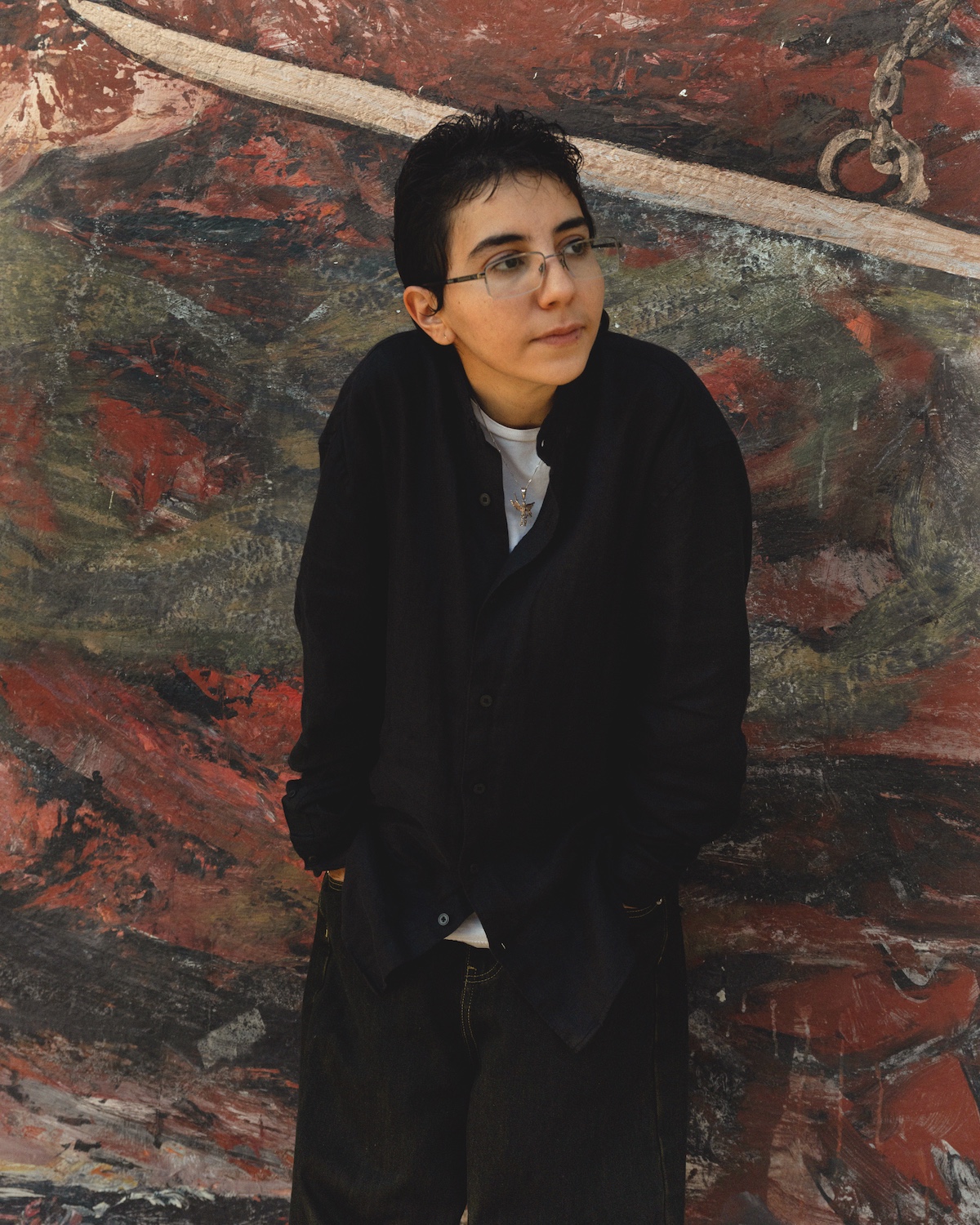
Even St. Panther itself, as a project, has had multiple phases, and five years have passed between These Days and Strange World. What's the biggest thing about you that's changed since your last, bigger release, and how do we hear it on this record?
St. Panther: I think the way I interact with my gift is now so clear. When you’re younger, I think you’re figuring yourself out as a person. You’re figuring out your goals, what direction you’re really climbing towards. And that direction just gets taught to you as, like, just further, just go one step further. And you’re not really taught the art of intention, like, which direction is further? It could be left or right. So I think on this record, I really found my footing in that sense of, I know what visions I want to chase and they’re very humble visions of wanting to get music like this to people in a timely way. I realize that about myself. Eras of when you’re putting out this music matters. Just the way I interact with it is completely different. It’s definitely coming from a more mature place, so it’s a beautiful thing to enjoy.
Even ‘Strange World’ the title is striking and all too apropos. Life has felt pretty strange for a long time now… What's the story? What was your vision going into this record, and did that change over the course of writing and recording these songs?
St. Panther: Yes. I think the thing that really initiated, this is something we really have to make a project out of… Like, the first song really that I did from this project was “Brand new.” I did that song in 2021. And that came so naturally from a feeling of, I am so ready to make this next jump into a next project, into the next phase of my career, whatever you call that. And the music was just a testament of that. The music was changing directions and doing things, so I was like, I really want to find a home for all these different directions. And a song like “The Deal” arrived after we did “American Dreams” here at my house. And after I wrote the lyrics to “American Dreams, ” I was like, okay, this all has a thread of, you’re opening the door to what you actually want to talk about as an artist, the things that are going on in your community, the things that really are impacting you enough to write. So after “American Dreams, ” I was like, okay, that really is… An overarching theme of this project is there’s this next phase I think all artists kind of hit when you have your sound figured out and you’re like, well, what are my goals with this?
And I think I found the intention for the next project in that way, really quickly. So the rest of the music was really… When we made ‘Strange World, ‘ that was the newest of all of these songs. It was the last song we did, which really just helped tie it all together, especially the time we recorded it, and we recorded it last year. What was going on last year simply just also helped inform the rest of the project. And then the song, like, “Whoever Said Silence is Peace, ” I think we did that one in ’23. And yeah, all of these moments have really just been collections of my feelings throughout the last five years. And they’ve all had a similar thread and had a concept of that similar thread, I think, since things have only gotten weirder since 2020, honestly, so it was very easy to talk about what’s going on around us in that sense too. Found its purpose really quick.
You talked about finding your sound, and I think that's amazing. Once you find your voice, the next question is, well, what do you do with it? And what were those intentions? What were you hoping to communicate, and what are some of the driving emotions behind the songs?
St. Panther: I think I took this really important piece of data from the last project where people were telling me over and over, I feel this familiar feeling when I listen to your music. And I said this in this previous interview too. I think that feeling is empathy. I think it’s a feeling that we’re all challenged by currently, because there’s just so much to feel over so many different things. But what I wanted people to be able to have in the listening experience of this project was just a moment of pause, of tuning into yourself. Because songs like these kind of put you back in a place in your own life. They kind of help you tune into yourself more. The music could be about my life, but it’s very much belonging to other people once they listen to it. So, yeah, I think that was pretty much the intention of where I think my music is headed. Music like that, I think, holds a very subtle power to make real movement and change in our day to day. So, I think that was pretty much just it.
You said that these songs are meant to activate people to think about our relationships with each other. What conversations do you hope Strange World sparks?
St. Panther: I think the main conversation in a song like “American Dreams” was, we do have these vehicles of relationships to each other through a screen, and many times I think the ability of access makes us feel close but still far. So I think the conversation I want to ignite is, with a song like that, the music video too being an extension of the purpose of that song, there’s this QR code I left at the end of the music video, for example, for people to scan in and start really getting involved in ways. Like, if you can make a monthly contribution to anyone in these regions, amazing, because then you start interacting and making relationships of your own. So I think I’m trying to engage different populations of people to exist in the space of music together that normally wouldn’t become friends on a regular day to day. And maybe the situations we’re currently in are just provoking more of that itch to bring more people together. So I think hopefully people engage each other maybe even through being at the shows too. Yeah, that’s really the hope.
Your current support links, I think, are to four different families. Are they all Gaza based?
St. Panther: Yes, all of them Gaza based. They’re all in different regions, all people I’ve had relationships now with, through Instagram, for the last two years. And they all just randomly sent me a message. I think dozens of us too have gotten similar messages, random DMs from people in the region just being like, can you help? Or especially, I think it’s more of a thing that if you’re someone public facing, you have so much more influence and that’s the people they’re reaching towards because you can reach so many other people just based off of that network. So I got all those messages and just immediately responded. And they’re all very sweet people. They’ve become friends now. We talk about all different types of things, but mainly we try to catch up every day and I see how I can help them from here, and it’s… I just try to engage other people too. I don’t know, just try to have relationships with people outside of the US. There is so much culture and friendship to enjoy, truly.
That is very special. It sounds like, in a way, you have been breaking open your boundaries and barriers in recent years, just through this kind of work, this interpersonal work. Creating community out of thin air is an amazing thing to do, and I'm honestly, personally impressed and humbled by those simple, but very human acts.
St. Panther: Thank you. Yeah, I’m opening the door to more people seeing that side of my life that may not always be just through the music. But I think through my music, over the years, I have been so surprised to see people in Japan, Russia, Brazil, all these different regions, listening and tuning in, where that’s just an opportunity to me to engage populations of people to bring them together. It’s a very special thing. Especially now, I think it’s more important than ever.
Is the goal with the QR code to continue to add to that list as there are more folks in need, or is that one thing, and there will be other things in the future?
St. Panther: I have other people hitting me up and I’m honestly an open book. People can message me and be added to this list. It’s a vehicle to get people the help and the resources that they need. And sometimes, that can just be supplied by people in another country. So, I mean, yeah, absolutely. It’s like an open link for whoever needs to join. And then also, it’s so important to… I try to… Similarly, like what you said, sometimes have focused moments of… Because then that resource will really actually help build this amount of people. So yeah, we’re all figuring it out in real time. This is real organizational work. Like, yeah, what will be the most effective, you know?
You're both creating art as activism and also doing real connective activism at the same time, and blending those together.
St. Panther: Yeah. It’s a gift, truly. Like, you never know where you’re going to find yourself in life, but I think I really found myself in my purpose, especially through the music.
Plus, being able to connect it to some bigger things that are just beyond yourself is always meaningful. It's a way of giving back, that nobody asks you to do, but you get to make that choice for yourself.
St. Panther: Yeah. For some reason, we walk the walks that we walk, you know? So I really try to listen to guidance on that front. There’s something very precious about music and how it really does open the doors to so many different things. So that’s kind of also what I’m enjoying about this project, is just the clarity of the mission, too.
Speaking of opening doors, “If you ask me, I don't get half the love I've been owed,” you sing in “Brand New.” It's beautiful, very emotional opener to the rest of the record. How do you hope this song sets the tone for Strange World as a whole?
St. Panther: I think this first song was just so… It does kind of exist on its own, but I think it speaks to a bigger message of… I think from that place, when I said that lyric, I was coming from, feels like music made by trans people of color is still climbing the ladder in the industry and kind of still in the back of the line. So I think that is kind of an intro of, like, look how beautiful some of the things coming from our communities are. So it kind of sets the tone of, like, I’m opening the door to that from the very first track.
I really love that. My two favorites are “American Dreams” and “Strange World.” I think that they are the two distinct pillars of this record – they're both political, but in their own different, special ways. “American Dreams” confronts desensitization and apathy. When did you first notice yourself or those around you slipping into that kind of numbness? And what was your goal with this song?
St. Panther: I think, honestly, after we started seeing more of the genocide going on in Palestine and how easily accessible that media was on a day to day, and seeing people I know just have… People I otherwise have conversations that are so positive about the world with, and they’re very much on the side of equal equity for all races, etcetera, but I think they had some sort of difficulty engaging with this, for some reason. I saw so many of my friends have difficulty engaging with this, and artists alike. I think a lot of people with platforms felt daunted by engaging with this. And just in general, I think we’ve always felt a little bit of a distance from other countries in that way, especially in the US. So I think the goal with a song like this was to just plainly acknowledge what I was observing in our culture, in my personal life, with the people I knew, and just address it and put it out there, because it’s like this whisper in the room that I was like, let’s just cut through the whisper and just say this shit on a mic.
And I think songs like this really do help us even recognize it in ourselves, in a way. So I think that was my version of unpacking it both for myself and then for what I was witnessing. So I think songs like that are just as important to get us to prompt some change. Now that we can see it and we acknowledge it out in the open, what now? What next? So it’s not just a whisper.
The actual lyrics to this track are striking. “So when you look right up at me, I still can't see you. Eyes on the screen, American dreams. American lover, American debt, American greed. As long as I got all my comforts, American things.” What runs through your mind even now when you hear these words, these lyrics of yours out in the wild?
St. Panther: We’ve all had that person in our lives that we’re talking to and they’re on their phone and they don’t hear a word you’re saying. There’s always that moment they look up and they’re like, what? And it’s like we’ve had this ability to be so not present, and I think that is a way of engaging that, a way of acknowledging that. That’s pretty much, I think, the overarching goal of the song, is to put a little bit more emphasis on these little moments in life that can really actually overarch to be a bigger thing in our culture. You know, just the numbness. Yeah, the lack of connection, really.
“I'm so blind on the world, I just can't see. Eyes on the screen, American dreams.” It's kind of like horse blinders – like, ‘I don't care about the rest of the world; I only want to focus on myself.’
St. Panther: Right. Our relationships to capitalism too, was really something I was observing there, is it starts in the individual. So we have a lot of access for individualistic decision making on a day to day, and that’s just the autonomy of where we live, and the luck and privilege. But sometimes that can also negate the very real circumstance of, there’s consequences to just looking at and thinking about just yourself every day. I had this conversation with my best friend the other day. We were talking about how many times we say, “I” in a day. And we were making a joke about how, in Princess Diaries, she’s making the speech, being like, “I can’t believe how many times in a day I say I.” And it is such a simple thing. We can maybe dedicate 30 more percent to the, “We, ” to the, how are my friends? How is everyone around me doing? My family. And that would change the world quite a bit if we did 30 more percent of that.
I love that goal. Baby steps, right? At the end of the song, you sing, “We need more space, catching eight trains, talking out of place. Who are you to say we should die by the day?” And then you get to this final mantra, “All you ever did was scroll through.” Most of the song is critique. There are bits of what we should actually do, but most of the song is just trying to wake everybody up to their blinders, to the fact that there's an entire world on these little screens. There's actually two parts to it: A, you can use it as a window into the rest of the world, but B, it's also a distraction from your own personal surroundings at the same time.
St. Panther: Yes. And that second half of the song is really… I was talking about my trans sisters, how I know and have seen… I essentially put a news clipping of one of our passings in the song. And it’s really just something that I’ve witnessed so many people just scroll past. I’ve been to so many vigils in the last few years of just people in our community that have passed in very unjust ways. And essentially, yeah, we do have access to these news clippings, but sometimes they just go right over our head because we see so much of it. So I think focusing in on a personal moment there really just acts as a vehicle to really put on the radar for people. Because I think also this is just something people don’t think about often, is what the trans population is really enduring currently. So I was doing one for us in the second verse there, for sure.
When you say, “a clipping” –
St. Panther: Well, a news clipping, like essentially, one of our trans sisters that took a train in New York was attacked after taking that train and was really, really severely, if not left basically to die. So I think a moment like that in the lyric was like, so many of us are the person commuting every day, taking a train. And who are the people around us to say we don’t deserve a life just equal to them as well? So I think that was just a very literal news clipping I put in the song, of like, this is something I witnessed, and speaking to the larger population around this person, really. But, yeah, small moments, small glimpses into our culture, really.
Now I understand.
St. Panther: Yes, it’s about someone. So, then to talking about her night commutes, her job, how she was doing sex work. And there’s a lot baked into that verse, really. But we all just live very different walks of life, so kind of drawing attention to just even one community member, I think, was the focus. It’s like I was talking about the overarching thing for our whole world, but then focusing on one story that was personally close to me, because I’m trans as well. So yeah, songs like that just come to you.
I also want to talk about “Strange World,” the title track of the record. Tell me about the song and its importance for you, and why it ultimately ended up becoming the title of the record as well.
St. Panther: I think this song, by the time we got to this song, we laid it all out on the table. We had a song like “American Dreams.” We talked our shit already, so now it was like, let’s do what this personal group of people does best. And we project towards the future with hope and we draw that spirit from a very positive place. I think Ray is one of the funniest, if not funnest people to be with on a day to day, so I think having her involved was really important to the energy and spirit of, what comes next after acknowledging what’s going on in our world? And the hook came from me. I was singing, “Strange World.” That was kind of the first thing happening. And she took it a whole new direction. She gave it a bestie vibe of like, okay, this shit is going on around us. And she was talking about a relationship, but then she was also talking about a friendship, in a way, of like, I got you through these times, I got you for life. So it’s… Oh my God, that window is just so beautiful.
She was showing off right there. But pretty much that. We captured the spirit of what a hopeful future looks like after acknowledging all these things in our world. So I was like, that couldn’t be a better title for the project. I think, “Strange, ” my best friend was saying, can mean a lot of different things. It can have a negative connotation, but it can also be the beauty of what queer people create also. It’s technically labeled strange, but strange can also be beautiful, good, new. So I think too that also speaks to the theme, is, “Strange, ” not always in a bad way, but it can also be what comes next. And it might just feel weird first, but… Yeah.
“We're living in such a strange world, but I'm still rooting for us” feels both intimate and collective, like you're speaking to one person and to everyone at once. I'd love you to expand on finding hope. I find this song to be unbridled hope in a very pure way that's very, very hard to find. What was that experience like translating those emotions into music?
St. Panther: It was loaded, because I did have to carry the weight of what I was feeling and the weight of what I’m writing about. So to find hope in those moments where even things in your personal life are going on that are kind of shrinking your hope in humanity, you’re like, I’m kind of looking for it everywhere. I’m gonna find it under a rock somewhere. So I think there is just some beauty music offers my life. It takes me to the place of the imagination, even when things around me look so bleak. So I think I’ve really leaned on it not just as a catharsis, but also as a manifestation, like a ritual of what I want the future to look like for myself. And I’ve seen it actualize in many ways. Like, there was once a time where I was a young kid learning how to play instruments, and this is the life that I asked for. So I think in similar ways, when we’re talking about those similar hopes for our communities, I think when we have a song like “Strange World, ” like where… The type of people you’re putting into the pot of energy, people like that hold very powerful energy of manifestation as well.
So I think even that song being everyone’s favorite, is just a testament of how music and all of us coming together through it can really actualize new things, you know? So I think having and finding the hope in that process really helps it translate. But ultimately, I think the “Rooting for us” line comes from… Yeah, there is so much I think we’re capable of. Still learning, still applying, so the hope is within that. I know I have such intelligent friends that are emotionally capable of engaging with things that are harder. And I’ve seen them open up and change, and so that’s really the hope with music like this, is it helps people access more within themselves to be able to get to that place.
Earlier, you struck on the word, empathy, and I think “Strange World” is really the apotheosis of that feeling brought to life as well. There's the bigger societal dreams, but also a very intimate focus... Because we are not a ‘society’ – we are individuals, and we're just trying to get by every day, in our bodies. I think that it's very special to be able to identify just one, core feeling, and push it through, even when we know we're feeling everything all at once.
St. Panther: Yes. I think the most important thing music does is that it gives you a private moment with yourself to tune into things about your universe, about our collective universe. So I think that’s just the intention of this project, is giving you 16 minutes of pause if you’re a listener that really does things front to back like that, and just prompting people to have personal meditations. Because I think the overarching hope is, I want this strange world and these hard times to change. And change always starts with yourself. So I think something as simple as that was what we went into it with, and I think we accomplished 16 good minutes of meditation on what’s going on.
I think you did, too. Now let's talk about the music on all these tracks. You really hit a soulful sound here. Were certain North Stars guiding your own intuition in building Strange World? What did your vision look like, and how did you go about bringing it to life?
St. Panther: I think some of the first songs informed the sonic. So, “Brand New” was the first one. It was very much an all R&B, soul start with some newer elements of newer R&B, like the auto-tune chain, and then I kind of fudged it up and made it go up an octave as well. So, kind of giving it that modern touch. “American Dreams” was very much like the bounce of, like, a “Super Rich Kids” by Frank Ocean kind of era, where I went in that song, where I was like, I love songs like that that just have you, like, knock your head and you just take in the lyrics. Like, the vocal performance and what the vocalist is saying is kind of the forefront, but the music is supportive, leaned back. So there were some moments like that where I think I’m like, these are moments that are highlighting what my voice really is as St. Panther, so let’s coast off of, we know how to produce great music and we also know how instruments can really support the voice in an arrangement. So I think that was our thread, really.
Even for a song like “Strange World, ” having a vocal performer as just magnificent as Rae Khalil, I think the instrumentation has to almost take a minimal format so that it can support the vocalist. So a lot of things were very minimal for when the vocals are in, but then we found these moments of, like, let’s flourish this moment. Let’s create an interlude feeling here and let’s have, like, instrumentation start building towards the outros of these songs and really swell the song. Like, in a song like “The Deal” that had key changes, we had so much instrumentation towards the end of the song. So really it was like, let’s make a really developed version of what I’ve already done and take it just one step farther into what I’m doing for my album so that there’s a bridge between records, you know? So a lot of my next work, I will say, will lean more in the directions of those newer moments, like the end of “Brand New, ” or like a song like “Strange World” that really gives you a new sonic bridge into new sounds. So, I think the balance between the old and the new.
There's a balance between electronic and organic sounds, and it seems like you're leaning more and more into that organic world, that warmer tonality, especially the deeper you go into the record. I think that there are some similarities, sonically, with what Justin Vernon has turned to on Bon Iver’s latest album, really leaning into a more soulful sound.
St. Panther: Yes. I think a lot of us really study a particular era of music when it comes to soul. I mean, we’ve had so many GOATs, and we all love our Stevie’s, our Prince’s, our Badu’s, our D’Angelos, so they are really the Mount Rushmore of music, period, I would say. But I think similarly, artists like mk.gee, myself, many, many more study those greats to really learn our instruments better and learn our expression of writing, performing as vocalists better. Yeah, so it’s really… All that data was included in the making of this project. And then, what we’re meditating on is how to push it further. I think Justin Vernon is also a great example of someone who has those similar types of processes with his work. Like, I’m going to make something super organic sounding, sonically, the guitars, the things that really bring us home about his music. But then you get something… Like, you’ll get a thread of something you’ve never heard before in his music, production wise, and it always takes you further. So I think that’s the goal of this project as well, and I think all of my projects, is like, how can we go further, you know? That direction.
What are you most excited about finally having this record out in the world?
St. Panther: I am excited most about the time it came out in, then the thoughts it’s going to provoke specifically because of that. I think if it would have came out in any other time period, any other moment, it might not have been meditated on in the same way as today, like the last week that we’ve just had. So that’s the most exciting thing for me and the most meaningful thing for me, too, because your music can land at any part of the calendar. But for some reason, my full records have always seemed to land in critical moments in our time. So it’s always so nice to see that the record makes sense to people and has a real feeling, a real soul behind it, because it really just speaks to our time, every time.
I think your music begs people to go deeper – to not just listen, but to actually do a little contemplative work. I hope that is what it translates to the rest of the world.
St. Panther: Me too. Fingers crossed. People absorb music in so many different ways, on a run, on a walk. But I do think we targeted a record where if you want to observe the whole thing, you’re going to have to be in a certain space. You’re going to have to be maybe at home or maybe on some headphones where you fully take it in to appreciate it. Or, maybe you’re on a long drive in the car. And those are the moments that we reflect the most, I think. So I think a lot about how people are gonna listen when I make music like this, too. Like, where are they gonna be? So, yeah, fingers crossed [chuckle] that there’s some meaningful contemplation and just emotional inventory being done while people take in this record.
“We're living in such a strange world. It will never be the same, but I'm still rooting for us.” Obviously, there's a lot to love throughout this entire record. What are some of your favorite lyrics? And do you have any songs that you'd really like to talk about that we haven't brought up yet?
St. Panther: We touched on a lot of great stuff, but “Whoever Said Silence is Peace,” too, I think is a very powerful way to end the record, because I’m speaking towards our little cognitive dissonance that goes on and kind of the silence that exists in that in our communities where sometimes we just don’t talk always about the things that we feel, and it doesn’t feel so easy to. But I think that was one of my favorite lyrics from the project, specifically because of that. Because that line can mean a lot of different things. It can mean speaking to the ghosting culture we have in our world, it can mean the ability to put our blinders on. It can mean a lot of different things. So I think, yeah, that’s one of my favorites. And then definitely, the “American lover, American debt, American greed” line. When that one came out, I was like, okay, okay, bars. Okay, we got… We were big braining. We were big braining on that day. But, yeah, I think lyrics like that really capture the reality of what I wanted to say.
You do leave us with the striking line, “Whoever said silence is peace is probably out there dreaming as big as me.” Tell me about what those final words mean to you.
St. Panther: I think when we try to brush things under the rug, it may feel like the solve. But you’re dreaming big if you think that brushing things under the rug and not talking about things and not communicating is, I feel like, the most productive way to get through times like these. I think sometimes it can feel really daunting, uncomfortable, but to take it in doses. I think that’s the reminder of that song, is you’re doing a lot more emotional labor and work to avoid than to confront. So I was like, you might be hoping and praying as long as the other side, like people that are confronting these things and having to do these things because they are confronting these emotions. So in that song, I’m like, we share something, the ones who are silent and the ones who aren’t. We do share that. Yeah. That’s the way I wanted to close.
You found a way to empathize even with people whose entire methodologies you would disagree with.
St. Panther: I met an activist that really, really changed my perspective on what I’m doing and how I “fight.” She said the method is through radical compassion. Sometimes I agree with that with some activists, sometimes I don’t, because I do feel like we need to disagree at some point. But then there is something very powerful about… We had this conversation where she said, essentially, to understand your opposition, you almost have to befriend it, but then also recognize that in them, they’re doing something, an act of compassion towards you. White supremacists believing that the whole world needs to be white, in their mind, would bring some divine order to the world. It’s a positive. It’s a net positive for everybody. But, it’s a very interesting part of the psyche that functions that way, right? So it’s finding this radical understanding towards people that don’t understand us. And that is perfectly fine. But there is sometimes very strange cases of offering that bridge and people actually choosing to walk on that bridge together, whether it’s uncomfortable. And I’ve just seen those moments happen, so I think sometimes we underestimate how conversation and dialogue really opens the door to things that we don’t expect.
So to put ourselves out there as people that are marginalized as well, to offer those bridges to more privileged people… I’ve seen privileged people engage with my work that otherwise are Republican, and it’s like, “f* trans people.” But they love my work, and then they’ve had to learn to love the person behind the work. Not that the whole world works like that, but there is some hope in extending that empathy, I think, especially through the music, because that’s such an easy medium to just jump into.
There are moments where we don't want to separate art from artist, because their art is so intrinsic to their identity. I think what you've told me throughout this conversation is that your art is so intrinsic to your identity, and that you want people to not just listen to the songs, but to get to know you and to understand a little bit more of what you're trying to put out into the universe through your music.
St. Panther: Yes. Art is an extension of ourselves, and I truly believe that it can be a performance, and you can really bring a lot of people in and hypnotize the world with that performance. And sometimes, it can just come from an organic place. Just pedestrian. My shit is pedestrian, man, and I really am proud of that. It is so unbelievably pedestrian that it’s like someone from… Like, my neighbors have this person under their houses making this music, and we… It’s so simple and they’ve been part of my music videos. It’s like, I want to make it as simple of a community as it can be. Like, music is that quiet power in our lives that just is a thread between all of us and our emotions. So it can really just be that simple through your artistry. That’s the simple goal.
You make it sound so simple. I guess you have to start with manifesting, right? For now, what do you hope listeners take away from Strange World, and what have you taken away from creating it and now putting it out?
St. Panther: I hope people take away that there is artists that meditate on these things about our world, and they’re trying to figure out ways to push the thoughts of our generation forward and include more people in them. So if you’re one of those people, if you love the record, show it to someone that you know would equally appreciate the record. And I think the chain goes on from there. And similarly, I’ve said whatever feelings this record provokes for you, just lean into them. I think they’re necessary feelings and thoughts you might have coming out of listening. And my takeaway from the record is really, I’m so glad that the mission has stayed pure all this time and it continues to find new footing, but all rooted in the same intention. And we’ll see what comes next with the album. I don’t think all of my records will be political. They don’t need to be, but they meditate on shared experiences. So, much more shared experiences through the new music, too.
And life is inherently political. How soon are we talking an album here? You just put out an EP and you're already looking down the road toward a full-length record?!
St. Panther: I’m recording it right now. I’m already working. Yeah, music like this just hatched us open, so there’s much more to come, all to share.
Can we expect to hear some of these same songs on the full length, or is this going to be a batch of all-new tracks?
St. Panther: I think it’s going to be all brand-new music. The way this is rolling, man, I think it needs to be new. And we know what I’ve done, but I think I don’t even know what I haven’t done. [chuckle] I’m discovering that in real time and pushing myself in ways to unearth that. So really, I think we’ll expect all new stuff.
Who are you listening to these days that you would recommend to our readers?
St. Panther: Oh, my gosh. Well, that new Rosalia album was just… We’re studying it front to back as musicians. How can you not after such a magnificent piece of music? Portraits of Tracy. If you guys are not hip to that, you better get hip to that. That’s one of my besties, but also just an incredible artist of our current time, I think, really, also similarly pushing music forward. So those are my recs.
Well, thank you so much for your time today. It's been such a pleasure, and congratulations again on this release.
St. Panther: Thank you so much for making the time for us and just covering the music with such depth. I really, really appreciate the love.
— —
:: stream/purchase Strange World here ::
:: connect with St. Panther here ::
— —
— — — —
Connect to St. Panther on
Facebook, 𝕏, TikTok, Instagram
Discover new music on Atwood Magazine
© St. Panther
 © St. Panther
Strange World
an EP by St. Panther