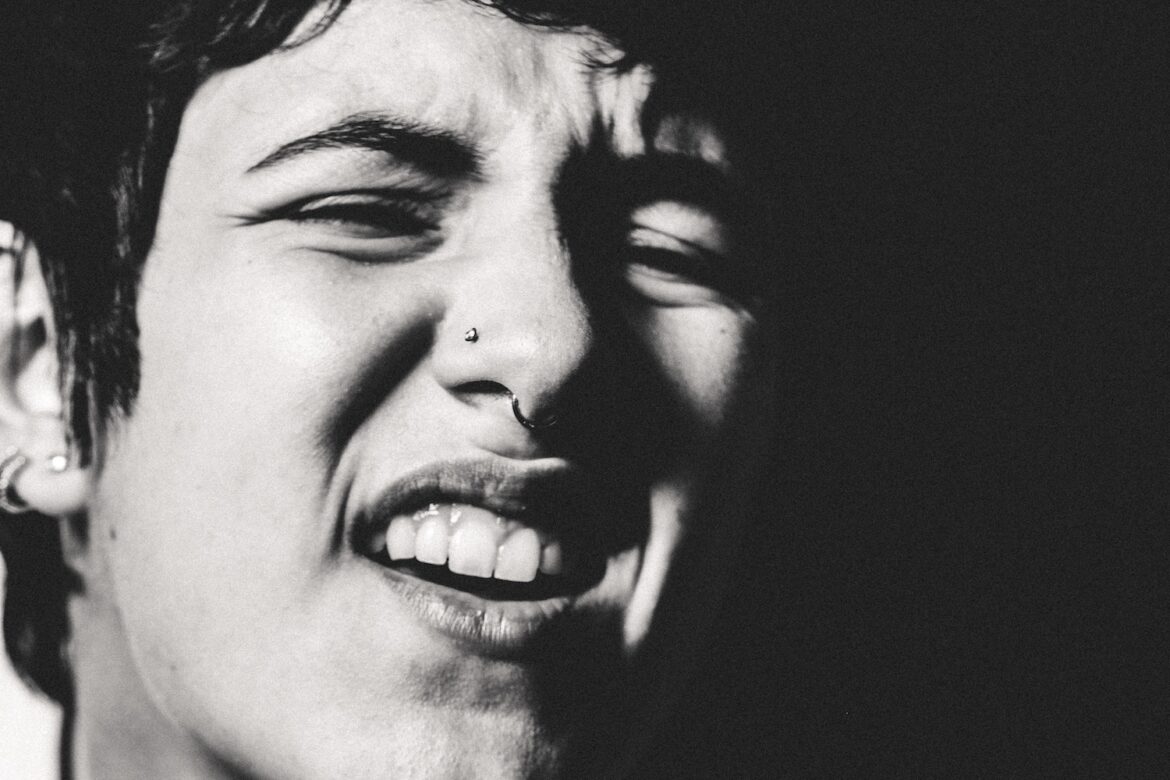
Deadbeat Girl transforms vulnerability into voltage on “Soft,” a cathartic indie rock eruption off their unflinching and raw ‘Self-Destructor’ EP that reclaims sensitivity as strength and turns emotional honesty into defiant self-liberation.
 follow our Today’s Song(s) playlist


Stream: “Soft” – Deadbeat Girl
I believe this EP is for yearners, those who feel insecure, and those who are constantly fighting a battle in their head.
* * *
There’s something volcanic simmering under the surface of “Soft.”
It moves in slow pressure waves – overdriven guitars scraping and shimmering, drums tensed like a held breath, Val Olson’s voice cutting clean through the noise with a wounded, unflinching clarity. Aching, impassioned, and relentless, Deadbeat Girl’s song churns from the inside out, its visceral lyrics slicing straight through the armor so many of us learn to wear. Olson tears into the pressure to be harder, louder, harsher, less feeling, less fragile – less anything that might be mistaken for softness. And in doing so, they transform that softness into something powerful, defiant, and unmistakably alive – an unfiltered, all-consuming emotionally charged indie rock fever dream.

Released October 24, “Soft” is a soul-stirring highlight off Deadbeat Girl’s Self-Destructor EP – a deeply introspective six-track collection exploring self-destruction, insecurity, and the tangled work of learning to accept yourself. It’s a record that finds New York City’s Val Olson digging fearlessly into love, gender, identity, and all the messy in-between spaces they inhabit. And yet, this track feels like its own epicenter: Raw nerve, bare truth, confession sharpened into catharsis.
When we get intimate
You’re just not into it
I’m not like all of the freaks
Out on the internet
Depraved and sickening
Look like you’re done with it
I guess i’m just not your type
Well, you like idiots
It’s rooted in a real experience – and a real wound. “I was once in a relationship where my partner at the time made me feel like I was too soft or not masculine enough,” they share. “They felt I was ‘not aggressive enough’ or ‘too emotional.’ I feel like a common experience for masculine presenting non-men is the expectation to act within the negative stereotypes of a cis-man in society… People should be able to be who they are without feeling sorry or explaining themselves.”
You feel every ounce of that shame, anger, and reclamation radiating through the song. The guitars snarl and shimmer, the drums pulse like a clenched jaw, and Val Olson’s voice arrives with a beautiful, bruised clarity – wounded, yes, but refusing to collapse. I’m just too soft… it’s not my fault. The line stings because it’s true, because it’s lived, because softness is too often mistaken for weakness when, in fact, it takes a staggering amount of strength to keep feeling in a world that keeps telling you to stop.
Play the part
Can’t change my heart
I wish I was more aggressive
End the night and you’re defensive
I’m not rough like all your exes, no
I’m just too soft
To get you off
I’m just too soft
I’m just too soft

But what makes “Soft” so special is that it doesn’t stay in the wound. It fights back – subtly, slyly, with a kind of tongue-in-cheek self-awareness that refuses to let pain define the narrative. Deadbeat Girl tells us the song is about “self-reflection and self-empowerment… meant to resonate with listeners but not to be taken too seriously.” It’s catharsis with a grin; a scream wrapped in a melody you can dance to; a reclamation delivered with enough grit and swagger to shake off someone else’s judgment.

That sense of empowerment courses through Self-Destructor as a whole, where Deadbeat Girl leans into vulnerability as a form of resistance, exploring insecurity, yearning, and identity with a grounded intensity. “I believe this EP is for yearners, those who feel insecure, and those who are constantly fighting a battle in their head,” Val Olson says – a sentiment that echoes across the record’s raw emotional terrain. Nowhere is that struggle more clearly articulated than on the title track, where Olson confronts the uneasy comfort of familiar sadness head-on: “For me, and I think others, it can be easy to slip into a depressive mindset and find comfort in it. Sometimes I tend to romanticize it or feel nostalgic for depressing times in my life in some sick way but turns out many people feel the same. Once you experience chaos and hardship for a long time, it can slowly become all that you know and are comfortable with.”
That process of confrontation and release isn’t just thematic – it’s deeply personal. Writing Self-Destructor became a way for Olson to sit with themselves honestly, without rushing toward resolution or self-correction. “I’ve learned a lot about myself through writing this EP and I have also grown an appreciation as well as an acceptance for the ugly parts of myself in the process,” they reflect. It’s a statement that reframes the record not as an attempt to escape discomfort, but as an act of staying with it – of letting insecurity, doubt, and contradiction exist without needing to be smoothed over or redeemed.
That acceptance – hard-won, unfinished, deeply human – is what gives tracks like “Soft” their charge. Deadbeat Girl doesn’t ask to be fixed or explained away; they insist on being felt. And in that insistence, their music becomes something larger than confession alone.
‘Cause when we try to kiss
All you can do is flinch
And this has gone for too long
for me to try to quit
We fight
You think you’re right
Said goodbye
Out of spite
Last night
You saw me cry
But baby you got it wrong,
I wasn’t made to break
“Soft,” in particular, feels like an anthem for anyone who’s ever been made to feel “too much” or “not enough” at the same time. It’s indie rock as self-liberation – charged, cathartic, ruthlessly honest, and unafraid to hurt out loud. Deadbeat Girl turns softness into a weapon, vulnerability into voltage, emotional sensitivity into something seismic.
By the time the chorus crashes back in, it’s impossible not to feel the shift: Softness isn’t the problem; someone else’s narrowness is. And in naming that truth, Deadbeat Girl leaves a mark that lingers long after the final note.
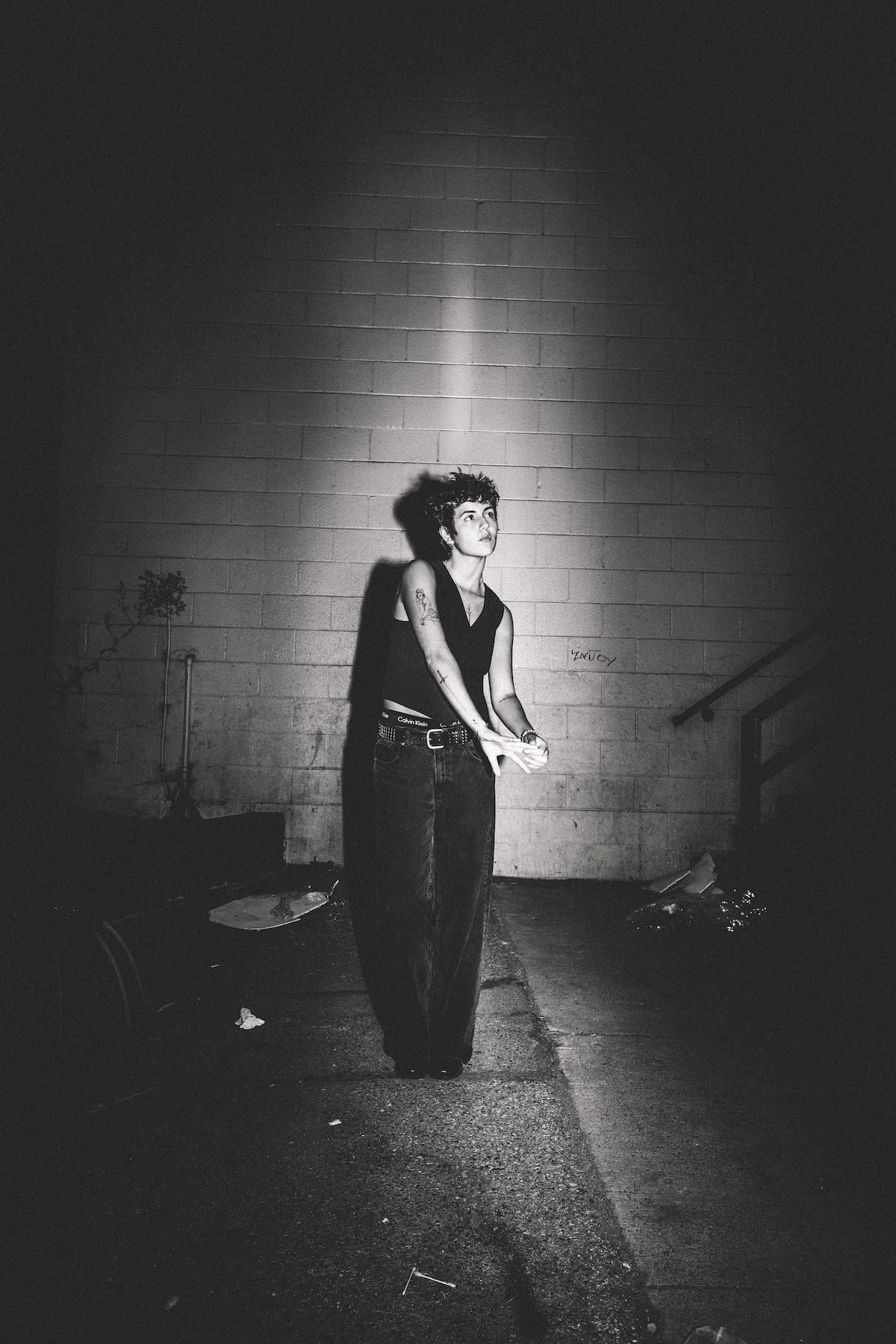
At its core, “Soft” is both deeply personal and quietly communal – a song born from lived experience, but expansive enough to hold anyone who’s ever been asked to harden themselves just to belong.
To dig deeper into the story behind the song, the spirit of Self-Destructor, and the world Deadbeat Girl is building around vulnerability and resistance, we caught up with Val Olson to talk softness, self-empowerment, and the freedom that comes from embracing exactly who you are.
I wish I was more aggressive
End the night and you’re defensive
I’m not rough like all your exes
I wish I was more impressive
You don’t talk and I’m depressive
You think that I’m just obsessive, no
I’m just too soft
To get you off
It’s not my fault
I’m just too soft
— —
:: stream/purchase Self-Destructor here ::
:: connect with Deadbeat Girl here ::
— —
Stream: “Soft” – Deadbeat Girl
A CONVERSATION WITH DEADBEAT GIRL

Atwood Magazine: Val, for those who are just discovering Deadbeat Girl today through this writeup, what do you want them to know about you and your music?
Deadbeat Girl: My music comes from a very honest place based on my own life experiences while also aiming to speak to others.
What inspired your band name?
Deadbeat Girl: I was actually inspired by one of my favorite songs by the artist “Day Wave” who has a song called “Deadbeat Girl.” I really resonate with the song and as someone who is transmasc/nonbinary but assigned female at birth, the name felt fitting haha.
What's the story behind your song “Soft”?
Deadbeat Girl: I was once in a relationship where my partner at the time made me feel like I was too soft or not masculine enough. They felt I was “not aggressive enough” or “too emotional.” I feel like a common experience for masculine presenting non-men is the expectation to act within the negative stereotypes of a cis-man in society. Sometimes we are expected to be emotionless, angry, aggressive, and big/strong but that is not what should be expected of anyone. People should be able to be who they are without feeling sorry or explaining themselves.
I really love the song's darker, post-punk adjacent sound. Who were some of your north stars and inspirations going into this - and what were you going for?
Deadbeat Girl: The production/overall sound for this song was inspired by my love for ’90s grunge music. I have been listening to the band Hole a lot, specifically, and I definitely included the song “Nutshell” by Alice and Chains as a reference.
What is this song about, for you?
Deadbeat Girl: This song is about self-reflection and self-empowerment. The song is written in kind of a tongue-in-cheek way, definitely meant to resonate with listeners but not to be taken too seriously! It is supposed to be fun while also speaking to the feeling of insecurity and embracing oneself.
What do you hope listeners take away from “Soft,” and what have you taken away from creating it and now putting it out?
Deadbeat Girl: I would like for listeners to take whatever they’d like from it. You can dance to it, you can cry to it, you can scream to it – whatever you would like to do because I feel that the song can be experienced in any one of those ways! This is also something that I have taken away from creating it and putting it out as well.
— —
:: stream/purchase Self-Destructor here ::
:: connect with Deadbeat Girl here ::
— —
Stream: “Soft” – Deadbeat Girl
— — — —

Connect to Deadbeat Girl on
Facebook, 𝕏, TikTok, Instagram
Discover new music on Atwood Magazine
© Ashley Crichton
 © Ashley Crichton
:: Today’s Song(s) ::
follow our daily playlist on Spotify
:: Stream Deadbeat Girl ::