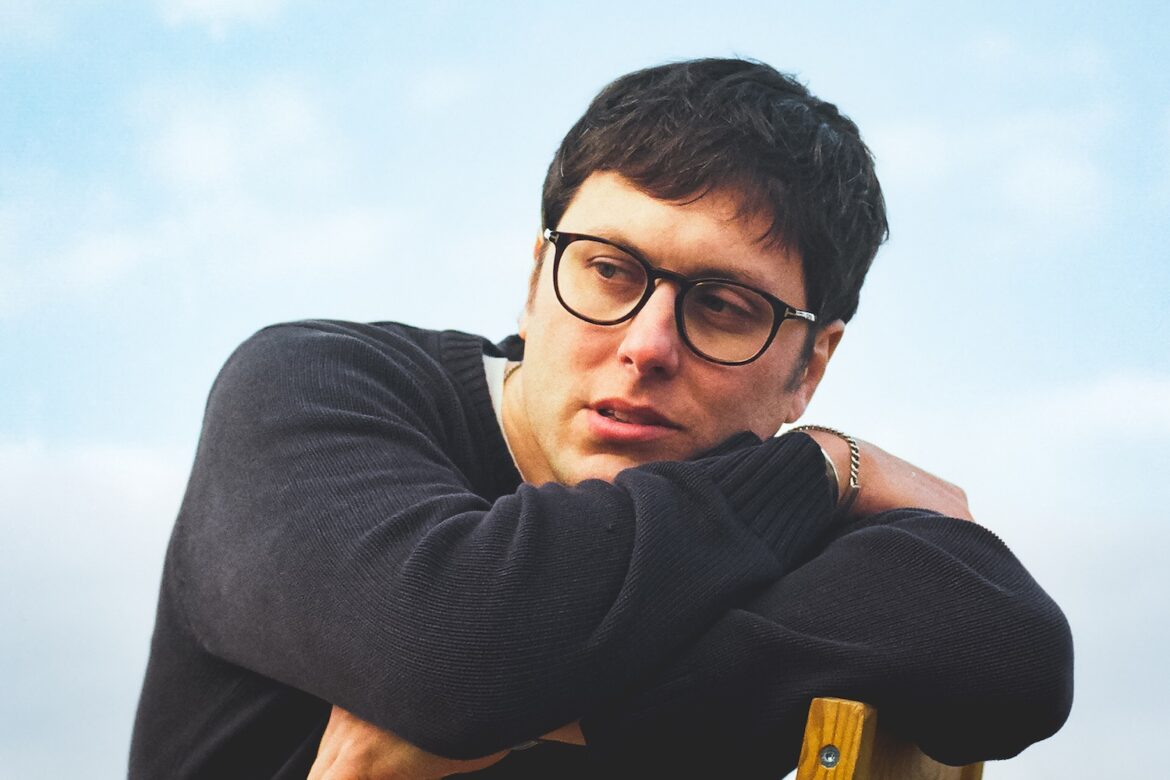
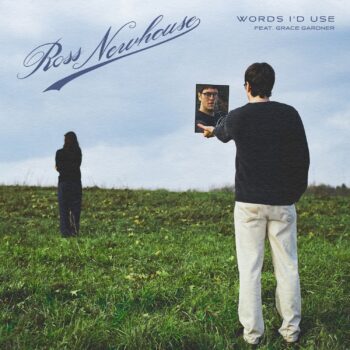
Brooklyn singer/songwriter Ross Newhouse channels self-doubt and vulnerability into “Words I’d Use” (ft. Grace Gardner), a lush indie folk duet – and highlight off his upcoming sophomore album, ‘I’d Rather Feel the Weight’ – that captures the fragile push and pull of love, and the courage it takes to trust someone else’s belief in you when your own falls short.
 follow our Today’s Song(s) playlist


“Words I’d Use” – Ross Newhouse, Grace Gardner
If you’ve ever seen those comments online like “I’ve never had an original experience” – that’s pretty true. There are billions of us. You’re not alone in what you’re feeling.
* * *
Self-doubt can be cruelest when it collides with love –
– when the person across from you sees your brilliance plainly, wholeheartedly, and without hesitation, yet you still can’t bring yourself to believe them.
Ross Newhouse’s “Words I’d Use” lives inside that ache: The push and pull between admiration and insecurity, between wanting someone to see themselves through your eyes and struggling to accept the same grace for yourself. Built on dreamy sonics – gentle synths, warm acoustic and electric guitars, and hypnotic, tender drumming – the song unfolds like a smoldering sonic hug, a musical blanket that lays its weight on the ears not to oppress, but to soothe. A tender duet with Grace Gardner and the latest single off Newhouse’s forthcoming sophomore album I’d Rather Feel the Weight, it’s a beautiful, bruised meditation on vulnerability and shared growth – one that makes emotional contradiction feel intimate, human, and strangely healing.
I want my words to stick
I want you to believe them
Let them seep into your skin
Like a brand new tattoo
But you never write in ink
And I’m too cautious when I think
We yell that you’re the best thing
I don’t deserve to have you
Released March 20 via Canvas Music Distribution, “Words I’d Use” is a soul-stirring indie folk reverie that signals a deeper, more expansive chapter in Ross Newhouse’s artistry – one where intimacy and atmosphere move in lockstep, and where emotional nuance takes center stage.
The Brooklyn-based singer/songwriter has been steadily carving out his own space since 2020, building a catalog rooted in lyrical precision and personal truth. His songs don’t chase easy answers; they linger in life’s in-between, tracing the contours of insecurity, desire, and self-reflection with a writer’s eye for detail and a musician’s instinct for feeling. As Newhouse himself puts it, his work lives “in the gray areas, the quiet space between heartbreak and joy” – a place where contradictions coexist and meaning reveals itself slowly, over time.
That duality defines not only this single, but the broader world of his forthcoming sophomore album I’d Rather Feel the Weight, a record shaped by collaboration, sonic evolution, and a willingness to lean fully into discomfort. Drawing from indie folk roots while incorporating electronic textures and modern production flourishes, Newhouse’s music continues to evolve into something richer and more immersive – a soundscape where words matter just as much as the way they’re carried.

But you never write in ink and I’m too cautious when I think / We yell that you’re the best thing, I don’t deserve to have you…
* * *
This evolution isn’t just audible – it’s intentional, and hard-earned.
Newhouse approaches this latest chapter with a sharper sense of identity, pushing beyond the boundaries that once defined his earlier work and embracing a fuller, more cohesive artistic vision. “My former projects were musical ADD – or, to be kinder to myself, the work of an artist who wasn’t fully formed yet,” he tells Atwood Magazine. “The lyric writing here is deeper and more focused, the narrative and themes are cohesive, and Cole Lumpkin, Kinnship, and I found a sonic world that draws from electronica and indie pop in a way my earlier stuff never did.”
“But honestly? A lot of my friends’ parents liked my old music, and I knew that meant it was safe. It was time to dig deeper into my influences, and this album is my mission statement.”
That mission statement comes to life through a record that leans into uncomfortable emotions, self-doubt, vulnerability, and emotional contradiction – and nowhere is that more evident than on “Words I’d Use,” a song smothered in seductive soft sonics and raw, unfiltered self-doubt. Together with fellow singer/songwriter Grace Gardner (whose 2024 record After Knowing remains a must-listen for fans of lush Americana-laced folk and achingly vulnerable lyricism), Newhouse taps into a deeply human tension: The exhausting, tender cycle of loving someone wholeheartedly while struggling to accept that same love in return. Their voices move in tandem, mirroring that push and pull – admiration and disbelief, reassurance and resistance – until the line between giver and receiver blurs entirely.
This shared emotional language didn’t arrive fully formed; it emerged through connection, conversation, and time. What began as a co-writing session slowly revealed a mutual understanding neither artist initially knew they shared, transforming a fleeting collaboration into something far more personal and lasting.
“I love Grace’s songs and their approach to music making, and I believe this collaboration brought out the best in both of our writing… What a joy to write this with them,” Newhouse shares. “To pull out a theme we didn’t know the other also felt and put words to it. To open up a stupid Zoom link in 2023 and come out with a piece of music that means so much! This song went through many iterations. It grew alongside of us and ended with a breakbeat and a guitar solo, but at its root will always be the song we wrote with the tuning we forgot that lived on a file on my notes app for years until it was time to dust it off.”
You can feel that history in every note. The song opens breathtakingly close – both artists singing hot on the mic in tandem, their voices nearly brushing against each other over gentle guitar and lilting piano. There’s an intimacy to the introduction that feels immediate and immersive, as if you’ve stepped directly into the middle of a conversation already in progress. From there, the soundscape expands with quiet confidence: Subtle textures bloom beneath the surface, the rhythm section easing in as the first verse unfolds, before the arrangement opens up fully in the second – a lush, dreamy swell that feels as tender as it is enchanting, wrapping around the listener with warmth, weight, and grace.
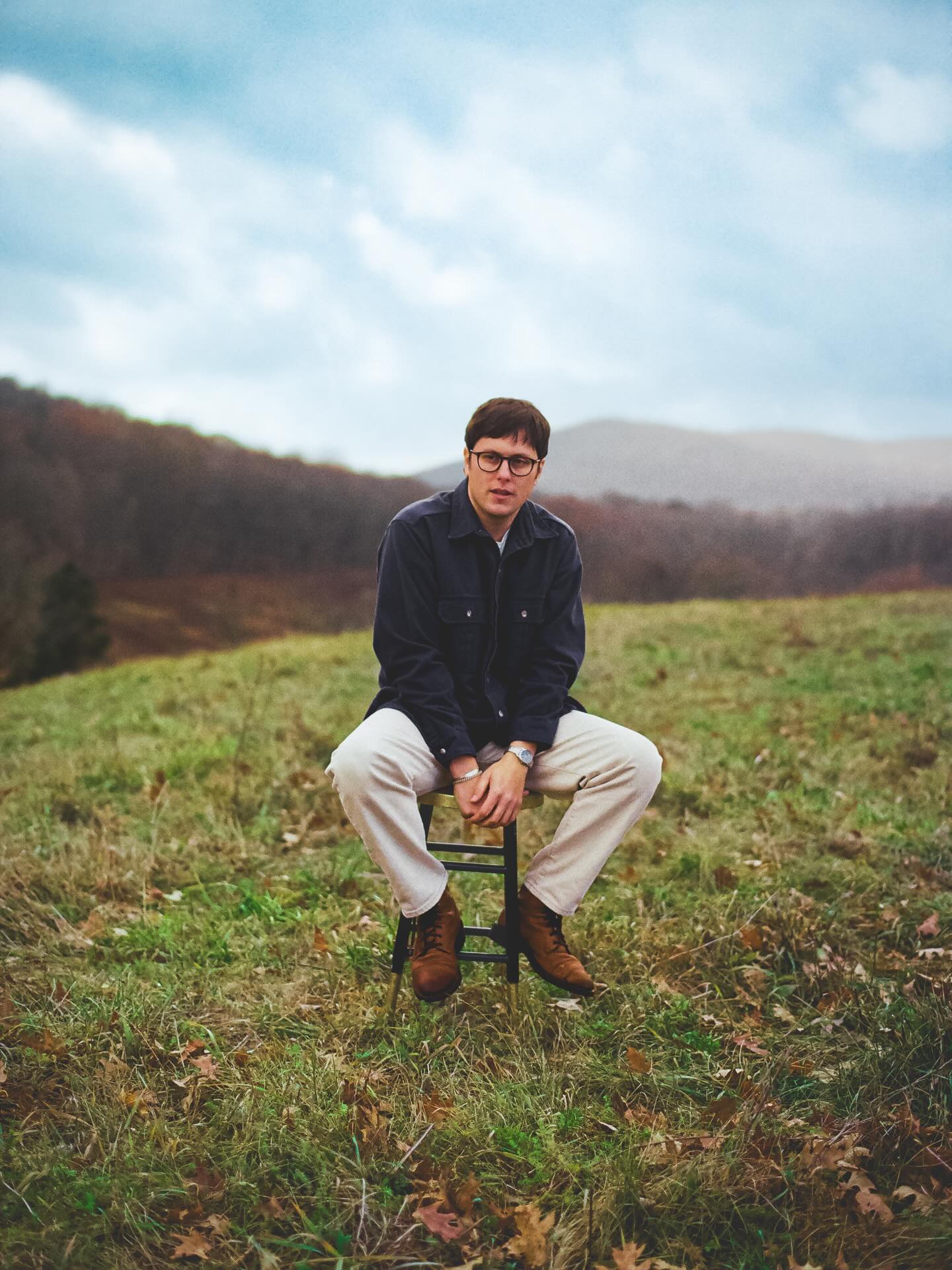
Lyrically, “Words I’d Use” circles a feeling that’s as intimate as it is infuriating: The inability to accept love at the same depth you give it.
From the very first lines, Newhouse and Gardner frame language itself as both bridge and barrier – “I want my words to stick / I want you to believe them / Let them seep into your skin / Like a brand new tattoo” – a striking image of permanence, of wanting reassurance to leave a mark that can’t be erased. Yet that desire is immediately complicated in the following verse, where hesitation and disbelief creep in: “But you never write in ink / And I’m too cautious when I think / We yell that you’re the best thing / I don’t deserve to have you.” Devotion is loud, almost overwhelming, but it’s undercut by an internal voice that refuses to accept it. By the time they arrive at “It’s a quiet screaming match / We’re fighting with our eyes,” that tension has reached a kind of emotional stalemate – two people locked in the same loop, offering each other affirmation while quietly rejecting it themselves. It’s a dynamic that feels deeply human: loving fiercely, doubting endlessly, and struggling to reconcile the two in real time.
It’s a quiet screaming match
We’re fighting with our eyes
You beg me to believe you
And I beg you not to lie
The chorus pulls that contradiction into clear, aching focus. “We’re both hypocrites / Saying why can’t you see / See what I see,” they sing, calling out the shared double standard at the heart of the relationship – each person desperate for the other to believe in themselves, yet unable to do the same. There’s both frustration and tenderness in that admission, especially as the refrain narrows into its most devastating line: “If you don’t believe yourself, you can at least believe me.” It’s a plea, a compromise, and a quiet act of love all at once – an attempt to bridge the gap between self-perception and external truth, cutting straight to the core as the pair refract love as both reassurance and last resort, offered with open hands and trembling hope.
This is also the true heart of “Words I’d Use” – the universal wish for a partner to see themselves through your eyes; the push and the pull between self-doubt and admiration. “If the person you love and trust most is telling you that you’re worthy, just accept it,” Newhouse says. “Stop assuming everyone is lying to you about your talent. I doubt they have the drive or energy to form a plot to get you to bomb onstage. At some point, you just have to laugh at yourself, take a beat, and trust that what you’ve made will resonate with someone.”
We’re both hypocrites
Saying why can’t you see
See what I see
If you don’t believe yourself
You can at least believe me
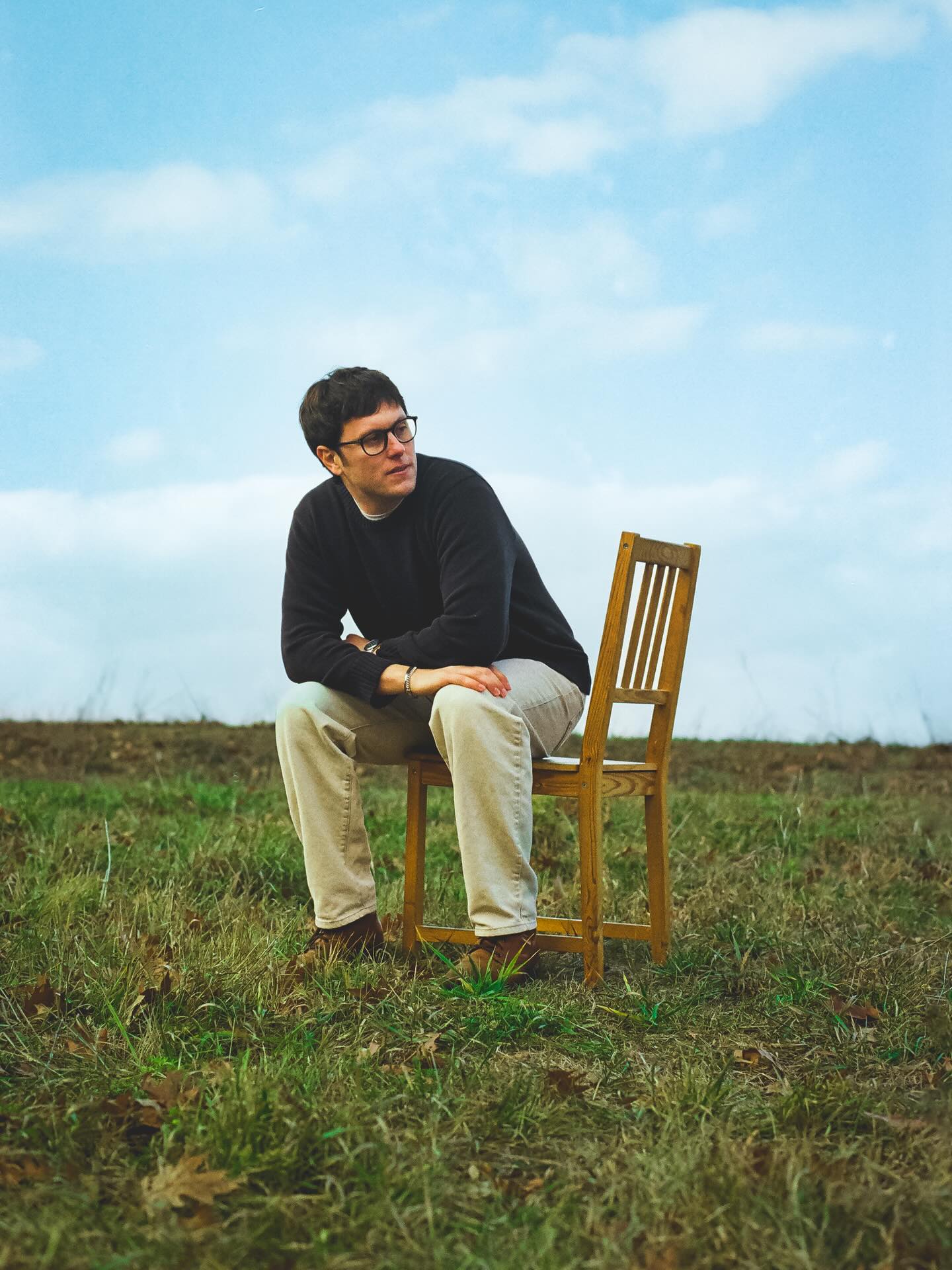
To write so vulnerably and openly speaks to Newhouse’s own evolution as a songwriter and lyricist –
– his words now carrying a weight and clarity that only come from a willingness to expose the parts of himself that once stayed hidden. There’s no distance here, no protective veil between artist and audience; every line feels offered in real time, unguarded and unpolished in the most intentional way. That kind of honesty doesn’t just invite listeners in – it asks something of them, too: To sit with their own contradictions, to recognize their own reflection in the push and pull he lays bare. In unveiling that raw, internal dialogue – the doubt, the devotion, the disbelief – Newhouse transforms his own innermost private thoughts into shared experience, turning vulnerability into connection and confession into catharsis.
It’s beyond your comprehension
Words I’d use to describe
And the ones you hurl back towards me
Are even further beyond mine
Let it all flow off like water
Give as easy as you breathe
But hold it through the compliments
When it’s anyone but me
And that’s what makes “Words I’d Use” linger long after the last note fades; as heartfelt as it is humble, as graceful as it is gut-wrenching, Newhouse and Gardner’s song is a mirror held gently but unflinchingly up to the listener. It captures the quiet, complicated truths we don’t always know how to articulate – the moments where love is abundant, yet belief in ourselves falls short – and gives them shape, sound, and space to breathe. In doing so, it becomes more than a duet or a confession; it becomes a shared language for anyone who’s ever struggled to accept the very thing they so freely give.
It’s also the perfect preview of I’d Rather Feel the Weight, which promises more of the same kind of disarmingly beautiful moments. “The full album revolves around the gray areas of the human experience,” Newhouse reflects. “Not necessarily joy, not sadness, but the emotions that you may think are only yours but are universal.” It’s a striking mission – one rooted in emotional honesty, nuance, and connection – and one that positions the record as a deeply human, immersive body of work, built to hold space for the feelings we don’t always have words for, but carry with us all the same.
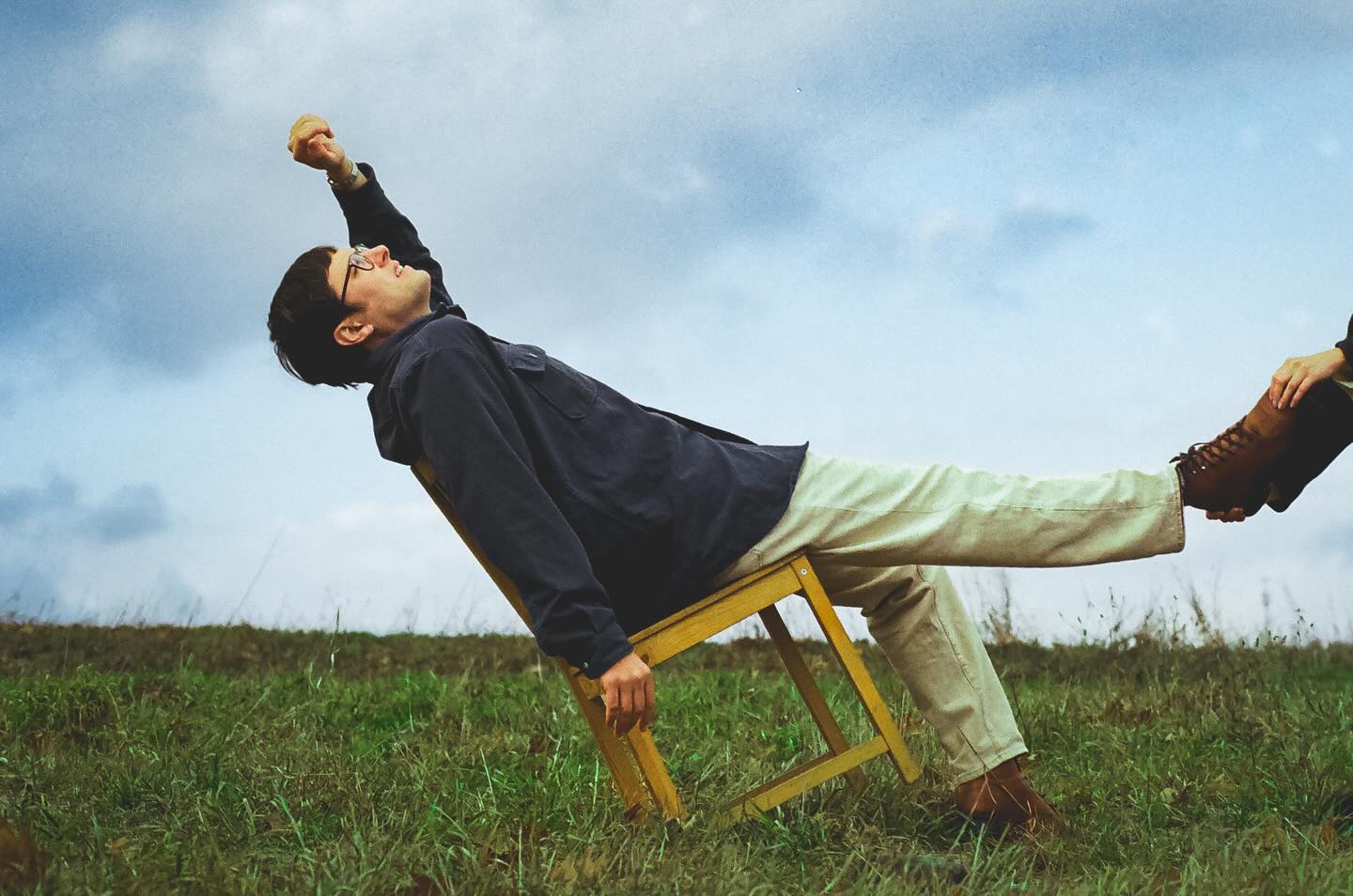
In the end, “Words I’d Use” leaves us with a gentle but grounding truth: Loving someone fully means learning to trust the way they see you, even when your own reflection feels distorted.
It’s a song about surrendering control – not to another person, but to the possibility that their belief might be more honest than your doubt. In that way, it doesn’t just sit in vulnerability; it offers a path through it, reminding us that connection can be a form of clarity if we’re willing to accept it.
That openness – that willingness to sit in the gray, to question, to expose – is what defines Ross Newhouse’s artistry at this moment, and it’s exactly what makes his music resonate so deeply. With I’d Rather Feel the Weight on the horizon, he’s inviting listeners further into that emotional landscape, one built on unbridled honesty, introspection, and authentic, earnest connection.
In our conversation below, Newhouse opens up about the making of “Words I’d Use,” his collaboration with Grace Gardner, and the creative evolution behind his forthcoming album – a deeper look into the thoughts, feelings, and stories that shaped this beautifully human song.
It’s a quiet screaming match
We’re fighting with our eyes
You beg me to believe you
And I beg you not to lie
We’re both hypocrites
Saying why can’t you see
See what I see
If you don’t believe yourself
You can at least believe me
— —
:: stream/purchase Words I’d Use here ::
:: connect with Ross Newhouse here ::
— —
“Words I’d Use” – Ross Newhouse, Grace Gardner
A CONVERSATION WITH ROSS NEWHOUSE
Atwood Magazine: Ross, for those who are just discovering you today through this writeup, what do you want them to know about you and your music?
Ross Newhouse: To put it bluntly, my music is for people who like words. I want to find the people who listen to songs, have a specific line stuck in their head and go on message boards to discuss it and analyze it. My lyrics are narrative and my songs work best as whole pieces – they speak to my insecurities, desires, and flaws. Honestly, it’s why I have a hard time cutting them into bite-sized clips for TikTok or whatever we’re doing now. In that sense, I’m a singer-songwriter. But I also grew up listening to post rock and electronic music and I gravitate towards those genres sonically. I’m super interested in how all these elements can work in tandem, and this project is me stepping into that part of my artistry and exploring.
You’ve been actively releasing music for five years now. Can you recommend a couple personal highlights from the Ross Newhouse catalog for Atwood’s crate-digging audience to sink their teeth into?
Ross Newhouse: “Bluebird” and “Dagger Earrings” are my favorites from my first EP, along with “Sea Without Blue” from my first album, Avonlea. They speak to the way I approach my music lyrically, but also have hints of the electronic-pop-folk world I live in now. Those songs are the building blocks of this record.
Who are some of your musical north stars, and what are you most excited about the music you're making today?
Ross Newhouse: One of the producers on the record, Kinnship, has been a north star of mine for a while. We approach lyric writing differently – I tend to be literal and direct, while he speaks more abstractly. But the mood of his music always lives in this gray area between melancholy and joy, never tipping too far into either, and that’s exactly where a lot of my music lives too. His production on “Arms Length” and “Blue” was a perfect match. He’s a big reason I was excited about this project.
Cole Lumpkin is another collaborator I’m thrilled to have on this project. Making songs with him feels like lightning striking the same spot over and over again – he’ll pull up a torrented plugin from 2005 and make some insane magic with it. Even though I grew up on math-rock, post-rock, deep house, and will have permanent tinnitus from New Brunswick basement hardcore shows, I felt like my music was mostly safe indie folk. Cole helped me take the sonic landscape I had in my head and turn it into something tangible.
You’ve called “Words I’d Use” a “modern indie-pop meditation on admiration, vulnerability, and shared growth.” What’s the story behind this song?
Ross Newhouse: Grace and I both have partners in the arts, which puts you in a strange position – you’re someone riddled with self-doubt, dating someone you think the world of. My girlfriend is my favorite actor. She’s brilliant. But she dances with artistic insecurities like so many of us do. She feels the same way about my songwriting. We adore each other and neither of us feel worthy of it. I don’t know exactly how that theme came up with Grace – we were just shooting the shit about where we were in life – but the moment it did, the song basically wrote itself.
How did you end up cowriting this with Grace Gardner, and what did that session together look like?
Ross Newhouse: There’s a really strong community of writers on TikTok; everyone is very supportive. Grace had a song called “Deny Me” that got a ton of love and put them on my radar. I reached out and we set up a session that didn’t go anywhere. Sometimes you just write a dud. Instead of trying to salvage it, we met again with a clean slate. We were just talking about life and music and within an hour or so we’d written the song. There’s definitely a lot to critique about TikTok and the chase for virality, but ultimately, we crossed paths because our songs arrived on each other’s screens years ago, and that’s kind of beautiful.
How does this track fit into the overall narrative of your sophomore album, I’d Rather Feel the Weight?
Ross Newhouse: The album is about leaning into uncomfortable emotions, and one of those is self-doubt. Like, if the person you love and trust most is telling you that you’re worthy, just accept it. Stop assuming everyone is lying to you about your talent. I doubt they have the drive or energy to form a plot to get you to bomb onstage. At some point you just have to laugh at yourself, take a beat, and trust that what you’ve made will resonate with someone.
How do you feel I’d Rather Feel the Weight reintroduces you and captures your artistry, especially compared to your debut, Avonlea?
Ross Newhouse: My former projects were musical ADD – or, to be kinder to myself, the work of an artist who wasn’t fully formed yet. The lyric writing here is deeper and more focused, the narrative and themes are cohesive, and Cole Lumpkin, Kinnship, and I found a sonic world that draws from electronica and indie pop in a way my earlier stuff never did. But honestly? A lot of my friends’ parents liked my old music, and I knew that meant it was safe. It was time to dig deeper into my influences, and this album is my mission statement.
You’re steadily releasing singles off the album right now, so I’d love to hear - what are some of your favorite songs that you’re excited for folks to hear?
Ross Newhouse: I think “Blue” is the best song I’ve written. It’s about the vastness of depression, and the production gets huge while still giving it room to breathe. I also love the sample at the beginning of “Prom Queen” – it’s from a 1955 educational video the state of Alabama produced to help kids with prom etiquette. And then there’s the album closer, “Without a Bite,” which was recorded acoustic, in one take, with my friend Dan Harris of Shallow Alcove. We recorded it as a demo to produce around, but after we played it through we looked at each other and just knew.
Likewise, do you have any favorite lyrics off this album that you’re especially proud of?
Ross Newhouse: The outro of “Without a Bite” is inspired by Sylvia Plath’s The Bell Jar, and pulling from great American authors was something new to me. I also get a kick out of some of the individual words scattered through the album: detractor, shipwreck, patchwork. Sometimes I’ll sit on random word finder sites, pick a word that calls to me, and see what comes out of it.
“Blue” talks about how limiting and pointless depression feels. I like this verse:
Miles off shore in a nasty shipwreck
Only the passengers will float back to the surface
So, you know, when I sink this low
It feels like I am going against my purpose.
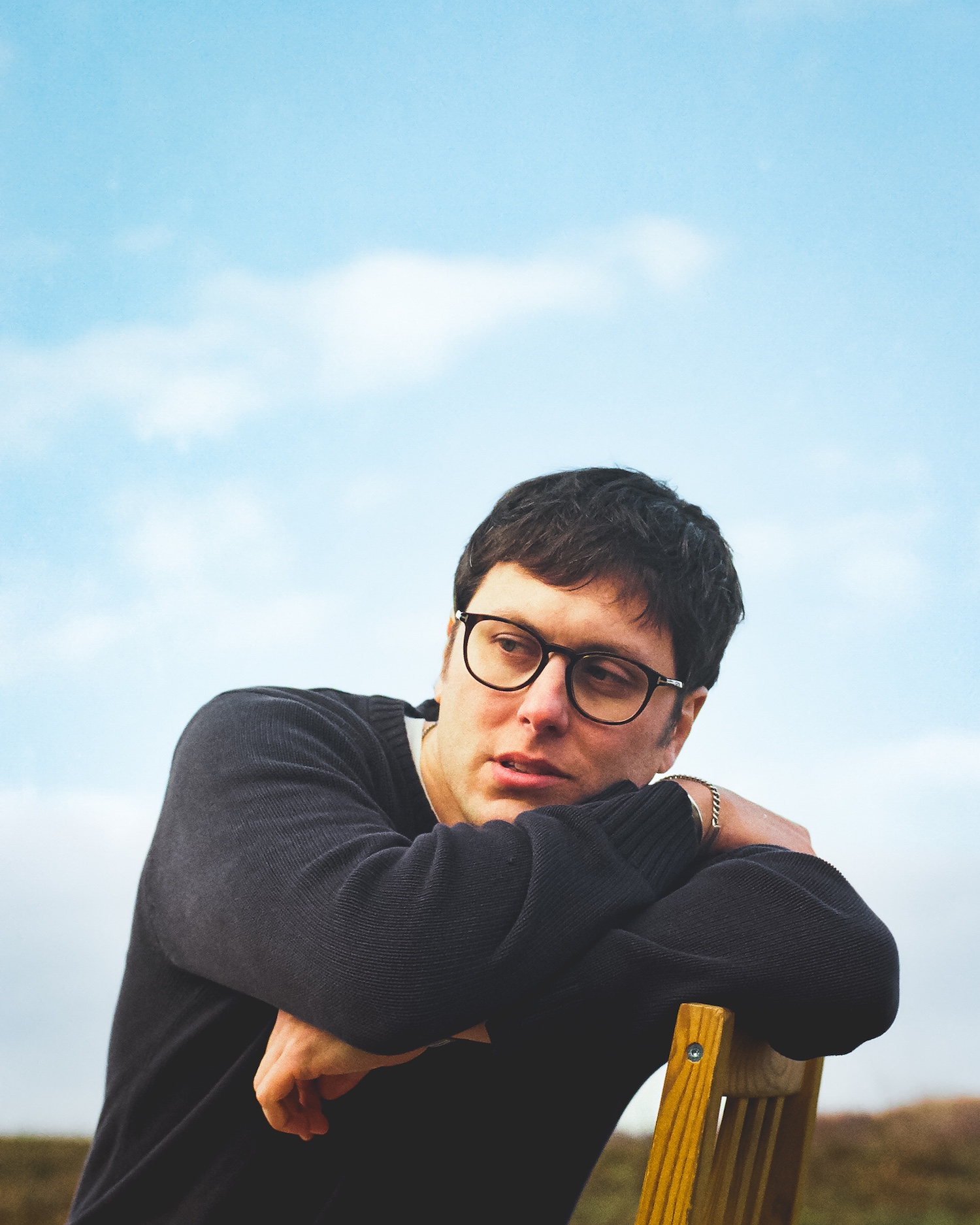
What do you hope listeners take away from these new songs, and what have you taken away from creating them and now putting them out?
Ross Newhouse: I hope they see parts of themselves in this album. These songs come from a personal place, but I don’t release music I think will only be cathartic to me. I want listeners to use these songs as a way to articulate emotions they otherwise might not have words for. If you’ve ever seen those comments online like “I’ve never had an original experience” – that’s pretty true. There are billions of us. You’re not alone in what you’re feeling.
Making an album today requires a lot of determination, time, and resources. My first record was a COVID baby – I had all the time in the world. This one was a labor of love and a hustle. There were social events missed, plans cancelled, frustrations and breakthroughs and real tears when I got the final files back. I thought it was going to be an EP at first, or that I’d just feed the algorithm and release singles, but the cohesion of the songs called for an album. I’ll always be grateful to these songs and these collaborators.
In the spirit of paying it forward, who are you listening to these days that you would recommend to our readers?
Ross Newhouse: Purser is putting out music that feels genuinely unique and visceral and I love how they pull influences from across genres and mediums, not just music. I recently saw Sudan Archives live – such an exciting performer to watch. You don’t often get an R&B/electronic artist who plays violin with a boy-band microphone. And my co-writers and producers on this album – Grace Gardner, Elise Petersen, Kinnship, and Cole Lumpkin – listen to all of them. I’m lucky I got to them before everyone else does.
— —
:: stream/purchase Words I’d Use here ::
:: connect with Ross Newhouse here ::
— —
“Words I’d Use” – Ross Newhouse, Grace Gardner
— — — —
Connect to Ross Newhouse on
Facebook, TikTok, Instagram
Discover new music on Atwood Magazine
© Nick Collingwood
 © Nick Collingwood
:: Today’s Song(s) ::
follow our daily playlist on Spotify
:: Stream Ross Newhouse ::