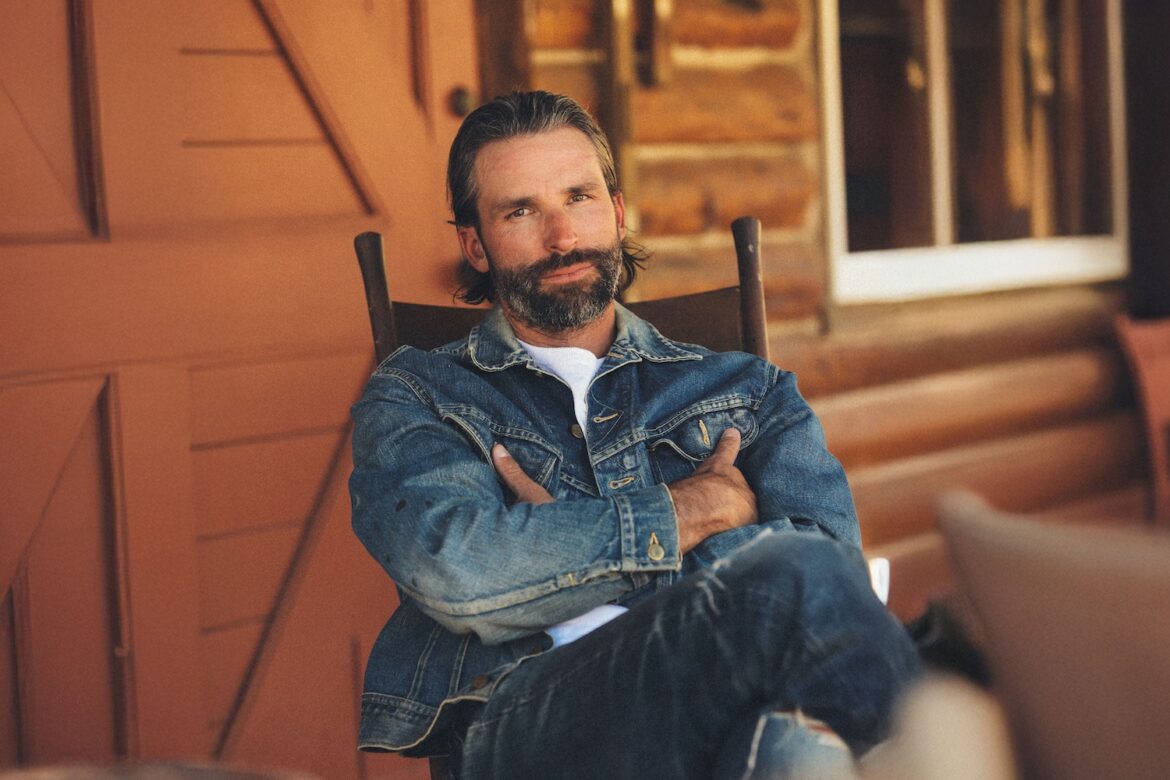
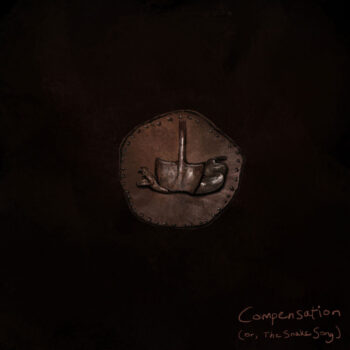
San Luis Obispo singer/songwriter Jonathon Penn confronts guilt, instinct, and spiritual consequence on “Compensation (Or, The Snake Song),” a breathtaking folk meditation off his upcoming debut album ‘It Took A Long Time To Get Young’ that gives voice to a rattlesnake, a reckoning, and the strange grace of seeing ourselves in what we fear.
Stream: “Compensation (Or, The Snake Song)” – Jonathon Penn
A shovel can become a mirror when the life at its edge looks back.
One swing can split the world into before and after: Instinct on one side, consequence on the other, and a body still moving long after the decision has been made. What lingers isn’t just guilt, but recognition – the unsettling feeling that the thing we feared may have been carrying a version of ourselves all along.
Singer/songwriter Jonathon Penn’s latest song sits inside that charged, uneasy instant after a choice has already been made and an action delivered, letting guilt, instinct, empathy, and imagination coil around one another until predator and prey begin to share the same skin. Spare, tender, and spiritually unsettled, “Compensation (Or, The Snake Song)” is a breathtaking folk meditation on consequence – a song about the weight we carry, the lives we touch, and the strange grace of learning to see ourselves through another creature’s eyes.
I’m just a snake they say
But I don’t think of myself that way
I just lay down and slide around
‘Cause I like the feeling on the ground
And I had my chance
I could sing and dance
But I got tired of holding myself up
I know you know the feeling
Hey, what you doing with that shovel?
Hey, why you digging your own grave?
Atwood Magazine is proud to be premiering “Compensation (Or, The Snake Song),” the beautiful fourth single from San Luis Obispo-based artist Jonathon Penn’s upcoming debut album, It Took A Long Time To Get Young. Arriving May 15th via Shifting Sands Records, “Compensation” follows previously released singles “Thick and Thin,” “Wildfire,” and “Hawk Circling,” offering another window into an album born from rupture, renewal, and the long, often painful work of returning to one’s truest self.
Penn’s story is one of two lives slowly, forcefully colliding: The musician who self-produced records in college and never stopped carrying songs inside him, and the finance professional who spent nearly two decades building a future that eventually became impossible to keep inhabiting. After the death of his father, the birth of his children, and the unraveling of a career path rooted in money, status, and control, Penn walked away from the life he’d been living and found his way back to the guitar he’d carried since he was fourteen – a lifelong companion that once belonged to his dad. It Took A Long Time To Get Young rises out of that breaking point as a record of hard-won clarity, spiritual crisis, and creative rebirth: A coming-of-age album for adulthood’s great undoings, made with real instruments, real time, and the unvarnished warmth of a voice finally choosing itself.

Within that larger story, “Compensation” feels like one of the album’s most intimate reckonings: A song that doesn’t simply reflect Penn’s transformation, but tests it.
Where It Took A Long Time To Get Young traces the long, disorienting path back to selfhood, “Compensation” lingers in the moral and spiritual aftermath of a single act – asking what it means to move through the world with tenderness when survival, fear, and instinct can still lead us to harm. It’s a small song with an expansive inner life, one that folds Penn’s personal upheaval into a wider meditation on balance, consequence, and the strange ways pain can become a teacher.
We both lost our way
Back here today
Reliving our past choices made
I guess we both have skin to shed
I don’t close my eyes
So I can see
My body float away from me
I guess we both lost our heads
Hey, what you doing with that shovel?
Hey, why you digging your own grave?
To hear Penn tell it, “Compensation” arrived at the very end of the album’s writing process, after the record had already begun to reveal its shape. The song grew out of a final burst of writing, a strange open tuning, and Penn’s years-long relationship with Ralph Waldo Emerson’s essay Compensation – a text that gave language to the forces he’d long been living through.
“This was the last song I wrote for the album,” he tells Atwood Magazine. “During pre-production, I had gone up to Middle Ridge Studio in Parkfield, California to record single-take, stripped-down demos of all 18 songs I had at the time. I was using those to help decide – along with the team – which 10 to 12 songs to bring into focus for the Sonic Ranch sessions. So, this was late in the pre-production phase, and I remember feeling like I was hitting my stride.”
“I believe ‘Thick and Thin’ was the 18th song, and I thought I was done. But ideas were still flowing. I was coming off the tail end of the Adrianne Lenker songwriting workshop I was doing through School of Song and still feeling creatively charged. ‘Lettin’ Loose’ came quickly – one sitting at the piano, deliberately written without rhymes as a constraint, trying to capture a single moment or emotional tone. That became song 19.”
“‘Compensation’ became number 20. The title comes from Ralph Waldo Emerson’s essay Compensation, part of his first book of essays, published in 1841 – the same volume that includes Self-Reliance. I’m not sure how I first came across the essay, but I’d been reading and rereading it for years. It helped me make sense of a lot. There are two main ideas in the essay that stayed with me. First, a kind of metaphysical notion of unity and wholeness – this idea that there’s one energy animating everything in the universe, materially and spiritually. That spoke to some of the personal experiences I’d had, and Emerson managed to put language to it in a way that felt poetic but also grounded, like he really knew what he was talking about.”
“Second was a version of karma: The idea that everything is compensated for, that you can’t have sweetness without bitterness. You can’t escape cost, or get reward without consequence – not because of morality, but because of the structure of reality itself. He writes about how humans constantly try to break this balance – to get the sweet without the bitter – but nature doesn’t allow it. Compensation always comes, even if not immediately, and maybe not in one lifetime. But on a cosmic scale, it all balances out.”
“There’s a beautiful section at the end of the essay. Emerson writes (paraphrasing here) that the tragedies we experience – those losses that feel irreparable in the moment – can later be seen as moments of guidance, even rescue. As if a guide stepped in and pulled us out of something that wasn’t meant for us. If we survive, we emerge stronger, more whole. He compares it to a banyan tree, growing vast and wide to shelter others.”:
“And yet the compensations of calamity are made apparent to the understanding also, after long intervals of time. A fever, a mutilation, a cruel disappointment, a loss of wealth, a loss of friends, seems at the moment unpaid loss, and unpayable. But the sure years reveal the deep remedial force that underlies all facts. The death of a dear friend, wife, brother, lover, which seemed nothing but privation, somewhat later assumes the aspect of a guide or genius; for it commonly operates revolutions in our way of life, terminates an epoch of infancy or of youth which was waiting to be closed, breaks up a wonted occupation, or a household, or style of living, and allows the formation of new ones more friendly to the growth of character. It permits or constrains the formation of new acquaintances, and the reception of new influences that prove of the first importance to the next years; and the man or woman who would have remained a sunny garden-flower, with no room for its roots and too much sunshine for its head, by the falling of the walls and the neglect of the gardener, is made the banian of the forest, yielding shade and fruit to wide neighbourhoods of men.”
That sense of consequence runs through Penn’s album like a current beneath the surface.
It Took A Long Time To Get Young isn’t merely a document of change, but of what change asks of a person: What has to break, what has to fall away, and what can be made from the wreckage once the dust settles. “Compensation” gives that question a fable-like shape, but its emotional source is unmistakably human – the sound of an artist looking back at the life that pushed him here, and beginning to understand the push as part of the path.
“That was the mindset I was in when ‘Compensation’ came,” Penn continues. “I had written most of the record, had the team and studio dates locked in, and I was finally beginning to understand that everything I had gone through – the losses, betrayals, career collapse, spiritual confusion – it had all become the raw material for this music. The process had been painful, but I could now see it had all led me here.”
“That may sound cliché when reduced to a few sentences, but the lived experience felt profound. It really did feel like a spiritual course correction. Like there had been a guide – some force – moving me off one path and onto another. I had been on the East Coast, working in finance, focused on money and status and control. I believed in the idea that freedom could be purchased. And then, piece by piece, that life fell away. I was dragged – painfully – toward something new. At some point, I thought ‘Compensation’ might be a good title for the album, but I didn’t yet have a song by that name. Still, the essay kept coming up. Over the years, whenever a friend was going through something difficult – a career implosion, a family crisis – I would send them Emerson’s essay and say, ‘This helped me. Maybe it’ll help you.’”
The song’s final form began not with a grand revelation, but with Penn immersed in the practical, meticulous work of preparing the record: Listening closely, holding each line to the light, and following an unfamiliar tuning into unfamiliar emotional terrain. Then the real world interrupted.
“I was deep in final rehearsals and prep, going over lyrics and arrangements, holding every song up to a high standard. I wanted each lyric, each melodic movement, to serve the story and the emotional arc of the song,” he recalls. “Honestly, I was probably overthinking everything a bit – part nervousness, part perfectionism – but I needed to feel like I’d done the work before we got to Sonic Ranch. I had a guitar in a weird open C tuning – something I came up with after the Adrianne Lenker workshop, inspired by her use of alternate tunings to disorient herself and discover new musical paths. It was something like E-G-C-G-C-E, not a tuning she used or one I had heard before, but it created an interesting palette. I kept that guitar in that tuning and would mess around with ideas on it here and there.”
“One day, I was wrapping up some work and went out to the trash bins behind our house. There was a rattlesnake there. Not uncommon – we live in a rural area – but still dangerous, especially with dogs and small kids around. I felt like I had to kill it. I used a grabber tool to hold it behind the head and then cut it with a shovel. If you’ve ever killed a rattlesnake, you know they don’t die easily. The body keeps writhing. The rattle shakes. The severed head spits venom. It’s a haunting, gut-wrenching experience – to intentionally end a life.”
“I sat with that feeling for a few days. The guilt. The weird spiritual disturbance of it. And it brought me back to Emerson again – to that idea of karmic balance, of the moral and emotional weight we carry when we try to separate ourselves from the consequences of our actions. That’s when the song came. I have a voice memo from the moment it started – me messing around with that open-tuned guitar, picking out a melody. The opening lyric came to me: ‘I’m just a snake, you say / but I don’t think of myself that way…’ That line unlocked the song. I started imagining the snake’s perspective. What story would it tell? What would it say to the person who killed it?”
What follows is where “Compensation” becomes more than a retelling. Penn lets the snake speak until the song’s world grows unstable and alive, its threats half-real and half-imagined, its details drawn from memory, literature, weather, fear, and the conscience’s own strange theater. The result is intimate and uncanny: A folk song that feels sung from inside the mind’s aftershock, where every sound has a shadow and every choice keeps moving.
“From there, the lyrics flowed. Some lines came directly from life: ‘I’ll hunt your dogs / I’ll send the fog / I’ll be the masked man in the trees.’ That year, it had been foggy on the Central Coast, and a neighbor reported seeing a masked figure in the trees – a brief neighborhood scare that later turned out to be nothing. But it all became part of this symbolic world where fear, guilt, consequence, and imagination blurred together. There’s a touch of Dostoevsky’s Crime and Punishment in the concept – this idea that the punishment may not come from the outside, but from within. That if you cross a moral line, you carry the weight of it, whether anyone knows or not.”
“The final lyric in the song – ‘I may make you wait, but I’ll compensate you for your troubles / I’ll get you back in time’ – is a direct nod to Emerson. That’s where the title came from. But I also liked having a secondary, more visceral name – ‘Or, The Snake Song’ as a literary Easter egg, inspired by a favorite book ‘Moby-Dick; or, The Whale.’ (That book was important to the story of album closer ‘Two Sides of the Sun’). Also of note is the shaker-esque percussion sound you hear at the beginning of the song and in the back half. That is an actual rattlesnake rattle that was inside the sound hole of an old Martin acoustic I had found during the writing process. The guy I bought it from told me it would be bad luck to remove it…”

All of that history lives inside “Compensation,” but the song itself never buckles under the weight of its own mythology.
It moves with remarkable restraint: Penn’s fingerpicked guitar tracing a soft, steady path forward while subtle piano, pedal steel, and baritone textures gather around him like weather at the edge of a field. The arrangement feels close enough to touch, yet never claustrophobic – a hushed folk world where every sound has been placed with care, and every space between notes feels charged with what’s been left unsaid.
Penn sings like he’s letting us overhear the thought before it hardens into confession. His voice is plainspoken and tender, worn but present, carrying the song’s strange fable with the intimacy of a man trying to understand himself in real time. When he opens with, “I’m just a snake they say / But I don’t think of myself that way,” the line lands with disarming simplicity: A creature reduced to threat suddenly becomes a self with a body, a will, a preference, a song. “I just lay down and slide around / Cause I like the feeling on the ground” turns the snake from symbol into soul, and in doing so, makes the listener feel the moral pressure of the whole piece.
That pressure only deepens in the refrain. “Hey, what you doing with that shovel? / Hey, why you digging your own grave?” is both accusation and prophecy, a question pointed outward and inward at once. It’s the snake speaking back, but it’s also conscience finding a voice – the part of us that knows harm has a way of returning, not always as punishment, but as memory, unease, recognition. Penn doesn’t sensationalize the moment; he lets it haunt the room. His restraint is the song’s great strength, allowing “Compensation” to feel less like a dramatic reckoning than a whispered one.
And I will send the fog
I will hunt your dogs
I’ll make you watch your every step
I’ll be the masked man in the trees
And I will send the rain
You’ll call it pain
I’ll make you wish we never met
I’ll be the falling feeling dreams
Hey, what you doing with that shovel?
Hey, why you digging your own grave?
By the time the snake begins to threaten fog, rain, dogs, dreams, and the masked man in the trees, “Compensation” has slipped fully into the realm of myth without losing its human center. Its images feel elemental and half-lit, but the sensation beneath them is deeply familiar: The fear that what we’ve done will follow us; that the line between protection and violence is thinner than we want it to be; that every life we touch, even briefly, leaves some imprint on our own. Penn’s songwriting resides within that tension with rare patience. He lets the song stay unresolved because life, too, often leaves us there – holding the shovel, hearing the rattle, wondering what balance will ask of us next.
It’s that patience that makes “Compensation” so special. Penn writes with the humility of someone who isn’t trying to master the mystery so much as sit inside it honestly. There’s no grand moral lesson here, no clean redemption, no easy absolution waiting for him (or for us) at the end of the song. Instead, he offers a portrait of consequence as lived experience: The way guilt settles in the body, the way empathy can arrive too late and still matter, the way a single moment can open into a lifetime of questions.
I’m just a snake you say
But I don’t think of myself that way
I just lay down, slide around
Cause I like the feeling on the ground
I may make you wait
But I will compensate
You for your troubles
I’ll get you back in time

On “Compensation,” Jonathon Penn emerges as the kind of songwriter who makes small scenes feel vast without inflating them.
He understands how to build a world from a gesture, a phrase, a sliver of memory; how to let a song breathe without leaving it empty; how to make folk music feel old in its bones and immediate in its ache. His voice is worth listening to because he brings together raw storytelling, spiritual inquiry, literary imagination, and the unvarnished warmth of a life being sung back into shape.
“Compensation (Or, The Snake Song)” may have been the twentieth song Penn wrote for It Took A Long Time To Get Young, but it feels like one of the record’s essential thresholds: The moment when the album’s questions of loss, rupture, rebirth, and self-recognition coil into one unforgettable image. A shovel becomes a mirror. A snake becomes a singer. A death becomes a reckoning. And from that reckoning, Penn finds one of his most quietly devastating songs – a breathtaking reminder that every life has weight, every action has an echo, and every ending may yet carry the shape of return.
Stream “Compensation (Or, The Snake Song)” exclusively on Atwood Magazine, and feel the ache of a song that turns one irreversible moment into a world of reckoning, empathy, and return.
Jonathon Penn leaves us where the song began – at the edge of a life suddenly looking back – and asks us to sit with the weight of what we’ve done, what we’ve feared, and what we might still learn to recognize in one another.
— —
:: connect with Jonathon Penn here ::
— —
Stream: “Compensation (Or, The Snake Song)” – Jonathon Penn
— — — —
Connect to Jonathon Penn on
Facebook, Instagram
Discover new music on Atwood Magazine
© Robbie Bruzus
 © Robbie Bruzus
:: Stream Jonathon Penn ::