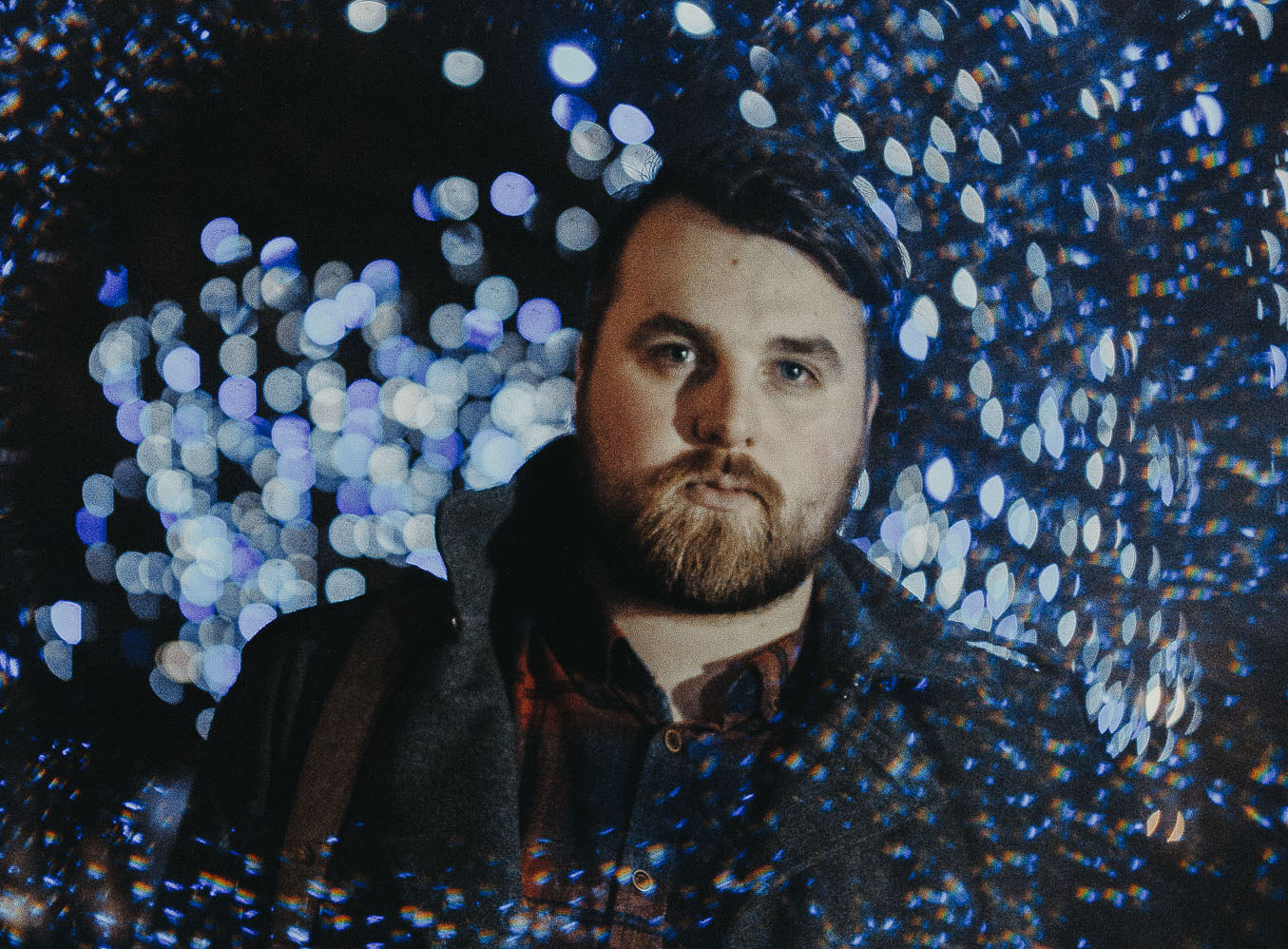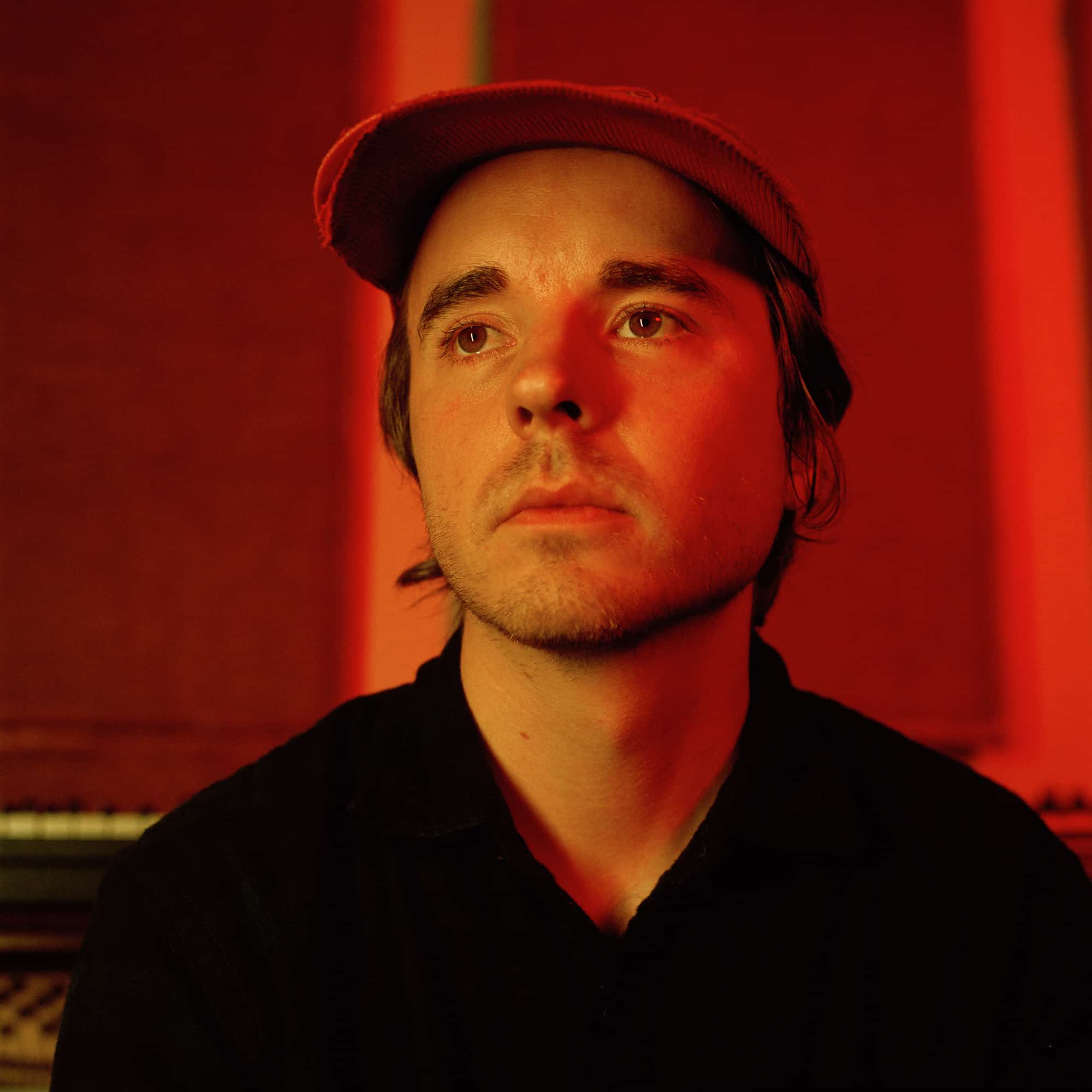
Actor and musician Finn Wolfhard opens up about spending two weeks in the Minnesota woods to record his sophomore album ‘Fire From The Hip,’ dueling with himself over his best and worst impulses, sharing his personal life through music, and a pointed theory about who’s really trying to sell us on AI.
Stream: ‘Fire From The Hip’ – Finn Wolfhard
People think they know someone, but in reality, that’s just a small part of them that you’re seeing on a screen or hearing in a song.
* * *
Finn Wolfhard has had the kind of year that would make anyone else’s Google Calendar look embarrassing.
In January, he hosted Saturday Night Live. The next month, he disappeared into a residential recording studio in a sleepy corner of the Minnesota woods where he spent two weeks recording reel-to-reel tapes with a handful of close friends. By May, he was making his debut on the Met Gala steps. And on July 10, he released his sophomore solo album, Fire From the Hip.
At twenty-three, the musician-actor has spent nearly a decade in the weird wonderland that is Stranger Things: One of the most watched, clipped, and pored-over-on-Twitter shows of the last ten years.
I catch Wolfhard over Zoom on a Tuesday morning. He calls in from Vancouver, the city that’s remained his home despite a career that could have pulled him permanently to Hollywood, and is wearing a red and black Faye Webster hat. After the usual pleasantries, we get right to the good stuff – his brand new record.
Fire From the Hip runs twelve songs in just over half an hour, front-loading much of its energy. Despite being recorded in the Minnesota snow, the album has a surprising surf-punky sound, with sun-warmed guitars that cut cheerfully through the fuzz. Wolfhard’s voice, plainspoken and boyish, fits neatly into that world, giving the music a loose-limbed playfulness.
During moments like “Maggie,” his vocals tap into some of the unvarnished sweetness of Alex Chilton, while the layered voices throughout tracks like “Crater,” “Follow,” and “I’ll Let You Finish” have a faint Beach Boys-like impulse to surround an individual voice with collective whole, and the echoing layers make his solitary thoughts feel communal. It is a record that calls for loud car speakers and open windows over private headphone listening.

The title suggests something flung out into the world before there’s time to second-guess.
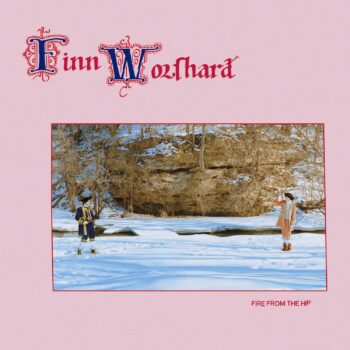
Wolfhard knows the feeling intimately. He admits a habit of saying things without thinking, then immediately wishing he could take them back. The album art mirrors this tension, depicting him twice-over in eighteenth century dress (oh yes, tricorne hat and all!) locked in a duel with himself. It is the record’s central conceit made literal, a nod to the famous standoff scene in Barry Lyndon. “Each song obviously has its own themes,” he says, but the record as a whole sits in the middle of the duel: Sometimes he is sure of himself. Other times, he is not.
One thing he was certain about was how to make the record. His debut, 2025’s Happy Birthday, was made largely alone, and tracked to cassette with friend and collaborator Kai Slater – four tracks, eight tracks, whatever the song needed. He loved the sound, but the process left him craving more room to experiment. For Fire From the Hip, he wanted to keep the warmth of tape while opening up the possibilities: More tracks and more versatility without losing the analog saturation of his first record.
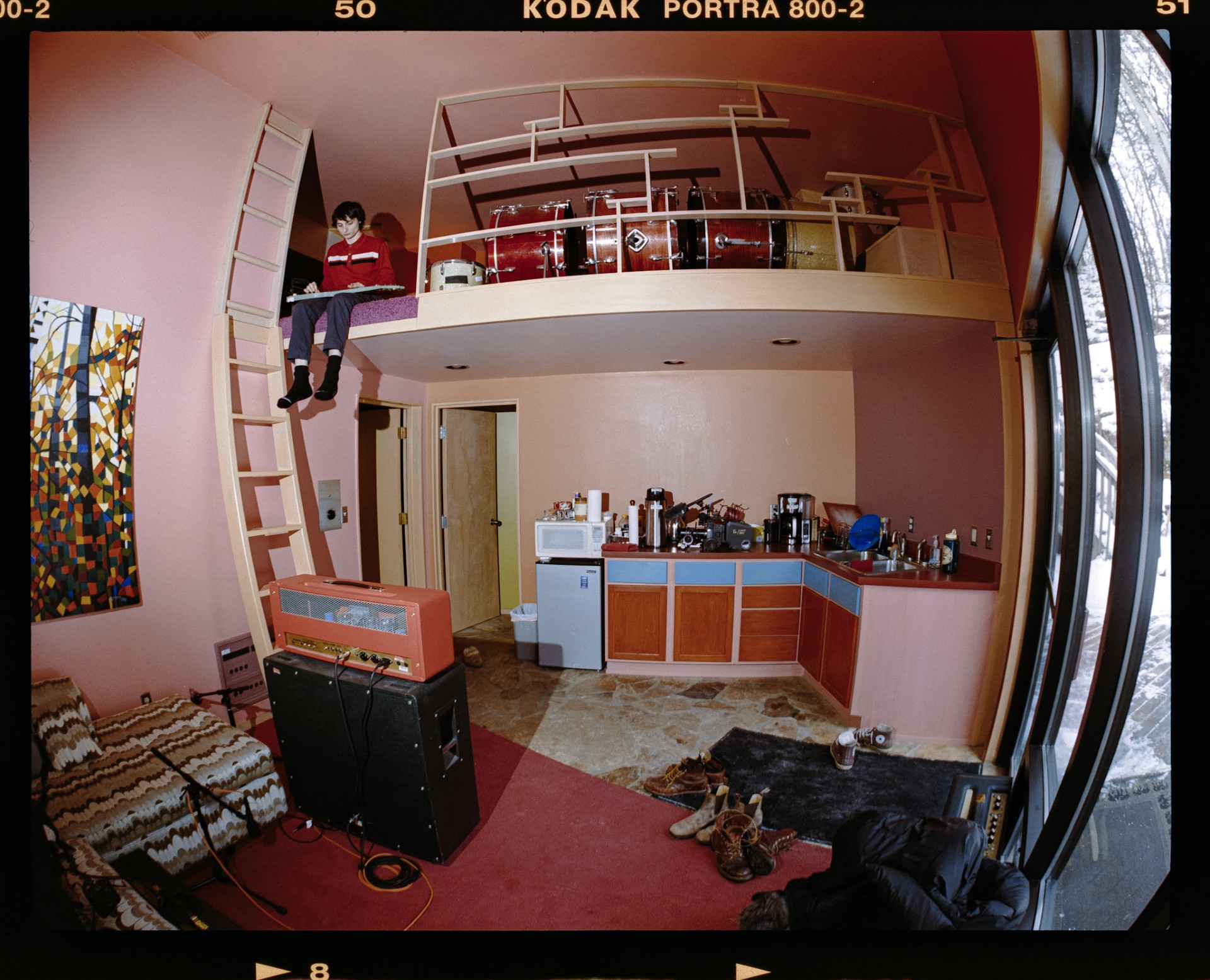
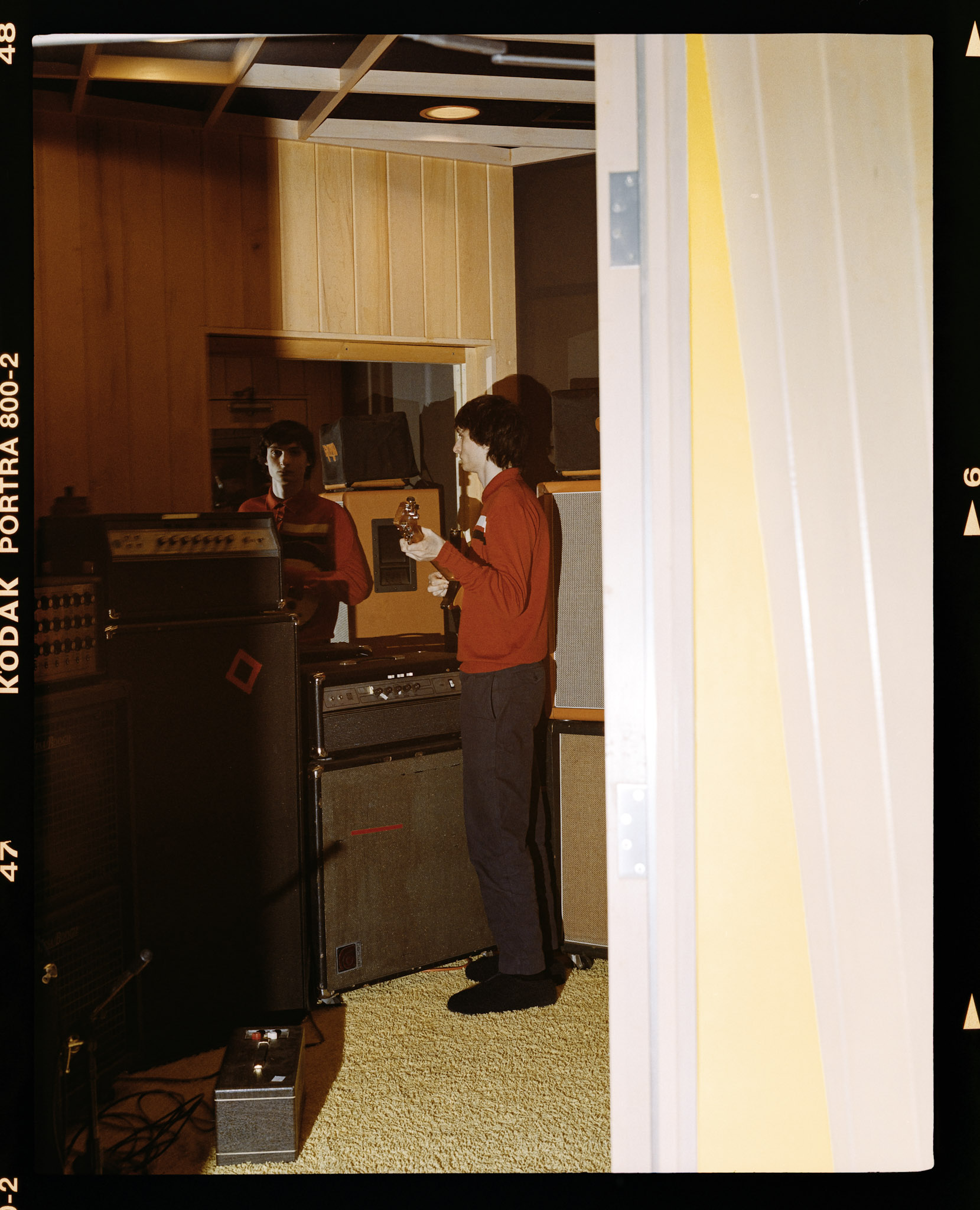
His search landed him eventually at Pachyderm Studios (the very studio where Nirvana recorded their last album, In Utero), which was chosen as much for the sound of its rooms as for what Wolfhard describes as its “cozy, haunted” atmosphere. His touring band (Ramsay Bell, Rand Kelly, Josh Resing) as well as Cadien Lake, Grace “Gep” Repasky, and Clay Frankel from Twin Peaks, trooped out to Minnesota with him to record alongside engineer Andrew Humphrey. Nothing about the sessions seems optimized for efficiency: Minimal engineering, mics set up around the room to capture whoever was playing, full live takes rather than tracks pieced together later. It’s a very 1972 way to make a record in 2026. It was also Wolfhard’s first time recording a full album to reel-to-reel tape.
“So much of the record is what it is because of the live takes we got with each other,” he says.
The studio is a residential one, so beyond recording there, they all actually lived together too. The musicians’ days seem to have had no fixed shape. They had dinner together, and if someone wandered into the studio after midnight, they recorded whatever felt right. Nobody was luxuriating exactly; there was plenty of real work to do. But there was also nowhere else to be, which turned out to be its own kind of luxury. When I suggest the whole thing sounds suspiciously like summer camp, he laughs and agrees.
“A unified unit” is how he describes the feeling he wanted the record to capture, reflective of the people who actually played on it.
It’s an interesting way to talk about what’s technically a solo record. Again and again, when Wolfhard talks about Fire From the Hip, the conversation seems to drift away from himself and toward the people who made it with him.
The songs themselves vaguely follow that pattern. Some are directly autobiographical: Things gnawing at him that needed somewhere to go. Others are borne of stories told to him by friends, or things he happened to read. He doesn’t seem particularly interested in drawing a red line between the two, nor does he seem worried about how listeners may try to decode individual lyrics. Trying to anticipate those readings, he says, would be “inhibiting,” especially when he’s writing about something personal.
But that doesn’t mean he’s trying to tell people everything. When I ask how he approaches fan speculation around his music, he shrugs off the idea that a song could ever represent the whole person who wrote it.
“I’ve never done anything where I’ve said something super inflammatory and had to pare it back, or too personal,” he says. “But I think also when you’re writing about stuff that’s happening in your life, it’s very easy to be like, well, that’s what their life is. But in reality, it’s only a small percentage you’re sharing with people, but that percentage is incredibly vulnerable.” Having spent most of his life as a public figure, first as a kid and now as an adult speaking for himself, the distinction seems important; people think they know him. Mostly, they know what he’s chosen to show them.
When our conversation turns (as all conversations worth having inevitably do) to The Beatles, Wolfhard gently interrupts something I’m saying to point out a John Lennon record (Walls and Bridges, for any interested parties) sitting on a shelf over my shoulder. When it comes to the Fab Four, he is a true and devoted head. In an interview with NME earlier this year, he called the band “the whole reason I got into music, and acting too,” crediting A Hard Day’s Night and Help! with flipping some switch in his head that music and comedy weren’t mutually exclusive after all.
His devotion is also the reason a George Harrison music video exists with his name on it as director. Released last December, Wolfhard directed a stop-motion video for Harrison’s “Give Me Love (Give Me Peace on Earth),” working with friend and animator Akash Jones. It’s a very charming video full of dancing plants that was inspired by a visit to Harrison’s garden at Friar Park. Handmade and fabulously unhurried, it’s got the same texture that runs through Fire From the Hip.
The visualizer for “I’ll Let You Finish,” lead single off the new album, works much of the same magic. He describes this video, animated frame by frame by Jones and another friend-slash-collaborator, Marcus Mazzulla, as a “Terry Gilliam-inspired fantasy.” It shows the process behind its own making, with its mechanics left plainly visible in frame. What seems to delight him is not just the finished video, but the very deliberate evidence in that video of the people behind the camera that moved pieces by hand, frame by frame to conjure up something marvelous. “It’s the closest thing to a magic trick you can get,” Wolfhard says. “The closest thing to real, true, handmade human artistry.”
Eventually, as the discussion around human-powered creativity veers toward AI, Wolfhard signals that he doesn’t buy the increasingly popular notion that its takeover of creative work is inevitable.
He leans back for a moment, deep in thought. “I think people have this narrative where they say, ‘Oh, AI is going to take over so we may as well put our hands up.’” But, he says, it’s just a story, and one being sold mainly by “really, really powerful rich people who own the AI companies.” He points to the people in his own circle who’ve simply chosen not to use it as proof that opting out is still possible, even as the tech becomes harder to avoid. “It’s not like we have the choice to let it not take over,” he concedes. “But the more work you can do on your own, the better.”
By the end of our conversation, it becomes clear that Wolfhard’s fascination with the traces people leave behind isn’t only an artistic preference as much as it is his way of moving through the world. He’s been an unusually generous conversationalist, which feels like a small miracle from someone who achieved global fame before he was old enough to drive. He follows the detours of our conversation with patience and a level of attention that could make one forget he’s probably answered different versions of these exact questions all week, meeting stray observations with thoughtfulness.
His tendency to linger, to notice the person behind a thing seems like the same one that draws him to things like tape hiss or animation that requires small pieces of paper to be nudged hundreds of times over. Wolfhard seems to find the same beauty everywhere he looks: In music, in art, in conversation, and in the relationships he builds with other people. The fingerprints, in other words, are the whole point.
— —
:: stream/purchase Fire From the Hip here ::
:: connect with Finn Wolfhard here ::
— —
— — — —

Connect to Finn Wolfhard on
Facebook, 𝕏, TikTok, Instagram
Discover new music on Atwood Magazine
© Louie Nice
 © Louie Nice
:: Stream Finn Wolfhard ::