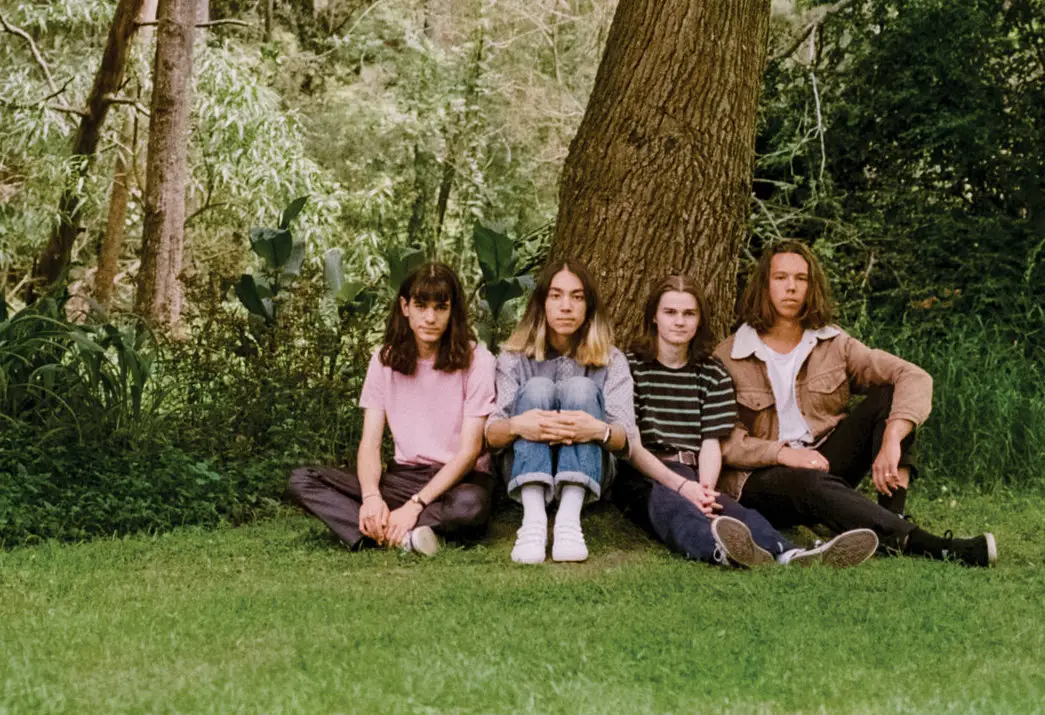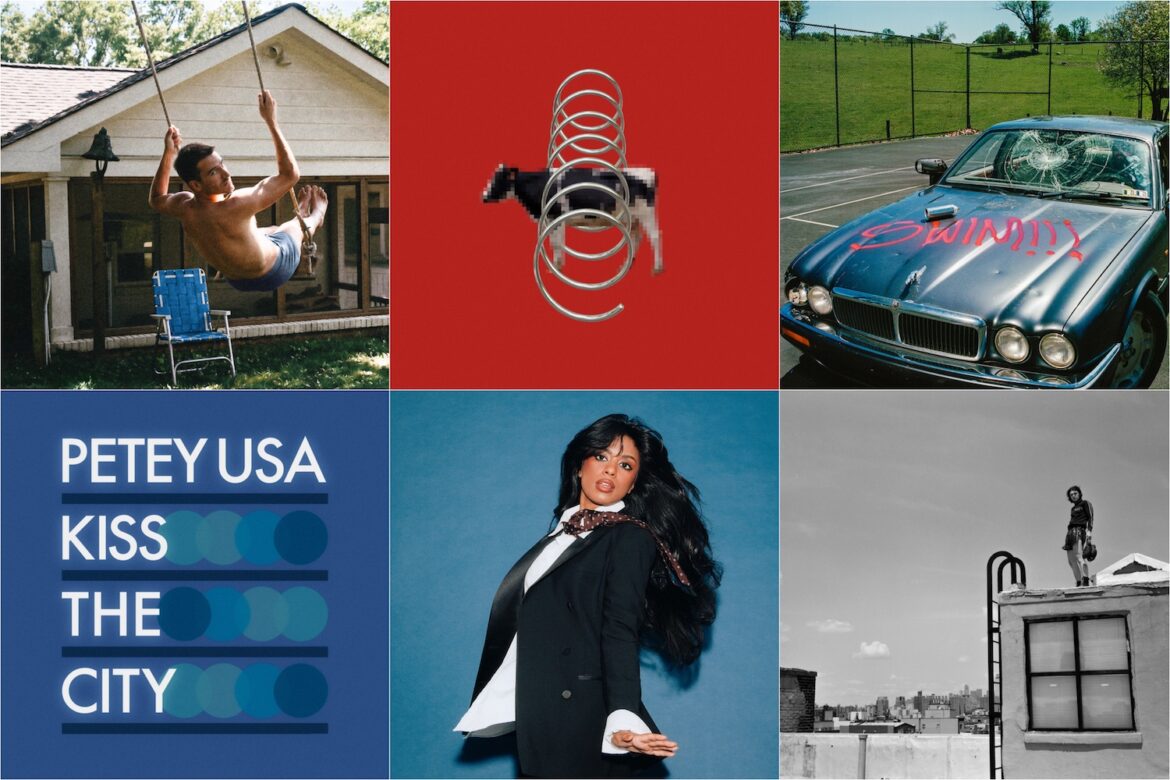
Atwood Magazine is excited to share our Editor’s Picks column, written and curated by Editor-in-Chief Mitch Mosk. Every week, Mitch will share a collection of songs, albums, and artists who have caught his ears, eyes, and heart. There is so much incredible music out there just waiting to be heard, and all it takes from us is an open mind and a willingness to listen. Through our Editor’s Picks, we hope to shine a light on our own music discoveries and showcase a diverse array of new and recent releases.
This week’s Editor’s Picks features Medium Build, BAILEN, Valley, Debbii Dawson, Petey USA, and Hank Heaven!

 follow EDITOR’S PICKS on Spotify

“Armor”
by Medium BuildEvery wall Medium Build’s Nick Carpenter ever built sounds like it’s shaking loose on “Armor.”
Feverish, unfiltered, and fully exposed, the singer/songwriter returns this summer with a song that barrels forward like a release valve blown open: Fun enough to shout along to, brutal enough to leave a mark, and breathtaking because it refuses to hide.
The first single from Medium Build’s upcoming sixth album King of Having Fun, out September 4 via slowplay/Island Records, “Armor” is one hell of a reintroduction: Exhilarating and achingly brutal in the same breath, an emotionally charged reckoning that pairs arena-sized release with lyrics that won’t look away from the mess. After the soul-searching of Country, the intimate recalibration of takeaways, and a year Carpenter has described as a violent upheaval of self, “Armor” feels like a fuse being lit – not a clean new beginning, but a door kicked open.
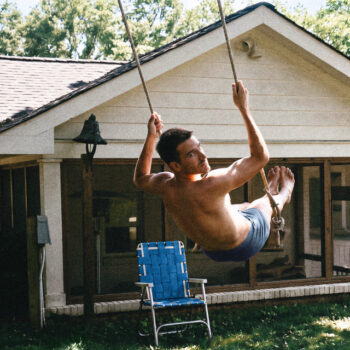
“‘Armor’ is the first song I knew was on the album,” Carpenter tells Atwood Magazine. “The most transparent look into my no filter stream of consciousness. The lyrics and the music pair up to imprint the feeling of unease and awareness that comes with being alive nowadays. If you listen to the lyrics there’s a lot to chew on, if you just vibe the music there’s a lot to bop to. Hope it leaves you better than it found you.”
Okay we think we’re in control
‘til we’re not
Then we’re helpless
You turn your head
The big empty comes along,
I don’t wanna know
how much money I got left, I-I-I,
I don’t wanna see my phone
or read my messages
I wanna starve myself ‘til I’m beautiful
Hey what the f*** is that?
Thought I could fix myself
without the dysphoria
Paul heard some philosopher
said “hope is fear and fear is hope”
I’m Sisyphus and you’re
the rock I’m pushin’
Carpenter’s hope that “Armor” might leave us better than it found us gets right to the heart of King of Having Fun. He sees his new album as “a letter from rehab,” even though he never went, and “a post-mortem” of the person he spent the past decade becoming. To him, it marks both the closing of that chapter, and the opening of a new one – a record about killing off old selves, processing the pain that made Medium Build possible, and rediscovering joy without dressing it up as denial. Here, having fun is not a dodge or a disguise; it’s what becomes possible after the post-mortem: A little joy scraped out of the wreckage, still messy, still moving. In that light, “Armor” is not just a jolt back into motion; it’s the perfect entry point into an album where fun, fear, healing, and self-destruction all keep colliding with one another.
Carpenter calls “Armor” a natural doorway into the record precisely because it comes in fast, weird, and wide-open. “This entire album has some of my favorite, proudest lyrics,” he shares. “But this song is just so what it’s like being in my head some days: Endless, run-on, intrusive thought. The way it starts – ‘Okay, we think we’re in control until we’re not / Then we’re helpless’ – you think you’re doing great, and then ‘you turn your head and the big empty comes.’ It literally reads like a conversation with yourself.”
And that conversation is relentless. “Armor” builds its emotional world through pure collision: Money panic slams into phone avoidance, body dysmorphia into self-help exhaustion, philosophical dread into a joke sharp enough to draw blood. “I wanted everyone to know the level, the sharpness of the pen, and how insane and serious I am about this record,” Carpenter says. “This song is crazy… I just wanted people to start with something a little nutty. And fast.”
“Armor” races because the mind inside it is racing – because the thoughts are arriving faster than shame can organize them, faster than a polished hook can smooth them into easier shape. Carpenter has always been a conversational writer, but here his bluntness becomes its own kind of virtuosity: Panic becomes poetic because he refuses to tidy it up. “I wanna starve myself ‘til I’m beautiful / Hey what the f*** is that?” may be one of the year’s most arresting couplets because it catches the thought and the recoil in the same breath. He catches the thought, then catches himself having it.
That’s the thrill of “Armor”: It moves like a banger and bleeds like a confession. Crashing through his own intrusive thoughts and rawest emotions with that classic charismatic, gut-wrenching intensity, Carpenter rattles through spirals of money anxiety, body dysmorphia, avoidance, fear, faith, self-hate, and love until the chorus arrives less as relief than reflex: “There I go again, projecting on you / And I hate myself, so I turn it into art / Or something dumb, put my armor on / No one can hurt me when I put my armor on.” It’s funny because it’s true, and absolutely devastating for the same reason.
There I go again
Projecting on you
And I hate myself
So I turn it into art
Or something dumb
Put my armor on
No one can hurt me when I,
I put my armor on
“The armor, what I’m talking about is humor, all the defense mechanisms that I’ve used my whole life,” Carpenter says. “I’ll use being agreeable as an armory of one to protect myself from people knowing me. Knowing enough psychoanalytic buzzwords to project onto people – ‘There I go again, projecting on you’ – like, ‘You hate me, you want me to leave,’ and they’re like, ‘No, I don’t. You want to leave. You’re being a pill.’ And then I’m like, ‘Oh, I’m the problem.’ I think my armor, historically, has been me being a problem and making it seem like it was someone else’s idea. But now my armor is trying to remember that nothing matters, and it’s not that serious. If it flops, I can still go home and make a good sandwich and live in a house.”
That last turn is classic Carpenter: Absurd, grounded, and sneakily profound. A joke, a sandwich, a house, and somehow a whole worldview tucked inside the shrug. Armor, in his hands, is not only toughness. It’s charm, it’s agreeability, it’s self-awareness used as a shield. It’s the joke before the question, the diagnosis before the apology, the messy little performance that lets a person be seen without actually letting anyone all the way in. “Armor” hits so hard because Carpenter understands the paradox: Sometimes the very tools we use to survive become the walls that keep us from being loved.
The song keeps returning to control, too – and to the terror of realizing control was never the thing we thought it was. “Okay we think we’re in control ‘til we’re not / Then we’re helpless” is a brutal way to open a comeback single, but it’s also the philosophical nerve running underneath the whole track. Carpenter sings like someone trying to inventory every impulse before it outruns him: The missed calls, the empty bank-account dread, the body shame, the self-sabotage, the old reflex to turn pain into content before it can become intimacy.
“We’re never in control,” Carpenter says. “The [idea that] we’re in control is the illusion. And that’s why people freak the f*** out. You see people break down because they think they have it. My big acceptance of this era is I don’t have it, and I’m excited and happy to be on the ride as long as I can.”
Carpenter’s ‘acceptance’ – itself a form of surrender – doesn’t make “Armor” any calmer; if anything, it makes the song burn that much brighter. The guitars hit like exposed wiring; the drums rush forward with no patience for self-pity; Carpenter’s voice sounds half-possessed by the need to get the thought out before it curdles. For all its speed and sweat, though, the song is never careless. Its chaos has shape. Its bluntness has craft. The lines keep landing because Carpenter knows exactly where to place the knife: “How come I only wanna fix it once the truck breaks down?” “If hell is real, how do I know for sure / I ain’t living in it already right damn now?” “I bet there’s gotta be a peace that you get / When you finally know the ride’s gonna end.”
How come I only wanna fix it
once the truck breaks down?
Ends up in the gutter
begging for forgiveness
If hell is real,
how do I know for sure?
I ain’t living in it
already right damn now?
All around history is repeating itself
I’m on a plane
kinda hoping that it goes down
I bet there’s gotta be a peace that you get
When you finally know the ride’s gonna end
Those lines push “Armor” past self-deprecation and into existential panic, but Carpenter never lets the song become a full-on spiral. He keeps undercutting the darkness with motion, melody, humor, and that unmistakable Medium Build instinct for turning the most private thought in the room into the thing everyone can scream together. That is where he sounds newly powerful as a songwriter: Not because he has become cleaner or more controlled, but because he has learned how to let the mess move at full speed without losing the thread.
For all its speed and sweat, “Armor” is ultimately about the terror of being known. Carpenter spends the song building walls, naming the walls, laughing at the walls, and still wondering what happens if he lets someone get close enough to touch the tender part underneath: “If I take my armor off would you put that blade through my side?” That line is the real bruise beneath the bop, the question hiding inside every joke, every chorus, every defense mechanism dressed up as personality.
It f***s with my head when I need you
So I build a wall, baby brick by brick
I need new ways to outrun you
But ain’t nothing changing,
something’s gotta take a break here quick
Then comes the late-song revelation, one of those Medium Build passages that sounds tossed-off until it lodges itself somewhere deep: “Love is time / Love is looking for your keys in your couch / Love is knowing you gonna say some dumb shit, run your mouth.” It is funny, domestic, imperfect, and enormous – a definition of love that lives not in grand declarations, but in patience, inconvenience, familiarity, and the strange mercy of being allowed to be human in front of somebody else. That’s what makes the next line hurt so much. The song spends three minutes charging forward, but here it finally turns around and shows us the wound.
Okay, I guess we just go until we die
I had my shift drink,
now I’m just dancing down the starting line
You’re so aware that your time is running out
I said time is love,
what I’m scared of is an empty mouth
Love is time
Love is looking for your keys in your couch
Love is knowing you gonna say
some dumb shit, run your mouth
Love is time, time is love,
Love is pride
If I take my armor off
would you put that
blade through my side?
More than anything, “Armor” proves Carpenter is writing from a new kind of freedom – not freedom from fear, but freedom from pretending fear is not in the room. He sounds bigger because he is letting the ugly thought stay ugly, letting the joke stay funny, letting the banger bang, and trusting that a song can leave us better than it found us without pretending to have solved the ache that made it.
As cathartic as it is captivating, “Armor” is Medium Build at full tilt: Reckless, self-aware, hilarious, wounded, and alive. It’s the sound of Nick Carpenter turning self-interrogation into a communal release without sanding down its roughest edges, a song that knows healing can still look like panic, and joy can still come with teeth. As the first glimpse of King of Having Fun, it doesn’t promise ease. It promises honesty, motion, and one hell of a reckoning.
“There I go again,” he sings, but this time, going again sounds like more than survival – it sounds like self-awareness, like a comeback, like an artist kicking the door open with his armor on and his heart on full display.
There I go again
Projecting on you
I hate myself
So I turn it into art
It’s something dumb
Put my armor on
No one can hurt me
when I put my armor on
“SWIM!!!”
by BAILEN“Burn that bridge, say ‘f*** it’ I know how to swim”: BAILEN’s “SWIM!!!” is the sound of a band choosing motion over fear.
Scrappy, self-reliant, and newly independent, the New York City sibling trio have returned with a breathtaking rush of indie rock adrenaline – charged, dramatic, and emphatically alive. Their first release since 2023’s sophomore album Tired Hearts, and their first since parting ways with their label, “SWIM!!!” doesn’t just introduce a new era; it throws itself headfirst into one. Julia, Daniel, and David Bailen have always had a gift for making heavy feelings feel communal, but here, that gift comes roaring back with a full-body jolt: Not a plea for survival so much as a declaration that survival was already inside them.
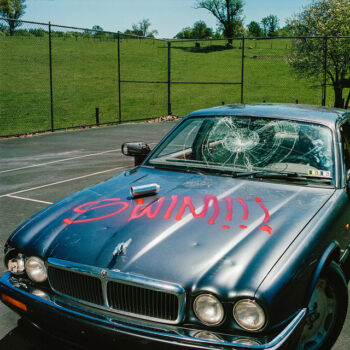
“‘SWIM!!!’ is about breaking away from systems and relationships that make you believe you can’t survive without them,” BAILEN tell Atwood Magazine. “It’s the freedom of jumping into the deep end and discovering you can swim. This song is our summer anthem. As we reflect on the past and look to our future, this song embodies the courage and freedom of new beginnings.”
Sometimes I believe in
Old dogs changing
But I’m chronically honest
And you’re chemically cold
And I sleep better when I sleep alone
And it won’t kill me if I let you go
The first verse cuts cleanly through the kind of attachment that disguises itself as necessity. BAILEN don’t waste time softening the blow: “I sleep better when I sleep alone / And it won’t kill me if I let you go” lands like the first honest breath after holding one for too long. The song’s emotional charge comes from that realization – not that leaving is easy, but that staying small for someone else’s comfort is no longer an option. By the time the chorus arrives, “SWIM!!!” has turned self-preservation into a ruthless battle cry.
The line itself had been waiting for the right moment. During a conversation with producer John Congleton about wanting to get out of a deal without “burning bridges,” Congleton offered the band advice: “some bridges are meant to be burnt.” Daniel’s response came fast – “f*** it, I know how to swim” – and the phrase stayed with them. Years later, after Julia survived a terrifying hit-and-run crash on I-95 with her parents, the song’s verse came pouring out of her on a guitar that had been damaged in the wreck. The experience left her with a new sense of urgency – a sign, as she put it, that it was “time to keep going and push through.”
So burn that bridge
Say f*** it I know how to swim
Yeah I’m lucky I know
how to live without you
I’ve done it before
Burn that bridge
I don’t have another second to give
Yeah I’m lucky I know
how to live without you
I’ve done it before
I’ve done it before
That chorus is pure release: Fierce, visceral, and built to be shouted back by a room full of people who need to believe themselves when they sing it. “SWIM!!!” is an independence anthem on multiple levels – personal, professional, emotional, and creative – and BAILEN meet that freedom with a full-throttle performance that reminds us what only this band can do. Their voices lock in and lift off, the rhythm charges forward, and the song’s whole body seems to tense and then burst open, like a dam finally giving way.
“It doesn’t feel like we’re trying to be anyone else besides ourselves on this record,” Daniel says of this new chapter. “And that’s refreshing. And maybe that’s a product of being independent.” Julia puts it even more directly: “We really stuck to our guns on this, and did everything pretty much ourselves, and the people that we worked with were our friends.”
You can hear that freedom in the song’s scope. BAILEN wanted “SWIM!!!” to feel big, and it does – alive with grit, muscle, and a little bit of beautiful chaos. Even its making carries the song’s do-it-anyway spirit: The band retracked the basics in a condemned Gramercy church, pulling the room into the chorus until the drums seemed to open up with the architecture around them. That physical largeness matters. “SWIM!!!” doesn’t sound polished into submission; it sounds lived-in, fought-for, and fully inhabited.
Sometimes I wait all day
For the crumbs of what little’s left
you let sink down my way
And we’ve been in this fishbowl
getting livid at the glass
And I keep waiting for the storm to pass
But am I happy if I have to ask?
That question – “But am I happy if I have to ask?” – is one of the song’s quietest gut-punches. Around it, “SWIM!!!” explodes with color and force, but underneath the adrenaline is a brutally simple truth: When you have to beg for crumbs, when you have to keep testing the glass, when you have to keep convincing yourself the storm will pass, you already know the answer. The song’s triumph is not that it denies the fear. It just refuses to let fear make the decision.
Julia says the song feels like “what summer used to feel like,” and that’s exactly right: Not an easy, glossy summer, but the kind that carries danger and freedom in the same hot breath – late-night air, bad ideas, open roads, the electricity of doing the thing because you are finally done waiting. By the bridge, BAILEN sharpen the song’s release into a full-on reclamation: “You got the house / You got the friends / You got the money / Go drive a Benz / I fell for the sellout / I guess that’s on me / You’re no badge of honor I’d rather be free.” It’s messy, funny, furious, and liberating – the sound of cutting the cord and realizing the water won’t swallow you whole.
You got the house, you got the friends
You got the money, go drive a Benz
I fell for the sellout
I guess that’s on me
You’re no badge of honor
I’d rather be free
(as a full moon on a Friday night)
As resilient as it is emphatic, “SWIM!!!” is BAILEN at full force: Three voices, three bodies, one band giving everything they have. It’s a song about walking away from whatever taught you to doubt your own strength, and a powerful display of BAILEN doing what they do best – turning pressure into harmony, heartbreak into momentum, and uncertainty into a reason to sing louder.
F*** it, BAILEN don’t just know how to swim – they’re doing victory laps in the deep end.
So burn that bridge
Say f*** it I know how to swim
Yeah I’m lucky I know
how to live without you
I’ve done it before
Burn that bridge
I don’t have another second to give
Yeah I’m lucky I know
how to live without you
I’ve done it before
I’ve done it before
“Vending Machine”
by ValleyValley are back to entertain us – but on “Vending Machine,” they’re not letting that word go unchallenged.
The Toronto indie pop trio’s first single in nearly two years arrives with soul-shaking force: Big drums, blaring guitars, radiant hooks, and a full-bodied rush of charisma from a band stepping into their next era with zero hesitation. Following 2024’s Water the Flowers, Pray for a Garden, a therapeutic triumph born from grief, growth, and the work of becoming their most authentic selves, “Vending Machine” finds Valley pushing further outward – louder, brighter, and more uninhibited than ever. It’s a song about what happens when care gets mistaken for access, when love becomes demand, and when the person behind the glass finally starts to realize they were never meant to be stocked, selected, and consumed on command.
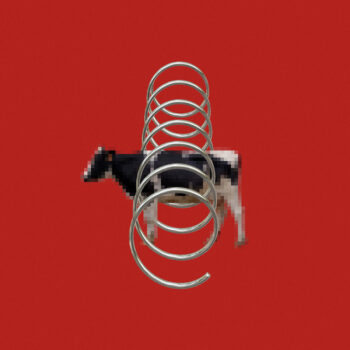
“Vending Machine” carries the spirit of Valley’s last era forward with even more passion and grit. Water the Flowers, Pray for a Garden was a soul-bearing reset from a band learning how to grieve, grow, and keep choosing each other in real time; watching them carry those songs into Brooklyn Steel last fall only made that chapter feel all the more vital – and visceral. “Vending Machine” doesn’t abandon that hard-won truth – rather, it electrifies it, channeling vulnerability into voltage and self-knowledge into a hook big enough to shake any room you put it in. Now comprised of Rob Laska, Alex Dimauro, and Karah James, Valley sound newly charged here: Still rooted in the emotional openness that made their last chapter so affecting, but ready to meet that vulnerability with teeth, humor, and a full-throttle alt-pop roar.
Touring that album only deepened the band’s understanding of what connection can look like when it isn’t built on transaction. “It showed us that people were willing to meet us in the room again regardless of preconceived ideas of who Valley is or records we’ve made,” the trio tell Atwood Magazine. “It was all rooted in the real connection we’ve made with our fans that’s beyond the music. You cannot purchase that, it’s non-transactional. It’s a lot of care, love and time. We love our val pals. Touring is beautiful that way, it’s the intersection where the music shakes hands with lives lived and soundtracked by us, all happening in a room. The fact that people continued to show up after making such a vulnerable album felt really special.”
“Vending Machine” opens with a child’s voice asking, “Do you need to be entertained?” – a funny accident that quickly turns into the song’s thesis. The line came by chance during recording in Franklin, Tennessee, when co-producer Chase Lawrence’s niece FaceTimed between drum takes and the studio mic happened to be running. The question is less invitation than indictment – and from the jump, entertainment sounds exhausting: A demand disguised as affection, setting the stage for a song about how draining it is to be loved for what you can give instead of who you are.
“‘Vending Machine’ is a song about transactional relationships with people,” the band share. “A vending machine exists to give things on demand. It doesn’t have needs or emotions. People only approach it when they want something. A source of comfort, attention, validation, or entertainment. It’s love that depends on output, not connection.”
Take whatever you want from me
You fell in love with the vending machine
Take whatever you want from me
You fell in love with the vending machine
Alright
The lyrics keep circling the split between desire and depletion: A person who walks in “like a miracle,” kisses “like a chemical,” and still leaves the narrator feeling locked up, chewed through, spit out, and used for parts. Valley make the metaphor sting because the machine is both object and mask – an image of being approached only when someone needs comfort, attention, validation, or a hit of entertainment, and a version of the self that has learned to perform availability until connection becomes consumption. Even the bridge’s “You want a sentimental meaning / Just to sleep at night / If you’re still living in your head, then you’re out of your mind” cuts through the fantasy with a grimace, refusing to dress up a transactional dynamic as romance just because longing makes it easier to endure. The vending machine is funny until it isn’t: Bright, accessible, useful, lonely, and always separated from the hand reaching in by a sheet of glass.
“It’s always felt like the image in our heads, a symbol of consumption that comes from a longing to feel loved,” Valley share. “We’ve all felt like the machine, we’ve also known what it’s like to be on the other side of the glass. The vending machine houses all connections whether they’re healthy or not. It stocks just as much love, dreams, comedy, healing as it does anger, grief, resentment, questioning, fear, doubt, truth, lies.”
Lock me like an animal
To the edge of self-control
Chew me, spit me, kick me out the door
But, baby, baby, I’m a carnivore
You better learn to love yourself, honey
Oh-oh (When you walk my way)
I don’t even need your loving at all
Yeah, yeah, yeah, yeah
This tension between performance and personhood powers every second of “Vending Machine.” The song hits with a rush of guitar overdrive, turning Valley’s polished alt-pop instincts into a roaring, arena-sized eruption of want, resentment, and release. When Rob Laska sings, “You better learn to love yourself, honey / Oh-oh,” the band break into an irresistibly catchy vocal cascade that sends chills up the spine; when they flip into the pointed, staccato strut of “Take whatever you want from me / You fell in love with the vending machine,” the hook lands like a sneer, a confession, and a dare all at once. There’s freedom in that line, but also frustration: The brutal recognition that no amount of giving can make love honest if the other person only knows how to take.
“I guess what we’re really saying there is, love is meaningless when it doesn’t feel honest,” Laska explains. “You need to find the love in yourself or you will spend a lifetime trying to purchase it, extract it, manufacture it from the life in front of your eyes.”
Take whatever you want from me
You fell in love with the vending machine
Take whatever you want from me
You fell in love with the vending machine
Okay
For all their indie pop shine, Valley have never sounded this gloriously, unapologetically loud. “Vending Machine” bursts at the seams with distorted guitars, pulsing rhythm, and vocal firepower, but its scale never swallows the feeling at its core. The band wanted the track to have bite without losing its sense of play, and that balance is exactly what makes it hit: It’s feral and funny, wounded and wired, a song serious enough to sting but loose enough to feel like three people blowing the roof off band practice.
“It was really fun to record,” Valley share. “Super playful. It felt like a good door to the house we’re building. With what the song is about, it was important to make the song sonically have some bite but not take itself too seriously. A lot of dry console guitar sounds, really feeling the room in the drums and vocals, treating the recording process as if we were capturing us playing at band practice or soundcheck, simply messing around and having fun. I think you can really feel that. It sounds like a band entertaining themselves while connecting on something real lyrically.”
Valley have long been masters of turning heartbreak, longing, and nostalgia into communal catharsis, but “Vending Machine” lets that catharsis bare its teeth. It’s dramatic, unrelenting, and wholly infectious – a song about being consumed on demand that refuses to be passive, polite, or easy to use up. And when the final chorus shifts from “You fell in love with the vending machine” to “You fell in love with a version of me,” the whole thing cracks open. The machine was never only about what other people take; it was also about who we become when we train ourselves to be useful, available, entertaining, and easy to reach.
“You’re allowed to question your authenticity or the ways you show up as you get older, which ultimately leads to connecting with yourself to change, to grow,” Laska says of that final shift. “I think it’s important to look back and not stare, but learn. The version of yourself that bred consumption from the people around you, and in our case publicly, might not have been coming from a real place to begin with.”
This is what makes Valley’s 2026 return feel so invigorating. “Vending Machine” is a beautiful punch in the face – a jolt to the system and a spark in the chest, leaving us breathless and emboldened as Valley remind us that love without connection isn’t love at all; it’s just another transaction waiting to be declined. More than anything, the song argues for the opposite of disposability: For care, for rooms full of people, for shared belief, for relationships that can’t be bought, extracted, or selected from behind the glass.
As Valley put it, listeners should “build meaningful relationships” and “find ways in your life to be in pursuit of something that brings you together with people in a room and doesn’t feel disposable, not through your device or on one side of the glass but collaborative, shared belief in something bigger than yourself.”
That’s the heart beating beneath all the noise: Valley taking the machinery apart, laughing at the absurdity of it all, and choosing real connection anyway.
You want a sentimental meaning
Just to sleep at night
If you’re still living in your head,
then you’re out of your mind
Take whatever you want from me
You fell in love with the vending machine
Take whatever you want from me
You fell in love with a version of me
Where Have All the Good Men Gone?
by Debbii DawsonWhere have all the good men gone?!
Debbii Dawson doesn’t pretend to have an easy answer – but on her new EP, she offers a way forward: Six songs of glistening pop euphoria, moral exhaustion, sun-kissed seduction, and spirited goodness, all lit from within by the stubborn belief that joy can still move us toward something better.
Released June 26 via RCA Records, Where Have All the Good Men Gone? is triumphant, infectious, and intoxicating pop music with a pulse and a conscience: Smile-inducing even when its questions burn, charming even when its heart is heavy, and alive with the radiant theatricality Dawson has made wholly her own. Born from fear, anger, grief, and the need to write her way back toward hope, the EP doesn’t dress pain up until it disappears. It lets the ache stay visible – then gives it a beat bright enough to dance to.
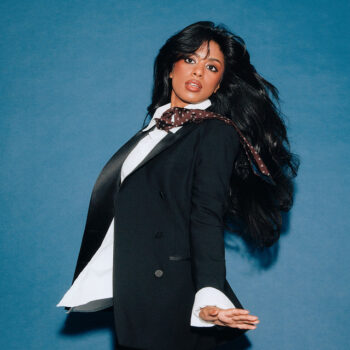
“I was showing up to the studio writing about love and dancing which I know we need more of now more than ever,” Dawson tells Atwood Magazine, “but I was spending my nights tossing and turning from nightmares, worrying about the safety and future of my family and friends. It became increasingly difficult to go on as if everything was fine. The terrible things I was seeing on the news everyday weren’t just events happening on distant shores, they are things that are even now affecting the people I know and love. So I paused what I was working on to write what was in my heart.”
This tension gives Where Have All the Good Men Gone? its lift. Dawson is writing from a place of real dread, but she refuses to make defeat the dominant sound. Instead, she turns political and personal exhaustion into glittering, genre-blurring pop – disco-lit, emotionally direct, and impossible to sit still through. The EP’s sweetness is not naïve; its joy is the sound of an artist insisting that movement still matters, that tenderness still matters, and that a melody can still carry a spark through the smoke.
That’s what makes “Mars” such a natural highlight. Inside a project so awake to broken systems, heavy hearts, and the weight of trying to stay good in a world that keeps catching fire, Dawson’s cosmic love song feels like the moment the room opens to sunlight. It doesn’t sidestep the EP’s urgency; it makes that urgency personal, intimate, and sweet. Infectious, intoxicating, and charmingly over-the-top, “Mars” is Dawson at her most lovestruck and luminous, transforming total devotion into a full-body pop high.
Oh I thought that I had love before
but none of it was true
‘Cause they came and went
but never stuck around
Now I finally found paradise,
my own Xanadu
Don’t knock me down from this cloud
I’m finally happy now
“This song is about going to the end of the earth and beyond for the people you love,” Dawson shares. That simplicity is part of its magic. “Mars” doesn’t need to intellectualize devotion; it lets love be huge, dramatic, a little ridiculous, and completely sincere. Dawson sings from the top of the feeling, not around it, and the result is sun-kissed seduction with a smile: A love song that knows it’s floating, knows it’s glowing, and has no interest in coming back down.
Never wanna say goodbye
Think that I would rather die
In this life you’re my favorite part
Baby if you go away
I’d be cryin’ everyday
I’ll follow you if you go to Mars
The chorus is pure pop rapture – big-hearted, glossy, and wonderfully uncool in the way the best love songs are allowed to be. Dawson doesn’t underplay the feeling or try to make it tasteful. She lets it sparkle at full wattage. “In this life you’re my favorite part” is a line so direct it practically blushes, and around it, the song blooms into something cosmic, cinematic, and completely swept up in its own sweetness. The production gleams; the melody lifts; Dawson’s voice floats above it all like she’s already halfway out of orbit. There’s a glam-pop sparkle to the whole thing, a little retro and a little otherworldly, with Dawson’s breathtaking voice transforming every melodramatic vow into music light enough to levitate.
That balance – heavy subject matter carried by irresistible pop pleasure – is central to Where Have All the Good Men Gone? Dawson has said she wanted to tackle subjects that are often thought of as political without becoming preachy, and “Mars” proves how much space there is inside that vision. Not every song has to stare directly into the fire to belong to a record about surviving it. Sometimes the most radical thing a song can do is remind us what we’re protecting.
“Mars” is the EP’s most unabashed swoon, but it still belongs to the same emotional universe. Its love is not casual; it’s chosen, cherished, and chased across impossible distance. “Jump in my car we’ll go to Vegas / Kind of love that’s gonna be famous,” Dawson sings, before going wonderfully anatomical: “If you cut me open uh huh autopsy / Gonna find out you’re the soul in my body.” It’s campy and sincere in the same breath – funny, wildly romantic, and so very Dawson in its refusal to separate charm from intensity.
As infectious as it is intoxicating, “Mars” captures Dawson’s gift for making pop feel both featherlight and full-hearted. Across Where Have All the Good Men Gone?, she channels dread into disco, grief into motion, exhaustion into action, and love into music bright enough to survive the atmosphere. “Mars” may be one highlight among six, but it shines like a promise at the center of the storm: If the world is burning, Dawson is still looking for paradise, still choosing the people she loves, and all the while making music that sends us smiling into the stratosphere.
If you go to Mars, Debbii Dawson is going with you.
“Kiss the City”
by Petey USAPetey USA makes burnout sound strangely seductive on “Kiss The City.”
His first single since last year’s The Yips finds Petey moving into a lighter, more hypnotic pocket without losing the raw nerve that makes his songs sting. It churns and glows in equal measure – indie pop with its hands in its pockets and its heart halfway out of its chest, aching with restlessness even as it moves with an intoxicating ease.
A city can make a person feel like they’re failing even when they’ve done everything right – and Petey USA lives in that anxious, fluorescent ache: The rent paid, the check made, the city lights buzzing like an exit sign, and old mistakes starting to feel so unbearable that only a new mistake will do.
I make the check, I pay the rent
Make up my mind, I have regret
The lights, the sound,
the people on the ground
Everybody gets better
if they wait around

Released May 21, “Kiss The City” continues to deepen the world Peter Martin built across The Yips: Characters caught between escape and inertia, men who can name the loop but still can’t quite step out of it, private thoughts presented with just enough humor to keep them from collapsing under their own weight. When we last spoke, Petey described records as snapshots – weird, permanent misrepresentations of whoever made them at the time. This song feels like a new snapshot in motion: Less barstool confession than sidewalk spiral, still unmistakably Petey, but channeled through a sleeker, brighter pulse.
“I think whatever is going on with me right now is allowing me to really clearly make up stories about someone’s life that feel lived in and honest – probably because either I’ve experienced some version of it or aware of my capacity to experience something like it,” Petey tells Atwood Magazine.
That distance suits him. Petey has always written as if autobiography and fiction were two doors into the same messy apartment, and “Kiss The City” thrives on the blur. The song sounds refreshingly open, even breezy at times, but its emotional weather is anything but settled. His voice is visceral and spirited, pressing forward with a familiar mix of exhaustion, curiosity, and half-grinning panic as he leans into the indie pop side of his artistry and spills his soul without making a spectacle of it.
And if the money’s no good
then the money’s not great
When the only kind of money
is the money I make
Black lipstick stains
on the liquor store glass
‘Cause I tried to kiss the city
but the city wouldn’t kiss me back
The title image is classic Petey: Funny until it hurts, romantic until it becomes humiliating, absurd enough to make the heartbreak land harder. “I suppose the ‘kiss’ is things simply working out,” he says. “Life working, in a place that was conceived to support and sustain life for millions of people. You’re conditioned to work for it, so it works for you, but then you work for it and it actually just spits at you.”
There’s the whole city in miniature: Promise, effort, rejection, return. “Kiss The City” understands the seduction of leaving everything behind, but it also understands how quickly fantasy starts asking practical questions. Petey’s vision of escape is not some pristine, pastoral cure-all; it’s a half-serious panic response to modern life, the kind of thought that blooms when the systems meant to support you feel designed to make you late, tired, broke, and weirdly ashamed of needing help.
“The same mistake I always make / I need to make the other mistake” may be the song’s sharpest little mantra, and Petey knows it. He says he first heard the phrase from the head of growth at his wife’s company and immediately fell in love with it. “If you are bummed out doing the same thing over and over again you have to try something else, plain and simple,” he explains. “You have to make the other mistake, there is no other choice.”
The same mistake I always make
I need to make the other mistake
Too tired to read, too anxious to sleep
Everybody gets better
if they turn on the TV
What makes the line stick is its refusal to romanticize change. Petey isn’t selling reinvention as salvation; he’s poking at the awful, necessary absurdity of choosing a different failure because the current one has become unbearable. The humor keeps the thought moving, but the feeling underneath is painfully precise: The sense of knowing the loop, hating the loop, and still needing a push – or a joke, or a chorus – to imagine another way through.
Written and produced entirely by Petey himself, “Kiss The City” carries a looseness that feels central to its charm. After making The Yips with Chris Walla in a more collaborative, deadline-driven setting, Petey says working alone again feels “looser” and “really fun and light,” like the songs are never quite finished until he decides to let them go. You can hear that freedom in the track’s restless momentum: Wiry guitars, a pulsing melodic glow, and a vocal performance that feels caught between a sigh, a smirk, and a full-body confession.
A crime, a thought, a thought police
My life is not what I had dreamed
I want to feel the fire with my hands
Everybody gets better
if they live off of the land
By the final stretch, the escape fantasy has started eating itself. “If I never need money then I never need friends,” he sings, before the song snaps back to its real thesis: “Every time I run away I come running right back to it.” For all its visions of land, distance, quiet, and self-sufficiency, “Kiss The City” is ultimately less about escape than attachment – to people, to patterns, to places that disappoint us and still somehow keep pulling us home.
Light but aching, churning yet oddly sweet, “Kiss The City” is Petey USA in a refreshingly hypnotic mode: Spirited, self-aware, and quietly devastating beneath its indie pop shimmer. It doesn’t try to solve the city, the country, the money, the mistake, or the restless human need to believe somewhere else might finally make us feel better. Instead, Petey kisses the city, gets rejected, runs away, comes back, and turns the whole ridiculous cycle into a song that feels as funny, tender, and bruised as trying to live anywhere at all.
And if I never need money
then I never need friends
We’re connected by a wire
that breaks, not bends
‘Cause I tried to quit the city
but it wouldn’t let me quit
Every time I run away
I come running right back to it
“Thread”
by Hank HeavenMemory can transform the most ordinary errand into a trapdoor – and on “Thread,” Hank Heaven makes that haunting sound dreamy, twangy, and strangely irresistible.
Released June 11, the singer/songwriter’s first track of the year is beautiful, catchy, and cathartic all at once: A fuzzy, aching indie-twang anthem about the little ghosts we carry through daily life, and the long, invisible lines that keep pulling us back to people we’re trying to release. Produced by Phil Weinrobe, the song churns with its own quiet force, rooted in the lessons of sobriety and lit by Hank’s direct, earnest voice. It’s charming without softening the hurt, sweet without sanding down the ache, and alive with the hard-won clarity of someone naming the thing that’s had power over them for too long.
I wanna go on a bender tonight
But I wanna be good for you baby
Go through the motions and turn off the lights
We’ve not been talking much lately
Well I went to the club, went to cut up the rug
I was sober and I needed to freak it
And they put on our song
and I screamed every word
This is the closest thing to
you and I speaking

“I wrote ‘Thread’ while being plagued by the memory of someone,” Hank Heaven explains. “It felt like no matter what I did, I was reminded of them. I saw their reminiscence in life’s most ordinary moments: Doing my laundry, walking around my neighborhood. Even the concept of getting better became a reminder of them. The song is both a declaration and an act of release.”
What a devastating place to begin: Wanting to disappear into old habits, wanting to be good for someone who is no longer there in the way they used to be. The opening line hits so hard because it puts desire and sobriety right beside each other, letting both feelings breathe in the same room. Hank doesn’t turn recovery into a clean break or memory into a sentimental glow; they sing from the messy middle, where self-preservation still aches with devotion, and where getting better can feel like another way of speaking to the person you miss.
Well you know I’m not better yet
Better leaving things unsaid
I wonder how much heaven spent
Got me my invisible thread to you
A shirt, a bar, a plate or a spark
A thread
“To name it is to overpower it,” Hank tells Atwood Magazine. “I guess the song came from me being tired of the constant reminder and writing it all out, singing it, playing it with a band allowed all those reminders to transform into something else for me. It didn’t have to haunt me anymore.”
That transformation is the pulse of “Thread.” The song doesn’t sever the connection as much as change its weight. A shirt, a bar, a plate, a spark – Hank lets these ordinary objects hold the feeling because that’s where memory tends to ambush us. The result is intimate and tactile, a song built from tiny anchors rather than sweeping declarations. Its ache comes from specificity; its catharsis comes from watching those specifics loosen their grip.
“I like to use literal things to capture a feeling,” Hank says. “The ordinary objects always bringing you back to someone is real as hell. I didn’t just want to name the feeling like ‘I miss you!’ over and over again. So I felt like the small everyday things were the glue that holds the feeling together for me or for a listener.”
The music carries that same balance of intimacy and release. From its fuzzy opening riff, “Thread” feels warm and frayed at the edges, twangy in its pull and quietly anthemic in its lift. Hank’s voice has a beautiful rawness here – spirited, steady, and full of feeling, less like a confession whispered in private than a song finally ready to be played out loud. There’s a cathartic charm to the way it moves: The melody catches quickly, but the hurt keeps deepening with each small detail.
Well I went on a walk
Went to get some fresh air
Yeah I remember when you made that suggestion
And at first I forgot
and you were almost not there
When a car drove by
with the windows rolled down
And it was playing our song
That god damn good fucking song
I couldn’t tell if I was crying or laughing
I wiped it all off my face
And I walked to your place
And I stood there for about 30 seconds
The accompanying one-shot video, directed by Weston Borg, places Hank in a boxing gym, putting the song’s emotional endurance on physical display. It’s a fitting image for this new chapter: A fighter not because they are untouched by pain, but because they have learned to keep moving through it. Hank says the songs were written while they were “sort of floating in New York,” working hard, living in strange accommodations, and carrying personal burdens that left them feeling “on guard all the time.” No wonder “Thread” lands with such gentle force. It’s not a knockout punch; it’s the breath between rounds.
By the time the song reaches the bodega, the bus line, the coffee order, and the laundromat where Hank once fake proposed with a plastic ring, “Thread” has become a map of memory’s smallest hiding places. Its heartbreak lives in the fact that love doesn’t vanish just because a relationship changes shape. It lingers in muscle memory, in neighborhood routes, in the dumb beautiful rituals that once belonged to two people and now keep showing up uninvited.
Dreamy, twangy, charming, and aching, “Thread” captures Hank Heaven in a moment of release that still honors the hold. It’s a song for anyone moving through something, for anyone trying to get better while still feeling tethered to the person, place, or past that made getting better necessary in the first place. Hank doesn’t pretend the thread disappears. They sing it into view, follow it through the city, and channel the haunting into music we can hold without letting it hold us back.
When the guy at the bodega asks me
If I want a large coffee
With milk
Cause I get that for you
For you
When I do my laundry at the laundromat
Where I fake proposed
With a plastic ring to you
To you
A thread
— — — —

Connect to us on
Facebook, 𝕏, Instagram
Discover new music on Atwood Magazine
Editor’s Picks
follow EDITOR’S PICKS on Spotify