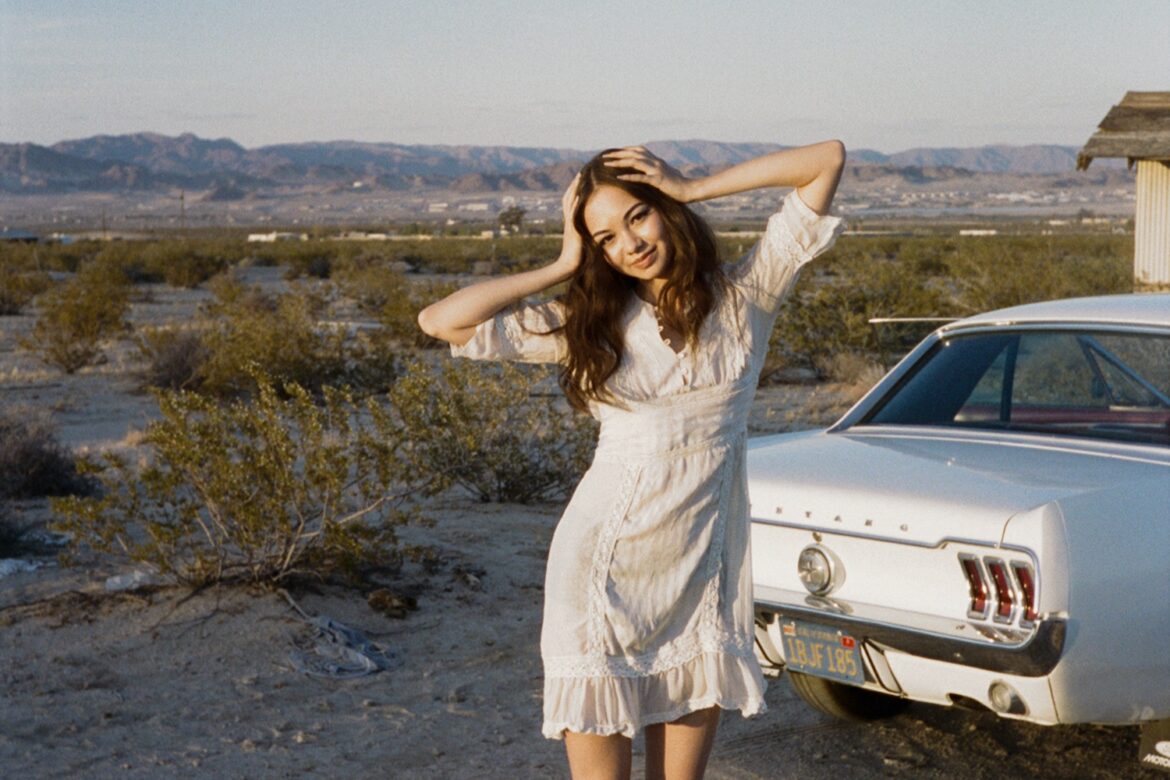
Dark, cinematic, and defiantly honest, ‘An American Crime’ finds Sabrina Sterling reclaiming her anger, her voice, and the messy complexities of her own story.
Stream: “Eventually” – Sabrina Sterling
This EP taught me that I’m no longer a scared, voiceless little girl. I can’t change what happened to me in the past, but I can choose how I move forward, and I refuse to let those experiences dictate the rest of my life.
* * *
There is no clean division between victim and villain in Sabrina Sterling’s world.
People hurt each other. People who have been wronged make mistakes of their own. Anger can be destructive, but suppressing it can be, too. And sometimes the most unsettling stories are hidden behind manicured lawns, trimmed bushes, and shiny cars in driveways.
On her new EP An American Crime, the 21-year-old San Diego-born, Los Angeles-based singer/songwriter steps willingly into that moral gray area. The follow-up to Ramona finds Sterling pushing beyond the quiet acoustic guitars and gentle percussion that once felt safest, embracing heavier guitars, synths, brash drums, and a cinematic darkness informed by her love of horror. It’s not merely a sonic reinvention; it feels like an artist discovering how much space she is finally willing to occupy.
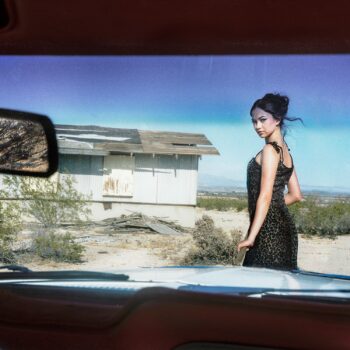
At the center of An American Crime is the mythology of the perfect American family – and everything that can remain invisible behind its carefully maintained façade. For Sterling, that contradiction is deeply personal. As she tells Atwood Magazine, her childhood home looked almost idyllic from the outside: a two-story house, manicured front lawn, and Mustang parked in the driveway. What outsiders couldn’t see were the painful realities unfolding behind that picture-perfect exterior.
Sterling refuses to make those realities morally simple. “Saint” deliberately complicates the boundaries between being hurt and causing hurt, allowing listeners to decide for themselves where culpability lies.
Elsewhere, An American Crime turns domestic spaces uncanny, explores justice and anger, and asks what happens when a young woman stops worrying about whether telling the truth will make everyone like her.
That last shift may be the most significant.
Sterling admits that she once softened her opinions in hopes that listeners on either side could still enjoy the music. This time, she is letting that instinct go. “I’m voicing whatever I want to say without worrying about being universally liked,” she explains.
In conversation with Atwood Magazine, Sabrina Sterling opens up about the moral ambiguity of An American Crime, transforming anger into something powerful, finding freedom in potentially being unlikeable, and becoming an artist who no longer feels obligated to make uncomfortable truths easier for other people to hear.
— —
:: stream/purchase An American Crime here ::
:: connect with Sabrina Sterling here ::
— —
Stream: ‘An American Crime’ – Sabrina Sterling
A CONVERSATION WITH SABRINA STERLING
There’s something fascinating about the title An American Crime because it immediately suggests guilt – that somebody has done something wrong and somebody else has been wronged. Throughout the EP, though, those roles seem much less straightforward. How interested were you in making the listener question who they should believe?
Sabrina Sterling: In a song like “saint,” I wanted people to understand that you can be wronged and also be wrong yourself. So yes, in some of the songs, I wanted to make it morally ambiguous who was right or wrong, because what I experienced was really complicated. No one was 100% right or 100% wrong, and I wanted the listener to be able to make up their own mind about it. The only exception to that is “Devil’s in My Living Room.”
The EP deconstructs this idea of the perfect “all-American family” and looks at what can exist behind that image. What drew you to using such a familiar cultural ideal as the backdrop for something much darker?
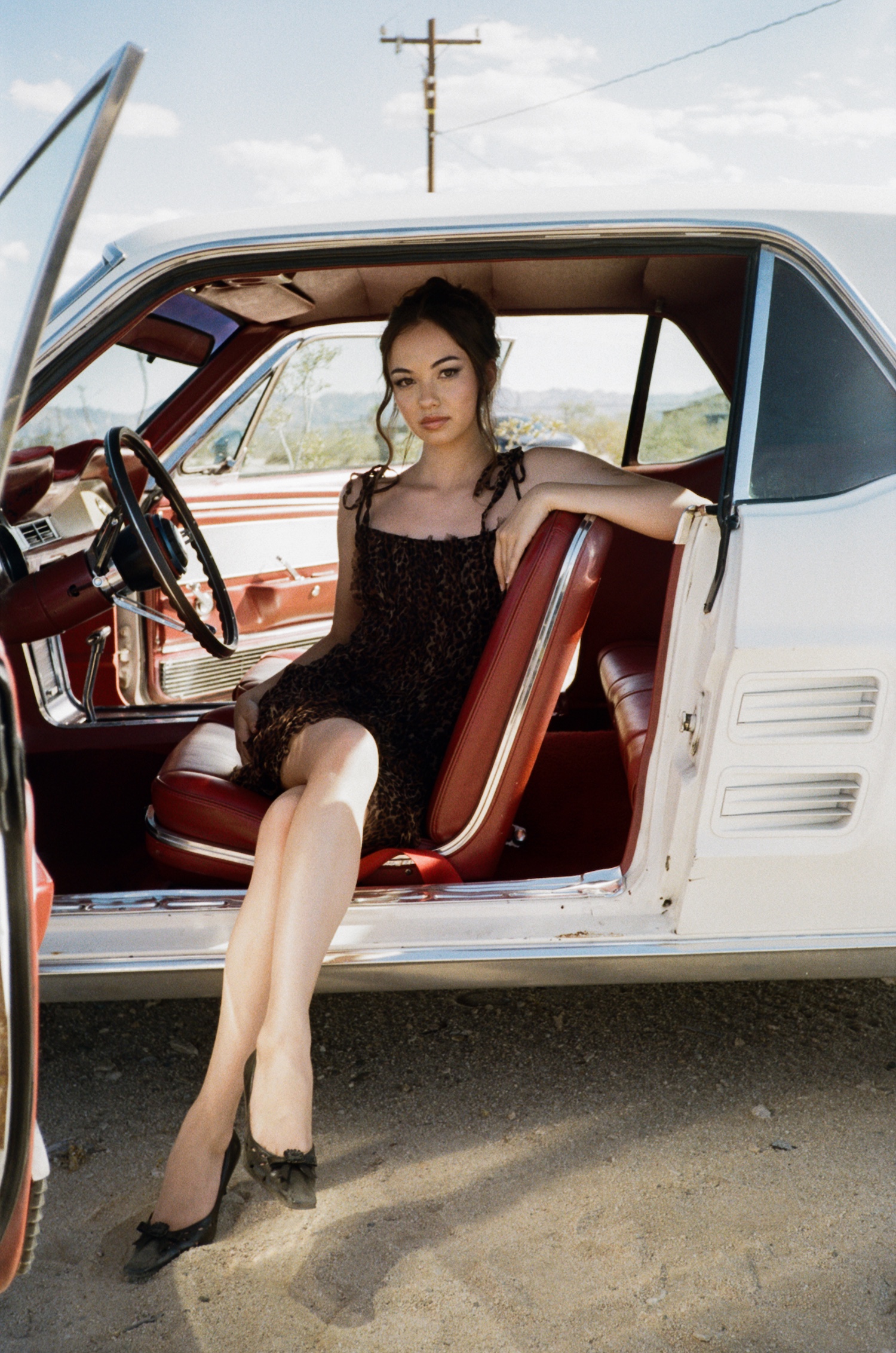
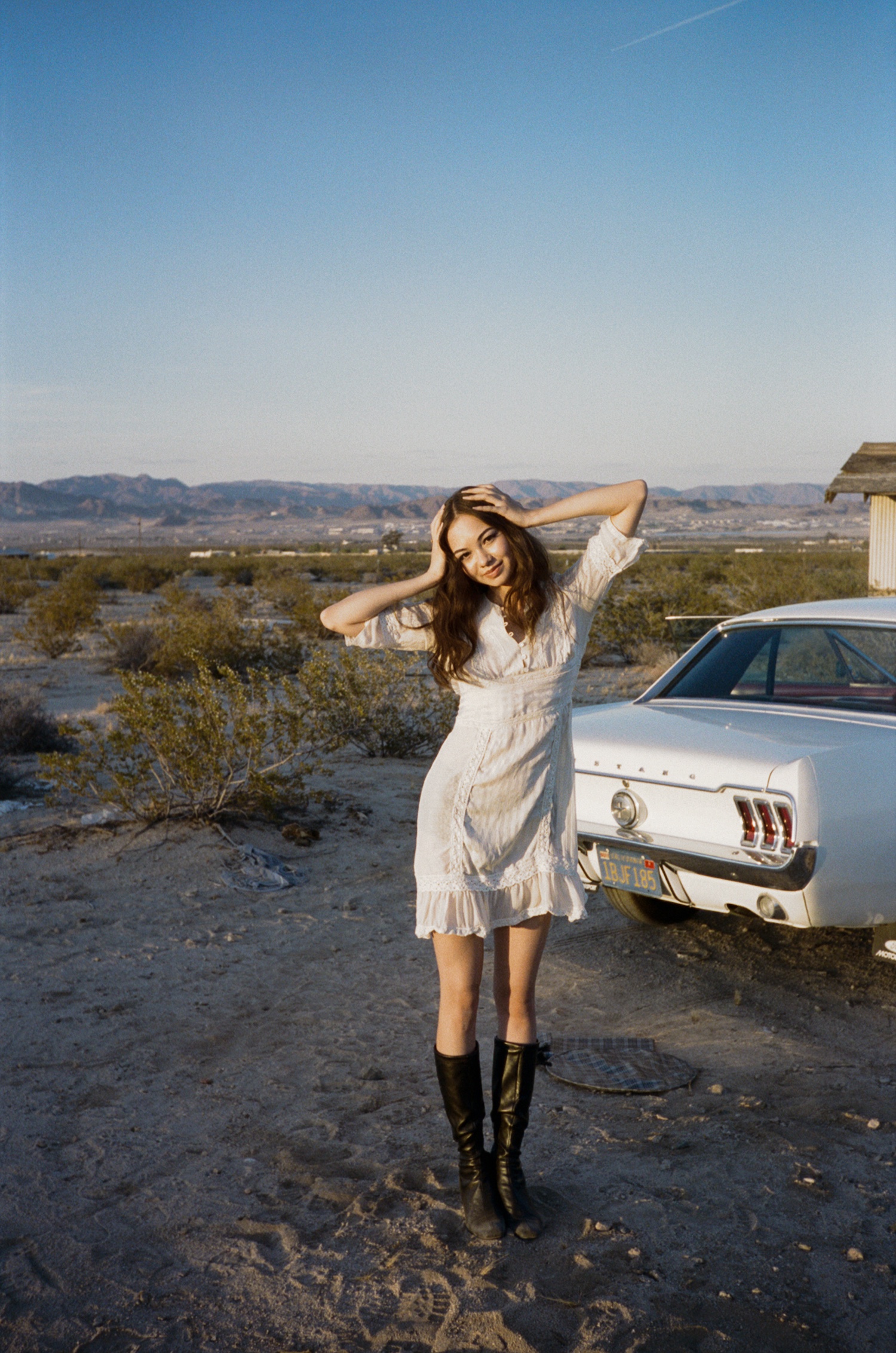
Sabrina Sterling: I really liked the juxtaposition of it. To take something so familiar and make people feel unsettled by the realization that such terrible things can happen inside it. My childhood home, from the outside, looked almost perfect. It was a two-story house with a nice front lawn, trimmed bushes lining the steps, and a shiny Mustang in the driveway. People never saw the unimaginable things that were happening behind all of the pretty.
You’ve described An American Crime through visual storytelling, and the project takes inspiration from film and horror. When you were creating it, did you approach the songs almost like scenes – thinking about setting, characters, tension, or even what the camera might be showing us?
Sabrina Sterling: Yes, especially with “An American Crime,” “Eventually,” and “Devil’s in My Living Room.” As I was writing those songs, I would constantly think about what the music video could look like, dreaming about what the viewers would see on screen. I think I naturally approach music very visually, and I love music videos so much. They’re such an important part of how I experience music, so I’m definitely going to keep pushing for as many as I can on future projects.

My childhood home, from the outside, looked almost perfect… People never saw the unimaginable things that were happening behind all of the pretty.
* * *
This record marks a noticeable sonic departure from Ramona, with heavier guitars, synths, and much more forceful production. Was there a particular song or studio moment where you realized, “Oh, this is what An American Crime sounds like”?
Sabrina Sterling: I knew from the start that I wanted it to be less in the singer-songwriter lane. I was always afraid to push the production and do more than what felt familiar to me, which was quiet acoustic guitars and gentle drums. As I continue to grow and write, I’m finding my lane and my voice, and I think this EP was a big part of that.
There’s an interesting question of justice running through songs like “Jukebox” and “Eventually,” particularly the idea of what happens when somebody feels they have to take matters into their own hands. Do you think writing this EP changed the way you understand anger – especially anger that might once have felt uncomfortable to express?
Sabrina Sterling: I think it did. People around me would often tell me to just forgive and forget, and they treated anger like it was a bad or uncontrollable emotion. Through writing this EP, I learned that anger can actually be healthy, and that I don’t have to suppress it. I can allow myself to feel angry, understand where it’s coming from, and still choose not to act on it. I think there’s a lot of power in being able to feel that emotion without letting it control you and your life.
“Devil’s in My Living Room” is such an evocative title because it places something frightening directly inside a supposedly safe, ordinary space. How important was the idea of turning domestic spaces into something uncanny or threatening across this record?
Sabrina Sterling: I wanted people to feel uncomfortable. It’s how I felt almost every day growing up. I liked the unsettling idea of being afraid and unsafe in the one place where you’re supposed to feel safe. I wanted to capture that contradiction of being in your own home but never really feeling at home.
I wanted people to feel uncomfortable. It’s how I felt almost every day growing up.
* * *
There seems to be less interest in shame on this project – not necessarily because the experiences themselves are uncomplicated, but because you're willing to own your perspective on them. Did making An American Crime require a different kind of vulnerability than your earlier music?
Sabrina Sterling: In a way, yes. I think I was always trying to waver in the middle, never fully picking a side or committing to an opinion, because I wanted both the people who agreed with me and the people who disagreed with me to still like the music. With this project, I’m learning to let go of that fear. I’m voicing whatever I want to say without worrying about being universally liked. I think there’s a different kind of vulnerability in being that direct and allowing people to really know where you stand.
You worked with Mike Wise, Harry Charles, and Cooper Holzman on the EP. When you're making something this personal but also building such a specific sonic and visual world around it, what does a collaborator have to understand about you before you feel comfortable letting them into that world?
Sabrina Sterling: They have to understand that my writing process is maybe a little strange, and that I’m a very visual person. I’m always describing how I want a song to feel by giving examples of movie scenes or explaining what I’m seeing in my head. When I’m throwing out production ideas, which I really know nothing about, I’ll describe them in some bizarre way, and they have to know me well enough to understand what I’m actually trying to get at. I think having collaborators who are willing to take the time and try to figure it out with me are really important to me.

People around me would often tell me to just forgive and forget, and they treated anger like it was a bad or uncontrollable emotion.
* * *
You've been releasing music since you were very young, and An American Crime feels like an artist becoming increasingly comfortable with complexity – with allowing herself to be angry, contradictory, or even potentially unlikeable. At 21, what are you giving yourself permission to write about now that you couldn't have written about a few years ago?
Sabrina Sterling: Back then, I was writing about teenage heartbreak in a pretty digestible way, and I was honestly worried whenever I put in a more mature or jarring lyric. Now I’m fully leaning into it. I love writing about things where, even in this moment, I don’t know if I was right to do them, or about things that a lot of people might consider taboo. Once I stopped worrying about being likable or being seen as a good person, which no one fully is, I felt like I could finally be honest about all the weird feelings and thoughts I’ve had. I think there’s something really freeing about exploring those parts of yourself without immediately trying to justify how I handled it.
If Ramona represented one version of you and An American Crime represents another, what do you think this EP taught you about the artist you're becoming?
Sabrina Sterling: This EP taught me that I’m no longer a scared, voiceless little girl. I can’t change what happened to me in the past, but I can choose how I move forward, and I refuse to let those experiences dictate the rest of my life. Starting now, I’m not going to water down my writing to spare the feelings of the people my songs are about. I’m learning that I can tell my story honestly, even when it’s really uncomfortable, and that I don’t need to make it easier for other people to hear.
* * *
Once I stopped worrying about being likable or being seen as a good person, which no one fully is, I felt like I could finally be honest about all the weird feelings and thoughts I’ve had.
* * *
Perhaps the most compelling transformation on An American Crime isn’t Sterling’s heavier production or cinematic world-building.
It’s her willingness to stop asking permission.
Throughout the EP, anger is allowed to exist without automatically becoming cruelty; victims are allowed complexity without being required to become perfect; and painful memories don’t need to be softened simply because their truth might make somebody else uncomfortable. Sterling has learned that feeling anger and being controlled by it are two different things – a distinction she describes as finding the power to understand an emotion without allowing it to dictate her life.
That newfound freedom has changed her songwriting, too. Where Sterling once worried about whether a lyric might be too mature or jarring, she now gravitates toward precisely those uncomfortable places: taboo thoughts, questionable decisions, contradictions she cannot neatly justify. Letting go of the requirement to appear universally likable has, she says, finally allowed her to write honestly about the stranger and messier corners of herself.
And perhaps that is the real crime at the center of An American Crime: refusing to remain the version of yourself that makes everybody else comfortable.
Sterling cannot rewrite what happened behind the façade of that picture-perfect home. What she can do is decide who gets to tell the story now. At 21, she knows her answer. She does.
— —
:: stream/purchase An American Crime here ::
:: connect with Sabrina Sterling here ::
— —
Stream: “Hold” – Sabrina Sterling
— — — —
Connect to Sabrina Sterling on
Facebook, 𝕏, TikTok, Instagram
Discover new music on Atwood Magazine
© Sabra Binder
 © Sabra Binder
An American Crime
an EP by Sabrina Sterling