Atwood Magazine is excited to share our Editor’s Picks column, written and curated by Editor-in-Chief Mitch Mosk. Every week, Mitch will share a collection of songs, albums, and artists who have caught his ears, eyes, and heart. There is so much incredible music out there just waiting to be heard, and all it takes from us is an open mind and a willingness to listen. Through our Editor’s Picks, we hope to shine a light on our own music discoveries and showcase a diverse array of new and recent releases.
This week’s Editor’s Picks features Jahson Paynter, Sarah Crean & Essence Martins, St. Panther, Jaïr Faria, Sesame Girl, and Grace Robinson!

 follow EDITOR’S PICKS on Spotify

no self respect!”
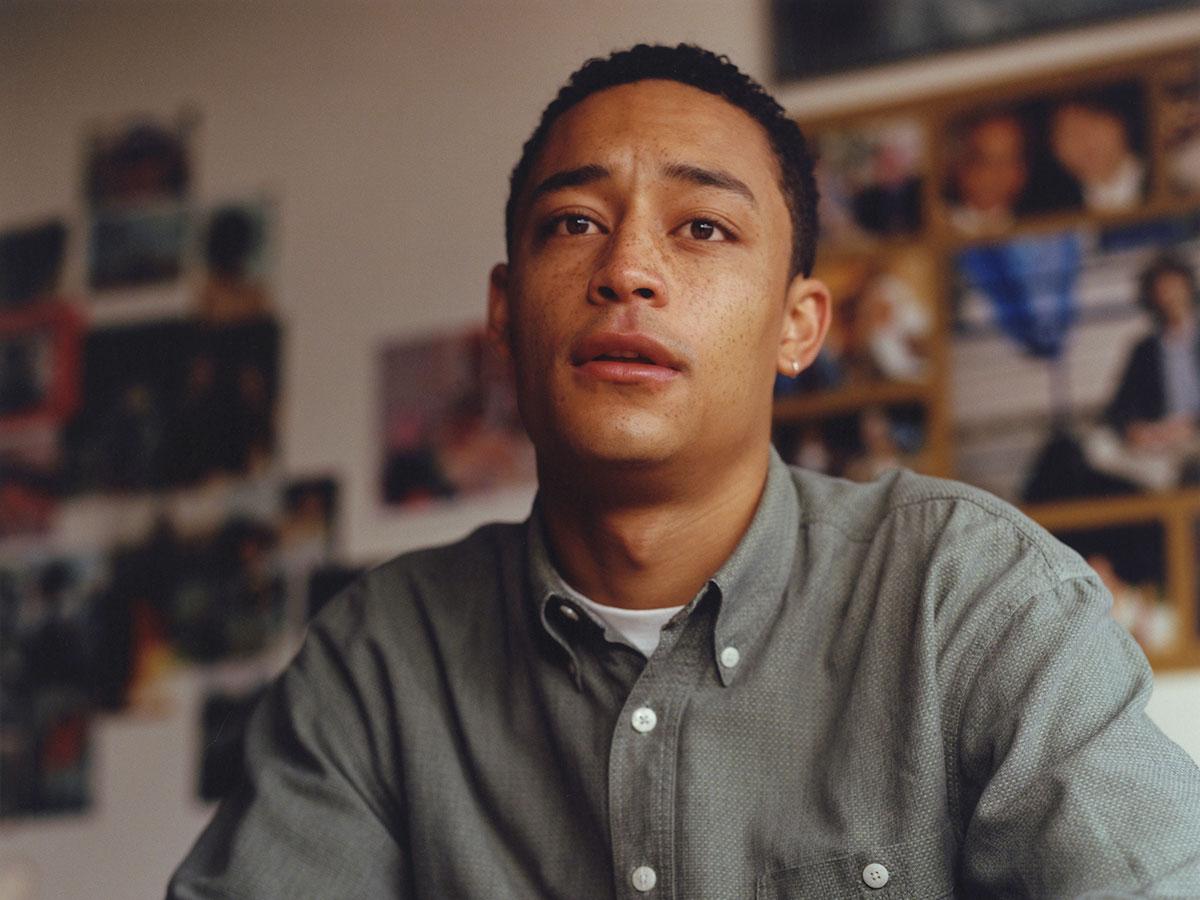
by Jahson PaynterJahson Paynter knows love is a losing bet, but he keeps putting pieces of himself on the table.
On his utterly spellbinding “no self respect!,” the Canadian singer/songwriter confronts the painful contradiction of knowing a relationship is diminishing him while still desperately longing to be loved. His breathtaking voice carries that conflict through an alternative R&B fever dream that grows from a delicate, soul-baring confession into a radiant, impassioned eruption of sound. Achingly intimate yet gloriously larger than life, it’s a stunning portrait of a man reckoning with how much of himself he’s willing to lose in pursuit of a love he’s never quite known.
you like how i’m cold
you’re always so warm
and it perplexes me endlessly
How I’m not the
body that you lean on
but can we both be wrong… maybe?
like what’s the point of being right anyways
i like how you check on my feelings
and tell me that’s is gon be fine
but you’re lying through your grill i’m so
gullible
The first moments are almost impossibly intimate. Golden piano chords cradle Paynter’s voice as he sings with a startling closeness, each phrase trembling between affection and frustration. “You like how I’m cold / You’re always so warm,” he confesses, before wondering why he isn’t “the body that you lean on.” Even his accusations arrive wrapped in tenderness, his expressive tenor stretching and curling around words that seem almost too personal to say aloud. He sounds caught between the comfort of knowing someone so deeply and the exhaustion of realizing that familiarity hasn’t brought him the security he craves. The sweetness of the music makes his uncertainty all the more arresting.
And the deeper we follow him, the more tangled his feelings become. “What’s the point of being right anyways,” Paynter asks, a seemingly casual surrender that reveals just how much he’s willing to overlook to preserve a relationship. The chorus is even more telling: “Always got your back this way / And I always let you back this way.” In one breath, loyalty becomes a liability. He’s forever offering support, forever opening the door, even when every return seems to cost him another little part of himself. Elsewhere, the suspicion of another lover collides with memories of imagining children and an estate together. It’s a painfully recognizable mess of jealousy and devotion, resentment and hope, where knowing you deserve better doesn’t necessarily make walking away any easier.
ain’t that why you think I’m that easy
always got your back this way
and i always let you back this way
god help with my defenses
i got no self respect
“It’s a mess, I’m a mess – you know how it goes,” Paynter tells Atwood Magazine. “I just realized that in the majority of my relationships, I’ll give up pieces of myself. And now I’ve started actually just being all of myself, I’ve realized I was just disrespecting myself by hiding certain parts of who I am.”
That realization gives the song its pulse, but Paynter’s music gives it wings. What begins as a delicate piano-led confession gradually gathers momentum, a full band rising around his voice and bringing an exhilarating sense of movement to his emotional turmoil. The drums breathe an infectious urgency into the arrangement, while the keys and swelling instrumentation create a beautifully restless atmosphere that seems to grow larger with every passing phrase. Paynter rises with it, pushing his voice from hushed vulnerability into increasingly impassioned, full-throated expression. And just when the song seems to have reached its summit, it surges higher still, blossoming into an almost euphoric rush of rhythm and melody. His singing is achingly expressive – pleading one moment, soaring the next, utterly unguarded throughout. The music becomes brighter and bolder as the emotional stakes intensify, creating a wonderfully disarming collision of heartbreak and exhilaration.
“Honestly, it was really intentional,” Paynter explains. “I almost left it as a drumless record, but I couldn’t do another one of those. I lowkey kinda used to hate drums. I have a newfound love and need for them now.”
There’s a marvelous freedom in that arrangement, especially against lyrics so concerned with the ways love can make us feel trapped. Paynter knows he’s repeating a damaging pattern, yet he can’t help reaching for the possibility that this time things might be different. “Love is like a lottery / Spend and always lose a piece,” he sings, returning again and again to a gamble whose consequences he understands all too well. The metaphor cuts deeper with every repetition: He isn’t simply risking rejection, but slowly spending the very parts of himself that make him who he is. Still, the song refuses to collapse beneath that realization. Its melodies keep lifting, its rhythms keep pushing forward, and Paynter keeps singing as though somewhere beyond all this disappointment lies a love worth believing in.
And then, near the song’s emotional peak, he offers a confession that casts everything before it in a different light: “I ain’t never seen it in my life / Maybe that’s the reason why I want it.” Suddenly, the desperation sounds less like an inability to let go and more like the hunger of someone reaching for a kind of devotion he has yet to experience. How do you know when to stop fighting for a relationship if you’ve never truly known what it means to be loved without conditions? How do you distinguish loyalty from self-sacrifice when the future you keep imagining is so much sweeter than the present you’re living? The ache in Paynter’s voice carries both questions, and the music’s astonishing swell gives them an almost overwhelming emotional force. His longing is heartbreaking because, beneath every bad decision and broken promise, the thing he wants is so beautifully ordinary: To love someone completely and know they’ll choose him with the same conviction.
“A lasting, yearning, always-growing, good, beautiful, kind of ugly, and real type of love,” Paynter says of what he’s searching for. “’Cause what’s real isn’t always perfect. I believe you don’t choose who you’re in it with, but you choose, day in and day out, to stay in love. And I want to choose and be chosen – no wavering faith.”
That yearning runs through the Mississauga-born artist’s rapidly growing body of work. Raised in a musical family – his mother a songwriter, his father a rapper turned reggae singer, and his aunt a spoken-word performer with gospel roots – Paynter began rapping as a teenager before discovering his singing voice. His path eventually led him to Los Angeles, where writing songs for other artists helped him recognize that the stories he was giving away were often his own. Following a breakout 2025 and the release of his debut EP Is Anybody Home?! this past May, he’s preparing to share his second EP of 2026, hold me, don’t hold back!, on October 29. Spanning alternative R&B, folk, and textured bedroom pop, the five-track record embraces the contradictions of loving another person while learning how to live more honestly with yourself. There’s a kinship with artists like Dijon in Paynter’s adventurous, emotionally unrestrained approach to arrangement, but his music speaks in a voice increasingly and unmistakably his own.
That freedom of expression is especially meaningful given his upbringing. Paynter’s father once encouraged him to keep his emotions hidden, fearing that vulnerability might be mistaken for weakness. Yet his son’s willingness to bring his inner life into the open has become one of his greatest strengths. On “no self respect!,” every tremor, melodic leap, and uninhibited cry becomes part of the story. Paynter communicates through the very sound of his singing what words alone might struggle to contain: The embarrassment of recognizing your own mistakes, the stubbornness of wanting what hurts you, and the almost childlike hope that love might still become everything you’ve dreamed it could be.
“I make music to work through my own issues – good, bad, and everything in between,” Paynter shares. “It’s like a diary, fr. I just want to make people feel something, small or large – just make people feel anything at all.”
Perhaps that’s what makes “no self respect!” so deeply affecting. Paynter gives himself permission to inhabit the contradictions most of us would rather resolve before admitting them aloud. He can know a relationship is wrong for him and still mourn the future he imagined within it. He can recognize how much he’s surrendered and still struggle to stop giving. He can be angry with himself for staying and continue to believe that love, when freely and equally given, is worth the risk. His performance grants those conflicting emotions room to breathe, refusing to tidy them into a lesson before they’ve been fully experienced. And as the song grows increasingly ecstatic, there’s a sense of possibility gathering inside all that pain – the exhilarating realization that acknowledging how you’ve lost yourself might be the beginning of finding your way back.
I keep returning to the extraordinary contrast between the song’s title and the way Paynter sings it. “no self respect!” sounds like an accusation, a frustrated reckoning with the person he’s allowed himself to become. But the music tells a bigger story. His voice grows more assured even as his words expose uncertainty, rising with such tremendous passion that the performance itself begins to resemble an act of self-belief. He may still be figuring out what he deserves, but he’s no longer hiding the parts of himself that love once taught him to conceal. In those three breathtaking minutes, Jahson Paynter takes the messy, bruising business of wanting to be chosen and makes it sound gloriously, defiantly alive.
And maybe that’s where self-respect begins – with the courage to show up as your whole self, even when you’re still learning how to love that person, too.
“Dreamer”
by Sarah Crean ft. Essence Martins“Is it alright if I cry beside you?”
Sarah Crean opens with a question that sounds like an apology for needing comfort – but the question that matters most is why she has to ask at all.
On her breathtakingly bright, tenderly stirring “Dreamer,” featuring Essence Martins, the Irish singer/songwriter confronts the fear that love might disappear the moment she stops giving everything she has. Glistening with warmth and irresistible indie pop sweetness, the song seems to answer her with an embrace – an exhilarating invitation to stop apologizing for how deeply you feel and start believing you’re worthy of being loved as you are.
Is it alright if I cry beside you?
Is it alright if I lose my voice?
Is it alright if I lie here without
Giving you something you want?
I can’t decide what I am good for
If I am not the girl that
gives a hundred and one
Rip out the stitch of the
bloody mark you gave me
I’m boring if I’m not on the cusp
“I’m just really bad for jumping all in with almost everything in life, not giving myself a chance to breathe,” Crean tells Atwood Magazine. “With ‘Dreamer,’ I tap into that by questioning, ‘Am I as interesting to people if I’m not jumping to 100% almost immediately?’ I think the majority of people do care intensely about other people’s perceptions of them, and mine fell to pondering my likeability in general if I retained some of myself and gradually let it out – particularly in a relationship.”
“I feel very intensely also, and I knew from listening to Essence’s music, she had a pinch of that too. She felt like the perfect person to call to help me bring it to the finish line. We started it in early 2025 and over the entire year just did random days in the studio tidying it up, even a day of projectile screaming at a mic. It was great – a really formative creative experience for me.”
Crean doesn’t waste a heartbeat getting personal. Her voice arrives immediately, the repeated “Is it alright?” riding a pulsing drumbeat and a glistening guitar lick that sound almost impossibly welcoming. But her requests become more revealing with each line: Permission to cry, permission to lose her voice, permission to lie beside someone “without giving you something you want.” The music practically beams with affection, while the lyrics expose a relationship in which even resting has become an act requiring approval. The question beneath it all is devastating: Must she keep performing to deserve a place beside someone she loves?
“When you’re trying to get away from a person like that, you’re half convincing yourself in and out of the decision,” Crean says. “I really wanted the song to be a real-time tracking of that circling and the back and forth.”
It’s hard to imagine a lovelier place for such an unsettled thought to land. The chorus swells into a radiant, enveloping rush of synths, ringing guitars, and buoyant rhythm, its melody so immediately inviting that you almost want to sing along before you’ve worked out what the words are asking. “Four, five / I always skip the one,” Crean sings, rushing past the first step as though patience has never come naturally. Then comes the wonderfully contradictory refrain: “I like to be a dreamer / But I can’t be the dog that you walk.” The music opens its arms as the lyrics begin drawing a line. There’s an intoxicating pleasure in hearing her sing so brightly about the right to keep some part of herself.
Four, five, I always skip the one
I jump ahead in ways that the cavalry warns
Feed me with the novelty score
I like to be a dreamer,
but I can’t be the dog that you walk
Oh I like to be a dreamer,
but I can’t be the dog that you walk
Oh I like to be a drеamer
A dog can be adored and still be kept on a leash. That’s the sting in Crean’s metaphor: She can give herself wholeheartedly to someone, but she refuses a version of love in which affection comes at the cost of freedom – where she’s expected to follow, obey, and wait to be wanted. It’s a painful distinction, especially for someone who loves as intensely as Crean does. Being devoted to another person should never mean belonging to them.
Martins’ entrance makes that resistance even more affecting. Crean’s verse asks whether she may cry; Martins’ asks whether she may speak honestly, before admitting, “I think I tried to be smarter for you.” The imagery grows pointed with “My neck is sore / You chained up your retriever,” carrying Crean’s metaphor of the obedient dog into a second perspective. When the pair join in the chorus, the contrast is powerful: Two narrators who have been made to question their own worth now share a melody big enough for both of them. Their voices lend one another the space their relationships have withheld.
Is it alright if I’m honest with you?
I think I tried to bе smarter for you
My neck is sore, you chained up your retriever
And I can’t give you all that you want
Four, five, I always skip the one
I jump ahead in ways that the cavalry warns
Feed me with the novelty score
I like to be a dreamer,
but I can’t be the dog that you walk
Oh I like to be a dreamer,
but I can’t be the dog that you walk
Oh I like to be a dreamer
“I love Essence soooo dearly,” Crean shares. “I came across her music in early 2025 and just loved how authentically she wrote, so honest and forthcoming. I had her as support at my first London show and we just clicked straight away.”

Crean’s insistence on agency extends to the studio itself. Originally from Ireland and now based in Brighton, she made her 2021 debut album Call for Refinement in her childhood bedroom, an experience that helped establish her confidence as a producer. Five years later, Heirloom, released September 18, is a self-assured sophomore statement created entirely by women, with Crean producing “Dreamer” and Lina Lou contributing additional production. Having previously worked with male producers who discouraged her from playing certain parts, Crean took greater control of her arrangements, rebuilding songs herself as she transitioned into independence. Her growing creative authority gives the record’s themes of self-reclamation another dimension: She’s claiming in her music the freedom to make her own decisions that her lyrics demand in life.
“Dreamer is at that middle point of the album, the first song on the second side of the vinyl,” Crean explains. “It’s purposefully placed there to signify that shift into fighting back and accepting reality a bit. The chorus change is really bringing that shift of tone into the forefront of the record.”
Listen again to the final choruses and the shift is startling. Crean’s “I like to be a dreamer” becomes “I hate to be a dreamer,” while “but I can’t be the dog that you walk” hardens into “so I can’t be the dog that you walk.” A handful of words, and the same irresistible melodic release suddenly holds a different kind of resolve. The first version wrestles with the impulse to throw herself wholeheartedly into love; the second acknowledges the harm that impulse can do when someone else takes advantage of it. Even the word hate carries an uneasy honesty – choosing herself doesn’t instantly undo the shame or grief of being diminished. The sweetness remains, but it’s no longer surrendering.
“Dreamer” understands how easily we can confuse being endlessly available with being worthy of love. Crean and Martins give that exhausting calculation the loveliest possible surroundings, making room for anger and desire without treating either as an embarrassment. Their voices are bright enough to make you smile, yet the song’s real gift is how gently it asks you to reconsider what you’ve been tolerating. Loving fiercely should never require disappearing into somebody else’s expectations. The dream worth keeping is the one in which you get to remain entirely yourself – even on the days you need to cry, even when you have nothing left to give.
“EAST SIDE GIRL”
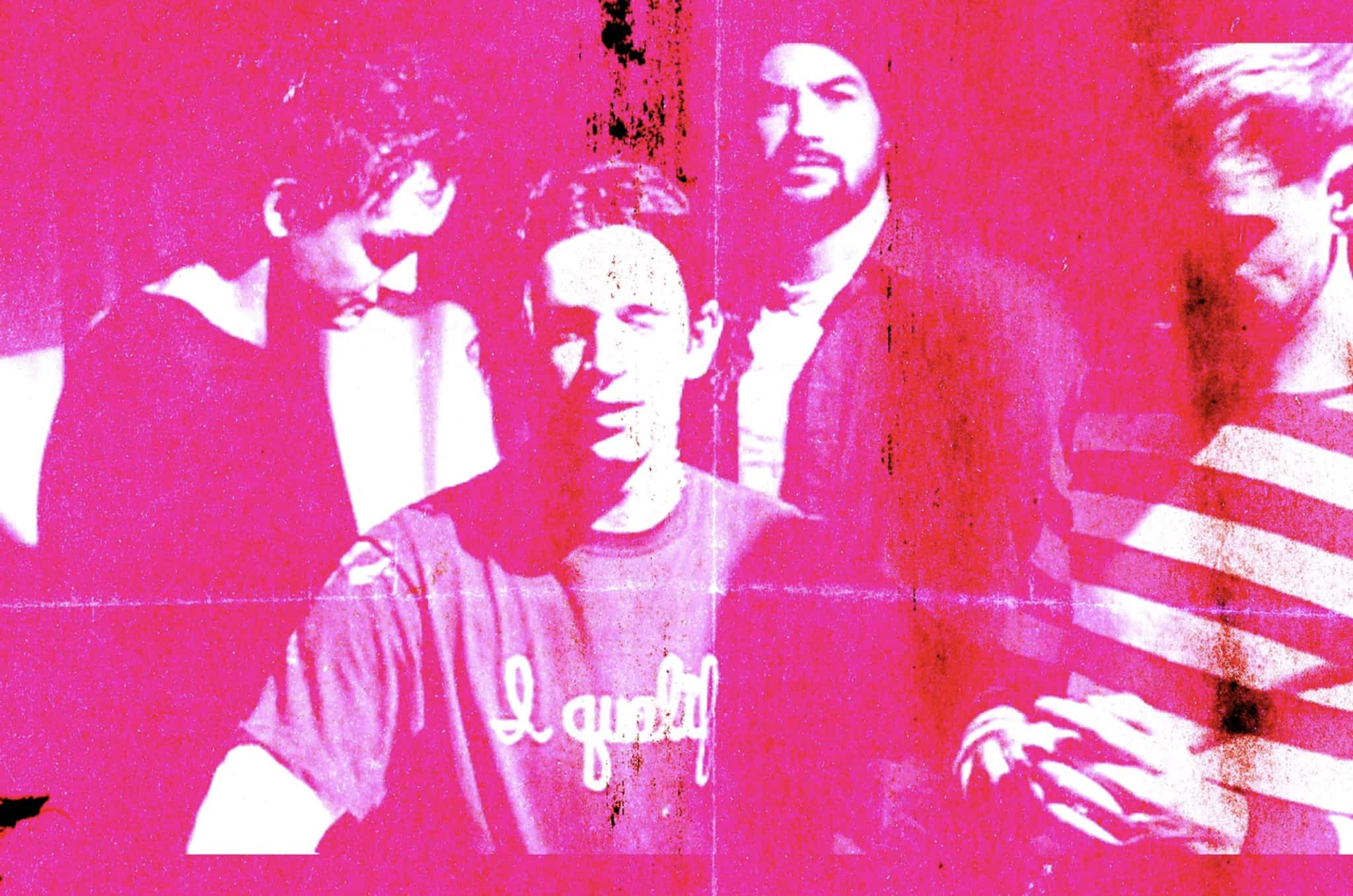
by St. PantherSt. Panther fell for an East Side girl, and somewhere along the way, they fell for the whole neighborhood.
On their boldly hypnotic “EAST SIDE GIRL,” the Mexican/Colombian singer/songwriter transforms a fleeting romance into a dreamy, sun-soaked love letter to East Los Angeles and the people who give it life. The enchanting opening track from their forthcoming debut album, East Side Love Story, sways with the timeless sweetness of Chicano soul, its irresistible melodies radiating the giddy thrill of a new crush and the joy of finding beauty in familiar places. Seductive, playful, and effortlessly charming, it’s a celebration of queer love and belonging that makes an entire neighborhood sound like falling in love.

Never mind what baby say
Girl you know I’m fresh to death
Got me all inside your head
Time to put that front to rest
I’m not on no 2%
I’ll make you feel whole again
I think I’m going crazy
pretending our love ain’t automatic
I felt you through the static again
And I’ve been going crazy to my friends
I think I’m done pretending
This ain’t no bitter ending
The music is irresistible from the start. A wonderfully unhurried groove settles into place, with supple bass, delicate nylon-string guitar, and gently swinging drums creating a warm, intoxicating atmosphere. St. Panther’s voice glides across the arrangement with effortless charisma, their delivery floating between honeyed sweetness and a flirtatious, almost mischievous confidence. “Never mind what baby say / Girl you know I’m fresh to death,” they sing, letting the words roll off their tongue as though they’ve been smiling to themselves all afternoon. Every element seems to sway in the same easy rhythm, creating the delicious sensation of riding through familiar streets with the windows down, a favorite record playing, and somebody special occupying every thought. It’s dreamy and deeply soulful, the kind of melody that settles into your body before you realize you’ve started moving along.
The romance unfolds in stolen glances and playful declarations, with just enough uncertainty to make the attraction all the more exciting. “I think I’m going crazy pretending our love ain’t automatic,” St. Panther confesses, capturing that thrilling moment when two people seem to understand what’s happening between them but neither quite wants to admit it. Later, the infatuation takes a wonderfully extravagant leap: “East side girl and she’s riding low / Wearing a dress I’ve never seen before,” they sing, before revealing they’ve “started having visions at the jewelry store.” One minute they’re flirting, the next they’re imagining forever. And then comes the cheeky reversal: “All she wanna say is hit the road, Jack.” It’s a whole romantic comedy compressed into a few verses, full of swagger, anticipation, and the delightful uncertainty of wondering whether the person who has you completely captivated might feel the same way.
Never mind what baby say
Girl you know I’m fresh to death
Got me all inside your head
Time to put that front to rest
I’m not on no..
East side girl and she’s riding low
Wearing a dress I’ve never seen before
Cannot withstand one minute more
Started having visions at the jewelry store
But the woman who inspired “EAST SIDE GIRL” gave St. Panther much more than a crush to write about. Dani Bojorges-Giraldo, the artist behind the project, had already lived in East Los Angeles for several years when they began dating a Sagittarius who introduced them to another side of the neighborhood. She showed them the streets she’d grown up on, pointed out where her oldest friends still lived, and shared memories of driving through the area with her father. There was a particular King Taco worth visiting, a favorite park, and an entire personal geography waiting to be discovered. Through her stories, the neighborhood became more intimate, its familiar streets acquiring histories and meanings that St. Panther might otherwise never have known.
“She never made me feel like an outsider,” St. Panther tells Atwood Magazine. “It was actually a really beautiful brief romance that made me fall in love with the east side as a whole. She has no idea the song took inspiration from her charisma, the way she carried herself. I just personally thought that archetype of girl was the shit.”
There’s a particular beauty in the way one person’s affection for a place can become contagious. A street you’ve passed a hundred times suddenly looks different when somebody tells you about growing up there. An ordinary restaurant becomes the setting for a memory you’ll carry long after the relationship ends. St. Panther channels that experience into a song whose romance extends far beyond the two people at its center. The East Side girl is magnetic partly because of the world she carries with her – her stories, her confidence, and the unmistakable sense of belonging that comes from knowing exactly where you’re from. Through her, St. Panther discovers another way of seeing the community they’ve come to call home. And through the music, they invite us to share in that discovery.
That sense of place runs deep into the song’s instrumentation. St. Panther had spent years listening to their neighbors’ music drifting through the streets of Boyle Heights, particularly one next-door neighbor whose daily rotation of oldies, funk, soul, and hip-hop became a kind of unofficial soundtrack to the neighborhood. Weekend mariachi performances and family parties added their own distinctive melodies to the atmosphere. When it came time to make East Side Love Story, St. Panther wanted to bring those musical traditions into conversation, finding a meeting point between the classical Spanish guitar sounds woven into East LA’s culture and the soulful records that had long accompanied their days.
“My big mission was to buy a nylon guitar to write the album,” they explain. “Thankfully, I scored the exact Cordoba model I was eyeing for years off a kid in Koreatown and brought it straight home. This was the first song I wrote on it. Classical Spanish guitar tone, but capturing the soul records on loop in the neighborhood. In my head it was about meeting those two staple genres in this neighborhood right in the middle.”
The result is remarkably transportive. St. Panther, who wrote and produced “EAST SIDE GIRL” themselves, plays nylon guitar, bass, and sitar on the recording, with C.C. Hamilton contributing drums. Together, they build a sound that draws on the enduring romance of vintage soul while remaining unmistakably contemporary. The guitar lends a delicate, almost wistful intimacy to the arrangement, its bright tones weaving around a bassline that seems to move with an easy, knowing smile. Hamilton’s drums supply an understated but infectious pulse, giving the song its wonderfully relaxed momentum. St. Panther’s vocal melodies are every bit as intoxicating, curling and cascading through the mix with a sweetness that recalls the golden age of soul. There’s so much personality in the performance, from the playful phrasing to the effortless way they stretch a note and let it hang in the air. The music breathes, the rhythm seduces, and the whole thing seems suspended in an endless late-summer afternoon.
That musical warmth carries a deeper cultural intention. For St. Panther, “EAST SIDE GIRL” is also an opportunity to celebrate the queer community at the center of East Los Angeles, honoring people whose influence on the neighborhood’s culture deserves to be recognized as essential rather than peripheral. Their romantic protagonist is a reflection of the confidence, charisma, and history they see in the people around them. Even the tentative dance between the song’s two potential lovers carries a larger significance. As St. Panther explains, there’s a particular coyness in queer courtship, a mixture of desire and caution shaped partly by the long history of stigma surrounding love between people who aren’t men. The song allows that uncertainty to become flirtatious and exciting, imagining a world where queer attraction can unfold with all the effortless romance and everyday possibility traditionally afforded to heterosexual love stories.
“I’m not entertaining myself as a subculture anymore,” St. Panther declares. “I’m taking up space with my artwork unapologetically and putting my community on my back in the same breath, because there’s beauty to offer, love to give, and much more art to make with us at the forefront of culture. We have enriched culture from the shadows long enough.”
It’s a declaration that gives the song’s irresistible sweetness another dimension. The easy confidence of “Girl you know I’m fresh to death” becomes a celebration of being seen and desired without apology. The fantasy of a future together, glimpsed through a jewelry-store window, becomes more meaningful when we consider how often queer people have been denied the freedom to imagine such futures openly. St. Panther allows these lovers to be coy, confident, confused, impulsive, and utterly enchanted with each other. Their story is allowed to be playful because their humanity is already a given. And in making queer love the heartbeat of this musical portrait, St. Panther honors the people who have long helped define the neighborhood’s identity, giving their lives and stories the prominence they deserve.
The accompanying music video extends that invitation into the streets themselves. Filmed around Boyle Heights at the tail end of summer, its romantic, retro-inspired imagery preserves the season’s golden warmth while drawing attention to the local businesses that make the neighborhood what it is. St. Panther wanted those establishments to be seen and supported, particularly amid the economic disruption caused by immigration enforcement activity in the area. It’s an important reminder that the places we fall in love with are sustained by people whose livelihoods, histories, and communities deserve our care. The neighborhood’s beauty is inseparable from the lives being lived within it.
The arrival of East Side Love Story also marks a long-awaited milestone for an artist who has spent years fighting to release music on their own terms. Following 2020’s These Days and 2025’s Strange World, St. Panther’s debut full-length arrives November 20 via drink sum wtr, bringing together ten songs inspired by seven years of living, loving, and growing in East Los Angeles. When we last spoke in 2025, St. Panther was exploring the relationship between empathy and activism, making music that encouraged listeners to reconnect with themselves and the world around them. With East Side Love Story, that commitment to community finds a more personal, romantic expression, as the artist draws on the rhythms and relationships of the place they’ve made their own.
“For me it means this long 6 years of feeling like I was on musical probation is finally over and I’m free to put my records out again,” St. Panther shares. “The fullness comes from being able to invite the world in when my voice is at its most intentional and clear.”
That creative freedom is palpable in “EAST SIDE GIRL.” After years of honing their genre-fluid artistry, St. Panther sounds utterly at home in a musical language that embraces the traditions around them while making space for their own distinct personality. They cite D’Angelo as a foundational influence, alongside an expansive range of artists and styles that includes vintage soul, Brazilian music, and the melodic sensibilities of early-2000s pop. Yet the most important inspiration may be the music outside their own front door. What began as a playlist of songs Shazammed from neighboring homes, affectionately titled East Side Love Story, eventually became an entire album concept. Even Pancake, their beloved cat, had a hand in the inspiration, with her revolving cast of neighborhood admirers offering a playful parallel to the artist’s own romantic adventures. Over time, St. Panther began to see the record as a photograph of their life in East LA, a way of preserving the people and experiences that had shaped them.
And that brings us back to the extraordinary affection at the center of “EAST SIDE GIRL.” The real-life romance that inspired it may have been brief, but its influence has endured in the most beautiful way. St. Panther didn’t need the relationship to last forever for it to change their life. Through one person’s generosity and enthusiasm, an entire community became more vivid to them. It’s a deeply moving reminder that the relationships we carry with us aren’t measured solely by their duration. Sometimes their greatest gifts emerge in the ways they teach us to see, to listen, and to belong.
“After 10 tracks of processing I discovered love is a continuum,” St. Panther reflects. “The more you allow connections to exist in their natural capacity, the more easily love flows through you and your life, and that relationships don’t need to last forever for the love to. Love is a part of you no matter what stays or goes.”
That understanding gives “EAST SIDE GIRL” an even sweeter resonance. What sounds, at first, like an impossibly charming portrait of infatuation gradually reveals itself as a celebration of everything love can leave behind. The melody carries the thrill of a new connection, while the story preserves the lasting affection that connection awakened. Every swaying guitar phrase and playful vocal flourish seems to glow with the pleasure of remembering someone who made the world bigger simply by sharing it with you.
St. Panther has made an extraordinary opening statement with “EAST SIDE GIRL,” a mesmerizing, soul-stirring invitation into a world where romance and community are intimately intertwined. Its beauty lies in how naturally those ideas coexist – how the admiration of one person can deepen into devotion to a place, and how a song about a fleeting encounter can preserve a lifetime of belonging. Even after the girl is gone, the streets remain, forever colored by the memories she helped create. And somewhere along those sun-drenched East LA roads, the love story continues, carried in the music of a neighborhood that St. Panther has made sound like home.
Too bad I don’t know how to act
All she wanna say is hit the road, Jack
But I still provide what the players lack
Maybe that’s the reason she keep coming back
Never mind what baby say
Girl you know I’m fresh to death
Got me all inside your head
Time to put that front to rest
I’m not on no 2%
“August”
by Jaïr FariaThe pavement remembers what Jaïr Faria is trying to forget.
A sudden downpour interrupts the sunshine on the Amsterdam-born, Los Angeles-based singer/songwriter’s smoldering, soul-stirring “August,” bringing an old love back into view just when life was beginning to brighten. Faria aches and quakes with the shock of that return, delivering a breathtakingly passionate alternative rock performance so intimate and combustible it seems capable of setting the rain itself on fire.
I keep seeing your reflection
Only when the ground gets wet
It brings me back to when you left
What am I supposed to do with that?
And it was you who used to tell me
You wouldn’t wanna break a sweat
You were feeling no regret
You weren’t supposed to tell me that
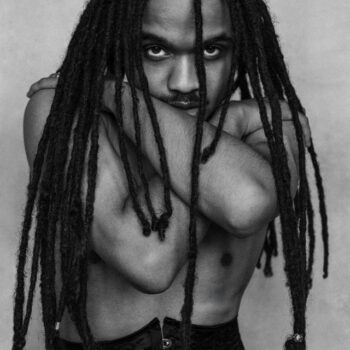
Faria opens with a devastatingly simple image: “I keep seeing your reflection / Only when the ground gets wet.” The absent lover takes shape in a street slick with rain, and his next question – “What am I supposed to do with that?” – lands with the bewilderment of a wound reopened without warning. Later, the sudden arrival of a favorite song delivers another unexpected blow. These are the tiny betrayals of everyday life, when the most ordinary details know exactly where to hurt you.
Guitars roar against the thud of heavy drums, and Faria’s voice sounds almost dangerously close to the microphone, every syllable carrying both tenderness and strain. He sings with the intimacy of someone admitting what he’s barely admitted to himself, then pushes that confession outward until it seems to shake the room. It’s a thrilling collision of emotional exposure and musical force, the rock instrumentation giving his grief an enormous physical presence while his expressive, soul-inflected vocals keep every word painfully personal. The result is as arresting as it is affecting, a performance that seems to register the shock of remembering in real time.
I sense you’re close
Know you’ve come home
When it rains
When it rains in August
It feels like fall
I get withdrawals
When it rains
When it rains in August
In the chorus, Faria makes a cruel seasonal misalignment feel bodily: “It feels like fall / I get withdrawals / When it rains in August.” The calendar says summer, but the ache belongs to autumn; withdrawals suggests a longing that doesn’t wait for permission or obey good intentions. He repeats “when it rains in August” until the phrase itself begins to resemble a recurring weather pattern, each pass carrying him back to the moment he thought he’d escaped. There’s desperation in that repetition, but also an extraordinary release in the way he gives those overwhelming feelings such a powerful voice.
“The rain becomes a metaphor for those unexpected moments that pull you back into grief, while August represents the warmth and happiness you are trying to return to,” Faria explains. “It is a bittersweet song about how healing is never completely linear.”
The chorus holds another, more troubling confession: “I sense you’re close / Know you’ve come home.” The person who left hasn’t returned, yet the rain makes their absence behave almost like a presence. Faria longs to be free of these memories, but part of him still recognizes their arrival as a homecoming. Earlier, he recalls that his former lover was “feeling no regret” – a cutting detail that suggests the two of them have carried the same goodbye very differently. Beneath the song’s fury is that imbalance: One person continuing to live inside a love the other has already left. It’s hard to hear him sing with such heat and not recognize the painful contradiction of wanting to be free of someone you’re still instinctively reaching for.
Raised in Amsterdam and now based in Los Angeles, Faria has been performing since childhood, developing a genre-fluid artistry that draws from pop and neo-soul while increasingly embracing the visceral power of rock. A multi-instrumentalist who puts live instrumentation at the center of his music, he’s also spoken about his ambition to reclaim Black rock for a new generation. Following independent breakthroughs including “Cry About It” and “Why I Called You,” Faria signed a publishing deal with Roc Nation and a recording deal with Giant Music. His forthcoming EP, When It Rains In August, arrives November 6, with fellow single “Georgia” exploring the difficult decision to leave a beloved place behind when staying close to someone makes moving on impossible. It’s a compelling companion to “August” – where one song wrestles with the decision to leave, the other reveals how easily memory can bring someone back.
I was caught in a deception
Thought I was finally moving on
Until your favorite song came on
How could I ever be so wrong?
And with no feeling for direction
I don’t even know where I’ve been
I still see you in everything
But only just the little things
“I think it’s less about changing my sound and more about discovering it,” Faria tells Atwood Magazine. “Over the past few years, I’ve learned that I don’t want to fit into just one genre. The pop and neo-soul side will always be part of me, but I also love rock, live instrumentation and experimenting with different sounds. This new chapter feels like I’m finally showing more sides of who I am as an artist.”
The word deception may be the cruelest thing Faria sings. “I was caught in a deception / Thought I was finally moving on,” he admits, as if one rainy afternoon has exposed every happier day before it as a lie. That’s the second heartbreak buried inside the first: Losing faith in your own recovery. You can begin to laugh again, build new routines, even look forward to tomorrow, and still be ambushed by a song or a storm. Faria gives that disorienting, deeply isolating experience its full emotional weight. Hearing him refuse to disguise how badly it hurts offers a kind of companionship to anyone who has ever wondered why moving forward can leave them feeling so far behind.
What makes “August” so overwhelming is the space Faria gives a feeling most of us would rather outrun. He sings straight into its center, letting the guitars and drums carry every jolt of recognition until one person’s private heartbreak seems big enough to move mountains. That first reflection may be an unwelcome visitor, but it isn’t a verdict on how far he’s come. The storm can interrupt the summer. It doesn’t get to claim the whole season.
I sense you’re close
Know you’ve come home
When it rains
When it rains in August
It feels like fall
I get withdrawals
When it rains
When it rains in August
“Wings of a Butterfly”
by Sesame GirlGossamer and iridescent dust, trembling in the last light of summer. Sesame Girl ask a butterfly’s wings to carry the weight of forever.
Their dreamy “Wings of a Butterfly” captures the beautiful vulnerability of wanting to intertwine your life with someone else’s – and yearning for proof that they’ll choose to stay. Beneath that uncertainty is a wide-eyed romantic courage – the willingness to risk heartbreak for the possibility of eternity. Glistening, sun-kissed melodies send the Australian quartet’s gentle indie rock soaring with an almost spiritual exhilaration as they throw themselves into love and hope to be caught.
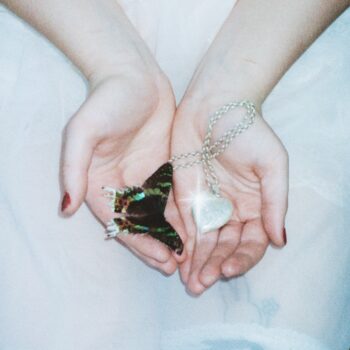
Summer fades away
On the wings of a butterfly
Hold hands with my babe
I don’t wanna say goodbye
I roll along for the last time
‘Til you say you’re coming
I’m a night alone for the last time
Whatever you do
I wanna do it too
I want you to prove
You’re here forever
Whatever you do
I wanna do it too
I want you to prove
You’re here forever
The song begins with summer slipping away, and everything in vocalist Heather Duncan’s lyrics seems beautifully precarious: Butterflies in flight, love scattered like dandelion seeds, the fleeting brush of a moth’s wing. Then the chorus plants its feet: “Whatever you do / I wanna do it too / I want you to prove / You’re here forever.” It’s an astonishingly direct declaration amid all that delicate imagery, and its repetition gives the song an emotional urgency that grows with every return. Duncan sings as though saying forever enough times might finally make it certain.
“‘Wings of a Butterfly’ is about asking for proof instead of promises,” Duncan tells Atwood Magazine. “Someone can say that they love you and they’re not leaving, but that’s not really enough. I feel like the lyrics ‘I want you to prove you’re here forever’ sum up the sentiment of wanting reassurance through something tangible.”
“It’s the same as someone getting you flowers – you don’t want to tell them to get you flowers, because it’s not as special as when they just do it for you.”
Musically, Sesame Girl make that yearning almost giddy. “Wings of a Butterfly” began as a little voice memo of a riff before the band built it almost from scratch in the studio with producer Simon Lam (Armlock). The resulting arrangement is delicately hazy and wonderfully melodic, with glistening guitar tones and an airy, floating ease that belies the emotional weight of the words. Its chorus is a little marvel of pop songwriting, slipping effortlessly into the song’s dreamy atmosphere while lodging itself in your head almost immediately. The hook has a subversive sweetness to it: Beneath all that gentle beauty is an insistence that refuses to be ignored. There’s real exhilaration in the way the music keeps reaching upward, carrying Duncan’s longing somewhere brighter each time the refrain returns.
Love can fade away
On the seeds of a dandelion
If you’re here to stay
Can you prove it one more time?
Your touch is soft as a moth’s wing
‘Til you say you’re coming
I could have been your blessing
Whatever you do
I wanna do it too
I want you to prove
You’re here forever
Whatever you do
I wanna do it too
I want you to prove
You’re here forever

The song opens Butterfly Wing In A Silver Locket, Sesame Girl’s six-track third EP, released August 7. Originally formed in Ngunnawal Country / Canberra, the Australian four-piece – vocalist/guitarist Heather Duncan, bassist Avril Ferguson, drummer Blake Bashfield, and guitarist Josh Fogarty – have embraced a more intimate, adventurous sound on this record, moving beyond the busier pop and rock arrangements of their earlier work. Working with Lam, they drew on organic, folk-tinged textures like banjo, slide, and acoustic guitar, blending them with gazey distortion and their natural pop instincts. The EP’s title grew from Duncan’s childhood fascination with butterflies and the sentimentality of a locket – a fitting image for a collection of deeply personal songs that hold enormous feelings close.
“On this record we really thought about the music we loved and gave ourselves permission to make whatever we wanted without worrying if it was too different from our other music, or if anyone would like it,” Duncan shares.
There’s an infectious freedom to that approach, and “Wings of a Butterfly” embodies it beautifully. The band’s willingness to embrace softness gives the song’s emotional contradictions room to breathe, while its pop sensibilities keep the music moving with an almost effortless momentum. Even the bridge introduces a flash of unexpected playfulness, borrowing the language of a boxing ring for a song otherwise preoccupied with the most delicate creatures imaginable: “Sting like a bee and float like a feather.” It’s a cheeky inversion of Muhammad Ali’s famous phrase, bringing a little bite to the song’s fluttering romanticism.
“So you really gotta do both the floating and the stinging is what I was trying to get across! And I also got the chance to misquote Muhammad Ali and I had to go for it sadly,” Duncan laughs.
And perhaps that’s what makes “Wings of a Butterfly” so compelling. Its sweetness carries conviction. For all its dreamy beauty and breathless romanticism, the song understands that enduring love requires more than beautiful words – it asks us to show up, to follow through, to make our devotion tangible. Duncan has already offered her own version of forever; the risk lies in trusting another person to meet her there. Sesame Girl wrap that longing in music so radiant and irresistible that even the uncertainty sounds like an invitation to believe. Their butterfly may be fragile, but the hope it carries is anything but. Forever, after all, was never meant to rest on one pair of wings.
Sting like a bee
and float like a feather
I want you to prove
that you are here forever
Sting like a bee
and float like a feather
I want you to prove
that you are here forever
“is it over?”
by Grace RobinsonGrace Robinson has spent years trying to make herself small enough to love.
On her tender, devastating second single “is it over?”, the Australian singer/songwriter confronts the relentless self-scrutiny of body dysmorphia and the crushing realization that even after doing the work to heal, the cruelest thoughts can linger. Robinson’s sweet, exposed voice begs for relief from a battle she thought she’d already won, capturing the exhaustion of longing to feel at home in your own skin – and wondering when that day will finally come.

Pieces of gravel picked out of my palm
I have fallen again by the length of your arm
Numbers and scales the truth never fails
To give you everything
I wish that I loved me
the way I love everyone else
Is that selfish?
Is that weaponising my health?
‘Cause I love when I seep to the bone
And give it everything
Robinson’s debut solo single, June’s “harder than you think,” approached burnout with a dry laugh, skewering the impossible pressure to excel at healing. It was a fitting introduction for the Naarm/Melbourne artist, who spent nearly a decade as a jazz vocalist, Empress frontwoman, choir director, and booking agent before finally releasing music under her own name. But the sequence tells an unexpected story: “harder than you think” looks back on a difficult chapter with the benefit of distance, while “is it over?” takes us deeper into the experiences that made her forthcoming debut album, choppy (out November 13 via AWAL Recordings), necessary. Robinson knew exactly how she wanted to introduce herself before opening those doors.
“I think of it as the handshake song,” Robinson explains. “It’s the ‘hi, nice to meet you, here’s a little bit about me’ song, rather than the ‘let’s drink a bottle of wine and unpack our deepest psychological wounds’ song. Those ones are coming later.”
A wiry lead guitar aches through the opening of “is it over?”, its tense, plaintive melody setting the emotional temperature before Robinson sings a word. An unyielding kick pushes beneath her delicate phrasing as distorted guitars thicken the air, and a choir of her own harmonies gathers around the refrain, amplifying its repeated plea. “I wish that I loved me the way I love everyone else,” she sings, laying bare an agonizing double standard: The compassion she offers freely to others somehow becomes impossible to grant herself. The contradiction came into sharper focus during a therapy session, when Robinson heard herself articulate a belief about her own worth that she’d thought she’d already overcome.
“I think a lot of women, and particularly women in the arts, grow up with this idea that their adequacy or relevance is somehow connected to how they look, whether they’re pretty enough, thin enough, palatable enough,” Robinson shares. “I think I developed this weird protection mechanism where my brain basically went, well, if you’re not going to have a pretty personality, you better have a pretty body.”
Robinson’s lyrics give those expectations a painfully physical dimension. She worries about occupying too much space – with her body, her words, even her hands – and compares the desire to escape her own skin to tearing off a woolen jumper that won’t stop itching. The imagery grows darker when she imagines an inscription on her gravestone: “If you stand at the foot of my grave in the cold / And they forgot to put cause of death on my stone / Could you carve with a nail, she was killed by her own.” It’s a harrowing projection of where unchecked self-reproach can lead, made all the more piercing by the gentleness of Robinson’s delivery. Yet even at its bleakest, “is it over?” leaves room for a possibility its narrator can scarcely bring herself to believe.
I’m so consumed by the way that
he always looked at me like a god
But I’m so consumed by counting
it all that I will never last for long
If you stand at the
foot of my grave in the cold
And they forgot to put
cause of death on my stone
Could you carve with a nail,
she was killed by her own
Is it over? Is it over?
Is it over yet?
I’ll pretend I’m sober
I’ll pretend that I grew out of it
Just like that woolen jumper,
the one that made my body itch
I wish that I could tear it off,
just for one day
I’d give it everything
“The fact that I’m asking the question means that some part of me still believes there’s an answer,” Robinson says. “It means I do want to be better. I do want to beat this thing. So I guess the question is also a little bit of hope.”
choppy was recorded in just five days with Robinson’s partner, housemate, and best friend – the very people who helped her through the experiences she was putting into song. Produced by Alex Gorman (Angie McMahon) and mixed by Marcus Paquin (Julia Jacklin), the record takes its name from a childhood nickname used by those closest to her. That intimacy comes alive in the closing moments of “is it over?”: Mid-take, Robinson called out a melody across the studio to Christy, who caught it on synth and played along, creating an integral part of the finished song. It’s a beautiful collision of instinct and trust, and an unexpectedly moving final image for a song haunted by the fear of taking up too much space. Robinson calls out – and somebody answers.
— — — —

Connect to us on
Facebook, 𝕏, Instagram
Discover new music on Atwood Magazine
Editor’s Picks
follow EDITOR’S PICKS on Spotify