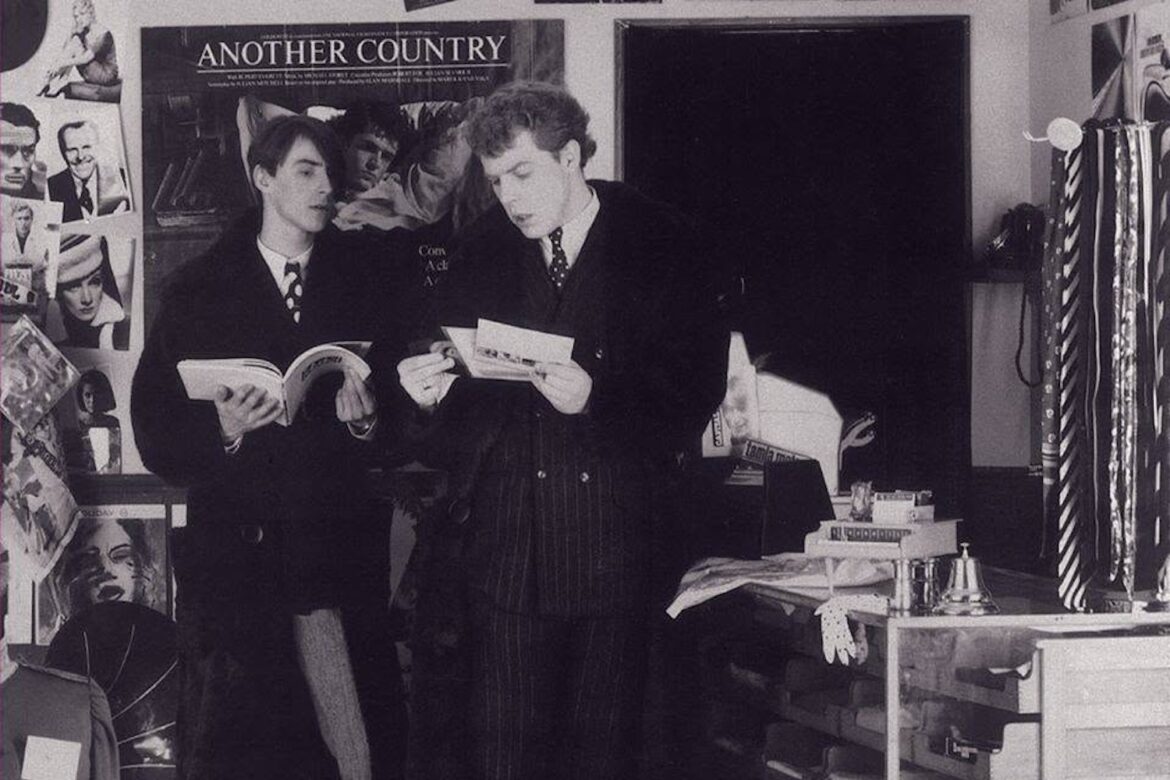
Political music usually comes with a side of homework. The Style Council’s sophomore album ‘Our Favourite Shop’ somehow turns Thatcherism, unemployment, social upheaval, and political apathy into sophisticated, wildly catchy pop that remains as sharp and fun today as it was in 1985.
Stream: ‘Our Favourite Shop’ – The Style Council
Let’s not bury the lede: I absolutely mean this when I say the 1985 album Our Favourite Shop by The Style Council is the best political album of all time.
Political music usually has a huge problem in that listening to it usually sounds like doing one’s homework. The songs have a reputation for being earnest and clever but end up sounding stiff and obvious. The listener usually is supposed to agree with what’s being said, and the listener almost always already knows what they’re being told to think. War bad, peace good.
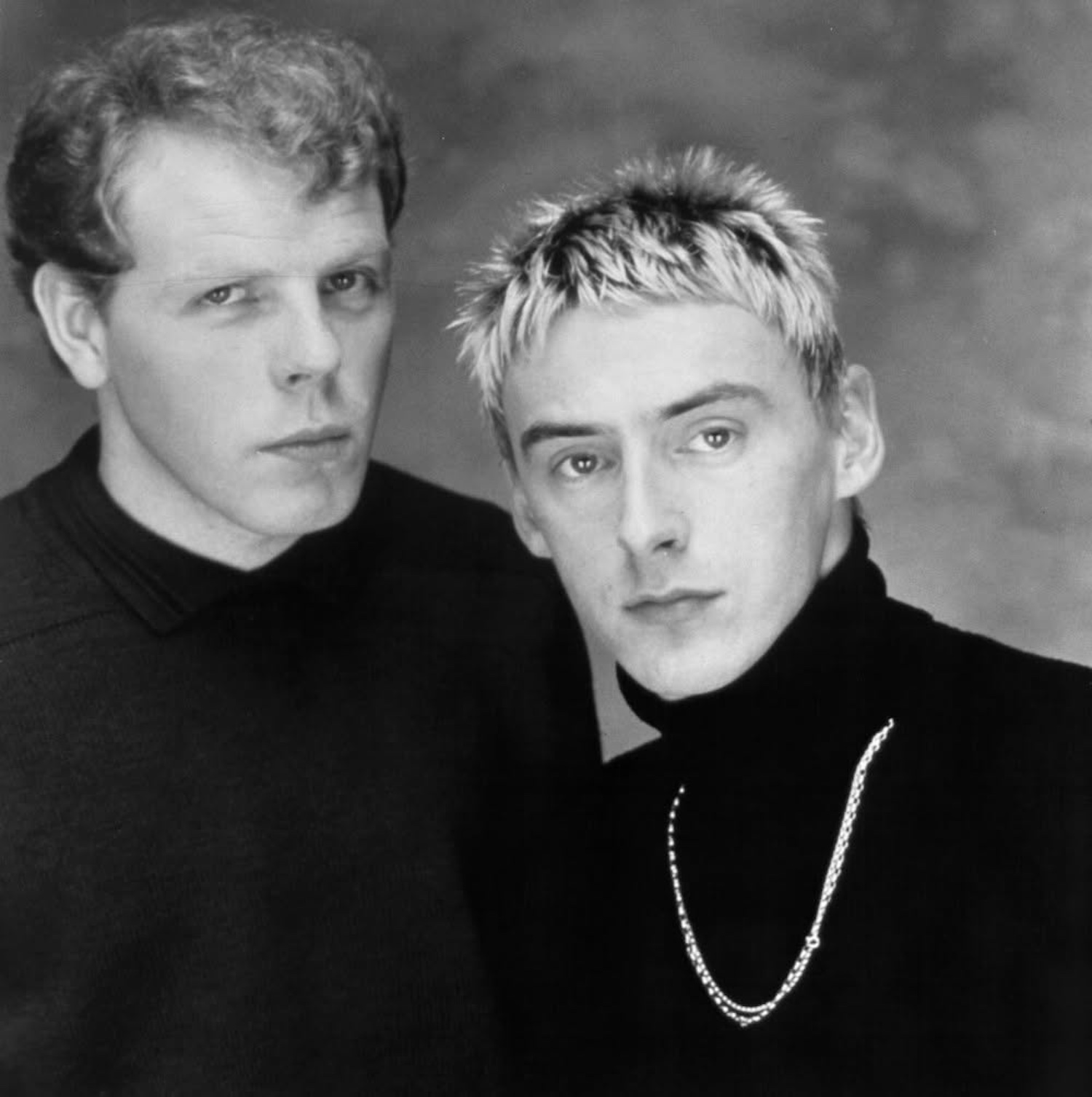
But Our Favourite Shop is a joyfully great sounding exception. The question here is: How did Paul Weller and Mick Talbot make an album about Thatcherism, unemployment, and apathy that is this fun to listen to, even 40 years later?
Who Did This, Anyway?
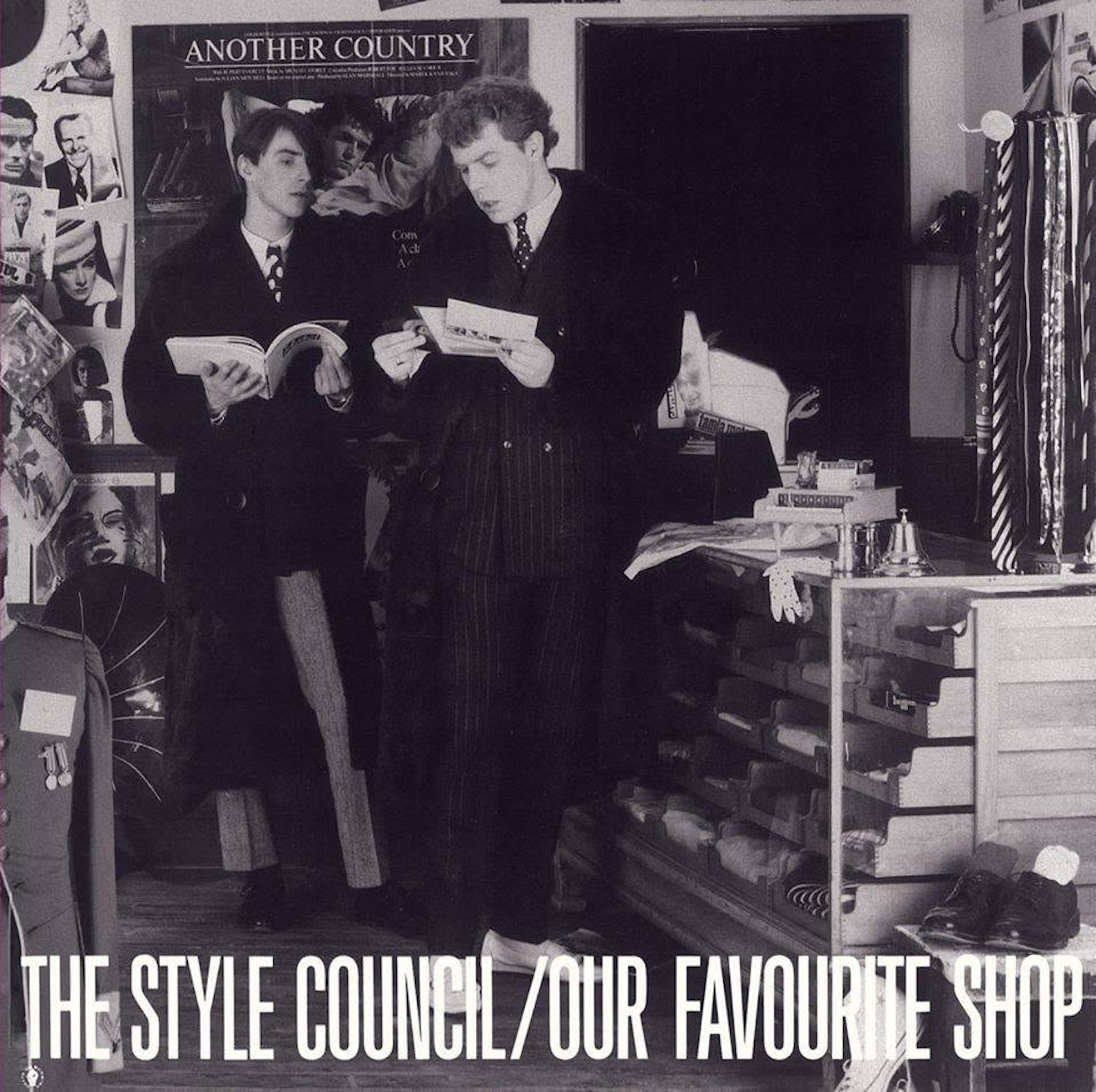
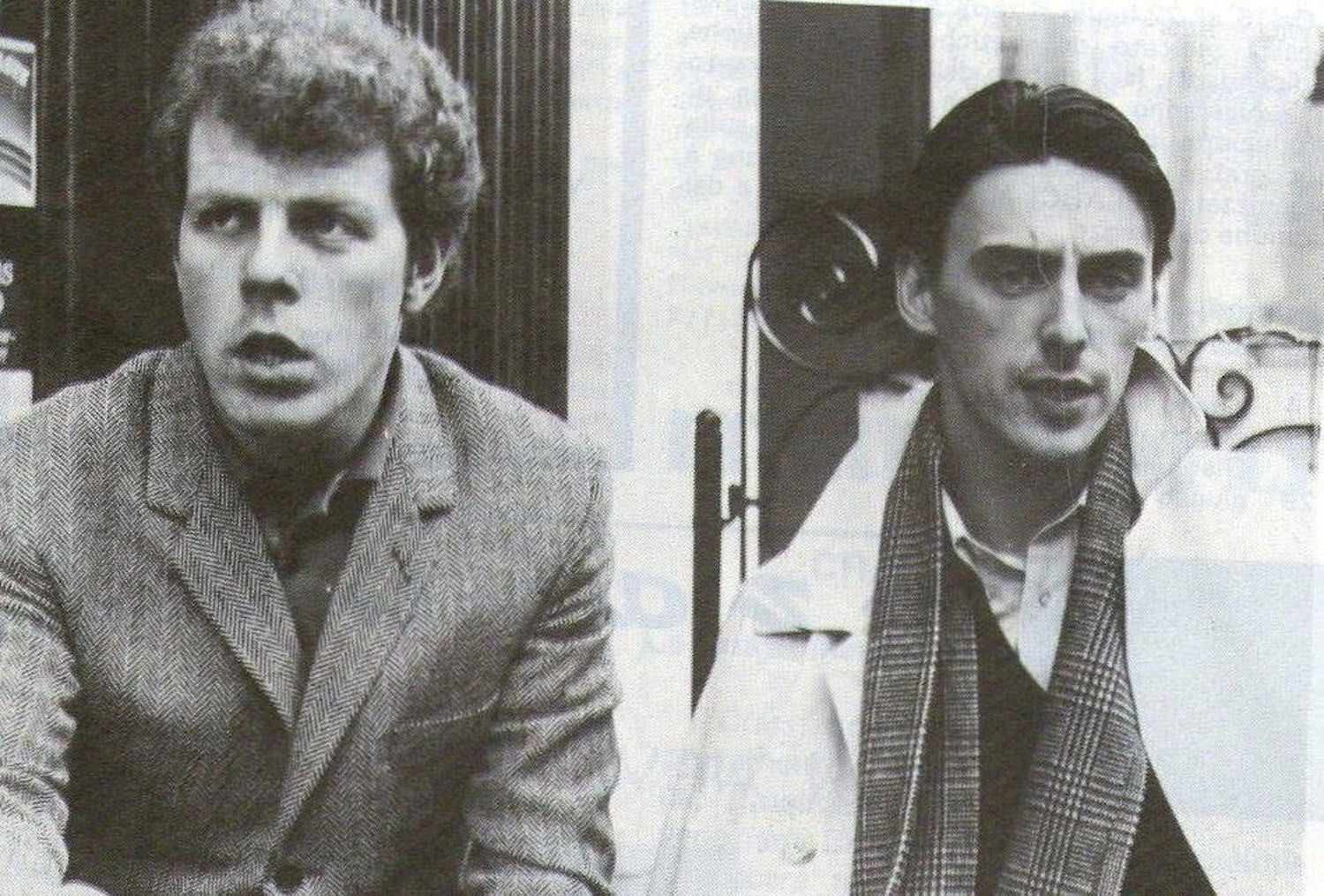
The Style Council was a two-man band, with terrific hired guns around them. Mick Talbot on keyboards, and Paul Weller on guitar. Talbot’s soul-jazz bona fides brought out the best in Weller which led to some of the most sophisticated songwriting of Weller’s storied career, but also some of the most sophisticated pop ever to appear on the Top 40.
They were much bigger in the UK than the US, where they never quite broke through. Hits like “My Ever Changing Moods” and “Long Hot Summer” were fantastic and somehow don’t sound dated 40 years onward. They were part of a small movement of “sophisti-pop” in England like Simply Red or Sade; unlike those contemporaries, they were really saying something over the groove.
Paul Weller came to The Style Council after abruptly leaving The Jam while they were on top of the British music world in 1982. The departure was shocking. Weller was immediately tired of the touring-recording treadmill, but also just as much, he seemed to feel that the punk energy of mods and a mod band would not age well.
Also, Weller was said to have been heavily influenced by reading Colin MacInnes’s 1959 mod novel Absolute Beginners – which prompted him to steer into a more sophisticated sound, where he needed a new band to do it.
Yes, The Jam could be political. But it had the more primal punk energy of the British mods. What The Style Council created in Our Favourite Shop is almost unimaginable in its detail and political observation coming from rebellious mod anger and disaffection.
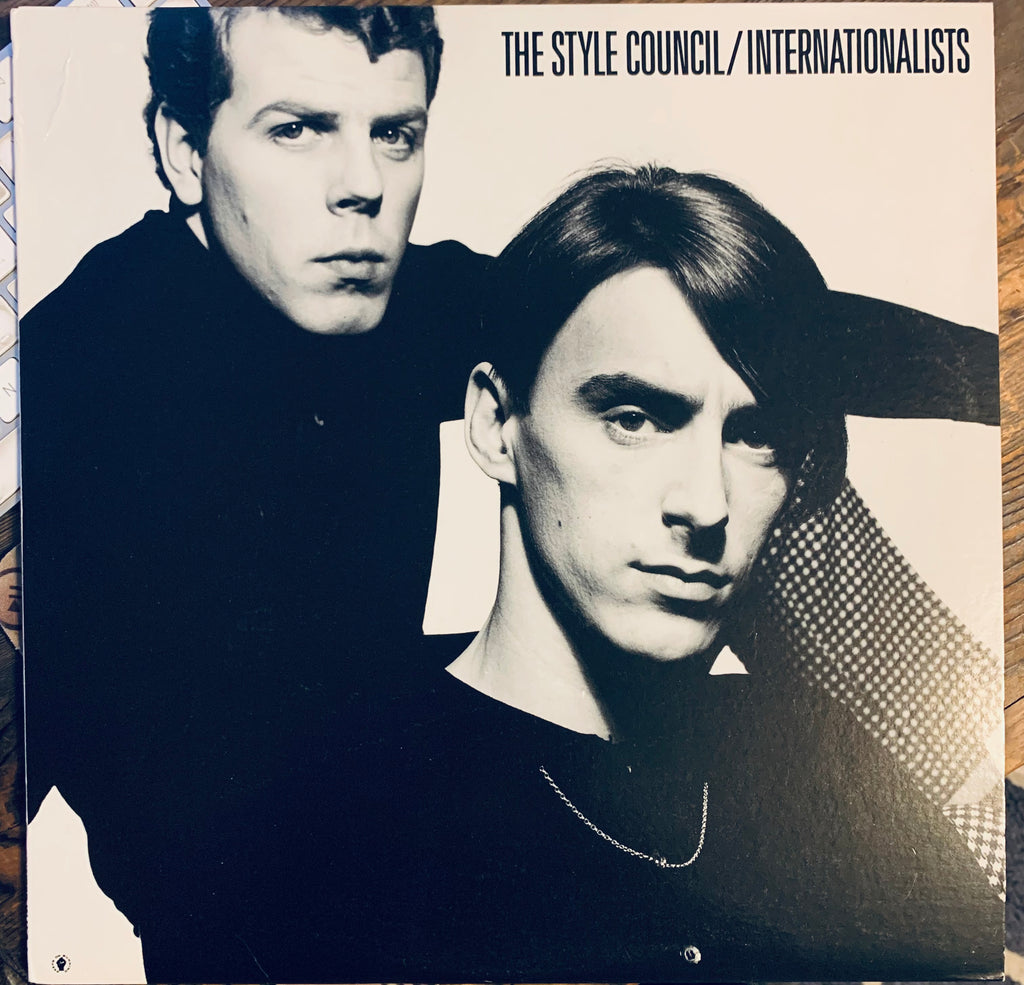
For those of you scoring at home, the album was released under a different title, Internationalists in the United States.
A Spoonful Of Sugar To Make The Medicine Go Down
This album isn’t just political music that’s well produced. Yes, it’s sophisticated and “jazzy” but more importantly, it’s playful, adventurous, and fun.
“Homebreakers,” “Internationalists,” and “Walls Come Tumbling Down” are all smart British soul with Stax and Motown influences. That style leverages this two-man band’s strength of Weller’s predilection for jazz guitar and Talbot’s fuzzy organ and rich piano chords with 6ths and 9ths.
Plenty of other songs from the album feature Latin lounge and light pop touches which stand out by ironically underscoring bleak economic outlooks with the shimmering sounds of happy, consumer-focused jingles. But that doesn’t do justice to these musical curios. “Down In The Seine,” “All Gone Away,” “With Everything To Lose” aren’t jokes; they’re toe-tappers with societal observations waiting there for anybody who wants to pay attention.
Even something seeming to be musical nostalgia like “Come To Milton Keynes” actually has all of the production flair and subtle hidden elements of a “Penny Lane” era Beatles track.
Let’s not pretend this is all a retro exercise. Drum programming of this caliber, like in “Boy Who Cried Wolf,” was brand new in 1985 and still doesn’t sound dated because it was all in service of an overall cool, jazzy, soul sound.
This great music isn’t a delivery system for their message. “The Lodgers” is great pop even if all of the words weren’t biting and instead were just syllables or noises.
The Scaffolding
Our Favourite Shop is not a concept album. Instead, it’s generally about what anybody in the early 1980s could see by just opening their eyes in Margaret Thatcher’s England: Dreadful unemployment, social upheaval, businesses closing, and a hard right attitude that anybody having trouble just needed to pull themselves up by their bootstraps.
That said, the first three songs are a master class in thematic album construction: “Homebreakers” shows a family in trouble in their community, “All Gone Away” ironically puts business closures and jobs disappearing from their community over a bossa nova beat, then “Come To Milton Keynes” torpedoes the marketing ads for new communities of the time by showing the reality instead of the vision of the ad copy.
From there, it builds further outward on the 4th track, “Internationalists” to make the case for a real movement. By the way, it’s one of the 4 songs The Style Council played at Live Aid. They went on at Wembley Stadium a little after Noon, the second act of the day.
For anybody caring to digest Our Favourite Shop as an album in full will not be disappointed by the journey that Weller and Talbot take you on.
Uggh, Margaret
The Style Council aren’t the first songwriters nor the last to take sharp aim at Margaret Thatcher and rising social tension and high unemployment in the United Kingdom at the time. Check out The Beat’s “Stand Down, Margaret” from 1980 for an iconic and great sounding take-down of Thatcher directly. Or Elvis Costello’s scathing “Tamp The Dirt Down” from 1989 all about dreaming of stomping on Thatcher’s grave, which is as bold as any political song ever recorded.
Americans had a similar social feel under the leadership of Ronald Reagan and the general culture in the U.S. at the time. U.S./Reagan policies were not friendly towards lower/middle class Americans but the attitude seemed to just omit the poor from the larger vision of the USA. But conservative politics in the UK, and Margaret Thatcher’s statements seemed to be more openly antagonistic towards those who were struggling.
It would be easy for punks, mods or any musicians to write songs basically amounting to “f*** you, Margaret Thatcher.” But that’s why I respect Our Favourite Shop so much; that it gets into real geopolitical ideas, specific economic policies, and their fallout for both towns and individuals.
“The Lodgers” is great pop and undercuts how derisively the upper class can view the working class. And it has a particularly specific message about housing insecurity.
The desperate protagonists of some of these songs (like “Homebreakers”) remind me of Michael Fagan, the struggling tradesman who broke into Buckingham Palace twice and had an odd, frank conversation with Queen Elizabeth as dramatized in a Season 4 episode of The Crown.
“With Everything To Lose” is a samba onslaught of the brutal political and economic realities of 80s England (and a song that gets its own socially relevant music video in the middle of the film adaptation of the aforementioned Absolute Beginners).
No choice or chance for the future / The rich enjoy less tax
Dress the girls in pretty pink / The shit goes to the blacks
A generation’s heart torn out / And covered up the facts
The only thing they’ll understand / Is a wall against their backs
The only hope now left for those / With everything to lose
In desperation empty eyes / Signed up and thrown away
There’s drugs replacing dignity / The short sharp shock repaid
There’ll be no money if you dare to question / Working the Tory way
The truth is up there carved in stone / Where 21 dead now lay
A family’s loss for a few pounds saved / With everything to lose
It’s one thing to see these lyrics on paper, but a whole other feeling when sung over beautiful Latin groove.
“Walls Come Tumbling Down” (the other one from the album which was played at Live Aid) is a great closer. The album has illustrated so many ills of policies, politics and attitudes, but this key song is where Paul Weller is trying to get the listeners off the couch. It’s as if the record is saying here’s what’s wrong, now what are you going to do about it?
The competition is a color TV
We’re on still pause with the video machine
Until the unity is threatened by
Those who have and who have not
Those who are with and those who are without
And dangle jobs like a donkey’s carrot
This isn’t some obscure look back at English politics in 1985; sadly, so much of this is still current. “Internationalists” makes the case for multi-national cooperation and rising tides lifting all boats 30 years before Brexit was ever a thing. “The Stand Up Comic Instructions” could have been recorded yesterday, belittling the pathetic bitching about cancel culture in the modern comedy world. “The Lodgers” is for anybody who recognizes affordable housing as a critical issue.
All of that could signal how prescient the album is. Or, more likely, how little things change or how history repeats itself.
A Fan of Great Promise
The groove on Our Favourite Shop is so lively and the songs sound so breezy that it’s absurd to accuse the record of being heavy-handed, which is how most political albums can sound.
Listening to some allegedly great political records normally feels like eating your vegetables. But The Style Council seemed to have pulled off the incredible feat of making a great album for listening and dancing – but also left a deep message for anybody who wants to stick around and listen deeper.
Weller and Talbot don’t really stop the songs and hang a light on them to tell you how important they are. They trust the fans. Or maybe Weller, post The Jam, did not care about popularity as much. Just sayin.
The album Our Favourite Shop with its U.K. title is a little more subtle, whereas the U.S. release name of Internationalists is a little more overtly political. So perhaps the band, or at least the record company, trusted the audience a little more in England.
Politics Didn’t Used To Be Less Political
I’m not here to make the old man case that political music used to be better. Stevie Wonder’s Songs In The Key Of Life and Marvin Gaye’s What’s Going On were both groundbreaking, reflective, and funky as anything – but we can think of them as more social statements than political.
For outright politics, perhaps Public Enemy and Rage Against The Machine were just as political as Our Favorite Shop, but their records were a little closer to that feeling of doing your homework. Listening to them wasn’t exactly virtue signaling but it had the feeling of a college freshman thinking they’d made a revolutionary discovery that music could be about something.
Billy Bragg was perhaps one of the Style Council’s few contemporaries that could go toe-to-toe with them when it came to socialist-leaning songwriting and folding actual policy discussions into their music. But Billy Bragg, just like Muse another 20 years later, could get pretty bombastic.
There is so much great overt political music from veteran artists like Neil Young, U2, Randy Newman and also brilliant recent politically-savvy songs like Drive-By Truckers’ “Babies In Cages,” Janelle Monáe’s “Turntables,” Gary Clark Jr’s “This Land” or Ben Folds’ “Mister Peepers” – but in most cases those were one-offs, not full albums.
I just can’t pretend that there isn’t another album out there: London Calling by The Clash. If there’s another album with a legitimate claim to the title of greatest political album ever made, it’s The Clash’s 1979 masterpiece. It’s politically charged, musically adventurous, and somehow manages to turn subjects ranging from unemployment and immigration to nuclear war and social unrest into songs you actually want to play over and over.
But that’s also where I think Our Favourite Shop has the edge. The Clash wanted you to know what they were pissed off about.
This Style Council album’s political content has held up well because it isn’t dependent on the listener agreeing with a particular angry slogan. Oh, they sounded pissed off, too. But OFS asks the listener to notice, think, dance, sing along, and figure some things out. They tried to make great songs and the sarcasm came naturally.
Meanwhile, as the record has aged it lives on as a document of how it felt to be alive, aware, and outraged in Thatcher’s England. Just because conservatism and consumerism seemed wrong to fans of this record didn’t mean they were angry young men ready to burn it all down.
Just like Our Favourite Shop ends with “Walls Come Tumbling Down” we all just listened to the diagnosis. Now, what are we gonna do about it.
— —
— — — —
Connect to The Style Council on
Facebook
Discover new music on Atwood Magazine
© courtesy of the artist
 © courtesy of the artist
Our Favourite Shop
an album by The Style Council