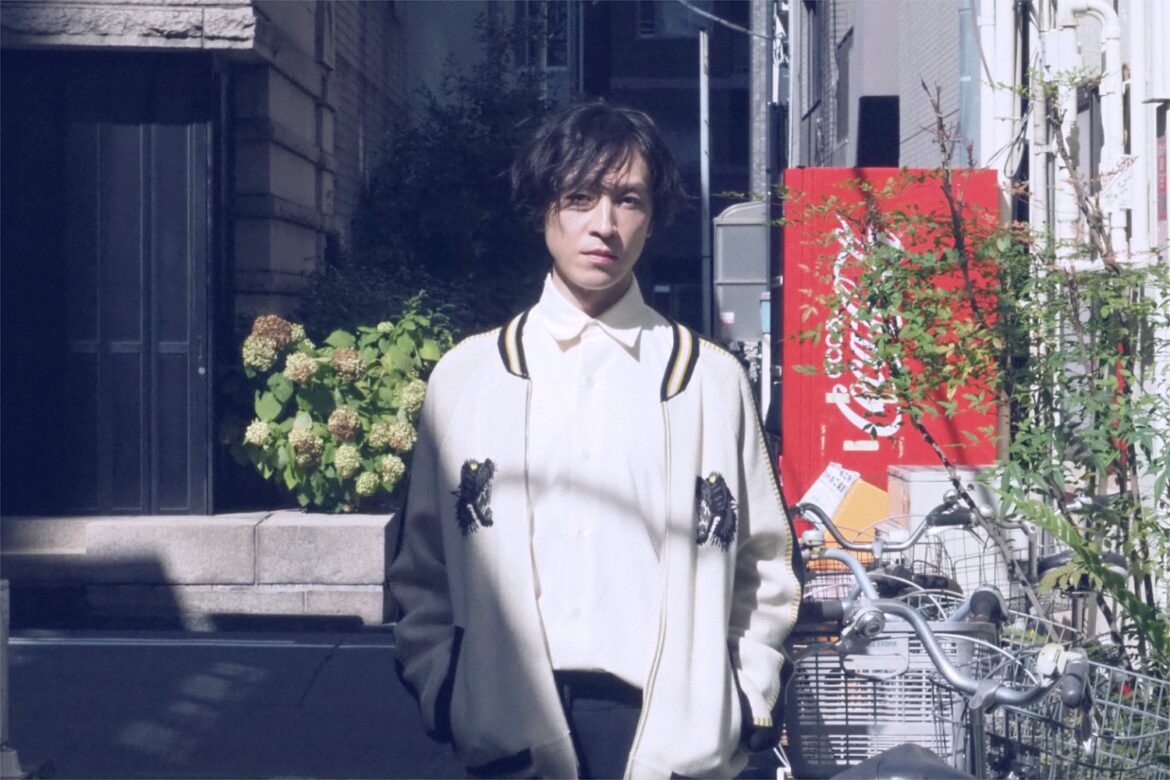
Tokyo-based singer/songwriter Masahiro Okamura contemplates mortality and the possibility of beginning again on “A Wonderful World of Death,” from his forthcoming debut album, ‘Foehn.’
“A Wonderful World of Death” – Masahiro Okamura
We spend much of our lives learning how to live, although very little prepares us for the knowledge that one day we will cease to exist.
Death remains one of the few experiences every human being shares, yet its permanence is almost impossible to comprehend. Perhaps that is why we have spent centuries writing songs about it, searching for some understanding of the inevitable through art.
Tokyo-based singer/songwriter and producer Masahiro Okamura approaches this ancient preoccupation with a disarming sensitivity on “A Wonderful World of Death,” a Japanese-language song from his forthcoming debut album, Foehn. Beneath its provocative title is a meditation on what it means to relinquish the familiar parts of ourselves and find the courage to continue living.
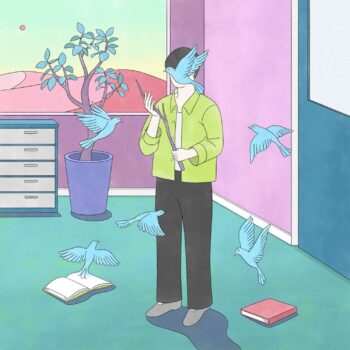
Now, I’ll just live on,
Holding deep within my heart
the bliss of final sleep
Yes, I will sing of dreams of rest
And sow my seeds in withered earth
Across the valleys
of overlapping thoughts,
As though each day
I welcomed a new death,
I will live on – From here
Now, I will welcome with an open heart
The joy of changing beyond recognition
Yes, I will part the grasses sharp as swords
And push my way on through
Beyond the mountains
of accumulated ideas,
Until a new sun floods the earth,
I’ll try to endure – From here
Atwood Magazine is pleased to premiere “A Wonderful World of Death,” a delicate piece of dreamy indie rock that explores the solace sometimes found in contemplating our own mortality.
For Okamura, the song began with an imagined character whose experiences of loss have left them feeling estranged from the world. They regard death with a certain romantic fascination, carrying the thought of eternal rest as they attempt to make their way through life.
Now, I’ll just live on,
Holding deep within my heart
the bliss of final sleep
There’s a peculiar sadness in those opening words. The protagonist has resigned themselves to continuing, although the prospect of death remains close to their thoughts. Their longing for rest seems to arise from an exhaustion that has settled somewhere deeper than the body.
“The theme is ‘rebirth’: letting go of old values and being reborn into new ways of thinking,” Okamura explains. “To express that rebirth, I used a protagonist who seeks peace in death as the lyrical motif.”
The distinction matters to him. Although the song inevitably contains something of his own experiences, its narrator is a fictional creation whose beliefs he doesn’t necessarily share.
“What’s important here is that the protagonist of this song isn’t an admirable person,” he says. “Embracing the change to new ideas might sound positive at first, but I think there’s also something precarious and irresponsible in it.”
Okamura imagines the character as someone whose grief has gradually loosened their attachment to reality. There’s an almost childlike willingness to accept whatever comes next, accompanied by a troubling indifference toward the consequences.
He finds beauty in that vulnerability.
The song is preceded by “@styx,” a brief instrumental named for the river that separates the living from the dead in Greek mythology. The reference introduces the idea of existing somewhere between two worlds, a fitting place for a character who seems uncertain about their attachment to either.
Brooklyn-based violinist Pete Lanctot contributes to both recordings. Okamura had already written the string arrangement when he contacted Lanctot, although he welcomed the musician’s suggestions. One of the phrases Lanctot recorded became the sustained, almost synthesizer-like sound heard at the beginning of “@styx,” after Okamura electronically altered the original performance.
That small addition became especially meaningful to him.
“The string part made the opening more mysterious, so I think it was really important,” he recalls.
The collaboration also helped persuade Okamura to introduce his music to listeners outside Japan. He had initially assumed that recording in Japanese would limit international interest, but encouragement from Lanctot and Brazilian guitarist Ramiro Pinheiro convinced him to reconsider.
“Since the song is in Japanese, I originally had no plans to send it to international media,” he explains. “But both of them really praised the songs I had asked them to play on, and the response from the other musicians was also really positive, so I thought I’d give it a try.”
The experience reflects a considerable change in how Okamura makes music.
Until recently, he had insisted on working exclusively with musicians he knew personally. During the creation of Foehn, he abandoned that rule and began approaching artists whose work interested him, regardless of where they lived.
Over approximately two years, the project grew into a nine-song album involving musicians and engineers from around the world. Okamura remained responsible for the compositions and production, allowing his collaborators to contribute their own interpretations to the arrangements.
The process introduced him to possibilities he might never have considered while working alone.
It also suited an artist who has spent much of his life feeling drawn toward places beyond his immediate surroundings.
As a child growing up in Japan, Okamura remembers having a persistent desire to “be somewhere other than here.”
Music interested him from an early age, although his circumstances at the time offered little freedom to explore his creative interests. It wasn’t until college, when he began traveling with friends, that he started to recognize how much he had been denying himself.
Watching his companions make music so freely encouraged him to pursue something he had wanted for years.
That decision came with an understanding that making music might never provide him with a comfortable living. He nevertheless felt compelled to continue, comparing the experience to the inexplicable determination of mountain climbers who risk their lives pursuing a summit.
“Just as people can live without climbing mountains, people can live without making songs,” he explains. “Being an office worker would give me a far more stable life.”
He understands that his dedication might appear impractical to someone who doesn’t experience the same creative compulsion. For him, however, songwriting has become inseparable from the way he understands his existence.
“That impulse is the engine, and things like becoming a star or being recognized are like the wheels,” he explains. “They’re necessary, but they alone can’t move you forward.”
That instinct also governs his relationship with lyrics.
“I don’t force ideas or messages into my songs,” he says. “I just write the words a song asks for, filtered through myself.”
It’s an interesting approach for someone whose music concerns such philosophical subjects. Okamura seems less interested in reaching conclusions than in following an idea wherever the composition happens to lead him.
With “A Wonderful World of Death,” that process brought him toward a subject humanity has struggled to reconcile with beauty for centuries.
“When I thought about expressing death as a theme, the first thing that came to mind was that when you actually face it, death is probably not beautiful at all,” he reflects. “It might be simpler than that, maybe even grotesque.”
He recognizes the peculiar human impulse to romanticize something that, in reality, can be frightening and physically unpleasant. Literature has long offered an imagined version of death that bears little resemblance to the experience itself. Music allows us to approach the same mystery through feeling.
Okamura’s protagonist inhabits that imagined world, finding an almost fantastical appeal in the prospect of disappearing.
Yet as the song progresses, the lyrics begin to suggest another interpretation.
Now, I will welcome with an open heart
The joy of changing beyond recognition
In the original Japanese, Okamura explains, these words have an ambiguity that the English translation struggles to preserve. They describe the physical transformation associated with death and decay, while also suggesting the abandonment of deeply held beliefs.
There’s something frightening about the idea of leaving everything familiar behind. We spend our lives growing attached to the people we become, and the thought of surrendering that existence can be difficult to comprehend. Yet imagining that an ending might also offer the possibility of beginning again provides an unlikely consolation.
Okamura recognizes that feeling in his own life.
As he has grown older, he has become more accepting of circumstances beyond his control. Loss has taught him that people sometimes disappear from our lives regardless of how desperately we wish they would stay.
He recalls a Japanese saying, originally borrowed from China: “Don’t chase those who leave, and don’t turn away those who come.”
There’s a certain resignation in that philosophy, although Okamura doesn’t consider himself particularly courageous for accepting change. He admits that resisting the world can simply become exhausting.
“Simply put, fighting against the world feels exhausting, and honestly, I think it’s the resignation that loss has brought me that makes me this way,” he explains.
Still, the song’s final words suggest that something within its troubled protagonist remains unwilling to give up.
Beyond the mountains of accumulated ideas,
Until a new sun floods the earth,
I’ll try to endure – From here
The promise is tentative. The protagonist doesn’t claim to have discovered a reason for living, and the future remains uncertain. All they can offer is an attempt to endure.
Perhaps that uncertainty makes the sentiment more affecting. There are periods in life when imagining a better future feels impossible, and continuing through another day becomes an accomplishment in itself.
For Okamura, the appearance of the sun carries particular significance.
He has long associated his artistic identity with the image of dawn, especially the moment when the darkness begins to recede and the first suggestion of daylight appears.
“Coming out of a dark night, a violet sky, a mix of purple and yellow, faintly appears,” he explains. “To me, it suggests a kind of salvation after getting through painful times, the feeling of ‘finally, I can rest.’”
That image helps explain the curious tenderness of “A Wonderful World of Death.” Although the song concerns a character who romanticizes dying, its conclusion imagines the possibility of another morning.
Okamura sees a similar progression in Foehn.
The album takes its name from a weather phenomenon in which moist air crosses a mountain range, losing its moisture before descending as a warm, dry wind. He discovered the word while searching for a title that suited the impressions the finished songs had left on him.
As he considered their order, he noticed that the album seemed to follow a comparable journey. The opening compositions suggested humidity and approaching rain, while the later songs gradually became brighter.
The title also appealed to him because of the international nature of the recording. The image of wind traveling across distant places reminded him of the musicians who had contributed to the project from different parts of the world.
Okamura is reluctant to impose an elaborate philosophical meaning on that coincidence. He simply liked the word and felt that it belonged to the music.
There’s something endearing about that explanation, particularly from an artist whose lyrics invite such extensive contemplation. Sometimes an image appeals to us long before we understand why.
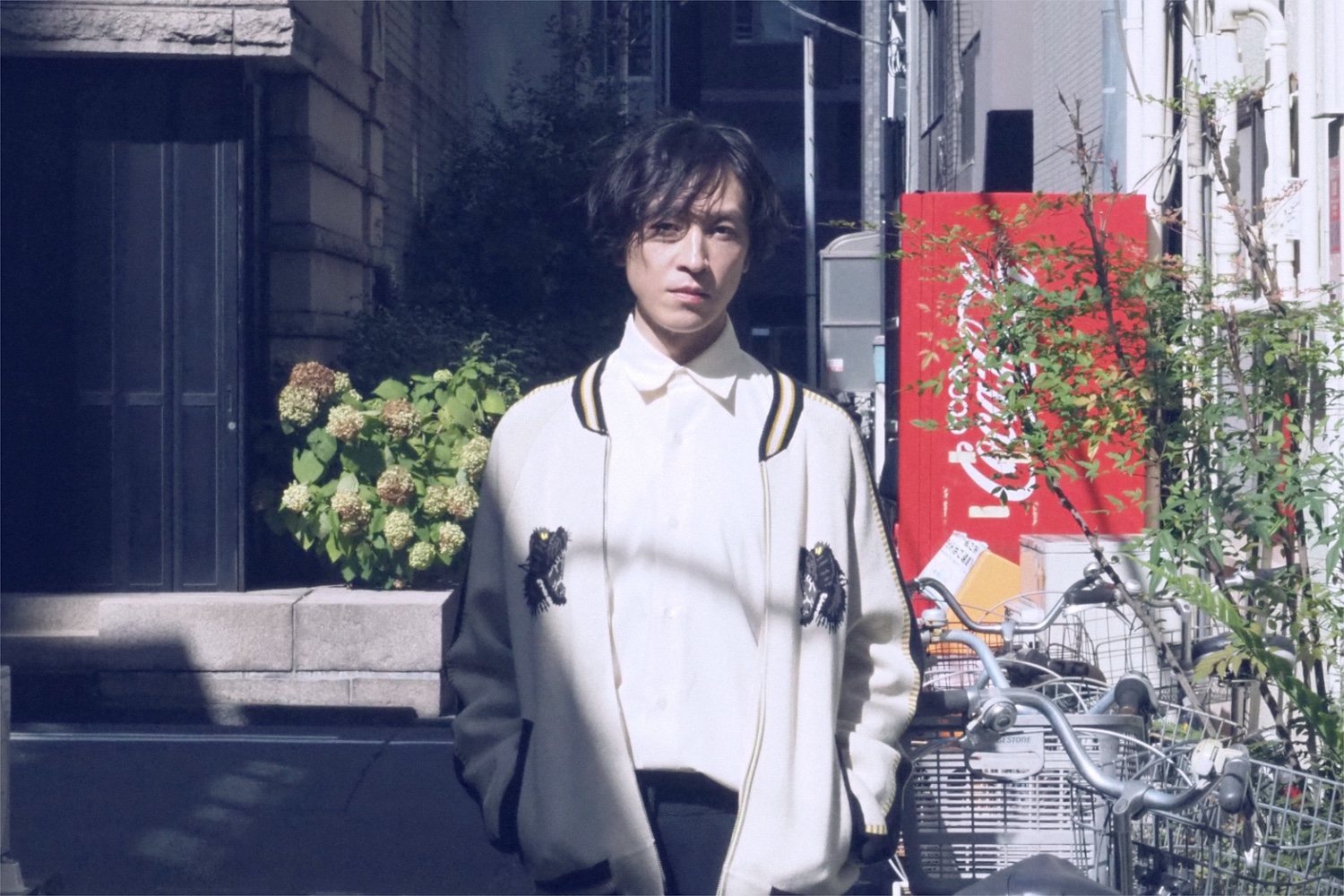
Throughout “A Wonderful World of Death,” Okamura allows his protagonist to entertain uncomfortable thoughts about mortality.
He offers no easy resolution to their suffering, although the closing image of sunlight suggests the possibility of rebirth.
He doesn’t expect listeners to agree with the character’s philosophy. In fact, he hopes they’ll resist the temptation to treat the song as a statement of his personal beliefs.
What matters to him is whether they find something beautiful in it.
“Maybe the true theme of this song is ‘beauty,’” he suggests.
It’s a modest conclusion for a song with such an imposing title. Yet there is something profoundly moving about a person who can imagine the comfort of death and still find themselves reaching toward another day.
Stream “A Wonderful World of Death” exclusively on Atwood Magazine, and read our full interview with Masahiro Okamura below as he opens up about finding beauty in mortality, the creative impulse that drives his songwriting, and the international collaborations that brought his debut album, Foehn, to life.
Masahiro Okamura’s debut album, Foehn, will be self-released October 28, 2026, with digital distribution by FRIENDSHIP. (Tokyo).
— —
:: pre-save Foehn here ::
:: connect with Masahiro Okamura here ::
— —
“A Wonderful World of Death” – Masahiro Okamura
A CONVERSATION WITH MASAHIRO OKAMURA
Atwood Magazine: For people discovering your music for the first time through this premiere, what would you like them to know about yourself and your music?
Masahiro Okamura: Right off the bat, I have to say this was the hardest question in the whole interview, haha.
When I was asked what I want people to know about me and my music, honestly, nothing came to mind right away. For me, the desire to create something truly great is much stronger than the desire to be known.
Of course, it would probably be better if I put more effort into letting people get to know me. But in my case, my focus on refining my craft is far stronger, and I tend to neglect everything else. That’s my weakness.
So if I had to squeeze out an answer to this question, it would be: “I make music because I want to write good songs.” And I feel truly honored that, as a result, Atwood Magazine has chosen to feature my work.
What was your childhood like growing up in Japan, and when did your relationship with music begin? Was there a particular artist or experience that made you want to start creating your own music?
Okamura: Ever since I was a child, I’ve always had this feeling of wanting to go “somewhere other than here.” I think I actually wanted to make music from an early age, too. But I tend to hold myself back, so I hardly ever acted on those feelings. And I didn’t really have the freedom to pursue music back then, either.
The turning point came in college. That longing to go “somewhere other than here” overlapped with the drifting, in-between time of student life, and I set off traveling with some friends. As we traveled through many countries, I realized how fortunate my own country is. And seeing the people I traveled with making music so freely and honestly, I suddenly felt how ridiculous it was to keep holding myself back. That’s when my desire to make the music I’d always wanted to make grew stronger, and I started making music seriously.
There are many artists who’ve influenced me, but if I had to name one thing, it would be “Fly Me to the Moon” by Bart Howard, which I heard as a child. I remember thinking, what a beautiful song. Even though it was my first time hearing it, it made me feel as if I’d known it for a long time. Of the tens of thousands of songs I’ve listened to since, this is truly the only one that has ever made me feel that way, and it’s deeply connected to my creative imagination.
I think it’s a timeless masterpiece.
Your debut album, Foehn, took roughly two years to complete. Can you tell me about the experiences that inspired the record and what you were going through personally when you began writing it?
Okamura: The inspiration, in a word, is “life.”
People often say that everything a writer is can be found in their first work, and I think that’s absolutely true. The first song I ever wrote was about loss and loneliness, and the songs I’ve written since have all leaned that way.
People make music or write literature partly because they want to become stars. But at the root, I think there’s an impulse, a feeling that you have no choice but to make music.
Take mountain climbers, for example. They risk their lives to climb mountains, and many have actually died doing it. I used to not understand why anyone would do that. But when I watched Le Sommet des Dieux (The Summit of the Gods), a French animated film based on a Japanese novel, I realized they feel the same way I do.
Just as people can live without climbing mountains, people can live without making songs. Being an office worker would give me a far more stable life. And yet, even if it means stepping outside of society and becoming an outsider, even if it means being poor, there’s an impulse that leaves you no choice. From the outside, it might look reckless, or like escapism, just as I once saw mountain climbing as nothing more than something dangerous. Of course, it’s not that I never have doubts, but that’s not the essence of it.
That impulse is the engine, and things like becoming a star or being recognized are like the wheels. They’re necessary, but they alone can’t move you forward.
I’ve drifted off topic a bit, but what I mean is that there wasn’t a specific event two years ago, like a breakup or a disaster. In a much broader sense, everything I’ve lived through, and all my accumulated experience as an artist, became the inspiration for this album. So the “two years” really just refers to the time since my previous EP, Blind. You could say this creative process actually began long before that.
The album brings together musicians and engineers from around the world, with much of the collaboration happening online. How did you connect with these artists, and was there a particular collaboration that changed the way you originally imagined a song?
Okamura: It started when I decided to let go of a rule I’d set for myself. Until then, I’d had this unspoken rule that the people I worked with on music had to be people I’d actually met and talked to in person. But this time, I decided to drop that restriction. And I thought, if I’m going to work with people I’ve never met anyway, why not reach out to musicians overseas? So I started searching online.
The first was “Days.” I sent a DM to Jason Meekins, an Austin-based drummer, and he gladly agreed to play. What came back was far better than I’d imagined. I was amazed that anyone could lay down such a great groove. After that, there was no stopping me, haha. In the US, the UK, Germany, Romania, Brazil, and Spain, I kept finding players and engineers I felt were right and asking them to join.
We met online, but every one of them was truly committed. Their individuality and skill were wonderful, and I feel that every song was reborn through them.
They were all so great that I want to write about every one of them, but if I focus only on collaborations that changed how I imagined a song, the most memorable was “A Persistência da Chuva (The Persistence of the Rain) feat. Ramiro Pinheiro.” At first, I’d made a pretty rough demo of it as a bossa nova-style pop song. A steel-string acoustic guitar felt a little too loud for it, and I didn’t own a nylon-string guitar. So I wanted someone from Brazil, the home of bossa nova, to play it, and I reached out to Ramiro. He really loved the song, and he was the one who suggested being featured on it.
The intro Ramiro played was truly beautiful, and it made me realize that this was exactly what the song needed. Without that intro, I think it would have been a much clumsier song.
German drummer Felix Ohngemach’s playing was also incredibly original. I went back and forth a lot on who to ask for drums, but looking at his Instagram, I had a feeling he was a really original player. I asked him, and sure enough, the result was amazing. As soon as his first take came back, I thought, “That’s it!” Usually, if the first take clicks, all that’s left is fine-tuning, so I knew we’d nailed it. Without his drumming, “Sweet Insanity” would have lost half its charm. That’s why, in the mix, I pulled the vocals down quite a bit and let the drums take center stage.
Another fun exchange, though it didn’t drastically change the arrangement, was with Florin Barbu from Romania. For the bass on “Days,” I’d already fully written out the lines myself. Because it’s such a simple song, I felt it was important to have someone play it with a great sound, and I loved the tone of his bass, so I asked him. The final result turned out really well. But beyond that, we ended up talking about music a lot, and somewhere along the way, we decided to give his bass a name. So now his bass is called “Tsumugi,” a Japanese word for twisting several threads together into a single thread, haha.
Everyone else was so incredible that I can’t write about them all, but their contributions were essential to this album.
The title Foehn refers to a weather phenomenon in which moist air crosses a mountain range and becomes a warm, dry wind. What drew you to that imagery, and how does it relate to the experiences of loss and personal change explored throughout the album?
Okamura: I came up with the title when the album was almost finished.
I’d previously released two EPs, anise and Blind, and for both, I chose one-word titles that were simple but still captured the whole work. This time, too, I was looking for that kind of single word.
First, when I pictured the focus track, “A Wonderful World of Death,” an image came to mind of wind rippling across a pale green meadow. Holding onto that image, I turned my attention to the fact that musicians from all over the world had taken part in the album. Then the scene of wind sweeping across the wide world and embracing everything felt somehow moving.
And for some reason, the letter “F” kept coming to mind. While I was searching for a word starting with F that evoked the wind, I found “Foehn.” It comes from the German “Föhn,” and I liked that it doesn’t sound very English, which gives it a multinational feel.
And by coincidence, when I put the songs in order, the album begins with tracks like “@styx” and “A Wonderful World of Death,” which carry a sense of humidity and wind. From there, it passes through darker sounds like “The Conical Sea,” then gradually brightens with “Days” and “Lost My Alpha.” That flow felt just like the foehn itself: moist air hitting a mountain, dropping rain as it crosses the ridge, and becoming a warm, dry wind.
So the title isn’t philosophically tied to loss or personal change. Honestly, it’s more that I was led to it by the impressions the songs carried, my experience creating with musicians from different countries, and the image the track order brought to mind.
Your new single, “A Wonderful World of Death,” explores the idea of finding peace in death. What inspired you to approach death from this perspective, and has your own understanding of mortality changed as you've gotten older?
Okamura: First, it might be easier to understand if I lay out the central theme of this song.
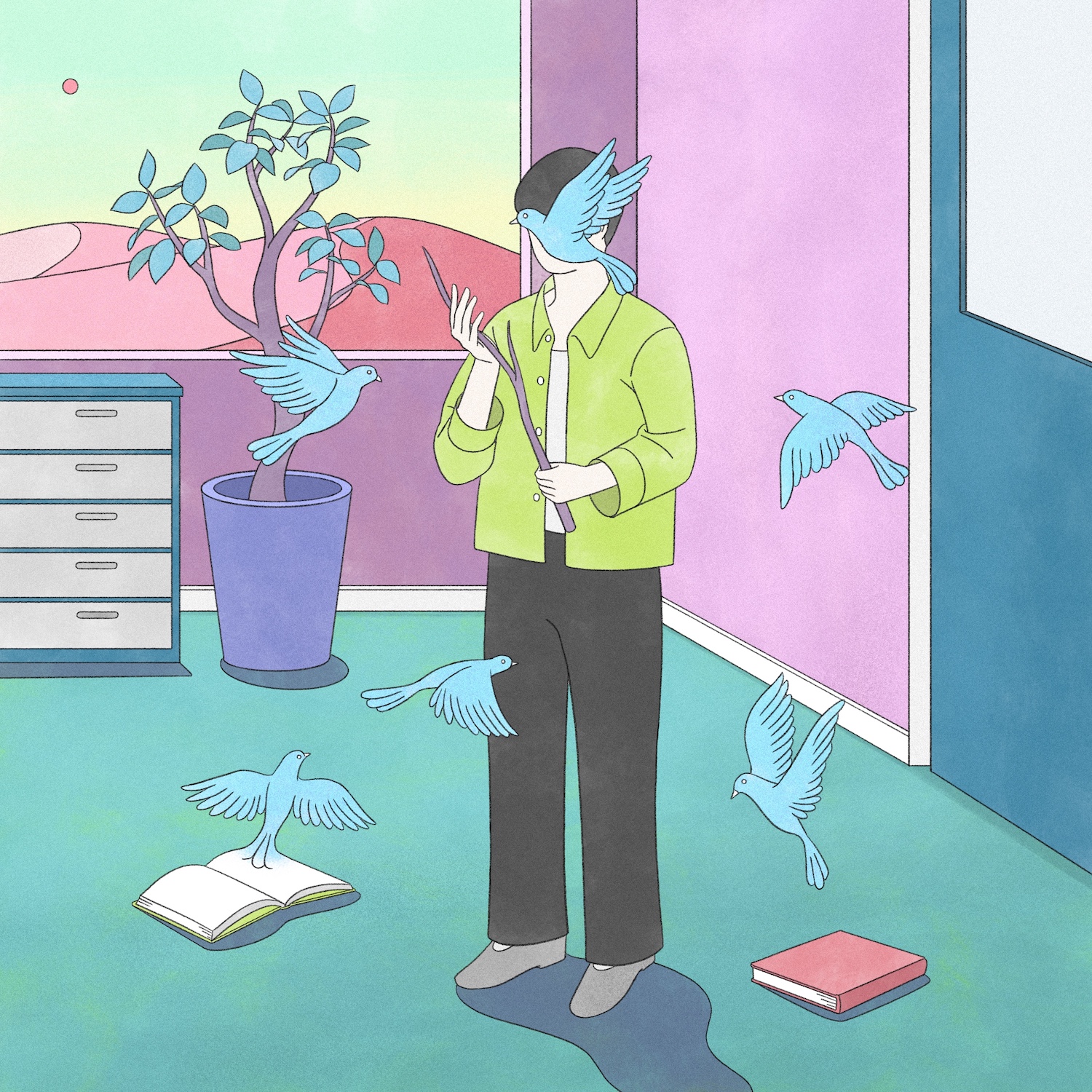
The theme is “rebirth”: letting go of old values and being reborn into new ways of thinking. To express that rebirth, I used a protagonist who seeks peace in death as the lyrical motif.
So it’s not simply a pessimistic view of finding peace in death. It also carries the sense of being reborn from there.
That said, honestly, I didn’t decide to portray death from this perspective. It’s more that the song itself wanted this theme. Basically, I don’t force ideas or messages into my songs. I just write the words a song asks for, filtered through myself. Otherwise, the sound of the words or their meaning somehow stops fitting together. With this song too, I didn’t write what I wanted to say. I wrote the words that naturally flowed out of it.
Since everything passes through me as a filter, my own perspective and what I want to say inevitably come through in the end. But forcing in what you want to say and letting it emerge naturally are slightly different things.
With that in mind, speaking from my own perspective, I think it’s okay to see death in a positive light, as something that can save us from the many kinds of suffering people experience, like emotional loss, poverty, and illness. No matter how negatively society views death, in the end, everyone has their own way of thinking about it.
On the other hand, some things have changed as I’ve gotten older. Death isn’t only something subjective, a release from one’s own suffering. I’ve come to understand that it has a strong impact on others too. It means leaving scars on the hearts of people who care about me, and causing trouble for the people I work with. So unlike when I thought of death as something personal, I now see it as something more social.
There's a beautiful line in the song about holding the bliss of final sleep deep within your heart. What does that image mean to you personally, and what were you hoping to express through it?
Okamura: This overlaps with my answer to question 6, but this line shows that the protagonist holds the idea of seeking peace in death. The line that follows, “sow my seeds in withered earth,” is a metaphor for letting that idea bloom, in other words, for a new way of thinking beginning to sprout. It’s there to portray who the protagonist is.
When I thought about expressing death as a theme, the first thing that came to mind was that when you actually face it, death is probably not beautiful at all. It might be simpler than that, maybe even grotesque. And yet, throughout history, people have dealt with death in music, painting, and literature, and tried to sublimate it into beauty.
So I think what I wanted to express here was the beauty of death and a kind of fantastical longing for it, just as so many artists before me have done.
Later in the song, you sing about welcoming the joy of changing beyond recognition. I found that particularly interesting because change can be frightening, especially when it involves losing something or someone important. What experiences inspired those lyrics, and how do you personally approach the uncertainty that comes with change?
Okamura: Thank you, I’m really glad to hear your thoughts too, Lily.
This part does describe dying and decaying, but in Japanese, it’s a bit more ambiguous. I layered in another meaning too: not being afraid to let go of old values and change into new ways of thinking.
What’s important here is that the protagonist of this song isn’t an admirable person. Embracing the change to new ideas might sound positive at first, but I think there’s also something precarious and irresponsible in it.
Through the protagonist’s somewhat free-spirited nature, along with the floating quality of the sound and the meaning of the pre-intro “@styx” (the river between the world of the living and the underworld in Greek mythology), I portray the protagonist as someone who carries loss and is detached from reality. There’s a fragility in them, as if something inside their heart is missing. But I think that very fragility is also what makes the song beautiful.
So if you hear this song as my own words, it might come across as a bit extreme. It might be better to listen to it as a song sung by a protagonist who carries a certain fragility. That said, the protagonist isn’t someone completely removed from me. Like Truman Capote did in his work, I often portray characters who are ungrounded, escapist, and fragile as a kind of fantasy. There’s no doubt that comes from my own sense of loss.
As for how I face the uncertainty that comes with change, of course I don’t accept everything 100%. But at my core, there’s a strong sense of resignation. I won’t accept things I shouldn’t accept, but if the people and the world around me change and I have no choice but to change too, I tend not to force myself to resist. Everyone dies someday, and even if you want to cherish traditions and culture, they keep changing too. Music has changed so much in the past 100 years, after all. So it’s not because I’m somehow mentally strong. Simply put, fighting against the world feels exhausting, and honestly, I think it’s the resignation that loss has brought me that makes me this way.
By the way, there’s a saying in Japan that originally came from China: “Saru mono wa owazu, kuru mono wa kobamazu.” Don’t chase those who leave, and don’t turn away those who come.
Brooklyn-based violinist Pete Lanctot contributes to “A Wonderful World of Death.” How did that collaboration come about, and what did his violin playing bring to the song that you felt was important?
Okamura: String arrangements are always something I struggle with. But this song was simple, so the arrangement came together quickly, and basically, all that was left was to have someone play it the way I’d arranged it. In that situation, what matters most is the beauty of the sound itself and the extra ideas the player brings.
So I was looking for someone who excelled both as a player and as an arranger, found Pete, and reached out. He got really excited about the song and was eager to do it.
The take he sent back was truly wonderful. In a few places, he added phrases he came up with himself, and I’m really glad he did. Especially the bright, long, sustained pad-synth-like sound at the beginning of the pre-intro “@styx.” That’s actually a string phrase Pete gave me, which I processed into a synth-like sound on my end. That string part made the opening more mysterious, so I think it was really important.
Actually, Pete and Ramiro were the reason I decided to submit to Atwood Magazine. Since the song is in Japanese, I originally had no plans to send it to international media. But both of them really praised the songs I had asked them to play on, and the response from the other musicians was also really positive, so I thought I’d give it a try. I’m truly moved to have it featured like this.
The song ends with the promise to endure until a new sun floods the earth. Despite its title and subject matter, I hear a sense of hope in those final words. Was that something you consciously wanted listeners to take away from the song, and what do you hope they feel after hearing it?
Okamura: Thank you. I think you understand it really deeply.
About the sense of hope you felt, there are two perspectives.
The first is my image and personality as an artist. If I had to sum it up in one word, it would be “dawn.” Coming out of a dark night, a violet sky, a mix of purple and yellow, faintly appears. To me, it suggests a kind of salvation after getting through painful times, the feeling of “finally, I can rest.” Seeking a peace that isn’t here now but will come someday. That quality is at my core, and maybe from the outside, it looks like hope. Also, in front of people, I’m actually quite sociable and cheerful. I can never become completely dark, so even when I deal with negative themes, my songs often end up with a glimmer of hope.
The second is the motif I depict. As I mentioned earlier, at the center of this song is “rebirth,” being reborn from old values into new ways of thinking. “Sow my seeds in withered earth” at the beginning represents a small, personal idea, the kind you could hold in the palm of your hand. In contrast, “until a new sun floods the earth” represents a larger idea that shines down on all of society, and the way it spreads.
The image is of the seed of my own small philosophy blooming as it receives the sun, a larger philosophy that lights up all of society. Since this flow is depicted through the motif of the protagonist sowing seeds and the sun pouring down onto the earth, I think you’re absolutely right that it leaves a positive impression and gives listeners a sense of hope. And this, too, connects to the image of the artist I hold in my heart: dawn.
Finally, as for how I hope people feel after listening, I don’t want to tell anyone that “seeking peace in death is right” or that “values should be reborn.” Not at all. As I said earlier, people tend to try to sublimate death into art. So I’d be happy if people simply found this song beautiful, as one of those works of art.
Thinking about it that way, maybe the true theme of this song is “beauty.”
— —
:: pre-save Foehn here ::
:: connect with Masahiro Okamura here ::
— —
“A Wonderful World of Death” – Masahiro Okamura
— — — —
Connect to Masahiro Okamura on
𝕏, Instagram
Discover new music on Atwood Magazine
 © YAC
art © Takaya Katsuragawa
 © YAC
art © Takaya Katsuragawa
:: Stream Masahiro Okamura ::