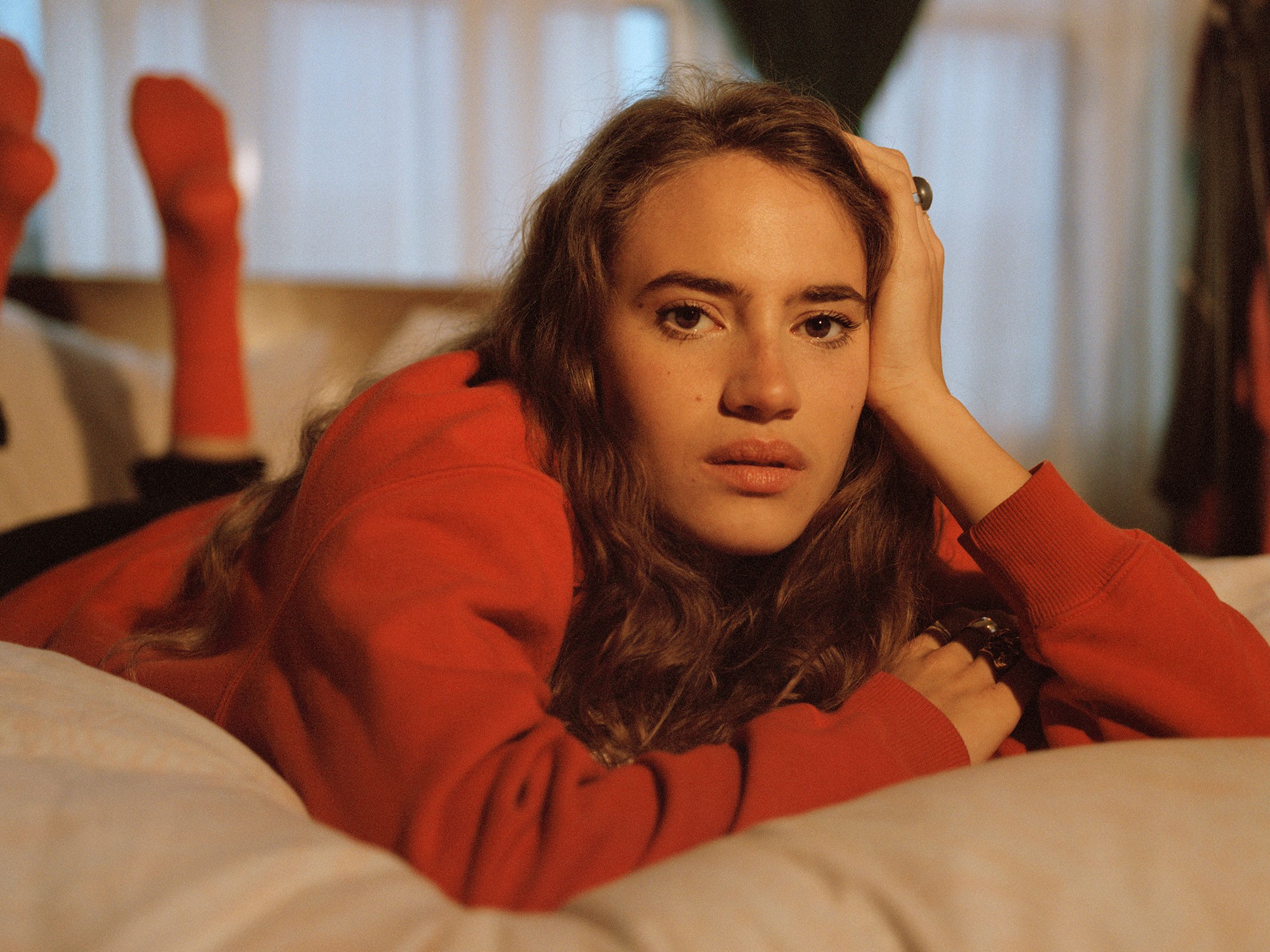
Written and produced entirely on her own, ‘Triple Shooting Star’ finds Annika Bennett learning how to sit with her feelings as they are – following instinct, trusting restraint, and discovering what it means to finally sound like herself.
Stream: ‘Triple Shooting Star’ – Annika Bennett
In the past, the songwriting felt like me, but the recordings didn’t always. Producing this myself was my way of finally sounding like myself.
– Annika Bennett
* * *
People move through life without ever being taught how to truly process their feelings.
Instead, they judge themselves, push emotions aside, or struggle to open up to the people closest to them. That isn’t a personal failure, it’s simply something many of us were never shown how to do.
This is where great art steps in. Whether through music, film, or other forms of expression, artists take on the brave work of making themselves deeply vulnerable. By understanding themselves as honestly as possible and sharing that process with the world, they help others feel a little less alone.
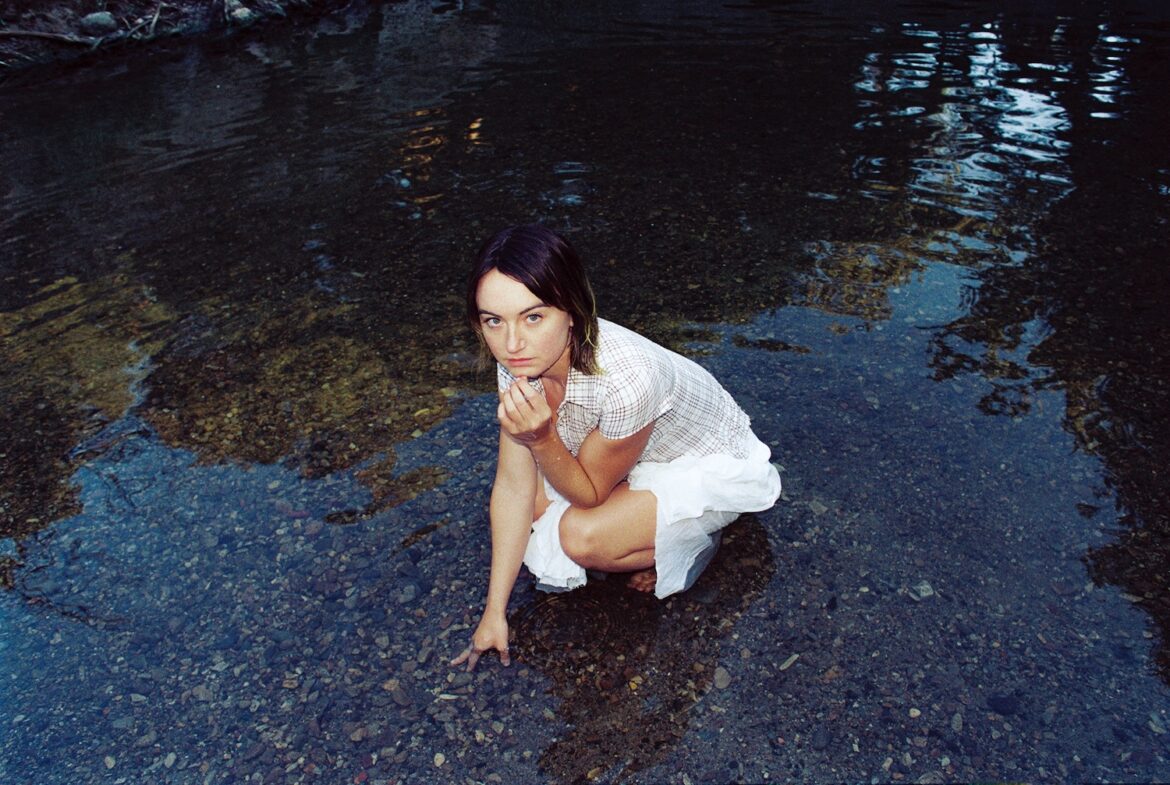
Annika Bennett is one of those artists. “I think that’s part of why I love songs so much,” she says. “Ultimately, there aren’t any bad feelings, we just don’t always accept them. Writing songs is the moment where I see myself most clearly. It’s where I stop to witness my feelings and try to understand them enough to make a song out of them, instead of trying to fix them or push them away.”
Her second studio album, Triple Shooting Star, written and produced entirely by Bennett, moves through warm, melodic soundscapes while exploring self-witnessing without judgment, the healing power of deep friendships, and the importance of following your instincts.
We caught up with her to talk about the record and the emotional world behind it.
— —
:: stream/purchase Triple Shooting Star here ::
:: connect with Annika Bennett here ::
— —
A CONVERSATION WITH ANNIKA BENNETT

Atwood Magazine: I think the last time we spoke was last year, probably around this time when Live From Mother Earth came out.
Annika Bennett: Yeah, I know. I didn’t even realize we were planning out the release for next year and stuff, and we were like, well, I guess another fall release. I guess I’ll just do it three years in a row.
Well, I obviously love this album so much. I think it's so good, and it's so cool that you produced all of it too. Was this your first time fully doing that on your own?
Annika Bennett: I released an EP called Room Demos three years ago, maybe two and a half years ago, and that I also fully produced on my own, but it very much, I gave it the disclaimer of demos, but also they felt like demos to me. This is the first time that I’ve fully produced a project.
Obviously these do not feel like demos. I didn’t learn that you produced it as well after I listened. It was very cool to learn! I want to dive into the producing and also the songwriting, which is so unbelievably good.
Annika Bennett: Oh my God, thanks. Yeah, I’m really proud of it. In the past, the songwriting felt like me, but the recordings didn’t always. Producing this myself was my way of finally sounding like myself. When I do it myself, I’m not second-guessing anything. I’m just following instinct. Right now, the “hack” for making the songs feel like me is just doing everything myself.
I love that. These songs feel so pure and when you talk about it like that it makes perfect sense. Okay, so I want to talk about some of them starting with “Big House on a Mountain.” I love this song. It feels like a natural extension to the closer from Live From Mother Earth – “Oregon.”
Annika Bennett: I hadn’t even thought about that, but I million percent know what you mean.
Yeah! I thought it was a cool progression. Tell me about writing this one.
Annika Bennett: Well, I started writing it in January, and it was during the fires in LA, and I just remember everyone was feeling a million things at once. I mean, I guess I can’t speak for everyone. I was feeling a million things at once, and I think it just was such a disorienting time. Do you know Olivia Barton?
Yeah, I saw her open for Lizzy McAlpine. She was fantastic!
Annika Bennett: Yeah, she’s one of my best friends, and we make a lot of music together, but I remember her saying something about how when you don’t know what to write, you should just look around at what’s around you and just start there – on that really surface level. And so I just started looking around and just writing in the most dumb way ever. I’m literally sad for this, this, and this. And then I think the rest of the song just kind of unfolded from there.
It's very Joni Mitchell in a way. That's the feeling I get when I listen to it. Ok, “F**k Up” is my favorite one right now. I love the piano riff that melts you the whole way through. I love the songwriting in the first verse. I want to hear about both of those things and how the whole song came together.
Annika Bennett: Thanks. Every one of these songs I wrote chronologically. I wrote the first line first and then the second line, and then I found the chorus when I got there.
I haven’t always written that way, and there’s no worse or better way to write, obviously. But I think that there’s a certain kind of feeling that I get when I’m writing a song and I’m discovering it as I’m writing it, versus coming up with one section and then kind of mapping the other.
I feel like for all these songs, I was just following it. And so for that song, I was in Nashville earlier this year. My friend Carrie has a studio, and I think she was out of town and just letting me use the studio for a night. So I was just playing her piano and made a little drum loop. It was very similar to “Big House in a Mountain” where I’m just not knowing what to write. I decided to start with exactly where I was, which was literally, “It’s hard to think straight when the drums are playing.” Then I stopped it, and then I was like, “Okay, but I hate the sound when it stops.” I think I just was very instinctually just trying to be exactly where I was in the moment and then seeing what thoughts followed.
That's so cool. I love that. That's awesome. So, did you do a lot of the songs in Nashville?
Annika Bennett: Those two “Big House on a Mountain” and “F**k Up” were the only ones written there. The tracklist for the album is actually pretty close to the chronological order in which I wrote the songs. Those were January and February. I wrote “A Cure” in March, and the rest came throughout the year, mostly in LA.
That’s really cool. I’d imagine writing them all this year and then getting to play and release them in the same year must feel really satisfying.
Annika Bennett: Yes, for sure. I did some shows with Leith Ross and doing those shows while I was putting that EP out is the best thing I could possibly do.
When you’re only interacting with music online, it can feel kind of void of meaning. Even if you’re getting messages, it’s still this weird thing where you don’t want to be on your phone all the time, but you also don’t want to feel like no one’s listening. You don’t want to see a number, but you want to feel a connection.
I think that in my dream world, it would be like I make a bunch of songs, I go play the songs, and then I put the songs out, and then I move on.
That's how it should be. Okay. So “A Cure,” has been out the longest - I love this one. The production is so warm and full, but also really restrained in a way that feels intentional. I also love the “Band-Aid to cure” line. It’s such a gut-punch singer/songwriter line. The witches line is also one of my favorites. Tell me about this one.
Annika Bennett: Thank you! With the production, I didn’t play to a click. I just played the song, and then I added some guitars after some extra little electric guitars and bass and harmonies. But I really wanted to keep it feeling a little bit desolate. I tried adding way more things, but for some reason, whenever I’d add things, it just felt like it was taking away from the feeling. And maybe because the lyric is so songwriter, I’m like, if I dress it up too much, it’s going to feel, it’s going to get away from me a little bit, versus just keeping the production really humble. I don’t know if that makes sense.
It makes perfect sense. I think the reason I love the production so much is because it feels really full, even though there's not that much in it, but you can feel it.
Annika Bennett: Totally. And for the songwriting. I wrote this super late at night. I had just gone through a breakup and I was talking with one of my best friends about it, and she had just gone through a breakup too, and I remember we were just talking about feeling like there has to be some greater purpose to really feeling our feelings versus numbing out. And the witches line is about my friends. I have this one really core group of friends, and we call ourselves the Witches, or actually a different friend coined that term for us.
That's exactly where my mind went. I was like, oh, this is girls talking shit. That's why I love it.
Annika Bennett: Yeah exactly. We would get together sometimes on a full moon and..it’s not even about the witchy shit. It’s more about just, I have all of these women specifically in my life who are so in their feelings and on their healing shit. We’re tapped into some really deep things, and I feel like when we all hang out, it’s spiritual.
Absolutely. I think a lot of girls have that where our friends are our soulmates in a way. They can get to you on a level that others can’t. I think that's wonderful, honestly.
Annika Bennett: Yeah. No, totally. Not to quote the song in any way, but I do think it’s a big cure for me for a lot of things, is not just hanging out with friends, but hanging out with friends where it gets that deep, where you’re healing each other.
For sure. Ok - so, “I Used To Want.” I love this song. I read your caption on it where you said it was a “lightning in a bottle song.” Tell me about that.
Annika Bennett: Yes. And dude, that f**ks me sometimes because there’s so many days where I have song ideas multiple times a day, and most of the time I don’t sit down and write them. With that song particularly, I remember thinking about not writing it. I was tired, and I was like, no, I’m just going to write it. And then I’m like, f**k. All the times that I haven’t just written the song because I’m feeling lazy. But…
You got to believe that that happens for a reason though. But yeah, I mean, this song, I think most girls have gone through this, so I think it's just such a special song and it feels important. How does it feel like having it out?
Annika Bennett: Honestly, I wrote it and I was obviously feeling it, but I was like, this is kind of whatever. But then I put it online, and a lot of people really liked it. I don’t think I fully appreciated it until after. It was the last song that I added to the EP. The rest of the songs I wrote mostly in the spring and then recorded them in the summer. I wrote in maybe July. I just added it to the EP late. And there’s something really nice about it.
I think that it is the one that I’m the most still in, if that makes sense. I think it still feels pretty ambitious for me what the song is saying. Not that it’s not true, but it’s just fresh. It’s a song where I’m like, yeah, I do feel this way, but ambitiously, if that makes sense.
No, it totally makes sense. And that's, again, back to capturing that moment in time. It's a fleeting moment that you probably really firmly felt at that time, and now you're kind of like, do I?
Annika Bennett: And I think that part of what at least makes it a song that I like is that it’s not just saying, “La, la, la, everything’s great.” I think that I did have this feeling when I was writing it, just the fact that the song is like, “I used to want this more than this,” and it is really acknowledging the darkness, but in a way that’s not staying in the darkness.
I think that when I was writing it I was really stopping and thinking a lot about what are all of these little trade-offs that I’m making all the time. So I guess that’s what I mean when I say it’s ambitious. It’s not even me fully. I’m not fully in the after. I feel very much somewhere in between, but I think I just feel really aware of the trade-offs.
It's such a complicated thing, but it's so relevant to so many people. I don't think it has to be something that you're sure of. It's just nice to have a song that kind of exists in that moment.
Annika Bennett: Yeah. Thanks.
I want to talk about “Remembering.” The first time I listened to it, it just kind of took me back to every breakup I've ever had.
Annika Bennett: Yeah. I think that it’s another one that I just wrote really chronologically of just describing this pain that I had with my ex. It’s so straightforward that I almost don’t know what to say to explain it. It made me sob when I was writing it, but I think that’s part of why I love songs so much. Ultimately, there aren’t any bad feelings, we just don’t always accept them. Writing songs is the moment where I see myself most clearly. It’s where I stop to witness my feelings and try to understand them enough to make a song out of them, instead of trying to fix them or push them away. It was so healing to just be like, I don’t have to try to pick one or the other. I don’t have to hate them or miss them or whatever. I think that it’s just the most healing thing ever to witness myself.
Totally. It's so clear that you're just trying to get down to how you actually feel, and that's why these songs connect so much. You're making yourself as vulnerable as you can and these amazing, honest songs come out of it.
Annika Bennett: It’s really interesting, though. I think that writing songs has always been that for me, but I think that as time goes on, I just realize how important it is completely separately from songs to just try to witness ourselves and not judge ourselves and not change how we’re feeling. There’s so much pain in resisting feeling something, and I think that actually just feeling really sad or really whatever, can actually feel almost good in a way.
It's liberating. Do you ever not know how you feel about something until it comes out in your songwriting process?
Annika Bennett: Every time I’ve written a song that I really love, I cry. I think I feel so seen by myself that it makes me cry, and that’s so cheesy, but I don’t even know if it’s that I’m surprising myself or I’m not surprising myself. I think it’s just that I’m really seeing myself. I think that the same way when someone else really sees, at least for me, if I really feel seen by anyone, I just start crying.
It's so rare. It's so rare to have that with anyone, let alone yourself.
Annika Bennett: I love songs for so many reasons. I really love writing, but at least for songs like this, and in the past year that I’ve had, I just am so grateful to have a way to show up for myself.
Before we go, are you touring this project more?
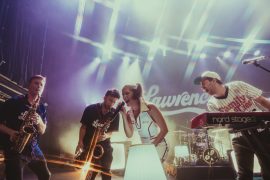
Annika Bennett: Yeah. I’m putting out a vinyl in the spring and I’ll probably do a handful of shows around that. Maybe some more chill, acoustic things, like in record shops.
I’m also doing some dates opening for Madison Cunningham, and then I have a bunch of songs I’m working on for next year. I’m starting to formulate another project, and I’m really excited about it.
That’s so exciting. I’ll definitely try to catch one of those shows. Thanks so much for talking through these songs with me.
Annika Bennett: Thank you. It’s so good to hang again.
— —
:: stream/purchase Triple Shooting Star here ::
:: connect with Annika Bennett here ::
— —
— — — —
Connect to Annika Bennett on
Facebook, 𝕏, TikTok, Instagram
Discover new music on Atwood Magazine
© Caity Krone
 © Caity Krone
Triple Shooting Star
an album by Annika Bennett