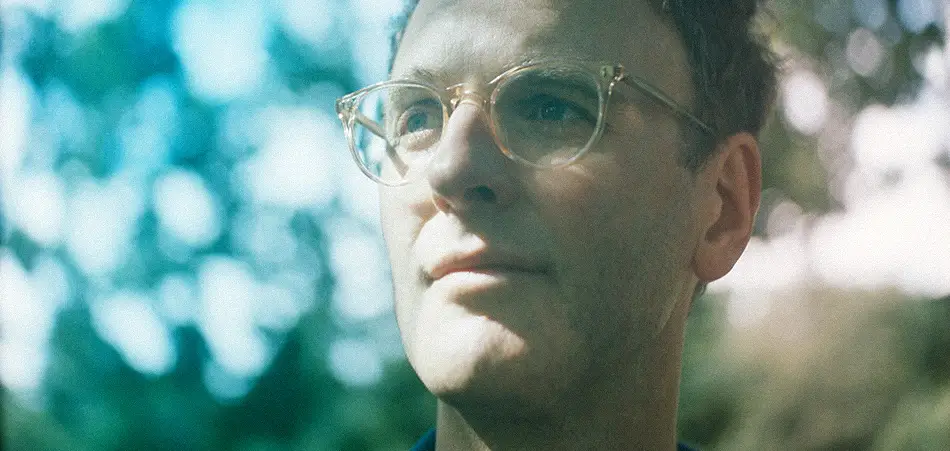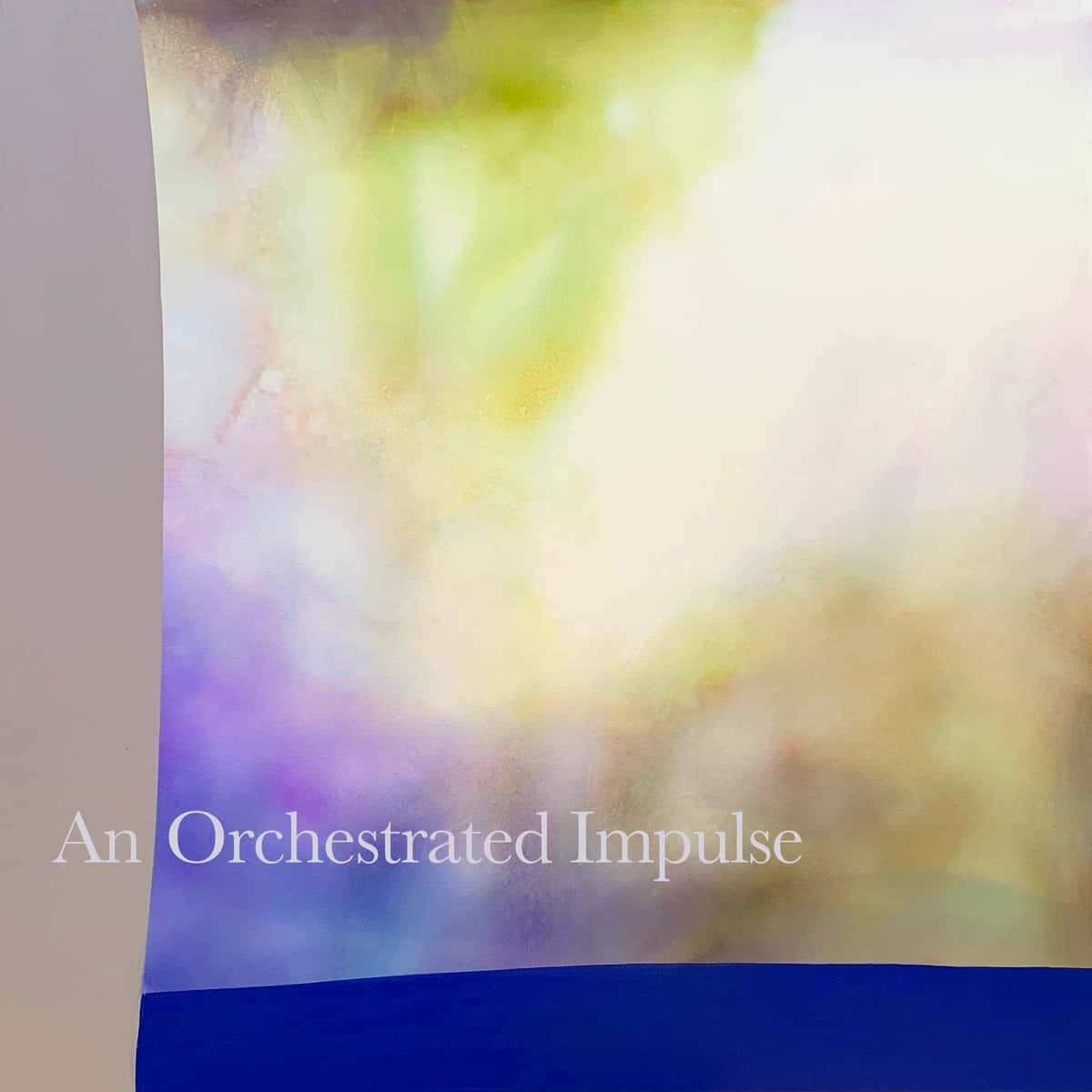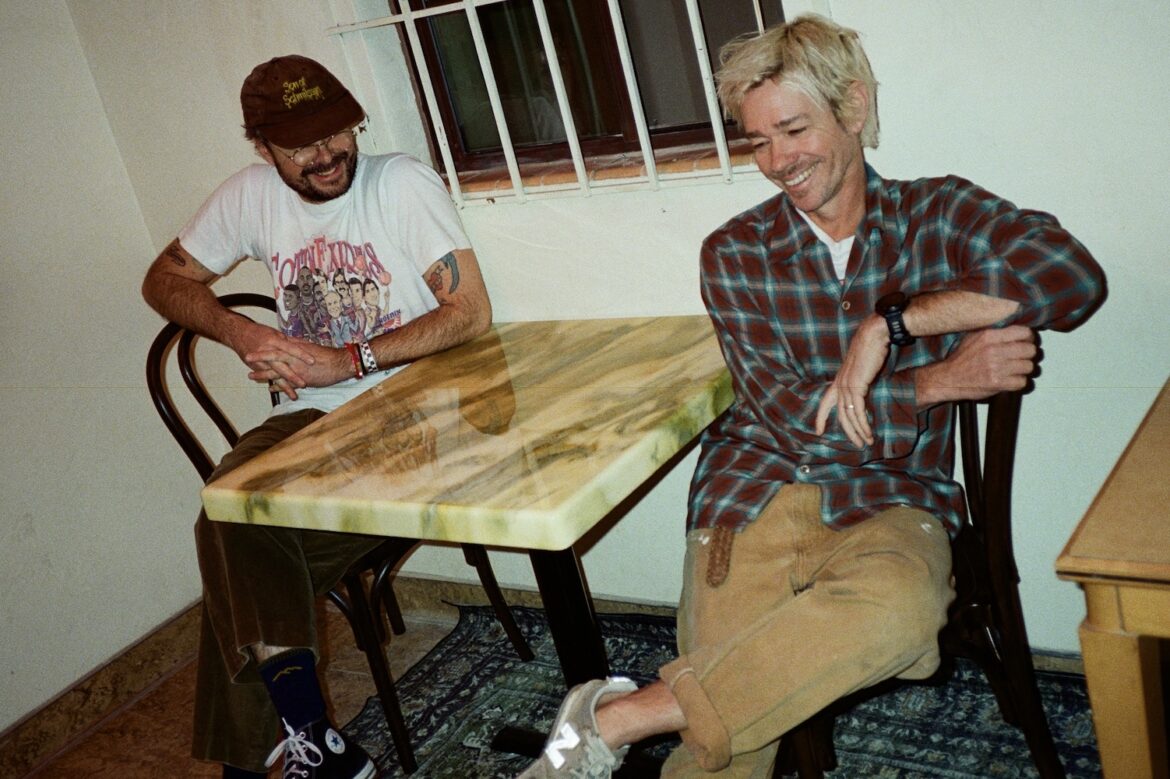
The Format’s Nate Ruess and Sam Means sit down with Atwood Magazine to discuss their band’s long-awaited return, the unlikely reunion that brought them back together nearly two decades later, and the deeper questions about society, responsibility, and living fully in the present that shape their new album, ‘Boycott Heaven.’
Stream: ‘Boycott Heaven’ – The Format
What does it mean to boycott heaven?
Not to reject faith, exactly, nor to sneer at hope, but to refuse the seductive lie that meaning lives somewhere else – beyond this life, beyond this moment, beyond our responsibility to one another right now. On their third studio album Boycott Heaven, The Format wrestle with belief as both comfort and burden, asking what we cling to when the old promises stop making sense and what remains when the reward at the end no longer feels like enough.
The result is not a nostalgic return, but a real-time reckoning – a restless, searching third chapter that finds Nate Ruess and Sam Means confronting the world, and themselves, with a clarity that only time can bring. Boycott Heaven refuses easy redemption, turning existential doubt, moral urgency, and the messy contradictions of adulthood and our present day into some of the most fearless songs of The Format’s career.
Released January 23rd via The Vanity Label, Boycott Heaven is a record about belief – belief in this life, in one another, and in the unique, enduring creative bond between two friends who still have something to say. Formed in Phoenix in the early 2000s, The Format quickly became one of indie pop’s most beloved cult bands, marrying theatrical ambition with disarmingly human songwriting. Their 2003 debut Interventions + Lullabies introduced Ruess’ soaring voice and the pair’s knack for turning existential uncertainty into irresistible melody, while 2006’s Dog Problems pushed their sound into lush, orchestral territory – a bold, maximalist statement that would later be hailed as one of the era’s most underrated indie records. And then, just as quickly as they had risen, The Format disappeared.
Nearly twenty years have passed since The Format last released an album together. In the time between Dog Problems and Boycott Heaven, Nate Ruess became one of the most recognizable voices in pop through his work with fun. and as a solo artist, while Sam Means built a life of his own in Phoenix – continuing to perform and founding the wildly successful Hello Merch. But the strange gravitational pull of The Format never really disappeared; it simply waited.
What began quietly – Ruess teaching himself guitar, writing songs in his basement, sending demos to his longtime friend – soon snowballed into something unmistakable. “It just was two friends making music,” Means recalls. Halfway through the process, the realization arrived almost accidentally: This wasn’t a side project or an experiment. It was The Format again.
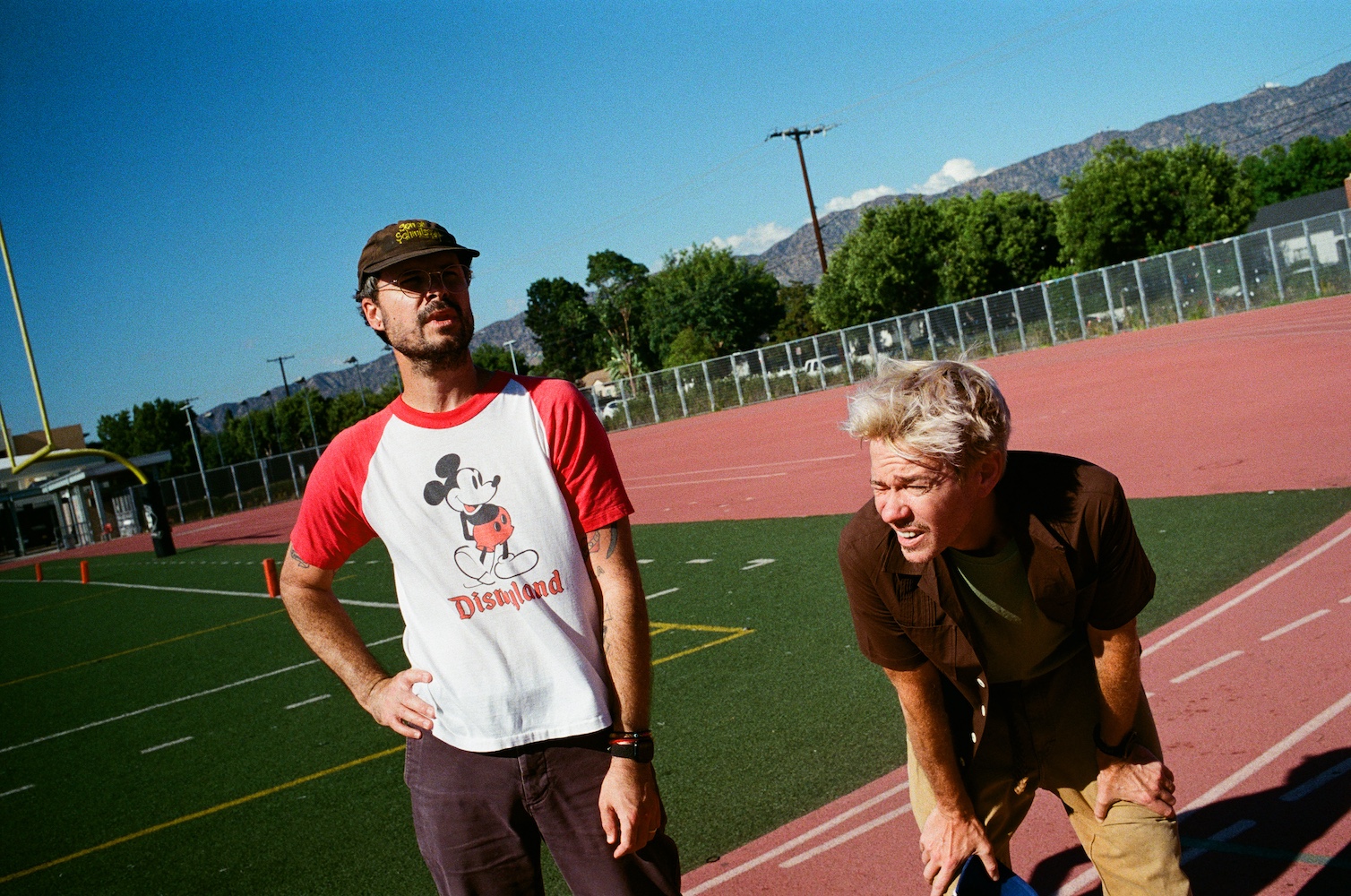
And yet, Boycott Heaven doesn’t sound like a band trying to relive its past.
Recorded largely as a four-piece rock record and produced by Brendan O’Brien (Pearl Jam, Bruce Springsteen, The Killers), the album trades the ornate maximalism of Dog Problems for something leaner, louder, and more immediate – a guitar-driven collection of songs that wrestle openly with faith, fatherhood, politics, responsibility, and the uneasy paradoxes of simply being alive right now. Across eleven tracks, Ruess’ lyrics confront the moral fog of the modern world with startling honesty, whether reckoning with personal doubt, the fragile promises of success, or the human cost of conflict and indifference.
For Ruess, the album’s central idea is deceptively simple: Focusing on the life in front of us rather than the promises waiting somewhere beyond it. “I think, though I’m never sure, I’m saying there’s more to do in this life – mainly more good to be done in this world – so try to focus on now as opposed to where you are maybe headed next,” he tells Atwood Magazine. It’s a philosophy that runs through Boycott Heaven’s sharpest moments, transforming existential anxiety into something urgent, compassionate, and defiantly alive.
That perspective arrives immediately in the album’s opening moments. “Two days is dangerous, two days beside your soul / One night is just enough, one night to lose control,” Ruess sings at the start of “There’s No Gold at the Top,” before delivering the album’s blunt thesis statement: “There’s no gold at the top, only vultures waiting for you to die.” It’s a startling way to begin a record – less invitation than confrontation – dismantling the myth of success and salvation that hangs over so much of modern life. Musically, the track mirrors that emotional jolt, opening in a hazy, psychedelic drift before exploding into one of the album’s most thunderous choruses. The effect is both disorienting and exhilarating, setting the philosophical and sonic stakes for everything that follows.
And just like that, The Format are back.
I can feel you in my blood
I wanna hold your hand
One night is just enough
So let go and let’s begin
I like what comes with the climb
I’m a product of my parents
in that I only collect what is mine
I’ve been handed nothing
but the sense to know
just when to go and it’s time
There’s no gold at the top
only vultures waiting for you to die
And I’m Alright
Just had another bad night
If “There’s No Gold at the Top” establishes the album’s worldview, the swaggering lead single “Holy Roller” delivers its most electrifying rock statement.
Built around a towering guitar riff and one of Ruess’ most infectious melodies in years, the song – released as Boycott Heaven’s lead single in October ’25 – captures The Format at their most theatrical and immediate. The track began as one of the earliest demos Ruess shared with Means, a melody-driven idea that quickly evolved into a full-bodied rock anthem in the studio. “Long story short – I just wanted to rock,” Ruess says with a laugh.
For Means, the song’s appeal was obvious from the start. “It’s one of those songs where it was just done,” he explains. “Nate brought it to me and I was like, ‘This thing’s pretty good, man.’ I didn’t think it needed a lot.” What began life as a gentle pop ballad eventually morphed into something much bigger – a stadium-ready rocker whose deceptively simple structure hides a melodic hook that’s “so unbelievably catchy,” Means adds. The transformation captures the band’s creative chemistry at its best: Ruess’ melodic instincts colliding with Means’ instinct for scale, producing a song that feels both spontaneous and unmistakably classic Format.
At the center of the album sits its towering title track, “Boycott Heaven,” a shape-shifting epic that captures the record’s emotional and philosophical core. Moving through dramatic shifts in tone and tempo, the song unfolds like a slow-burning argument with itself before resolving in a communal chant that feels almost spiritual in its ambiguity. For Means, the title itself carries a deliberately open-ended meaning. “It encapsulated a lot of the things that I was feeling,” he explains. “Heaven can be a lot of things… a literal place, a reward, whatever. But it makes you think – what are we doing this for?” That question echoes through the song’s defiant refrain – “holding on to something, letting go of nothing” – a mantra that perfectly captures the album’s restless search for belief in an uncertain world.
The phrase itself arrived almost by accident. Ruess recalls first seeing the words when a hashtag meant to read “Boycott Heineken” flashed across his screen – only he misread it as “Boycott Heaven.” The slip stuck with him immediately. “I thought, ‘That’s a cool term,’” he says. What began as a momentary misreading soon evolved into the philosophical backbone of the record, a phrase elastic enough to hold contradiction, doubt, and hope all at once.
For Means, the title resonates because it captures the chaos and confusion of the present moment.
The phrase surfaced early in the writing process and immediately felt right – not as a literal rejection of faith, but as a way of interrogating the systems of belief people use to justify their actions. In a world where people often trample one another in pursuit of some promised reward, the title becomes less about rejecting heaven than confronting the logic that suffering now will somehow be worth it later. “There’s some crazy shit going on in this country and in the world everywhere,” Means says. “So if anything, the title just makes you stop and think about what we’re doing all this for.”
The weight of that question lands hardest on the devastating “Leave It Alone (Till the Morning),” one of the album’s most emotionally raw and morally searching songs. Written in the shadow of global conflict and the weight of fatherhood, the track finds Ruess confronting the helplessness of watching suffering unfold from afar while trying to make sense of what responsibility looks like in a fractured world. At its most heartbreaking moment, he sings of children in Gaza with nowhere left to go – a line delivered not as commentary, but as a father grappling with the unbearable reality of raising children in a world where such suffering exists at all. The chorus ultimately retreats into a quieter, more uneasy admission: “It’s probably best we just leave it alone till the morning,” a line that captures the uncomfortable space between recognizing injustice and not knowing what to do next.
For Ruess, the song wasn’t written to offer answers so much as to process that overwhelming sense of moral weight. “You’re just sitting there thinking about the world your kids are going to inherit,” he says. The result is a moment of startling vulnerability on Boycott Heaven – a song that refuses distance or abstraction, choosing instead to stare directly at the human cost of the chaos the album keeps circling back to.
Moments like “Leave It Alone (Till the Morning)” reveal the deeper emotional terrain Boycott Heaven inhabits. Rather than offering tidy conclusions, the album lives in the tension between conviction and uncertainty, responsibility and helplessness, belief and doubt. Across its eleven tracks, Ruess and Means rarely pretend to have answers. Instead, the songs circle the same questions from different angles – about faith, about family, about the fragile moral compass required to navigate a world that rarely makes sense. The result is a record that feels both urgent and deeply human: Not a sermon or a manifesto, but a collection of songs searching for what it means to live with clarity, compassion, and purpose right now.
That perspective is inseparable from the simple fact of time. Nearly two decades have passed since Dog Problems, and the distance shows not only in the subjects the band tackles, but in the clarity with which they approach them. “We’re older now. We’ve lived a lot more life since the last record,” Means says. That lived experience runs through Boycott Heaven in subtle but unmistakable ways – in the weight the lyrics carry, in the restraint of the arrangements, and in the sense that these songs are less about chasing grand statements than about trying, honestly, to understand the moment they were written in.
And yet the most striking thing about Boycott Heaven may simply be that it exists at all. After nearly twenty years apart, Ruess and Means could easily have let The Format remain a beloved artifact of the mid-2000s indie scene. Instead, they returned not out of nostalgia, but because the creative spark that first brought them together never quite faded. Listening to these songs, it becomes clear that the bond between them – equal parts friendship, curiosity, and musical instinct – still has something vital to say.
Maybe now, more so than ever.
Which brings us back to the question we began with: What does it mean to boycott heaven?
For Ruess and Means, it isn’t about rejecting belief so much as redirecting it. If the phrase sounds rebellious at first, the album slowly reveals its deeper intent: A refusal to wait for meaning somewhere else. Instead, The Format turn their attention to the world in front of them – its beauty, its chaos, its fracture, its responsibility – and the imperfect, necessary work of living within it. If there’s no gold waiting at the top, as these songs suggest, then perhaps the point was never the reward at all.
And perhaps that’s the quiet miracle of Boycott Heaven: That after all these years, The Format still sound like two friends searching for something true together. The answers remain elusive, as they always have, but the act of asking the questions – honestly, openly, and in song – feels more meaningful than ever.
To explore the ideas behind Boycott Heaven more deeply, Atwood Magazine recently sat down with Sam Means and Nate Ruess to talk about the unlikely return of The Format, the meaning behind the album’s title, and the musings that shaped these new songs – from faith and fatherhood to the burden of paying attention to the world we’re living in now.
In our conversation below, the two longtime collaborators reflect on the winding path that reunited them, the stories behind Boycott Heaven’s most powerful moments, and what it means, after all these years, to finally bring The Format back to life.
— —
:: stream/purchase Boycott Heaven here ::
:: connect with The Format here ::
— —
A CONVERSATION WITH THE FORMAT

Atwood Magazine: Boycott Heaven is The Format's third studio album and your first in nearly two decades. How are you feeling about its release?
Nate Ruess: A whole bunch of things. Nervous just cause it’s always nerve racking when you put yourself out there, no matter what. But mostly just excited. It’s been a year since we hit record, so I’ve had a lot of time to sit with it and think “I can’t wait till people hear it.”
Sam Means: I’m feeling great. It’s crazy that crept up on us real quick, because we started recording this thing in January of last year with the intention of it coming out… We originally thought it might come out in the fall, but then just the way things panned out, we had to push it into this year. So it felt like it was so far away, and now to have it [here], it’s pretty mind-blowing. It feels great.
I love that ambition that after nearly 20 years, you guys were like, just put it out in the same year that we make it. Let's just give it to the people.
Sam Means: Yeah, because we played those shows in the fall, so we’re like, oh, it would be really cool to just drop a record after the first show. And I don’t think anybody would be expecting that. So I mean, we dropped the announcement, but unfortunately we had to wait a little bit. So, yeah, we’ve released four songs now, so kind of dragging that part on has been both exciting to see people react to each song individually, but also makes you a little anxious just to get the rest of it out there. So I think we’re ready. We’re definitely ready.
What is your first impressions of the streaming world like? When you guys were last releasing music as a band, it was really in the pre-streaming age.
Sam Means: Yeah, streaming. Yes, it’s bizarre. It’s definitely different. But we were up against different things 20 years ago too like leaking records. I was talking to my wife while we were walking the other day and I was like, it’s kind of crazy how many people have this album and it just hasn’t really leaked. And then I was like, but where would it… I guess where would it leak? Because everyone has their streaming service of choice. I think very few people listen to music anywhere else. I don’t even know if people would know how to put it on something to listen to it. But yeah, it’s definitely a different model than I’d experienced in the past, but it’s been cool to still be able to make some fun Merch and cool things and records and all that stuff.
You said you guys got back together in January. What did those conversations look like? I know that there were reunion tours planned pre-pandemic that then got put on hold. Was this album a twinkle in your eyes for a long time? Was this a spontaneous thing?
From my perspective, the response has been huge. I was at the first concert in New York City and remembering every lyric in real time. And of course, with every track, it does feel like momentum has been building. Are you feeling any of these ‘pinch me’ moments, like, “Oh, my God, we got the band back together. The Format is actually putting out new music!” Is that salient to you in any way?
Sam Means: Those first shows that we played were definitely that for me. That’s what made it real. Everything had been behind the scenes, so we had done things, but starting to get on stage again, especially in Phoenix. The first show was pretty mind-blowing for us – where we were playing and the amount of people that were there, selling out. Yeah, the two nights at the Beacon, it was all very surreal. And those are moments that I’m definitely never going to forget. It’s a very important part of my life to be able to experience that. But then also there’s a very real feeling of like, okay, now we’re about to play “Holy Roller.” No one’s going to know what this is. And it’s scary. It’s scary then to be in that moment where everyone’s so pumped.
You’ve both lived a lot of life since 2006. How is that distance, the time, your separate careers, these different versions of yourselves changed the way you interact as The Format now?
Sam Means: I feel like we’re roughly the same age. I’m a little bit older, but I feel like we’ve kind of grown the same. We have very similar interests and very similar situations where we’re married, we’re fathers, we have this deep history as friends, a friendship that’s going on 30 years. And a certain bond that it’s hard to shake even with some time apart. And even in the time apart, we weren’t making music together, but we’re still friends and family, really. So it’s really strange to walk back into this in some ways because there’ve been a lot of experiences. The first day I walked into the studio, I was absolutely terrified. I don’t belong here. These guys… Brendan O’Brien, this guy’s a legend. Matt Chamberlain on drums… just walking into a room with absolute professionals. And then of course Nate, who went on and did so many incredible things.
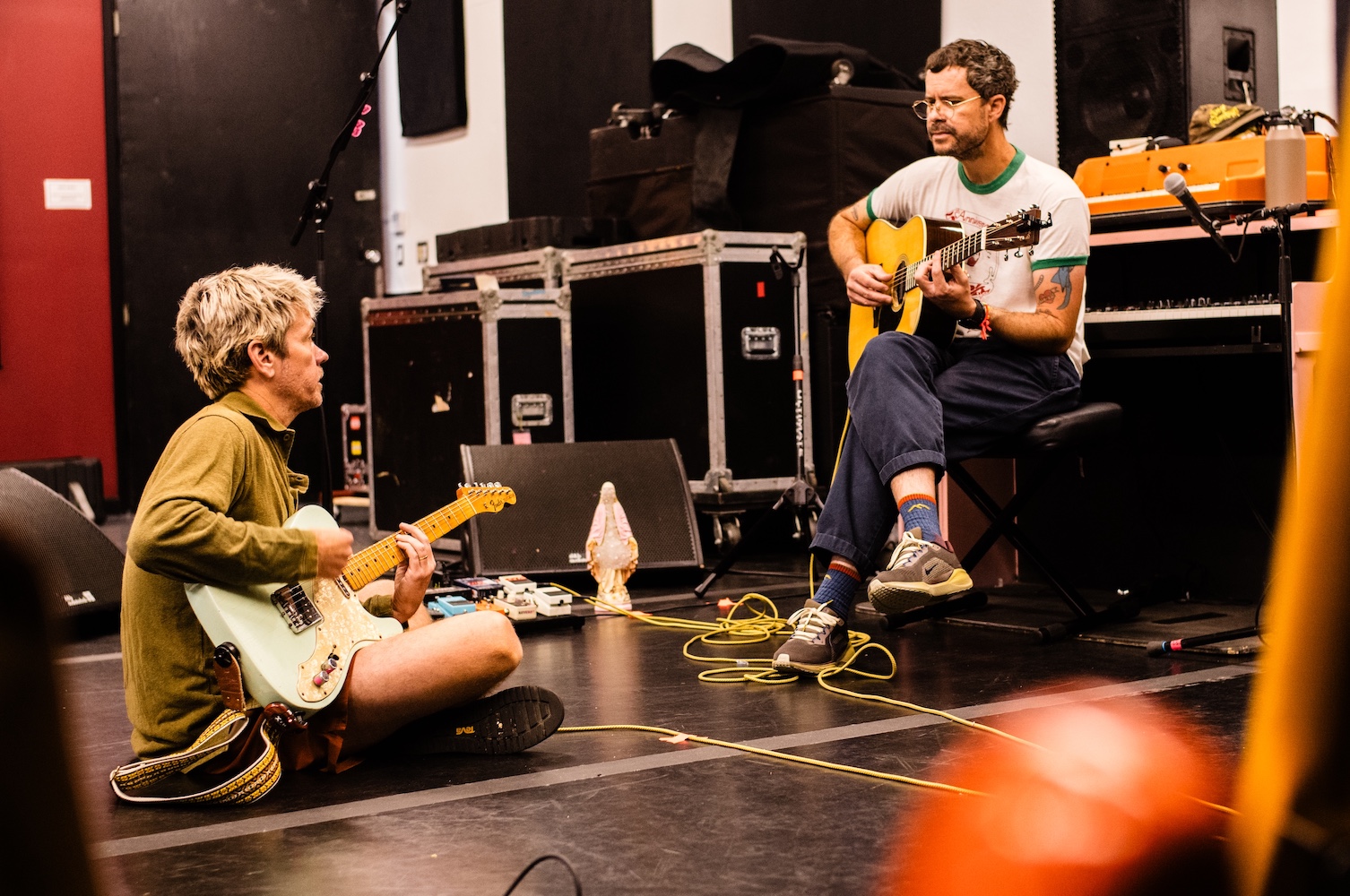
So I felt like maybe some level of imposter syndrome – I don’t deserve to be here. But then you get in and you start working and the thing that’s there is there. It’s very obvious that it’s there. And it goes a long way. So I think it felt very comfortable making the record. It felt very comfortable being in a room again with the band and playing the old songs and learning the new songs. It felt really cool and familiar watching Nate learn how to play guitar and play with him and be able to do that. It was a much more efficient process because we could both play guitar, we could both fumble around Pro Tools and stuff. So that was really fun – being able to say, okay, I’m gonna sit in the chair and play guitar while you work the computer and then we’ll swap, we’ll go back and forth. So yeah, it’s been really cool. I mean, it’s very special. I’m really happy that we’re here and I think we wouldn’t be here if we didn’t want to be here.
And that’s really the most important part about it: We’re all really excited that A, people still care, but also that we’re still able to have so much fun so many years later doing the same thing.
The album arrives nearly two decades after Dog Problems, but it doesn't sound like a band trying to relive or reclaim its past. What felt different about the starting point for “Boycott Heaven” and how do you see this album?
Sam Means: It really didn’t feel that different. Dog Problems was such a different album from Interventions, and we were always trying to push the boundaries on what we could do and think of new ideas. And I think in a lot of ways, granted there’s a 20-year gap, but coming from an album that has all the bells and whistles you can imagine to a pretty stripped-down, basically a four-piece rock album is kind of how we recorded it… I mean, there’s a few little things on there, but not much. It’s mostly just a lot of guitars. We had a pretty clear vision of what this was going to be and there’s certainly no intention of trying to capture anything other than the album that we wanted to make. And as we were making it, I didn’t even know it was going to be a Format album at first. I didn’t know. We just started making music really.
We didn’t even have a conversation about it other than like, hey, I got these songs and a couple demos. You want to come over and work on them? So I was like, sure. It wasn’t like, well, what’s this going to be? Is this going to be The Format? It just was two friends making music. And about halfway through that process, we thought, is this a Format record? Yeah. I think my response was, “What else would it be? Yeah.” This literally feels like one to me. I definitely think that’s what’s happening. So we better get on board because I think we’re back.
Nate Ruess: I think we developed as songwriters, but more importantly we developed as people, and if you’re true to who you are I feel like whatever you’re creating is going to be authentic. Whatever this is just happened to be that. This feels like us as people right now.
As far as what felt the same – I think the way we operate and communicate and kinda the roles we take in the creative machine were very similar to the past. I also think the respect or admiration towards one another remained. It just grew over time and that made for a really exciting time writing and recording.
If Sam is there and if Nate is there, well, then it's probably The Format.
Sam Means: Yeah, and it wasn’t even just us, it just felt like one, which is so funny because it was, it is like, like you said, we’ve never been… We’re sentimental people where we’ve never tried to capture nostalgia. We’ve certainly never tried to cash in on nostalgia in any way, shape or form. That’s something we’re pretty actively even like rebelling against is, we don’t want to try to be who we were 20 years ago. We want the challenge of like, can we still make a really good album as middle-aged dudes, with kids. And I think we did. And we’re very happy with it. And I think there’s a lot of lyrical and musical themes that kind of connect the dots to the other albums. And I think people will discover that as they listen to the album as an entire piece of work. And I think it’s really cool that we’re able to do that.
The phrase ‘Boycott Heaven’ is such a loaded, almost provocative idea. It’s spiritual, political, personal. When that title first surfaced, what did it mean to you?
Nate Ruess: Sam sent the first verse of ‘Boycott Heaven” to me as a suggestion of a bridge to another song and when I heard it I flipped and said “gimme a day and I’ll finish the rest.” The first verse/chorus which is basically what is the meat of the song, were his lyrics and melody. I’d already came up with the name ‘boycott heaven,’ so I just played into that cause I’d wanted to touch on that more lyrically anyways. It was a great collaboration cause aside from the fun song “Roman Candle” I don’t think there’s every been a time in the bands I was in where I didn’t write all the lyrics or melodies to a song- and this turned into one of my favorites. As far as the lyrics, I think, though I’m never sure, that I’m saying there’s more to do in this life – mainly more good to be done in this world- so try to focus on now as opposed to where you are maybe headed next.
Sam Means: To me, it just kind of encapsulated a lot of the things that I was feeling and not necessarily… Like you just said, it does capture a lot of different types of emotions and buckets. And that’s what I thought. That’s how I felt. It’s like, what is what is heaven? Heaven can be a lot of things. It can be a literal like spiritual place that you go to, or it could just be a reward. It could be whatever. And to me, it was like, I think before we even really started, I think Nate was like, I really want to call this album “Boycott Heaven.” What do you think about that? And it’s like, that’s perfect, because without getting too deep into it, like philosophical about it, it does really capture so many things about how I feel about just the way the world exists today. It’s like, what are we doing this for? What are we doing anything for if there’s not some sort of reward at the end? That’s maybe the way we go through life generally thinking, like, we want to do good and maybe good things will happen. But it seems like more and more today, some people are going through life like, kind of stomping on things in order to get to the other side, and that’s pretty gross, and sometimes you have to call that out.
So, I mean, now it seems even more relevant right now than it did a year and a half ago when we first started talking about this stuff. There’s some crazy shit going on in this country and in the world everywhere. It’s like, it’s wild everywhere. So if anything, I mean, yeah, I think there’s some people will take it literal as like, this isn’t like an anti-religion album at all. It’s more of like a… It’s something, it’s a title I think is really special because I think it does actually make you think, like, what do they mean by that? Someone I think on Twitter or Reddit or something was like, oh, I thought it meant, like, this is like the heaven of boycotts. Like, I’m in “Boycott Heaven.” It’s like, I love that. I love that. Like, someone… I never considered that version of it. And that’s a cool way to look at it. Yeah, maybe it is. Maybe it’s that too. But there’s actually a really funny story to how it even came to be. Nate saw a hashtag on Twitter that said “Boycott Heineken,” and he thought it said “Boycott Heaven.” He was like, “That’s a cool term.”
When I first read it, I thought this a band saying, ‘f*** you, you thought we were dead and we're back.’
Sam Means: Yeah, but there’s just so many different ways, and I’ve never even asked Nate what his definition of it is, because it doesn’t really matter. Because it can be so many different things. I know the emotions that it brought me. And I can only imagine he’s probably going through the same thing. It’s like, how can you define something like that? You wouldn’t even want to.
So you marked your return with “Holy Roller.” I remember listening to that song at the Beacon Theater and thinking, ‘I don't remember this one.’ The track wrestles with belief, with guilt, with desire and defiance all at once. Why mark your return with this song?
Nate Ruess: For me it was more about the melody and then I think the lyrics just drive the melody home in a very classic rock type of way. Long story short- I just wanted to rock.
Sam Means: It just felt like it was one of the first songs that I had heard actually. It’s one of the earlier demos that Nate had put together. It’s one of the songs, probably the song that I had the least to do with of all the songs on the album as far as the writing of it. It just was one of those songs where it was like, it was done. Like, he brought it to me and I was like, this thing’s pretty good, man. I don’t know. Like I don’t think this needs a lot. Like, this has a cool message and it doesn’t need a lot more to it. This is just like a good rock song. And when we were recording it, Brendan O’Brien really… This is one that really spoke to him. He was like, oh, people are gonna like this one. This is a good one.
So when we were… I think this was even one of the songs where he had like the strongest production notes too, where he was just like, don’t mess this one up. And that’s how I felt too. So it’s pretty clear that everybody that was working on it, had a connection to it and thought it was a special song. And the way it’s sort of been traveling around the last several months, I mean, we put it out in October, and now here we are in January, and it’s still sort of out there circulating around and it’s making its way under radio stations around the country. And I think that’s really cool, because I think people are starting to like… It’s one of those things that’s kind of like a sleeper song. Like, it’s so unbelievably catchy. And it’s kind of started out as a ballad. So I think that’s the interesting part about it too, is that it just is… Was this like pop ballad that got kind of morphed into a rock song. And I think that juxtaposition, while it’s hard to define, probably for anybody who doesn’t know that, it’s an interesting way and how it kind of came out and how it was produced.
What strikes me, is right at the top with the song, “There's No Gold At The Top,” we hear Nate sing, “Two days is dangerous, two days beside your soul. one night is just enough, one night to lose control” – running into this message, “There's no gold at the top, only vultures waiting for you to die.” You guys really start off the album not with a whisper, but a bang. Can you tell me about this introduction, and why this track comes first?
Sam Means: Yeah. I was just telling someone else that was actually the first song that I heard. And even the first part of that song, like, the first minute and a half before the drums kick in, before it comes into the like, I know it comes with a climb part, that’s even his original demo that Nate had sent me. We rerecorded it and then kind of went back. We’re like, oh, this doesn’t have the same vibe, but that song hit me like a ton of bricks. As soon as it got to that big bombastic part. And even me just hearing it with his voice and a guitar for the first time, I got chills. I was just like, I don’t know what this is, but this has so much power to it, especially knowing just sort of the history of who he is and things that he’s gone through in his life and in the music industry and stuff. It’s just like, wow, what a cool way to start a record.
And it starts so trippy and psychedelic, and then it just straightens out. It just comes out of nowhere? I think it’s a cool way. We’ve always had some… I mean, I think just Nate even across his whole catalog, even with fun and solo stuff, has always been really mindful of opening tracks. And I think this one definitely got the job done. It’s really fun to play. I cannot wait to play it live. It’s been really fun to rehearse that one.
I’ve found myself really struck by your song, “Human Nature.” Can you tell me a little bit about that track?
Sam Means: Yeah. I mean, it’s hard for me to speak too much on Nate’s lyrics. I’ll try not to. But that’s another one too. I I never ask him about lyrics or what anything means because I like to have my own interpretation. And I think that’s what’s really beautiful about it. But that’s another one where you can really… If I think about it, I can apply those lyrics to Nate’s life. I can apply them to mine. I can apply them to things that are just going on in the world around us. And that song is just really fun musically. It’s the shortest song. It’s very short and sweet. It’s so fun to play, just all guitars. And it has this just kind of weirdo intro and outro that was fun to do. And yeah, I mean, I think Nate’s ability to maintain these themes, that maybe you’ve seen or maybe you’ve heard on other records that he’s done, it’s present, it’s familiar, but also completely fresh because he’s introducing some new stuff.
And certainly, there’s some things that come in from the world around us and where we are now and also just where we are as adults and as fathers, there’s a lot of really cool, just family tones and reflections and things like that while still feeling very much like something you would hear on another Format record. I love that song – I love all these songs. Lyrically, I think this is the strongest record that he’s ever made. And to be able to do that, just to have this opportunity at all is mind-blowing. And then, to just be a part of something that I think is truly special and people are going to enjoy is very exciting.
Nate, I'm truly blown away by the line, “All the kids in Gaza are dying to go home. The problem is they got nowhere to go. And I am not your father in that I know my right from wrong. It's probably best we just leave it alone 'til the morning.” This is one of the boldest, most beautifully succinct statements I've heard any artist say in a long, long time – and it honestly makes me love The Format's music that much more. Can you talk about writing “Leave It Alone,” and what that song means to you?
Nate Ruess: Thank you so much. The song means everything to me. It’s hard to talk about it in great depth without just breaking down completely. All I can really say is i started writing the song a week or two after October 7th just knowing what was bound to happen. And really just the emotional fallout I’ve had with the world around me either because of people’s apathy or people’s willingness to turn a blind eye – very often in the name of religion.
For me it’s something I think about almost every minute of the day, and it’s something that’s completely broken me as a human being- and something I’m refusing to let break me as a father teaching my kids what’s actually right and wrong.
Other lyrics like “I fear that I am just like everyone,” “there’s no gold at the top, only vultures waiting for you to die,” and “holding on to something, letting go of nothing” have really sat with me in a profound way. Your lyrics have always meant so much to me, and this album has a lot to offer in that department. Do you have any favorite lyrics off this album – and lines that continue to resonate with you?
Nate Ruess: “Leave It Alone” definitely levels me the most. Over the last few years, I find myself on the verge of tears more often than I should be. I’m not saying these songs have my favorite lyrics (at all), but I have broken down to “No Gold,” “Shot In The Dark,” “Right Where I Belong,” and “Leave It Alone.”
Musically, I think this is also one of your guys' strongest records. Some of the chord changes in “Boycott Heaven” and “Depressed,” they wake you up. They're unconventional in the best way. What are some of your favorite tracks, your standouts? What do you hope folks really latch on to?
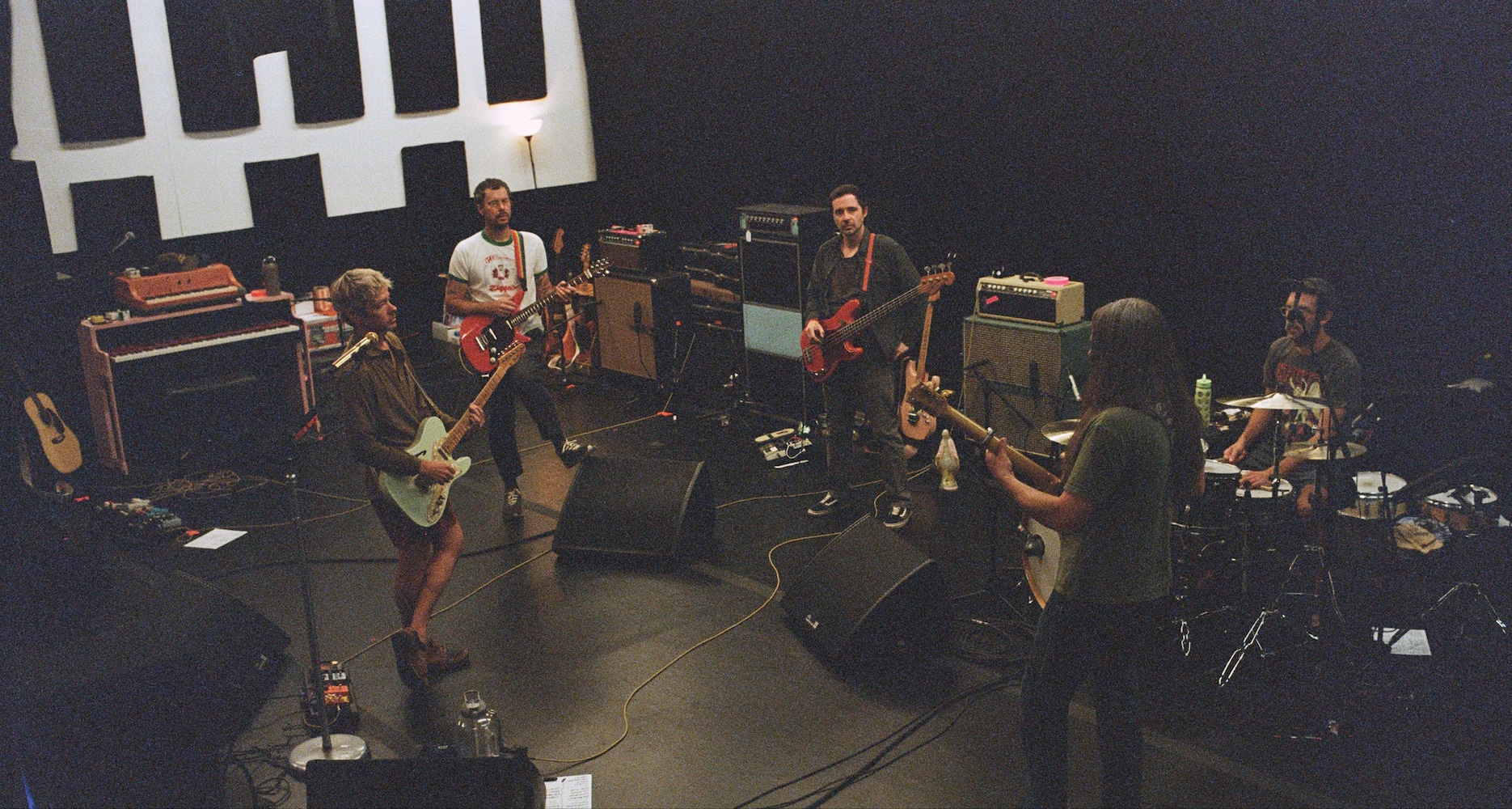
Sam Means: I just really hope people listen to it as a complete album because there was a lot of thought that went into the collection of songs and how we were going to reintroduce what The Format was and is today, 20 years later. I think there’s a lot of really cool stuff on there and in a lot of ways it’s just kind of getting back to basics and we tracked this thing as like a four-piece band basically in the studio and we did some overdubbing and stuff obviously, but the bass and drums were all tracked with us just kind of playing in a room and that was very intentional in wanting to just make something that felt very real and in the moment. And there were a lot of outside elements that were happening while we were recording this album. Like LA caught on fire and we had to evacuate where we were staying and there’s this like urgency and a lot of that urgency came through. We were recording in this big studio and we only had so much time with Matt Chamberlain and in this space when we were going to then go move into a much smaller space.
So getting the core of this done, like really there’s this feeling that was unexpected that came out where it’s like we had all this time to sort of sit and think about how this Format return might happen someday. But then once it got started it was just so fast and then once we actually started doing it, the urgency from just the world around us crept in and made it happen even faster. So I just really hope all that stuff comes through and I just would hope that people… I know it’s hard to listen to albums in full these days, but that’s 45 minutes. It’s not too bad. Listen to it on a little run or something and in the car and I think it’s a record, it’s an album, it’s a start-to-finisher, you gotta start it at track one and end it at the last one and I think you’ll feel something from it.
If someone who loved The Format 20 years ago is just now pressing play on Boycott Heaven, what do you hope they recognize? Not about the band, but maybe about themselves.
Sam Means: I mean, I can only say what it does for me, it’s definitely caused me to sort of reflect on my life, being here 20 years later, having this opportunity to do this. Obviously, I’ve done a lot of like, how did I get here and how am I still here? But I think there’s a lot of really interesting topics, and not only in just like the world around us, but in sort of who we are as people. It’s like, call it self-reflection or maybe it’s just an observation on the world around us or just how people are. But that’s the beauty of music, is just being able to listen to songs and sort of create your own narrative around it.
So I think it’s a very thoughtful record. Like I said, it’s very beautifully crafted set of lyrics that Nate has put together in this thing. And I think it tells a really cool story of friendship and time and love and scary things. And so, yeah, I think people just listen to it. I think they’ll be able to definitely pick something out for themselves that will make them think. That’s what’s happened to me. And certainly has done that for me, not just because I’m in the band and making the music alongside this guy, but also because I’m just a person thinking like, man.
What are some of your favorite moments, story-wise, on this album? What really resonates with you? Are there any moments that you're especially proud of, especially excited about, to have this part ownership over?
Sam Means: “Boycott Heaven,” to me, the song, is a very special one. I feel like that’s like the most dramatic one, kind of changes course a couple times and another one that’s really fun to play. But also I just think the messaging in there, it’s called “Boycott Heaven” for a reason. It’s like, it’s the title track. It kind of explains what’s going on, and it’s not like, this isn’t a literal like anti-religion album. This is just so many different things, and I think it pretty overtly states that. And if you listen to the lyrics at the end of that song, it starts off with like… At the very end, the chant is, we all could use something. And it’s just sort of… At the top of this, maybe you’re listening to it and it’s like grappling with maybe what spirituality and religion even is, for a lot of people.
And it’s like, yeah, this is like in a lot of ways messed up, but… And things have gotten skewed and twisted over the years and how people look at a lot of these things. But at the end of the day, we all could use something, we need something. Like you need some sort of light at the end of the tunnel to look toward as you’re getting through life. And so I really like that part about it. It opens very strong in kind of a stern sort of way, especially that second verse when Nate comes in. It’s pretty intense and then it just kind of, by the end of it, you just feel this completely different, the sense of like neutrality in that topic. And I think that’s really cool.
“Holding on to something, letting go of nothing.” It's quite poetic. There's a push and a pull there. “Holding on to something to believe in.” It speaks to something larger than life. People ask, ‘What do you believe in? What are your core values?’ And I think that's ultimately what this song interrogates. I'm glad to hear that you love that one as much as I do.
Sam Means: Yeah. And he flips that line at the end, too. He says, holding on to nothing, letting go of something. The very last time he says it, which is a clever little way to just point out like, I’m not definitively right here.
What do you hope listeners take away from The Format's third album? And what have you taken away from creating it and now putting it out?
Sam Means: I just think it’s been really cool that we’ve been able to make something that is totally unique while also in parallel being absolutely a Format album. Going into it not knowing what it was and then just experiencing it turn into something so organically. If people can let go of the 20 years in between, I think it’s going to feel like the third Format album. For a lot of people it might take a minute, you might need to dust off the ears and listen to it from start to finish, but I think at the end of the day, you’re going to be like, “Dang, these guys did it. It’s pretty cool.“
Nate Ruess: I just want people to like it and internalize it the same way they have our old stuff. It’s been such a surprise after all these years that people have stuck around. And they’ve stuck around because of what the songs meant to them. I hope this album has the same effect and also brings new people along the way. What I’ve taken away from it is that I actually do enjoy writing and recording music. I’m still very on the fence about the playing life thing though. [laughs]
I don't want to get greedy, but do you think there’ll be a fourth album?
Sam Means: I don’t know. I mean, I hope so. Nate’s already talking about getting back in the studio. I’m like, okay, man, let’s get this one out. But you never know. It’s very possible. I think we want to do more. There were a lot of songs left over, and certainly a ton of like stuff that just Nate had written over the years and he’s got and I have a lot of stuff too, just because neither of us have made an album in 10 years, even individually. So, there’s a lot of stuff out there and a lot of potential, and I think as long as we’re having a good time doing this, it’s very possible.
This one's for the OGs. Is there a song from the early Format catalog that continues to resonate with you most today? Something that hits differently now than when you first made it?
Nate Ruess: “If Work Permits” has always been my favorite old Format song. Still is. I think that one really summed up where my head was for a long, long time. I don’t think I let that go a little until I started a family and realized there’s more to life than just me.
Sam Means: “If Work Permits” continues to be my favorite song, not only because I just love playing it live, but just the dynamic nature of it. I think that song really captures, especially now having made this third album, really captures the acoustic folky vibe that we have into a chaotic rock ending. So having that be, I think it’s the last song on Dog Problems – so being the last song on Dog Problems, it’s a really cool, I don’t know if that was… But I guess it wasn’t intentional at all because we thought we were going to make another album 20 years ago. But, yeah, so having that now, just the way that worked out and Dog Problems and roll into this rock record, it’s pretty cool.
What are you looking forward to with the tour? You’re about to bring this entire collection, this larger discography to life on the road.
Sam Means: Yeah, just being able to play these songs. I mean, we’ve played a handful of them now, but to be able to play these songs now, then people will know them. That’ll be cool because it’s been really fun, sort of, freaking people out a little bit, playing a new song that no one’s ever heard. But by the last show we played, everybody was singing “Holy Roller,” and that definitely hit different than when everyone’s kind of looking around like, “What is this song?” So I’m looking forward to playing the new stuff because we really love playing it. And then also just, with the people having the album be able to sing along and do what they do. That’s going to be really great.
— —
:: stream/purchase Boycott Heaven here ::
:: connect with The Format here ::
— —
Boycott Heaven” – The Format
— — — —
Connect to The Format on
Facebook, 𝕏, TikTok, Instagram
Discover new music on Atwood Magazine
© Carlo Cavaluzzi
 © Carlo Cavaluzzi
Boycott Heaven
an album by The Format