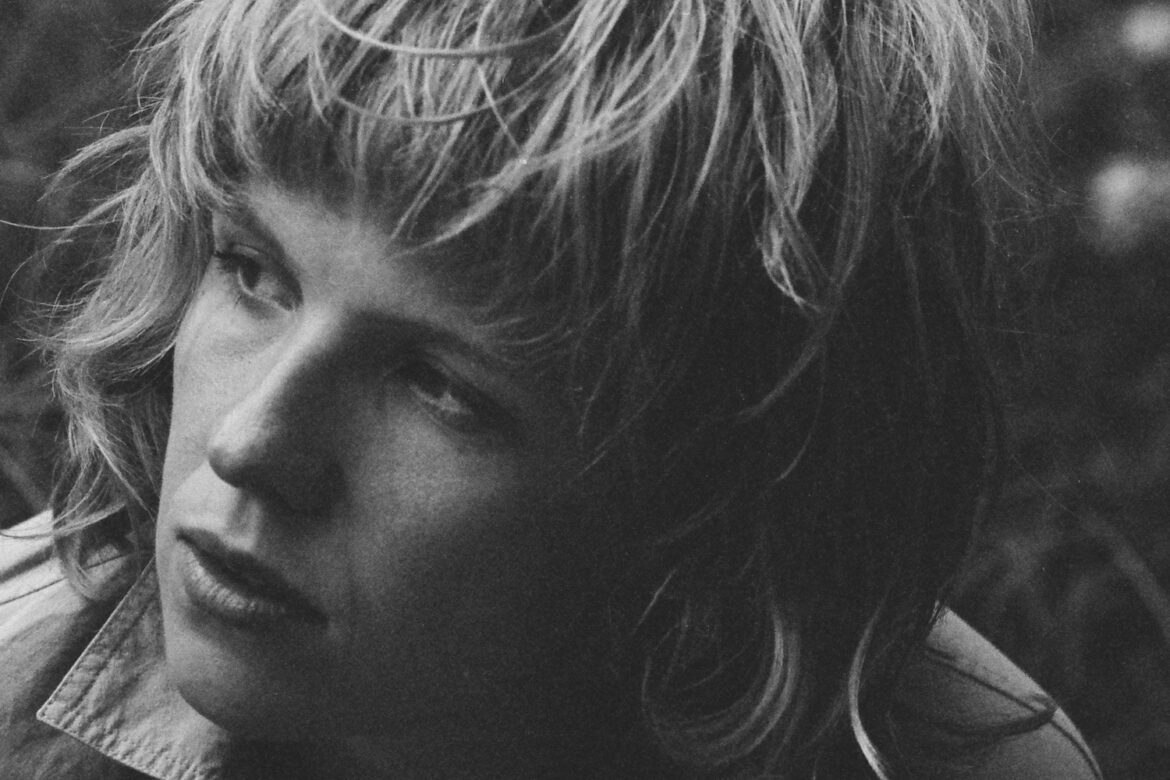
Portland, Maine-based indie folk artist Dead Gowns takes us inside her dark, romantic, and deeply human debut album ‘It’s Summer, I Love You, and I’m Surrounded by Snow,’ a raw, weather-beaten reckoning with desire, illness, and the nature of wanting. Through bruised, achingly expressive arrangements and exquisitely crafted lyrics, singer/songwriter Geneviève Beaudoin turns disorientation, grief, and longing into a tender, slow-burning catharsis that lingers long after the last note fades.
Stream: “How Can I” – Dead Gowns
Hold on to something, the cheek of wanting, in all seasons reach…
* * *
There’s a whole weather system inside Dead Gowns’ music – wind howling through old church rafters, guitars crackling like low thunder, a voice that can flick from hushed bedroom whisper to raw, keening wail in a heartbeat. Her songs feel coastal and interior at once, full of fogged-in mornings and tempestuous afternoons where desire hits like a change in pressure: Sudden, disorienting, impossible to ignore. On It’s Summer, I Love You, and I’m Surrounded by Snow, Geneviève Beaudoin turns that pressure into sound, fueling bruised, brash indie folk with the echoes of Maine’s islands, gymnasiums, and desacralized churches. The result is exceptionally raw, achingly intimate, and tenderly dramatic – a record where every tremor of wanting, every pang of illness, every flicker of grief gets translated into song.
and every time I get your letters
I pretend they’re from another
it’s never in the light
and I’m never quite
so sober
but it’s just
what I have to do
on these nights
when I’m in love with you ’cause
how can I…?
– “How Can I,” Dead Gowns
Released February 14, 2025 via Mtn Laurel Recording Co., It’s Summer, I Love You, and I’m Surrounded by Snow marks the full-length debut of Portland, Maine-based singer/songwriter Geneviève Beaudoin, who has been steadily carving out a world of dark, romantic, lyrically forward indie folk under the moniker Dead Gowns since 2018. The album arrives after the project’s 2022 How EP (and its 2023 Vinyl Me, Please edition), expanding that record’s intimate, spectral palette into something bolder, heavier, and far more unguarded. Where How captured the early contours of Beaudoin’s voice and vision, It’s Summer, I Love You, and I’m Surrounded by Snow finds her stepping into a fuller sense of artistic identity – one rooted in excavation, emotional risk, and a desire to explore human feeling from multiple angles.
“This is a collection of songs… about the nature of wanting,” Beaudoin shares after a long pause, putting words to her painstakingly crafted music. “It’s about coming into adulthood and deciphering life’s capacity to fulfill desires… or let them go painfully unmet. I wanted to write songs to better know and understand my cravings – to be touched, to be known, to have control, to encounter someone lost to time.”

That impulse – to examine desire from every angle – became the record’s foundation, but the making of the album took far longer than she anticipated. “My vision was to finish this record a lot sooner,” Beaudoin tells Atwood Magazine. “We started preparing for it in 2019 and began recording in 2020. I had no idea we’d spend so many years on it – re-recording tracks, taking breaks from it and going back in – but this extra time really allowed me to tighten my language around music production and what I wanted to create and what I wanted to hear.”
Working so slowly reshaped the creative partnership at the record’s core. “I made my collaboration with my partner and co-producer, Luke Kalloch (who also recorded and mixed the record), so much stronger. I did just have to accept that the record was going to take the time it needed.”
That time was spent in spaces that shaped the album as deeply as the songs themselves. “We recorded the record predominantly in old churches, island community centers, home studios, and non-traditional recording spaces. As Luke described to me what he enjoyed about mixing the record – it was making all of these spaces / songs compatible in a mix while not taking away from what makes each room and place unique.” Those rooms left their imprint; they even dictated performances. “If you listen carefully, you’ll hear how f*ing cold it was to sing ‘Kid 1’ in December during a snow storm – but maybe that’s part of why that vocal delivery was the take.”
And the geography of the sessions – stretched across the Maine coast – remains embedded in the album’s grain. “We first began recording the LP at a desacralized church in Stonington, Maine (a village town on the island of Deer Isle). From there, we did overdubs in various home studios and at an old community center (gymnasium) on Peaks Island off of Portland. Only one song, ‘Bad Habit,’ was recorded at PRISM Analog – a non-profit studio in downtown Portland.”
After spending years inside these rooms – and inside her own emotional landscape – Beaudoin began to understand what this debut might reveal about her as an artist. “I hope it introduces me as an excavator – someone wanting to explore human feelings from multiple angles,” she says. “Someone trying to make sense of their reality as an offering to our collective catharsis.”
Part of that excavation comes from lineage – not just personal, but musical. When asked about the “indie folk”-leaning world she builds across the album, she points to a constellation of touchstones: “I think influences include Feist, Cat Power, PJ Harvey, Big Thief, Angel Olsen, Julia Jacklin.” Then she names the moment something clicked into place: “In earnest, when Big Thief released Masterpiece in 2016, I felt this opening. I think that band and that record just really clarified a way of connecting sound and lyric that aligned with my own tendencies and desire for songwriting.”
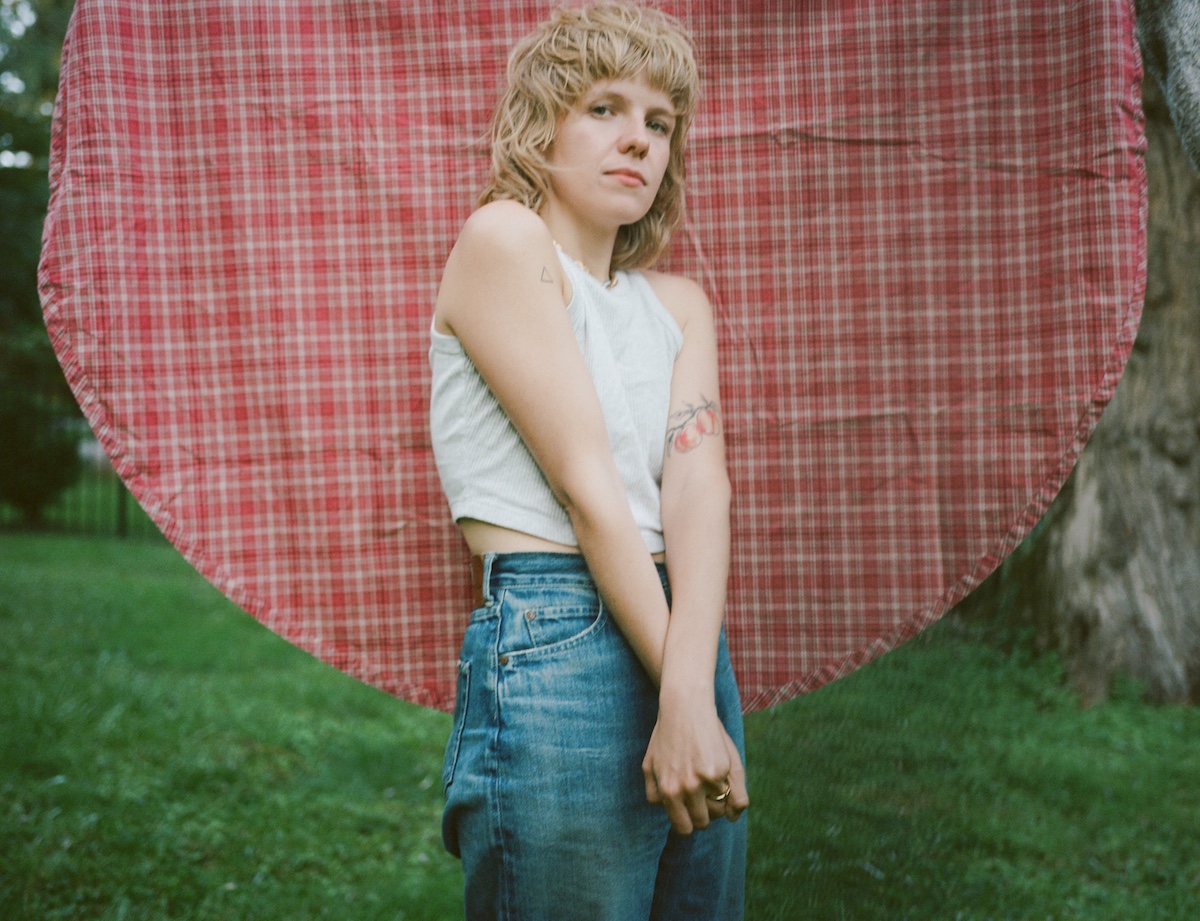
Beaudoin candidly describes the record as dark, romantic, and disorienting – three words that echo through its sonic and emotional world.
The album title, she explains, is adapted slightly from the line “It’s summer. I love you. I’m surrounded by snow” from Eileen Myles’ poem “Shhh.”
“I love the title for many reasons,” she smiles. “For one, there’s a sense of getting lost in time, getting lost in desire, getting moved/pulled around in feeling. Disorientation in strong feelings … and in feeling those feelings throughout your entire body. I also think, even if the songs don’t name Maine, it’s where I grew up and currently live and it can’t be cut out from the narrative (or the visuals for that matter). And Maine seasons are (typically) very strong. We are swept up in the blizzard in February and then we are set down in the hot salty haze of August.”
Across its twelve tracks, It’s Summer, I Love You, and I’m Surrounded by Snow moves with a restless emotional gravity – shifting from quiet, internal reckonings to surges of feeling that land with startling force, each song revealing a new contour of Beaudoin’s raw, disorienting world.
“How Can I” cracks the album open with a question that feels less sung than wrestled with, Beaudoin’s voice moving from a tentative murmur into a raw, roaring howl. The song circles its own uncertainty until it becomes a kind of emotional thunderstorm, each repetition of “how can I” gathering force. Guitars churn beneath her like low, living pressure, and the track sets the record’s stakes: A world where desire isn’t whispered politely but floods the room, demanding to be named.
If that’s the album’s bruise, then “Wet Dog” is its fever. One of Dead Gowns’ most energetic and emphatic songs, the record’s second track barrels forward in a rush of feeling that’s both reckless and impossibly tender. Beaudoin sings as if chasing her own impulse, letting the song skid and spark, yet even at its most anthemic there’s a lightness to her touch – a trembling human edge beneath the roar. Images like “we move like a horse cut from the carousel” capture the song’s wild push-pull: Desire as both release and derailment, beautiful in its chaos and deeply affecting in its vulnerability. It’s the kind of indie rock outpouring that burns hot without ever hardening.
oh you know you are so frustrating
a horse cut from the carousel
you are grating
the lines from every spore
that point us where we were
on the ferris wheel
and after all I am still tethered
these apples will keep bobbing forever
drenched in who we are
the long walk to the car
proving this is more
than being touched
and wanting touch in return
I am your wet dog
I am your wet dog
and wet dogs don’t like fireworks

“Kid 1” pulls the lens back to memory – childhood desire, messy devotion, the ache of realizing too late what deserved attention. Its vocal take, captured in a freezing desacralized church during a December snowstorm, carries the shiver of that room; you can almost hear her breath turning to frost in the air. The song feels weathered and lived-in, tracing lineage and regret with a clarity that stings. When she sings, “I’m starting to feel / how foolish I’ve been,” it hits like a wince of hindsight – a small, unguarded admission that collapses the distance between who she was and who she is now, revealing how self-understanding often arrives years too late. It’s here that the album’s world sharpens: Tenderness and pain pressed so close together they become indistinguishable.
From there, the record drifts inward and outward at once. The devastating “In the Haze” – Beaudoin’s personal favorite – moves in a melodramatic, guitar-driven fog through hospital basements and unlit hallways; the gentle, dreamy “See People” reaches toward connection even as solitude keeps tugging at the sleeve; and “Sand Plumb” settles into a quiet metamorphosis, softening the album’s edges until what remains feels fluid, surrendered, almost tidal. Together these songs deepen Dead Gowns’ terrain – disorientation, longing, and the fragile hope that rises once you finally stop resisting what pulls at you.
it’s not loneliness
when you’re only crying
it’s not hunger
when your plate is full
what are you mad about
the trees have turned over
you’re back in the bad days
you need to start over
Part of what makes It’s Summer, I Love You, and I’m Surrounded by Snow feel so alive is the way Beaudoin blends her own lived experience with imagined possibility.
“I find a lot of freedom by starting in an autobiographical place and then expanding into fiction,” she reflects. “There’s a lot of movement by expanding like that, an opportunity to learn from experiences by imagining how many different ways they could have gone. ‘Swimmer’ begins with a phone call, and then the pair is ‘burning indigo’ on the beach, and it’s raining, and the two people are like dogs. But like the lyrics indicate (‘of course, I don’t call / so of course that’s not true’) – that call didn’t happen, so was the trip to the beach real?”
That fluidity – the freedom to distort, reimagine, revise, and rewrite emotional truth – threads through the record. Even her favorite lyrics arrive at the intersection of longing and ambiguity. From “Wet Dog,” she cites:
and after all I am still tethered
these apples will keep bobbing forever
drenched in who we are
the long walk to the car
proving this is more
than being touched
and wanting touch in return
It’s one of the album’s clearest distillations of desire: not just hunger, but proof of something deeper, something binding. And from “Kid 2,” she lifts a line that feels like a thesis in miniature:
hold on to something
the cheek of wanting
in all seasons reach
In just a handful of words, Beaudoin captures the record’s core: Wanting as instinct, as ache, as audacity – as something we learn to live with rather than extinguish.

Stepping back, what makes It’s Summer, I Love You, and I’m Surrounded by Snow feel so singular is how freshly it treats these emotional states.
The album arrived on Valentine’s Day, a holiday often drenched in illusion and performance, yet Beaudoin offered something far riskier: A portrait of longing that refuses to simplify itself. It’s an album that feels as vital now as it did on release – intimate yet immense, tender yet unflinching, steeped in Maine’s physical world yet expansive in its emotional scope. These songs reach across seasons, bodies, and memories, tracing the contours of desire with a clarity that startles the ears and stirs the soul.
Taken together, they form a record that doesn’t offer answers so much as teach us how to sit inside uncertainty – to name what pulls at us, to honor the ache instead of outrunning it.
“When it feels like this world is just getting crueler, I experience music as such a salve,” Beaudoin shares. “Music makes me feel held. It feels meaningful to me to contribute to that care by putting out a record.”
And that’s ultimately the gift of It’s Summer, I Love You, and I’m Surrounded by Snow: It doesn’t pretend longing can be solved or grief can be outrun. Instead, it turns those feelings into something spacious, tender, and strangely steadying – a place to sit down and feel what the world keeps trying to rush past. Beaudoin offers these songs the way one might offer a hand in the dark: Not to pull you out, but to stay beside you while your eyes adjust. It’s a record that holds – stormlight, shame, desire, memory – and in holding them, makes room for us to breathe again.
Experience the full record via our below stream, and peek inside Dead Gowns’ It’s Summer, I Love You, and I’m Surrounded by Snow with Atwood Magazine as Geneviève Beaudoin takes us track-by-track through the music and lyrics of her debut album!
how do I become the water
or rather when
I didn’t want it
I didn’t need it
I didn’t think you had it in you
oh where’s the milk, the meat
you sapped the tree, my maple leaf
forever gentle
but dumbfounded
the city swells on us
and capsizes
and I didn’t think
am learning to become
the open wide that I want
– “Sand Plumb,” Dead Gowns
— —
:: stream/purchase It’s Summer, I Love You… here ::
:: connect with Dead Gowns here ::
— —
Stream: ‘It’s Summer, I Love You, and I’m Surrounded by Snow’ – Dead Gowns
:: Inside It’s Summer, I Love You, and I’m Surrounded by Snow ::

— —
How Can I
I think “How Can I” sets the scene for the entire record. If the album is talking about disorientation in time and my inability to address the present moment properly – here it is. It was so hard to tell this person how I felt about them. We were very close friends. It felt irresponsible to say how I felt. So I delayed my actions, I hid the letters, I swallowed the message instead of saying it out loud. It’s morning and then it’s night. It’s night and then it’s morning. I couldn’t be honest.
Wet Dog
This was one of the earlier songs I wrote for the album – I think there’s a demo somewhere from 2017. But I still love to sing it today. There’s a heightened frequency here; singing “Wet Dog” feels like I’m having a fever, and the thermometer is charting so high it could explode. Even if it’s all for nothing. I like to imagine myself careening through the feeling of desire like “a horse cut from the carousel.”
Kid 1
I wrote “Kid 1” during the pandemic, while running in a cemetery near my home. I’ve never written a song while running before and maybe it shows in the melody choices. For me, this song is about how desire matures. This song is about wanting more time with my grandmother, wanting to redirect past energy. Can desire be misguided? Definitely. I was such a dumb kid, I think back to so many summers at my grandmother’s home in France just fixated on crushes back home – and missing the life and family right in front of me.
Brother
In a similar vein to “Kid 1,” “Brother” is about repairing non-romantic bonds or choosing to “bond anew.” It makes a big reference to Maine, where I live. Here, folks sometimes joke that you’re one of two types – either of saltwater or freshwater mind. Do you choose the ocean or the lake? So I think the intention in these lyrics was to consider how to repair bonds and break routines (Ocean people? Let’s try the lake) — for the better.
Burnout
Ha, I feel like at this point in the album, we’ve tricked the listener – you thought you were picking up a record about romantic desire, and then the sequence hits you with family, death, and illness. I wrote “Burnout” after my grandmother died and I was thinking about lineage and what we pass down. I was thinking of my mother’s grief and also her power. Then my own. And my sister’s.
In the Haze
I’ve mentioned it elsewhere, but a lot of my experience of chronic pain (I have endometriosis) filters into my songs and this song specifically is about feeling stuck in illness. I didn’t yet have a diagnosis when I wrote “In the Haze” and I was getting a lot of “you look fine” and “you seem healthy” comments when I was neither. So this song is about going back into the hospital for testing, comparing myself to a friend who seemed to be thriving on the internet, and considering what it takes to feel resilience in the present.
Bad Habit
It’s really quite simple – I wrote “Bad Habit” about trying to get laid in the Maine winter. It’s a salty mess out there.
Swimmer
This song began as a poem and went through many arrangements until we found the one that hit. Some past versions were more synth pop while others leaned acoustic/stripped back. But I love where we landed and the mix of electronic elements and more traditional instrumentation. That’s our friend Hamilton Belk on the pedal steel and Eliza Edens on background vocals.
Maladie
My mother is French and while I grew up in Maine, I spent most summers in France with my grandmother and cousins. You could call “Maladie” a bilingual song. But for me, it’s more about how gaps in one language can be filled by another and the entire process gets me to the real feeling. Growing up around two languages, I don’t think I ever felt like I “got it” either way and this song just leans into the idiosyncrasies of how French and English exist together in my brain.
See People
“See People” felt like a premonition. I wrote in 2019, feeling anxious about going to a party. And then the pandemic hit and I picked the song back up and I was spooked. It felt so relevant to the isolation that I was experiencing, it could have been written then. I’m someone who wants connection, needs it even, and I couldn’t get it through a phone. We put out a demo previously, but this full arrangement of the song is so satisfying. I’m thrilled with it.
Kid 2
“Kid 2” is a post-script. If “Kid 1” is full of angst-driven and pavement-pounding energy, “Kid 2” is the after. It’s looking at nostalgia as a gift from Grief, asking you to (softly) deal with it.
Sand Plumb
Ending with this song was to put two questions in conversation in this record. “How Can I” starts the record with the repeated question “how can I?” but it’s a question of limitation. With “Sand Plumbs,” the album ends with “How do I become the water?” which is expansive. I can’t change the past, but I can soften my view towards the here and now. Desire changes from a pointy arrow to a fluid body, streaming through seasons, months, years. By the end of the record, I’m no longer overcome by desire but embodied by it.
— —
:: stream/purchase It’s Summer, I Love You… here ::
:: connect with Dead Gowns here ::
— —
— — — —
Connect to Dead Gowns on
Facebook, 𝕏, TikTok, Instagram
Discover new music on Atwood Magazine
© POND Creative
 © POND Creative
It’s Summer, I Love You, and I’m Surrounded by Snow
an album by Dead Gowns