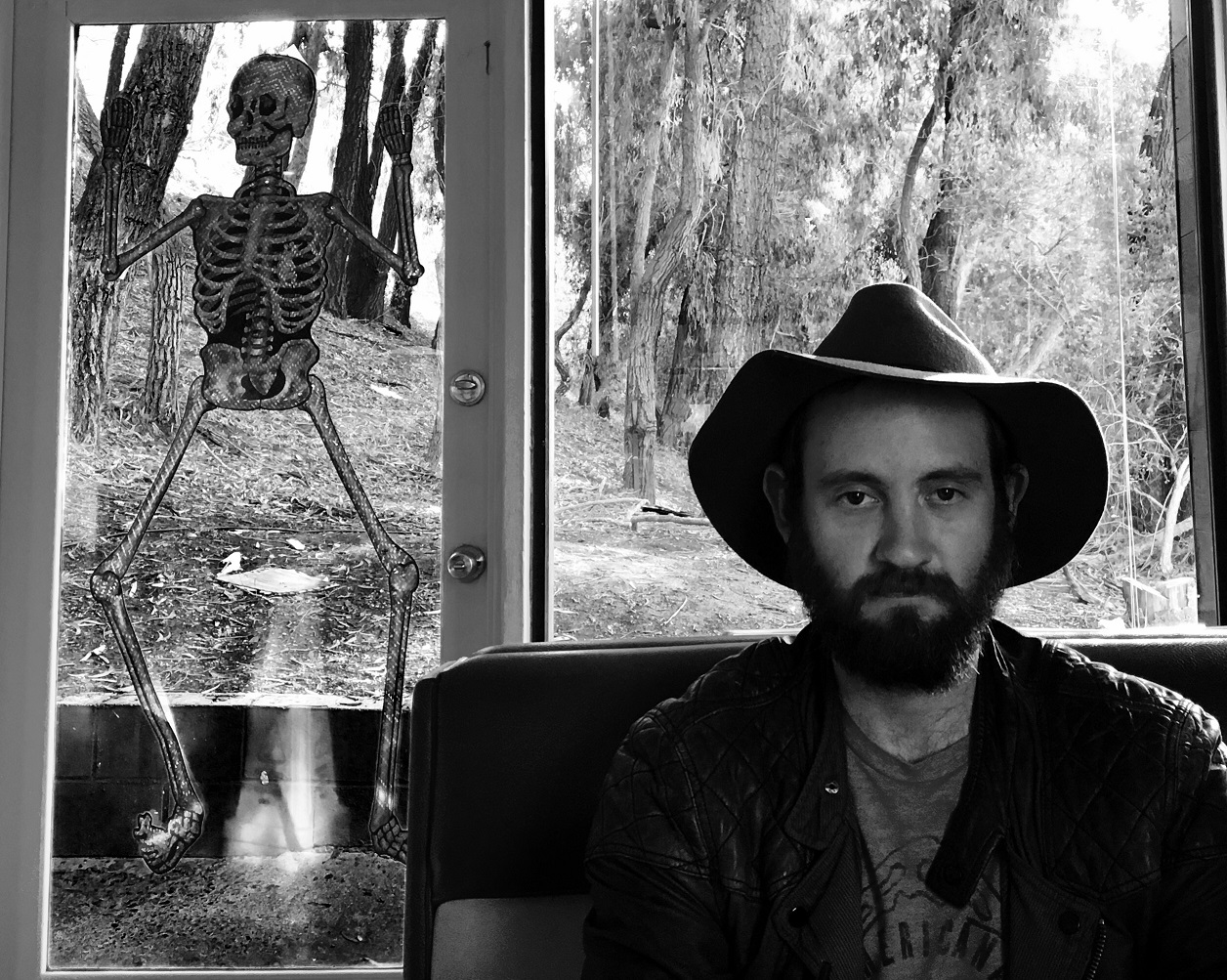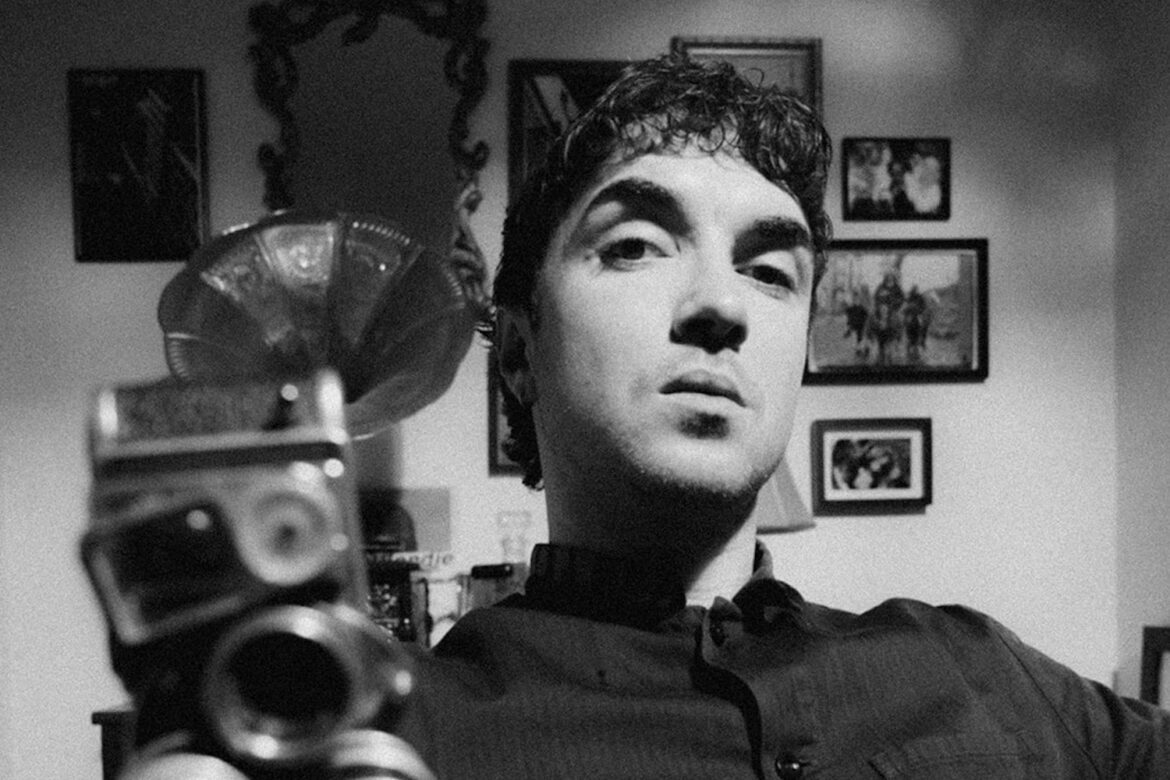
Irish artist David Keenan reflects on the inspiration behind his fourth album ‘Modern Mythologies,’ the joy of making music, and his relationship with his hometown of Dundalk on the Irish border.
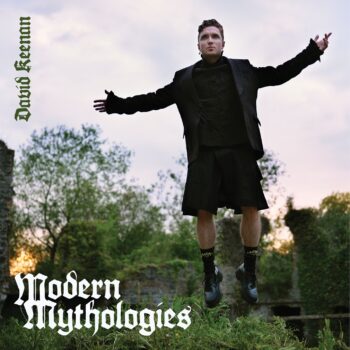
Stream: ‘Modern Mythologies’ – David Keenan
Irish artist David Keenan has long written songs that feel rooted in place – steeped in memory, myth, and the restless search for belonging.
On his fourth album Modern Mythologies, the singer, songwriter, poet, and composer continues that tradition, weaving together introspective stories of heartbreak, struggle, addiction, journeys, and personal relationships through what can only be described as a modern Celtic lens. The record arrived quietly at the tail end of 2025, but its emotional scope and lyrical depth reveal an artist unafraid to wear his heart on his sleeve and explore the tangled threads between past, present, and future.
That sense of identity and belonging often leads Keenan back to Dundalk, the Irish border town where he grew up and where his musical instincts first took shape. At just 14 years old he wrote the song “El Paso” about his hometown – a track that has since been adopted as an anthem by fans of Dundalk FC, who still belt out its lyrics at home games.
Since those early days, Keenan has become a relentless live performer, touring across Ireland, the UK, Europe, North America, and Australia, and sharing stages with artists including Hozier, David Gray, Dermot Kennedy, Counting Crows, Snow Patrol, Richard Thompson, and Rodrigo y Gabriela.
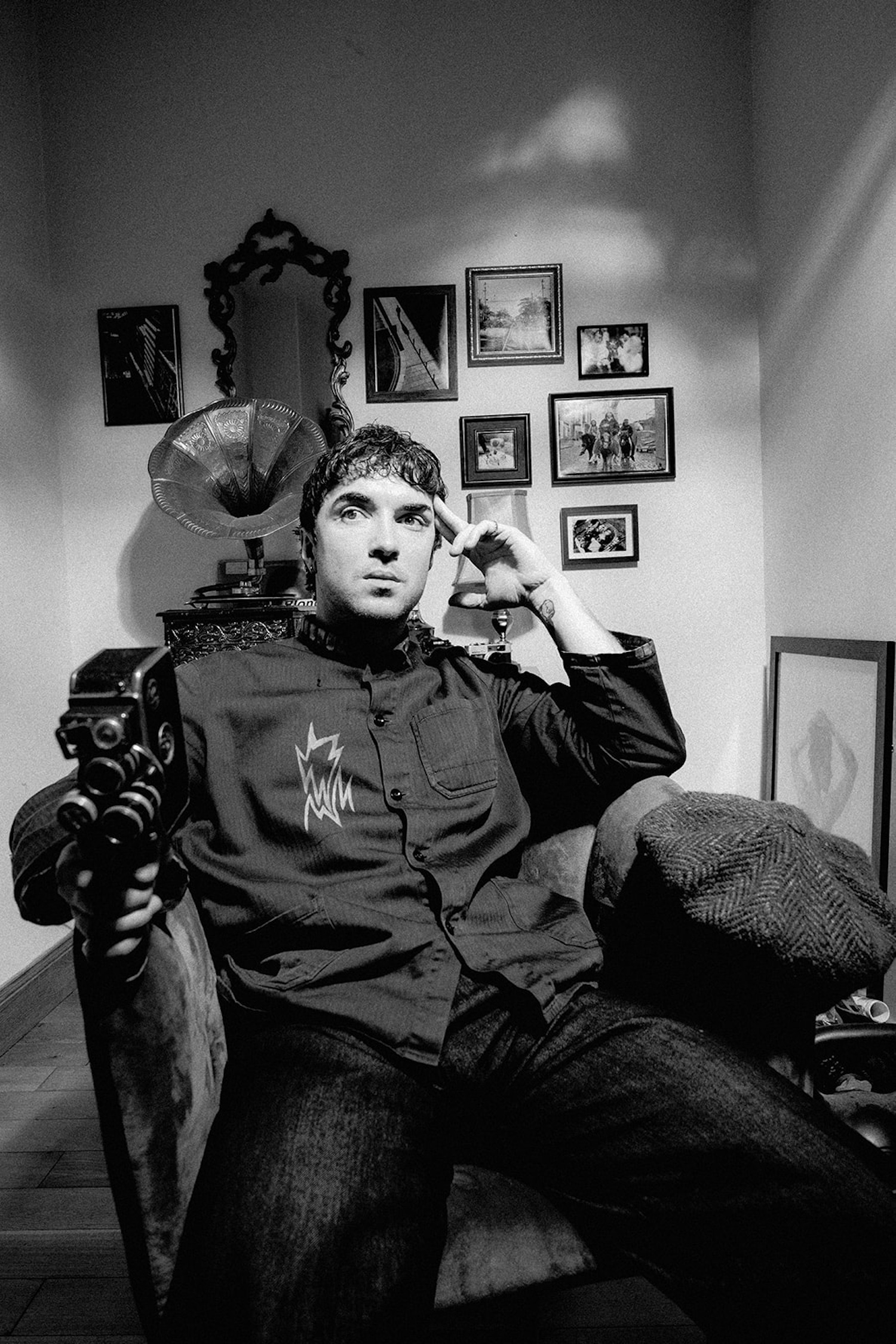
But Keenan’s career has never followed a conventional path.
A modern-day troubadour driven by instinct and curiosity, he continues to forge his own artistic direction – even recently recording and releasing a nine-track album, Just for Today, in a single six-hour studio session on Bandcamp Friday simply for the rush of it. “We can’t just create music, we can’t just serve social media,” he tells Atwood Magazine. “We have to serve ourselves as people.” It’s a philosophy that runs through both his music and his life – a commitment to authenticity, storytelling, and the messy human experiences that shape great art.
In conversation with Atwood Magazine, Keenan reflects on the inspiration behind Modern Mythologies, the joy of making music, and the deep emotional ties that continue to draw him back to Dundalk.
— —
:: stream/purchase Modern Mythologies here ::
:: stream/purchase Just for today here ::
:: connect with David Keenan here ::
— —
‘Modern Mythologies’ – David Keenan
A CONVERSATION WITH DAVID KEENAN
Atwood Magazine: Remembering a quote from Oscar Wilde where he said the Irish are the greatest storytellers since the Greeks, would you tend to agree with that?
David Keenan: I think so, we had all our myths. We had a kind of a society here that was based around community and Brehon law, and there’s many different theories that we came up the Atlantean way and then the arrival of those people. I think storytelling is a is a tool, it can be a weapon. If you look at the Irish bard, satire was a powerful weapon of theirs and people were afraid to insult a bard in case he’d write a satire about them. And, obviously, with the colonization, I think we took the English language and kind of filled it with all the musicality of Irish.
And because the Irish language has multiple meanings for every single word it gives us, I think more scope even if we’re not aware of it on a conscious level. We have access to this history and traditional storytelling that stretches back just thousands of years to neolithic times. I suppose for me, music has brought me into all that. I wasn’t aware of that as a child, but over the years, you want to develop your own craft and your own voice and things start to appear, and you get curious, and you go looking and digging, making discoveries that feel really exciting. So, yeah, I think we are…. Long answer!
That’s quite an answer, indeed! But you’re someone who takes inspiration from all around you, and we imagine that creative brain is always spinning, always going. Is the fun part for you, how you package that reflection around you, or is it processing it in your songwriting, or is it when it comes to life in the studio, or more when you play a completed piece in front of a live audience?
David Keenan: Well, I mean, there’s threads that connect all those things, but I find each of them to be full of struggle, playfulness, pure joy and each one of them gives me purpose. When I’m making music, I know that I’m doing what I was put here to do, and also just in terms of the way my head works, I mean, we all go on this kind of trip, but we don’t go on a lot of figuring out who we are, self-acceptance, rejection and all that stuff. But I think for me, I’m just getting better at accepting that I have this head, and it doesn’t stop. So, I can sit and I can kind of let it take over the shop, take over the show, or I can try to channel that head into something very creative, I think play is the operative word.
It brings me in touch with people, community when I’m traveling on the road and I’m gigging. And you see that, you hear the song being sung back to you, and it reminds me every night I go out and do it, like why I’m doing it. Whether it’s in front of thousands of people or 20 people. You can have more of a connection with 20 people sometimes.
I grew up in Dundalk and there was very little expected of me. I didn’t engage with school, and it was really just a kind of self-education going into the local library when I was about 14 or 15. I got into music, became obsessed, and then became obsessed with poetry. I wasn’t going to excel at sports or anything, but thought that I could have an outlet for the drive and ambition in myself and the need for belonging. I could find that in music and poetry and writing. Then separately, privately, it gave me a lot of healing, a lot of reprieve from growing up and just surviving. To be honest, anytime I’m doing anything creative, I just feel blessed.
You just mentioned belonging, and that’s a lovely segue into our next question because from one of your songs on the album Modern Mythologies reminded us of a quote James Joyce once wrote, about every man was searching for the place he belonged to. In “Suriname or Bust” you have a line in there “because this is where I’m always returning to” and for you, is that place Dundalk, or is there somewhere more mythical?
David Keenan: Well, I think I write about a sense of belonging. I use town, and I use the city as a physical place and a mental place as well, the metaphor. I used border. Border comes up in the songs a few times. So that’s the physical border probably growing up on the border, and then that border between whatever. It’s changed over the years, that sense of belonging. I think as long as you’re comfortable in your own skin, you have a sense of belonging no matter where you are. But if you’re not, you feel like that kite that’s all over the shop. And I’ve been both. I think that song is just about me, and it’s about a different version of me. And it’s about lads that I would have known growing up and lads that are out there that you see. They want to get out of the town, but they know they never will. Maybe they don’t have the outlet to express themselves, and they find themselves in the bookies, and it’s like the last roll of the dice. It’s always the last roll of the dice. The last £20 goes on the horse and but then there’s a kind of Butch Cassidy and Sundance Kid element to that song as well.
I think I was looking for that acceptance and sense of belonging, and you’re looking for a partner in crime. I have references to all those different versions throughout my life. But the last couple of years, I’ve come full circle with Dundalk just being back there more and my grandfather passing away. Sometimes I think when you’re younger, you don’t dig a bit deeper and go, what’s going on here? You push things down for a certain period of time. And if you come around to it, you start you just go back, and you look at, well, who am I? Where am I from? What does that mean? The roots are deep there in Dundalk, big time.
Strong emotional ties to the town?
David Keenan: Absolutely.
Back in 2020, your The Beginner’s Guide to Bravery album reached number one in the Irish Indie Charts. When you look back now, do you think that success came too early? You have a line on the track “Incandescent Morning” about “the fame coming too quick like a pick and mix,” love that line.
David Keenan: Yes, it obviously did on a level because I wasn’t able to deal with this because I didn’t have any kind of practice to look after myself. I’m a very intense obsessive, like it’s all or nothing. Do you know what I mean? But you can’t sustain that without having your kind of parachute? I just didn’t have any parachutes back then. So, I just kept burning the candle and was very kind of a sensitive, vulnerable young fella and very naive as well. You think it’s all about the music and the art, but the music industry itself is very murky. There are a few people that you can kind of take them at face value. It can be very layered and very confusing for a young person. There’s a lot of games involved in how people communicate with you. The pressure as well, think you have a big band. I was trying to keep everything on the road, and I was just going off the rails with drinking and whatever else I could get my hands on. You can’t really sustain that.
But then perspective in hindsight, it was a great thing because you have to really suffer before you change. I’ve had a few of those kinds of opportunities throughout my life, to really face the pain of things. Then you can deal with them in music and song, and you can grow and hopefully get some consistency and stability back and confidence. That’s where I’ve been over the last couple of years, but I wouldn’t be where I’m at if it wasn’t for all that trial and tribulation.
That’s the thing now, with chat GPT and AI and stuff. I think for art and music, it requires human struggle not for the sake of it, but because it’s a universal thing that we can all identify with grief, loss, failure, and suffering. We have to learn from our mistakes and be kind of honest about that rather than let’s live this kind of Instagram veneer life, because that’s just adding and aiding and abetting the disconnection. I think that the whole world is feeling this disconnect of the online world. So, I’m grateful for those kinds of trials and tribulations, but I’m glad I’m not in them anymore.
When we booked this interview with you weeks back, we thought we would solely be talking about your fourth album Modern Mythologies, released last November. But since then, you’ve only gone off and recorded a new nine track album in 6 hours, released it on the same day for Bandcamp Friday! Do you want to tell us a little about that?
David Keenan: Well, I wasn’t trying to break any Guinness World Record or anything like that. It was really just a culmination, I think, of little things that we’re talking about, getting that kind of autonomy back in my life. Then just walking into the booked studio, I worked with Cian Synnott at The Clinic Studios in Dublin. I know that he’s going get a great sound in the room straight away so I’m going in with that. I looked at my phone and saw it was Bandcamp Friday, and I just thought we’d see how we get on. Usually, like two or three takes and that’s me.
I don’t play something to death because I’m playing the songs myself at home and Megan Nic Ruairí was coming in at half one to record the duet just for today. And before she got in, we got the seven takes of seven other tracks recorded and then did a few with Megan because we hadn’t played it together in probably, I don’t know, a year? I got a bit giddy then. I said, ’Let’s just upload this. You know, it was so refreshing.
I think Cian found it very refreshing. Megan was really excited. But it was very straightforward, and it was kind of you know; I did it. You can really suffocate that creative, oh, this is so new and exciting, and I’m not sure what it is. A couple of the songs I was editing in my head with each take, and that’s the magic of capturing something that’s just raw and real. You can’t polish that or it sounds like everything else or, you can really boil all the goodness out of that. And if that was sitting for a year or whatever, I’d probably just leave it alone, forget about it.”
It’s just like I just wanted to put it up and maybe in and amongst all that, say to other artists, look, don’t allow yourself to be held back. There’s a difference between recklessness and trust in your gut. But we have to remind ourselves why we love doing it. It’s for the joy and excitement. It’s not just for the metrics. How many likes is it going to get? How many people are going to share? Will it go viral? We can’t just create music; we can’t just serve social media. We have to serve ourselves as people.
It is what it is, it’s me and the guitar and then the song with Megan on the piano, but I’ve never done an album like that. People are always on to me about it. I just love you doing the solo thing, and I’ve never tried it. I love those songs, they’re not up here in my head and annoying me, they’re out there.
It’s great to see an artist taking back control and guess it’s also a response to the modern world as well as the traditional digital release cycle. Being able to do something as spontaneous as that and put it out in the world without any hullabaloo and watch how it goes, is lovely to see.
David Keenan: It didn’t feel contrived, it just felt like yeah, put it on Bandcamp and gave people an opportunity to pay for the work. The response was great, and I appreciate that because people value the music, and we all know the crack with Spotify; we don’t need to go there.
But I think if people are given the option to support, people want to support because they appreciate the music, what it does for them. So, it works both ways, I felt inspired by it.
The trumpets on the song “Amelioration” were the hooks that pulled us into Modern Mythologies. But the whole album is a compelling mix of genres with alt indie folk rock at the heart of it with a bit of soul, a little bit of jazz, and some ballads on there as well as with “Radiate A Smile.” Then you’ve got an amazing song such as “Poison Water,” with the phenomenal drumming on there. As an artist who is constantly exploring and is someone not overly concerned about genre, if you went into a record shop, where would you like to see your album lined up next to?
David Keenan: Well, I’m not sure, really. Just, it’s for some people that I admire or even some more experimental artists because it’s not your singer/songwriter album. It feels like a kind of anthology of ideas and styles of music that excites me. When I was writing those songs, it was just common, and you get a clue. The song tells you where it should go to a certain degree. You get an idea and instinctively know that maybe there’s an opportunity there for some brass. Or with “Poison Water”, I was trying to make a dance track. With the synth in the studio, with those synths that were coming in and incredible musicianship on there as well from the lads involved. But it was my first album in three years. I felt like I should come back well in myself, sharp and creatively focused to make a record that was musically expansive as well as lyrically layered.
I like writing lyrics to have a few different things going on below the surface, because I think in order for a song to sustain the immediacy, I think people will come back to the songs in years to come and look at the lyrics. I would always want the lyrics to stand up on their own without the music as well.
There are some funny lines throughout with a bit of humor, including “The Fool’s Gold” and “50 Quid Man,” then there’s some love songs in there as well, but the humor comes through.
David Keenan: Definitely, loads of humor, I’m glad you can pick up on it. Maybe I wasn’t communicating the humor enough in the past, but there are some funny lyrics in there for sure.
When we talk about the musicianship on there, are those musicians in your live band, or were they session musicians for the recording of the album?
David Keenan: All of them were the live band at one point. There were three different iterations of a band on the record because the A side was recorded with one group of musicians and then the B side was kind of done with another two. The album was made over a couple of years, so the live thing was changing. “Poison Water”, the drums on that were from Cory from Bricknasty and you can hear if you listen to Bricknasty, it’s just incredible, the intricate playing.
Just amazing musicians on the whole thing. I’m glad that people were kind of into playing on these songs with me as well. It was chemistry with all the players on it.
Well, that jumps across from the album from all the different musicians, whether it’s the trumpets on “Amelioration” or the drums on “Poison Water” or even some of the quieter songs, the background, the piano on “Rebel Tune.”
David Keenan: Some of the best musicians in the country play on the album, so there’s no wonder that it sounded so great. Dylan Lynch from Soda Blonde is on drums and the first eight songs with Louis Armstrong, Gavin Glass, Connor Cunnigham, just incredible?
For me to be in there, in the middle of it bringing my ideas, writing some parts, then you have to leave the door open for people to be themselves. It was a great combination, I thought.
Definitely. As we mentioned, this album is more than a singer-songwriter record, there’s a bit of folk in there as well. Do you think there’s a bit more of folk renaissance at the moment, thinking more of bands that are embracing Irish roots like Madra Salach, Child of Prague, who play a kind of emo and traditional mixture, and singers like Lisa O’Neil and Joshua Burnside at the moment that are focusing on the a lot of lyrics about Irish and whether it’s past and present.
David Keenan: I think there’s just hunger for authenticity. There’s a real appetite for that and storytelling, the Irish language revival. There’s a confidence, I think really coming in. That postcolonial hangover seems to be gone in many areas, and it’s gone the opposite way. It’s come out into this kind of pride in the culture and the language. I’d even go back as far as a hot take, to the industrial revolution; the last time things are really changing in terms of AI now. And if you saw this parallel resurgence in the occult, seances and fairy tales? You can see that now with mythology, folklore, and the writings of Manchán Magan where he links all these things together.
I think there’s loads of things happening. People singing in their own accents as well. I mean, ten years ago, you were laughed at if you sang with your own accent. It’s a cultural movement, I think. It’s just great to hear some stuff that is raw, real and has a bit of substance to it.
When you’re Irish, and when you hear Irish music with authenticity, whether it’s a modern folk song or from something that taps deep inside you, there’s no denying it. It just comes out, whether it’s goosebumps or the hair standing on the back of your neck, whether it’s a particular lyric that taps into something deep inside you. It’s like when I go to get my haircut, using the same barber for many years, and I’ll have a wild piece of hair that wouldn't be tamed with Brylcreem or any hair product, and he’ll just say to me jokingly ... “you can’t cut DNA!”
But I think you’re right with the latest generation that are coming through. There is definitely a bit more confidence in knowing who we are and knowing where we came from and leaving it behind. I’ve been talking to lots of different musicians from across the world, and I speak to a couple of musicians from Anishinaabe, the first nations culture over in Canada. They talk about intergenerational trauma. That’s something that we still process from the famine from because when we think about it, it’s still such a short time ago, but we’re finally letting the shackles free and it’s great to see that confidence coming through in this younger generation of musicians.
David Keenan: The healing the healing takes time, and you’ll always see it you can always get a good read of where we’re at through the music and the art.
Actually, when I think of it just to go off topic for a second, there was one band from Dundalk, called Future West. I thought they had one of the most underrated albums Irish albums for years. Did you know that 2022 album Who Will Forgive All My Sins by any chance?
David Keenan: I did know that album, and I’ll tell you there’s a bit of trivia there. So, I used to get the bus into school. The home house was a couple of miles outside Dundalk. Secondary school this was, and this fella got on the bus one day with kind of leather boots, and that was like wearing a bull’s eye on your back if you’re anywhere different. Anyway, eventually I got talking to him and he had a Walkman and so did I. He introduced me to the Libertines, and he said his brother was in a band and I really admired this with his courage getting on the bus with those boots. I was like I had to be in a band with him. So, we ended up being in a band, but that was Francis Watters from Future West. He wrote some great songs, and I’m sure he’s still writing some great songs.
I have conflicted feelings about social media, but it’s also great when you have random conversations with music people. Out of the blue, Francis contacted me because I wrote an article about Blowtorch Records where the album was launched. We had a brief exchange, but I just thought it’s great to have an opportunity to talk to someone like that. But that album, I thought it was one of the most under rated Irish albums for the last ten years?
David Keenan: Yes, brilliant.
I would love to see them come back.
David Keenan: Well, give him a shout. He had great musical knowledge, probably through the brother, but he would’ve introduced me to the Human League and Manic Street Preachers and, people that I wouldn’t have heard of, The Libertines, things like that.
That’s great. Well, it was a pleasure to meet you, David, and I wish you well for the future. You’re playing the Roisin Dubh in Galway in the coming months, I hope to see you there to perform some of these songs that we just talked about, and I hope people check out ‘Modern Mythologies’ because it’s a great record.
David Keenan: Thanks a million, and for having me on, man.
It was lovely to meet you and take care.
David Keenan: See you in Galway, Take care.
— —
:: stream/purchase Modern Mythologies here ::
:: stream/purchase Just for today here ::
:: connect with David Keenan here ::
— —
— — — —
Connect to David Keenan on
Facebook, 𝕏, Instagram
Discover new music on Atwood Magazine
© Rob Benson
 © Rob Benson
:: Stream David Keenan ::