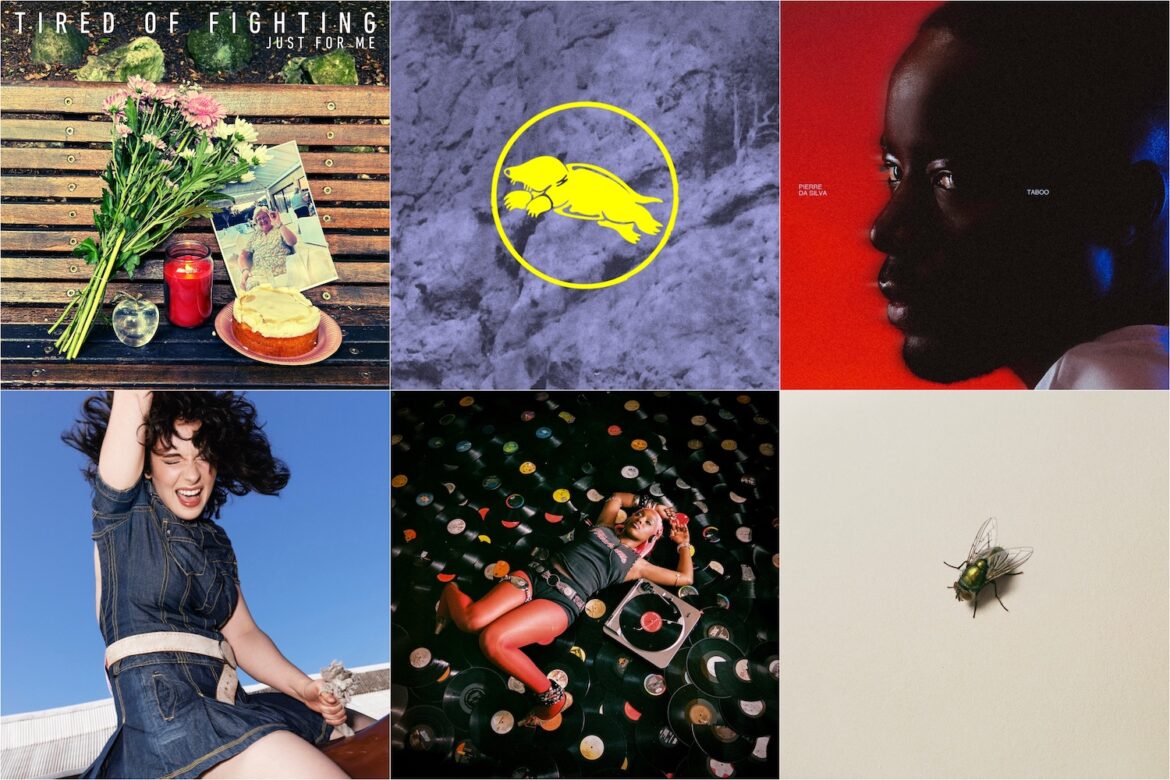
Atwood Magazine is excited to share our Editor’s Picks column, written and curated by Editor-in-Chief Mitch Mosk. Every week, Mitch will share a collection of songs, albums, and artists who have caught his ears, eyes, and heart. There is so much incredible music out there just waiting to be heard, and all it takes from us is an open mind and a willingness to listen. Through our Editor’s Picks, we hope to shine a light on our own music discoveries and showcase a diverse array of new and recent releases.
This week’s Editor’s Picks features Tired of Fighting, LIFE, Alemeda, aleksiah, Pierre Da Silva, and ill peach!

 follow EDITOR’S PICKS on Spotify

“Just for Me”
by Tired of FightingGrief doesn’t arrive gently, and it doesn’t ask permission – it crashes through the door and rewrites everything you thought you understood about time, memory, and the people you love. Tired of Fighting’s “Just For Me” lives inside that rupture, tracing the disorienting, deeply human experience of saying goodbye while still searching for the right words to hold on. Written in the wake of frontman Nic Wood’s grandmother’s terminal diagnosis, the song transforms a moment of unbearable loss into a towering act of remembrance – one that aches with guilt, love, and the quiet desperation to make meaning out of what can’t be fixed. From its opening confession – “This is just for me / this is just for my sanity” – to its heaven-shaking refrain, “Just For Me” doesn’t just tell a story about grief; it makes you feel the weight of it in your chest, all at once raw, reverent, and impossibly alive.
This is just for me
This is just for my sanity
To feel a little less guilty
For when I said I was busy
Let’s sing so loud
It’ll trouble the heavens
So angels glide over trembling clouds
Let’s sing so loud
The dead can live on
Just for a moment
Inside of a song
Released March 20 via Punkerton Records, “Just For Me” introduces Tired of Fighting as one of the UK’s most compelling rising voices in emo and alternative rock – a Newcastle-upon-Tyne band built on urgency, honesty, and sheer sonic force. Formed in 2019 around Nic Wood’s towering, full-bodied vocals, the group – rounded out by George Sharpe on bass and Kev Nolan on drums – has quickly carved out a reputation in the northeast for turning stripped-back ingredients into something massive. Drawing inspiration from early 2000s emo while channeling the storytelling spirit of heart-on-sleeve rock bands past and present, Tired of Fighting thrive on emotional clarity and dynamic intensity, crafting songs that feel as cathartic in a crowded room as they do through headphones.
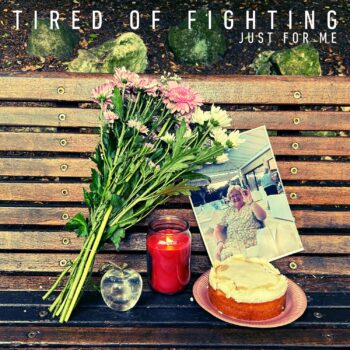
That ethos is at the core of “Just For Me,” a song that begins in near solitude before erupting into a full-bodied, feverish release. Wood’s voice sits hot on the mic, exposed and unguarded, before the band kicks in with roaring guitars and relentless percussion – the kind of sonic shift that mirrors the shock of life-altering news hitting all at once. By the time the song reaches its towering finale, complete with a choir that swells like a congregation, the track feels larger than life itself: Grief turned into communion, memory turned sacred. It’s visceral and overwhelming in the best way, a song that doesn’t hold back because it can’t.
I’m in a couple of bands
It’s not important really
It’s not nearly a living
But it keeps me busy
You searched and you found us
On the internet highway
You said you were proud of
who I was becoming
Let’s sing so loud
It’ll trouble the heavens
So angels glide over trembling clouds
Let’s sing so loud
The dead can live on
Just for a moment
Inside of a song
“There are certain moments that you can never truly be prepared for. Finding out that your grandmother has terminal cancer is one of them,” Wood tells Atwood Magazine. “In her final weeks she was moved to a care home. In her room there was a notice board that said ‘Just for me’ on it, which you were supposed to fill up with photos and other personal things that would jog memories. We went to visit her one day and her brain tumour was affecting her particularly badly. The only words that she could say were ‘just for me.’ She just kept saying ‘just for me’ over and over again. It was heartbreaking, and terrifying, but it was almost like I could tell she was saying that she loved us and that it was going to be okay. We needed to hear that just as much as she did in that moment.”
“As a songwriter I think it can be an easy trap to get lost in your own thoughts sometimes and, dare I say it, maybe even be a little self-centered. Then here come these three words ‘just for me,’ supposedly dripping with egotism, that come to teach us that life can change at any given moment, so it’s important to see the wider world around you. As she was saying them, ‘just for me’ meant so many more things. I knew that she was trying to say ‘I love you,’ ‘It’s going to be okay,’ ‘don’t worry about me.’ The words ‘just for me’ communicated so much that afternoon, it had to be the title of the song.”
That phrase becomes the emotional anchor of the song – three simple words that carry an entire lifetime’s worth of meaning. “It’s a song about saying goodbye to someone, but it’s also about processing grief, and learning life lessons,” Wood explains. “Something you don’t necessarily expect to feel is the guilt you experience for not cherishing the moments you were with that person when everything was fine… So this song is a reminder to appreciate the people that you have in your life.” In that light, the chorus – “Let’s sing so loud it’ll trouble the heavens so angels glide over trembling clouds / let’s sing so loud the dead can live on just for a moment inside of a song” – reads as both a plea and a promise: A way of keeping someone present, if only for a few fleeting minutes at a time.
Let’s sing so loud
The dead can live on
Just for a moment
Inside of a song
“To me the chorus is about trying to give up my stubbornness and to have an ego death of sorts,” Wood adds. “I had built myself up to be this logical, cynical person, but this was me trying to say, I have no idea if ghosts are real, I don’t know what happens when we die, I have no idea if angels exist or if there’s a plan. I wanted to abandon that part of myself and give thanks. But I wanted to show that thanks in my way. I am a very loud singer, there are times in the set that I sing completely off mic, and whenever I do that it does almost feel like a religious experience, when myself and the crowd are just all locked in sharing the same thing… Basically, I wanted to praise in the way I knew how. Also there’s a saying that goes, you die twice, the first time when they bury you, and the second time when you last get thought about, so whenever this song is played, she will always be alive in some sense.”
Your granddaughter
can handle herself in Mexico
She still knows karate
Somewhere in her catacombs
Your granddaughter is gonna be fine
anywhere she goes
She holds the secrets of the science
She has a rage like a bulldozer
Your granddaughter
can handle herself in Mexico
She still knows karate
Somewhere in her catacombs
Your granddaughter is gonna be fine
anywhere she goes
She holds the secrets of the science
She has a rage like a bulldozer
Tired of Fighting’s music is rooted in sincerity and connection, their songs inviting listeners to see themselves reflected in shared experiences and emotional truths. That commitment resonates deeply here, where personal loss becomes communal catharsis – a space where grief is felt, honored, and, in some small way, carried together. “Our music is about sincerity, authenticity, and communication,” Wood says. “Our music is there to tell people that it’s okay to allow yourself to feel. As a live band, we also love proving that you can make a massive sound with just the simple elements of a guitar, bass, drums and a voice.”
With “Just For Me,” that message lands with extraordinary force. This is emo at its most immediate and expansive – intimate in its details, universal in its reach, and unafraid to be as loud, raw, and human as the moment demands. In a genre built on catharsis, Tired of Fighting have delivered a song that doesn’t just meet that standard – it raises it, channeling grief into connection, memory into motion, and love and loss into music that can be shared, sung, and carried forward.
If this is any indication of what’s to come, Tired of Fighting aren’t just part of emo’s next wave – they’re shaping it, proving that the most powerful songs still come from telling the truth as loudly, unapologetically, and honestly as possible. “Just for Me” is breathtaking and life-giving – an inspiring, aching reminder that even in loss, there is connection, and in connection, there is a kind of enduring life.
Let’s sing so loud
It’ll trouble the heavens
So angels glide over trembling clouds
Let’s sing so loud
The dead can live on
Just for a moment
Inside of a song
“The Dollywaggon”
by LIFELeaving demands rupture – a tearing loose from the self you thought you were, driven by instinct as much as intention. LIFE’s “The Dollywaggon” barrels headfirst into that moment of upheaval, a feverish post-punk fever dream that captures the violent, exhilarating push toward new beginnings with rip-roaring force. Built on furious drumming, searing electric guitar work, and a relentless churn that never lets up, the track feels cathartic and instinctual in its release – dramatic to the nth degree, unapologetic and unforgiving in how it hits and how it moves. From the very first line – “Get yourself a new skin and keep walking up and over…” – “The Dollywaggon” doesn’t ease you into its world; it throws you straight into the fire, demanding motion, demanding change, demanding that you keep going no matter what waits on the other side.
Get yourself a new skin and keep walking up and over like the soil weary marcher. You can march anywhere even through grouse-bodied marsh, and there’s no such thing as being parched when your thirst keeps topping up.
Over Dollywaggon, well done that’s a medal. The bunion. You befriend the crank who hangs dead moles on chicken wire. And the placard reads right to roam, and the boy is roaming. You’re f***ing roaming.
I never wanted to leave myself,
but I’m leaving now
Released February 16 via Launchpad+ in partnership with EMI North, “The Dollywaggon” marks LIFE’s long-awaited return and serves as the lead single off their fourth studio album ABSTRACT / NATURAL, out June 19. The Hull, UK four-piece – Mez Sanders-Green (vocals), Mick Sanders (guitar), Lydia Palmeira (bass), and Stewart Baxter (drums) – have spent over a decade carving out their place as one of the country’s most fiercely independent and community-driven bands, building their own creative ecosystem while releasing three acclaimed records: Popular Music, A Picture of Good Health, and North East Coastal Town. Rooted in DIY ethos and collective spirit, LIFE have always made music with purpose and urgency; here, that identity expands outward, sharpened and reenergized after nearly four years away.
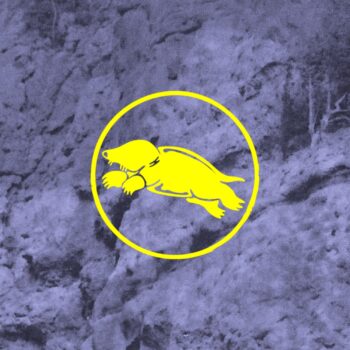
That sense of forward motion pulses through every second of “The Dollywaggon,” a track that churns and surges like the journey it documents. Written while Sanders-Green walked the 193-mile coast-to-coast route across England – from the Lake District through the Yorkshire Dales and across the moors to Robin Hood’s Bay – the song unfolds as both physical trek and internal reckoning. Characters flicker in and out like roadside apparitions, landscapes take on mythic weight, and the entire composition moves with a breathless urgency that mirrors the act of putting one foot in front of the other, again and again, toward an uncertain horizon. “Purpose. Momentum. Movement. Freedom.” It’s feverish, immersive, and vividly alive – a sonic landscape that feels carved out of earth, sweat, and sheer will.
You see that giant up ahead with his phallic pole f*** dripping up to the sky, the good thing is – he’s been neuted – by the one and only. She. The Mother. Mother Earth always wins. She does a solid.
And even I’d pledge allegiance to that. I’d kneel. Salute Dollywaggon. Crying, toxic man. Toxic man dotted out. Dotted. Out.
“‘The Dollywaggon’s universal theme is about letting go and moving on – new adventures and beginnings. I wrote the lyrics whilst doing a long distance walk… turning what I saw into characters and scenes,” Sanders-Green explains. “I like to think it sounds like a pulpy Northern-based western – cryptic placards, farmers hanging dead moles on chicken wire, phallic mountains, pikes and ridges, Mother Earth always winning. The middle-8 feels like a salute to the new. In many ways, the track became the blueprint for the whole record.”
That blueprint reveals itself in the song’s structure as much as its imagery. The band lean hard into contrast and escalation – tightening the screws with surgically precise drumming before letting the track rip open in waves of distortion and vocal intensity. Sanders-Green delivers his lyrics in near stream-of-consciousness bursts, his voice pushing against the edges of the arrangement, urgent and unrelenting as it carries lines like “I never wanted to leave myself, but I’m leaving now” into something both deeply personal and universally understood. “For me, this line is me saying to myself, it’s ok to move on as moving on opens up new adventures,” he explains. “When humming this line I noticed it sounded a bit like a nursery rhyme… I enjoyed that idea as I think there can be underlying meanings in rhymes you hear in the playground.” It’s a release that feels earned, not manufactured – a confrontation with the self that refuses to be softened or simplified.
“The intent here was to be bold and brave,” he says. “The whole record is about new beginnings, letting go and maybe saying goodbye. It’s about adventure, journey and escapism… I see ‘The Dollywaggon’ as the opening chapter to the story I tell on this record as a lyric writer.” That framing lands with force: this is not just a single, but a threshold – the first step into a ten-part narrative that unfolds across ABSTRACT / NATURAL, a “musical novella” rooted in place, myth, and movement.
I never wanted to leave myself,
but I’m leaving now
forever pining to be posted
around the pike
Pentangle
towards that edge
we’re one and the same
I never wanted to leave myself,
but I’m leaving now
LIFE have always centered their work around connection – to community, to landscape, to each other – and that ethos runs deep here. “We are passionate about community and DIY culture,” the band share, a simple statement that underscores everything they’ve built over the past decade. On ABSTRACT / NATURAL, that foundation widens into a fully realized creative world, shaped not just by the band but by the collective that surrounds them, from their Hull-based studio, The Moon Factory, to the broader network of artists they continue to champion and uplift.
With “The Dollywaggon,” LIFE don’t just return – they surge forward, louder, sharper, and more unrestrained than ever. This is post-punk at its most feverish and full-bodied, a rip-roaring statement of intent that embraces chaos, movement, and transformation with unapologetic force. In capturing the catharsis of letting go and the thrill of what comes next, LIFE deliver a song that doesn’t just ask you to move – it insists on it, pulling you into its churn and daring you to keep going. “If ‘The Dollywaggon’ can stir up a sense of escapism, then I feel like we have done our jobs,” Sanders-Green says. “This album was forged by so many… it is a collective offering.” In the end, “The Dollywaggon” doesn’t just soundtrack the act of leaving – it becomes the rupture itself, the forward motion, the moment you let go and move into whatever comes next.
“Broken Record”
by AlemedaBeing taken for granted leaves a mark – a slow-building frustration that eventually snaps into a louder, sharper, impossible-to-ignore breaking point. Alemeda’s “Broken Record” turns that breaking point into a full-throttle release, a loud, unabashedly loud pop rock explosion that rushes and roars through its two-and-a-half-minute runtime with ferocious intent. Fueled by larger-than-life guitars, pounding drums, and a vocal delivery that cuts straight through the noise, the track plays like a cathartic outburst set to distortion – fierce, biting, and completely unfiltered as it barrels forward without hesitation.
Released February 20 via Top Dawg Entertainment / Warner Records, “Broken Record” marks Alemeda’s first single of 2026, arriving on the heels of her sophomore EP But What The Hell Do I Know – a project that cemented her as one of alternative pop rock’s most fearless and uncompromising new voices. Raised between Ethiopia and Arizona, Alemeda has steadily built a reputation for channeling personal truths into explosive, genre-blurring anthems, blending pop instincts with rock muscle and sharp-edged lyricism. “I’m excited to be a part of the movement of alternative representation for black women,” she says, a mission that underscores both her presence and her impact. Over the past five years, she’s carved out space on her own terms, pushing against expectations while opening doors for broader representation in alternative music.

“I wrote ‘Broken Record’ about being taken for granted. It’s about not feeling appreciated until you’re gone,” she shares. That sentiment pulses through every second of the song, where absence carries more weight than presence and frustration spills over into a combustible release. “Just the general feeling of your absence is more appreciated than your presence,” she adds, distilling the track’s emotional core into a line that hits with blunt, undeniable force.
That tension drives the song’s sonic identity, where everything feels dialed up to its most extreme setting. The guitars rip and snarl with a theatrical edge, recalling arena-sized rock grandeur while staying rooted in raw, garage-born grit; the rhythm section surges forward with relentless momentum, never letting the track settle or soften. Alemeda’s delivery matches that intensity beat for beat, her voice riding the chaos with confidence and bite, turning assertive, confrontational lyrics into moments that feel both personal and universally resonant.
“I took some inspiration from Alabama Shakes and the Dragon Ball Z Kai theme song,” she says of the track’s sound. “I also watched The Sound of Music the night before and that inspired the chorus melody.” That collision of influences lands exactly as you’d hope – bold, unpredictable, and completely her own, merging cinematic sweep with punk urgency in a way that feels instinctual rather than calculated.
What makes “Broken Record” hit as hard as it does, though, is the clarity behind its anger. Alemeda doesn’t just vent – she draws a line, reclaiming space and self-worth in the process. “I hope that listeners can take away a sense of confidence to walk away from situations where they’re not being appreciated,” she says, grounding the track’s explosive energy in purpose and empowerment. It’s that balance – between fury and intention, chaos and control – that gives the song its staying power long after its final note fades.
With “Broken Record,” Alemeda doesn’t just make noise – she makes a statement. This is pop rock at its most explosive and unrelenting, a fierce, dynamic anthem that refuses to shrink itself or soften its edges. In turning frustration into fuel and absence into power, she delivers a track that doesn’t just demand to be heard – it dares you to listen, louder every time it plays.
“Bullsh*t, Baby!”
by aleksiahBeing taken for granted only works until it doesn’t – until you finally see things clearly and decide you’re done for good. In that instant, your self-worth snaps into place with a smile, a shrug, and a perfectly timed “enough.”aleksiah’s “Bullsh*t, Baby!” channels that realization into a catchy, larger-than-life indie pop reverie, a feel-good sway that rushes forward with buoyant energy and a cool, irresistible glow. It’s loud in spirit even at its breeziest, a three-and-a-half-minute burst of sonic sunshine whose heat radiates through glistening, mellifluous vocals and melodies that feel designed to lift you up and pull you along. Fun is the word – truly – but beneath that shimmer is a fire that refuses to be ignored.
You’re a pop psychologist
Needle in your fables, tending to my fist
You’re the cool philosophist
Read the situation, tell me how it is
You say I’m a hurricane
Blown out of proportion, always in the way
And I know I’m scared of change
But maybe not today
Released March 6 as the Adelaide pop star’s first offering of 2026, “Bullshit, Baby!” ushers in a new era anchored by her upcoming EP Good On Paper, arriving this May alongside an Australian headline tour. Following the breakout success of 2025’s cry about it – a record that propelled her onto global stages and into the NME 100 – aleksiah continues to carve out her own lane in modern pop: Candid, confessional, and unapologetically self-aware. Since her 2022 debut “Fern,” she’s steadily built momentum through viral singles, critical acclaim, and a growing international presence, all while refining a voice that balances emotional honesty with undeniable pop instinct.

Bullshit, baby, you just hate me
And you do it on the daily
Bullshit, baby, you’re so lazy
Come and end it while you can
Bullshit, baby, drive me crazy
You’re just keepin’ me for safety
Bullshit, baby, don’t just date me
If you can’t even give a damn
“Bullshit, Baby!” feels like a bold return to the spotlight – a reintroduction that doubles as a statement of intent, signaling an artist stepping fully into her sound and setting the tone for what’s still to come. aleksiah wrote the song from the perspective of someone finally seeing a bad situation for what it is – and finally deciding to leave. “I seemed to have a really bad track record of choosing people to either date or see that really had no interest in me or who I was as a person,” she explains. “Some of them I felt really didn’t really care if I was breathing or not, and it was frustrating that I didn’t see that at the time and kept staying when I had no idea why I was really there or why I was wasting my time, so I wrote this song looking back at myself essentially being ‘girl, why are you so stupid just leave.’” It’s both reflection and reclamation, looking back with clarity and stepping forward with control.
That reclamation pulses through the song’s sound, where lightness and intensity move side by side. A tight groove and shimmering production give the track its buoyant lift, while aleksiah’s delivery carries a looseness that feels effortless and intentional all at once. “We wanted to have people hear how much fun we were having while we made this song,” she says. “I actually bounced around and was smiling throughout all the chorus takes.” You can hear it in every line – the way her voice dances across the beat, the way the chorus lands with both bite and brightness, turning frustration into something you can move to.
You’re a fake monogamist
Show me who you’re callin’,
tell me who you’re with
Always play apologist
Never really mеan it, redirect your shit
I am sick of playin’ dumb
You don’t really lovе me, I am not the one
And that’s okay, but please speak up
‘Cause honey, I am done
Bullshit, baby, you just hate me
And you do it on the daily
Bullshit, baby, you’re so lazy
Come and end it while you can
Bullshit, baby, drive me crazy
You’re just keepin’ me for safety
Bullshit, baby, don’t just date me
If you can’t even give a damn
That contrast is no accident. “I almost wanted to change the past in a way… I wanted to re-write that narrative, with more of a ‘this is your last chance’ kind of vibe,” she leaning into a version of herself that knows better, demands more, and finally walks away. Where once there was hesitation, “Bullshit, Baby!” leans into confidence, flipping the script on relationships that settle for less and refusing to stay in spaces that don’t give back. It’s a song about walking away – but it never feels heavy. Instead, it glows.
That glimmer is what makes “Bullshit, Baby!” hit the way it does. It’s empowering without preaching, sharp without losing its sense of play, and entirely committed to the joy of its own release. As aleksiah puts it, the hope is simple: “To not let anyone take advantage of you… If you’re not happy, leave!!!” It’s advice delivered with a wink and a hook, wrapped in melodies that stick long after the song ends.
With “Bullshit, Baby!,” aleksiah doesn’t just call out bad behavior – she transforms it into fuel. This is indie pop at its most radiant and self-assured, a feverish, fiery anthem that knows exactly what it is and exactly how it wants to feel. In embracing both the sunshine and the sting, she delivers a track that doesn’t just make you smile – it reminds you why you should.
In the end, “Bullshit, Baby!” doesn’t just mark the moment you’ve had enough – it’s the clarity, the confidence, and the clean break that comes with finally walking away.
I loved you and your mess
But I can’t make this shit make sense
I loved you and your mess
But I know I can’t love you ’till death
Bullshit, baby, you just hate me
And you do it on the daily
Bullshit, baby, you’re so lazy
Come and end it while you can
Bullshit, baby, drive me crazy
You’re just keepin’ me for safety
Bullshit, baby, don’t just date me
If you can’t even give a damn
“Taboo”
by Pierre Da SilvaDesire lives in the in-between – in the moments we keep to ourselves, the glances we don’t explain, the connections that feel too electric to name out loud. Pierre Da Silva’s “Taboo” leans all the way into that tension, turning secrecy into seduction and restraint into release. It’s a song that pulses with quiet urgency and undeniable pull, a brooding, propulsive slow-burn that wraps itself around you and doesn’t let go. From its very first breath, Da Silva’s breathtakingly nuanced vocal performance draws you in close – intimate, aching, and visceral – gliding over a dreamy, soul-stirring soundscape that feels as intoxicating as it is emotionally charged. This is music that doesn’t just linger; it lingers under your skin, shimmering with longing and heat in equal measure.
I didn’t mean to do this
It only took one kiss
To disarm me with your lips
Now I can’t resist uh huh
You know just what you’re doing
Got me playing into your tricks
I’ll be falling into your ditch
Laid out there for me
That’s a guarantee
Released March 26, “Taboo” finds the Hackney-based singer/songwriter stepping into a more playful, mischievous side of his artistry, expanding on the vulnerability-led songwriting that first put him on the map. Having built a reputation for emotionally open, reflective records, Da Silva continues to evolve here – blending pop, soul, and dance influences into a sound that feels both deeply personal and effortlessly fluid. His recent run of releases, including February’s “Dans Le A.M.,” signals an artist in motion, growing more confident and more uninhibited with each step, while staying rooted in the emotional honesty that defines his work – a balance he sums up simply: ‘Sometimes the music will be fun, sometimes it won’t.’

That sense of freedom is intentional. “Most of my writing is often rooted in vulnerability, but Taboo was written from such a playful place,” he tells Atwood Magazine. “It’s about leaning into the thrill of a guilty pleasure. Seeing someone or doing something you might want to keep private, and embracing the freedom and excitement in that.” For Da Silva, the song isn’t weighed down by conflict – it thrives in that push and pull, finding beauty in the tension between what’s felt and what’s revealed.
You, you bring the trouble
I’m falling into
I know what I’m doing
but I’m not supposed to
I can’t stop it, I don’t want to
I don’t want to, I only want you
Let’s keep it a secret
Call it Taboo
You’re just trouble and I knew
I can’t stop it, I don’t want to
I don’t want to, I only want you
Written during a period of creative shift, “Taboo” captures an artist opening himself up in new ways. “I feel like I’m constantly growing and changing and expressing myself in new ways… this music is much freer and more honest than some of my previous releases,” he explains. “That’s mainly due to me just coming into my own as a person and finding more confidence in who I actually am. We’re definitely stripping the layers back.” That evolution is palpable throughout the track, where every note feels instinctual and unguarded, guided as much by emotion as by intention.
Sonically, that openness translates into a rich, immersive experience. There’s a sensuality to the way the song unfolds – a subtle build, a lingering tension, a rhythm that feels both grounded and weightless. The bilingual interplay of English and French adds another layer of intimacy, softening the edges and deepening the allure, as if the song itself is slipping between worlds. It’s in that space that Da Silva thrives, balancing soulfulness and restraint with a magnetic, almost hypnotic pull.
One look and I’m yours
But could you be mine
There’s danger in your eyes
But I can’t look away
It’s 11:59 I’m asking you to stay
You’re happy to oblige
We both clearly want it that way
We both clearly want it that way
At its core, “Taboo” is about surrender – to feeling, to desire, to the fleeting moments that don’t need to be explained to be understood. “For me, Taboo is about a sneaky link… the fun in it,” he says with a smile. “We might not seek a relationship or want to be public but we enjoy each other’s company and the fun and keeping things light and private.” There’s a freedom in that perspective, one that trades expectation for experience and finds meaning in the moment itself.
That sense of release lingers long after the song fades. “I want people to feel more free to enjoy things… we’re always trying to be a little too cool for school,” Da Silva reflects. “I want us all to just be more free and have more fun… I feel freed.” And in that spirit, “Taboo” becomes more than a song – it becomes an invitation: to let go, to lean in, and to embrace the thrill of what we don’t always say out loud.
You, you bring the trouble
I’m falling into
I know what I’m doing
but I’m not supposed to
I can’t stop it, I don’t want to
I don’t want to, I only want you
Let’s keep it a secret
Call it Taboo
You’re just trouble and I knew
I can’t stop it, I don’t want to
I don’t want to, I only want you
“MOLLY'S NOT A FRIEND”
by ill peachSometimes grief explodes in a crowded room – blurring the line between escape and exposure until there’s nowhere left to hide. ill peach’s “MOLLY’S NOT A FRIEND” captures that rupture in full force, a feverish, volatile alt-pop eruption that churns and thrashes with high-octane intensity. Built on sweaty synths, driving drums, and a disorienting sense of momentum, the track hits like a wave you didn’t see coming – visceral, disruptive, and unapologetically ferocious in both sound and spirit. At the center of it all is Jess Corazza’s performance, raw and razor-sharp yet delivered with striking control and poise, turning a night gone wrong into something electrifying, chaotic, and impossible to look away from.
Head first in the crowd
Riding waves like a pool toy
Rope around the clouds
She’s like a wild card cowboy
Hit the floor
My heartbeat multiplies
See the panic in my blurry eyes
She was on her way out the door
She was on her way it’s how she rolls
She roll she roll she roll
Away she go she go
— — — —

Connect to us on
Facebook, 𝕏, Instagram
Discover new music on Atwood Magazine
Editor’s Picks
follow EDITOR’S PICKS on Spotify