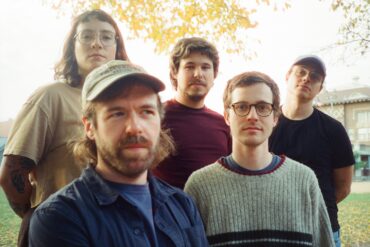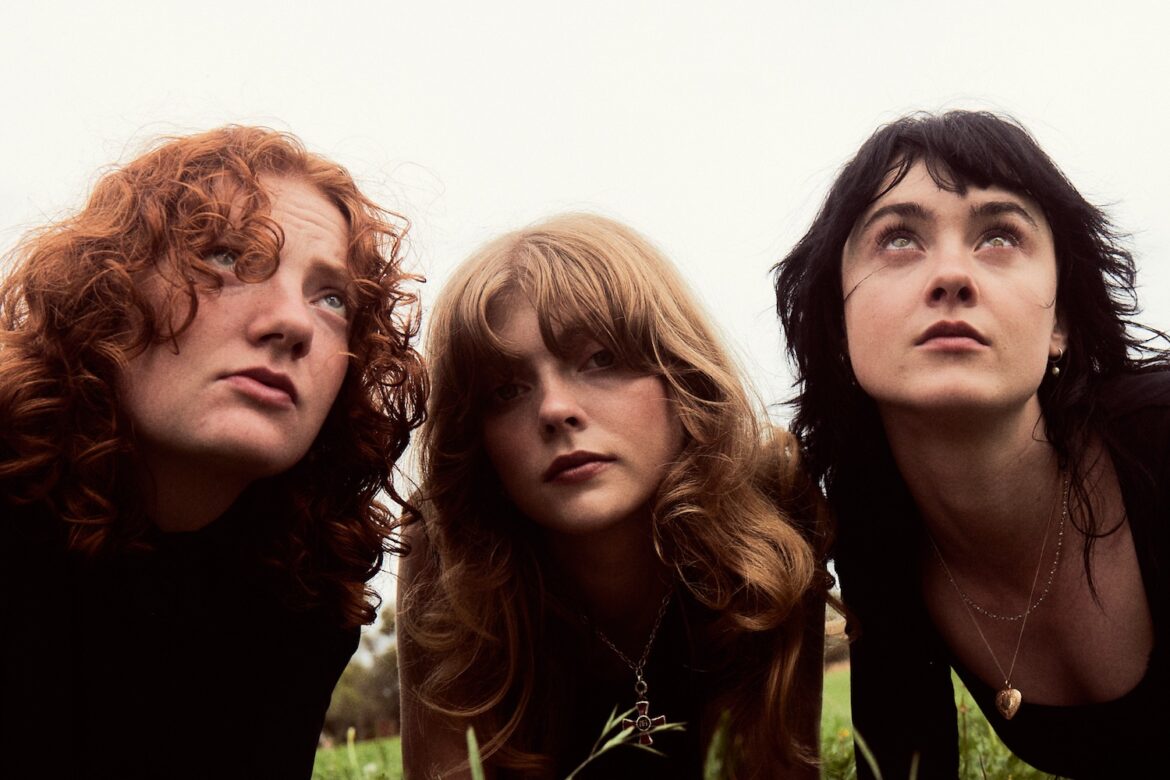
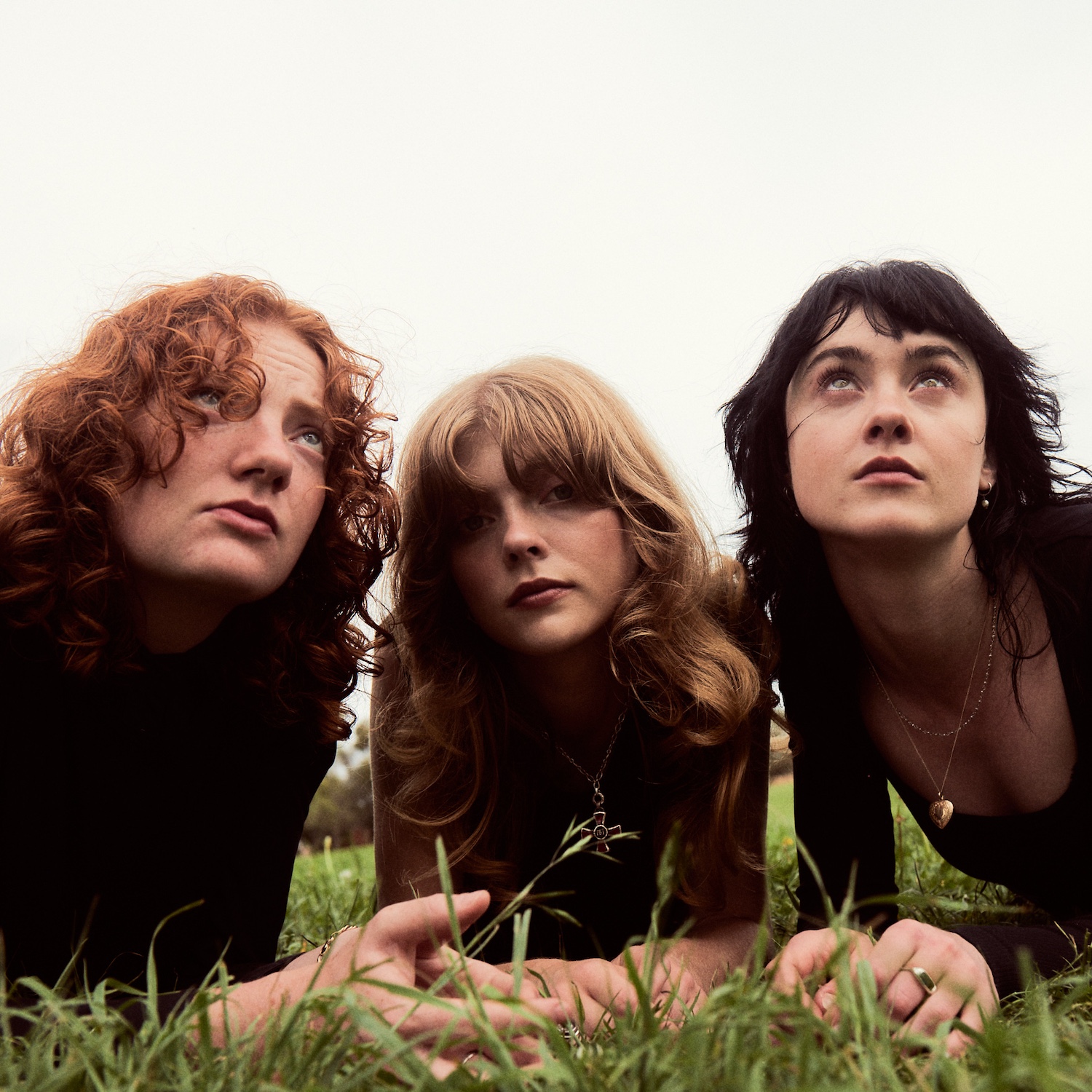
On their debut album ‘Now Would Be a Good Time,’ Melbourne’s Folk Bitch Trio channel heartbreak, dark humor and lush harmonies into a vivid, unfiltered portrait of what it means to be young, sincere and a little bit unhinged in the 2020s.
Stream: ‘Now Would Be a Good Time’ – Folk Bitch Trio
Releasing your debut album is a bit like shouting your diary entries into a canyon – equal parts terrifying and exhilarating.
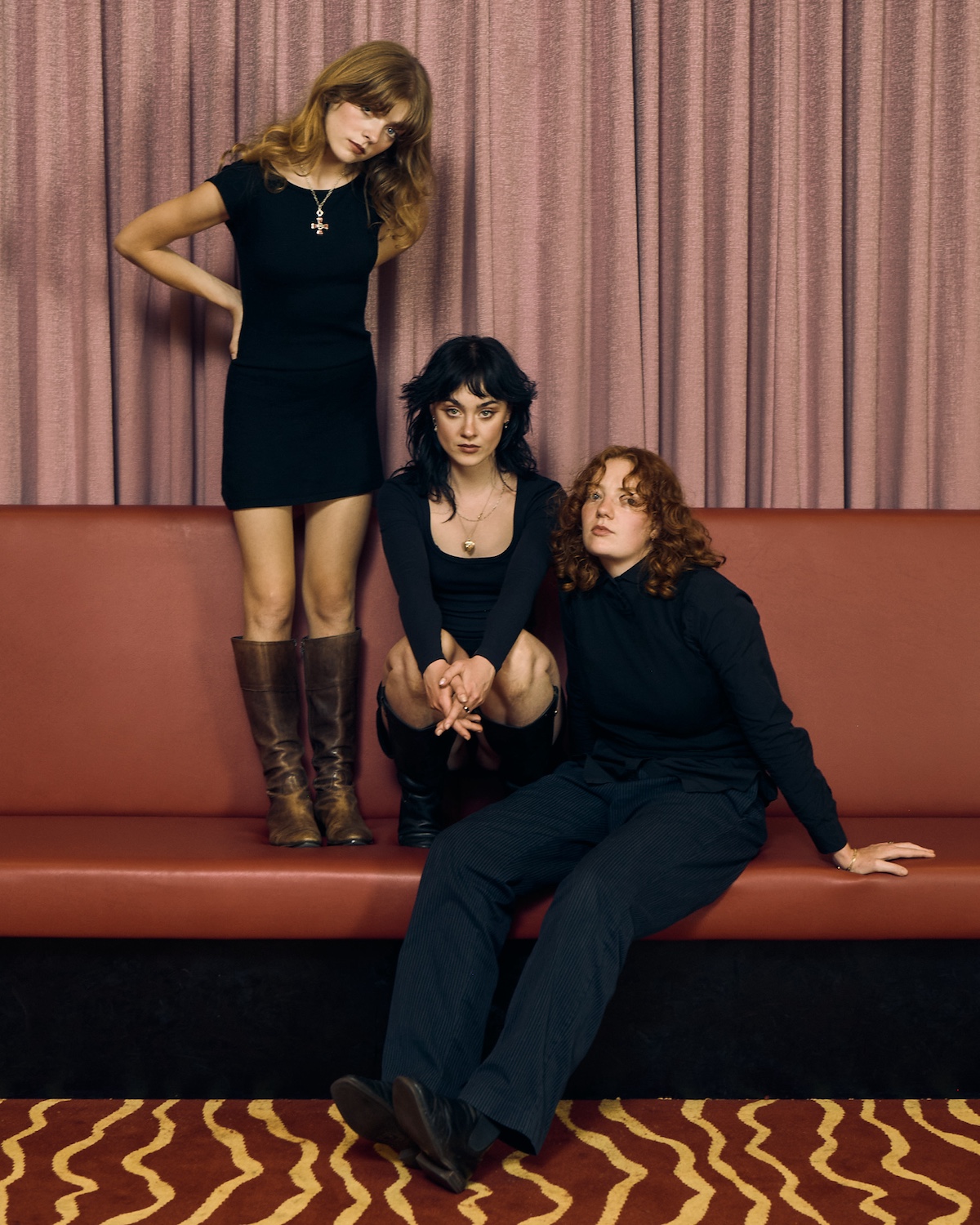
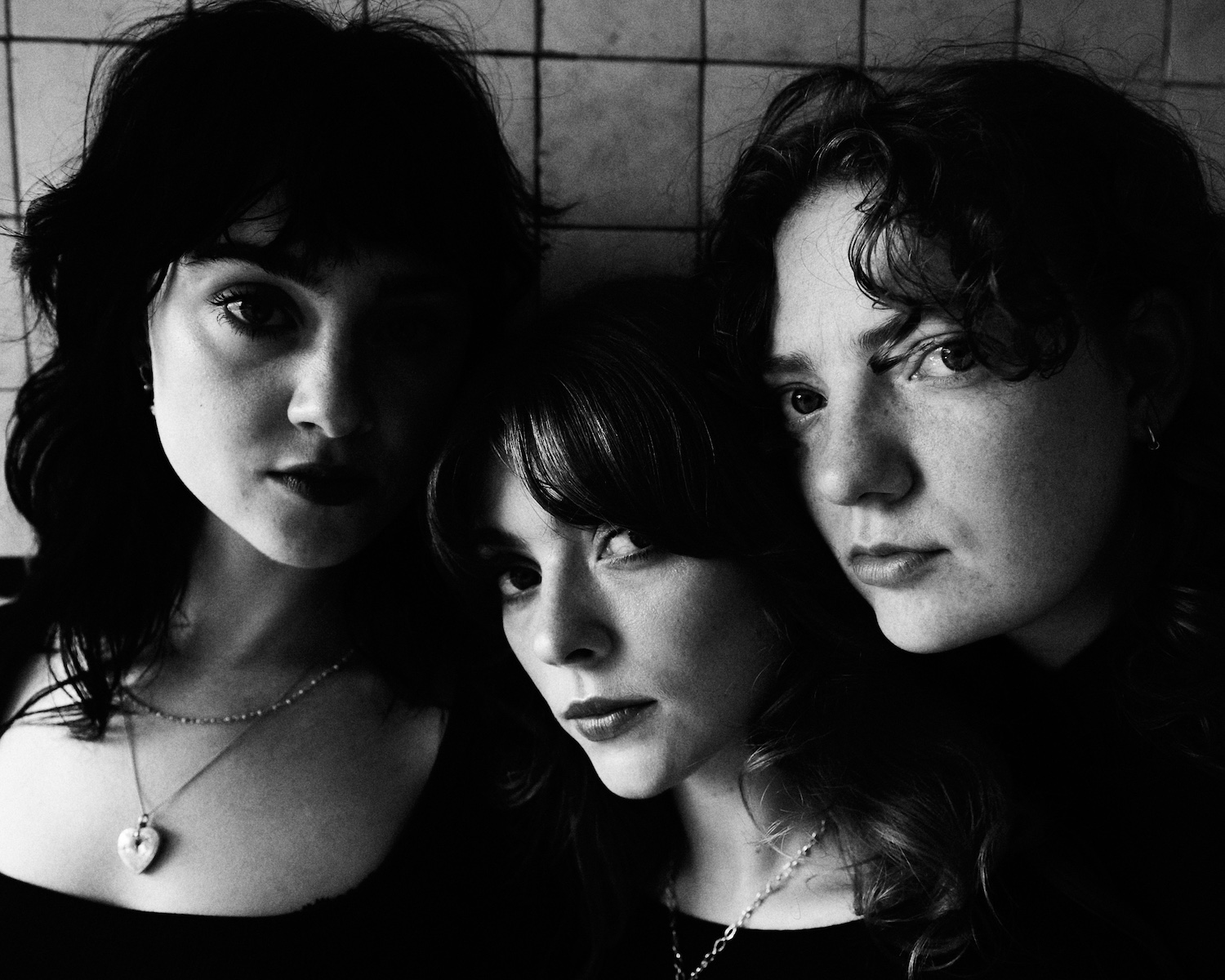
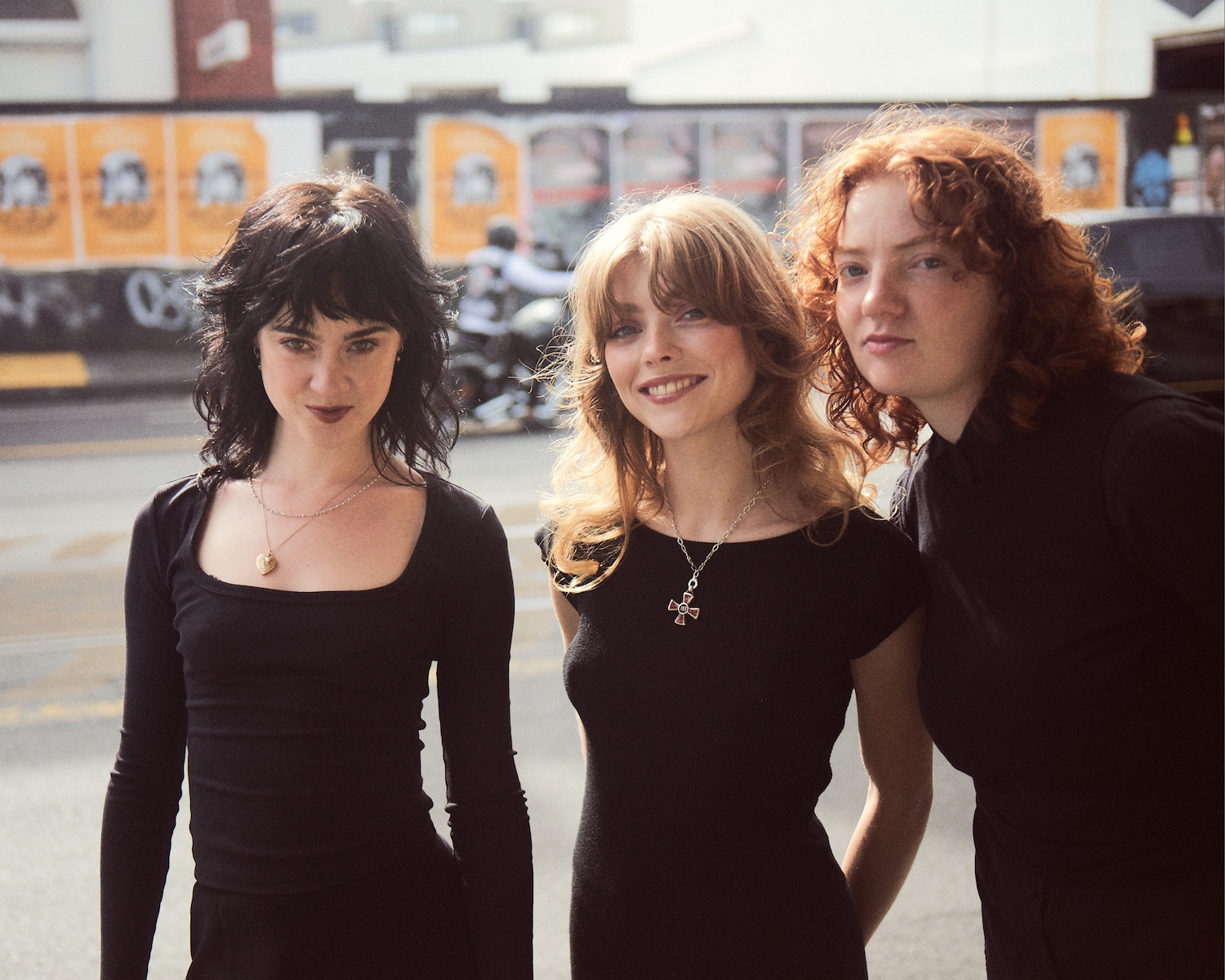
For Folk Bitch Trio – Gracie Sinclair, Heide Peverelle, and Jeanie Pilkington – putting Now Would Be a Good Time into the world feels surreal.
Just days before its official release on July 25th, they handed the vinyl over to fans at a live show. “It felt a bit scary,” says Peverelle. “Like, oh my god, we’re actually doing this.”

That sense of awe – of finally seeing something long in the making take shape – echoes through the music itself. Now Would Be A Good Time is vivid and emotionally sharp, weaving together gothic ballads, dark humor and plainspoken honesty about heartbreak, lust and life in your early twenties. Songs like “Moth Song” drift like a fever dream, while “The Actor” hits like a gut punch. Each track captures a moment: sex dreams next to your partner (“Hotel TV”), post-breakup theatre shows, and guttural self-analysis (“Cathode Ray”).
The band recorded to tape with producer Tom Healy in Auckland – after trying digital, they knew it wasn’t quite right. Tape gave their stripped-back harmonies and off-kilter arrangements the warmth and texture they were searching for. Finally, they sounded like themselves.
The clarity of knowing who they are and how they sound has been years in the making. Sinclair, Peverelle, and Pilkington first came together in high school. Their origin story includes a “bad heartbreak song” called “Edie” and a text from Pilkington asking if they wanted to start a “folk bitch trio.” Since then, their bond has deepened into something rare: three distinct voices, perspectives, and aesthetics fusing into a whole that’s stranger and better than the sum of its parts. Pilkington brings Americana roots and musician-parent wisdom, Peverelle is a visual artist with a pop ear, and Sinclair is the theatrical goth-jester of the group.
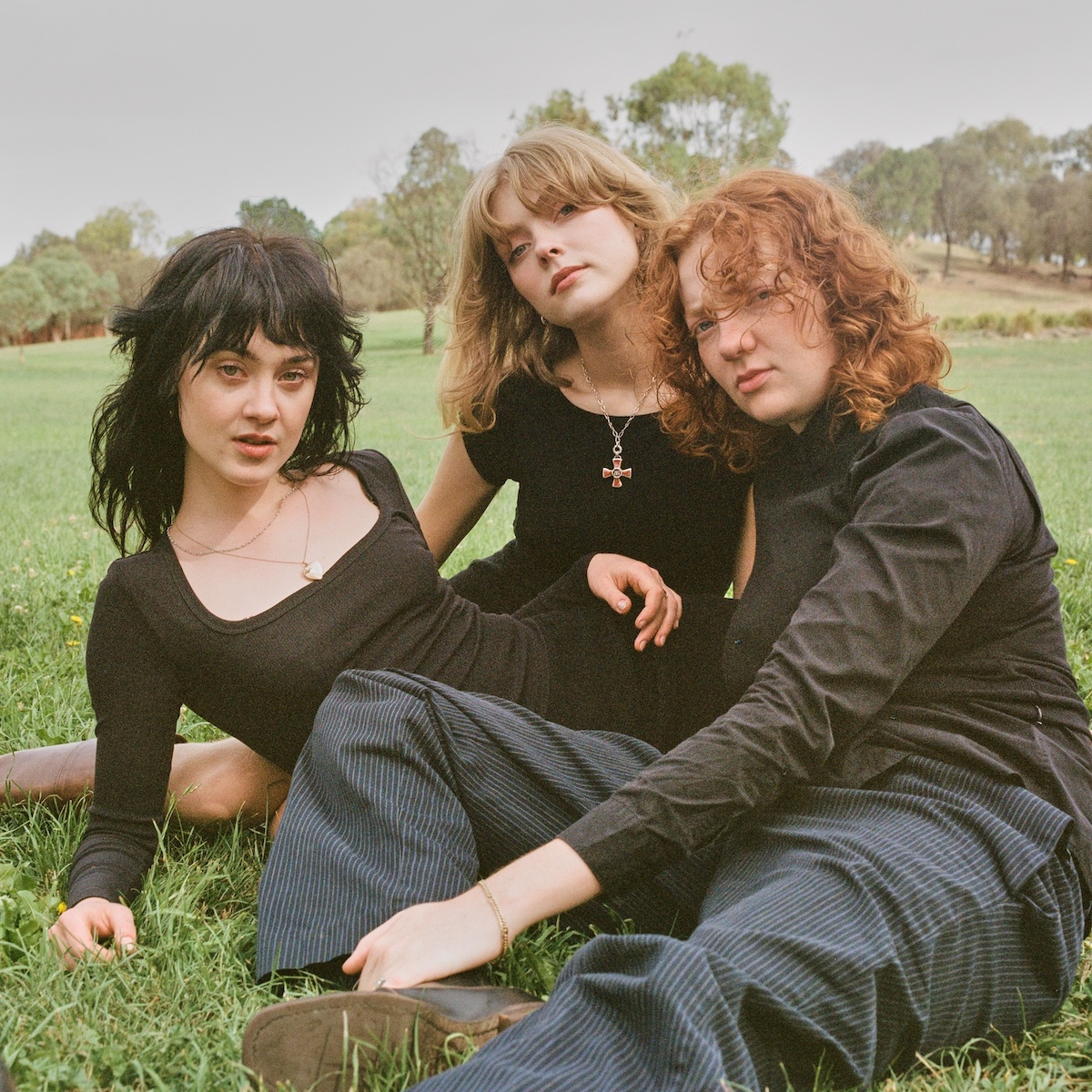
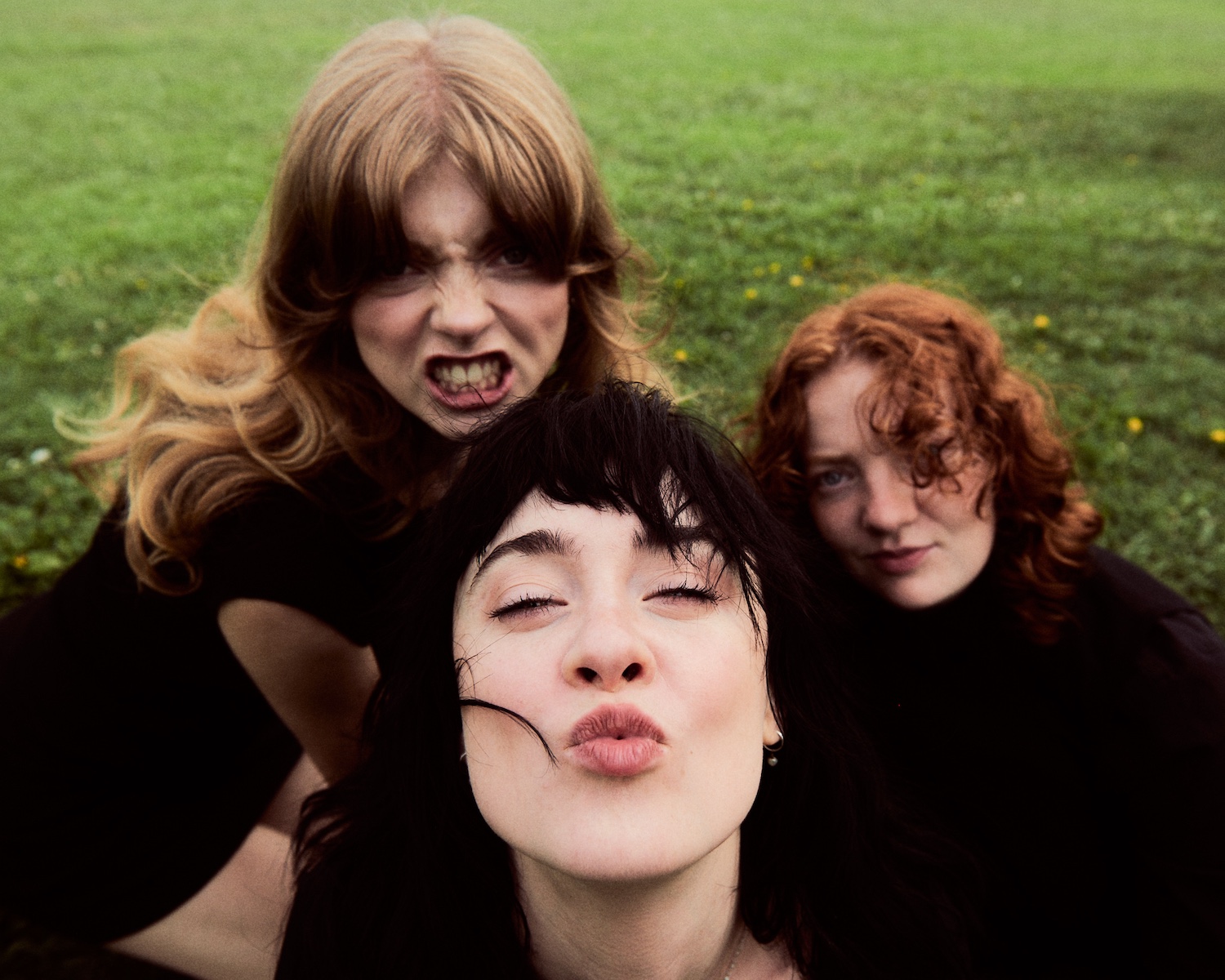
Despite the emotional intensity in their music, the trio doesn’t take themselves too seriously.
“Being a musician is weird,” says Sinclair. “You need to find the humor in it.”
That humor, sincerity, and heart-on-sleeve approach is baked into every note of the album. It’s part of what keeps them grounded, even as the pace of touring picks up and their audience continues to grow.
So, what’s next? More touring, more songwriting – though they admit it often happens in stolen moments between shows, or in a hotel room with half-written notes on their phones. Because for Folk Bitch Trio, songwriting never switches off.
Atwood Magazine had a quick chat with Peverelle, Pilkington, and Sinclair about emotional release, recording to tape, and why sincerity still matters.
— —
:: stream/purchase Now Would Be a Good Time here ::
:: connect with Folk Bitch Trio here ::
— —
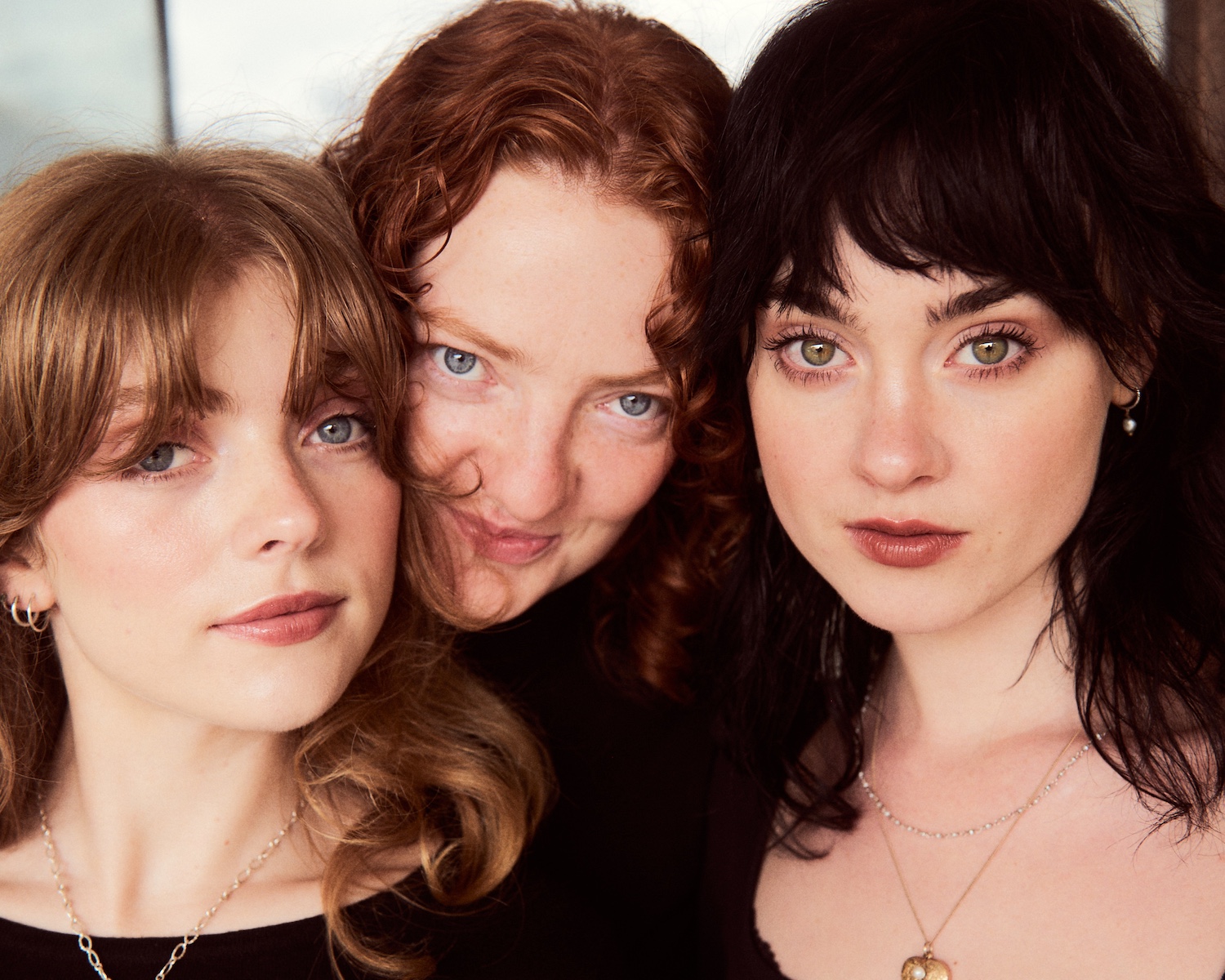
A CONVERSATION WITH FOLK BITCH TRIO
Atwood Magazine: I just saw you at the Winnipeg Folk Festival and you were amazing! I desperately wanted to hear “Moth Song” because I think it would have been beautiful in that setting.
Gracie Sinclair: Thank you. Yeah, I have a little bit of a sore voice and I still kind of do. So, we cut it from the set that night. But it was great, it was fun.
“Cathode Ray” is another great song. There's that one line about the scalpel. It’s such an intense lyric – where did that come from?
Gracie Sinclair: Thank you. That is nice that you pulled that. I actually opened my phone and saw Charlotte Ginsberg this morning talking about how she loves violence in movies because it’s so cathartic and I definitely resonate with that. I think I just have a lot of pent-up anger and frustration, and I am a very visual songwriter. I like to use words to invoke images and so I think it’s just an expression of violence using words.
I say, “We get home, get the scalpel out / and just for fun / you say, show me what it looks like / when you come undone.” It’s like when you come home with a partner and you’re really getting into a conversation with them. But really, you’re both poking at each other really hard and you need to stop. But you won’t.
Is that song cathartic, or is it opening old wounds for you?
Gracie Sinclair: I think it was probably like making new wounds at the time, but it’s also just like a reference.
A lot of your songs have very strong emotions in them. Is there ever anything you've written and thought it’s too much or does anything go?
Gracie Sinclair: Anything goes! As long as it’s a good song, that’s all that matters.
Can you tell me about how this album came together?
Jeanie Pilkington: It was written super fragmentally. We’ve been a band for five years and these songs have kind of come together slowly over that time at whatever period. Over the last couple of years, we’ve started touring quite a bit internationally. So, I’d like to say that half was written once we were a touring project and half of it was written about, I guess much more like mundane day-to-day life when music wasn’t our job, and we weren’t actually doing it that much.
You’re on a big tour now – how is that affecting the songwriting? Is there a lot of material coming out or are you just trying to absorb life?
Jeanie Pilkington: In hotels, sometimes that happens, but we’ve all spoken about the process of having your brain on to get inspiration while you’re on the road. But the actual song might not come about until you’re back home and have space to take it all in and see it from the outside a little bit. I don’t know, sometimes writing on the road, I feel like for me, it’s like constant. I’m always writing in my notes app or singing little melodies into my phone.
So far, we’ve had little to no down time. It’s rare to have time to sit down and write a song. But I feel like the process of being a songwriter never switches off, right?
Is there a lyric you have stored in your phone right now that you really want to get to?
Jeanie Pilkington: I think it’s something that I’m interested in exploring a bit more. Yeah, I’m excited to sit down and do that, but I wouldn’t reveal it until it’s good.
Being on the road, I imagine it makes you see a lot and grow up really quickly. Is that accurate?
Jeanie Pilkington: Maybe, I guess it’s hard to say. We’ve definitely seen a lot that you would never see if this weren’t what you were doing because there’s just certain places in the world and certain things you do when you’re on tour that wouldn’t happen naturally. And it’s not like traveling.
I think it does maybe make you go up quickly, but also kind of the opposite – you don’t have routine and you can’t really get into that kind of domesticated romantic life that some people would start to dig into at our age. I’d say that that could have the potential to stunt your growth a little bit; you’re like a going up incline and then you totally plateau and hit a peak where you’re stunted. I’d say professionally maybe our growth has been accelerated and then personally maybe there is some stunting going on.
Have there been any standout moments on tour?
Heide Peverelle: We sold some records at a show yesterday, like before the record’s out. So that felt a bit scary, like, oh my God, we are actually releasing the record. Handing it to them was kind of surreal.
Speaking of the record, it was recorded to tape, which offers a completely different feel and sound. What was the thought process behind that?
Heide Peverelle: We did a lot of recording before we went to record this record, just exploring with different producers and different ways of recording. And most of it was digitally recorded and we got the mixes back and just felt like it wasn’t quite right. And even in the moment, I think just the immediacy of digital recording, wasn’t really our vibe. And then, we did a session with Tom Healy, our producer, to record our song, “God’s a Different Sword,” which we previously recorded on tape in Tasmania and then again in LA. We realized that that’s what we liked, and we liked how you could just see the tape machine in the next room, and it was all kind of there and very tactile. I think it just fits for us.
How have audiences been reacting to the new material?
Jeanie Pilkington: It’s the same material that we’ve already toured, really. So, I suppose it’s new to like almost everyone that isn’t us. So, it’s hard to say because it’s not new material to us and none of these songs we’re playing for the first time and trying to gauge whether people like them or not.
I also don’t look at the crowd enough to know that – I just kind of stare at the wall. So, I don’t really know, but I think we have a pretty safe consistency in our music, and we have a pretty strong through-line running through the record. I’d like to say that I think if people have enjoyed what we’ve put out so far and what they’ve heard, they’ll probably like the rest of it.
There is a strong through-line of very strong emotional stuff, but there's also a streak of dark humor. How important is it to you to keep that sort of sense of play?
Gracie Sinclair: It’s not purposeful or a choice; that’s just us. But it’s an important part of us in any sense. It’s like us all the time, so it was bound to be on the record. I think it was impossible for it not to be. But yeah, it’s important because we take the job very seriously and I like to think that we’re quite professional when we need to be. But I think we have to try and find humor being on tour, and being a musician is pretty weird. There are some strange, hard moments, so being able to find it funny and make it light where it needs to be is important for us.
How does your perception of being on the road and releasing an album compare to reality?
Jeanie Pilkington: Do you know, I don’t think any of us imagined it. No, I think with anything we’ve done, we’ve had the privilege of it being planned enough in the future to have that sort of preconceived foresight.
If this album were a manual for living in the 2020s, what would you want people to take away from it?
Gracie Sinclair: Mainly humor. It’s OK to be a bit corny because I think that is sincerity and I think that is something that our generation is a little bit out of touch with. Sincerity is important; put your heart on your sleeve. See what happens.
I feel like you've done that, like something good transpired from you doing that. Is that true?
Gracie Sinclair: Yes, definitely. This whole project was an experiment and us wearing our hearts on our sleeves from the very beginning. And that’s why we have this name that’s kind of prickly, but so funny and true. It is sincere, but it’s also kind of this funny protector that we armed ourselves with when we were 17, getting up on stage to sing songs in front of our friends.
What's most important to you for people to know about you?
Gracie Sinclair: That we’re funny, that we love each other, that we love what we’re doing. And I’m very happy to be here and appreciative of anyone who’s listening.
— —
:: stream/purchase Now Would Be a Good Time here ::
:: connect with Folk Bitch Trio here ::
— —
Stream: “Hotel TV” – Folk Bitch Trio
— — — —
Connect to Folk Bitch Trio on
Facebook, TikTok, Instagram
Discover new music on Atwood Magazine
© Copper Taylor-Bogaars
 © Copper Taylor-Bogaars
:: Stream Folk Bitch Trio ::