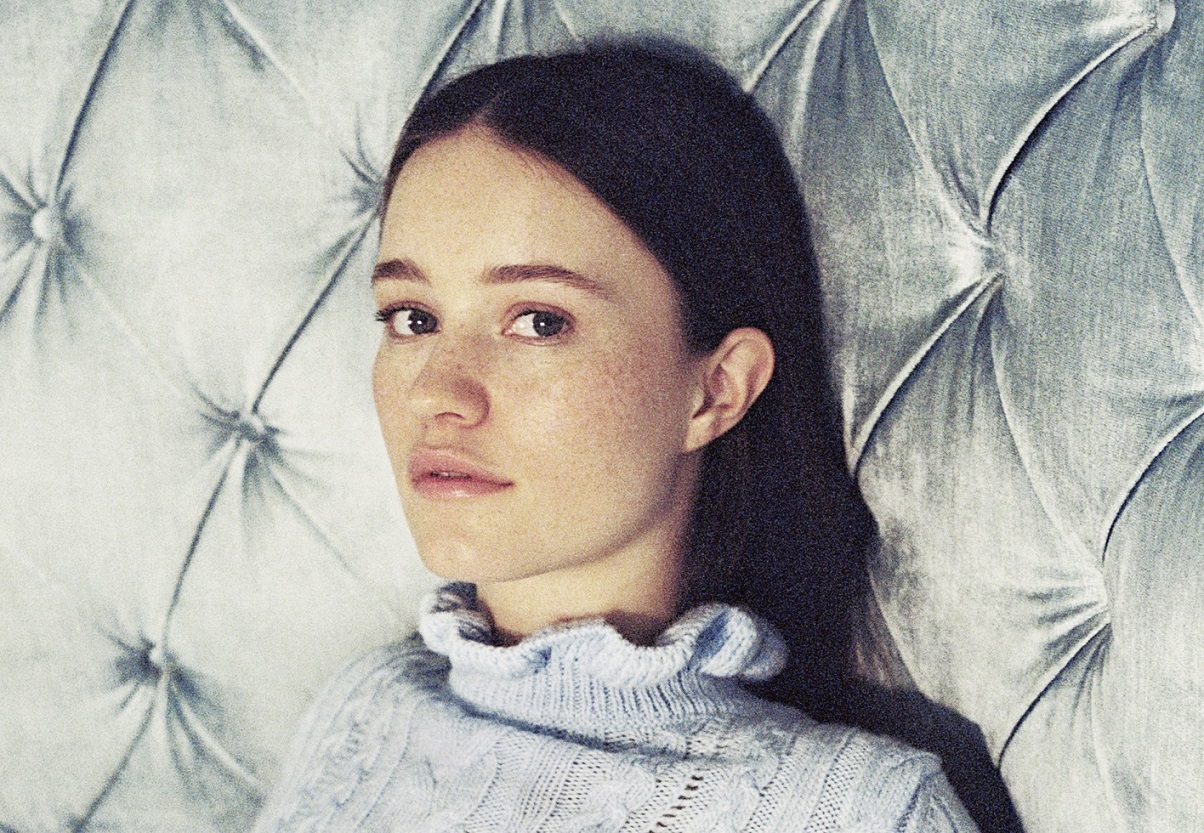
Between arena tours, a role in Will Ferrell’s new Netflix show, and a musical era marked by bold, immaculate, and brutally honest songwriting, Katelyn Tarver is proving that sometimes the road you need might be the one you build yourself.
Stream: “$82 at Erewhon” – Katelyn Tarver
It’s funny how much things can change with time.
Growing up, most of us have an idealized version of what we want our lives to look like. We have beliefs that have been instilled. These beliefs filter through every decision we make. We move through life with thoughts of “this is what I should do” and “this is what my life should look like” based on a make-believe happiness that was sold to us somewhere along the way.
The brutal awakening is when you realize you’ve constructed a life that you don’t actually want. Upon this realization you have the option to sit in it anyway (most do) or to go on the incredibly difficult, but beautiful journey of figuring out what you really want. The questions so few of us ask: What makes me happy? Who am I? Maybe it’s existential, but isn’t that what it’s all about? You’re the only person who has to live your life.
Katelyn Tarver explores these themes with no reserve as she enters her new era. Her four latest tracks, “#1,” “Don’t Eat Pray Love,” “Strange Weather,” and the gut-wrenching “$82 at Erewhon” explore feeling the most lost and alive you ever have at the same time with precise production and immaculate lyrics.
As Tarver puts it, “There is no right path… you just have to do what’s right for you, specifically.”
In between arena tours and filming Will Ferrell’s new Netflix show, we were lucky enough to sit down with Tarver to discuss her current musical era with refreshingly unfiltered honesty. We traded pleasantries about the last time we spoke, which neither of us can believe was just last winter. She tells me about filming in her “time off” between legs of the tour. Read our full conversation below, and stay tuned for much more to come from Katelyn Tarver in 2026!
— —
:: stream/purchase $82 at Erewhon here ::
:: connect with Katelyn Tarver here ::
— —

A CONVERSATION WITH KATELYN TARVER

Katelyn Tarver: I’m pinching myself. This is the coolest shit ever.
Atwood Magazine: That is unbelievably cool. I cannot wait to watch! Last time we spoke, you were just putting out Quitter and navigating that uncertainty. Now it feels like you're fully in it and thriving.
Katelyn Tarver: Yeah, I know. That was such a tough time for me and a tough album to then talk about during that time, and it was a low point. But I’m still very proud of it, and I’m grateful that it exists and sort of shows the process and the place I was at. I was really wrestling with some heavy stuff and trying to communicate that in a real way. I’m always proud of that. But I was definitely in that zone of, “I don’t know if I can keep doing this. It’s so emotionally taxing.”
It’s exciting to be in a place where I’m putting music out about the aftermath of that time, which is still heavy, but I feel like I’m in such a better place. I’m excited to still be standing.
It feels like those songs were very much steppingstones to these new ones.
Katelyn Tarver: Totally. It’s always so interesting to be a confessional songwriter and look back. My friend the other day was like, “It’s like you have these journal snapshots of what you’ve gone through the last however many years” And I’m like, yeah, I guess I do. It feels insane. It’s like, “Why do I do this? Why do I put my f*ing journal out for the world to read?” But I guess it’s also maybe nice and maybe helpful for people to read.
I don’t think you would unless you felt like you had to, in a way. I’m curious about that, the songs are so personal and real - do you ever start writing and realize, “Oh shit, I didn’t even know I felt that way”?
Katelyn Tarver: Oh, yeah. Olivia Rodrigo has that song “Scared of My Guitar.” I remember hearing it and being like, ohhh, because you really can’t run from yourself when you’re writing songs. You sit down and you’re like, “Okay, what are you going through?” And it just… can’t help but come out.
That was happening a lot during the Quitter era and even a little before. I was writing about how heavy things felt, and I think it helped me get to a point of: “Why am I still writing about this? Why is this still here?” And looking around and thinking, “I don’t think life is this heavy for this long for everyone else.” People connect with this stuff, and we all go through periods of that, but it helped wake me up. I realized, “I’ve got to make some changes or else nothing’s going to change.”
And that’s when I had the worst realization that no one wants: “I think I have to leave my marriage.” It was the worst, but being on the other side of it now, sharing songs written in the aftermath while having more mental peace felt important. I knew it was the right decision, it was still f*ing awful.
By sharing all of this through your music in such an honest way - it has definitely helped people who are going through something similar.
Katelyn Tarver: I hope so. Anyway, yeah. Songwriting is very revealing if you let it be.

Absolutely. Okay, so let’s jump into some of the songs, starting with “#1.” This song feels like such a strong introduction to the new era. It’s empowering, fun, a little different sonically, and the video is hilarious. It also kind of rips the band-aid off for longtime listeners. What made you choose it as the first single?
Katelyn Tarver: It was a discussion. I was not sold on it being the first single, to be honest because it felt almost too shocking. I always think about my audience who’s been there for a few albums, probably wondering, “What’s Katelyn going through? She’s teetering on something…” And then suddenly it’s like, bam. Here it is.
That song and the whole process of being on my own for the first time and truly putting myself first felt so unfamiliar. That’s why in a lot of these songs, I talk about feeling selfish. That was a big hurdle. The way women are raised, plus being raised pretty Christian… there’s this narrative of, “Am I allowed to be this brash and live the life I want, just for me?”
So much of this new era was that realization: It’s my life. I get to do what I want. And that felt selfish and wrong because that’s how I was conditioned, but the deeper truth was: No. That’s actually how I should be living. That’s the only way I can show up for anyone else or my community. At the end of the day, we are all looking out for number one, and that’s not selfish; it’s necessary.
So it took convincing for me to come out guns blazing with a first line that rhymes Porsche with divorce. I was like, “This is insane.”
It’s kind of iconic though.
Katelyn Tarver: I know! I was like… alright, I guess we’re going for it. And it felt like the first time I really got to show more of my personality. My producer and friend Mikey Reeves, who did most of the songs, has always been like, “You’re so fun and funny and lively, but your music is always just a gut punch.”
Entering this new phase, where yes, there was grief and loss, but also freedom and fun – it was exciting to lean into that. To show some humor. To show the absurdity. And that translated into the video and into performing it live. It made me go, “I want to make more songs like this.” It got me back in touch with my younger self, of why I got into music in the first place.

Okay, “Don’t Eat Pray Love.” I want to talk about this one because the songwriting is immaculate. It reminds me, not in sound but in spirit, of an old really rich country song. It’s introspective, and the chorus and final line, “I don’t eat, pray, I don’t love you,” really hit. How did the writing process unfold for this song?
Katelyn Tarver: Thank you so much. That one came out of a phase where my life was very Eat, Pray, Love. I was going here, going there, dating, figuring things out. It was exciting and chaotic. I was also thinking a lot about my spirituality. Growing up Christian, and then deconstructing that belief system over years… trying to figure out – if I don’t believe this anymore, then what do I believe? What does that mean for who I was, who I am, where I’m going?
It’s such an intense process. I wanted to show that this wasn’t just a breakup. It was the final blow to an identity I had been shedding for nearly a decade. Growing up with a worldview, acting within that framework, and then suddenly having to rebuild everything from scratch.
I got the hook “I don’t pray, I don’t love you anymore”and it felt like a way to explore all of it. Not praying, I don’t have that religious belief anymore. Not loving you, I’m not with you anymore. Not eating, sometimes I’m not taking care of myself, or I’m acting in extremes. It all fit.
I brought that into a session in Nashville with Mikey and Topher Brown. And that hook? It’s a crack to Nashville songwriters. We were like, “Oh shit, what are we going to do with THIS?” It was so fun building the song knowing exactly where the chorus was landing.
We wanted to flip Eat, Pray, Love on its head, not in a way that mocks it, because I was living it and loving it, but acknowledging the mess, the humor, the confusion of it all.
It’s a nice juxtaposition: you are doing the Eat, Pray, Love thing, but also unraveling it.
Katelyn Tarver: Yeah. Trying to give a snapshot of what life feels like right now. At one point I joked with Mikey that the song is like a “Get Ready With Me” for a day in the life of a mid-thirties, recently divorced, childless woman who’s just… figuring it out.
That unraveling of “this is how the women in my life did it, so that’s how I’m supposed to do it,” and then realizing, “Maybe that’s not what I want at all,” can be incredibly disorienting, but such a real and not talked about things women in their 30 thirties go through.
Katelyn Tarver: We don’t have many models. We don’t have a lot to point to, socially, as examples of how to do it differently. So we’re all like, “Okay, we don’t have to do it that way, but now… how do we do it?” The bridge of that song really sums up the emotional thesis of the album to come, Sometimes it’s hard out here in the deep end / I miss having something to believe in. The framework religion or traditional paths give you can be comforting. If it’s not true for you though, it becomes painful. So you live in this tension of freedom and terror at the same time.

We don’t have much time left, but I have to talk about “$82 at Erewhom.” I am obsessed. It came out a few Fridays ago, right?
Katelyn Tarver: Yeah, a week ago.
With the amount of times I’ve listened to it in one week, it feels like it’s been out for at least a few. I just love how something as simple as a grocery bill can trigger this emotional spiral and then sonically, it builds, the drums, the harmonies… it’s so emotional. I’m sure you’re excited to play it live. Tell me about it. I love it.
Katelyn Tarver: Well, thank you first of all. This one is really special. It’s the only one I wrote completely by myself.
It’s the best one.
Katelyn Tarver: I know. I feel like that’s my next frontier in owning my shit, getting the guts to write more alone and put it out. It’s scary. I came up in the pop-star, co-writing era, and I still get nervous being fully naked creatively – just me and my words. But every time I do it, it connects differently.
You should trust your gut.
Katelyn Tarver: Yeah. Thank you. And it was such a good reminder – if you feel a song, write it right then. That song could only have been written that day, in that moment. I had just seen the charge, texted my ex, and it reminded me of how he always wanted to shop at expensive places. I’d always be like, “You’re so annoying, why are you spending money on stupid shit?” And suddenly I was like, “Wow, I’m texting you like you’re a stranger, but you aren’t.”
All of that hit me like a wave. I was disciplined enough to sit down right then and write it. A couple days later, things shifted – we ran into each other, reconnected, and now we actually have this new friendship. So that exact emotion? It would’ve passed. Capturing it was lightning in a bottle.

I love hearing that. I feel like that’s sometimes how the best songs are made - full stream of consciousness moments.
Katelyn Tarver: Yeah, and I’ve spent so long like, “I can’t write alone, I’m not good enough on guitar” And then here’s this song that forced me to face the ways I limit myself out of fear or insecurity. I’m proud of it on so many levels. And I can’t wait to play it live – I feel like it’s really going to hit.
Well, I absolutely think you should feel confident fully writing your own songs. We’re out of time, but this was so lovely - truly thank you for taking the time to chat with us.
Katelyn Tarver: Yeah. Thanks so much for doing this. I’m always so grateful for your support.
Of course - we can’t wait to hear what is next!
Katelyn Tarver: Thanks, Kelly. I’ll talk to you soon.
— —
:: stream/purchase $82 at Erewhon here ::
:: connect with Katelyn Tarver here ::
— —
— — — —
Connect to Katelyn Tarver on
Facebook, 𝕏, TikTok, Instagram
Discover new music on Atwood Magazine
© Phil Chester & Sara Byrne
 © Phil Chester & Sara Byrne
:: Stream Katelyn Tarver ::