Atwood Magazine is excited to share our Editor’s Picks column, written and curated by Editor-in-Chief Mitch Mosk. Every week, Mitch will share a collection of songs, albums, and artists who have caught his ears, eyes, and heart. There is so much incredible music out there just waiting to be heard, and all it takes from us is an open mind and a willingness to listen. Through our Editor’s Picks, we hope to shine a light on our own music discoveries and showcase a diverse array o f new and recent releases.
This week’s Editor’s Picks features Holly Humberstone, Oh He Dead, Cloudbelly, Joan & the Giants, Iona Luke, and Sofia and the Antoinettes!

 follow EDITOR’S PICKS on Spotify

Cruel World
by Holly HumberstoneLove deserves songs that are as thrilling as the feeling itself – and that’s exactly what Holly Humberstone has delivered on her exhilarating sophomore album.
Intimate, anthemic, and unabashedly romantic, Cruel World…So It Ends marries the emotional precision of the English singer/songwriter’s diaristic songwriting with the enormity of her pop melodies. She writes about desire with a newfound candor, finds humor in the absurdities of infatuation, and captures the terrifying responsibility of holding somebody else’s heart in her hands. Her gift for making everyday experiences feel larger than life has never been more apparent. From the grungy urgency of “Red Chevy” and the effervescent pop of “Killing The Mood” to the intoxicating revelry and bittersweet catharsis of “To Love Somebody,” Humberstone sounds as fearless in her pursuit of pleasure as she’s ever been in her exploration of pain.
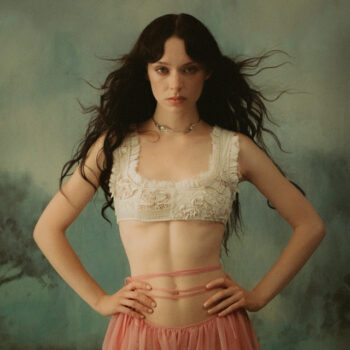
Released April 10 via Interscope Records and expanded November 13 with five additional songs, Cruel World marks a particularly rewarding chapter in the career of an artist Atwood Magazine has championed since the release of her earliest singles in 2020. The Grantham native was just twenty when she introduced herself with Falling Asleep at the Wheel, a breathtaking debut EP whose songs bore the emotional weight of growing up in a crumbling family home surrounded by her three sisters. In the six years since, Humberstone has won the BRIT Rising Star Award, toured with the likes of Olivia Rodrigo and Taylor Swift, and established herself as one of contemporary pop’s most compelling storytellers. Her second album, which debuted at No. 4 on the UK Albums Chart, finds her enjoying the fruits of that extraordinary journey while reconnecting with the girl who set it in motion.
Back in August 2020, Humberstone described her music to Atwood Magazine as “dark, wonky, brutally honest pop.” Asked six years later whether that description still holds true, she has only one reservation.
“I think it rings true today. I hope so,” Humberstone tells Atwood Magazine. “I think maybe the part of it that I would change is the dark bit? To me, Cruel World feels like there’s an optimism about it that hasn’t really appeared in a lot of my previous music.”
The distinction is significant. Where her 2023 debut album Paint My Bedroom Black documented the disorientation of living out of suitcases and searching for a sense of belonging amid the relentless pace of her career, Cruel World was born out of an opportunity to stand still. Having spent the better part of four years on tour, Humberstone returned home in the autumn of 2024 with time to consider what she wanted from her next record. She purchased a dilapidated house in southeast London with two of her sisters and her best friend, undertaking its restoration while beginning work on the album in daily sessions with longtime collaborator Rob Milton. In a particularly endearing departure from the title of her debut, she painted her bedroom pink.
The process of moving also sent Humberstone back through her own history.
“I was packing away my childhood home and going through basically everything that I’d ever owned whilst I was writing Cruel World, and through that process, I rediscovered who I used to be as a little eleven-year-old dreaming about maybe one day getting to be a pop star and write songs for a living and do this as a job,” she recalls. “I kind of just rediscovered who I was a little bit in that process through all of these old objects that felt like, kind of haunted with my former self.”
Among those objects were old CDs, fairy tales, ballet shoes, and programs from childhood trips to the theatre. Working with her sister Eleri and creative director Silken Weinberg, Humberstone drew upon these memories to create the album’s elaborate visual universe, finding renewed enchantment in the gothic imagery that had accompanied her music from the beginning. The orchestral tuning that introduces “So It Starts…” evokes the anticipation of sitting in a theatre before the curtains rise – a sensation Humberstone remembers vividly from seeing a ballet with her mother one Christmas. It’s an invitation into a world governed by her imagination, where the ghosts of girlhood have become a source of creative inspiration.
“I think also maybe as a bit of a form of self-preservation or kind of protection from the horrors of the world that we live in today, I think I just needed to make something that sounded like a release, and like something that was positive, you know, to escape into,” she explains. “It’s like a different world. I just wanted to kind of create my childhood fantasy.”
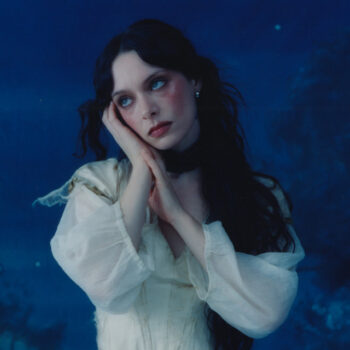
The musical ambition of Cruel World makes that world particularly inviting. Milton and Humberstone have developed an extraordinary understanding of how to frame her voice over the course of their collaboration, and their work here gives her melodies room to assume almost physical proportions. The radiant pop hooks of “Make It All Better” and “Die Happy” sit comfortably alongside the delicate balladry of “Lucy” and “Peachy,” while the restless energy of “White Noise” introduces yet another dimension to the album’s musical palette. Underpinning that versatility is a consistency of emotional expression: However elaborate the arrangements become, the person singing at their center remains startlingly accessible.
Much of the record’s infectious energy can be traced back to Humberstone’s experiences onstage. Her time on the road helped shape “To Love Somebody,” the album’s spectacular lead single and a spirited affirmation of the enduring value of love in the aftermath of heartbreak.
“In my mind, I’m always picturing a festival in the summer, and it’s sunset, and everybody’s half cut, drunk, and they just want to be screaming shit with their friends and feeling it all,” she says. “Everybody’s going through something confusing, and in that moment, people feel united and part of one thing. It’s kind of filled with a lot of backing vocals throughout the album that were intended for people to kind of scream back, you know, and kind of be involved in it and feel it all.”
Humberstone understands the immense satisfaction of singing words that give shape to feelings we’ve struggled to articulate ourselves. “To Love Somebody” is especially potent in this regard, its buoyant arrangement carrying a remarkably compassionate perspective on the inevitability of loss.
To love somebody
To hurt somebody
To lose somebody
Is to know you’re only human honey
To love somebody
To hurt somebody
To lose somebody
Well at least you got to love somebody
Her generosity extends throughout Cruel World. The sweetly reassuring “Lucy” offers comfort to young women trying to establish their place in a world that often seems inhospitable to them, while “Peachy” considers the vulnerability of the person on the receiving end of her affection. Even at her most romantically preoccupied, Humberstone remains acutely aware of the feelings of those around her. She’s equally capable of examining her own behavior with an irreverence that makes the desperate “Drunk Dialling” such an entertaining counterpart to the album’s more earnest declarations of devotion.
“Maybe learning that, like, accepting that things are chaotic, and that things are out of my control, and that life is always going to feel a bit confusing and a bit wobbly. And celebrating that. I think maybe that’s why Cruel World feels a little more hopeful,” Humberstone says. “I’ve written a lot about my experience of being in love for the first time in this album.”
Nowhere is that celebration more compelling than on “Red Chevy,” a three-minute burst of alternative pop perfection that ranks among the most irresistible songs Humberstone has ever written. Its tremendous melodic payoff, scuzzy electric guitars, and beautifully integrated saxophone give it a muscular, almost swaggering quality. The repeated pre-chorus builds anticipation through the accumulation of intimate details before everything gives way to an emphatic demand for affection: “So kiss me like you f**in’ mean it.”* The sheer force with which she delivers that refrain makes it difficult to resist singing along.
“I love that song. It fits within Cruel World, but it also very much feels like it could have been a Paint My Bedroom Black song, too, for me,” she says. “That was the first song that was written from the entire album, when I got back off tour, and I went into the studio with my main collaborator, Rob.”
Having spent so much time travelling around America, Humberstone borrowed the iconography of an American romance to immortalize a relationship unfolding considerably closer to home. The juxtaposition of the titular Chevrolet with a distinctly British corner shop gives the song its peculiar charm. She imagines herself inside a sweeping romantic film whose most cherished scenes involve getting fast food, playing video games, and taking a photograph of someone she can scarcely believe she gets to be with.
“I just wanted to romanticise my southeast London love story that really didn’t look very picturesque or romantic in real life, because southeast London isn’t very picturesque or romantic,” she says. “I think that’s the cool thing about getting to make songs, is that I literally just get to paint it myself in the way that I want to.”
Back in your red Chevy
Man, I never felt so goddamn heavy
I could take a picture of you if you let me
Why you gotta look so goddamn sexy?
I’ll be yours to keep
To get fast food and play video games
I know it sounds stupid, but you’re all that I need
I know it sounds stupid, but you’re all that I need
So kiss me like you f***in’ mean it
And I’m yours (Ah)
So come on and kiss me like you f***in’ mean it
I’m yours (Ah)
There’s an underlying poignancy to “Red Chevy” that makes its musical exuberance all the more affecting. Humberstone describes two people whose lives have felt emotionally burdensome, gradually revealing the comfort they’ve found in one another. The second verse and pre-chorus offer a glimpse into her partner’s life before they met, recalling a period when even the simplest tasks felt overwhelming. Suddenly, the prospect of spending time together in unremarkable places carries an entirely different emotional significance. The pleasures she enumerates throughout the song are so appealing precisely because they’re so attainable.
And the song sounds every bit as intoxicating as she makes those experiences out to be. The tension between the abrasive guitar textures and the sweetness of her melodic sensibility lends “Red Chevy” an exceptional vitality, giving the song’s declarations of devotion a satisfying edge. Humberstone revisited it earlier this summer on her four-track EP it’s a real Cruel World, offering a more intimate interpretation that further emphasizes the strength of the songwriting beneath the original’s electrifying production.
“I love all the grungy, kind of dissonant guitar sounds,” she says of the original recording. “And I just love how you can scream the chorus, and it feels like such a release. That’s been a really fun one to do live.”
It’s telling that the first song written for Cruel World contains so many of the qualities that would come to define it. The interplay between romantic fantasy and autobiographical detail, the humor that emerges from taking her feelings seriously, and the desire to make music that people can experience together are all present in abundance. Humberstone began her second album by following an idea wherever it took her; by the time she had finished it, she found herself reluctant to leave that creative space.
“Cruel World opens and closes as its own story, but I wanted So It Ends to feel like the encore,” Humberstone explains.
Several of the additional songs were written in Nashville during the same trip that yielded “White Noise,” a propulsive, hypnotic pop anthem about seeking refuge from heartbreak on the dancefloor. Finding herself in an unusually productive period after completing most of the album, she decided to capitalize on that momentum rather than bring the writing process to a premature end.
“I think once you’ve got an album that you’re really proud of, you kind of have space to just let the guardrails down, and just be free, and just experiment, and take things to places that maybe you usually wouldn’t.”
The results are five songs that more than justify a return to Humberstone’s world. The ABBA-inspired “Too Cute To Be Lonely” is an unabashedly catchy dancefloor anthem whose protagonist treats the considerable effort she’s put into getting dressed for the evening as an excellent argument against going home alone. “Terminally Yours,” which Humberstone considers a companion piece to “Die Happy,” approaches the disarming experience of falling in love with delicious exasperation: “Your stupid face is my sorry fate / I am terminally yours.” Meanwhile, the dreamy, ’90s-tinged “Silver Sky” takes immense pleasure in imagining a future spent growing older alongside someone, marveling at the improbability of their having found each other among billions of people.
The same sentiment finds its fullest expression on the magnificent “Killing The Mood,” a radiant piece of pop songwriting that distills so much of what makes Humberstone exceptional into less than three and a half minutes. Its infectious rhythmic bounce and sprightly electric guitar complement a vocal performance brimming with personality, while its chorus captures the exhilaration of discovering that the person you’re falling for feels exactly the same way. Perhaps most impressive is the sheer density of imaginative writing within a song that feels so effortlessly accessible.
I wished upon a passing neutron star
To reassemble all my broken parts
In every dive in Santa Monica
There is a girl whose world has fell apart
When I first met you I was kinda dark
Hard to believe you were a stranger once
Now here we are
Who cares if star signs are compatible
You and I are f***ing magical
The opening image is particularly striking: Humberstone takes the childhood tradition of wishing upon a star and repurposes it as an adult’s desperate plea for emotional repair. The specificity of a neutron star gives that familiar romantic image an unusual scientific dimension, establishing the cosmic vocabulary she’ll play with throughout the song. By the time she dismisses the relevance of astrological compatibility, her cynicism has begun to give way to an altogether more compelling proposition – that the connection she’s experiencing is miraculous enough without requiring any celestial explanation.
“Killing The Mood” offers a stark contrast to the devastating “Beauty Pageant,” the original album’s closing ballad about the exhausting demands of being a woman in the public eye. Humberstone worked on “Killing The Mood” during a writing retreat near Ipswich.
“Weirdly, I wrote this at the same sort of time that I wrote ‘Beauty Pageant,’ and I think that I needed to get this one out after the heaviness of ‘Beauty Pageant,’” she recalls.
“We were listening to ABBA, and we were like, let’s just make… yeah, like, Paul Simon-y type thing, like, let’s just make something that feels euphoric and fun.”
Those influences make perfect sense for a song whose musical appeal is matched by its playfulness with language. Humberstone’s conversational phrasing gives the verses an appealing spontaneity, her observations spilling into one another with the excitement of someone who can hardly contain what she’s feeling. The chorus offers an irresistible invitation to remain suspended in that moment for as long as possible.
Ooh, don’t you
think about killing the mood
I’ve been lonely so long
We got a good thing going on
There’s a genuine vulnerability beneath that buoyant refrain. For Humberstone, the prospect of a relationship finally going right is almost too precious to interrogate. She wants to enjoy the evening without entertaining the innumerable ways in which it could end badly. Even her impatience with the idea of spoiling the moment communicates how much this newfound happiness means to her.
And then she delivers one of the most inspired couplets on the entire record: “Isn’t it sexy we’re existing at the same time / It’s a miracle.” What an extraordinary way of expressing the wonder of being in love. The thought that two people could have existed in completely different centuries, on opposite sides of the world, or never at all becomes a source of almost overwhelming romantic excitement. It’s a deceptively profound observation delivered with the casual flirtatiousness of a passing remark. A few lines later, she brings that cosmic perspective back down to earth, delighting in the adolescent sweetness of a telephone conversation neither person wants to end: “No you hang up, no you hang up!”
The combination of imaginative lyricism, melodic immediacy, and emotional sincerity makes “Killing The Mood” such a remarkable achievement. Humberstone has written a song that feels like falling in love, down to the way its smallest details assume an almost fantastical significance. It shares with “Red Chevy” an appreciation for the transformative power of affection – the ability of another person’s presence to make the world around us infinitely more interesting.
“A lot of the time, the best songs come from when you’re not taking it too seriously, and you’re just kind of pissing about,” Humberstone says. “And having fun with your friends.”
Of course, the pleasure of making these songs hasn’t diminished her ability to articulate considerably less pleasant experiences. The deluxe edition’s final track, “Annihilation,” is a ferocious account of betrayal that finds Humberstone wielding her wit with devastating precision. The theatrical imagery that permeates Cruel World reappears in her description of a charismatic lover whose public persona conceals a capacity for cruelty. Its scathing verses offer an especially effective counterpoint to the romance celebrated elsewhere on the album, bringing us back to the emotional understanding at the heart of “To Love Somebody”: Loving someone leaves us susceptible to being hurt by them, sometimes in ways we could never have anticipated.
What makes Cruel World…So It Ends such a consummate artistic statement is how much more of herself Humberstone has found room for within her music. The songwriter who once introduced herself through the loneliness and anxieties of her formative years has retained her extraordinary capacity for introspection whilst growing considerably more adventurous in the ways she expresses it. She can make a room full of people dance to a song about heartbreak, give voice to the exhaustion of being perpetually scrutinized, and make the prospect of growing old with someone sound like the most romantic thing in the world.
“I just want the songs to be as real as possible, and as authentic as possible, because I think that people maybe now more than ever need that humanity to connect to,” she reflects. “Nobody can connect to perfection. I think people want something that’s a bit rough around the edges and a bit emotionally vulnerable and real, you know?”
As she begins contemplating what her third album might become, Humberstone admits she has little idea where the writing process will take her. For now, she has given herself a particularly high standard to live up to.
“I’m so proud of every song on the album,” she says. “I’m gonna be proud of this for years and years to come. I think when I’m an old lady, I’ll be like, ‘This is my proudest piece of work.’”
Somewhere between the eleven-year-old writing songs on her mother’s piano and the woman imagining herself listening back to this album decades from now is an artist experiencing the realization of her childhood dreams. Cruel World…So It Ends captures the excitement of that particular moment in her life with extraordinary affection, giving us seventeen tracks to inhabit long after the curtains have fallen. For all the cruelty Humberstone recognizes in the world around her, the beauty she continues to find in it is what makes her music so worth celebrating.
Vertigo
by Oh He DeadYou don’t have to have your life together to celebrate having one.
Soulful and audacious, Oh He Dead’s fourth album, Vertigo, channels the dizzying experience of being alive into a heady mix of R&B, funk, and indie rock. Gritty grooves, impassioned vocals, and flashes of psychedelic experimentation make for a record teeming with rhythmic vitality, infectious melodies, and unpredictable musical detours. It’s an exhilarating celebration of life in all its beautiful, bewildering messiness – and well worth losing your balance for.
Released September 25 via Wally Baba Records, Vertigo finds the Washington, D.C. five-piece expanding the musical universe they’ve inhabited since breaking through with “Lonely Sometimes” in NPR’s 2018 Tiny Desk Contest. Comprising lead singer Cynthia “CJ” Johnson, guitarist Alex Salser, bassist Colin Sidley, drummer Adam Ashforth, and keyboardist Piano Whitman, Oh He Dead possess a mischievous streak that extends all the way back to their name.
“CJ wrote a song about killing her ex-boyfriend that turned into the question, ‘Whatever happened to that guy?’ and CJ would say, ‘Oh He Dead,’ and we turned that into our band name,” Salser tells Atwood Magazine.
Their irreverence is matched by a genuine reverence for the music that brought these five musicians together. “Although we all come from different musical backgrounds, we all have a love for classic soul and R&B,” Salser says. “Sly and the Family Stone and Marvin Gaye are some of our favorites, but we love blending our classic heroes with more modern rock music like Queens of the Stone Age.”
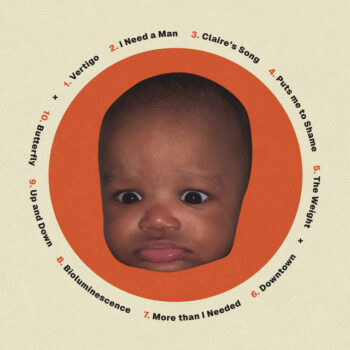
Following the release of their sister albums Pretty (2023) and Ugly (2024), the band spent much of their time on the road, amassing more than a hundred songs before collectively voting on the ten that would comprise Vertigo. Recorded with Nashville-based producer Jimmy Mansfield, the album even features a family photograph on its cover: An endearingly dazed-looking Wallace, Johnson’s child, whose expression became a running joke among the bandmates. “It started as a bit, but then we decided to go for it,” Johnson says. Beneath the humor and musical eclecticism lies a considerable artistic achievement for a band whose years of touring together have fundamentally changed the way they create.
“I think Vertigo is the culmination of playing together for years,” Salser reflects. “It’s the first truly collaborative record. We’ve really come into our own as live performers, and I feel like we captured the energy of the show onto the record for the first time.”
Fittingly, one of the album’s most spectacular moments emerged from a song the band couldn’t properly rehearse together. The opening title track, “Vertigo,” is a breathtaking exercise in musical escalation – a soulful, churning slow burn that reaches an almost euphoric high in just under three minutes. Ashforth composed its instrumental demo on an airplane using an OP-1 Field synthesizer and workstation, inadvertently providing Johnson with the impetus to look at a particularly difficult period in her life from a different angle.
“When I was having a bad day, I wanted to write a sad song about it,” Johnson recalls. “I went into the Oh He Dead demo files and clicked on ‘Vertigo.’ To my surprise, ‘Vertigo’ was not a sad song at all and inspired me to write about the up and down feelings of life but still being grateful to be alive.”
Feel so good to be alive
Guess I’m glad to be alive
I can say it’s this or that
But I’m pretty OK with the fact that
I can say I still exist
A spinning room could leave me sick
Stand up straight and wipe my face
Keep a steady pace for the race
Johnson’s delivery is magnificent. The uncertainty of her opening lines – “Where’d you go / I don’t know / How it goes / I don’t know” – gives way to increasingly emphatic declarations of gratitude, her voice gaining conviction as the arrangement grows more dramatic around her. The electronic textures lend the song an otherworldly quality, while the accumulating layers of instrumentation and vocals generate a delicious sense of anticipation. Every return to the refrain feels bigger and more spirited than the last. What’s especially moving about “Vertigo” is how little Johnson actually asks of life in the process of singing so passionately about it: Simply to exist is reason enough for this much musical fanfare.
“This is us telling the world and ourselves, ‘It could have been worse,’” she says.
The song’s unusual electronic foundation initially posed a challenge for musicians accustomed to developing their arrangements through rehearsals and live performances. Forced to work outside their customary methods, they discovered just how attuned they’d become to one another in the studio.
“Despite having limited prep, we managed to record the song in just half a day in the studio,” Ashforth recalls. “The rough arrangement and repetitive elements of the song made it ripe for creative layering of additional instrumental and vocal textures. This is where the band shined as a collective; it felt like we were sharing one brain, adding layer after layer to create the final product.”
The classic soul of “I Need a Man” offers an irresistible change of pace, putting Johnson’s commanding presence in the foreground as the rhythm section settles into a satisfyingly deep pocket. Her romantic wish list is full of small, specific gestures of affection – kisses every hour, conversations in the shower, fingers running through her hair – though the song’s central desire is for someone who can meet her wherever she is emotionally. “I need a man / Who can take me on my worst days / Fight me on my good,” she sings with an appealing combination of assertiveness and flirtation.
“This song is literally the bare minimum of things women need from men,” Johnson says.
For all its effortless swagger, “I Need a Man” required an unusually meticulous approach to recording. Unsatisfied with their initial takes, Mansfield played the band an iPhone recording of an early rehearsal and challenged them to recreate their own playing note for note. The musicians spent fifteen minutes individually transcribing their parts before reconvening.
“We generally allow for some room for improvisation when recording; small details like a fill, or embellishment of some kind,” Ashforth explains. “But here we were asked to strip away these musical instincts and copy the exact spontaneous choices we made on the demo from months ago. Trying to reconstruct these musical liberties from the past, while still sounding effortless, felt like a tall task. Surprisingly, this worked! After one or two takes, we laid down 95% of the instrumental parts, all while convincingly channeling the iPhone recording.”
At the opposite end of the creative spectrum sits “More Than I Needed,” a nearly five-minute release of pent-up energy that several members of Oh He Dead cite as their favorite musical moment on the record. With the song still unfinished on their final day in the studio, the band took a chance on recording it entirely live. Its extended refrain – “Give me more / (Gotta give me more) / Give me more than I needed” – becomes an opportunity for the musicians to feed off one another’s energy, transforming a song about romantic disappointment into an ecstatic communal performance.
“I had spent like two weeks learning to play the organ, and it all just kinda clicked for me on this song,” Whitman remembers. “Adam and I were in one corner of the room and Alex and Colin in the other. CJ was fueled by Fernet Menta and was absolutely crushing it on the mic. She was taking us to outer space! It was so much fun. I would make a whole record, live like that, again.”
“We recorded that one live in the studio with Jimmy conjuring the spirit of a James Brown impersonator, falling to his knees and screaming into the mic,” Sidley adds. “I feel like that song gets the closest to capturing the essence of our live shows, so making an album mostly like that would be an interesting idea.”
Oh He Dead are equally compelling when their music takes on a more pointed edge. The hypnotic “Puts Me to Shame” marries its danceable groove with a scathing indictment of fame and the lengths people will go to attain it, its invitation to “put down the phone get to dancing” taking aim at a culture of perpetual validation. Meanwhile, the explosive “The Weight” brings the uncertainty of a potentially irreparable friendship into sharp relief, with Johnson articulating the anguish of wanting to sever ties and desperately hoping the other person hasn’t done so: “I wish you never had my number / I hope you still got my number.” The band venture even further afield on the delightfully eccentric, psychedelic “Bioluminescence,” a cosmic fantasy of escaping the mundanity of everyday existence that Sidley describes as “a complete work of studio alchemy facilitated by our resident producer/mad scientist Jimmy Mansfield.”
Perhaps the most rewarding aspect of Vertigo is the generosity of spirit that permeates its music, crystallizing in the uplifting album closer and lead single, “Butterfly.” An anthem dedicated to recognizing and affirming the worth of women, its imagery finds tremendous strength in a seemingly delicate creature.
“I just kept thinking about this butterfly who has no idea how beautiful she is,” Whitman explains. “We see this beauty in this little bug that brings so much joy and has so much meaning attached to it. And they’re really fragile, but they’re quite resilient. They keep flying, even with broken wings.”
Lift her up (lift her up, lift her up)
And show her she is good enough
Strong enough, big enough
The opening and closing tracks make for particularly affecting bookends: Where “Vertigo” revels in the wonder of our own existence, “Butterfly” asks us to recognize that wonder in others. Both songs find Johnson singing with the kind of conviction that makes their affirmations feel as much like invitations as declarations. It’s hard to imagine a more fitting way for these five musicians to bring their fourth album to a close.
“We had so much fun making this album, and I guess all we can hope for is that it’s captured in the recording,” Whitman says. “We put a lot of care into it. Vertigo doesn’t really fit into a box, genre-wise. It’s all over the place yet in the same sonic world, and that’s something very special about the evolution of this band.”
The delight Oh He Dead take in playing together is palpable throughout Vertigo, and it’s perhaps their greatest gift to the listener. The world is still spinning when the record ends; these five musicians have given us thirty-seven minutes of reasons to dance along with it.
Throwing the Game
by CloudbellyWhen you’ve spent your life bracing for impact, even an embrace can feel like a threat.
Tender and tumultuous, Cloudbelly’s third album, Throwing The Game, is a deeply affecting exploration of what it takes to let our guard down and allow ourselves to belong. Dreamy, pop-laced indie folk unfolds into cathartic bursts of indie rock, giving Corey Laitman’s penetrating lyricism a musical world as richly imagined as the stories they tell. Immersive and irresistibly melodic, it’s a record as rewarding to lose yourself in as it is to reckon with.
Released November 13 via Barn Attic Records, Throwing The Game marks a creative high point for a band Atwood Magazine has championed since their debut single, 2021’s “Up in Smoke” – a song that, fittingly, appears on this very album. What began in 2020 as a collaboration between Laitman and producer Anand Nayak has since blossomed into a formidable Western Massachusetts quartet comprising Laitman, guitarists Sam Perry and Ciarra Fragale, and drummer/producer Nate Mondschein. Their acclaimed 2024 sophomore album, i know i know i know, was named one of the year’s best albums by The Boston Globe and earned an Album of the Year nomination at the Boston Music Awards. Its successor finds the four musicians drawing upon a deeper understanding of one another’s creative sensibilities, having spent a year and a half gathering every Wednesday at Mondschein’s studio to develop the twelve songs that comprise this collection.
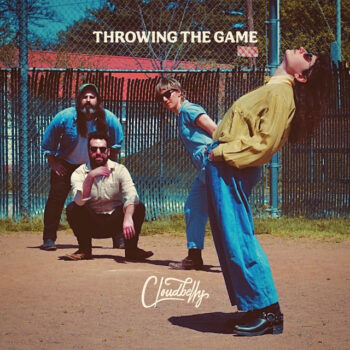
“We’ve found our footing as an ensemble for sure,” Laitman tells Atwood Magazine. “Back then we were relatively fresh as a quartet and still gathering data about who we were together and how we functioned as a band. We’ve really used the space of the last few years to experiment and risk creatively in ways we just didn’t have time to when we were getting i know i know i know together.”
While its predecessor grappled with the dissolution of two significant relationships, Throwing The Game ventures further back into Laitman’s personal history, examining the experiences that have informed their understanding of love. From the ecological anxiety and domestic bliss of lead single “Oh, Antarctica!” to the childhood memories that populate some of the record’s most affecting moments, Cloudbelly approach intimacy as something that exists in conversation with everything we’ve lived through. The album’s title proposes a radical reconsideration of what it means to have power in our relationships: Perhaps the greatest strength lies in recognizing when the fight we’re putting up is keeping us from the very thing we want.
“Throwing The Game is about setting down, with kindness, the painful, isolating impulse to reject connection and belonging,” Laitman explains. “The album asks: Why am I so squeamish in the face of genuine affection and esteem? When I’m vulnerable and my hackles go up, what do those hackles imagine they’re protecting? How can I stop doing this?”
“The titular ‘game’ is the story those hackles tell us: That most people are adversaries, competing with us for limited power. To throw a game is to stop playing it on purpose. The work of the album is unraveling the painful roots of that story, with nuance and compassion, and telling the smallest, most frightened places in us that it’s okay, we don’t have to play anymore.”
One of the record’s most captivating songs approaches love from the perspective of someone witnessing its endurance across a lifetime. “Poppa” is a stunning five-minute portrait of Laitman’s maternal grandfather, whose dream of living in the wilderness sits in poignant contrast to his life on the seventeenth floor of an apartment building in White Plains, New York. Laitman’s grandparents moved there from Long Island in 2022 as their grandmother’s dementia progressed, and the song travels freely between the brightness of their childhood recollections and the realities of their grandparents’ old age. Homemade Christmas cheesecakes, rides on their grandfather’s back, and afternoons spent singing together at the piano give way to scenes of extraordinary devotion as he cares for his wife of 75 years.
“My Poppa – my mom’s dad – was always my favorite adult when I was a kid,” Laitman shares. “He was playful, a great storyteller, really connected and present – I felt an emotional and spiritual kinship with him that I didn’t as much with the other adults in my life.”
And you would talk about how
Watching us grow up made you tired
And I would watch the heart of time
rising like water in your eyes
Then I’d take your hand
and we’d cry together
Out of love,
Out of love
Laitman has an extraordinary gift for making the passage of time perceptible through physical detail. Watching their grandfather tear up becomes a way of bearing witness to his aging, while the recurring image of their grandparents rocking each other back to sleep is all the more moving for its candor about the circumstances surrounding it. The music is equally remarkable: What begins as an intimate indie folk reverie erupts into a churning, enveloping fever dream, its layers of instrumentation and manipulated voices giving the recording a density befitting the sheer accumulation of memories within it. Originally written for acoustic guitar and voice, “Poppa” owes much of its transportive quality to Mondschein’s imaginative production.
“From a production standpoint, that is one of my favorite types of projects to work with, because it means my job is less about bringing the song to life, and more about finding ways to add new emotional dimension to an already narratively realized song,” Mondschein says. “A lot of that often starts with using tape loops and warped demo recordings and vocal chops and other little sonic goodies to construct a textural backdrop for Corey to float above and/or be in dialogue with (even more essential than usual in a song about generational dialogue and connection).”
“It felt dignified to name exactly what I saw as my grandparents aged – and as my Nana died – without smoothing over the brutality of the present or dimming the brightness of our shared memories,” Laitman reflects. “I think the depth and breadth of all the memory you carry with you as you age becomes a compelling kind of gravity – and, in the case of my grandparents who had been married for 75 years and had two children together – I mean, can you imagine bearing witness to someone for so long? Being trailed by so much life lived together?”
The album’s title track is another spellbinding exercise in perspective, this time with Laitman writing from the point of view of a former partner attempting to reach them during a difficult road trip. The contrast between the previous day’s shared laughter among the marshes and the antagonism inside the car gives “Throw The Game” its narrative tension, while the band’s dramatic ascent from a subdued opening into a rousing, full-band plea brings the narrator’s desperation to the fore. Particularly arresting is the promise embedded in its bridge – “But I’m not your dad, babe, and when you get back / I’ll still be listening” – an acknowledgment of the history informing this confrontation, delivered with the patience of someone who wants to work through it together.
“I wrote it from the perspective of an ex-partner trying to reach me while I melted down at the beginning of a road trip,” Laitman says. “It’s clear in the song that I’d made them into the enemy in my mind, that I was feeling vulnerable and trying to mask it with this frantic, aggressive bravado.”
And the demon has mouths
made of hunger and shame
And your power depends
on you throwing the game
“Real power is here, between us, in the act of accepting the love you’re given and letting yourself belong,” they add. “Remembering our shared humanness makes you bigger; playing the game keeps you small.”
As charged and immediate as anything Cloudbelly have released to date, “Bend” brings a different kind of urgency to this conversation. Laitman interrogates their childhood experiences, their own anger, and the responsibilities they once assumed for things beyond their control, arriving at the disarmingly humble refrain, “Soften me up where I need to bend.” Giving such a plea the muscularity of an indie rock anthem is an inspired choice. The guitars have a presence and character of their own, and the propulsive arrangement makes the repeated act of beginning again sound energizing rather than exhausting. Having discovered the song’s rhythmic identity through playing it live, Cloudbelly capture the electricity of four musicians fully invested in what they’re making together.
“My personal favorite track is ‘Bend.’ I think it best illustrates our growth from an alt-folk project into a genre-defying act that has a more cohesive full-band sound,” Perry shares. “I also wanted this record to have more front and center guitars. We had a great time getting tones in the studio with a diverse array of instruments. It’s awesome to hear each of those guitars shine on ‘Bend.’”
Part of what makes Throwing The Game such an exceptional listening experience is the generosity of its arrangements. Cloudbelly are equally adept at drawing us into the delicate world of “Phantom Lung” and surrounding us with the exhilarating momentum of their bigger compositions, and the record’s melodic sophistication gives its most searching passages an enduring appeal. By the time the sprawling closer, “You, The Dark & I,” arrives at its repeated promise of “We’re gonna make it out of here,” the significance of that we has grown considerably. Throughout the album, Laitman has been investigating the obstacles to connection; its closing moments offer the comfort of companionship in the face of everything we cannot know or control.
“I hope listeners feel a little more alive and close to themselves after listening to Throwing The Game,” Laitman says. “My wish is that, by feeling, holding and naming all the painful, beautiful and intense experiences we did on this album, listeners can feel like some of their burden is shared, maybe even feel permission to put the weight of it down a moment. If any listener comes through the album with a little more spaciousness and hope, we’ve done our job.”
For all the difficult truths Cloudbelly confront on this record, the pleasure of listening to it is a reminder of how much beauty becomes available to us when we open ourselves up to the world. Throwing The Game makes the prospect of laying down our defenses and letting someone in sound like an adventure worth having.
“Mamma Don't Cry”
by Joan & the GiantsA house without screaming should be an ordinary thing. For Grace Newton-Wordsworth, finding one meant feeling at home for the first time.
On “Mamma Don’t Cry,” Joan & the Giants channel her experience of rebuilding her life after abuse into an invigorating indie pop anthem. Intimate in its storytelling and emphatic in its delivery, the song swells into an impassioned declaration of self-worth – a celebration of personal growth begging to be sung at the top of our lungs.
Originally from Western Australia and now based in Naarm (Melbourne), Joan & the Giants have been a firm Atwood Magazine favorite for several years. Formed in 2019, the band currently comprises Newton-Wordsworth, drummer Riley Sutton, guitarist Chris Mackenzie, and bassist Liam Olsen. Having grown up on an organic and biodynamic farm south of Perth, Newton-Wordsworth draws inspiration from the likes of Joni Mitchell and Fleetwood Mac, as well as contemporary artists Phoebe Bridgers, Chappell Roan, and Middle Kids. Named one of Atwood’s Artists to Watch in 2025, the four-piece have spent the past two years taking their music to increasingly far-flung corners of the world, from their international debut at SXSW in Austin to The Great Escape in Brighton, all while cultivating a sound whose enormous melodic hooks make space for intensely personal storytelling.
“I think our songwriting is for those who like a big, rocky, ethereal sound with deeply personal, vulnerable lyricism,” Newton-Wordsworth tells Atwood Magazine. “I think we make music for the outsiders and people who don’t always feel like they fit in.”

Released April 23 and co-produced by Joel Quartermain (G Flip, Meg Mac) and Edwin White (Vance Joy, Amy Shark), “Mamma Don’t Cry” follows November 2025’s Seb Szabo collaboration “Figure It Out” and precedes this past August’s “Looking for a Reason.” For those who have followed Joan & the Giants’ journey through songs like “BEG,” “Feels Like Heartache,” and “Still Breathing,” hearing Newton-Wordsworth sing so emphatically about her independence carries particular significance. Last year’s EP, The Five Stages of Grief, captured the turmoil of a deeply painful period in her life, and while those songs remain important to her, revisiting them can still be difficult. What makes this single such a significant addition to the band’s catalog is the vantage point from which she’s writing: She’s had the opportunity to discover who she is on the other side of suffering.
“There are still songs on this EP that are difficult for me to listen to, because they take me right back to those moments,” Newton-Wordsworth reflects. “But more than anything, I’m proud that I was able to turn that pain into something meaningful. I think the songwriting on this record is beautiful, and despite everything that was happening behind the scenes, I’m really proud of what we created.”
“This song will always be incredibly special to me. I didn’t write it from the perspective of a victim – I wrote it from the strength of being a survivor. It came from a place of having escaped something really damaging and finding a way to rebuild my life.”
I got coffee with my mother
On the oceanside
She’s talking about politics
And I wanna die
There’s so much I haven’t said
Do you know that he cheated
She starts crying
And I’m embarrassed cause I’m breaking
Newton-Wordsworth opens “Mamma Don’t Cry” with an almost unbearably intimate portrait of a mother and daughter sitting down for coffee. The specificity of that opening verse is striking: Her mother is talking about politics while Newton-Wordsworth is summoning the courage to say something that will fundamentally change their conversation. When she finally does speak, her embarrassment at breaking down is as revealing as the disclosure itself. After spending so long concealing what she had endured, even allowing herself to be vulnerable in front of someone who loves her is difficult. The ensuing chorus is as much a promise to herself as it is a reassurance to her mother, and the conviction in Newton-Wordsworth’s singing makes those promises all the more moving.
“We’d gone for coffee in Fremantle, and that’s when I finally told her what I had been through,” she recalls. “She broke down in tears, heartbroken that I hadn’t told her while it was happening. But the truth is, when you’re in it, you don’t really tell anyone. It takes every ounce of strength just to stop excusing it – and even more to finally walk away.”
“I think that’s the part that still gets me every time. At its heart, it’s the story of telling my mum about the abuse I’d endured, and her reaction was understandably heartbreaking. There’s a lot of pain in that moment, and it’s something I still carry with me.”
Mamma don’t cry for me
I will walk on broken bones
Mamma don’t cry for me
I will build myself back up
Mamma don’t cry for me
I am better on my own
For the first time in my life I am home
There’s a meaningful distinction between the independence Newton-Wordsworth asserts in the chorus and the love she discovers in the second verse. Being better on her own opens her up to a different kind of companionship altogether, and in the friendships she forms with her three housemates, she experiences an affection that asks nothing of her in return. Her description of moving into their house is particularly poignant: “They took my baggage and / I cried on their shoulders.” In two lines, she captures both the physical act of moving and the emotional weight she’s finally able to share with others. The subsequent revelation that she’s never known a house without screaming gives the word home an entirely different significance when she sings it again. A place of safety becomes the foundation upon which she can begin to rediscover herself – a metamorphosis beautifully represented by the butterfly on the single’s cover art.
“By the time I wrote it, I was in a much better place,” Newton-Wordsworth explains. “I’d finally found safety, stability, and a sense of home in a share house with three strangers who ended up becoming family. The song is really about picking up the shattered pieces of myself, putting my life back together, and finding the courage to tell my family what had actually happened to me.”
“It came from a time when I discovered just how strong I really was – and I’m proud of that. I felt like a butterfly leaving the cocoon, slowly finding freedom, peace, and a sense of self again.”
So I packed my shit
Moved to a house with three strangers
They took my baggage and
I cried on their shoulders
I’ve never known a love like this
Comes with no conditions
Never known safety or a house
With no screaming
Musically, Joan & the Giants make that sense of possibility palpable. There’s tremendous warmth to the band’s performance, from the melodic interplay of the guitars and the surging rhythm section to the expressive vibrato that gives Newton-Wordsworth’s voice such emotional immediacy. The arrangement retains the intimacy of the song’s acoustic origins while introducing a rockier edge, and the mounting instrumental energy gives its refrain a lift that’s utterly infectious. Newton-Wordsworth describes “Mamma Don’t Cry” as “an exciting step into something rockier – driven, raw, and grounded in folk and country influences,” and those roots are especially apparent in the directness of her storytelling. For all the heartache embedded in its lyrics, this is music that makes the chest swell and the spirit soar. The band understand how powerful it can be to give an intensely private experience the dimensions of an arena-sized singalong.
“I felt the song needed to become an anthem – a true sing-along – because of how uplifting its message is,” she says. “Although I originally wrote it as a slow, acoustic piece, it seemed to call for more energy and momentum, something that felt exciting and expansive.”
“The line, ‘Look at me now, look at me now, I have grown into someone I want to be,’ feels especially powerful when sung by a crowd. There’s something really moving about hearing people take a lyric born from hardship and transform it into a shared celebration of growth and resilience. To me, that’s a special moment – turning human struggle into something beautiful.”
Look at me now
Look at me now
I have grown into someone I want to be
Look at me now
Look at me now
I have grown into someone I want to be
Perhaps the song’s most affecting compositional choice is what follows this exhilarating declaration. Just as Newton-Wordsworth invites us to revel in how far she’s come, she reveals another fragment of what she’s survived: “There’s so much that you don’t know / I was taught to hide it all / Bruises and broken doors / I downplayed it all.” The placement of these four lines is devastatingly effective. We’ve already heard her express pride in the person she’s become, and now we’re given a fuller appreciation of what it took to get there. When the chorus returns, its familiar melody carries an even greater emotional weight. The promise to walk on broken bones takes on a particularly visceral significance, while her assertion that she is finally home becomes the song’s ultimate victory. Joan & the Giants give us every reason to want to sing these words louder each time we hear them.
“Yeah it absolutely is a moment of triumph,” Newton-Wordsworth says of the bridge. “I think I’ve gone through some really awful things in this lifetime, and when I sing that line it just sort of reminds me of who I am now and how proud I am of the person I’ve become.”
“The song makes me cry, but it also reminds me of something important. It reminds me of the strength it took to leave, the strength it took to start over, and the strength that’s still inside me whenever I need it. More than anything, it’s a reminder of how far I’ve come.”
“I hope when people listen to this song, it gives them a bit of strength,” she adds. “I can’t even begin to explain how much strength I’ve had to find within myself over the last few years, and I think it’s a reminder that we’re all far stronger and braver than we give ourselves credit for – even at our absolute lowest.”
“At the end of the day, I just hope the song sends a little bit of love to whoever hears it. If someone can take comfort, hope, or encouragement from it, that means everything to me.”
What an extraordinary thing it is to be able to look at yourself and genuinely love the person you’ve become. Joan & the Giants have written a song worthy of that achievement, an uplifting and deeply affecting anthem that invites us to take pride in our own hard-won happiness. For a few minutes, the home Newton-Wordsworth has made for herself has room for all of us.
“Can We Still Hang Out?”
by Iona LukeLove can leave you starving at a table you’ve set for two.
Ravenous and radiant, Iona Luke’s “Can We Still Hang Out?” is an intoxicating indie pop fever dream about the lengths we’ll go to keep someone close, even when loving them is costing us ourselves. Dreamy, impassioned, and deliciously dramatic, the song swells from wounded intimacy into an anthem of breathtaking, full-bodied euphoria, making the desperation in Luke’s voice almost irresistible to sing along to.
Released May 29, “Can We Still Hang Out?” arrived in the midst of a breakthrough year for the 23-year-old British singer/songwriter. Raised in London’s Shepherd’s Bush, Luke studied English Literature at Cambridge University, and her fascination with language is evident in the visceral imagery that populates her songs. Following earlier singles “Violence,” “Voices On The TV,” and “Existential,” an appearance at The Great Escape, and her first full-band London headline show at Paper Dress Vintage in June, Luke is establishing herself as an artist whose formidable vocal presence is matched by the fearlessness of her pen. She takes her cues from a lineage of women who have made the more uncomfortable corners of our emotional lives fertile ground for artistic expression.

“My musical north stars are ones I’ve talked about quite a lot, my ladies Stevie Nicks, Patti Smith, PJ Harvey, Beth Gibbons, Lana Del Rey,” Luke tells Atwood Magazine. “They inhabit a zone of such brutal and sometimes uncomfortable honesty that I really connect to. They’re not trying to comfort the listener, or make things easy to understand, and I think that’s honourable. What I’m most excited about is that emotional honesty, I want to see how far it can go, and what I might figure out in the process. It would be nice if music made you smarter, but as of yet that has definitely not happened to me.”
“Can We Still Hang Out?” opens Luke’s five-track debut EP, From Dust, released July 10. An absorbing study of what it means to inhabit a body and share a life with others, the record explores bodily autonomy on “Crashing,” the physical manifestations of desire on “Bones,” the uncertainty of identity on “Existential,” and the changing nature of memory in the wake of loss on “Dawn.” By opening the EP with a song in which affection becomes an appetite capable of consuming the very person experiencing it, Luke establishes just how high the personal stakes are going to be.
“From Dust is an honest and charged EP,” she explains. “No song allows for a breath of emotional relief, intentionally holding intensity throughout.”
You came over
I made you tea
I let you call quits
I let you kill me
I let you hurt me
Cus I knew you were hurting
The gentility of the song’s opening gesture evaporates in a matter of seconds. Luke moves from making someone a cup of tea to permitting her own destruction with alarming ease, and the repeated use of “I let you” is especially telling: She frames the pain inflicted upon her as something she’s willingly accommodated, as though understanding another person’s suffering obliges her to endure whatever they put her through. There’s an almost conversational simplicity to these opening lines that makes their progression all the more unsettling.
“The story is about caring for people that drain the life out of you,” Luke says. “The first verse says ‘I made you tea’. English, casual, polite, but the kind of gesture that initiates care without much thought. It’s a smaller version of a larger spiral of events in which you give and give, and never make a cup for yourself. Then you’re unbelievably thirsty, and sick, and lonely, and they’re still sitting and sipping. Then you have to decide whether to stay there or to leave. I’m being annoyingly metaphorical, but I think it’s dangerous to give an exact story, because the feeling comes about in different forms.”
Oh how do you not know
I would eat pieces of myself for you
I’d grow up and grow old
Be bought and then resold
Oh I would talk to all your family
And help you feel some empathy
I know you treat me awfully
But can we still hang out next week?
Luke’s chorus has the unnerving logic of a bargain in which the price keeps going up and the reward stays the same. She offers up her body, her future, and even her autonomy, imagining herself as a commodity to be bought and resold. She’s willing to intervene in this person’s family life and help them develop the very empathy whose absence is causing her so much pain. And after these extraordinary declarations comes the devastating understatement of “But can we still hang out next week?” – a question so ordinary it could have been lifted from a text between friends. She knows exactly how poorly she’s being treated, yet the prospect of spending a little more time together remains worth an almost unimaginable personal cost. The melodic sweetness with which Luke delivers these gruesome images makes the chorus especially arresting; we’re drawn into the same seductive space in which affection and anguish have become inseparable.
“I was interested in how love and resentment so often sit beside each other, so much so that you excuse your own suffering, even adding to it in order to hold onto something that is better let go,” Luke shares. “There’s a hunger in this song – a kind of physical self-cannibalisation that comes with starving for the attention of someone who will not feed you.”
“The repetition in the lyrics, beyond structural arrangement, mirrors this sad but common cycle of accepting the treatment we think we deserve, even reinforcing it ourselves. The anger peeking through at the end signals the hope of breaking that cycle, though it never fully arrives by the end of the song. Even at four and a half minutes (a relatively long track), behaviour like this in relationships is often a much longer challenge.”
What makes “Can We Still Hang Out?” such a thrilling piece of music is how dramatically its emotional temperature changes without abandoning the melodic foundation that makes it so instantly addictive. Luke’s voice grows increasingly emphatic as the instrumentation gathers weight around her, transforming the chorus into a soaring, spirited outpouring. By the final two choruses, her offer to help this person feel some empathy has become a frustrated plea to help them feel “some f**ing peace,”* and the words “next week” have fallen away entirely. The question itself, however, remains. There’s an important distinction between the liberation we experience as the music erupts and the freedom the narrator has yet to attain. Luke allows the arrangement to express a rebellion her words are still struggling to enact, and the resulting tension is electrifying. Even as we recognize the helplessness of her situation, we can revel in the newfound strength of her delivery.
“Personally, it’s catharsis,” she says. “It’s about admitting that care doesn’t always need to be silent, and deserves reciprocity. All of my songs take what’s internal outwards, both in writing the words down and in singing them. They release the bad stuff; good throw up!”
Anger can be a difficult emotion to entertain when we’ve spent so long equating love with being accommodating. Part of the enduring appeal of “Can We Still Hang Out?” lies in the permission it gives us to be furious with someone we still desperately want to love us. Its sweeping melodies and exhilarating ascent make confronting that contradiction an unexpectedly joyful experience. For anyone who has ever mistaken being needed for being loved, the compassion Luke extends to someone else throughout this song is perhaps something we might finally learn to afford ourselves.
“I’m always tentative to tell anyone to take anything from anything I write, because whatever they think about it is true, if it’s true for them,” Luke reflects. “I’d hope it’s a step in the right direction towards learning what’s good for you and what’s not. Trenches of the twenties and whatnot. So, at the least, I’d hope any listener would feel understood by the song.”
“When I listen to a song that hits the nail on the head of what I feel it’s a physical relief, felt literally in my tongue and my lungs, to temporarily escape the stress of articulation by having someone else say it for you. So, hopefully that’s what this song can do for somebody.”
For all the hunger at the heart of “Can We Still Hang Out?,” the music itself is remarkably nourishing.
“I Don’t Know What I’m Doing on Earth, I Don’t Know What on Earth I’m Doing”
by Sofia and the AntoinettesEven dead friendships deserve flowers. A name can still hold an entire childhood, even when the person behind it has become a stranger.
With a bouquet of memories and regrets, Sofia and The Antoinettes’ achingly beautiful “I Don’t Know What I’m Doing on Earth, I Don’t Know What on Earth I’m Doing” mourns the people we’ve loved and lost along the way, reckoning with our own part in their departure. Enchanting in its melodic tenderness and heartrending in its honesty, the song is an intimate, unguarded confession from someone who wants so desperately to love well, yet knows how much hurt she’s left behind.

Released April 17 via Warner Records, “I Don’t Know What I’m Doing on Earth, I Don’t Know What on Earth I’m Doing” appears on Sofia and The Antoinettes’ sophomore EP, Leaving The House Is A Performance, out now. The East London-based British singer/songwriter has had a remarkable year, performing at SXSW, selling out London’s Hoxton Hall, and supporting Lola Young on both sides of the Atlantic – all before releasing her second EP of 2026, Existential in High Heels Pt.1, on November 20. At just 23 years old, Sofia Atkinson-Hieber has cultivated a distinctive artistic identity steeped in literature and music, drawing inspiration from Leonard Cohen, Sylvia Plath, Jeff Buckley, and Lana Del Rey. Even her 2025 debut EP, WOMEN WHO LOVE TOO MUCH, borrowed its title from Robin Norwood’s 1985 book, extending its examination of female emotional life into a residency at Stoke Newington’s Bar Doña with evenings devoted to women who cry, smoke, and think too much. Sofia calls her artistry “existentialism in high heels,” an especially fitting description for a songwriter who can make the messiest corners of her existence read like poetry.
“Leonard Cohen’s first album, Songs of Leonard Cohen, is lyrically the most perfect thing to exist, to me,” she tells Atwood Magazine. “If I wrote one line as good as any of his, I could die content. The music I’m making today feels like I’m coming back to myself, and understanding a lot of thoughts I don’t dare speak out loud.”
The cover of Leaving The House Is A Performance captures Sofia in a fur coat against the backdrop of a shuttered storefront, bringing a touch of theatricality to an otherwise ordinary street scene. It’s a fitting introduction to a six-track EP concerned with the gap between our private selves and the people we present to the world. Its fourth track invites us into the recesses of Sofia’s memory, where entire relationships survive in fragments of conversation and images she can’t bring herself to forget.
“The title touches on the unconscious performing human beings take part in every day. The small rehearsals of said selfhood; the outfits, the phrases, stolen and our own, the versions of ourselves we become depending on who is watching,” Sofia explains. “I wrote these songs during the first handful of times I experienced the strange grief of watching people you love become strangers. I used real names because I didn’t really know how to hide yet, and because part of me wanted proof that these moments actually happened exactly as I remember them.”
“The EP is probably the most honest thing I’ve made, it was written at a time I thought no one would hear any of it, a state I can no longer truly reach. It is a messy diary on my deep want to be loved, my begging to be understood, and trying to bridge the gap between myself and myself. I think these songs are what I found in that gap.”
I grew up with a girl called Grace
We still talk but it isn’t the same
We held hands under stars when we were eight
Now I don’t know much more than her name
And I knew a girl called Livia
We swung from chandeliers at the masquerade
And I don’t know what happened to Laura
When I lost her in the crowd at the blue parade
Each woman in the song receives her own miniature portrait. Grace is immortalized beneath a starry childhood sky; Livia is forever swinging from a chandelier; Laura disappears into a sea of faces. Sofia’s gift as a songwriter lies in how much history she can conjure with such little information. We may know nothing about these women beyond what she gives us, yet her wistful delivery makes their absence palpable. Names become vessels for whole chapters of a life, and perhaps the most consequential name in this entire song is the one we never hear.
“I ran into a girl I used to know at a dive bar,” Sofia recalls. “We used to braid each other’s thoughts and now we couldn’t lock eyes. Before we said our final goodbye (to date), we promised to get a drink. Contextually, a broken promise.”
“I went home and wrote both verses (the chorus came a while later) but figured that the way to hurt her best, would be to leave her name out all together.”
Running around collecting names
Putting the flowers I grow on their graves
There’s tremendous poignancy in the fact that Sofia grows these flowers herself. Her metaphor gives the grief of estrangement a physical ritual, a way of continuing to care for people she can no longer reach. And while the verses are steeped in nostalgia, the chorus opens onto a far more uncomfortable reckoning: “I never meant to hurt anyone.” The sweetness of her singing makes this admission particularly disarming, drawing us close enough to hear the uncertainty beneath her words. What began as a song about being left behind would ultimately require Sofia to reconsider the story she’d been telling herself about why people leave.
“The original chorus was about how hurt I felt,” she shares. “Each of these people, whose names in the song are all real, had meant so much to me and left. And because I am someone who will always leave the door unlocked, and has never successfully managed to cut anyone off, I couldn’t understand how they had. And more so if I missed them, why didn’t they miss me? Until I went for a drink with my dear Grace.”
“So I asked her the same thing, not about her but about all these other people who had disappeared. ‘If you’re so hurt by them, chances are they’re also hurt by you.’”
“I went home and wrote the chorus.”
I never meant to hurt anyone
I just came to water my flowers
and feel the warmth of the sun
I never meant to hurt anyone
Tried my best
And I did things I shouldn’t have done
I don’t know what I’m doing on earth
But I know I never meant to cause any hurt
Listen to how the song’s perspective shifts in its second verse. Sofia grapples with the guilt she associates with Dani before recalling her own heartbreak at the hands of Kate, whose lessons in losing gracefully couldn’t prepare her for losing Kate herself. The distinction between innocence and intention grows increasingly important as she sings through her shortcomings, and her delicate, captivating vocal performance gives these confessions an almost unbearable sincerity. By the final chorus, her desire to water her flowers and enjoy the sunshine has given way to an even simpler wish: “I just came to feel alive and fall in love.” And then, in place of her earlier admission of wrongdoing, comes a devastating little question: “Wasn’t it all so beautiful once?” It’s the sound of someone who understands that she has made mistakes and still misses the life she shared with the people she hurt. Sofia allows those emotions to coexist, giving us a melody worth returning to and a set of words that grow more affecting with every listen.
“The only thing I ever want from putting any music out is to relieve the heavy feelings, the lonely ones, and give words to the feelings that can often feel indescribable,” she says. “What music has done for me, really.”
For all its extravagant length, the song’s title contains a remarkably clever piece of wordplay: Its first half questions Sofia’s purpose in the universe; its second questions how she’s conducting herself within it. Neither comes with a satisfactory answer, and therein lies much of the song’s power. We spend our lives learning how to care for one another, often discovering our greatest lessons at the expense of relationships we wish we could have back. Sofia and The Antoinettes gives us three minutes and forty-five seconds of spellbinding music in which to remember those people, grieve what we shared, and consider how we might care for the relationships still ours to tend.
“The irony still remains that there is an element of hurt embedded in the intention of this song, though I believe it to be for the best that the first person I mentioned here, isn’t in it,” Sofia reflects. “I am never pretending to know anything nor teach anything nor conclude anything. As goes the title, I don’t know what I’m doing on Earth, I don’t know what on Earth I’m Doing.”
“One thing I do know, I’m trying to do better.”
— — — —

Connect to us on
Facebook, 𝕏, Instagram
Discover new music on Atwood Magazine
Editor’s Picks
follow EDITOR’S PICKS on Spotify