Dublin’s Soda Blonde wrestle with shame, displacement, and inherited identity on their searing single “Suit & Tie,” a dark, hypnotic alt-pop reckoning that transforms inner conflict into a bold act of self-acceptance – a cathartic, confrontational, and ultimately freeing soundtrack to learning how to stand inside yourself.
 follow our Today’s Song(s) playlist


Stream: “Suit & Tie” – Soda Blonde
“Suit & Tie” is staring straight down the lens. It’s less about escapism and more about confrontation with identity, ego, and shame. It was very liberating to write.
* * *
Shame is a powerful thing. It lingers in the body, hums beneath the skin, and whispers quietly even in the rooms we’ve fought hardest to enter.
For Irish alt-pop band Soda Blonde, confronting that voice head-on has become the driving force behind their electrifying new single “Suit & Tie.” Dark, charged, and hypnotic, the track smolders with tense synths and industrial guitar while frontwoman Faye O’Rourke delivers one of the most direct and emotionally exposed performances of the band’s career – a declaration of identity, exile, and self-reclamation that feels both bruising and exhilarating.
The moment the song begins, O’Rourke cuts through the haze with four deceptively simple words: “You’re so welcome.” The line lands with a sharp edge – a greeting that feels almost confrontational, laced with irony and emotional friction. “It’s layered,” she tells Atwood Magazine. “In the delivery I wanted to give an edge. It becomes almost accusatory. Like – you’re welcome, whether you want to be here or not. It also plays with the Irish habit of hospitality and always making space for others, sometimes at the expense of ourselves.”

Hey dove, is it love,
is it what they promised us?
Dress yourself and brush your hair
Hey, hey, my hurricane
Break and take my heart away
Give it to another girl
That tension – between invitation and accusation, belonging and alienation – runs through every second of “Suit & Tie.” Built on a restless pulse of synths and shadowy textures, the track moves with a slow-burning intensity, each verse tightening the emotional coil before the chorus explodes into its striking refrain: “I’m coming back in my suit and tie.” For O’Rourke, the image carries a deeply personal symbolism. “It’s about this idea of being baptised in one’s own shame and owning it,” she explains. “The suit is like a metaphorical way of me wearing and owning all that shame proudly and stepping out into this new chapter.”
I’m coming back, I’m coming back,
I’m coming back
I’m coming back in my suit and tie
I’m coming back, I’m coming back,
I’m coming back
I’m coming back in my suit and tie
That image – of stepping out in a “suit and tie” – lands as more than metaphor; it feels like a reclamation of space. There’s something inherently public about it, almost performative in the best sense – like walking back into the very rooms that once made you feel small, this time on your own terms. It’s armor and exposure all at once. You’re dressed, defined, visible – but no longer hiding. In that way, the song reframes shame not as something to shed, but something to carry differently: Not buried, not denied, but integrated into the person you choose to become.
The song grew out of a long-standing sense of displacement that has followed O’Rourke throughout her life. “I’ve spent a lot of my life feeling slightly unmoored,” she says. “Not fully belonging anywhere. The Irishness, the Englishness, the leaving, the returning. Even in rooms I’ve worked very hard to be in, there can be a very loud voice in my head telling me, ‘You don’t belong here.’” That internal conflict surfaces most starkly in the song’s arresting third verse: “I am Irish scum with English blood / I don’t know where I think I’m going / Or of what I’m guilty of.” The line arrived unfiltered in the writing process. “It came out very quickly and I didn’t edit it,” O’Rourke recalls. “Identity can feel blunt. Ireland and England have such a complicated history, and when you personally straddle that line it can create a strange internal friction.”
For longtime listeners, “Suit & Tie” marks a striking new era in Soda Blonde’s artistic evolution.
Previous releases often embraced sweeping, romantic textures and dreamlike storytelling, but this track turns the lens inward with startling clarity. “It’s confrontational in a way we haven’t been before,” O’Rourke says. “Previous songs were expansive, romantic, sometimes surreal. ‘Suit & Tie’ is staring straight down the lens. It’s less about escapism and more about confrontation with identity, ego, and shame. It was very liberating to write.”
The song also reflects a creative shift that has quietly taken shape in the band’s recent work. After exploring lush sonic landscapes across albums like Small Talk and Dream Big, as well as their 2025 EP People Pleaser, Soda Blonde are now embracing a more distilled approach. “What excites me most about what we’re making now is the restraint,” O’Rourke explains. “There’s more space. More confidence in silence. We’re not trying to prove we can do everything at once anymore. There’s something sharper, more distilled. It feels strong.” That sense of intentional minimalism gives “Suit & Tie” its hypnotic power, allowing every line and every synth pulse to carry emotional weight.
What makes that restraint so effective is how physical the song ultimately becomes. “Suit & Tie” doesn’t just unfold – it presses in, tight and unrelenting, like a room with no exits. The percussion lands with a deliberate force, while the synths feel less like atmosphere and more like pressure building just beneath the surface. There’s a claustrophobic quality to the arrangement, a sense that everything is closing in at once – and yet, instead of collapsing under that weight, O’Rourke meets it face to face. The resulting listening experience mirrors the song’s emotional core: Tense, breathless, and charged with a visceral, aching energy that never quite lets you exhale.
Hey, bird, have you heard?
You don’t have to say a word
Just get back on your feet, okay?
Hey, hey, hey, love, is it strange?
Is it how they said it tastes?
Swallowing the razor blade
While it still carries the hallmarks of Soda Blonde’s sound, that intensity – that palpable heat – feels heavier, rawer, and more immediate than ever before.
From the moment they emerged, Soda Blonde have been one of Atwood Magazine’s favorite acts, a band whose music blends emotional candor with cinematic ambition, instantly infectious melodies, and fearless self-exploration. Formed in Dublin in 2019 by former members of Little Green Cars, Soda Blonde have steadily built one of the most compelling catalogs in modern Irish alternative music. Across multiple albums and a string of ambitious projects – including an orchestral collaboration with Ireland’s National Symphony Orchestra – the quartet of Faye O’Rourke (vocals), Adam O’Regan (guitar/keys), Donagh Seaver-O’Leary (bass), and Dylan Lynch (drums) have developed a reputation at home and abroad for their immersive sound and unflinching lyricism. Yet if their earlier work explored longing, belief, and ambition, “Suit & Tie” signals something more defiant.
“This song was a really big deal for me in marking a new chapter of being unapologetic,” O’Rourke says. “I’ve carried shame since being a young child, and writing this was an attempt to ditch those horrible voices in my head that govern a lot of my actions. I want to help people who feel like I do and help them find some harmony in themselves.”
That desire to connect has always sat at the heart of Soda Blonde’s music. For O’Rourke, songwriting is less about constructing perfect narratives than about articulating the difficult truths we often struggle to admit. “I have an obsessive desire to articulate something that I struggle to articulate,” she says. “We’re interested in the in-between states – longing and disgust, shame and arrogance, belonging and exile. The music shifts because we shift. But the through-line is always that I’m pushing myself to say something that’s tough to admit.”
I am Irish scum with English blood
I don’t know where I think I’m going
Or of what I’m guilty of
Am I the man bеhind the wire?
Am I grace without a man?
Will you see to mе it’s nothing?
So to you I’ll say instead
I’m coming back, I’m coming back,
I’m coming back
I’m coming back in my suit and tie
There’s a reason these feelings resonate so deeply. Shame, after all, is rarely loud in the ways we expect – it doesn’t always arrive as collapse or confession, but as a subtle, persistent hum that shapes how we move through the world: The rooms we shrink in, the versions of ourselves we edit down, the parts we keep just out of sight. What “Suit & Tie” does so strikingly is bring that internal dialogue into the open, not to resolve it neatly, but to sit inside it fully. In doing so, Soda Blonde offer something more powerful than release: Recognition.
It’s that recognition – that intimate, unsettling sense of seeing yourself in a song – that gives “Suit & Tie” its undeniable, inescapable weight. Here, honesty isn’t just confessional; it’s confrontational, a fearless refusal to look away from the parts we’re most inclined to hide. The song burns with tension and conviction, balancing sleek electronic production with a raw emotional core that refuses to soften its edges. And as Soda Blonde step into this new era – one that confronts shame rather than hiding from it – the result is nothing short of mesmerizing: A dark, electrifying anthem about identity, self-acceptance, and the courage it takes to stand fully inside your own contradictions.

If the band’s hope for the song is simple, it’s also deeply human.
“I hope people hear the music first and feel like it’s shit cool,” O’Rourke laughs. But beneath that playful aside lies a deeper aspiration. “I’m always looking for people to connect with what we make on a deeper level. I hope people hear themselves in the work, feel seen, and maybe even like themselves a little bit more.”
And if “Suit & Tie” leaves listeners standing a little taller – owning the messy, complicated truths that shape who they are – then Soda Blonde have already done exactly what they set out to do.
Soda Blonde recently sat down with Atwood Magazine to unpack the weight, contradictions, and emotional truth behind “Suit & Tie” – and what it means to finally stand inside the parts of yourself you’ve spent years trying to silence. Read our candid conversation below, and spend time with a song that turns shame into something you can actually wear.
— —
:: stream/purchase Suit & Tie here ::
:: connect with Soda Blonde here ::
— —
Stream: “Suit & Tie” – Soda Blonde
A CONVERSATION WITH SODA BLONDE

Atwood Magazine: Soda Blonde, I'm obviously a day one, but for those who are just discovering you today through this writeup, what do you want them to know about you and your music?
Soda Blonde (Faye O’Rourke): I’d want them to know that we’re a band that really means what we make. I have an obsessive desire to articulate something that I struggle to articulate. We’re interested in the in-between states: Longing and disgust, shame and arrogance, belonging and exile. The music shifts because we shift. But the through-line is always that I’m pushing myself to say something thats tough to admit, sometimes theatrical, sometimes intimate, but always rooted in something very lived.
We've spoken at length over the years about artistic inspiration, as you've embraced different sonic and musical textures between Small Talk, Dream Big, etc. Who are some of your musical north stars at the moment, and what are you most excited about the music you're making today?
Soda Blonde: We’re drawn to artists who build worlds rather than just songs. People like Bowie, Kate Bush, PJ Harvey, artists who treat each record like a psychological and visual landscape. I’m also really inspired by cinema in this chapter, films like Under the Skin or Stomach Bug.
What excites me most about what we’re making now is the restraint. There’s more space. More confidence in silence. We’re not trying to prove we can do everything at once anymore. There’s something sharper, more distilled. It feels strong.
“Suit & Tie” marks your first studio release since last May's People Pleaser EP. How do you feel this track ‘re’-introduces the band compared to your past releases?
Soda Blonde: It’s confrontational in a way we haven’t been before. Previous songs were expansive, romantic, sometimes surreal. “Suit & Tie” is staring straight down the lens. It’s less about escapism and more about confrontation with identity, ego, and shame. It was very liberating to write.
While the concept of musical “eras” feels reductive almost to a fault, I do think it helps capture some perspective – especially when it's artist-driven. So to that end, if “Suit & Tie” marks the start of something new for Soda Blonde, what is this new chapter, this new era about for you?
Soda Blonde: I do think it’s a new chapter. It’s about standing in the muck (metaphorically and sometimes literally) and owning a feeling of shame that I’ve carried since being a young child, which is a big moment for me. It’s also about all of us playing the music that we feel we need to hear right now. We’ve been playing together for so many years and seen each other through some difficult moments, I think this record, when it’s released, will be a huge triumph for us personally as we’ve endured quite a lot of shit to get to this point. There’s no apologizing with this new music.
Faye, you previously said how “Suit & Tie” was born out of feelings of un-belonging and displacement, loss and isolation. What's the story behind this song?
Soda Blonde: The song came from feeling displaced — culturally, personally, creatively. I’ve spent a lot of my life feeling slightly unmoored. Not fully belonging anywhere. The Irishness, the Englishness, (my dad was born in London but his folks were Irish, so technically I’ve got no English blood haha) the leaving, the returning. Even in rooms I’ve worked very hard to be in, there can be a very loud voice in my head telling me “you don’t belong here.” The shame piece as well has always been a through line in my work. I have trans-generational inherited shame, and a lot of shame around my own mistakes and things that have happened to me. The suit is like a metaphorical way of me wearing and owning all that shame proudly and stepping out into this new chapter.
The moment this song starts, we hear you saying “you are so welcome” – and there's so much emotion packed in that four-word phrase. Can you tell me a bit about that phrase?
Soda Blonde: It’s layered. In the delivery I wanted to give an edge. It becomes almost accusatory. Like — you’re welcome, whether you want to be here nor not. It also plays with the Irish habit of hospitality and always making space for others — sometimes at the expense of ourselves. There’s irony in it, I guess.
What does the chorus' act of “coming back in my suit and tie” look and feel like, for you?
Soda Blonde: I guess as I mentioned it’s about this idea of being baptised in one’s own shame and owning it. The song was a really big deal for me in marking a new chapter of being unapologetic. It was an attempt to ditch these horrible voices in my head that govern a lot of my actions. That sounds intense, but my inner self-deprecating thoughts can be unbearably loud, and it’s only from really sitting in isolation through the writing process and eliminating some of the tools I would use to escape from myself that I realised just how loud those voices were. I want to help people who feel like I do and help them find some harmony in themselves.
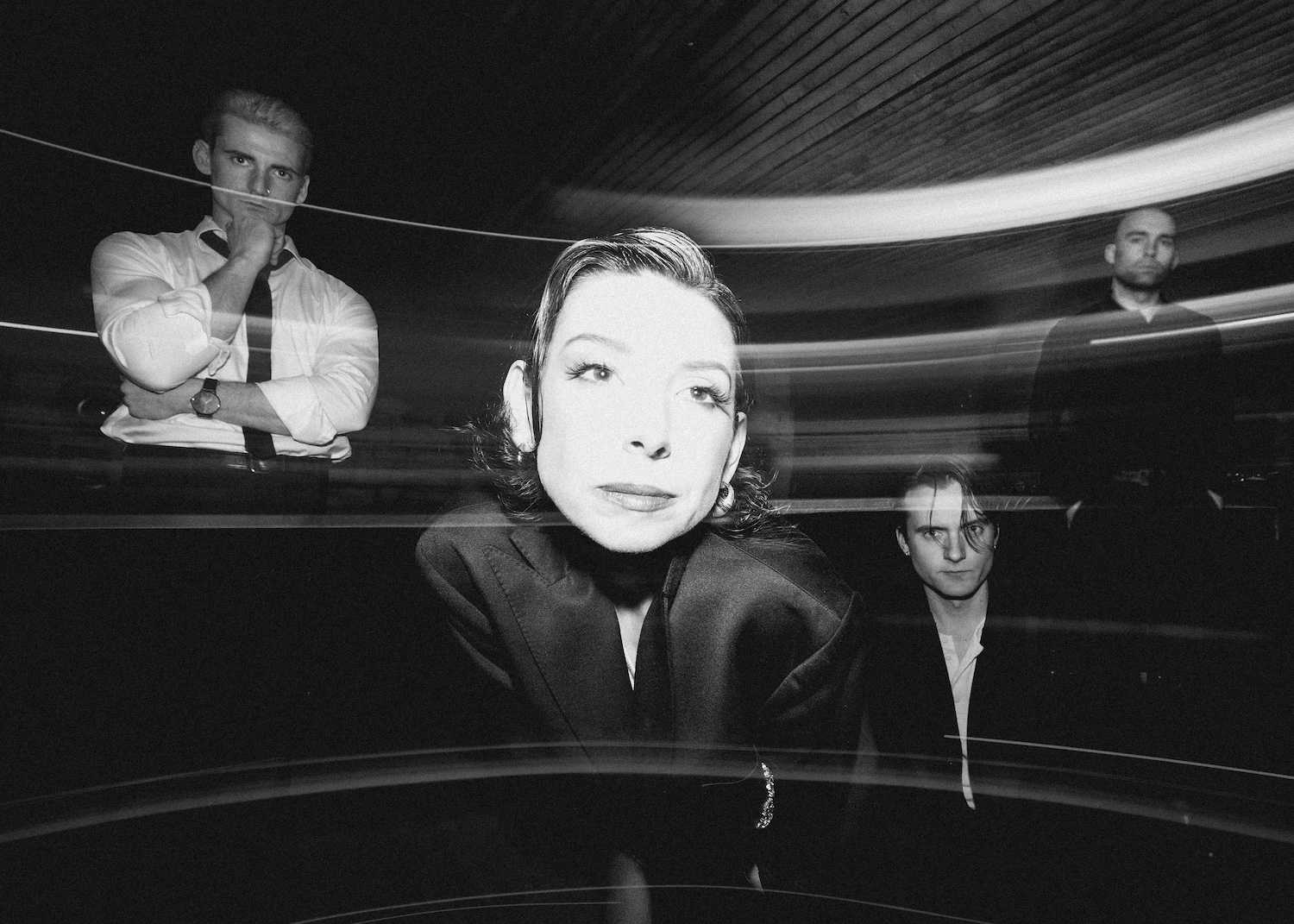
Your third line hits the hardest for me: “I am Irish scum with English blood, I don't know where I think I'm going or of what I'm guilty of…” and you go on from there. It's direct, it's raw, it's unapologetic, and it's instantly relatable – even to those of us who lack Irish or English blood! Do you mind sharing more about the identity conflict (real or perceived) that's going on in this verse, and how, if at all, it's resolved for you at this point?
Soda Blonde: That line came out very quickly and I didn’t edit it. It’s deliberately blunt because identity can feel blunt. Ireland and England have such a complicated history, and when you personally straddle that line, even quietly, it can create a strange internal friction.
As previously mentioned, my father’s parents were Irish, so I don’t really identify as English, but growing up with my dad having this thick Cockney accent, it was always brought to my attention that there was something going on there, and he would have been someone who shared that feeling of displacement in a much more acute way, being Irish and brought up in London in the 1950s. There would have been a lot of prejudice and discomfort; even the name O’Rourke was something he wanted to shed because of the backlash he’d get for even saying his name. So I guess that line is acknowledging his experience and my own inherited displacement and discomfort for being less traditional and less anchored in any national identity.
What do you hope listeners take away from “Suit & Tie,” and what have you taken away from creating it and now putting it out?
Soda Blonde: I hope people hear the music first off and feel like it’s shit cool haha. We worked really hard on creating something sonically that stands out and blends something grounding with something really fluid and modern, I think it makes you feel powerful when you listen to it. Looking deeper I hope people can hold themselves up higher like I’m trying to do within this piece. I’m always looking for people to connect with what we make on a deeper level so I hope I get some people coming up to us at shows and expressing that they feel seen and that they can like themselves a bit more for hearing themselves in the work.
— —
:: stream/purchase Suit & Tie here ::
:: connect with Soda Blonde here ::
— —
Stream: “Suit & Tie” – Soda Blonde
— — — —
Connect to Soda Blonde on
Facebook, 𝕏, TikTok, Instagram
Discover new music on Atwood Magazine
© Adam O'Regan
 © Adam O'Regan
:: Today’s Song(s) ::
follow our daily playlist on Spotify
:: Stream Soda Blonde ::