
Seattle alt-folk artist Where’s Beth sits with the ordinary ache of being alive on ‘Ache Is A Cricket In The Night,’ a soul-stirring, gently enchanting sophomore album that discovers beauty in discomfort and wonder in the smallest details. Sitting down with Atwood Magazine, singer/songwriter Sarabeth Weszely discusses how leaving New York City, embracing imperfection, and learning to stay present through it all shaped a record that meets life’s discomforts with tenderness, curiosity, and hope.
“Ache Is A Cricket In The Night” – Where’s Beth
Life is beautiful just as it is, with all its grief and boredom and chaos and change… we don’t need to avoid those more difficult experiences to have ‘the good life.’
* * *
On Ache Is A Cricket In The Night, pain keeps time.
Where’s Beth imagines ache as a cricket chirping through a thunderstorm – small, persistent, and strangely soothing in its constancy. Rather than something to conquer or outrun, discomfort becomes a presence worth listening to, and across eight soul-stirring songs, Sarabeth Weszely follows it into the corners of ordinary life: A fridge abruptly falling silent, a clogged drain gurgling like human pain, a stranger pointing out an untied shoe, a lover’s body resting heavy across her chest. The details may be small, but the emotional worlds they open are anything but.
Across Ache Is A Cricket In The Night, Weszely learns to sit with hurt long enough to discover how much beauty lives alongside it.
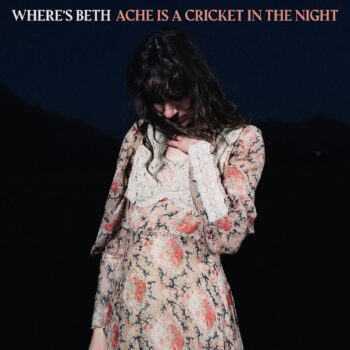
Released March 6, Ache Is A Cricket In The Night is a gentle, enchanting sophomore album rooted in grief, burnout, anger, love, change, and the wonder of staying present through all of it. That intimacy has long been central to Where’s Beth, the alt folk project of Midwest-raised, Seattle-based singer/songwriter Sarabeth Weszely. A trained writer, Weszely has spent 2022’s for my mom & other lovers and her 2024 debut album Bone Broth tracing the emotional charge of shared domestic spaces and everyday details; on Ache Is A Cricket In The Night, that close-observational lens opens wider without losing any of its humanity.
Weszely wrote its songs during her final year of seven in New York City, as the pace and pressures of life there began to wear her down and she and her husband were grieving the death of a friend. “On one level, it’s a break up record with New York City,” she tells Atwood Magazine. Yet leaving becomes only one piece of a larger reckoning, as Weszely begins reconsidering a much older instinct: The urge to classify difficult emotions as problems demanding immediate solutions.

This exhaustion comes into sharp focus on “Nothing Quite So Boring As Urgency,” one of the album’s most vivid and darkly funny songs. Weszely leans out a fire escape and watches a neighbor’s party; she spies the inside of their home on Zillow, hears a truck beeping over the radio at a café, watches rent remain perpetually out of reach, and eventually drops her suitcase down three flights of escalator at JFK. Mundanity and overstimulation pile atop one another until the song, a lush and dreamy folk reverie built on guitars, keys, drums, and flugelhorn, arrives at its wonderfully weary conclusion:
“Maybe it’s time to take our leave
Nothing is quite so boring as urgency”
Weszely calls the track a personal highlight, and its humor leaves the truth underneath all the more exposed. Burnout has made everything urgent, and urgency itself has become tiring. Still, Ache Is A Cricket In The Night refuses to stop at frustration. Again and again, Weszely’s songwriting pushes past her first reaction and toward curiosity – asking what might happen if she stayed with an uncomfortable thought long enough for it to change shape.
Grief undergoes that transformation on “Holding Us Back,” where Weszely personifies it as an unwanted stranger emerging from the woods and settling into the home she shares with her husband:
“Watching you grieve is not an easy thing
A stranger from the woods I didn’t want to let in
Sitting her ass on your unwrinkled skin
Crash on our couch til the spring birds sing”
There is no timetable attached to this guest, and Weszely knows it. “I wanted both of us to move through it as quickly as possible, but that’s really not an option,” she says. “Grief felt ambiguous and hard to trace, and it brought heartache from other parts of life to the surface.” “Holding Us Back” gives that ambiguity a body, then stays beside it, watching love and loss occupy the same rooms. By its end, Weszely relinquishes “the entitlement to all of our time,” one of the record’s most piercing acknowledgments that loving someone also means accepting the life neither of you can control.
The fridge stops humming, it’s an eerie sound
I wanna ask what you’re thinking about
I know you’ve been living under a fog
But when you need a living body
To hold, let go, to let loose
On a crowded staircase to a closed subway line
I relinquish the entitlement to all of our time
Soon it will be time to move
And just like a fool grows my love for you
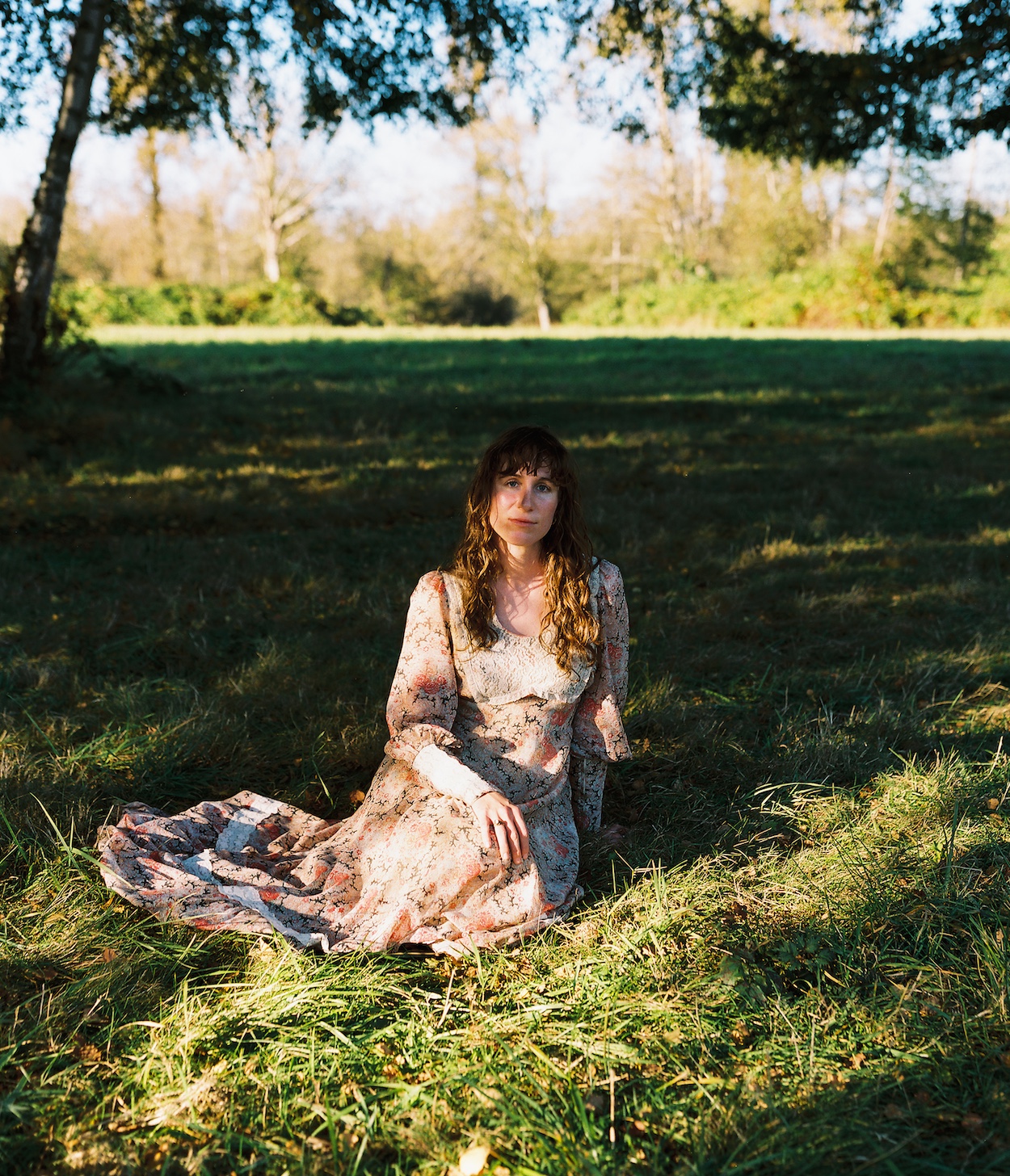
The album reveals its central philosophy most fully in its glistening title track. Against an imagined thunderstorm, a cricket keeps chirping, its tiny rhythm enduring through the chaos around it. Weszely transforms that image into a metaphor for recurring pain – less a monster lurking in the dark than a vulnerable creature already living within the ecosystem of a life.
“The hurt is softer than we know
But how strong our toes”
The song culminates in the line that ultimately gave the album its name: “Trying to escape complaint with all your might / While ache is a cricket in the night.” “It struck me as a line I needed to hear over and over again; I was talking to myself,” Weszely reflects. “The line ‘ache is a cricket in the night’ became a sort of mantra for me, reminding me to sit with discomfort in daily life rather than trying to outrun it.” What begins as an image becomes an ethic: Pain can remain present without becoming all-consuming. Sometimes the gentlest response is simply to hear it.
That curiosity reaches throughout the record. On the spellbinding album opener “White Ants,” termites burrowing through a house lead Weszely from thoughts of anger eating away at a home toward an entirely different possibility: Perhaps their work also softens the wood, facilitates change, and makes room for tenderness. A stranger noticing an untied shoe becomes evidence of human kindness. Later, “When I Get Home” finds intimacy in equally unglamorous places – phone batteries, someone else’s cat hair, dirty dishes, dusty sheets – before Weszely lands on one of the album’s loveliest expressions of devotion: “Don’t want you to be a fixture in my life, just a movement of the light.” Throughout Ache Is A Cricket In The Night, the ordinary never stays ordinary for long. Close attention keeps revealing another way to understand what is already there.
Weszely brought that same openness into the recording process. She wrote and recorded most of the album on a 1952 Gibson inherited from her grandfather Cappie, the bluegrass musician who first taught her guitar in middle school. After moving across the country to Seattle, she rebuilt a home studio with her husband, Jesse Thorson, and eventually recorded the album live with a band that included Abbey Blackwell, Steve Moore, Mike Turnwall, Carrie Jennings, and Karen Laura Peters. They played together without headphones, captured songs in full takes, and generally resisted listening back until later.
“These limitations were intentional and helped me stay present while I performed instead of getting lost in the endless possibilities of digital music making,” Weszely explains. “It helped me trust my gut as a producer and also trust the playing of my bandmates.” Even the mistakes stayed – imperfections that belong naturally on a record devoted to embracing life before it has been cleaned up.
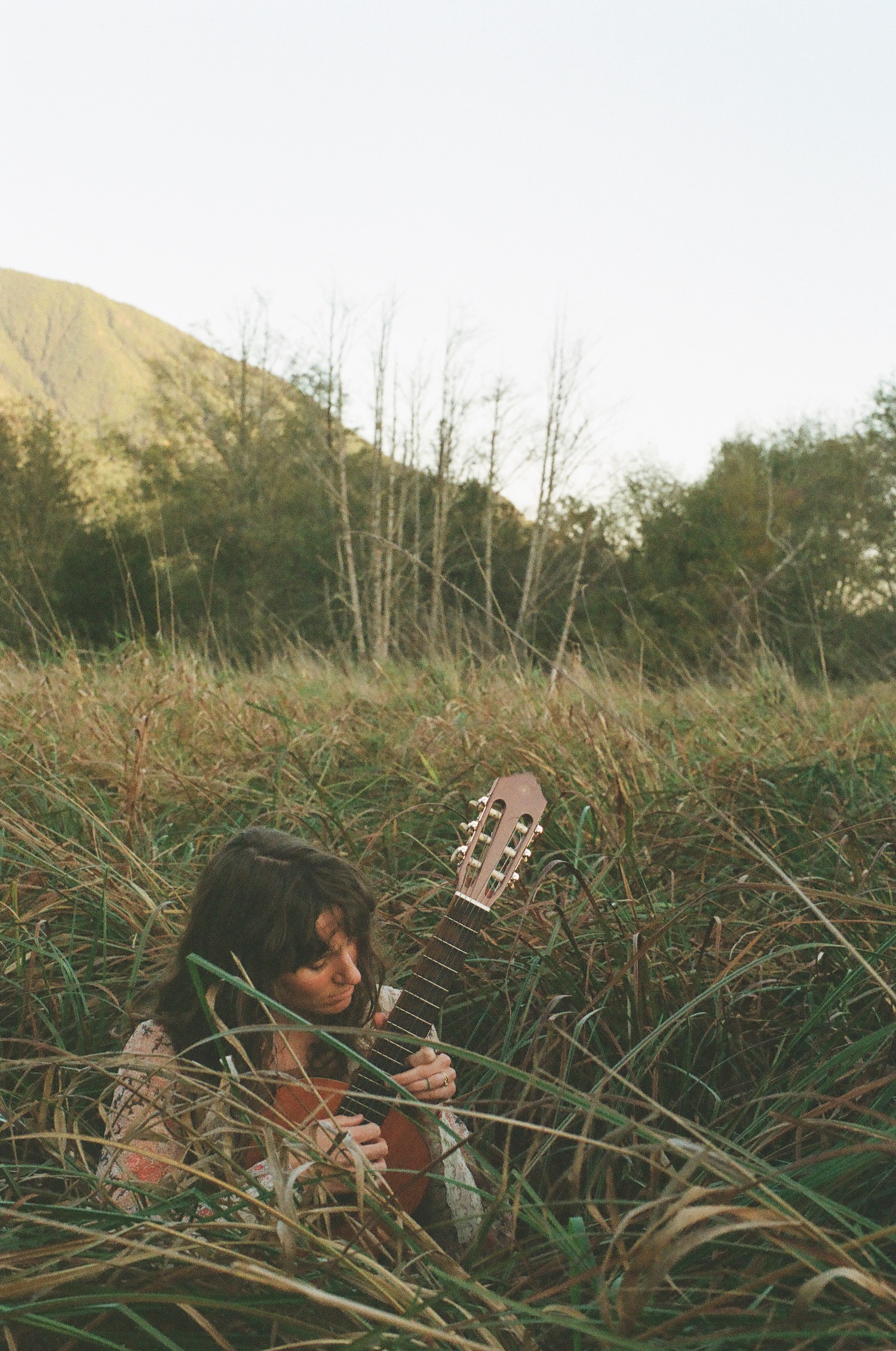
That may be Ache Is A Cricket In The Night’s greatest gift. Its gentleness never comes from looking away.
Weszely looks closer – at grief, anger, boredom, weather, bugs, rent, love, domestic clutter, and all the other forces constantly reshaping a life – and discovers beauty within their coexistence. “I hope listeners take away from this record something that I am still working towards, but that these songs seem to understand better than I do: That life is beautiful just as it is, with all its grief and boredom and chaos and change,” she says.
The ache never disappears. The cricket keeps time. And somewhere within that steady song, Weszely finds a way to stay.
Atwood Magazine recently caught up with Where’s Beth’s Sarabeth Weszely to discuss leaving New York City, learning to welcome discomfort, recording Ache Is A Cricket In The Night live in her Seattle home, and finding tenderness, humor, and hope in the smallest details of being alive.
— —
:: stream/purchase Ache Is A Cricket In The Night here ::
:: connect with Where’s Beth here ::
— —
Stream: ‘Ache Is A Cricket In The Night’ – Where’s Beth

A CONVERSATION WITH WHERE’S BETH

Atwood Magazine: Sarabeth, for those who are just discovering you / Where's Beth today through this writeup, what do you want them to know about you and your music?
Where’s Beth (Sarabeth Weszely): I guess a good place to start is: I love songwriting. I love it so much, and for new reasons all the time. I’ve written music pretty much my whole life and I do it as a self-regulating practice more than anything. It is one of the healthiest ways I’ve found to move through the world and my own experiences, which are intense. I’m a big feeler, and I have a hyperactive mind.
My process of writing songs usually involves finding creative ways to get past the surface-level, repetitive thoughts I have about what’s going on in my life or in the world in order to find something more interesting. It’s a practice I come back to over and over again to help me get unstuck from my usual thought patterns and see things in new ways.
I learned how to play guitar in middle school from my grandpa in central Illinois. We called him Cappie, short for captain (he flew small planes). Cappie was a bluegrass musician; he was in a band called The Geezers and referred to playing guitar as “picking and grinning.” I wrote and recorded most of this record on the 1952 Gibson that I inherited from him, which is the guitar he taught himself to play on as a kid.
My reasons for recording, releasing, and now touring have changed over the years, and I imagine they will continue to change. Recently, I’ve been grateful for music as a way of communicating – with other musicians when we play together, and with listeners. It’s an intimate way of communicating, and the human connection that music facilitates is really exciting to me.
I’ve had a Patreon for six years now, since before I recorded anything, when I only had voice memos to share. The people who have supported my music on Patreon are a huge reason I’m able to produce and release it now.
Can you share a little about the story behind your new record?
Where’s Beth: On one level, it’s a break up record with New York City. I lived in New York for 7 years and wrote the songs on this record over the course of my last year living there. I was never what you could consider a true hustling New Yorker; I tried to keep my living expenses low so that I could spend time writing songs and also just enjoying my life, wandering neighborhoods, people watching. But despite feeling like I lived at a much slower pace than everyone around me in New York, I was still working a lot of jobs – more than I could healthily sustain at the time – I was just feeling over it. I wanted to be in nature, and not in the one-sided way I got into nature then, taking the Metro-North train to the woods once a month to fill up my cup before returning to the city to empty it. I wanted a real relationship with the land, where I gave back to it and interacted with it every day. And the songs in Ache Is A Cricket In The Night are songs I wrote as I was coming to the decision that it was time for me to leave the city.
That same year, my husband and I were also grieving the death of a friend. Grief is an experience I am still pretty uncomfortable with if I’m being honest. I wanted both of us to move through it as quickly as possible, but that’s really not an option. Grief felt ambiguous and hard to trace, and it brought heartache from other parts of life to the surface. So I started to think more deeply about my relationship to pain and sadness. The religious culture I grew up in and around attached a lot of shame to pain, like ‘if you don’t feel good, you’re probably doing something wrong.’ I don’t believe that’s true at all, but it still impacts me. Songwriting is a place – maybe the place – where I allow myself to speak about the whole range of human experiences without immediately judging them as right or wrong. So the practice of songwriting came to feel more vital than ever to my wellbeing during this time.
Why the title “Ache Is A Cricket In The Night”?
Where’s Beth: Crickets chirp ‘in time,’ like a metronome, and their tempo changes depending on the temperature outside. When I was writing the song that ended up becoming the title track of the record, an image came to me of a cricket keeping time during a chaotic thunderstorm. The image felt comforting, so I camped out there for a while and wrote a song about that cricket, which eventually morphed into a song about pain – the kind of pain that comes back over and over again in life, and that I try to avoid.
I had my voice memo rolling and the line “trying to escape complaint with all your might, while ache is a cricket in the night” came out. It struck me as a line I needed to hear over and over again; I was talking to myself. The line “ache is a cricket in the night” became a sort of mantra for me, reminding me to sit with discomfort in daily life rather than trying to outrun it. It also felt like a unifying metaphor for the songs I was writing at that time, so it became the title of the record.
Bugs appear in a lot of my songs, especially on this record. I grew up in the Midwest and formed a strong attachment to the prairie – a landscape that feels, when you’re in it, like an ocean of bugs. Bugs have been fascinating to me for a long time, and comparing pain to bugs is a silly way I found I could become more curious about pain. Bugs are small and vulnerable. You can see them as pests but they are also integral members of their ecosystems with complex ways of surviving and communicating. And in the case of crickets, their presence is calming. So the idea that I could welcome heartache as if it were a cricket in the night was helpful for me during that time.

What was your vision going into this record? Did that change over the course of recording this?
Where’s Beth: I had a vision for the way I wanted to go about recording these songs, but I honestly wasn’t sure if I could pull it off. I love when listening to an album feels like being in a particular room with particular people, so I knew I wanted to record with a band playing simultaneously in the same room. I also wanted to engineer it myself from home, but I had only recently learned how to home record (while making my first album Bone Broth) and had never engineered a full band simultaneously. I was also about to move cross-country from NYC to Seattle, so I had to wait until my husband and I found a place to live and rebuilt our studio.
It ended up coming together about a year after we moved to Seattle. I’m really happy with how the record unfolded, which has pretty much everything to do with the musicians I met in that first year who played on the record: Abbey Blackwell (Alvvays, La Luz, Cassandra Jenkins), Steve Moore (Sufjan Stevens, First Aid Kit, Sunn 0)))), Mike Turnwall, Carrie Jennings, Karen Laura Peters, as well as my husband Jesse Thorson.
How do you feel Ache Is A Cricket In The Night reintroduces you and captures your artistry, especially compared to your Bone Broth?
Where’s Beth: Making Ache Is A Cricket In The Night is the most comfortable I’ve ever felt while recording. When I first started recording, I saved up and fundraised to spend a handful of days in the studio and I felt a lot of pressure to get it right, even though I’d never done it before. I got sick, I didn’t sleep well, and the pressure did not make for a great performance.
I started learning how to record from home in 2023, when I made my first LP Bone Broth with John-Lewis Anderson and John Mark Nelson. I was excited that I could finally take my time on a record, and I experimented a lot. I learned a lot, and one thing I learned is that recording vocals on their own, without instruments, is really hard for me. It feels like I should be able to get a “perfect” vocal take since I can try again as many times as I’d like and splice takes together, but that process was honestly pretty excruciating for me.
We recorded Ache Is A Cricket In The Night live as a band, which meant we needed to capture the songs in full takes, and I couldn’t later decide to change the arrangement or redo my vocals or anything like that. We didn’t wear headphones and didn’t listen back to our takes the day-of. Where we added overdubs, we did our best to record those as single takes too. These limitations were intentional and helped me stay present while I performed instead of getting lost in the endless possibilities of digital music making. It helped me trust my gut as a producer and also trust the playing of my bandmates, who are all such incredible musicians. I hope you can feel some of that trust when you listen to the record.
There are definitely some mistakes in there, and in general the process of making this record helped challenge my notion of “perfection.” It was mixed by Michael Coleman, a musician and engineer I’d worked with in the past and who I admire a lot. He takes a similar approach and was the perfect person to help me land the plane.
As a lyrically forward artist, do you have any favorite lyrics in these songs?
Where’s Beth: I have an affinity for this verse in “White Ants”:
Got anger in your face
I don’t want to be the place
It’s needing to go somewhere
And we all want the clean air
Tender is not hard to find
Bugs on the underside
Strangers in the grocery line
Saying your shoe’s untied
The chorus of the song (“white ants in the burrowing carving new migrations through the wood when the day is done”) is about termites eating away at a house, and that imagery led me to think about anger and the way it can eat away at a person or a home too. But then as soon as I had made that comparison between termites and anger, I thought the work termites do could also be described as increasing tenderness, softening wood, facilitating change, and that led me to think about moments of human kindness that soften me, like when a stranger tells me my shoe is untied or my backpack is open. And that caused me to be more curious about the experience of anger, in myself and in other people, instead of just fearing and resisting it. So this verse is a cool example of how the creative process teaches me and makes me a more hopeful person than I’d be without it.
Do you have any definitive favorites or personal highlights off this record?
Where’s Beth: “Nothing Quite So Boring As Urgency” is a special one to me. I was learning how to voice lead on the guitar and that influenced the way I wrote the song, especially the interaction between the vocal melody and guitar. I also wrote a lot of lyrics for this song – more than usual for me – which was cathartic.
I love playing the song live with my band. I also like that it makes people laugh at shows (when I share the title of the song, or when I sing the line about dropping my suitcase down three flights of escalator at JFK). It’s good to laugh!
Can you describe this record in three words?
Where’s Beth: I wouldn’t go to my grave with these but here are three words that come to mind:
- Stay
- Tender
- Open

What do you hope listeners take away from Ache Is A Cricket In The Night? What have you taken away from creating it and now putting it out?
Where’s Beth: I hope listeners take away from this record something that I am still working towards, but that these songs seem to understand better than I do: That life is beautiful just as it is, with all its grief and boredom and chaos and change. That we don’t need to avoid those more difficult experiences to have “the good life.” I hope it accompanies listeners through their own range of experiences, especially when life is less-than-comfortable.
— —
:: stream/purchase Ache Is A Cricket In The Night here ::
:: connect with Where’s Beth here ::
— —
— — — —
Connect to Where’s Beth on
Facebook, TikTok, Instagram
Discover new music on Atwood Magazine
© Aaron Banh
 © Aaron Banh
Ache Is A Cricket In The Night
an album by Where’s Beth