Atwood Magazine’s writers reflect on Zach Bryan’s ambitious and emotionally charged fifth album ‘The Great American Bar Scene,’ exploring its introspective storytelling, vivid Americana imagery, and enduring resonance one year on from its July 4th release – a record that captures the quiet poetry of everyday life, late nights, and the people we hold close.
Featured here are Atwood writers Jake Fewx and James Crowley!

— —
To start, what is your relationship with Zach Bryan’s music?
James Crowley: I was introduced to Bryan’s music with 2022’s American Heartbreak. That album and his self-titled follow-up were both ranked in my favorite albums lists for 2022 and 2023. While I do think that he has clear standouts on each record, personally, I don’t think he really has a bad song. I’ve followed each release since that album, and a handful of his songs have found places in my regular listening.
Jake Fewx: Zach Bryan is very new to me! I first heard of him earlier this year after seeing his eponymous album get some love on various 2023 end-of-year lists. That warranted the decision to give it a listen, and I wasn’t disappointed! For a stereotypical “everything but country” guy like me, I couldn’t help but be impressed with what Zach Bryan was showcasing on that album. The atmosphere Bryan crafts on that album is really sweet and immersive, but his stellar storytelling ability is what made me an instant fan.
Let’s go back to last July 4th, when this album was released. What were your initial impressions and reactions to The Great American Bar Scene?
James: I do genuinely feel like he’s tightened up his sequencing and flow to make an album that’s his most consistent. The Great American Bar Scene feels the most fully formed of his five records. The best songs still pack a gut punch, and it works very well as a late summer nights album for drinking beers on your porch.
Not to get too wild, but it almost feels like the flipside of the coin to the summer’s biggest (and honestly, best) album brat by Charli XCX. Where brat is a bombastic and energetic album, perfect for nights on the town, The Great American Bar Scene is the album for quiet late nights up alone.
Jake: My first listen through had me stunned. I had the album playing on my AirPods while strolling through a nice lakeside park near me, and the music matched the scene perfectly. To me, this new album sounds like an upgrade for Zach Bryan on pretty much all fronts. The performances are outstanding, the music sounds more homogenous, and, somehow, Bryan’s lyricism is better than his previous work (like, how??). I loved the album on first listen and have had it on heavy rotation all month. Bar Scene has a ton of merit, and I have been having a good time unpacking what the album has to offer.
How does this album compare to 2023’s Zach Bryan – what are the most striking similarities or differences?
James: To go back a little further, it’s easy to split Bryan into two eras: Major label ZB and independent ZB. While 2022’s American Heartbreak is his major label debut, it is something of a bridge between where he’d left off with 2020’s Elisabeth and where he’d go on the self-titled album in 2023. Just as on Zach Bryan, The Great American Bar Scene has the best production of his career, and it doesn’t feel like he’s sacrificed any parts that have made those early songs so special.
That being said, I do think that there’s a little bit more reservation on this record versus the self-titled. Coming off the crossover success of American Heartbreak, Zach Bryan felt like a victory lap, and he seemed ready to share everything with the world. Now, Bryan’s celebrity has grown, and to some extent, he seems like he’s a little more cautious about what he shares. The Great American Bar Scene is much more of a record that’s laidback, rather than a fist-pumping in the air.
Jake: To me, Zach Bryan is a true blue country album, while Bar Scene is more of an artsy homage to the various styles of music Bryan loves. Zach Bryan himself is impressively consistent while tackling similar content across both projects, but this new album feels more thought out in its presentation, concept, and sound palette. To me, it sounds like Bryan is adopting the sentimental, dreamlike sound of mid-’00s indie classics like Sufjan Stevens and Bon Iver and bringing them into his country realm (not to mention the incredible 20th Century folk rock sound); it all serves the album super well. Zach did his homework for the new project, and the music is all the better for it.
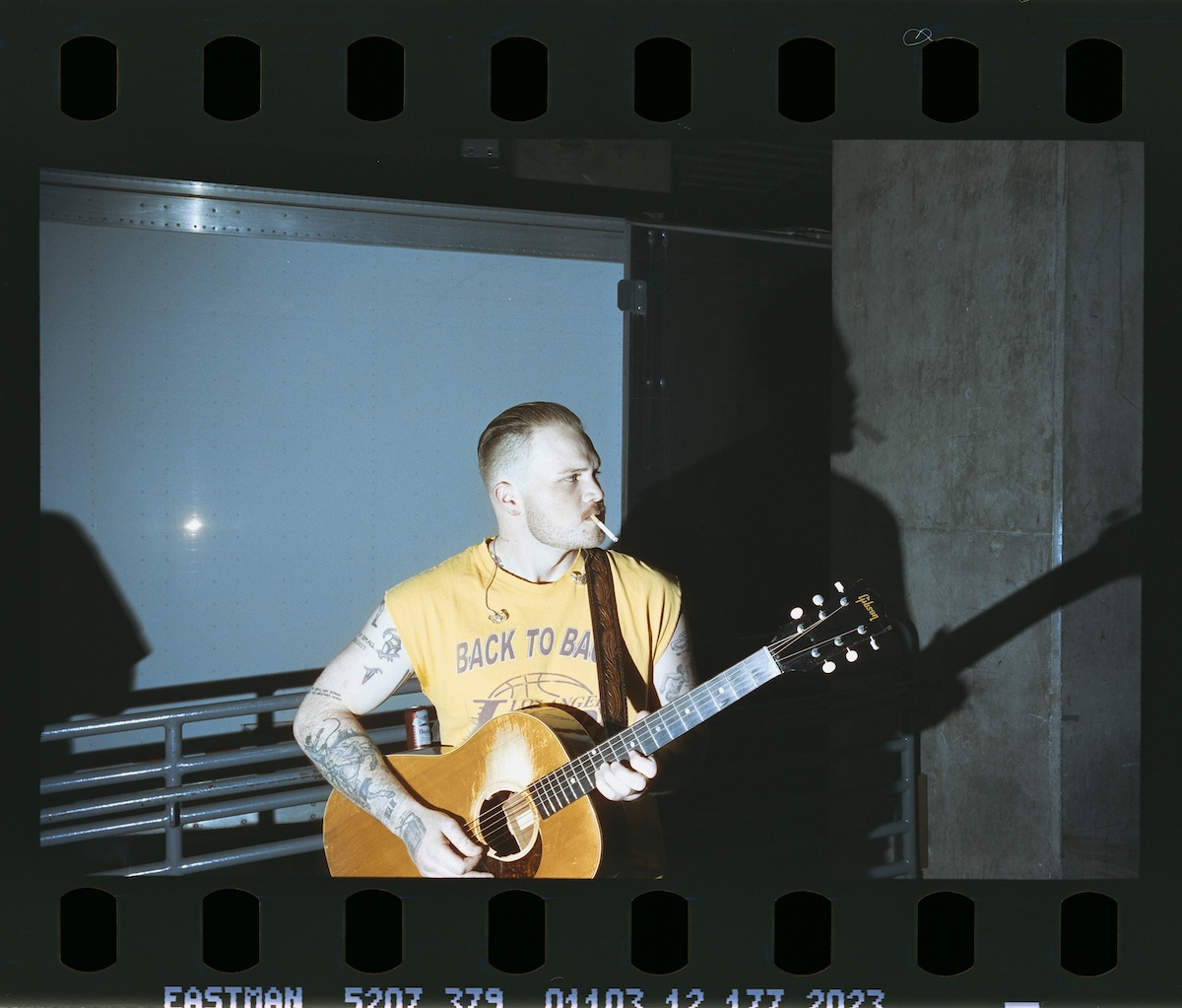
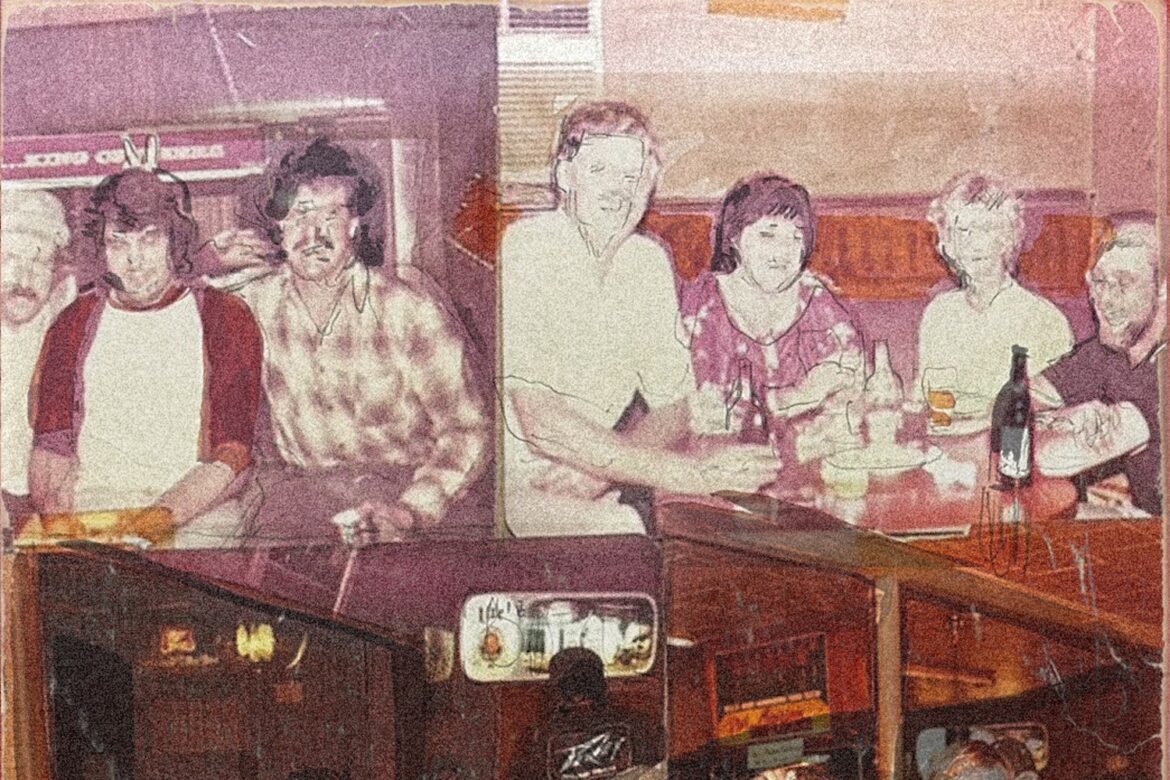
How does the title ‘The Great American Bar Scene’ capture the spirit of these songs?
James: While I haven’t drank in nearly three years, I still have a certain fondness for a dive bar. When I walk into a bar and catch the scent of spilled beer, a low level of chatter, and see a boilermaker deal, it does feel like home. There’s a warmness to these songs that certainly feels like a bar that’s not packed in with people screaming, music blaring, and overpriced drinks. Bryan had sorted of tipped his hand in this direction with songs like “Nine Ball” and “Sarah’s Place” from his Boys of Faith EP, but where those songs are certainly a little more energetic, there’s a little more reservedness on The Great American Bar Scene.
“Nine Ball” and “Sarah’s Place” sound like buying a round of shots for your friends, throwing quarters on the pool table to claim the next game, and dropping a $20 into a jukebox to ensure that all your favorite songs play at top volume. The Great American Bar Scene feels like wandering into the bar after a long day at work to debrief with friends in the booth you’ve been spending all of your 20s in. It’s smiling while catching up with your favorite bartender while waiting for people to show up. It’s deciding that there’s not a better spot to grab dinner on a date night than the bar that you end up in every weekend.
Jake: Framing the album around a typical night at an American bar packs a lot of conceptual meaning because it is so. Stinkin’. Relatable! I mean, this album is straight 21st Century Americana, and Bryan does a great job of selling the music as such, but at its core, this album is about people. Just normal people trying to live a good life.
There’s a strong sentimentality in the image of a ‘bar scene.’ It conjures images of people gathering to laugh, relax, brag, reconnect, and ultimately enjoy their life among companions. And while Zach Bryan sings a lot of his path of self-improvement, he’s actually very empathetic. He excels at sharing a fondness for his experience, whether good or bad. That sense of relatability is a great vehicle for him to both share his personal experience and create deeper meaning in his music, which creates a point where his message is so successful.
Zach Bryan very deliberately released this album on Independence Day. What is the significance of that decision, and how does it fit into the context of the overall record?
James: Bryan’s affinity for Bruce Springsteen has never exactly been subtle, and the Boss even gets a feature in the record. To some extent, I think Bryan would view this record as his Born in the U.S.A., although I don’t necessarily know that Bryan picked up on the political implications of songs like the title track or “My Hometown,” especially after he shared his rather privileged view of when “a person includes politics into their life.”
Given Bryan’s Navy background, it’s not really a surprise to learn that he’s very patriotic. I think to some extent, he was trying to create a record that felt like a celebration. As a person who’s been more and more jaded by the United States with each passing year, the Fourth of July still serves as a time to get together with friends and family for a summer’s day, have a barbecue, and enjoy each other’s company. You don’t need to wear a red, white, and blue t-shirt.
Jake: I really like how James compared this album with brat earlier. Is it too late to dub “barscene summer”?
One of my favorite aspects of the album is how Bryan paints a grand and holistic image of America as a country. Like I mentioned before, the music manages to capture that nostalgic “sea to shining sea” Americana, but it feels so, I don’t know, modern. Bryan does such a good job of crafting a variety of these vivid American images. The music makes you imagine a Brooklyn skyline, a starry Northern Minnesota night, a small family home in Oklahoma, a busy metro train in Boston, and it’s all done with incredible sincerity. The music captures that associative feeling of relating memories to a place you used to know but is done so with a love and respect for a wide-lens view of America and the grand diversity it offers – it’s quite beautiful!

The Great American Bar Scene features plenty of notable collaborators, including Bruce Springsteen and John Mayer (among others). What do you make of these features?
James: Of all the features on the album, Springsteen and Mayer are certainly the most exciting. After each joined Bryan on stage at various concerts, plenty of speculation reached fans about each making appearances on the album. Mayer’s contributions on “Better Days” certainly add some instrumental flair that Bryan’s songs usually don’t have, with some bluesy twangs, giving it more of a laidback, southern rock feel than country. Springsteen’s addition is certainly the best payoff on the record, after Bryan shouts out “State Trooper” on the title track and gives a nod to “Thunder Road” on the opening line of “American Nights,” having the Boss show up later on a love song reminiscent of “I’m On Fire” is certainly a lot more fun.
All that being said, the best feature truly feels like it comes with John Moreland on “Memphis; The Blues.” Where Springsteen and Mayer’s features feel like cosigns from legacy artists to the next generation of singer-songwriters, the additions of Watchhouse (on “Pink Skies”) and Noeline Hofmann (on “Purple Gas”) feel like Bryan trying to highlight the artists that he wants to give a boost to, but Moreland feels the most in conversation with his music. While Bryan has reached a massive level of mainstream success, the Big Bad Luv singer feels like he’s had the most direct influence on him. Listening to songs like “Harder Dreams” and “High on Tulsa Heat” truly sound like predecessors to the type of stripped down, lyrical country that Bryan has made his name on. “Memphis; The Blues” feels much more like a peer offering advice to someone a little younger than them. Hearing them duet on the love song is truly a treat, and they feel the most well-matched.
Jake: Frankly, the album’s features are a bit hit or miss for me. My inner music lover can’t help but admire and appreciate the inclusion of a name like Bruce Springsteen (like, c’mon. That’s rad.) but, sadly, Springsteen’s feature brings me out of the otherwise captivating backdrop of Zach Bryan. I quite like Noeline Hofmann’s vocals on “Purple Gas,” and a John Mayer feature usually hits, but otherwise, I think the additional guests bloat the otherwise seamless album experience Zach Bryan crafted around them.
Which song(s) stand out for you on the album, and why?
James: Besides the aforementioned “Memphis; The Blues,” my favorite has been “28.” It’s something of a loving-the-imperfections ballad, but it’s a little bit harder than that. It’s a song about how you get to learn a person’s history as you love them. Even if you may not ever get to see the apartment where your partner’s parent may have lived in Boston or they may not see how you looked when you “lost my mind in the streets of the city,” you’re always going to be loving someone who has a history that is going to play a part in your relationship. Similarly “Funny Man” is a wonderful love song, with a sweet sentiment.
Alternatively, I love “American Nights.” Unfortunately, I felt like some of the more energetic songs that were really standout tracks on Zach Bryan (“Overtime,” “East Side of Sorrow,” and “Fear and Friday’s”) didn’t really make the cut on The Great American Bar Scene. “American Nights” is a truly fun song. Even though there are plenty of lyrical allusions to crime, getting into trouble, and more, the chorus of “Shake your body off under coastline light” truly makes the pay off worth it.
Jake: C’mon, tell me you didn’t get a little emotional listening to that opening poem. What a great way to start the album! There are a lot of great songs to name, but I think it is worth mentioning how darn smooth the album plays from front to back.
“Oak Island” is my personal favorite track. I love the driving beat and the bright yet mellow energy of the trumpet; it contrasts everything around it really well. “28” is just shimmering, heartfelt Zach Bryan at his best. I love the powerful sentiment of “Towers”; that gospel choir never fails to give me chills!
Do you have any favorite lyrics so far? Which lines stand out?
James: The best line for me comes in “Towers.” Bryan sings, “Do you think God’s a person or is He just a sound of laughter through the walls in a place I haven’t found?” I feel like his reflections on a higher power and simply trying to enjoy being present in the moment, finding God in the people around him (or struggling to in this case).
I also feel like “Northern Thunder” has one of my favorites. Serving as both a tribute to Bryan’s late mom and a reflection his recent skyrocket to fame, the pre-chorus couplet, “It ain’t been my week, it ain’t been my year/And I hate to admit I just need you here” is a tender reminder that grief isn’t linear, and healing is an ever-continuing process.
Jake: This is probably me just going for the lowest hanging fruit, but I love the sentiment of the chorus from the title track. “Why does love always feel like a fever dream / In the great American bar scene” ties together the album’s themes, narrative, and sound concept while simultaneously capturing that American nostalgia Bryan has crafted – life is a bit of a fever dream after all!
With an album tackling a concept as large as “America,” it would have been so easy for Bryan to lean into a political stance, but he succeeds at creating something a bit more meaningful. He says it so well on “Boons,” saying, “No concern for politics / Come on home I’ll check for ticks.” Bryan succeeds at showcasing a deeper, more affectionate meaning without getting too heady. It gives the music longevity while remaining simple. And Bryan gets tons of mileage with these simple images. I adore the line “She is smoking cigarettes in the kitchen / Tom and Jerry on the front room television” on “The Way Back.” It’s a description that perfectly encapsulates the aesthetic of that image. I can’t praise the lyricism enough!
Barring 2021, Zach Bryan has released a lengthy new album each year since 2019. Given his prolific nature, does The Great American Bar Scene show that this model is sustainable or perhaps that he should slow?
James: Having had time with this album has sort of shown some cracks in the model of prolifically releasing new music at the clip that Bryan does. I stand by that there isn’t a bad song on a Zach Bryan record, but there are certainly many that aren’t really memorable. While Bryan has paired down the releases since 2022’s American Heartbreak, his more recent albums are still significantly longer than many of his peers’.
I’ll never complain about more new music or having a surplus to choose from. Still, there’s a part of me that feels like the best songs from the self-titled, the Boys of Faith EP, and The Great American Bar Scene probably could’ve been boiled down to one amazing record. Instead, we have two still pretty great records, but they have a fair amount of filler.
Jake: No, Zach Bryan. Keep ‘em comin’.

Where do you feel The Great American Bar Scene sits in the pantheon of Zach Bryan’s discography?
James: Personally, I believe that Bryan’s greatest achievement so far is either the self-titled album or his live record All My Homies Hate Ticketmaster. Based off of his current output, I believe that most people will view the self-titled as the crowning, most definitive record, but I think that given the ever-growing nature of his audience The Great American Bar Scene will become a fan favorite. The tent of Bryan fans continues to grow, and I’m sure that as people continue to discover him, the records that they join with will be their favorite, but I feel that the widest net was cast with Zach Bryan. Still, if Bryan ever makes good on that promise for a “midwest punk” record, I’m sure that will become my favorite.
Jake: I haven’t listened to any of Zach Bryan’s earlier work, but this album is sure making me want to dive into it! As of right now, I am absolutely loving “The Great American Bar Scene” and anticipate it will stick with me as a high point of the year.

One year on, how does this album hold up?
James: Looking back on The Great American Bar Scene a year later is interesting. Shortly after the album came out, Bryan was subjected to a fair amount of public fallout after his breakup with Brianna “Chickenfry” LaPaglia. Some people did stop listening to his music after that, but I do genuinely feel like the whole breakup drama was built on a he said/she said nature. Ultimately, I think that they are both very flawed people, who don’t work together in the long run. That is fine. I don’t expect artists to be perfect people. There were certainly some moments where it felt like there was a lot of Zach Bryan oversaturation, as LaPaglia spoke about their relationship and breakup. Still, that aspect never really tampered my feelings about the album. “28,” which was clearly written about the relationship, remains the standout song on the album, and Bryan has not stopped playing it.
While I still really do enjoy the album, Zach Bryan, the celebrity, does occasionally overwhelm Zach Bryan, the musician. Seeing the petty drama unfold has occasionally made me feel turned off from the album. When he posted the Trump picture, I was again annoyed, whether he was doing it as a goof or not. The decision to remove “Memphis; the Blues” and replace John Moreland’s feature after the Visitor songwriter publicly took a shot at him did again show some cracks in the Bryan facade. I stand by that that was one of the best tracks on the album, but the redone version lacks a depth that Moreland brought to it. It also gave a bunch of Bryan’s fans license to show how annoying, stupid, and childish they are. I wrote a lot about that when it happened, and I realize that it’s not going to change the stan approach to pop music.
Despite the newfound baggage that Bryan has, I generally still really enjoy this record, not as much as the self-titled, but it’s solid. The singles he’s released after it haven’t had the juice, but The Great American Bar Scene does. When my fiancée and I got engaged last August, my gut reaction was to caption the post with my favorite line from “28.” I’ve gone back to the album’s bangers like “Oak Island” and “American Nights” regularly. We saw Bryan from up in the rafters at Brooklyn’s Barclay’s Center on the last night of his “Quittin’ Time” tour, and it was a great show. The crowd still left a lot to be desired. The vibes were better months later when I saw Charli XCX on the brat tour. Even though I try to separate the artist from their fanbase, I can’t deny that it has an impact.
Still, I am excited to see what Bryan does next. I am very excited that he has The Front Bottoms opening for his MetLife show in New Jersey later this summer. Even though TFB don’t release music I enjoy anymore, I’m always going to appreciate when the bands that released pivotal emo albums get big opportunities. While I’ve been underwhelmed by Bryan’s latest singles, I do think that his next album will be a good one, and if he’s keeping his pace, we’ll get to hear it before the year is done.
Jake: In retrospect, The Great American Bar Scene didn’t quite get the limelight I suspected it was capable of attaining. But politics and tabloid-esque celebrity stunts aside, I do think Zach Bryan achieved something impressive on this project. The music speaks for itself. The melodies are immersive. The storytelling is poignant, and Bryan excels at remaining relatable to a wide audience without sacrificing his high level of artistry. Though I can’t say I choose to spend much time with this album, my experience with it has been and continues to be very enjoyable, making me excited for what Zach Bryan may have in store for us next.
— —
:: stream/purchase The Great American Bar Scene here ::
:: connect with Zach Bryan here ::
— —
— — — —
Connect to Zach Bryan on
Facebook, 𝕏, TikTok, Instagram
Discover new music on Atwood Magazine
© courtesy of the artist
 © courtesy of the artist
The Great American Bar Scene
an album by Zach Bryan