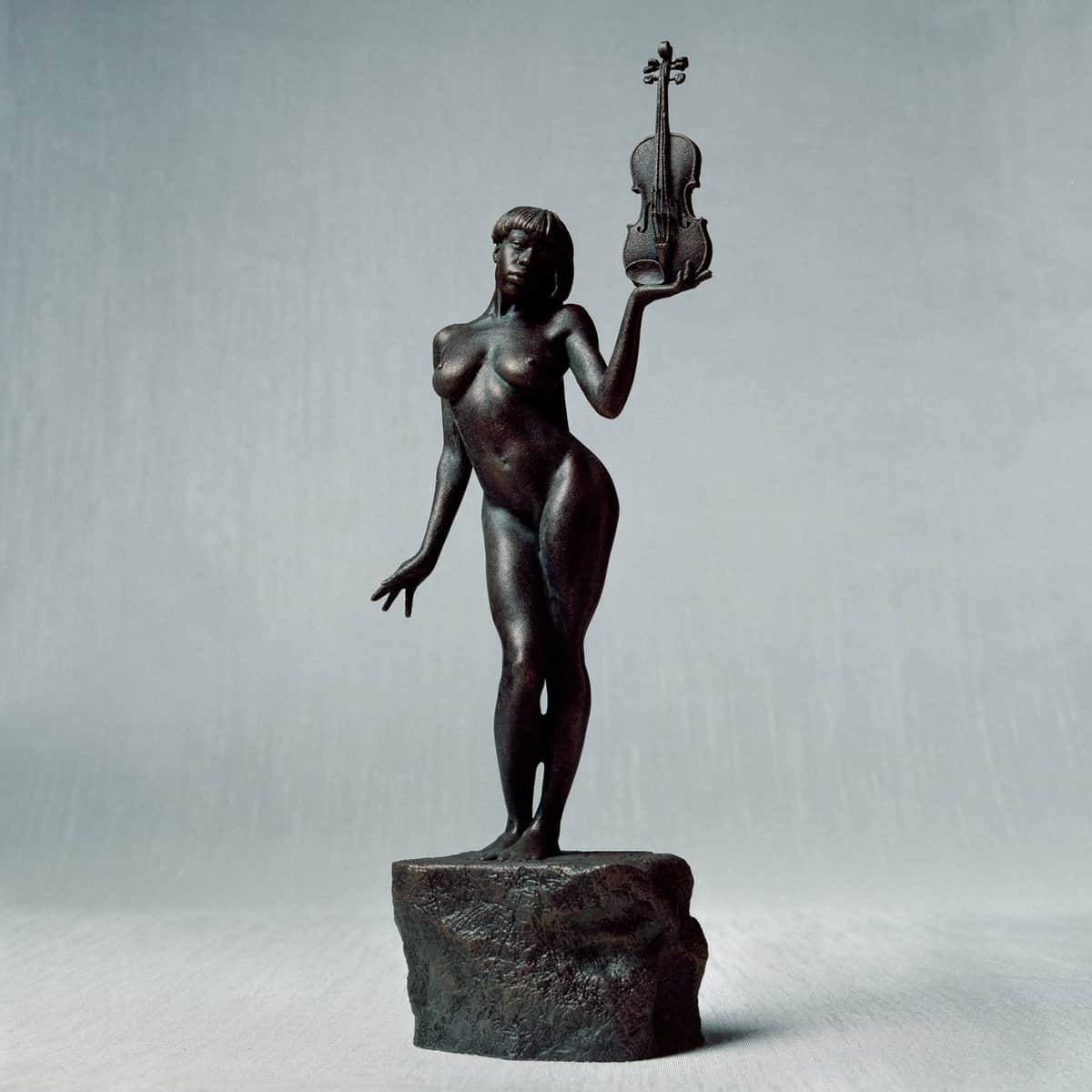
Indigo De Souza opens up to Atwood Magazine about her bold third record ‘Precipice,’ embracing joy, surviving disaster, and why living on the edge might just be her creative superpower.
“Crying Over Nothing” – Indigo De Souza
Some artists flirt with vulnerability, but Indigo De Souza dives in headfirst.
With her latest album Precipice, the North Carolina native-turned-pop auteur isn’t just toeing the line between joy and devastation; she’s dancing on it with wild abandon. Born from a chapter of radical mental clarity and shaped in the wake of literal disaster, Precipice is both her most explosive and tender work to date.
Ahead of her newly announced 2026 tour, De Souza sat down with Atwood Magazine to talk healing, hurricanes, heartbreak, and holding on.
— —
:: stream/purchase Precipice here ::
:: connect with Indigo De Souza here ::
— —
Stream: ‘Precipice’ – Indigo De Souza

A CONVERSATION WITH INDIGO DE SOUZA
Atwood Magazine: You’ve described life as “always being on the edge of something without knowing what that something is.” What personal precipices inspired this album, and how did music help you harness that feeling rather than be consumed by it?
Indigo De Souza: In the thick of writing Precipice, I was entering a new era of clarity around my mental health. I was finally given a diagnosis that fit all of my symptoms, and it changed everything. I spent my whole life before the diagnosis not knowing what was happening to me. Not understanding why my brain was dragging me in all these unpredictable directions, and not knowing how to navigate it. This album came at a time when I was starting to feel some amount of hope for myself and my world. Having a true diagnosis helped me find the right path towards healing and learning tools for survival.
The title track reflects both darkness and hope – “Holding on for dear life… everything has gone dark.” How do you navigate that duality in your writing: Surrendering to the heaviness while still leaving room for light?
Indigo De Souza: It’s really not something I’m actively choosing to talk about, but more so something that just naturally has to do with the human experience. Life is so hard and heavy and ruthless, and at the same time, a totally awe inspiring world of magic. That’s what being alive seems to be. Beauty and pain. Highs and lows. Light and Dark. I can’t help but speak to that duality.
Your catalog has always brimmed with honesty, but Precipice feels like a step toward both personal catharsis and mass appeal. How did you strike the balance between raw confession and the kind of euphoria that drives a pop record?
Indigo De Souza: I really just focused on staying true to the emotional core of my songwriting while having maximum fun making glossy electronic sounds, and it just sort of popped out!
This album marks a sonic expansion for you, leaning into bigger, bolder pop textures while maintaining intimacy. What drew you toward that direction, and how did you ensure it still felt authentically yours?
Indigo De Souza: Yes! I’ve always loved pop music. It’s probably my favorite genre because of its big universal power and its hopeful energy. I just felt like it was time for me to explore that space. I needed a little break from heartbreaking emotional rock music. It truly opened up a whole side of my musical personality that feels really important to my relationship with joy and celebration of the self. It’s impossible for me to make music that isn’t authentically mine, no matter what genre I’m exploring. I’ve never been able to embody anything else but myself, unfortunately for me.

Working with Elliott Kozel, who’s collaborated with SZA and FINNEAS, seemed to unlock a new energy in your music. What did that collaboration bring out in you as a writer and performer?
Indigo De Souza: Working with Elliott changed my life in so many ways. It’s hard to articulate how important our collaboration and friendship is. We just clicked immediately when we met. We are truly able to speak telepathically with music. He is an amazing producer. He has no ego, he is patient, he is curious, he is laid back, he has an incredible sense of humor. And I think probably most important for our connection, we have both been through very hard things in our lives. There is nothing like taking a mixed bag of trauma and turning it into beautiful recorded sounds. He has shown me that anything is possible when you’re making music. I am so grateful to have a friend like him.
Songs like “Not Afraid” and “Be Like the Water” carry a sense of liberation and movement. How did the sonic landscape – the keyboards, romantic guitars, and pulsing rhythms – reflect where you were emotionally while making this record?
Indigo De Souza: I was in a mostly positive headspace while making this record. We recorded the bulk of the record in Los Angeles. It was my first time really sinking in and feeling what that place was all about. At first I didn’t like it, but then it grew on me over time. I think LA really came to represent a space of freedom for me. Freedom from the life I’d experienced since childhood in North Carolina. As much as I of course love my home state, it also carries the ghost of so many memories past. And as someone with severe mental illness, I have a really hard time with my past self. LA became a place for me to feel hopeful and excited about the now, and the world of possibilities up ahead.
In late 2024, you faced a literal precipice: Hurricane Helene flooding your home and uprooting your world. Did that experience reshape your relationship with Precipice and the themes of finding beauty amid chaos?
Indigo De Souza: The flood really did totally turn my whole life and world upside down very very unexpectedly. And that was horrible of course. But at the same time, it taught me so many beautiful hard lessons that I truly am so grateful for. Precipice had been finished for a long time when the flood hit. I kind of stopped thinking about those songs for a while. I went to LA a few months after the hurricane and wrote/recorded a new album with Elliott processing the flood and the aftermath. It was so helpful to have that outlet. After finishing the flood album, we released Precipice. It was funny timing! The industry moves at a funny pace. At first it was hard to embody such hopeful sounding songs, but eventually I fell in love with Precipice all over again. Especially practicing for tour with my band in North Carolina. Performing these songs is so fulfilling and special.
You’ve said you often feel “constantly on the precipice, of something horrible or something beautiful.” Does living in that space fuel your creativity, or does songwriting offer a way to step back from the edge?
Indigo De Souza: Yes, I think that’s where a lot of my creativity comes from. That space of uncertainty and curiosity. The willingness to consider a variety of outcomes without being too stuck on any specific one. Writing music has always given me the chance to practice following my gut. Which is special! Because I don’t always do that outside of music. I have to be more discerning in my everyday life.
Your music often captures private emotions but finds deep connection with listeners. How do you hope Precipice resonates with fans who might be standing on their own edges of change or uncertainty?
Indigo De Souza: I hope that Precipice provides a feeling of courage and positivity. I hope the listener can feel the hopefulness and fearlessness I felt when I was making it.
Over the course of your career – from Any Shape You Take to All of This Will End to now – how has your approach to vulnerability evolved? Are there parts of yourself you’re only just learning how to share?
Indigo De Souza: I think it has always come very easy to share the dark and heavy parts of myself, but maybe harder to be open about my joy. I’m not sure why. Maybe joy just feels more personal somehow. Like, not everyone has the same sense of humor I do, but most people know what it feels like to be heartbroken. I don’t know, it’s always come pretty naturally to share emotion, but I think I’m always learning new ways to articulate things.
You’ve described wanting to make music that “fills your heart with euphoria while you dance along.” What role do you think joy – even tentative, hard-won joy – plays in your music now compared to your earlier work?
Indigo De Souza: I think now I am less afraid to embody joy in music. I really only just started practicing that. Since I was a kid, music has mostly been a place I go when I’m sad or angry or out of control. But now I’m more open to that space being fun and silly and less serious.
Looking ahead to your headline tour this fall, plus your work with PLUS1 and The Trevor Project, what do you hope these live shows and partnerships communicate about where you are as an artist and a person right now?
Indigo De Souza: I am very excited about the tour, and grateful for the opportunity to partner with PLUS1 and The Trevor Project, donating proceeds from our shows to a truly incredible organization. It can feel so overwhelming, all the horrible things happening in the world, everywhere you turn. But I just hope that I can make some small difference in the corners I’m able to touch with my music. I’m grateful music gives me the chance to uplift people’s lives, and bring people together.
* * *

Indigo De Souza doesn’t just sing about standing on the edge – she invites you to dance on it with her.
With Precipice, she’s crafted an album that honors uncertainty, grief, joy, and every fragile breath in between.
It’s a rare thing to witness an artist so fully shed old skin in real-time, to watch someone embrace chaos and come back glittering.
— —
:: stream/purchase Precipice here ::
:: connect with Indigo De Souza here ::
— —
— — — —
Connect to Indigo De Souza on
Facebook, 𝕏, TikTok, Instagram
Discover new music on Atwood Magazine
© Hannah Sommer
 © Hannah Sommer
:: Stream Indigo De Souza ::