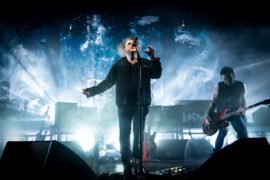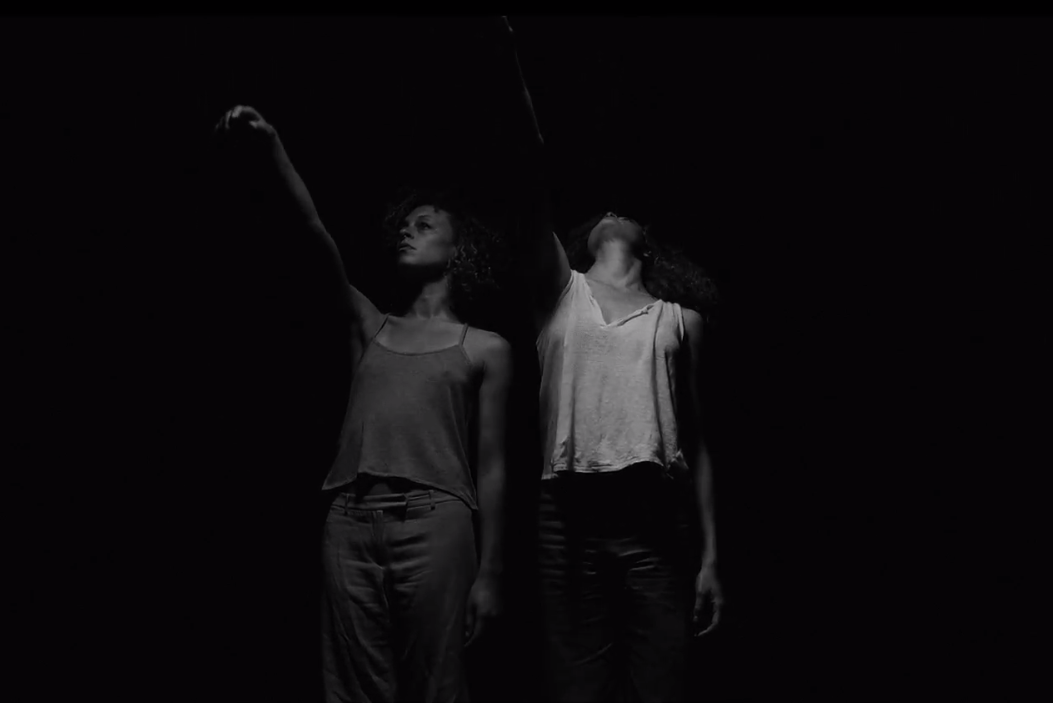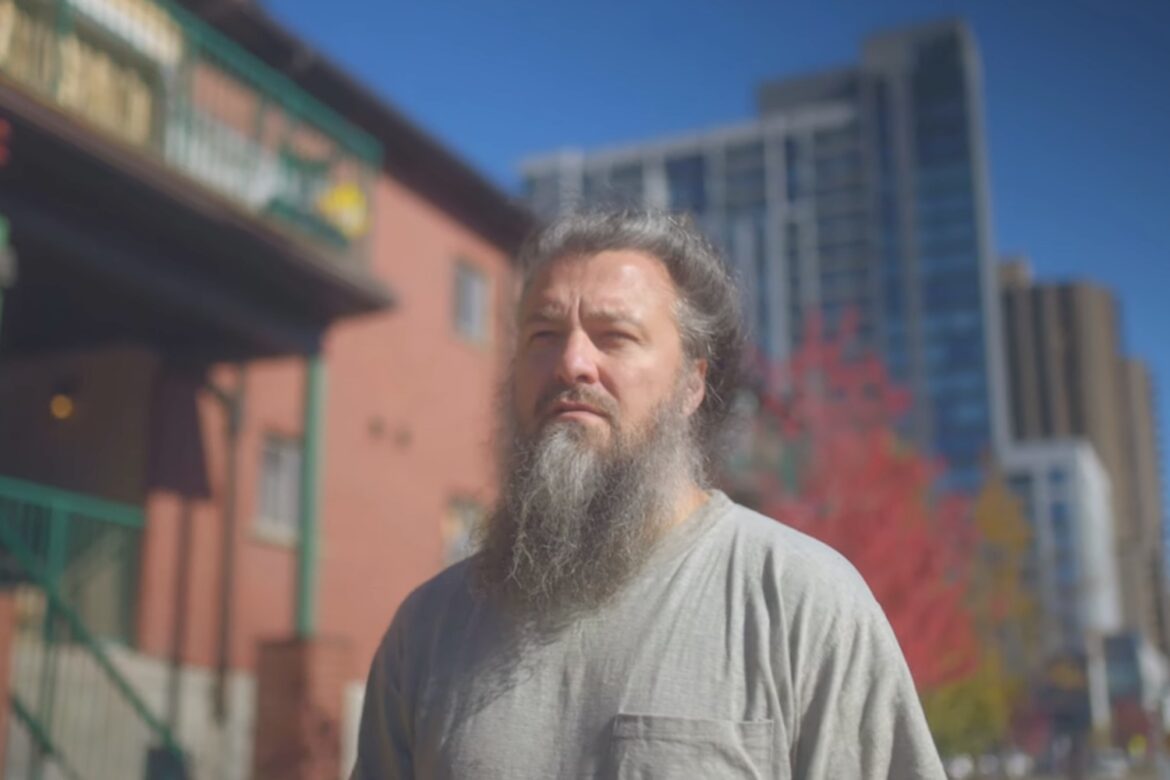
Anishinaabe artist Adam Sturgeon of Status/Non-Status opens up about identity, responsibility, and resilience in modern Canada, reflecting on making ‘Big Changes’ at home amid neighborhood upheaval, teetering between hope and hopelessness, and continuing the work of telling his family’s story through collaboration, communal connection, and collective care.
Stream: “At All” – Status/Non-Status
I’ve always teetered that dichotomy of hope and hopelessness. We needed to build hope into the songs because a lot of the feelings are challenging right now.
* * *
Over the years, Anishinaabe musician and artist Adam Sturgeon has undergone metamorphosis, shedding old monikers and reclaiming heritage.
In 2021, he left behind the collective formerly known as WHOOP-Szo to become Status/Non-Status as part of his ongoing exploration of the complex roots of his family history. Together with Zoon’s Daniel Monkman, Sturgeon introduced the world to OMBIIGIZI in 2022 via their Polaris Music Prize shortlisted record Sewn Back Together and followed that up with 2024’s excellent sophomore release Shame, which had more elements of traditional First Nations music and culture coming through on it.
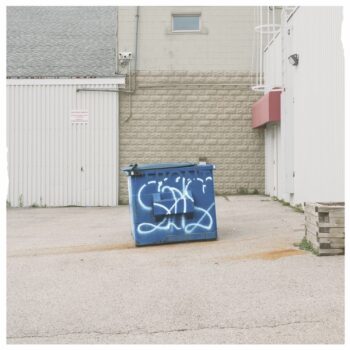
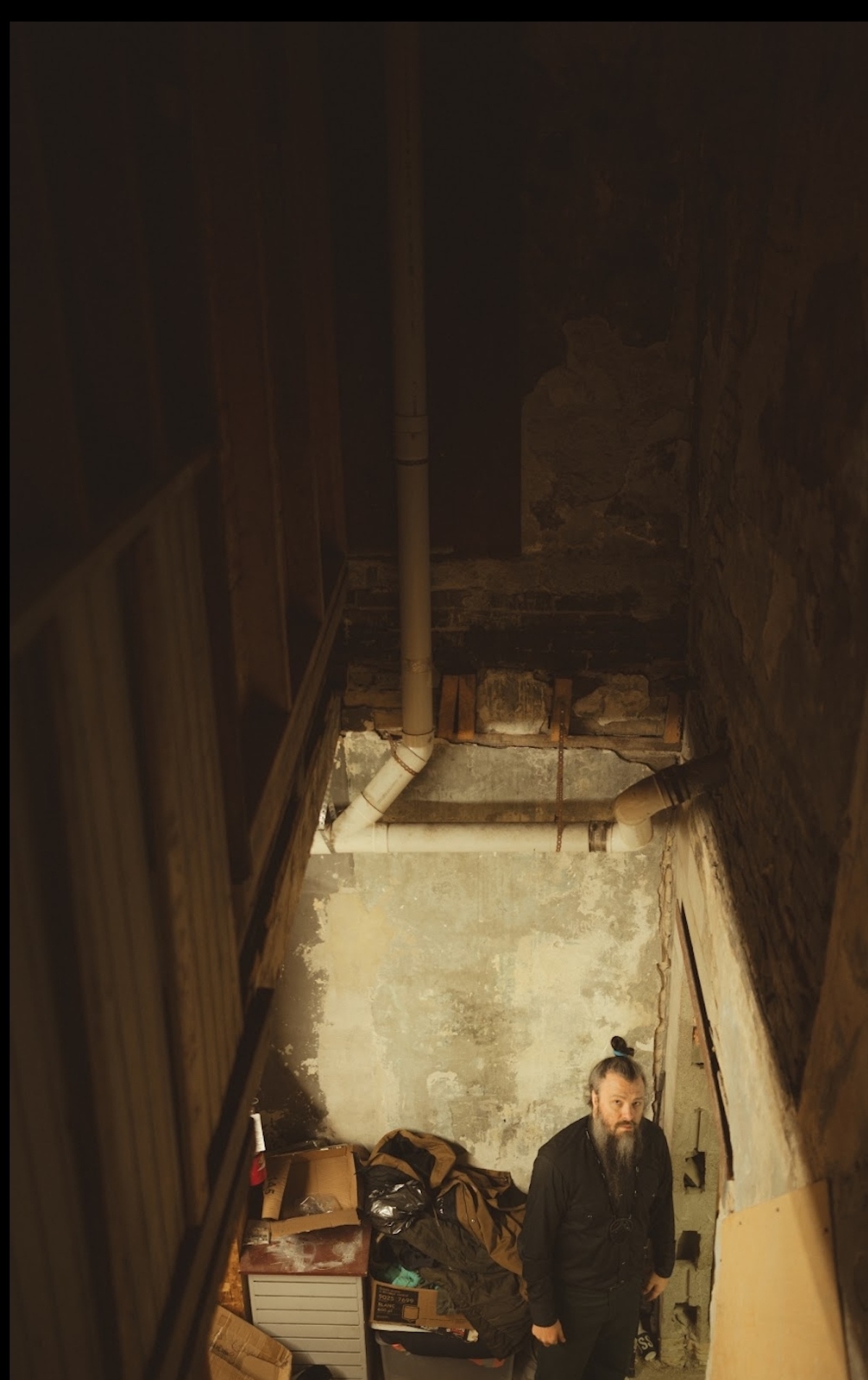
Now, Status/Non-Status’s upcoming third studio album Big Changes nearly out in the world (March 6 via You’ve Changed Records), Sturgeon feels less interested in polish than in presence. The record was made at home – in slippers, between coffee and conversation, amid the reality of a neighborhood in turmoil – and it carries that intimacy and immediacy. Hope and hopelessness teeter side by side, big drums and jingle dresses ring out beneath driving guitars, and questions about land, belonging, and survival linger long after the last lyric fades. In many ways, Big Changes isn’t just a statement; it’s a continuation of the work: Telling his family’s story, holding space for community, and finding ways to endure together.
Adam Sturgeon is a longtime musician, cultural educator, activist, and advocate for amplifying indigenous voices and cultural preservations against colonial injustice – and a friend. Read our conversation below, and hear what “big changes” really mean for him.
— —
:: stream/purchase Big Changes here ::
:: connect with Status/Non-Status here ::
— —
Stream: “Good Enough” – Status/Non-Status
A CONVERSATION WITH STATUS/NON-STATUS
Atwood Magazine: Aaniin Adam! Just to start, do you feel a weight of responsibility representing your Anishinaabe culture?
Status/Non-Status: Yes, I think that’s something that is kind of wide reaching for a lot of and all indigenous artists right now. And, you know, part more of the struggle is just trying to do it in the right way. So, I always just feel the best way for that is just to represent myself and my family. We have our own unique circumstances surrounding our identity, and it’s a big part of who we are, and one forms our way of life.
As an artist in modern Canadian society in 2026, what does it mean being an indigenous musician?
Status/Non-Status: I don’t know, A little bit of pressure.
Is it more of a challenge?
Status/Non-Status: It’s challenging, yes. I didn’t realize when I was getting into it, that the movement was taking shape and taking hold. I was using music as my own tool for healing, and I was in my own bubble of self-exploration. My intention was never to represent all indigenous people and indigenous music, but that sort of comes with the territory in Canada.
It’s a little bit unfair in a way, but it’s also an amazing opportunity to use our voices. I think that we’re cresting the way of understanding how to do that in the best ways. And that comes with trials, tribulations, and successes.
Right, and on success, you must be very happy with your new album, Big Changes which is going to be released on You’ve Changed Records in March. How does it feel to have nearly out in the world, done and dusted?
Status/Non-Status: Yes, It’s a nice feeling. It’s good to put it into the headway, so to speak, and allow new things to take shape from it and new experiences with it. It’s very much an insular experience of recording at my home and very much about the steps I take outside of my door within my community on the, like on the land that I exist in, which is maybe not how everyone pictures it.
We live in a real kind of devastated city and community, mired with a lot of poverty, addiction, houselessness, and a myriad of laterally violent things that are coming with it. It’s getting worse very rapidly.
So, in the album, there’s a lot of questions pertaining to that and always with a healthy side of using my cultural lens.
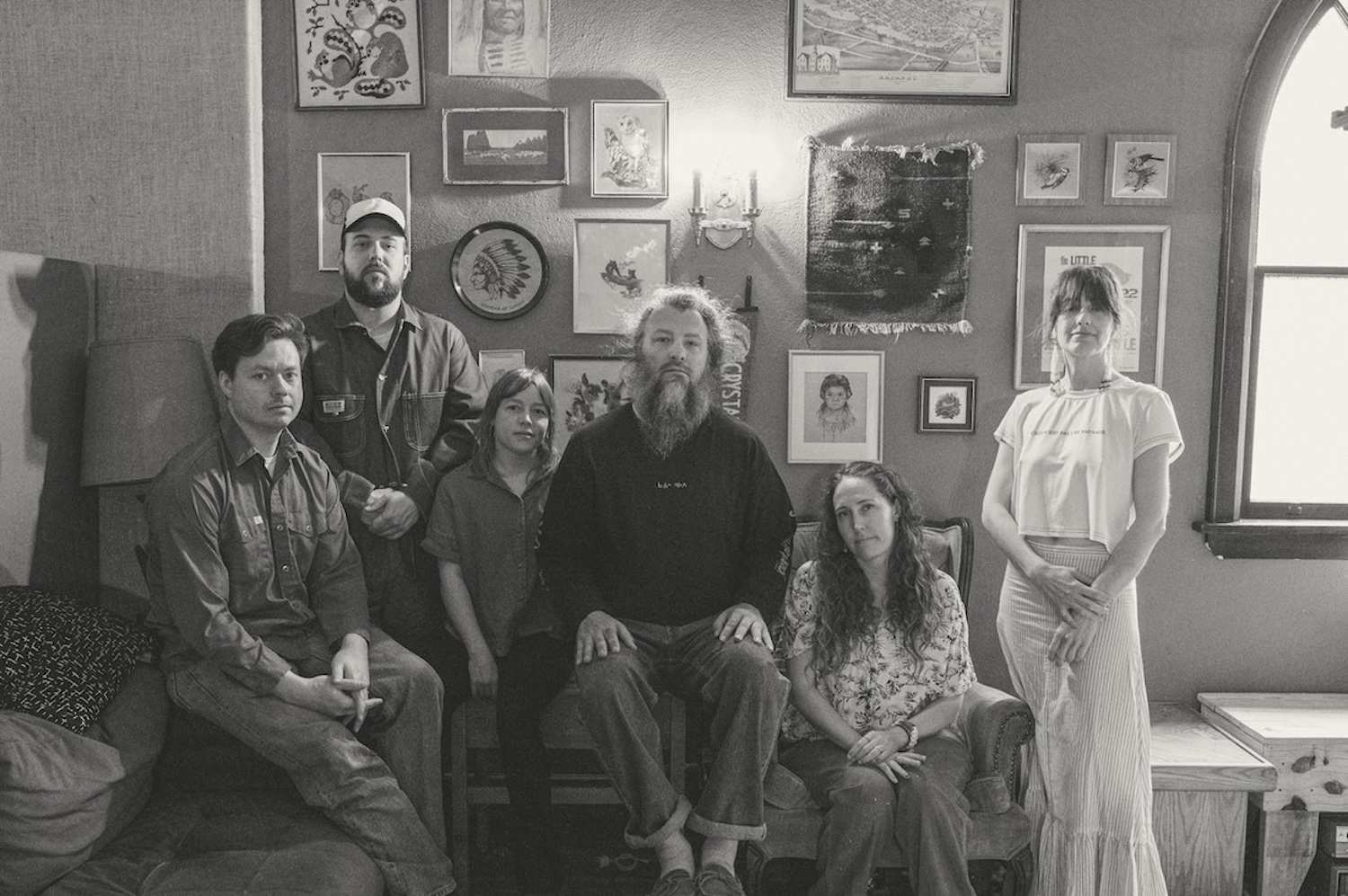
There’s also a bit of humor in there as well as more serious themes of resistance and community building. I’m used to your sonic collaboration with Daniel Monkman/ Zoon with the Ombiigiizi project, but you have much more artist participation on this record than the last few albums? Just looking through the list of names that are on here from Judy, from Eric’s Trip to Kevin Drew, to Rachel McLean, to Steven Lourenco, Sunnsetter’s Andrew MacLeod, Kirsten Kurvink Palm. On “Basket Weaving” Odawa poet and artist Colleen “Coco” Collins, explores an “ancestral experience of reconnection.” What’s the best part of those collaborations?
Status/Non-Status: Thanks for saying all their names. I think a lot of times some folks get lost in the shuffle with that. As I put forward my artistic expression, but the idea of working with so many people and using their strengths, working as a team, as community, as family. Certainly, as we get older, we just try to find ways that allow it to all make sense.
That recording process that we had was such a healthy experience, and I did draw a lot from making the first record where it was like, let’s just do this. Maybe I had songs ready, but I would always just show everyone the song the day of. So, there was no time to overthink our parts or anything. I think the rawness is present in the album, but so too is the fluidity of our working together, encouraging and being in the moment of it, feeling positive about just what we were doing.
Because sometimes in the studio, you can put a lot of pressure on yourself to get a part right or maybe spend years writing songs even, and you can really get bogged down by that stuff. I think Kevin Drew from Broken Social Scene is really the one that taught us to just go for it, and I love it.
I love the new album as well, there’s so many good things about it. But what I like for existing fans of Status Not Status is it's a bigger, louder noise while also having moments of quiet and calm before being brought back to pummeling drums and noisy guitar again. I’m a sucker for loud guitar with female harmonies, I just think there’s something lovely about that, especially on a couple of tracks like “Blown Again,” it just resonates so well. But even effects such as the bell on a few tracks, “At All,” “Tom Climate,” and “Bitumen Eyes,” where it sounds like a Ribbon Skirt jingle, are intriguing.
Status/Non-Status: Copper pennies and our jingle dresses and the bells that are going on in the background. The last song, we did a big drum on there. For me, that’s indigenizing the experience, but I don’t know if it’s always heard.
There is much positivity coming off the record as well as a sense of foreboding with the titular song “Big changes”, especially with your voice on that one.
Status/Non-Status: I’ve always teetered that dichotomy of hope and hopelessness. We needed to build hope into the songs because a lot of the feelings are challenging right now.
Well, I guess for the listener as well, you want to tame that emotional curve?
Status/Non-Status: Yes. But I’m such a sucker for all that kind of stuff that you’re saying as well, and it does kind of make you feel good. I grew up listening to Eric’s Trip, and so the harmonies and all that stuff were so inherent in their music. They’re really the ones that got me into the older stuff, good old folk music.
And with the expanded collaboration, Adam, the last time we spoke, you mentioned your interest in doing more production with other artists. Did this recording experience with so many different artists involved, give you a bit more confidence to consider more production with other artists outside of Status/Non-Status?
Status/Non-Status: Yes, we recorded it at home. So, we’re in our slippers, and we’re comfy, cozy, and we’re drinking coffee, having snacks and a lot of chats and trying to do away with the pressure of a studio environment, but really with quite a capable environment for it.
But I think that was always the thing when I was younger and putting more pressure on myself or maybe less confident in understanding exactly what was happening in the studios. Artists are so resistant to click tracks, you know? We use some click tracks, and they aren’t even a part of our brainwave in it all. It’s just to keep us organized and keep track of things.
I think it’s just really important to love the experience of it, and that’s going to be my biggest takeaway. And if I can help others do that because I think to varying degrees, some people would come to the studio and be like, … oh well I need some notes and maybe I could do this or that. Understanding where everyone is at with that but then encouraging them to sort of follow the flow of the studio environment and trust themselves. Because yes, maybe that’s what it’s all about. It’s just hard to trust what you’re doing.
You seem to be a lot more confident, even as I see in your promotional videos and material for this record, and appear to be in a good place?
Status/Non-Status: I don’t know about that! I think that’s a necessary evil. I think it’d be really nice to leave the Internet entirely and have people discover the music; I think that they’d actually find more meaning from it in that. But at the same time, I am getting some positive feedback where it’s like people want to relate.
The truth of some of those videos and the dialogue is that I have to just capture myself in the moment. So, if I don’t get it in, or if I have to think about it too much then I don’t end up doing them. I’m only really capturing myself in that moment where it’s just like, that was what it said and if I missed a couple details, well, this is me. Some people are really good at that on the Internet.
The Internet was a good place for me when I was a shy artist that I could write an email and kind of plan it out and get myself organized. Here’s you know, trying to book a show or something like that or selling someone to listen to my songs. That was a great way for me to connect because it was a lot harder to connect with my face and my voice.
It’s a really insecure, uncomfortable thing to do. But I am getting good feedback from it.
It sort of harms you because you’re going for clicks and likes. When you put something so personal out and you don’t get the numbers, that’s not good for you. So, I’m just really trying to remind myself to be grounded in it and ignore that. But yes, I would really like to just to turn it off.
Well, I understand the challenge of that push/pull of trying to be a content creator, having to try to promote material, and the conflicted feeling of just wanting to focus on making music. I see some emerging bands chasing some of the wrong metrics, and they’re just going to the wrong lane as you mentioned because it is difficult to understand the traps with those types of videos. But I think for your music, and when we’re living in an algorithm driven era, it’s good to have some personal touches to promote your record. I guess it’s a necessary evil at this moment in time. Maybe things will change?
As mentioned, when we last spoke, the only reason I got to hear your music was the bit of serendipity of going along early to see Kevin Drew perform and Zoon happened to be the support act. I wouldn’t have come across Ombiigiizi or in turn Status/Non-Status because the algorithm just wasn’t going to surface your music to me and provide that exposure over this side of the world. But in turn, I do try to promote as many Canadian bands as I can through my college radio show. There’s lots of hotspots around Canada now, from Vancouver, Calgary, and Toronto, to Ottawa and Montreal and the Maritime Provinces. There’s so many different cities kicking off right now with lots of bands and many different genres. I guess they’re all facing the exposure challenge?
Status/Non-Status: Yes. It’s true, Canada’s so expansive. There’s so many kind of different little scenes and communities and sounds that pop up, and then some sort of cross community connections, like the You’ve Changed family or I think a lot of the sort of Calgary, Montreal sound back in the day from bands like Women and all the bands has cascaded out from that.
There’s amazing music in Canada. It’s harder and harder to connect because of the algorithms and but it also more maybe, especially in Canada right now, we do need to sort of refocus on our own communities and the building of those places and making sure that there are spaces to rehearse, play, perform, and the regions that we come from.
There’s a lot of small towns that were founded in the late eighteen hundreds and early nineteen hundreds that are kind of like mill towns. They had some type of industry, and they were bustling. They went through sort of a downturn through the nineties, early two thousands, but I think that those places are really ripe for reinvigoration because they’re well set up to rebuild from a core, whereas some of the larger cities are really sprawled out, and so the communities and connections aren’t as there. But because of that, we have some good suburban angst, emo hardcore stuff.
Well, some of your record is ‘emo’ in the sense of the stop/start, the loud/quiet, not the traditional emo sound that you’d expect, but there are elements of it as you change gears between the songs.
Status/Non-Status: Yes, we do like to make room for the lyrics. I do try to sing loudly, but I’m not always screaming. With the Big Changes record, I am actually finding it a little more challenging to project my voice over top of some of the music. Some stuff is really monotone, it’s all kind of driving in the one register, and I’m being chill. So, yes, new challenges to developing the live version of it.
But, yes, I do tend to like to make the space for the lyrics. For a long time, I didn’t know how to write choruses, but I could maybe write a guitar hook. So, it’d be like verse instrumental verse instrumental.
I have to say props to your drummer Eric Lourenco, because of his percussion chops all the way through the record. I mean, soft, loud, and everything between the range of the drum sounds are so good, especially when I’m listening to the album on headphones.
Status/Non-Status: We spent a lot of time building up the drum kit and the mics around it, and it was a lot of fun. He’d switch out snares and cymbals and stuff like that. But Eric and I were really locked in, and I think every great band is really defined by their drummer.
Changing topics for a moment, when researching for the interview on Anishinaabe and First Nations culture, one of the books I’ve read in the past was ‘An Inconvenient Indian’. Since however the author Thomas King has been discovered as not being indigenous after all. I was wondering, between Buffy San Marie and others, how do you feel about people claiming indigenous roots?
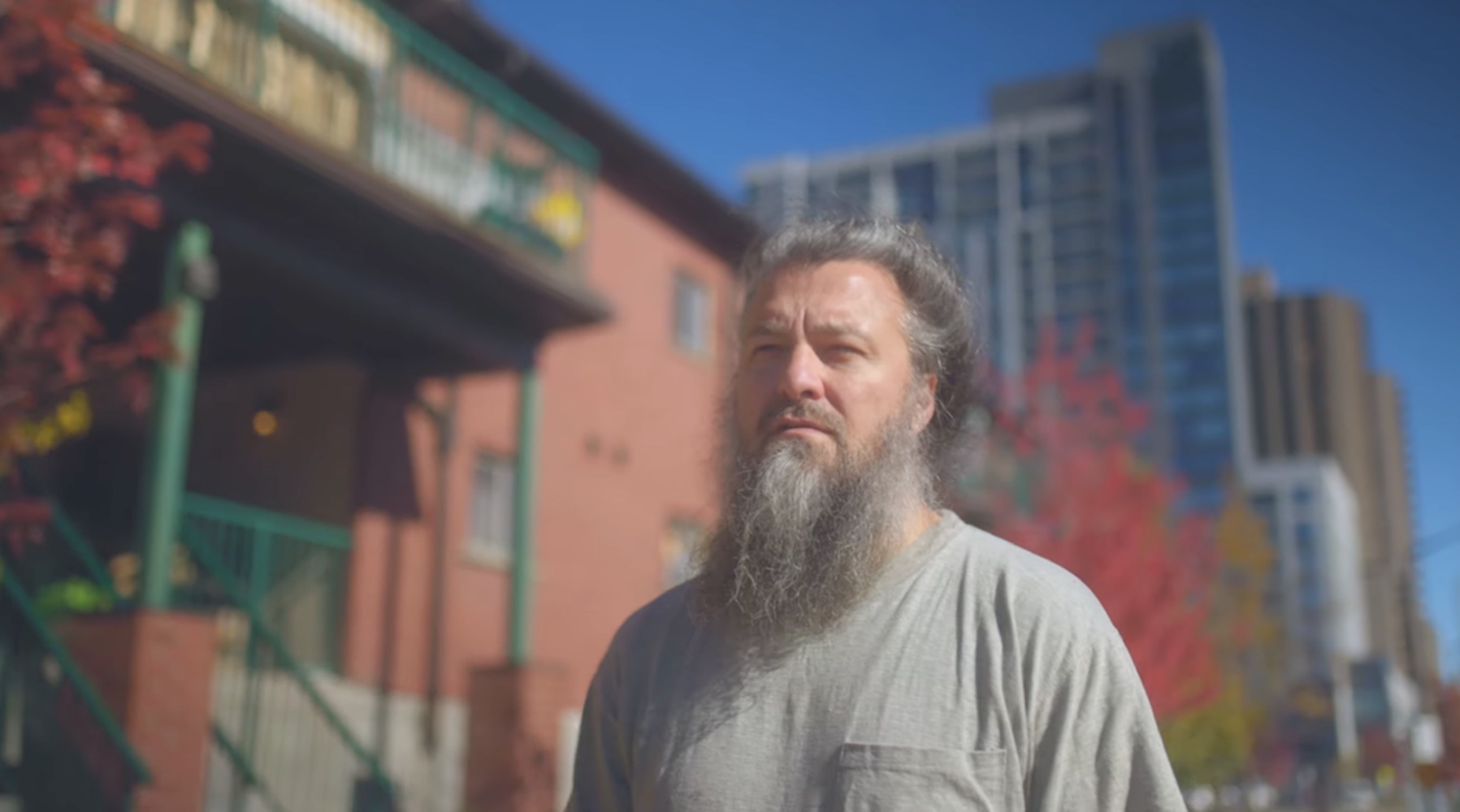
Status/Non-Status: You know, it’s incredibly harmful. And one of the negative byproducts of that is so much questioning of community. For a long time, I probably would have identified more as a reconnecting person, but it’s also helped me understand my true connections, my true value and worth even though it can be scary. It’s scary to be an indigenous person, to be a mixed person, to be a brown person in Canada. It’s not everything that it’s made out to be internationally.
There are a lot of complexities because we have a law that contains us, that tells us who is or who is not. So, we fight for our sovereignty, and our communities protect them. As individuals, belonging is so challenging, to believe in yourself. I feel fortunate that I know my last name and that I can allow my ancestors to guide me. I have tormented myself to no end to make sure that I know who they are, what they are, and what we’re all about. In many ways, a lot of our stories are not being told, and space has been taken up by a fictitious idea of what we are. So increasingly, I’d like to just be myself. I don’t need to pretend that I went to all the pow wows in the world or that I grew up on the Reserve. What I can tell you is that I see the effects of this colonial project and how it’s impacted my family and how we’ve turned the tide and have empowered our young people to find themselves and encourage themselves.
It was really cool to be native of a number of years ago, and right now, it’s not cool because of these things. And, it’s a really big problem, and there’s not a clear way forward.
I’ve been met with barriers as a non-status person, while at the same time, I would like to acknowledge all the privileges and proximities that I have had through my whiteness. So, again, I just go back to making sure that I’m telling my family’s story to the best possible degree. This impacts our art, our vision, and our creativity around it. But luckily, we’ve had some great teachers that have pushed through artists and visionaries and people that understand the law of it all.
So, there a whole history of unfolding. It’s going to take many, many years to continue to sort it out, but we have some new laws that are passing to make sure that our community that is not included will be. And, yeah, so some positive steps forward, but, you know, it’s a genocidal act that’s been taking shape against us this whole time.
Well, I get it, as unfortunately that British colonial playbook and tactics were first tested here in my own country eight hundred years ago, between divide and conquer, famine, land grabs, and cultural erasure. It was well rehearsed by the time it came over to Canada and North America. But having that mixed heritage, you mentioned the dichotomy of not being native enough and having sometimes with that invisibility of not being seen as a native, because of your mixed culture. I didn’t realize about the cultural importance of braids and hair in the First Nations culture, do you think braids and tattoos help with that experience of not being seen?
Status/Non-Status: No. Because belonging exists within. There are good symbology and great teachings, and those teachings form like a circle, and your circle expands with knowledge. It’s not to say no, but it’s self-love and self-acceptance.
If you’re looking for it from elsewhere, it’s really hard. You need to be given the tools to love yourself, and so you need that community and family and belonging. But on the path of that when you don’t have it, it just makes me think about the people that don’t know everything about it, that don’t have a place in it, and we need to find a way to include that experience a little bit. At the same time, I think the big struggle is that we have some serious problems with mental health and addiction, housing, poverty and water. When you start to quantify the list, there’s a lot of other things that need the space. My story is only one spoke in the wheel, so I’ll represent it. I will use the tools that I can to share those stories, but I also need to make sure that I’m sharing the space and hearing what everyone in the community is saying about these types of things.
That’s some of your closing lyrics on “Bitumen Eyes” about the preservation of land and water issues; “What of the water?”
Status/Non-Status: Yes, that’s where there’s no more lyrics after that. Just a bunch of music. Right?
Right. It’s powerful. I’m not going to try and pronounce it, but one of the other words that I picked up along the way is the Ojibwe word for Canada, “Zhaaganaashiiwaki,” a term that translates to “English land” or “land of the Englishman” used to refer to Canada. I came across it via Anton Treuer, a Professor of Ojibwe at Bemidji State University. In one of his videos, he explained the differences between the languages using the example of the word for grandmother/elder woman. He ponted out that English has a more ageist viewpoint for the elderly as opposed to the First Nations view. The Ojibwe term for elderly woman/grandmother is “Mindimooyenh” because a lot of the First Nations were matriarchal societies, which translates to a deeply respectful term of “the figure that holds us together.”
Status/Non-Status: Yes, I think about that a lot with my lyrics and stuff. I find where I’ve been taught that English language is spiritually broken in the way that you’re sort of speaking to it, and so I play with it. It’s one of the ways that I indigenize it, but I don’t know if that counts as something cultural or not. It’s just I learn about history and our experiences, and I kind of lay them out in abstract ways of that experience, whether it’s “top hats and formaldehyde”, that was the fur trade.
Lifting the Spirit of the Anishinaabe Experience Through Music With Ribbon Skirt’s Billy Riley
:: INTERVIEW ::
One of the things I want to go back to about is having the studio at home. Is there a downside to that? I know there’s an upside to having young kids where it’s lovely to see them having access to drum kits and having that fun with music. But can you walk away from continued recording, or do you need to keep going back and say, maybe one more take? Is there a disadvantage to having a home studio?
Status/Non-Status: I was gathering a lot of equipment for several years, and I’ve had some studios at different, band houses and stuff like that. And at one point had kind of a pretty decent setup. Not fully professional, but pretty close. I’ve always had a vision. We moved into a church here in London before we had kids, and the vision for the space was always something maybe a little less family-oriented, but it’s a fun space.
It’s a big space, and people congregate and hang out for meals and stuff. It’s a great environment for our kids who are both hopping on the drums. My eldest takes lessons. They pretend to be Slipknot right now!
Music is a beautiful part of our life, and I’m not putting a lot of pressure on them to explore it other than the challenge of upholding your responsibilities and living a good life.
The downside is just that it pisses off the neighbors. But you should see this neighborhood. It’s in a lot of turmoil, so it’s becoming an unsafe place for my family, unfortunately. That is the bigger issue, and I have a lot of empathy for the experiences of the people here. But it’s not currently a healthy place to be, and that is the challenging part.
I think that making the record was allowing me to see Big Changes. And the Big Changes reference also comes from our city’s sign, where the city has been doing a lot of construction and there’s always big changes everywhere. The city’s going sideways, so it’s kind of like a silly response to it. And not to be all doom and gloom about it or anything; it’s just the reality of the situation that we’re living in, and we’re going to be ok. We’re actually the lucky ones, and we’re the fortunate people in the neighborhood. We bring a lot of vitality to it, and we do try to say hi to our neighbors and help where we can.
It’s funny, you get a letter on your car window or in your mailbox, please, can you stop? We’re going to put that in the liner notes, but I have some beautiful letters that I’m going to put in frames!
So, they’re hanging around the studio. But, yeah, it’s a great sounding spot, and there’s plenty of room for me and my family. No one’s in anybody’s way. The kids got their own guitars that they know which ones to use and smash up, It’s great.
That’s so cool for them. Well, I look forward to seeing you live one of the days, hopefully. For now, all the best with the new album, and with your upcoming tour dates. Have a good day, and Miigwech Adam!
Status/Non-Status: Thanks again! Take care, See you!
— —
:: stream/purchase Big Changes here ::
:: connect with Status/Non-Status here ::
— —
Stream: “At All” – Status/Non-Status
— — — —
Connect to Status/Non-Status on
Facebook, 𝕏, Bandcamp, Instagram
Discover new music on Atwood Magazine
© Natasha Roberts
 © Natasha Roberts
:: Stream Status/Non-Status ::