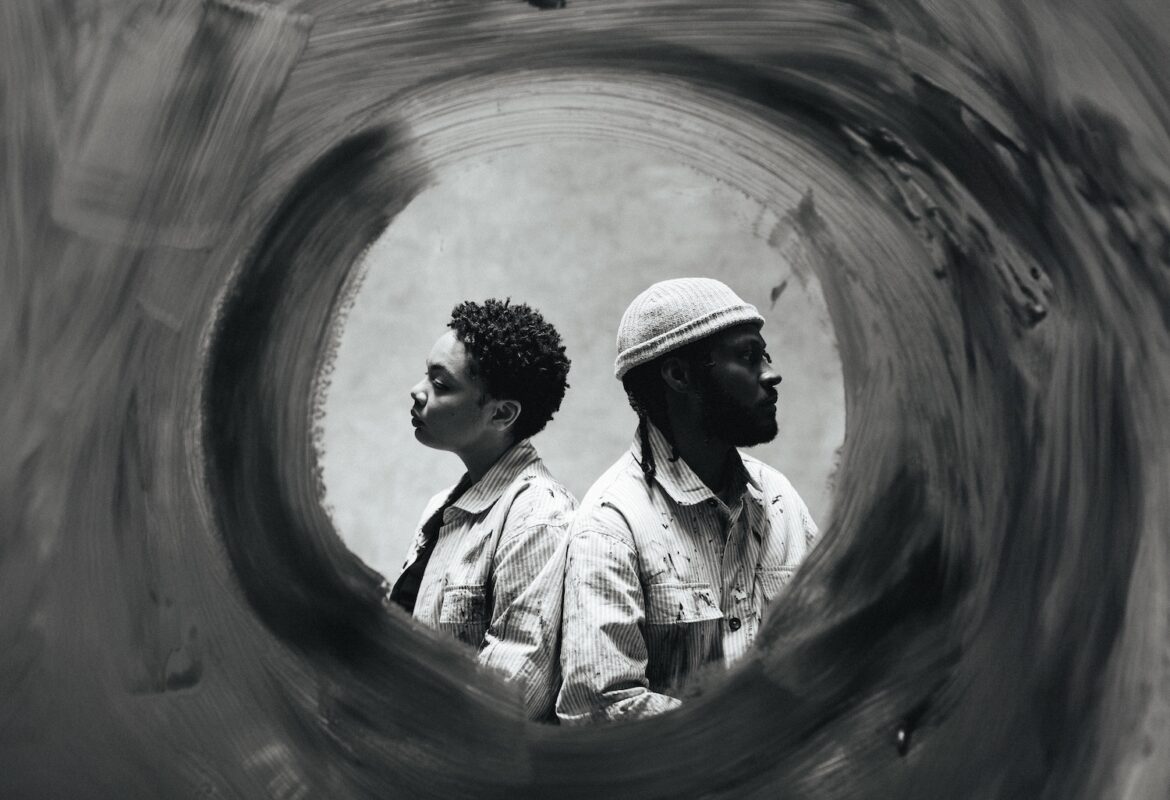
April + VISTA reshape tradition into revelation on their boundary-pushing debut album ‘Traditional Noise,’ a breathtaking record that fuses raw experimentation with soul, rock, R&B, and electronic music – resulting in a deeply human meditation on memory, survival, self-reclamation, and creative freedom. In conversation with Atwood Magazine, the duo discuss honoring the music that raised them, resisting the boxes imposed on Black indie artists, and turning their unconventional, modern noise into an intimate soundtrack for life itself.
‘Traditional Noise’ – April + VISTA
The title “Traditional Noise” is both an ode to the music that soundtracked our most precious traditions, and also a response to folks who think our music is too left-of-center or even off-putting because it’s not traditional R&B, or hip-hop, or pop.
* * *
Tradition can be a refuge, a rhythm, a room you return to when the world gets too loud – but it can also become a cage, especially when other people decide which sounds belong to you.
On Traditional Noise, April + VISTA embrace that tension with open arms, crafting a debut album that honors the music that raised them while pushing those inherited languages into stranger, richer, more liberating shapes. The Virginia-raised singer/composer April George and Maryland-raised composer/producer Matthew Thompson don’t treat genre as a border so much as a living archive – a place to preserve memory, confront expectation, and make room for the full, unruly truth of who they are.
Their music feels alive with discovery: Soulful and cinematic, gritty and graceful, intimate and immense, all of it pulsing with the conviction of two artists refusing to separate comfort from chaos.

I wish that you could stay
Pluck the flies from the balm we made
The end surrounds I hope it tastes
Sweeter than the start of day
And though I can’t see you from here
Oh, my view is crystalline
Standing in place,
right where we belong
– “Standing in Place,” April + VISTA
Released April 22 via Atlanta-based indie label Third & Hayden, Traditional Noise is, true to its title, a radiant collision of inheritance and disruption – a soul-stirring debut album that treats memory as raw material, genre as clay, and noise as both wound and way forward. April + VISTA have spent over a decade building their own universe from the Washington, D.C. underground outward, earning acclaim with 2018’s You Are Here, channeling burnout and unrest into 2021’s searing Pit of My Dreams, and sharpening a creative language rooted in curiosity, tension, and emotional candor.
“Our music is raw and celebrates experimentation,” April George tells Atwood Magazine. “We take familiar yet contrasting sounds and stick them in a blender to create something new and uniquely ours.”
That blender has never sounded more vivid than it does throughout their debut LP. Across Traditional Noise, April + VISTA draw from the formative music of their youth – the songs that filled family gatherings, road trips, school mornings, and private rituals – and stretch those foundations until they glow, crack, groove, and combust. For Matt Thompson, every April + VISTA project is “a document of our lives at the time and is an expression of journey as independent artists,” and this album arrives as both personal record and artistic declaration: A fiercely self-possessed statement from two Black indie artists refusing easy categorization, reclaiming the traditions that raised them while rejecting the boxes those traditions are too often used to build.
As the duo put it, “Black music is expansive, and we aim to embody that depth.”
“Sure we can make traditionally palatable music, but our reality is noisy and we won’t separate that from our art.”
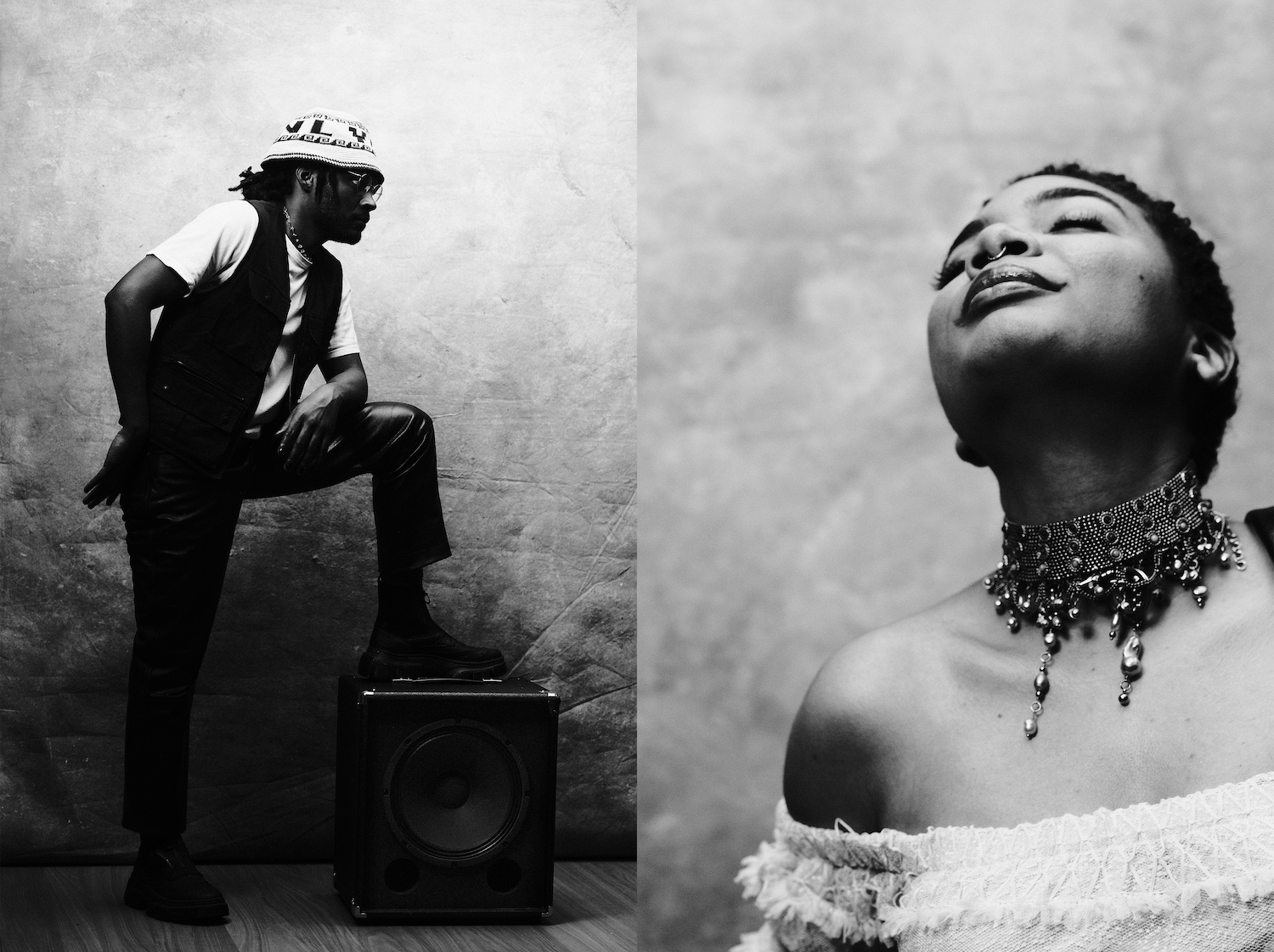
April + VISTA ‘Traditional Noise’ © Foster K. White
Across Traditional Noise, that expansiveness reveals itself in constant motion.
The dreamy, orchestral surrealism of minute-long opener “Hello” gives way to the heavy, soul-soaked force of “Very Bad News,” a blistering first act that turns corrupted power, righteous anger, and warped nostalgia into an explosive statement of intent. The song opens like a retro pharmaceutical ad beamed in from a fraying future – “Are you restless? Afraid? / Can’t seem to focus? / Exhausted, or just plain over / the commotion in your skull?” – before detonating into a cinematic reckoning with greed, deception, and control. April George sings from inside that pressure, her voice cutting through the chaos with sharpened resolve as she declares, “I hardened my heart / To keep it all in tact,” and later warns, “You’re sitting too high / Before you claim your throne / There’s something you should know.”
For George, the song’s fury came from looking outward and finding corruption and decay at the source. “While writing lyrics for ‘Very Bad News,’ I was meditating on the idiom ‘a fish rots from the head down’ and saw many connections to the times we’re living in,” she says. “The lyrics are a middle finger to the corrupt people and systems that have the world in their tight grip.” This middle finger arrives wrapped in high drama: Sweeping strings, effect-laden vocals, and scorched rock grandeur all push the song toward the scale of a revenge epic. “We wanted the song to have a dramatic and assertive air to it, and we approached the sonics like a film score to get that effect,” she adds. “I had the most fun composing the strings; we ran out of money and couldn’t afford to hire a full ensemble, so I played all the violin and viola parts, had a friend play the cello and we layered our recordings to create a full orchestra.”
Thompson hears “Very Bad News” as a return from the brink. “We also wanted ‘Very Bad News’ to be this explosive movie sequel-style return, where the character you thought had died was back and out for vengeance,” he says. “We were revitalized and inspired again after burnout almost ended us. That’s what the song means to me.” In that sense, “Very Bad News” doesn’t just introduce Traditional Noise’s world – it kicks the door open. It carries the album’s warped nostalgia, political heat, and self-made grandeur in one sweeping gesture, turning exhaustion into spectacle and survival into sound.
Travel light
Through the shadows
I’m watching my back
I hardened my heart
To keep it all in tact
It helps me to forget
All your lies
Torn and mangled
I cut up your words
With my pocket knife
The world that you destroyed
Deception in your voice
In your eyes
I see danger
Your greed multiplies
You’re sitting too high
Before you claim your throne
There’s something you should know
From there, the album keeps widening. “Do What You Know” slips into a more sensuous register, its subterranean groove and slow-burning ache circling a hard-won kind of self-trust: “I dug a hole to the other side / Had to go lower to reach high / It turns out all that it takes to get wiser / Is to stand pat, steadfast to what you know.” It’s a song about grounding yourself without standing still – about honoring instinct as a form of growth.
“Bless My Heart” pushes that inner pressure into the body, churning with heavy motion, frayed nerves, and volatile release. George sings, “Lost outside myself I feel detached / Carry somber days up on my back,” giving shape to a dissociative spiral that only grows more forceful as the track barrels forward; for Thompson, the song is one of the album’s high points, a place where he “really leaned into the bit to create the kind of rock that I love but never thought I’d make.”
And then comes “Standing In Place,” one of Traditional Noise’s most tender reveries – a gentle, dreamy exhale that finds clarity inside disarray. Built around the mantra “Standing in place, right where we belong,” the song feels less like stillness than arrival: a moment of spiritual steadiness after so much motion, loss, and self-interrogation. George names its choir arrangement as one of her personal highlights, and the duo frame the song as a threshold between eras: “Disorder is as beautiful as it is terrifying. It’s a lesson every creative learns when journeying through the not-so-glamorous parts of their career: You have to get comfortable with walking confidently through the dark, doing it scared is the only way you will get to where you belong. This song is a final goodbye to our past selves as we evolve and transition into a new form.”
Reversal makes the vantage wide
All the dust, debris subsides
My words are few, my faith alive
I cast my sins into the tide
Standing in place,
right where we belong
As Traditional Noise moves deeper into its own weather system, the album’s power becomes less about how many sounds April + VISTA can hold at once and more about how precisely they understand the emotional weight inside each one.
The record keeps shifting shape, but its center stays human: Love withheld, faith tested, memory preserved, and the self slowly clawing its way back into view.
“Love Unspent” sits in that ache, glowing with the warmth of classic soul harmony while carrying the weight of feeling held too long in the body. George sings, “Love unspent / Coiling up in my palm / Brittle, thin / It freezes up / Leave me lost,” turning withheld tenderness into a physical thing – fragile, clenched, nearly unbearable. The song’s molten center arrives in lines like “Courage runs / Beneath my skin” and “Spiral molten core / Feeling it melting me down,” where desire, fear, and release blur into one slow-burning confession. George names the song’s choir arrangement as one of her personal highlights, and you can hear why: The voices don’t simply decorate the song; they swell around it like memory itself, giving all that unspent love somewhere to go.
“Grotto,” meanwhile, feels like the album’s great act of cleansing – a song about running so far from yourself that return becomes its own kind of miracle. Its opening line, “I ran so fast, I left myself behind,” lands like a thesis for anyone who has ever confused survival with self-abandonment, and the image only deepens as George sings of wishes built by other people filling the sea she nearly drowns beneath. By the time she reaches “Another chance to find that girl I left / And watch as the waves roll in,” the song has moved through doubt, projection, solitude, and surrender toward a hard-won vision of renewal. April + VISTA have described “Grotto” as a song born from rejecting others’ doubts and standing firm in the belief that you’re enough on your own; on the album, it feels like the moment Traditional Noise stops fighting the current and starts learning how to be remade by it.
Together, all these songs make Traditional Noise feel less like a genre exercise than a living environment –
– one where smoky soul, heavy rock, electronic atmosphere, R&B warmth, and cinematic composition don’t merely coexist, but press against each other until new shapes emerge. April + VISTA’s music thrives in that pressure. It’s lush without losing its grit, experimental without abandoning feeling, and deeply personal without closing itself off from the listener. The album invites immersion, but it also demands attention: Every texture carries memory, every groove holds tension, and every rupture feels like another attempt to make sound out of survival.
What makes Traditional Noise so intoxicating isn’t merely its range – though that range is undeniable. It’s the way April + VISTA make collision feel purposeful – how all these genres and styles coalesce with orchestral composition and experimental texture to become vessels for memory, resistance, longing, and release. The album doesn’t chase novelty for its own sake; it uses experimentation as a form of truth-telling, pulling inherited sounds apart and reassembling them with enough pressure, color, and conviction to make the familiar feel startling again. This is boundary-pushing music with a beating heart: Provocative because it refuses containment, thought-provoking because it understands history, and deeply affecting because every risk seems rooted in lived experience.
“For us, this record is unconventional, modern noise,” April + VISTA explain. “It’s an abstraction of the traditional music that we grew up listening to. We think it’s fresh, but it also acknowledges the guitar music, the soul, the foundational genres that we sought to challenge. I think unconventional modern noise is forward thinking, while still being aware of what came before it.”
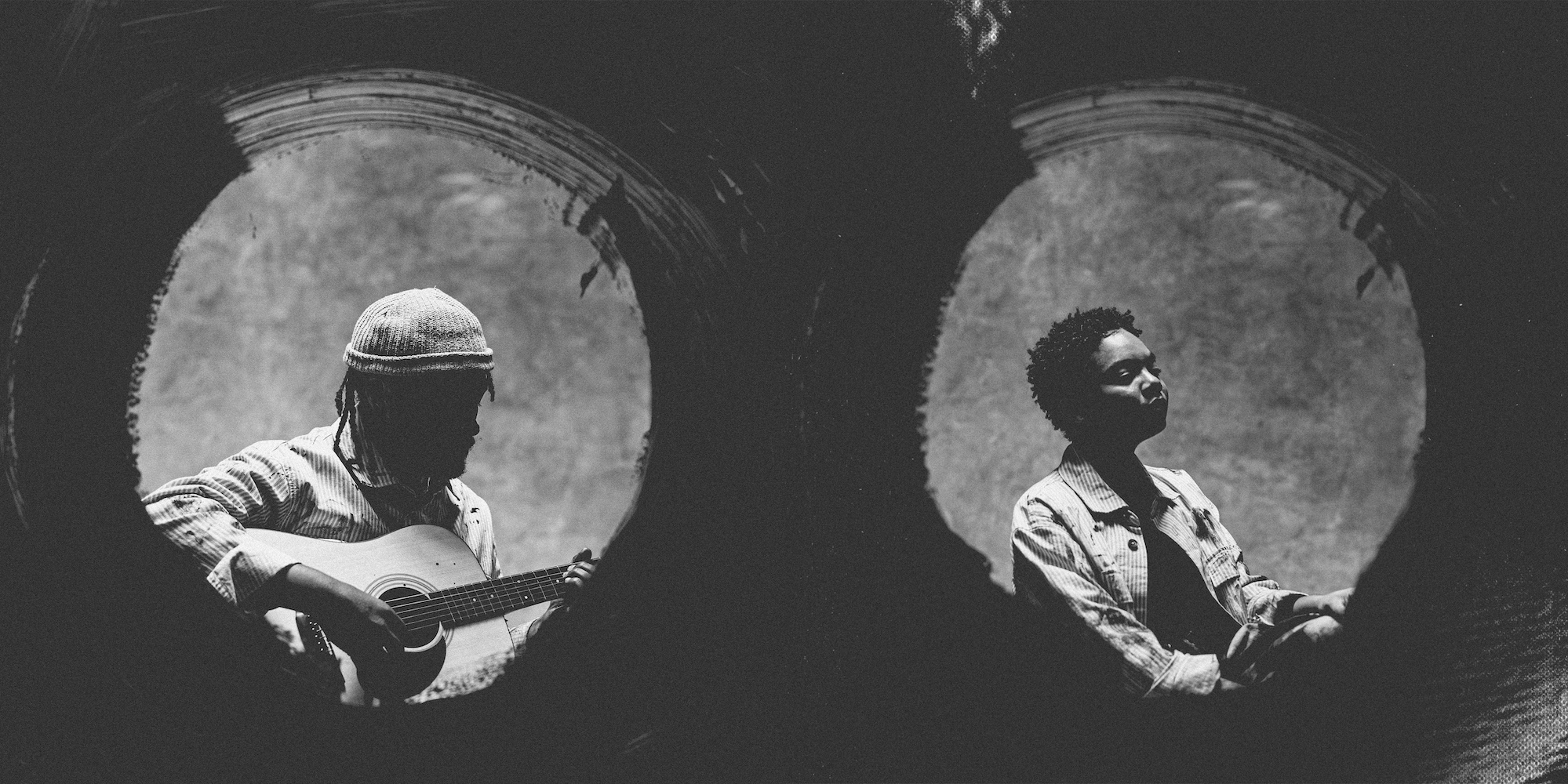
For us, this record is unconventional, modern noise. It’s an abstraction of the traditional music that we grew up listening to.
* * *
April + VISTA want Traditional Noise to live with people beyond the headphones – not as background noise, but as a soundtrack for memory itself.
They imagine these songs playing on road trips, during ordinary rituals, through long city walks on warm afternoons; moments that may seem small in real time, but become sacred once music attaches itself to them. That hope speaks to the album’s deepest generosity. For all its invention, intensity, and genre-warping ambition, Traditional Noise never loses sight of the human lives on the other side of the speaker. It preserves their stories, but it also leaves space for ours.
The duo describe the record as a kind of amber-colored fossil – a preservation of the people, places, and memories they hold close – and that image feels especially apt for an album so alive with motion. Traditional Noise captures April + VISTA in transition, but it doesn’t flatten that transition into polish or easy resolution. Instead, it honors the work itself: The diligence, perseverance, authenticity, and self-belief required to keep making art when certainty runs thin. Their biggest takeaway is beautifully human – that the work doesn’t have to be perfect to connect; it just has to be the truest, fullest effort you can give.
Some may dream
A thousand dreams
Of love they’d long to send
I carry yours close to me
Like evergreens
That rustle in the wind
– “Two Evergreens,” April + VISTA
That truth is exactly what makes Traditional Noise stand out so boldly in 2026. In a musical landscape that often rewards easy hooks, fixed identities, and clean categories, April + VISTA have made a record that feels thrillingly unconcerned with fitting in. It’s intoxicating because it’s alive at every edge – thoughtful, physical, provocative, tender, and unafraid to let beauty arrive through friction. They don’t smooth over contradiction; they build with it. They don’t choose between tradition and invention; they insist that the future needs both. Traditional Noise is the sound of two artists trusting their instincts deeply enough to make a world only they could have made – and inviting us to find ourselves inside it.
By the time Traditional Noise reaches “Morning Star,” the album exhales. After so much pressure, rupture, and reckoning, its closing track arrives like a meditation at dawn – delicate, smoky, and prayerful, with lush jazz piano chords and George’s voice suspended in a haze of soft, glistening sonics that seem to filter in like warm sunlight through parting clouds. Yet even here, April + VISTA don’t offer easy peace. George sings of damage that begins “from the top” and travels “all the way down,” of “slow growing heat,” running tears, “stories unknown,” and “roots of the scorned” buried beneath the surface. The song feels like a dedication as much as a release: A final honoring of the people, memories, histories, and hidden wounds carried through this record’s special human journey. Light breaks through, but it doesn’t erase what came before. Instead, “Morning Star” gathers it all – the grief, the gratitude, the inheritance, the ache – and lets it rise.
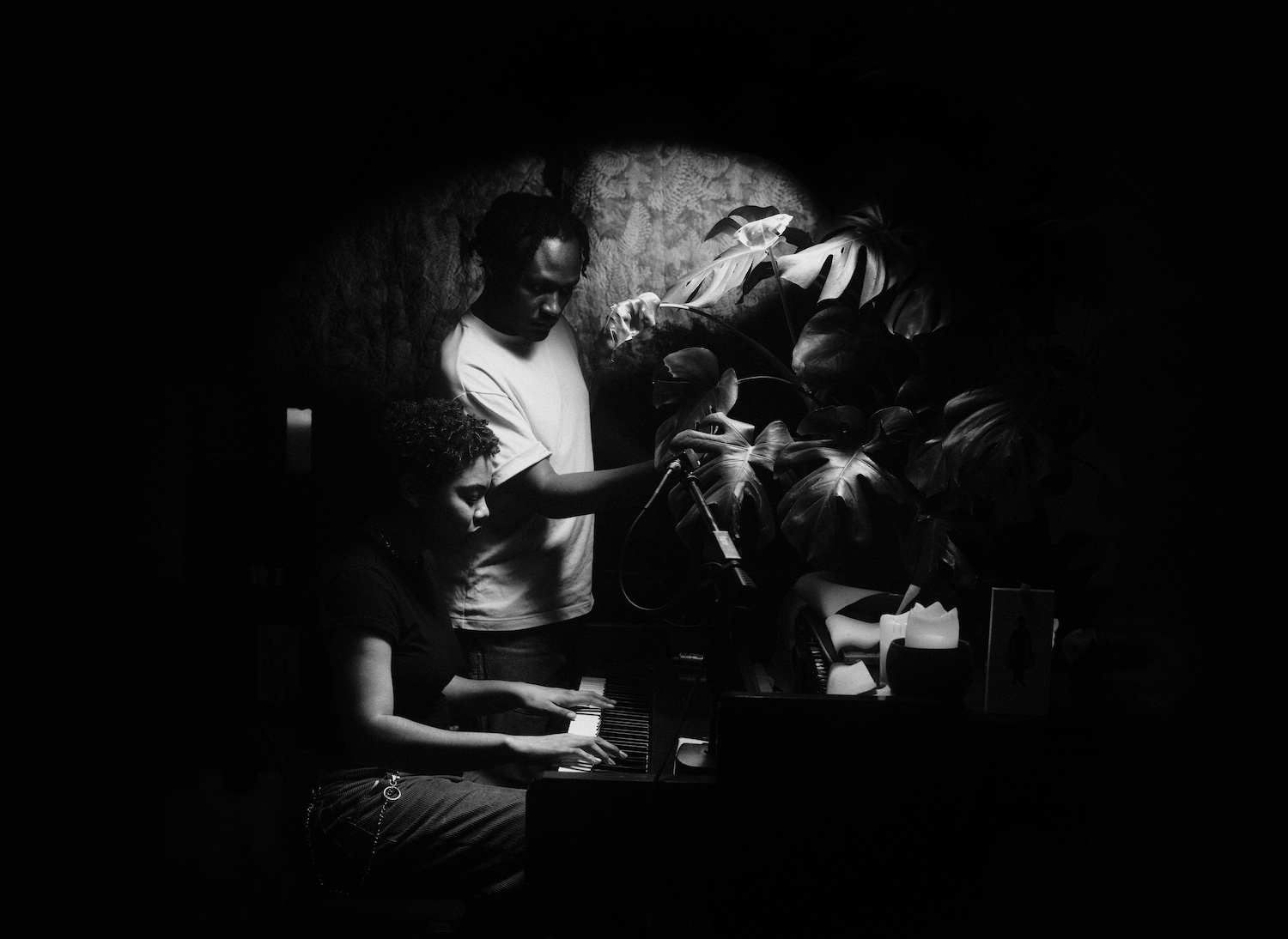
Traditional Noise matters because it sounds like artists making peace with the impossibility of being easily understood – and choosing freedom anyway.
Across its many textures, moods, and collisions, April + VISTA don’t just blur lines; they remind us that those lines were never sacred to begin with. The album’s beauty lives in that refusal: Its insistence that soul can be experimental, that heaviness can feel healing, that tenderness can carry teeth, and that the music that raised us can become the very material we use to imagine ourselves anew. In 2026, when so much art arrives already flattened into categories, Traditional Noise feels thrillingly alive – a record with its own pulse, its own weather, its own gravity. It’s bold, transportive, and breathtakingly human: The sound of two artists honoring where they come from without letting the past decide where they’re allowed to go.
In conversation with Atwood Magazine, April George and Matt Thompson open up about the traditions that shaped them, the pressures that nearly consumed them, and the creative risks that pushed Traditional Noise into being. They talk about building orchestras from small rooms, chasing comfort after burnout, finding the sound inside the noise, and making music that can score other people’s memories as vividly as it preserves their own.
Tradition may be a refuge, a rhythm, a room you return to when the world gets too loud – but for April + VISTA, it’s also raw material, ready to be reshaped into a future only they could hear.
— —
:: stream/purchase Traditional Noise here ::
:: connect with April + VISTA here ::
— —
‘Traditional Noise’ – April + VISTA
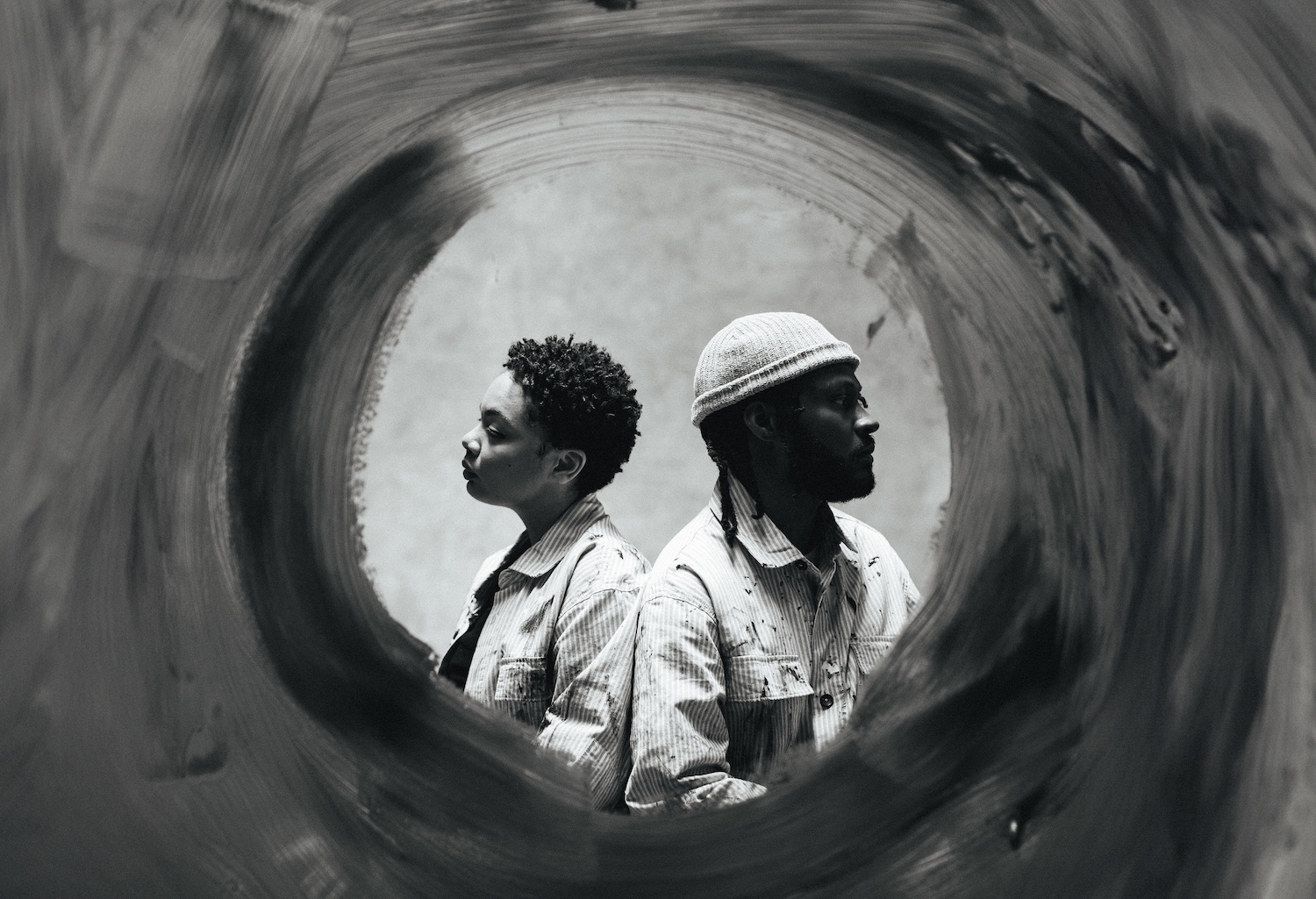
A CONVERSATION WITH APRIL + VISTA

Atwood Magazine: April + VISTA, for those who are just discovering you today through this writeup, what do you want them to know about you and your music?
April: Our music is raw and celebrates experimentation. We take familiar yet contrasting sounds and stick them in a blender to create something new and uniquely ours.
Matt: Each project we make is a document of our lives at the time and is an expression of journey as independent artists. We don’t really consider genre as we create. We, instead, like to honor the music that has helped us navigate the world. We just love good music and want to contribute to a community of sincere artists.
Who are some of your musical north stars, and what are you most excited about the music you're making today?
April: We are inspired by artists and bands that aren’t afraid to challenge the status quo and learn as they go. We are deeply influenced by projects like Madlib’s Yesterday’s New Quintet where he went full on jazz and taught himself to play all the instruments himself (keyboard, percussion, guitar, vibraphone, bass, etc.) or bands like Radiohead and composers like Colin Stetson that experiment by playing traditional instruments in unconventional ways to get a unique tone and sound. We take a similar approach to our own music and are most excited about walking to the edge of our skills and asking “How can I push this further?”
Matt: We’re also really inspired by film composers like Emile Mosseri and Mark Isham. We like to world-build in our music and take notes from film to create sonic environments through texture.
You've called your debut album Traditional Noise an exploration of the formative music of your youth, and a simultaneous effort to upend the notion of “popular music.” What’s the story behind this record?
Matt: After releasing our EP Pit of My Dreams, a project marked by its intensity, we were terribly burnt out and a little directionless. We spent a ton of time listening to comfort music. For us, these were songs that we grew up on, artists that we ritually listened to at family gatherings or during road trips, getting ready for school. Engaging with the sounds that made us fall in love with music was kind of healing, especially after spending so much time searching for catharsis in confrontation with Pit of My Dreams. It got us thinking about what tradition meant in our musical journey and our lives.
We found comfort in familiar song structures and legible genres. However, As black artists who love to experiment, but are constantly forced into pigeon-holes, we wanted to challenge the tradition that the world seemed committed to imposing on us. The title “Traditional Noise” is both an ode to the music that soundtracked our most precious traditions, and also a response to folks who think our music is too left-of-center or even off-putting because it’s not traditional R&B, or hip-hop, or pop. We’re like “sure we can make traditionally palatable music, but our reality is noisy and we won’t separate that from our art.”
I often get into senseless debates with friends about this question - what’s the difference, to you, between ‘noise’ and ‘sound’? Is there one, as you see it?
Matt: I think the difference lies in its utility to the listener. Sounds are useful while noise is a barrier. When we were writing Pit of My Dreams, we were so stressed about our careers, the music industry, the world-on-fire, that we found it hard to find joy in music. It became a noise that pestered us for a while like a flies buzzing around our head, so we kind of avoided it until we couldn’t. Knowing that our art was our only way to release this frustration, we began to embrace noise as a vehicle to describe the dark place we were in. Noise became sound for us. We drenched everything in distortion. We fell in love with cracks, and pops, and textures that would otherwise agitate but it scratched the itch in our brains. Since then, noise has played a central storytelling role in our music. Nowadays, we’re always looking for a sound in the noise.
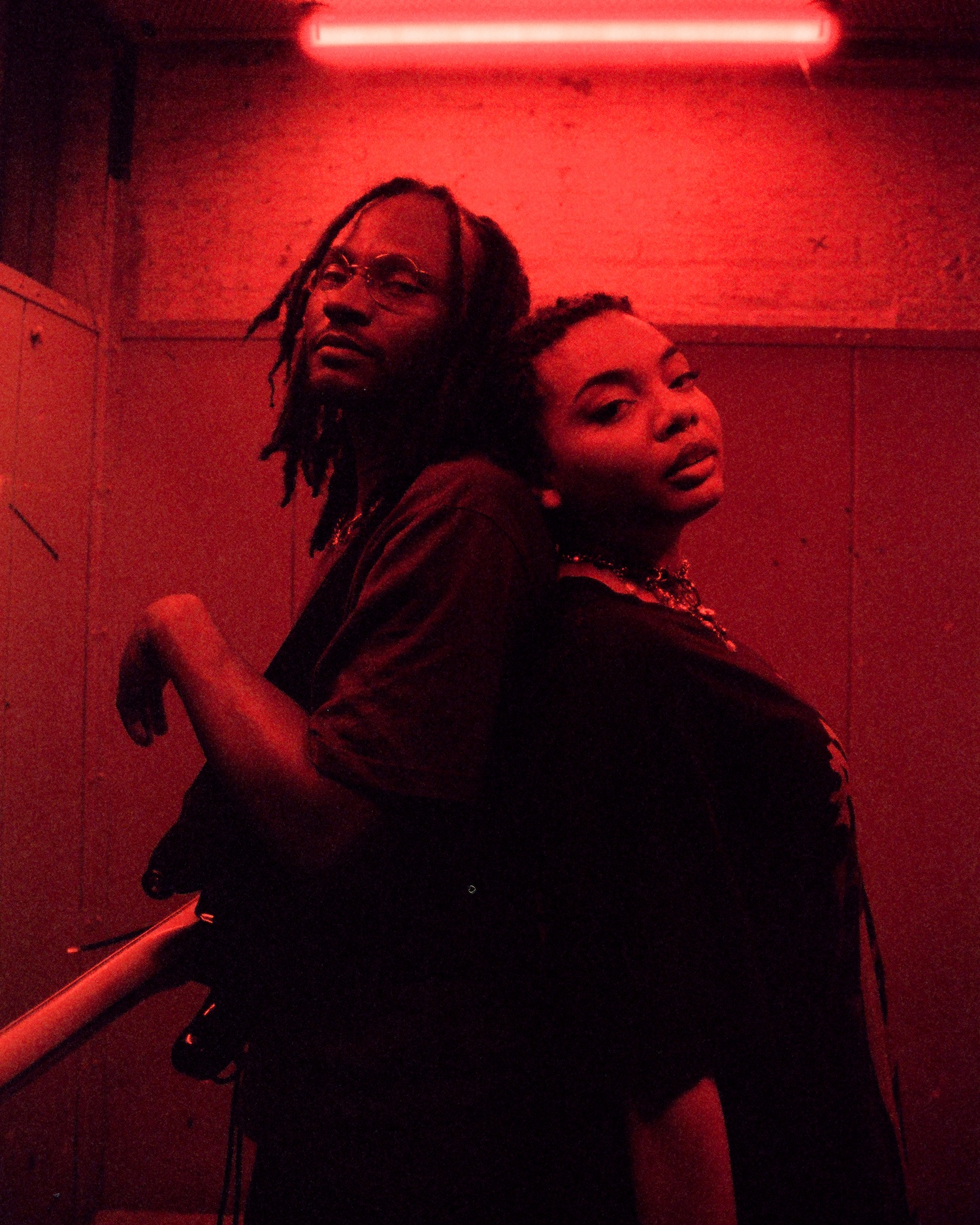
Nowadays, we’re always looking for a sound in the noise.
* * *
How do you feel Traditional Noise introduces you and captures your artistry, especially compared to your earlier EPs?
April: Traditional Noise feels like a fully realized exhibition of our sound; we were still excavating our sonic and creative identities when writing our first four EPs – Lanterns, Note to Self, You Are Here, and Pit of My Dreams. They felt like deep stretches, we tinkered with tons of tools we’d never used before, learned how to collaborate with other musicians and with each other, all while navigating uncharted territory in our personal lives. Our debut album finds us more confident; we’re still experimenting, learning new instruments and tools, but this time we had a more solid idea of what we want to say and have honed the skills to achieve the sounds we dreamed of making way back when.
Matt: Agreed. I think we’re able to express ideas more accurately now. We’ve learned and unlearned so much since releasing those first two EPs. There are hints at this new sound in all of our earlier works as well. Traditional Noise is us going all in on the ideas that we weren’t confident or skilled enough to explore fully on our earlier works.
I was instantly taken by “Very Bad News” - from the commercial-style intro to April’s effect-laden vocals and the sweeping violins, the album’s first track feels like a whole world unto itself. What’s the story behind this song, and how does it fit into the overall world of Traditional Noise?
April: While writing lyrics for “Very Bad News,” I was meditating on the idiom ‘a fish rots from the head down’ and saw many connections to the times we’re living in. The lyrics are a middle finger to the corrupt people and systems that have the world in their tight grip. We wanted the song to have a dramatic and assertive air to it and we approached the sonics like a film score to get that effect. I had the most fun composing the strings; we ran out of money and couldn’t afford to hire a full ensemble, so I played all the violin and viola parts, had a friend play the cello and we layered our recordings to create a full orchestra. One of the core themes of Traditional Noise is warped nostalgia, calling back to our days surfing the early internet; we program a Microsoft Sam-like voice to give us cues in our IEMs when we play live and got the idea to use that voice to narrate the project. It’s a nod to our upbringing as ’90s kids and we thought it would be a fun way to set the tone for the album.
Matt: We also wanted “Very Bad News” to be this explosive movie sequel-style return, where the character you thought had died was back and out for vengeance. We were revitalized and inspired again after burnout almost ended us. That’s what the song means to me.
One thing I love about this record is how effortlessly it defies categorization - between songs and even within them! – and yet, you’d be hard-pressed to find a more seamless, cohesive listening experience. What was your vision going into this record? Did you have conversations about styles / genres / vibes, or is it less about intentionality and more about chasing feelings all the way through to their conclusions?
April: Wow, thank you! At the time we felt a bit burnt out after writing Pit of My Dreams. The pandemic was raging on, putting an intense strain on our future as a DIY band and our creative process. We were determined to find a way to find the fun again, and were chasing the feeling we got as kids virtually crate digging on Youtube, spiraling down pixelated rabbit holes as we looked up names in the liner notes of our favorite CDs. We wanted to make something that our high school selves would obsess over.
Matt: Making our own sort of comfort music was definitely intentional. We took stock of the music that brought us comfort and said “we want to make things that feel like that for us.” One of our goals was to make music that you could listen to deeply and soundtrack your experiences.
Singles like “Love Unspent,” “Bless My Heart,” and “Grotto” have already painted an incredible sweeping portrait of what this record looks and sounds like. Why these three songs as singles? How do you feel they’re representative of the album as a whole?
April + VISTA: We wanted to show our range! As Black indie artists, we’re often immediately pigeonholed as traditional R&B, people are rarely curious about the many textures, sounds, and vast genres that we explore in our work. Black music is expansive, and we aim to embody that depth. We felt like those songs honor our roots and also show that we are stretching those traditional sounds into unexplored corners. We’re also incredibly ADHD and can’t sit still sonically; blending genres like post-punk with dusty soul, and downtempo wrangles our short attention spans.
I understand a big part of this record’s creation story involved getting out of your respective comfort zones. Can you share with me a few ways in which you did that? Any stories that exemplify this experimentation and friction in action?
April: I adopted the practice of free writing in my journal before diving into the lyrics. One of my favorite writers, James Baldwin, did an interview with The Paris Review where he said “write a sentence as clean as bone” and I took that to heart. In the past, I found myself hiding behind my words; saying it plain meant conjuring the bravery to confront the things I needed to process and that scared me. Free writing helped me to find clarity and confidently speak with intention. I would write about that day’s musings, turn the passage into a poem, and later find a melody to sketches that Matt would send me. It forced me out of my comfort zone and I learned to stop hiding behind the words.
Matt: It’s funny because we needed to leave our comfort zones to create our own comfort music. I wanted the guitar to be a central instrument on this album so I started to teach myself and take lessons when I could. I added background vocals on “Two Evergreens.” I don’t sing at all but needed another voice so I did what I had to do. I committed to recording everything aside from the live drums myself, which took A LOT of independent learning and trial and error. I also wanted to prioritize effective composition over my usual programming and effects so I leaned heavily on writing for instruments like the piano and guitar, and drafting out drums that could translate to live percussion.
Black music is expansive, and we aim to embody that depth.
* * *
Do you two have any definitive favorites or personal highlights off this record?
April: The biggest personal highlights for me are the string arrangements on “Intro,” “Very Bad News,” and “Grotto” and the choir arrangements on “Standing In Place” and “Love Unspent.” I’ve always wanted my string arrangements and vocal arrangements to sound full and well-rounded, I spent the past decade working to achieve that bit by bit. These songs are the closest I’ve ever gotten to what I hear in my head and I didn’t need a full orchestra or mass choir to do it! Just a few friends who were down to experiment and my own sheer will. We were able to achieve a sound that stands next to seasoned artists and all of it was recorded either in my small apartment or in an untreated warehouse. I’m very proud of that.
Matt: “Very Bad News” and “Bless My Heart” are both high points for me. I really leaned into the bit to create the kind of rock that I love but never thought I’d make.
This may be your “debut” album, but you’ve been active for over a decade! Can you recommend a couple personal highlights from the April + VISTA catalog for Atwood’s crate-digging audience to sink their teeth into?
April + VISTA: Absolutely! If you want to get familiar with the A+V sound, start with these tracks: “Beasts,” “Hot Coffee Freestyle,” “Fo’Sho,” “Cooperators,” “What Is Enough,” “Standing In Place,” “Love Unspent,” and “Grotto.”
What do you hope listeners take away from Traditional Noise, and what have you taken away from creating it and now putting it out?
April + VISTA: We want Traditional Noise to be an album people play on roadtrips, while making burgers, or on a long walk through the city on a warm Sunday afternoon. Whatever you do, let the album score your memories. We like to think of this album as our own little amber-colored fossil, preserving stories about the people and memories that we hold dear. We want listeners to preserve their own. Our biggest takeaway from finishing this album is that diligence, perseverance, and a little delusion will get you really far. The work doesn’t have to be perfect to connect with people, it just has to be your best effort.
If this record is what “traditional” noise sounds like, what do you think unconventional, modern noise might entail?
April + VISTA: For us, this record is unconventional, modern noise. It’s an abstraction of the traditional music that we grew up listening to. We think it’s fresh, but it also acknowledges the guitar music, the soul, the foundational genres that we sought to challenge. I think unconventional modern noise is forward thinking while still being aware of what came before it.
In the spirit of paying it forward, who are you listening to these days that you would recommend to our readers?
April + VISTA: Christelle Bofale, Niecy Blues, Brandon Woody, Joy Guidry, Tony Kill, Foots x Coles, CrashPrez, Annabelle Freedman, Def Sound, Machell Andre, Echelon The Seeker, Hayden Pedigo – all of these artists embody a high level of experimentation that we deeply admire. Dig in!
— —
:: stream/purchase Traditional Noise here ::
:: connect with April + VISTA here ::
— —
— — — —
Connect to April + VISTA on
Facebook, 𝕏, TikTok, Instagram
Discover new music on Atwood Magazine
© Foster K. White
 © Foster K. White
Traditional Noise
an album by April + VISTA