DJ and producer Sinca reflects on the early memories, dancefloor discoveries, creative boundaries, and human connections shaping her evolving place in electronic music.
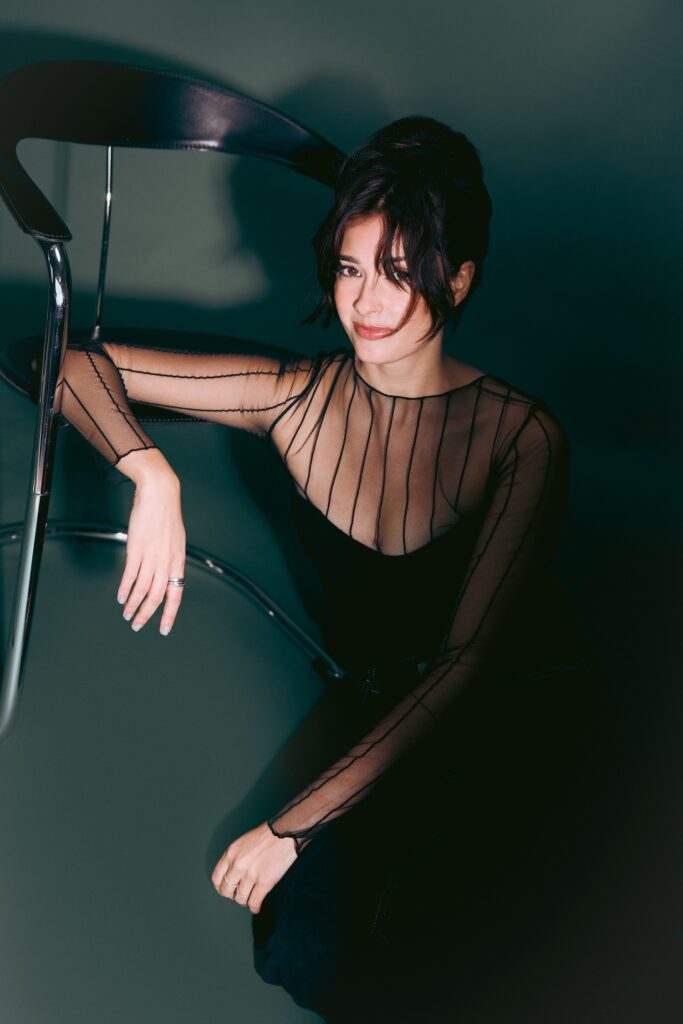
Gabriela Sinclair sits in a warm corner of her space, the sunlight giving way to the gentle shade of her room in the South of France, where she’s visiting her dad.
The talented Peruvian-French-Canadian DJ and producer – who makes music under the name Sinca – is calm, humble, and human. Yet a quiet energy surrounds her. She recalls the joy and spontaneity a crowd can bring: “You can play music, and people just fall in love,” Sinclair laughs, remembering a funny moment on stage.
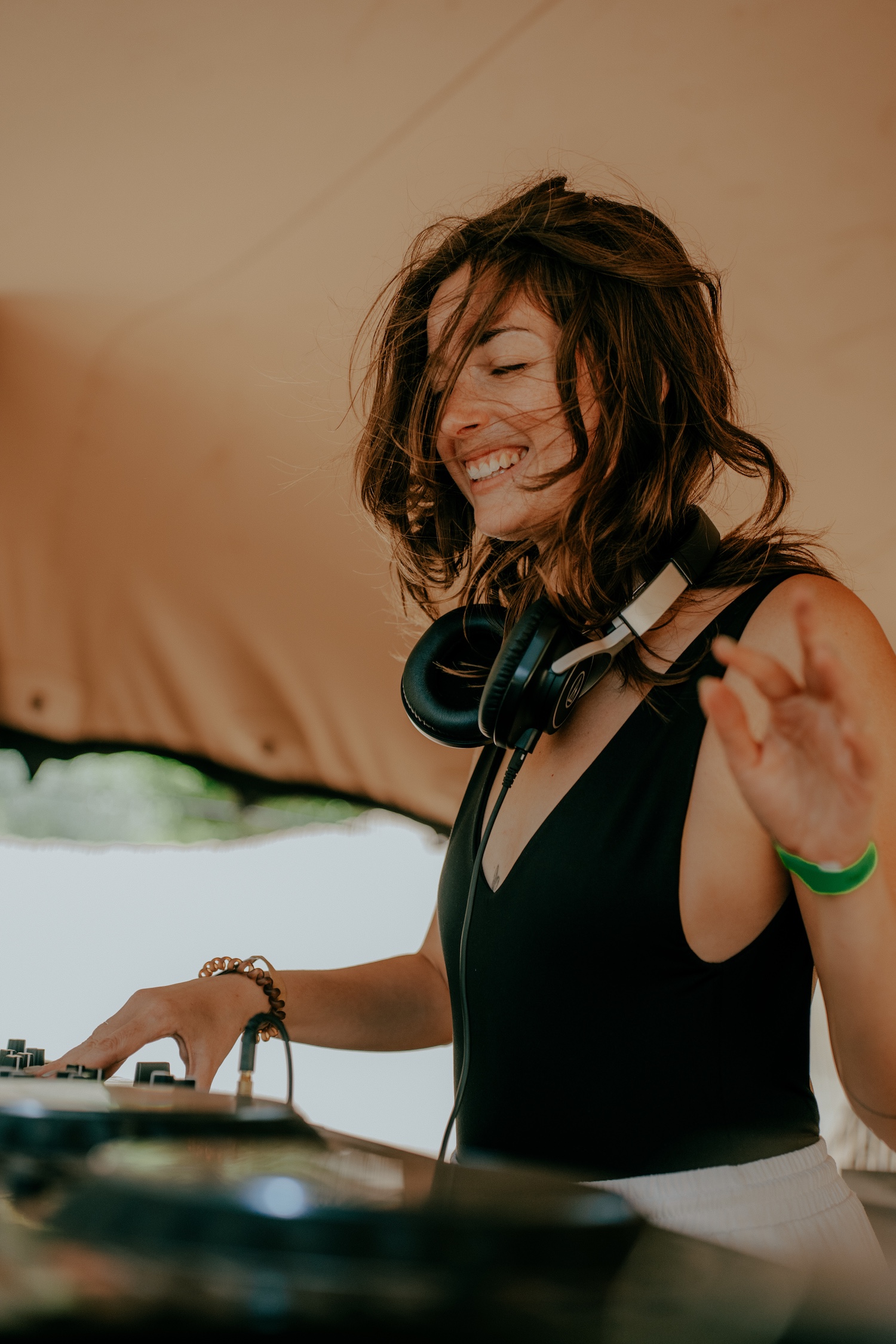
She has performed at renowned clubs such as Stereo in Montreal, Quebec, and on festival stages, including the DoLab at Coachella in California. She moves seamlessly between minimal house, progressive, and indie dance sounds across the dancefloor. She has a passion for sampling and crate-digging, bringing her own original spark to dancefloors worldwide. “It’s interesting how some communities can be found around the world and share the same taste in music, but sometimes there’s a big cultural difference,” she reveals.
Music always surrounded her wherever she traveled in Peru with her family, shaping her perspective and artistic upbringing. “We would do big road trips, and there would be music all the time. It has definitely influenced my relationship with music,” Sinclair recalls. Her discography includes appearances on Nora En Pure’s label, Purified; her 2025 EP Silver Lines; and her latest remix release, “The Light” (2026), in collaboration with Dosem and SOMHI.
Sinclair has earned support from respected artists, including Eli + Fur, the female DJ and producer duo, and British underground veteran John Digweed (Bedrock Records). Since her deeply personal track on Anjunadeep Explorations, “Mancora” (2021), she has reimagined herself through her early musical memories. She continues to advance her artistry alongside the vivid textures of “Villeray” (2023), transporting listeners on an odyssey of sound. Sinclair’s sets reflect her imagination, curating experiences across genres while drawing from a sonic palette of influences to inspire her audience.
Sinclair’s easygoing presence and collaborative nature in the industry go beyond music itself.
She shares her personal joy and gratitude for the experiences and relationships that have helped her grow, personally and creatively. These connections have helped her achieve success while furthering her growth mindset. She has pushed beyond the boundaries of the underground scene as a female DJ and producer. “I had a crazy summer and fall in 2025. I decided to take a long break from music because I was exhausted and overwhelmed. I made that decision; I didn’t know how long my break would be,” Sinclair confides with Atwood Magazine. She discusses the weight of mental health and the support that friends and industry relationships can provide, and how that support can make all the difference in moving forward.
AI has become more apparent as tools become more accessible across the music industry. “AI could be an exciting tool to start using, but I still think it’s very important to create your own track rather than one [generated by] AI, because then [we] lose what makes us human,” Sinclair acknowledges. Each artist navigates transformation on their own terms.
Read on as Sinca guides us through her experience in our interview, sharing her insights with Atwood Magazine in a conversation that explores what sets her work apart in the studio and on stage, how she keeps listeners grooving, and how she pushes back against the quiet fear of imposter syndrome – returning stronger than ever before.
— —
:: stream/purchase Silver Lines EP here ::
:: connect with Sinca here ::
— —
A CONVERSATION WITH SINCA

Atwood Magazine: Hi Gab, thank you for taking the time to chat with Atwood Magazine! How have your roots influenced you to perform and create music?
Sinca: My mom was born and raised in Peru. She met my dad in the United States while she was studying. My dad is French Canadian. They moved to France, where I was born, and then to Montreal, Canada, so I grew up in a household with different influences. My parents were raised by professional pianists and were very passionate about different kinds of music. There was always music playing around the house when I grew up, whether it was my mom and dad cooking in the kitchen and putting on music, or me going downstairs to the basement where my sisters would play other types of music. We would do big road trips, and there would be music all the time. It has definitely influenced my relationship with music. Music has been the center of my life, even though I didn’t think, when I was young, that I would have a career in music; that wasn’t something I had envisioned for myself, but I knew how important music was to me.
What is your first memory of music, and how did it shape your desire to create?
Sinca: When I was five or six, I remember being in Peru with my mom and my Peruvian family. We had to drive for a few hours to get to this beach town. We were playing a lot of Latin music. At the time, Shakira, who was not known at all in the US at the time or other parts of the world, was known in Latin America with her first album. I remember we were playing her album all the time. This is also when I started creating music. My first release (Mancora) is out on Anjunadeep. Mancora is a beach town in Peru. It was important for me to imagine and recreate the image of myself enjoying music the most. Like when you’re doing a road trip – It’s warm, and you’re going to the beach. Now that I think about it, I named my track Mancora because I remember listening to music and feeling deeply connected to the road in Peru on the way to the beach.
On Anjunadeep Explorations 2021 and 2023, your tracks create vivid, immersive journeys. From that first memory to the foundation of music, you share what’s important to you – especially “Mancora” and “Villeray,” they connect memory and experience so seamlessly. How have your travels influenced the way you explore and experience music around the world?
Sinca: Music taste is very cultural and subjective. In the underground, melodic, and progressive scene, there’s a very deep understanding of what underground music is within this community, no matter where you are. I can think of tracks that I’ve played in completely different settings in different countries, and [the audience] would appreciate [it] in the same way anywhere around the world. At the same time, there are a few differences. In India, they enjoy the melodic side a lot more. It has to stay, groovy, and you have to be able to dance on it, because it’s dance music. But they really enjoy deep and progressive sound. When you go somewhere like France, I played last year, at a festival here in [the] south of France, I had to stay a little bit darker. A bit [more] of indie dance, because they like techno music more than [the] melodic and progressive sounds. It’s interesting how some communities can be found around the world and share the same taste in music, but sometimes there’s a big cultural difference. It’s also fun for an artist like me, who likes to be versatile – experiment with different dance floors and sounds.
When you begin working on a new track, what does your creative process look like?
Sinca: I feel very inspired by a few tracks I’ve played in recent sets, [as well as] those from other artists. I sometimes have these epiphanies when I play a track I’ve found online by an artist I’ve never heard of before, and then the crowd loves it. When you hear it in a club with quality speakers, you hear certain things that you can’t hear on your computer. I go to the studio and listen to what makes those tracks special on the dance floor. My rabbit hole is basically getting lost in sample banks. I love sampling. I shop them – I play around, [spending] an hour and a half on a specific sample. The next day, I’m going to hear it and have a totally different direction. Sometimes I take the sample, and I feel inspired to use this melody [or] sing in French, because it’s my first language. I feel very inspired by samples in general.
Is there any new gear or technology you’re excited to experiment with?
Sinca: A lot of these banks, like Splice, for example, are always new. It’s always exciting to go on these platforms. But especially in the last few years, there have been a lot of discussions about AI tools that I have started experimenting with. There’s a part of me that’s a bit of a purist, and also who’s very passionate about making music. So I don’t want to use AI to make music from scratch, not because you wouldn’t make good music, but because I wouldn’t have the pleasure of creating the song, which is why I’m doing this in the first place. I think there’s a lot to learn from AI – use it as a tool. I know there are tools now that provide AI-based feedback. Kind of like what I do with sampling – you generate ideas, you get inspired, and then you start in your own direction. AI could be an exciting tool to start using, but I still think it’s very important to create your own track rather than one [generated by] AI, because then [we] lose what makes us human.
How do you adapt your creative process when you're on the go?
Sinca: I’m still learning. It is very hard for me to take a project from A to Z when I’m on the road. I can feel inspired to start new ideas, [and] I will come back home to the studio, listen to the five to 10 new ideas I’ve had, and then decide which one I want to continue. It’s just so hard to be on your computer without your tools and not be in your zone – especially when you need to focus for a few hours, when you’re deeply working on a track.

What has been your most memorable performance or show? What did you take away from it?
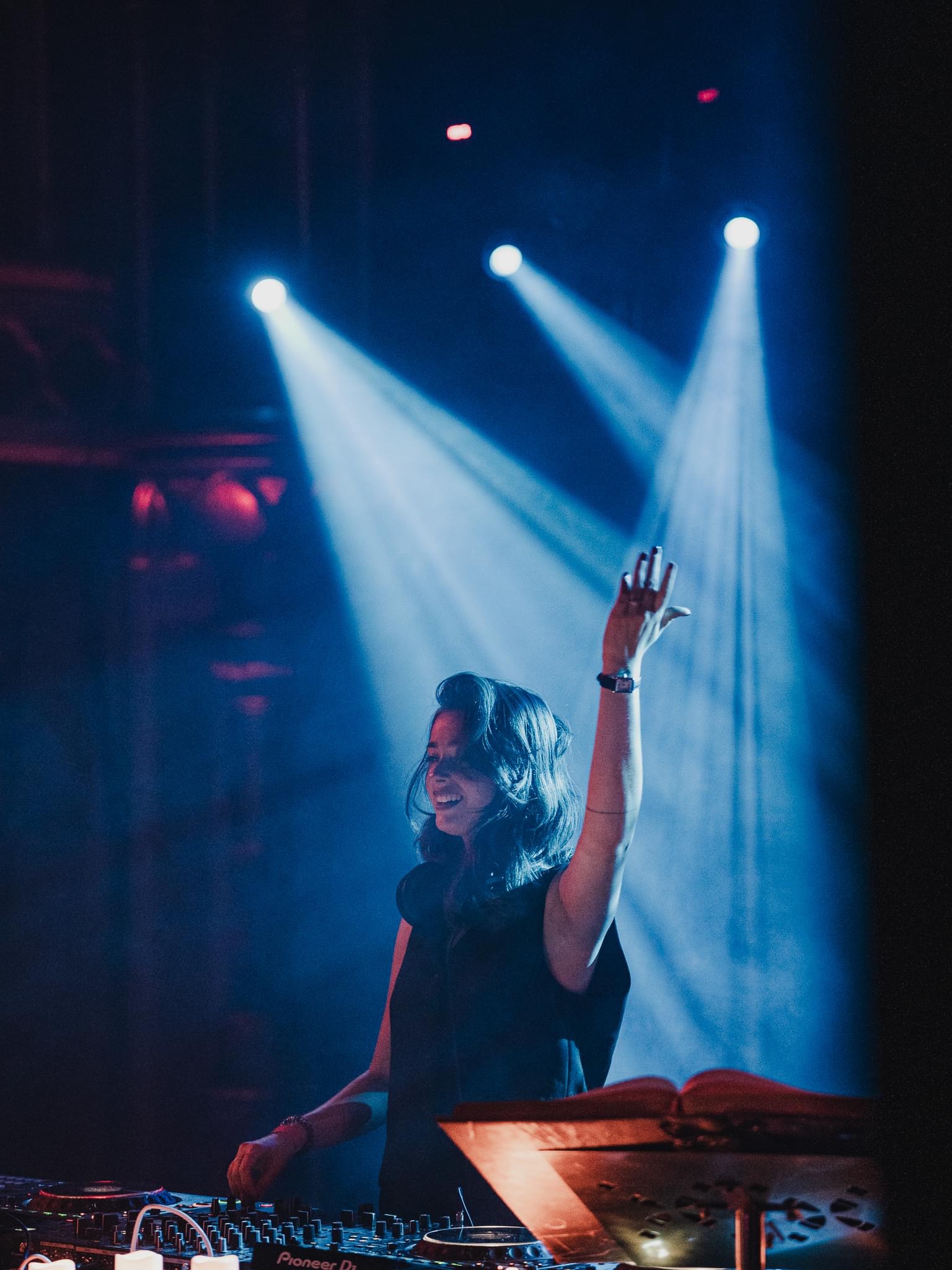
Sinca: Wow, symbolically, I had a crazy summer 2025 and Fall. I decided to take a long break from music because I was exhausted and overwhelmed. I made that decision; I didn’t know how long my break would be. I had decided to finish the shows that were already confirmed until the end of October. [The] last shows I had in October were in Amsterdam. I had a show at Ministry of Sound in London, an iconic club. I had a show in Bermuda and another at Stereo in Montreal as a headliner for Halloween. All of those shows, especially the Stereo one, which was the last one in my hometown, [with] all my friends. Still not really knowing, “Am I ever going to DJ again? Am I ever going to want to produce music again? What’s going to happen?” All these really tough questions. “Am I abandoning Sinca?” Everything I’ve built, [or] everything I’ve done, was a really hard moment for me. It was [also a] very symbolic event at Stereo. My friends were there, [and] I cried at the end of the show. It was very emotional for me. And [now] I’m back. I started touring again two weeks ago, which [felt] good.
Sometimes, stepping away from the environment can leave you with a renewed sense of purpose. Now that you are back, what’s a fun way you connect with the crowd during a set? Are there any moments of crowd connection that have moved you?
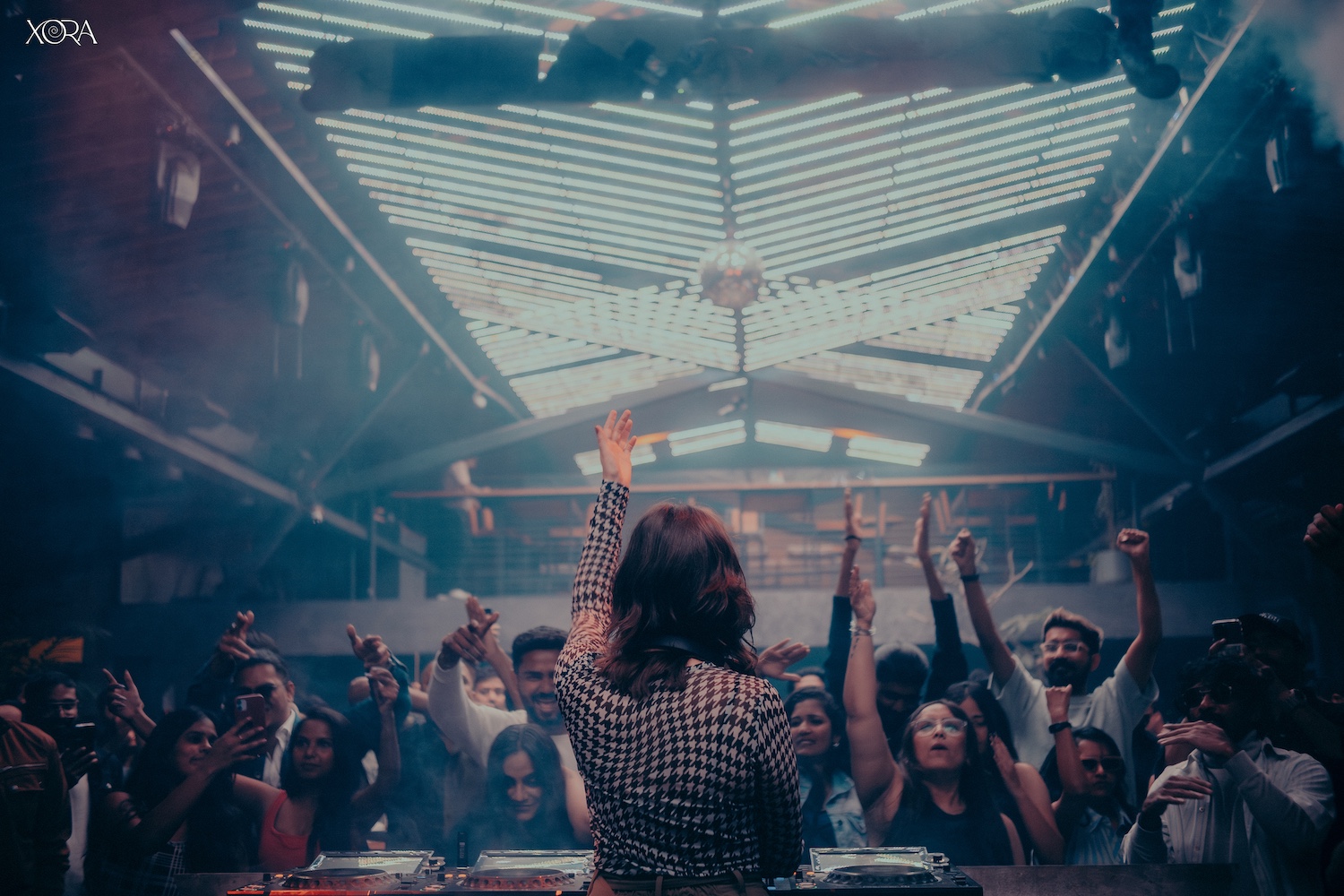
Sinca: It was probably the best decision of my life to take that break. It was so good for my mental and physical health. I definitely have a lot of fun when I play. Not that some DJs don’t have fun. I think everyone has a way to express it, but I’m just like a child. I’m smiling the whole time. The DJ booth is not too far from the crowd, and some people come up, reach out, and give me a handshake or a high five. These are very special moments, because that’s what it’s all about. I have a funny anecdote – last year, in a festival in the south of France, there was this guy who typed on his phone, “Marry me?” However, I am married, and my husband was right beside me. We have such a good relationship, so he wasn’t angry about it at all. He was flattered. It’s funny because he went up to the guy and explained, “I’m her husband.” Shortly after they started being friends. By the end of the night, they were friends. You can play music, and people just fall in love.
The joy of electronic music is so spontaneous! How do you stay authentic to yourself while touring and performing?
Sinca: I have just started touring again, [but] I really try to prioritize my health [and] my sleep. I’m a sociable person, like [many] people in the scene. So let’s say I’m somewhere and five people ask me to grab a coffee – I used to say yes to everyone, do everything, and try to see everyone. But [setting] boundaries and doing it delicately, because [it’s about balancing] my energy. Going to the gym, [or] going on walks – [finding] time to journal, meditate, [and do] yoga, is hard. That’s the best way for me to stay aligned with myself in the long term and not burn out again.

Having those boundaries is so important, especially if you're always on the go. In terms of music, you arrange it organically across genres – from minimal to progressive to indie. Are there any certain grooves or sounds you naturally gravitate to when mixing live?
Sinca: When I dig for new music to play in my sets, I try to envision how this is going to sound in the club – how people will enjoy it. Not every song can work in every setting, culture, club, or community while staying danceable. There needs to be something that keeps you energized. I try to choose songs that are aligned with what I’m trying to make on the dance floor. So I often say I’m definitely on the underground side of the scene, but I try to make the music accessible enough for people who aren’t into underground music.
What tracks or discoveries spark your curiosity?
Sinca: I recently started looking into much older tracks. I go back to some tracks that were released in 2005 or 2010, because there are some bangers. I think it’s really cool to include those in your sets – because back then, there was no AI – real, authentic bangers.
You have collaborated with Eli + Fur on “Insomnia,” a part of their 2025 Dreamscapes remixes release, showcasing your creative style and remix flair. Additionally, you were also mentored by John Digweed. How have these experiences challenged you or shaped you as an artist?
Sinca: I’m a huge fan of Eli + Fur and John Digweed. It was definitely special to remix their songs. What I’ve learned from that is to gain confidence and trust my skills as a producer. Because when you’re a self-taught producer, I just started Ableton classes. I learned everything through experience and by learning from others. I’ve had imposter syndrome for the longest time. I’m very self-critical, and I feel like an imposter, because I’m not like this geeky producer with 1,000 pieces of analog gear in her studio. I’m not that type of producer, but it doesn’t mean I’m not a good producer – I’m just my own type. That gave me a lot of confidence, and I’m super grateful that they have asked me to remix their songs. I’ve built friendships with them, both with Eli + Fur and John Digweed. John Digweed has been so supportive of me and my music. He’s released a few of my other tracks on his label. Yeah, it’s definitely helped me – my appreciation for them, and the industry itself.
Even just in your own style in music, you don't need much. As long as you stay true to yourself, you can really share a narrative through different textures and sounds, making it your own. What does electronic music mean to you personally?
Sinca: The most important thing is the community. It goes beyond the music itself, which is amazing. There’s a great sense of community in the EDM and electronic scene, and it’s always so positive, inclusive, and beautiful. There are different communities. In general, it’s just very open arms, which is very unique, and it’s great. I feel like on a dance floor with some house music playing, you will have people smiling at you, dancing with you, connecting with you, or just randomly talking to you. I think what makes this genre very special is the sense of community.
Your early 2025 EP and project featured two tracks, “Silver Lines” and “Told U So,” on Nora En Pure’s Purified Record label. Are you working on any new collaborations or projects that we can expect in the future?
Sinca: I do have two or three more releases planned this year, including one of my tracks on a VA, and another collab is coming out this summer with some progressive house DJs and producers. I do have collabs with artists who are not necessarily in the same genre as me. For instance, I’ve collaborated on two tracks with Cristina Lazic, who is more on the minimal, minimal tech, and minimal house music. We actually played our first back-to-back together two weeks ago, which was really cool. I think she got to experiment more with her progressive and melodic side, and I got to experiment more with my minimal side. So it was very interesting. But yeah, that’s what I find the most fun about collaboration. People can expect to have different sounds. Again, coming from me, I’m forever eclectic.
— —
:: stream/purchase Silver Lines EP here ::
:: connect with Sinca here ::
— —
— — — —
Connect to Sinca on
Facebook, TikTok, Instagram
Discover new music on Atwood Magazine
© courtesy of the artist
 © courtesy of the artist
:: Stream Sinca ::