East London singer/songwriter James Smith steps fully into himself on ‘Golden Age,’ a spellbinding sophomore album that channels the pressures of his mid-twenties into ten soulful, rousing songs about trying to feel young while money, grief, love, and ambition keep pulling life into and out of focus. In conversation with Atwood Magazine, Smith reflects on the highs and lows of his newfound independence, making the music he actually wants to hear, and finding light in the weight of his so-called golden years.
Stream: ‘Golden Age’ – James Smith
Life is about the now. You need to stop waiting for everything to just make sense… we’ve got so much to celebrate every single day, and we need to chill out and stop waiting for our dreams to come true, because we’re doing them.
* * *
Your twenties are supposed to glitter.
They’re sold as the years of freedom, momentum, romance, risk, and arrival – the shining stretch where life opens up and every dream still feels close enough to touch.
James Smith’s Golden Age knows better. The East London singer/songwriter’s fully realized sophomore album lives inside the cruel irony of those years: Rent is high, money is hard, love is fragile, grief arrives without warning, and the pressure to become the person you imagined can make even the brightest days feel black-and-white.
“How am I supposed to live, when I’m barely getting by in the golden age,” he sings on the title track, distilling the album’s ache into a line that lands like a confession and a generational gut-punch. Warm, soulful, smoldering, and startlingly alive, Golden Age is a triumph of old-school craft and modern emotional clarity – easily one of the year’s finest releases, and the sound of an artist stepping fully into the music he was born to make.
But it’s all black and white
In the golden age
Too busy earning on my mind
In the golden age
How am I supposed to live
When I’m barely getting by
In the golden age
Oh my lover
We’re still young
But I’ve felt old since 21
With all these dreams
I’m holding on my back…
– “Golden Age,” James Smith
Out now, Golden Age follows Smith’s 2024 debut Common People and arrives as his first fully independent album – a ten-song collection written, produced, and mixed by Smith himself. For longtime Atwood readers, Smith’s name carries history: We first featured the East London singer/songwriter back in 2018, when he was still a teenager signed to Virgin EMI and beginning to introduce himself through intimate, heart-on-sleeve songs rooted in love, loss, vulnerability, and emotional immediacy. Even then, he stood out as a young artist with a timeless instinct – someone drawn less to trend than to feeling, melody, and the craft of a song that could make heartbreak feel both personal and universal.
In the years since, Smith has grown up in and around the industry, moving from the major-label world into a more independent chapter while slowly figuring out who he wanted to be as an artist. Common People, his 2024 debut album, gathered years of writing into a long-awaited first full-length statement – a necessary arrival point, but also a release that helped him move past the weight of making “a debut album” at all. Two years later, Golden Age finds him sounding freer, more mature, and wholly self-possessed: No longer simply proving he can make a record, but building one fully on his own terms.
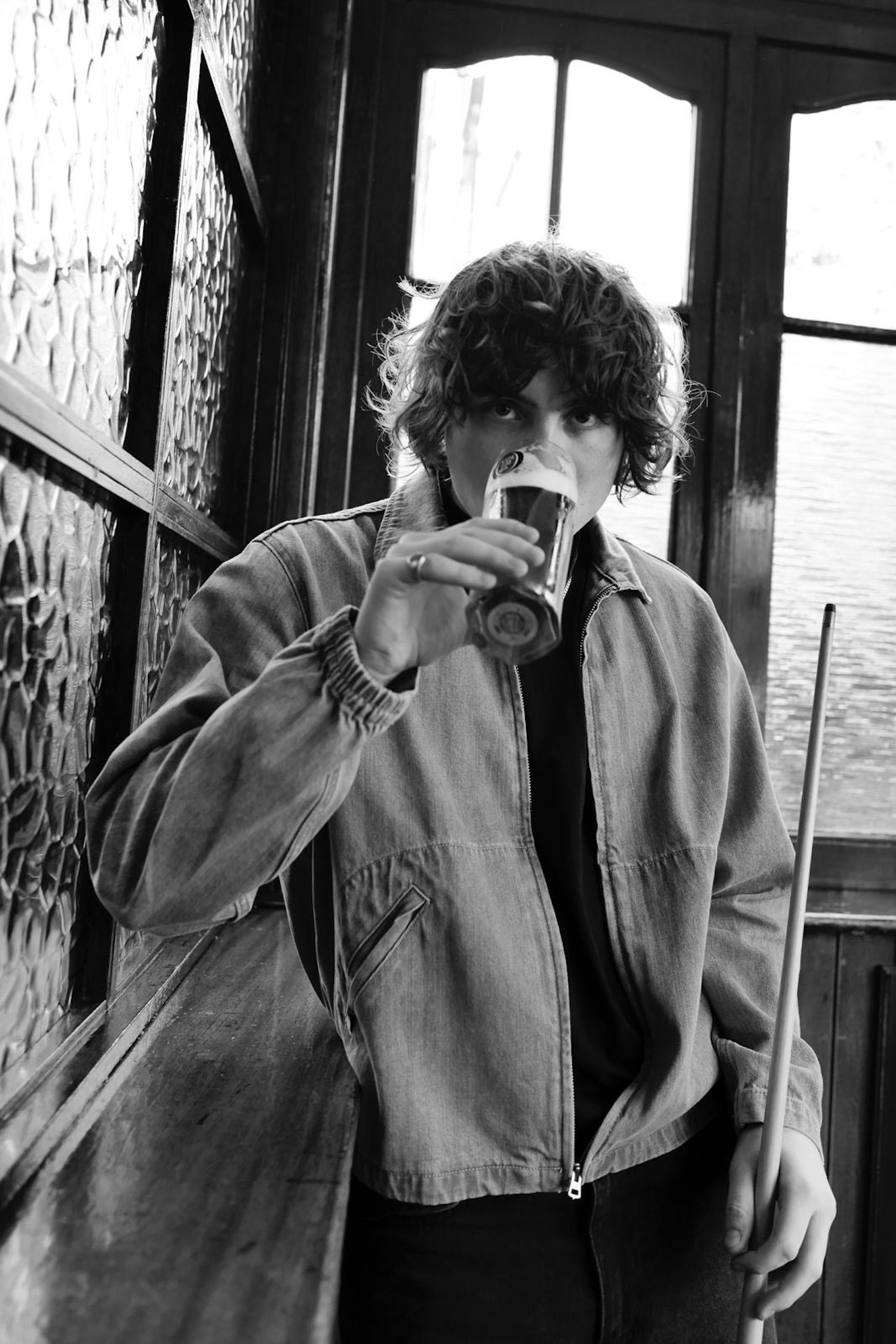
In conversation with Atwood Magazine, Smith describes himself not as an artist chasing a genre, but as “a songs guy,” a lover of songwriting whose second album “goes down a lot of different roads.”
That range is the record’s lifeblood: “Electric Eyes” opens with swaggering Britpop hunger and social-media disillusionment; the title track “Golden Age” turns mid-twenties pressure into a full-bodied anthem for anyone barely getting by in their so-called golden years; the soulful “My Angels” calls out through grief, shame, and self-loss; “Jesus Is A Woman” brings neon-lit Soho funk and heat into the room; the smoldering “Dancing With You (Baby)” glows with bluesy warmth and lovesick memory; and “Chianti” tenderly closes the door with laughter, warmth, and a bottle of wine waiting to be shared. Through it all, Smith sounds timeless without sounding trapped in the past – a craftsman with one foot in the golden eras of rock, soul, blues, and singer/songwriter tradition, and the other firmly planted in his own life.
This sense of ownership matters, as Golden Age is not simply a step forward from Common People; it’s the sound of Smith taking full control of his instincts. His first album, he says, helped him get over the pressure of “the first album thing,” allowing him to see records not as monuments, but as living projects – chapters in a much longer pursuit. This time, he knew he was making an album. He had the cover in mind before the songs were finished. He kept the music close, working on it himself before sending it to his team with the quiet confidence of someone who finally knew what he wanted to hear.
“Golden Age is named after one of the tracks on the album, which sort of sums up the time in which I’ve written this album, which has sort of been like my mid-twenties,” Smith explains. “These years should be the best years of my life, but I’m so stressed about money and work and trying to make it as a musician that I can’t really enjoy myself.”
That tension – youth as promise, youth as pressure – shapes the whole record.
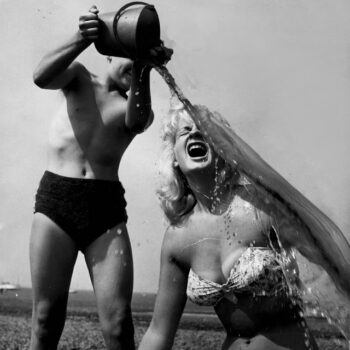
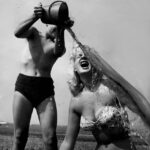
Smith found the album cover in a photograph of his great aunt and great uncle, who were around his age when the image was taken; to him, it carried a Marilyn Monroe, Gatsby-era glow, an old-world shine that made the title click. But the music itself is never frozen in nostalgia. Golden Age feels lived, labored over, and deeply present: A record about making art while broke, trying to love well while life keeps pulling at the seams, and learning that the dream doesn’t always feel like the dream while you’re inside it. Smith says his vision was simple – to “make some music that you would enjoy listening to if you was just a punter” – and that self-trust gives the album its ease, its spark, and its emotional punch.
That spark hits immediately on “Electric Eyes,” a bold, live-wire opener that kicks the door open with countdown momentum, raw overdrive, and the kind of restless band energy that feels hungry before Smith even starts singing. The song’s gaze is fixed on the internet’s image machine – all screens, mirrors, social designs, and carefully maintained smiles – but its sound refuses the flattening effect of that world. Recorded at Konk Studios in London with Smith and his band playing together in one take, “Electric Eyes” feels thrillingly physical: A roomful of musicians pushing toward the edge of a song and trusting the noise that comes back.
“That whole track is just one take of me and the band,” Smith says. “I remember playing it with the boys, who are such amazing musicians, and genuinely having goosebumps as I was playing with these guys, and being like, ‘I’m a f***ing rock star, this is sick.’”
As an opening statement, “Electric Eyes” does more than announce a bigger sound; it reveals the album’s appetite. Smith has always had the melodic instincts of a classic songwriter, but here the music itself becomes part of the storytelling. The guitars don’t decorate the feeling – they push it forward. The band doesn’t merely support him – it gives the record a body, a charge, and a pulse. After years of being known as a singer/songwriter, Smith sounds newly energized by the realization that the music can speak as loudly as the voice.

If “Electric Eyes” announces the album’s appetite, “Golden Age” gives that appetite a name. The title track is Smith at his catchiest and most emphatic – dynamic, seductive, soul-stirring, and rousing, with a chorus that turns private exhaustion into something almost communal. It’s a song about feeling crushed by the very years that are supposed to feel limitless, but Smith doesn’t sing it like surrender. He gives it lift. He lets the guitars gleam, the rhythm push, and the melody rise until the pressure itself starts to feel anthemic.
That is what makes “Golden Age” such a perfect title track: It understands contradiction from the inside. “Oh my lover, we’re still young, but I’ve felt old since 21,” Smith sings, letting one line hold the strange grief of growing up before you feel ready. The song is full of dreams carried heavily, money anxieties, rent stress, and the exhausting wait for life to finally open up – but it never collapses under that weight. Instead, it turns the feeling outward, making the barely-getting-by years sound big, bold, and strangely beautiful.
That pressure spills outward on “Silver Spoon in My Cup,” which cuts into class with humor, bite, and a bluesy smirk. Smith writes about money without abstraction: Rooms, shoes, clean clothes, silk sheets, drivers, drinks, cold weather made irrelevant by someone else’s comfort. The song is funny because it is specific, but it stings because the joke has teeth. “Truth be told I’m happy as I am,” he sings, even as the song keeps circling the brutal imbalance of wanting a seat at the table while watching someone else inherit the feast.
That thread reaches beyond the song itself. Smith grew up in East London, in what he calls a “working class, working man’s world,” traveling around the city with his family’s market business and working from a young age. In conversation, he connects that upbringing to both his work ethic and his empathy: The long days, the sales, the class friction, the constant exposure to different kinds of people. It all feeds the music. Golden Age may glow with vintage warmth, but its feet are planted in very real rooms – studios he could barely afford, jobs and money worries that do not disappear because the songs are good, and a London where class remains one of the city’s defining pressures.
If tracks like “Electric Eyes” and “Silver Spoon in My Cup” give Golden Age some of its sharper edges, “Jesus Is A Woman” opens a different door entirely. Funky, sweaty, playful, and a little divine, the song brings Smith’s Soho nights into the album’s world: Desire in fishnet tights, holiness under club lights, the thrill of a room that feels both sacred and dangerous. Written from an old idea he started with Martin Luke Brown, “Jesus Is A Woman” became, for Smith, a way of letting another side of himself into the record – the side that dances, drinks, meets wild characters, and finds transcendence somewhere between the dancefloor and the morning after.
“It spoke about that part of myself that goes out in Soho every now and then, and has a bit of a crazy night,” he says. “I just wanted a bit of that in the record… to bring that world that I know pretty well into this other, laddie, blokey world that I have.”
That balance is part of what makes Golden Age feel so alive. The record can be rugged, tender, funny, wounded, romantic, and theatrical without ever seeming unsure of itself. Smith is not chasing eclecticism for its own sake; he is letting the album contain the full range of his life. One moment he is writing about rent and work, the next about grief, the next about dancing in Soho, the next about an unopened bottle of wine. The roads are different, but the emotional center holds because the songs all come from the same place: A young artist trying to understand what it means to live fully while the world keeps asking him to prove he deserves to.
If Golden Age has a beating heart, “My Angels” is where it glows brightest. A soulful, sweet, tender, and stirring highlight, the album’s fifth track finds Smith at his most exposed, calling out through grief, shame, loneliness, and self-loss in search of a way back to himself. The song frames mourning not as a clean emotional passage, but as something disorienting and bodily: The smile painted on, the spirit lagging behind, the pub becoming both refuge and warning sign. By the time he reaches the plea to “find my way back home,” the song has opened a wound wide enough to walk through.
Smith’s voice is dynamite here – expressive, soulful, and impossibly human, rising from a place of bruised humility into a chorus that feels instantly classic. “My Angels” began as a piano ballad, but on Golden Age, it blooms into a full-bodied spiritual plea: Organ warmth, gospel-tinted backing vocals, bluesy gravity, and that lived-in vocal ache Smith carries so naturally. He doesn’t sing grief as an abstract feeling; he sings it as a body in the room, shoulders heavy, glass in hand, trying not to collapse under the weight of memory. The result is devastating because it’s honest – and healing because it dares to ask for help.
“‘My Angels’ is probably my favourite song I’ve written,” Smith shares. “It just started off as a piano ballad… it was just mainly focused on the song, but then when I took it in with the band, it felt like maybe a bit cooler to produce it up a little bit.”
“With that one, I wrote it about my granddad who passed, and he was like a bit of a father figure to me,” he continues. “When he did die, I just became like a total loser… not that I’ve ever had a drinking problem, but I felt like, at that time, I could’ve, because I’d just sit down the pub on my own, and just get absolutely smashed. Because I was just so, so sad, and I quickly got out of that, but I did feel like a lot of shame about that period. About how I dealt with my grief.”
That shame is part of what makes “My Angels” feel so powerful. Smith isn’t writing from the clean side of loss, with lessons learned and wounds neatly sealed; he’s writing from the place where grief has made him unrecognizable to himself. The song’s bridge becomes a kind of prayer for strength through inheritance: The people we lose do not disappear, but become part of the body’s architecture – carried in muscle memory, conscience, voice, and song. Then comes that luminous outro, “shine your light over me,” repeated until it feels less like a lyric than a ritual. Smith originally pushed the ending toward something even bigger, with a choir and a sweeping “Hey Jude”-like scale, before pulling it back. The restraint serves him. “My Angels” doesn’t need to tower to feel transcendent; it already does.
That sense of spiritual searching echoes elsewhere on the album, too. “Rain On Me” turns belief into a need as physical as weather: A desire to be pulled from the fire, to feel the sky open, to find someone – or something – worth trusting. It is not faith in the neat, declarative sense. It is faith as reaching, faith as hunger, faith as the ache of wanting to believe even when the room feels empty. Placed alongside “My Angels,” it deepens Golden Age’s emotional landscape: This is not only an album about young love and money stress, but about what we call on when our own strength is not enough.
That’s the wonder of Golden Age: Its most intimate moments make the whole album feel larger. “Dancing With You (Baby),” the song that opened this era almost a year ago, still stands as one of Smith’s defining achievements – a timeless, lovesick reverie of kitchen-floor romance, summer memory, and aching distance. Its warm lead guitar line helped set the tone for the record’s old-school soul, and Smith says choosing it first was an act of faith, especially when others around him didn’t quite hear what he heard. “I really loved it,” he says. “It’s maybe the fastest song I’ve ever written… picked up the guitar, had the chords, sung the whole chorus pretty much straight away.” That ease radiates through the final version: A song that sounds effortless because the feeling was ready to arrive.
It also speaks to one of the album’s quietest triumphs: Smith’s ability to let melody carry memory. “Dancing With You (Baby)” is built on a feeling almost everyone knows – the ache of remembering a time when love felt simple, even if it never really was. The song’s nostalgia is warm, but not naïve; it understands that memory can comfort and punish at the same time. That duality makes it an ideal doorway into Golden Age: A song about looking back that ultimately helped Smith move forward.
“Chianti,” meanwhile, sends Golden Age off with its arms open. Written in Italy with Smith’s partner, the sun-kissed acoustic album closer turns a dusty bottle of wine into a philosophy of living: Stop waiting for the perfect moment; open the bottle; celebrate while you’re still here. Its central image is wonderfully ordinary and quietly profound: An unopened bottle sitting on a kitchen table, gathering meaning the longer it goes untouched. After an album full of stress, longing, grief, class frustration, romantic memory, and self-discovery, “Chianti” feels like a hand on the shoulder and a glass raised in the air – a reminder that life doesn’t begin when everything finally makes sense. It’s already happening.
“I think, actually, life is about the now,” Smith says of “Chianti.” “You need to stop waiting for everything to just make sense… we’ve got so much to celebrate every single day, and we need to chill out and stop waiting for our dreams to come true, because we’re doing them.”
That realization is the golden thread running through the album. Golden Age begins in angst and pressure, opens into heartbreak and grief, dances through desire and memory, and ends in love – not perfect love, not easy love, but lived love: The kind you pour, share, sing, and keep choosing. Smith says the record made him feel like “an artist, a proper artist” for the first time, and you can hear that self-recognition in every guitar line, every drum hit, every vocal crack, every soulful swell. He wanted to make an album people could live with from front to back – “it’s just albums now,” he says, echoing the belief that Album is God – and with Golden Age, he’s done exactly that. This is a no-skips record in the truest sense: Rich with feeling, full of life, and built to last.
James Smith may call this his Golden Age, but the title’s brilliance lies in its contradiction.
These songs know that the best years can still hurt, that dreams can still exhaust you, that grief can knock you sideways, and that love can look like both a kitchen dance and an unopened bottle waiting for the right night. Through it all, Smith sings like someone carrying the past on his shoulders and stepping forward anyway – strong, soulful, and lit from within. On “My Angels,” he asks for help finding his way back home. Across Golden Age, he finds it: In songs, in memory, in love, in craft, in the light that keeps shining over him.
To step further into the world behind Golden Age, Atwood Magazine caught up with James Smith to discuss making the music he actually wants to hear, producing and mixing his own record, navigating grief and class as a young working artist, and how his second album became the first to make him feel like a proper artist.
— —
:: stream/purchase Golden Age here ::
:: connect with James Smith here ::
— —

A CONVERSATION WITH JAMES SMITH
Atwood Magazine: For those who are rediscovering you – or maybe discovering you for the first time through this interview – what do you want them to know about you and your music, and where the project is today?
James Smith: I’d say that I feel like a musician who has been at it for 10-plus years, but I feel like I’m just starting. That’s where I’m at. I’ve spent my 10 years trying to get a grip on my craft, and I’ve only just managed to get an album together that I feel really represents me as a person.
I think it’s quite tough to release stuff and be super public when you’re really young, because I started when I was 16 – or even younger, 14. I’ve been growing up in the industry, and I feel like I’ve just got to a spot now where I’m releasing music that I’m super proud of.
For anyone who doesn’t really know me, I’d say I’m a songs guy. I love songs. I don’t want to put myself into a specific genre. I’d say I’m a lover of songwriting. This album goes down a lot of different roads, so hopefully that comes across a little bit.
With us being so many years into your career, can you recommend a couple deeper cuts or personal highlights from the James Smith catalog for our readers to sink their teeth into?
James Smith: I’d say maybe listen to my first release – not because it’s good, but just to see where it’s going. My first ever song was a song called “Little Love.” Then maybe listen to a song of mine that comes out called “Electric Eyes.” I think you can see where I started, how I wanted to come across, and where I’m at now. There’s definitely a lot of singer-songwriter influence with a bit of rock influence as well, maybe. I’d say listen to those songs.
It’s been two years since the release of your debut album, Common People. What’s your relationship like with that first record and its songs today?
James Smith: It’s great, actually. I don’t feel like I’ve stopped since I put that out, because I’d sat on those songs for years, and they didn’t really make any sense to me. I knew they were good songs, so I just put them out.
But as soon as it was out, I was like, “Oh God, I’ve got to do another one quick, because I don’t want people to sit on this for too long.” It was a really good move, I think, to go with an album like that, because it took the pressure off the first album thing for me. It allowed me to be like, “Oh, they’re just projects, and you can throw them out, and there’s not loads of pressure.”
I was still figuring it out with that first record, and this one, I feel like I’m even figuring it out a little bit now. Fleetwood Mac, for example, did I think eight albums before they did Rumours, which is crazy. So I’m trying to do the same thing. Trying to be like Fleetwood.
If I’m not mistaken, this is also your first time releasing a record fully independently. What has your experience been like these past year and a half or two years, breaking away after being with labels for quite a long time?
James Smith: I’ve been in and out of a few different labels in my career, and it’s definitely been okay. I don’t ever want to shit on major labels, because they do a good job for some people, but I think for me, I’ve always been in control, even when I was with the labels.
You’d get the A&Rs at the label who would tell me things, and it sort of went over my head a little bit. I’ve always been headstrong enough to know that I’m the boss, essentially – not in a wanky way at all, but I’ve always held onto my art, so that’s been fine.
Doing it independently this time, I’ve realized how much money everything costs, first of all. It’s so hard. How much wasted money there is in the music industry, and the importance of the music as well. I’ve not had the luxury of being able to spend loads of money on music videos, or having tour support to get me onto a nice support tour, or whatever it is.
I’m having to rely on the songs to translate to people, and also rely on the songs to be able to sing them live, where they work just on my own, without a band. That’s what we’re learning from being independent. And it’s nice to own the songs as well for the first time.
It sounds like you’re getting the crash course in small-business ownership in the music world. Has that changed the way you work?
James Smith: Pretty much. It feels like a business, as it should, because it’s something I do. I work on it like it’s a 9-to-5. I’m in the studio at 8 AM every morning, and I leave at around 6, going for dinner. It’s a regimented thing for me, so it’s kind of cool to see it as a business, to be honest.
Let’s talk about Golden Age, your sophomore album. What’s the story behind this record, for you?
James Smith: Golden Age is named after one of the tracks on the album, which sums up the time in which I’ve written this album – my mid-twenties.
In the song, the lyric is, “It’s all black and white in the golden age / I’m too busy earning on my mind,” which essentially is like: These years should be the best years of my life, but I’m so stressed about money and work and trying to make it as a musician that I can’t really enjoy myself.
A lot of the record talks about that sort of thing, whether it be how social media’s f***ing me up a little bit in “Electric Cars,” or how there’s heartbreak in “Dancing With You (Baby),” or how I’ve messed up in my relationship in “For You, My Love.” There are a lot of young things going on, a lot of stresses.
Talking to my parents, they’re like, “These years should be the best years of your life.” But I’m like, “They’re not, mate. It’s awful.” Also, I found this picture of my great aunt and great uncle, which is the album cover. They’re the same age as what I am now, and there’s something about that picture that reminds me of Marilyn Monroe or something, or that golden, Gatsby era. I think it all really tied together, which is why I called it Golden Age.
For your second album, you had time, and the only pressure on you was the pressure you put on yourself. Because this time you knew you were making an album, what was your vision for it compared to your debut?
James Smith: Image-wise, even knowing that I was going to use that image, before I even had the album, I was like, “That’s going to be the album cover.” Because I’d got the first one out of the way, there was no pressure. For the first one, there was quite a lot of pressure for me to have my face on the cover, because I’m a new artist and people need to know who you are. I never really wanted to do that. I was like, “Well, 100% for the next album, I’m not doing that.” So I chose this picture.
Therefore, I wasn’t really caring about who I am here, so I could just focus on making music that I really like. The first song I wrote for the album was “Golden Age,” and this was this big rock, Oasis-inspired tune that is so different from anything I’ve done before. I was like, “Oh, this is cool. I’ve really enjoyed making this.” Then I listened to a lot of Americana and old, cool rock and indie music, and made a load of stuff that I loved. The vision wasn’t anything apart from: Make some music that you would enjoy listening to if you were just a punter.
As soon as I put the first single out, which was “Dancing With You (Baby),” that song straight away resonated with people. I was like, “Oh, great.” Because I love that song. I’d listen to that if I wasn’t me. That’s my sort of music. Before, with my old stuff, I always thought, “Oh, well, I’d never listen to this, but I’ll make it anyway.” So I think that was the goal for the album: Make music that I’d listen to.
Has fully aligning your creative self with your listening self changed your sense of self or your relationship with your music over the past year?
James Smith: Yes. It’s made me way more confident, actually. I felt like a bit of a doll before – someone would tell me what to do, and I’d be like, “Oh yeah, great.” Whereas I think since doing this, I didn’t even send my team any of the music while I was doing it. I was just like, “I’m going to finish this all on my own, keep it all on my laptop, and once it’s done, I’ll send it over and be like, ‘Got an album.’”
When I did that, and everyone was like, “Oh, this is really different, but we love it,” I was like, “Oh, I can actually do this music thing.” I don’t need everyone’s two cents involved, if that makes sense. I’m writing the next album currently, and I’m totally back at square one of, “What the f*** do I like?” I have no idea.
“Dancing With You (Baby)” came out nearly one year to the day before the album. Why did you choose to lead with that song, and what makes it so special that it got to be this album’s first single?
James Smith: When I wrote that song and started producing it up, no one liked that song. It’s so funny – that’s always the way, isn’t it? Everyone was like, “Oh, this is boring.” And I really loved it. I’d been doing a lot of different stuff, and I think the label – my indie label – wanted to push the more upbeat stuff, which I totally get. But I felt like, look, if we’re going to come back into the game straight away after the first record, maybe we shouldn’t just do something totally out of the blue. I’ve always been a singer-songwriter, so maybe starting with this track would be a good idea. My management didn’t love that at all, and I just thought, “F*** it. It doesn’t matter what goes first, really. We’re growing. It really doesn’t matter.”
I don’t know, man. It really resonated with people, and it’s maybe the fastest song I’ve ever written as well. It was a total brain fart. I picked up the guitar, had the chords, sung the whole chorus pretty much straight away, and I was like, “Oh, there’s a song there.” I wrote it in maybe 10 minutes. It sounds like it’s easy, I think, which is sometimes a really cool thing to listen to – songs that sound like they were written easily, if that makes any sense.
What came first in “Dancing With You (Baby)” – the top line or the guitar lick?
James Smith: The guitar lick came first. That’s lovely you said that about the music playing as much of a role as the vocal. That will stick with me, because I need to think about that on the next record. I need to stop f***ing over-singing and actually let the music do a bit of talking.
This album moves through rock, bluesy elements, soul, funk, and even a little bit of New Wave. Sonically, what was going through your mind? Was it a throw-paint-at-the-wall-and-see-what-sticks situation?
James Smith: It was totally that. I’d just moved into a new studio that I couldn’t afford. I’ve never made any money out of music. I’ve been pretty skint my whole life, and I was so sick of being at my parents’ that I found this shitty little room in London that I was paying for, put all my shit in there, and locked myself away for a month after the first album came out.
I was like, “I’m just going to make something – anything that feels good.” I was jumping from “Golden Age” to “Jesus Is a Woman” to a more bluesy thing, and it was all random, because I just enjoy making different stuff. Because I’ve produced for a lot of other artists as well, I’ve picked up tricks from different genres and know how to change my voice up a little bit to make it sound different.
But I think I genuinely got that from my love of Paul McCartney, the Beatles, and Wings. His voice completely transforms in a lot of that music. He’s a completely different singer, especially on Band on the Run. His voice is mental on that. That was a huge inspiration for this record.
Opening with “Electric Eyes” is such a bold move. Was that a conscious choice, and why open the record there?
James Smith: I think that one was either going to start the record or finish the record, because that was my first experience playing a song totally live. That whole track is just one take of me and the band.
It was so fun. I booked this famous studio in London called Konk, which is owned by The Kinks. We’d had a little practice, and I said to the lads, “Let’s just go crazy at the end. We’ll have an outro that just keeps going, and just watch me. We’ll go for it.”
I remember playing it with the boys, who are such amazing musicians, and genuinely having goosebumps as I was playing with these guys, being like, “I’m a f***ing rock star. This is sick.”
Out of the whole record, it’s the only time where it’s super musical at the end, and it’s all improvised. So I thought maybe that should be the end of the record. But then, actually, the way it starts, it felt like it had so much energy.
I love slow, mellow music, but someone told me recently that I need to chill out on that stuff because I’m such an energetic person. My music should correlate with me as a person, and I think that song does. So I wanted to start the album with a bit of a bang.
This record is fully your baby – produced and mixed by you. What does that mean to you now, hearing your creative vision all the way through from start to finish?
James Smith: The first record was fully produced by me, but I had it mixed by someone else. This time, I produced and mixed it. Thanks, man. It was a labor of love. It was f***ing long.
It is my baby. I’d like to think it’s a bit of a no-skips record, which I hope people feel the same about.
“My Angels” feels like one of the album’s emotional anchors. Where did that song come from?
James Smith: “My Angels” is probably my favourite song I’ve written. It started off as a piano ballad, and it was mainly focused on the song. But then when I took it in with the band, it felt maybe a bit cooler to produce it up a little bit.
I wrote it about my granddad, who passed. He was a bit of a father figure to me, and when he died, I became a total loser. Not that I’ve ever had a drinking problem, but I felt like at that time, I could’ve, because I’d just sit down the pub on my own and get absolutely smashed.
I was so, so sad, and I quickly got out of that, but I did feel a lot of shame about that period – about how I dealt with my grief. I remember feeling really shit about it, going into the studio one morning, sitting at the piano, and it just fell out of me.
It feels really honest and raw. That song was my favourite thing ever for the longest time, and then it took me so long to get the vibe right that I sort of can’t listen to it now. But I realize that it’s a good song, and I’m really proud of it.
I love the way “My Angels” ends with that final “shine your light” section, rather than resolving on the chorus. How did that outro evolve?
James Smith: That outro was humongous at one point, which is hilarious. The original demo had the outro just keep going, and at one point I’d got a choir to sing on it. There was a big slide solo. It was a bit like “Hey Jude.” It was that vibe. It was massive.
Then I remember sitting with it one day and being like, “Oh God, this has gone way too far.” My cringe was cringing.
“Jesus Is a Woman” is such a cool left turn on the record – unexpected in the most delicious way. Where did that song come from, and is Martin Luke Brown singing with you on it?
James Smith: I think there might be a little bit of Martin in there, yeah. I think Martin might be on the “oi,” and that’s it. We had this bassline and that “oi,” and it was just a 30-second idea that sat on my laptop for years. I think we might have done that in lockdown. The idea was so old. Then when I had this month on my own, I had the idea and made it a bit bigger and wrote the rest of it.
My thing with “Jesus Is a Woman” was that it sat in the Golden Age story for me, because it spoke about that part of myself that goes out in Soho every now and then, has a bit of a crazy night, loves to dance, loves to go to all the clubs, and has a really mental time. I’ve got so many friends in the arts, and so many crazy characters I’ve met through my life, and I wanted a bit of that in the record.
I’ve done a music video for it with a drag artist, and she was so amazing. It just made sense to bring that world that I know pretty well into this other laddie, blokey world that I have, if that makes any sense.
“Chianti” is sneaking up as one of my favorite songs of yours. It’s a beautiful ode to a wine bottle, but more so, it feels like an ode to what it means to open a bottle and share wine with your loved ones. Why end the record with this song?
James Smith: I wanted to end the record with this song because the last lyric is like, “Don’t you think it’s time that we open that bottle of wine?” To share that celebratory moment with people is so special, I think. It felt right to end the record on a bit of a high note. Also, there’s so much love in that song. I wrote it in Italy with my partner, who I love to bits, and it’s the first song we’ve ever written together as a bit of fun. We were absolutely pissed, and it was really funny.
But we actually do have this bottle of Chianti that is sat on our table, and we’re saving it for a special occasion. I think life is about the now sometimes. You need to stop waiting for everything to make sense. As soon as we wrote that song, we had to go back and drink that bottle of wine, because we were like, “We’ve got so much to celebrate every single day, and we need to chill out and stop waiting for our dreams to come true, because we’re doing them.”
You said the record ends with love, and it starts with angst and a lot of stress. How did you want that final stretch of Golden Age to feel?
James Smith: By the end of the record, you’ve got “Dancing With You (Baby)” into “Chianti,” and it feels like we can end on a high note. I’m actually sick of writing heartbreak songs and angst songs. There’s a time and place for them, but with the next record, I want to write more about good things. I want to do a bit more feel-good stuff. Even if it’s heartbreaking or whatever it is, I feel like you want to have a little smile on your face when you listen to it.
Are there any other songs on Golden Age that you want to highlight that we haven’t yet discussed?
James Smith: I think all my favorites are your favorites, man. That’s really cool. I love it all. There’s nothing more to say, I don’t think.
Has the record been done for a year, or have you been continuously working on it up until more recently?
James Smith: I finished it about six months ago. The songs were done, the production was done a year ago, but it took me ages to mix it all.
Are there any favorite lyrics you’re especially proud of on this record – lines that really resonate with you?
James Smith: Lyrically, I love “Chianti” overall. There’s a lyric about grapes and all that shit. I think there’s a line that says, “There’s more fruit to be picked from the vine,” which I think is a biblical lyric, but the way that sits in the song is really cool.
If it’s not that, it’d probably be the chorus of “My Angels.” I love how classic that feels: “I’ll call on my angels to help me find my way back home.” I think that really sits lovely with me.
Stepping back, what does Golden Age mean to you now, as we sit here on the precipice of its long-awaited release?
James Smith: It means a lot to me, because it’s made me feel like an artist – a proper artist – for the first time. It’s made me feel like I’m doing the thing that I always wanted to do as a kid, which was make records and for them to be played for all age groups.
My friend’s got babies, little toddlers, and he always sends me videos of the kids wanting to put the songs on in the car. The kids are at an age where they’ll remember the music, and I remember being that age and hearing Carole King. Later on, Paolo Nutini was a big one for me. I remember listening to that and wanting to listen to it all the time.
I think with this record, there’s maybe a chance that I can be that artist for a younger version of someone like me, if that makes sense. I’m proud of the record because I’ve stuck to my guns a little bit with it. I’ve not yet fallen into the trends. I might do it at some point.
What do you hope listeners take away from Golden Age?
James Smith: I hope they feel like they can listen to an entire record. With Spotify and stuff, it might suggest one of my songs. I’m hoping they can hear one of them and go, “Oh, let’s put that album on,” because it’s different enough for you to feel different moods.
I’d love for that to be a thing – for people to feel like they can get into a whole album rather than just one or two songs.
Do you aspire to be an album artist – the kind of artist where someone says, “Let’s just put on the full record”? Is that the big dream?
James Smith: Totally. That’s always been the goal. That’s why I’m so glad I’ve done the first one, because it just got that shit out of the way. I don’t think I’ll ever do an EP again. It’s just albums now.
It’s so silly when people stop making albums. Jack Antonoff did a podcast, and he was like, “We need to all just remember that album is God.” I’m so with him. It is. It’s the main thing that we all need to remember.
You’re an East London artist living in North London now. What’s your relationship like with the city of London in general, and do you feel like London has an impact on the music you make?
James Smith: I’m quite unique compared to a lot of Londoners, because I grew up in a working-class, working man’s world. I grew up in a market trader’s world, and that’s such a huge part of who I am. I don’t think there are loads of people in my age group who have experienced that.
Because of that, it’s made me quite a relatable person. It’s not that I identify as, “I’m just working class, and I only hang out with working-class people,” or whatever it is. Because of working from so young, I worked with the whole class system, which is such a huge part of London culture. I think our biggest issue in London is classism.
Because of working in sales from a young age – this sounds so wanky – I’ve met so many different people. Maybe it’s meant that I’ve become quite an empath, and that really helps my songwriting.
Your family ran market stalls around London. What were they selling?
James Smith: It was a bit of everything – whatever they could get their hands on. At one point, it was soap. At another point, it was scrap metal. Just a lot of random shit. But it meant that we traveled so much, only in London, and worked from a really young age. It’s given me a work ethic to really, really go for this if I’m committing to it.
Where in East London did you grow up?
James Smith: We moved about a lot, but the whole area is called Newham – the London borough of Newham. So around Upton Park, East Ham, and Barking.
In the spirit of paying it forward, who are you listening to these days that you’d recommend to our readers?
James Smith: It’s hard because I listen to so much older music. I really enjoy some of the soul-y pop girlies that are coming up because of Olivia Dean and the door she’s opened. There’s this girl I work on called Hope Winter that I’d recommend people listen to. She’s awesome.
Actually, I saw some band the other night from New York – I think they’re from New York. They’re so cool. They’re called Laundry Day. They’re f***ing sick. I hope they blow up because they feel really authentic. It’s like a load of uni kids who just got together. I think they’re going to be like the next Jonas Brothers or something. I think they’re going to be huge.
— —
:: stream/purchase Golden Age here ::
:: connect with James Smith here ::
— —
— — — —
Connect to James Smith on
Facebook, 𝕏, TikTok, Instagram
Discover new music on Atwood Magazine
© Freddie Pearson
 © Freddie Pearson
:: Stream James Smith ::