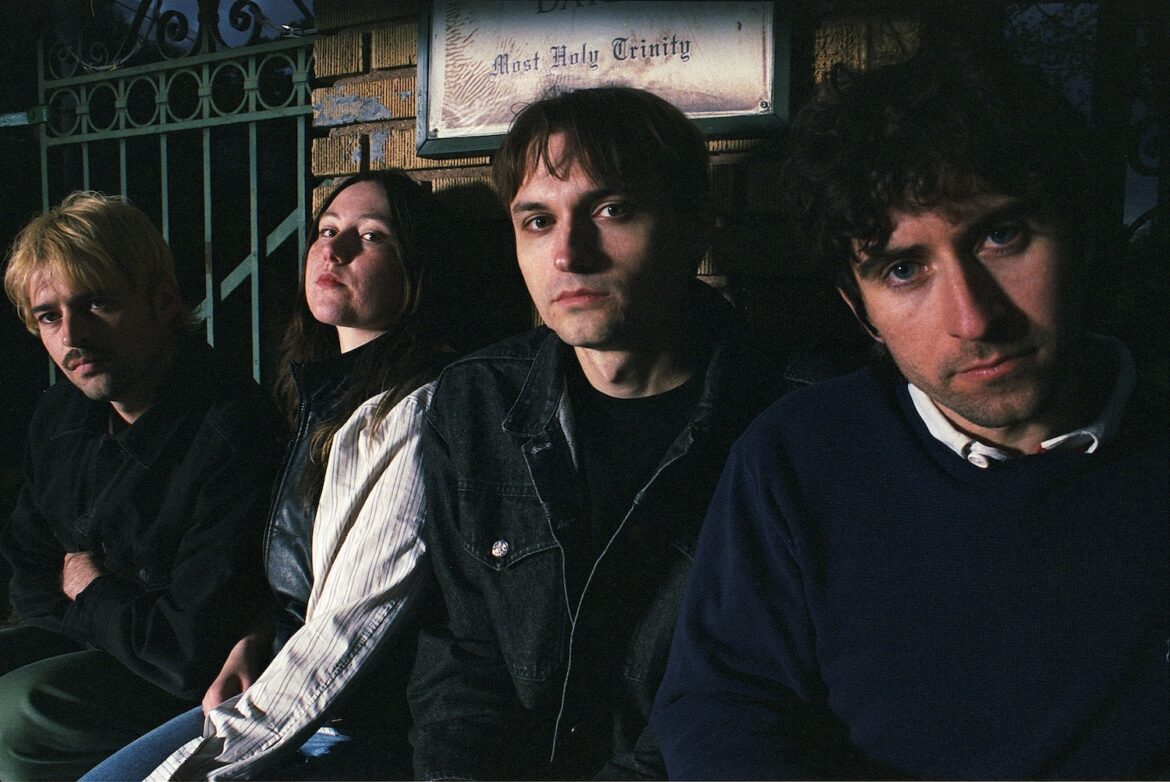
NYC indie rock band Closebye channel hard-won recovery into “No Troubles Left At All,” a hazy, hypnotic exhale whose quietly radiant glow captures the thrill of surviving the hardest part and stepping together into whatever comes next.
 follow our Today’s Song(s) playlist


Stream: “No Troubles Left At All” – Closebye
Closebye’s “No Troubles Left At All” washes over the body like a dream you can still feel after waking – warm, shadowed, and impossible to shake.
Its hypnotic pull turns a private exhale into an atmosphere listeners can disappear inside. Brooding bass and softly circling guitars hold the song in a suspended glow, while Jonah Smith sings from the other side of a difficult year with wonder still caught in his throat. The result is a vivid alternative reverie that lets relief arrive slowly, spreading through the ears and bloodstream until the title’s impossible promise begins to sound true.
Under the bed where you find me
Under the birthmark scar on your brow
Quick with the look so I know that you’re ready
You’re feeling my pulse with your ear to the ground
That’s what you can do
That’s what you can do
You play ball
It feels like our luck is changing
I wasn’t half then what I am now
Take off your pants
and our colors are blending
It’s over and done and we’re out
Released alongside its B-side, “Ann Arbor,” “No Troubles Left At All” follows Closebye’s 2024 debut album, Hammer of My Own, and arrives after the band spent more than a year completing their as-yet-unannounced next record. It also continues a history stretching back nearly a decade: Atwood first encountered Smith and guitarist Julian Smith through their former project Pueblo, premiering “Nausea” in 2017. Now joined by Margaux Bouchegnies and Simon Clinton, Closebye have grown into what Smith calls “a band in the truest sense of the word,” held together by shared history, deep friendship, and a collective desire to create music listeners can enter and inhabit.

That sense of togetherness marks a real evolution. Closebye began recording Hammer of My Own before Bouchegnies and Clinton had officially joined, at a point when Smith and Julian Smith were still unsure where the project was headed. Producer Ian “Skinny” Salazar helped pull the record into focus, but nearly two years later, the dynamic has changed from the inside out: Four musicians now share the weight, the vision, and the responsibility for deciding what Closebye can become. The friendship Smith describes is not background color; it has become part of the band’s creative architecture.
“No Troubles Left At All” appeared just when Closebye thought that creative season had ended. Alone in his apartment one night in March, with his wife away for the weekend, Smith found himself reflecting on how far they had come together. He stayed awake until seven the next morning writing and recording the demo in a single rush; the vocal captured that night remains on the finished song, preserving the tenderness and astonishment of a realization unfolding in real time.
“I think there’s something emotionally potent about that performance because I was experiencing those words in real time,” Smith tells Atwood Magazine. “I was writing, singing, and recording all at once. We ended up re-recording most of what I tracked on the demo that night, but we kept those vocals.”
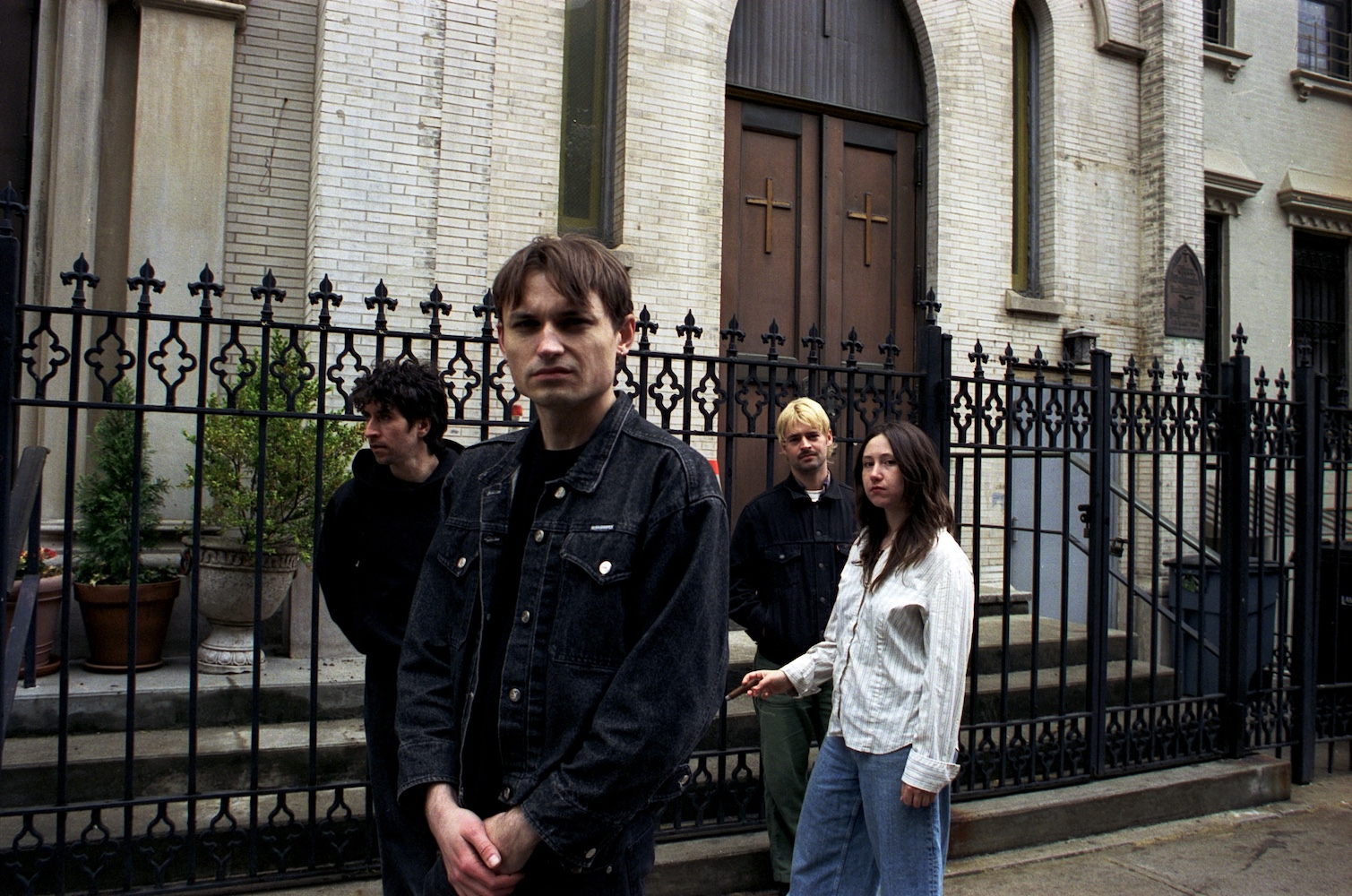
The band had finished its next album only a month earlier, and by any conventional release-cycle logic, “No Troubles Left At All” should have waited.
Closebye decided the song mattered more than the schedule.
“When I bounced the demo and sent it to the band, I think we all had the same reaction, mainly that we couldn’t sit on this song for a year or two while we waited for the next album cycle,” Smith recalls. “So it was basically like, ‘F*** it, here we go again, back to the studio, back on our bullshit,’ but in a way it was a healthy realization for us. We don’t have to treat every song like it belongs to a two-year album campaign. If something feels immediate and of the moment, we can just make it and put it out if we feel like it.”
Releasing it immediately preserves more than spontaneity. It lets “No Troubles Left At All” belong completely to the moment that produced it – a song about beginning again released by a band giving itself permission to work differently.
That’s what I can do
That’s what I can do
I play ball
That’s what we can do…
We got no troubles left at all
That immediacy is everywhere in the recording. Smith’s voice hovers close to the surface, intimate enough to catch every breath, while the arrangement gathers around him without disturbing the spell. Even as the beat settles into a buoyant pulse, shadows flicker along the song’s edges; its softness carries the memory of what had to be endured before this moment became possible. Closebye make renewal sound lived-in rather than pristine, allowing joy and old pain to occupy the same hazy space.
Smith wrote the song during his first year of sobriety, after months spent confronting feelings he had long suppressed. Much of his earlier work emerged from his lowest points; “No Troubles Left At All,” by contrast, may be the first song he has written from within recovery. Its central lyric – “Had to decide if my past was my last life” – catches him at the threshold between an existence he understands and an unknown future he has chosen to enter.
I was alone when you met me
Asleep at the dive, I was there for a year
Had to decide if my past was my last life
You gas me up and you force me to steer
But that’s what you can do
That’s what you can do
You play ball
That’s what we can do
That’s what we can –
“It represents being at the crossroads of an old life and a new life and making the choice not to give up,” Smith explains. “If I continued on the path I was on, I have a pretty good idea of what that life looks like. But if I decided to take a different path, I had no idea what was going to happen, and stepping into the unknown was exciting to me.”
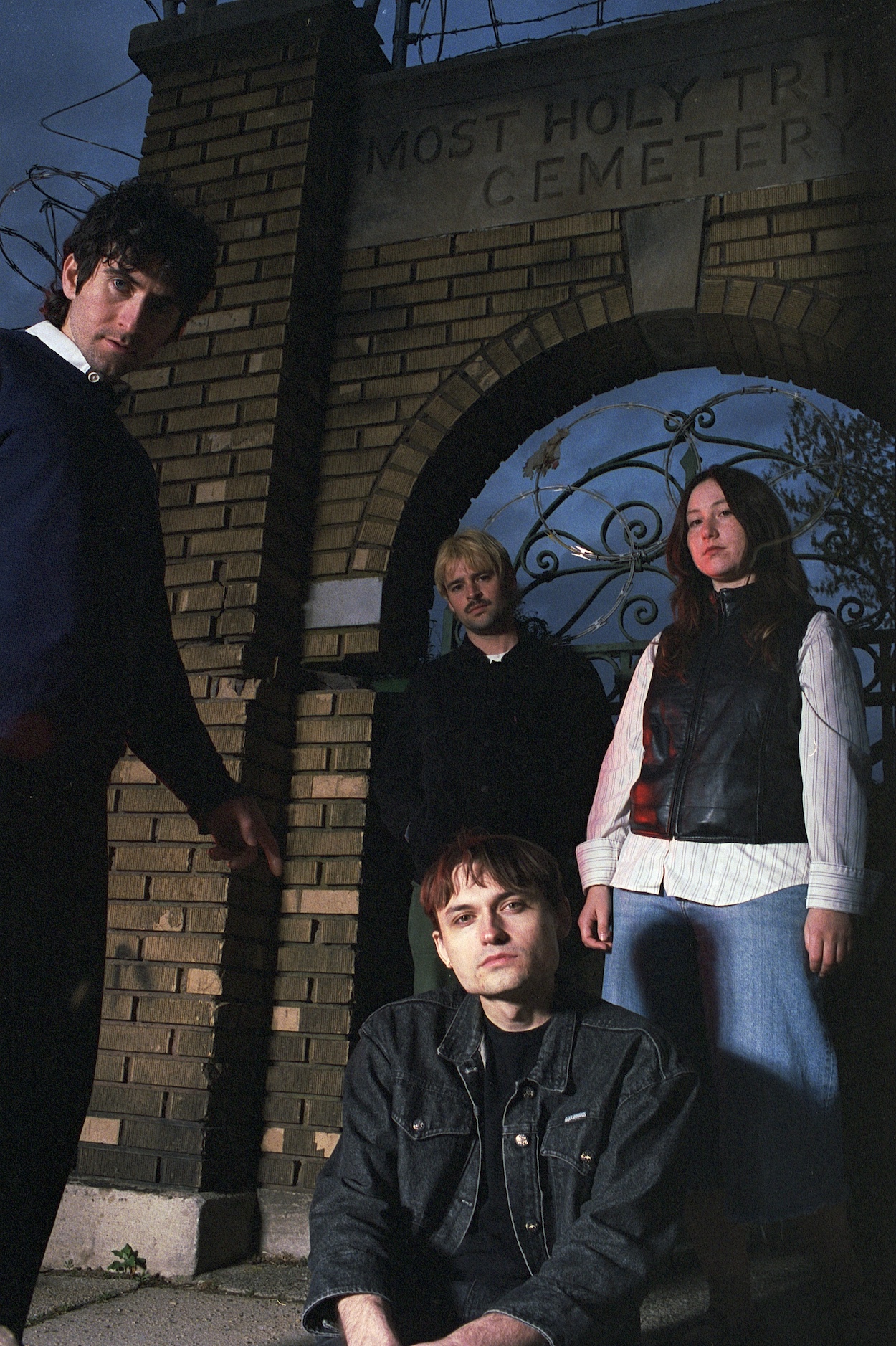
The chorus is earnest, though Smith knows its claim cannot remain literally true forever.
“We got no troubles left at all.” Depression and anxiety have not vanished; the lyric preserves a smaller and perhaps more valuable victory – the sudden knowledge that some of life has begun to click, that the hardest stretch has passed, and that survival can finally open into possibility. “It’s more like a celebratory exhale,” he says. “This song just tries to preserve a feeling of relief that you’ve got some shit figured out.”
We got no troubles left at all
We got no troubles left at all
Its companion song complicates that exhale in all the right ways. Written within the same two-week burst, “Ann Arbor” trades the former track’s compact pop buoyancy for a sprawling, road-worn ballad about the stranger middle stages of change – the stretches where growth arrives without fireworks, and moving forward can be painful, mundane, or simply hard to recognize while it is happening.
The song began during a drive Smith and his wife took from New York to Ann Arbor. Somewhere along the way, he opened his Notes app and typed, “It’s a real weird time in my life.” “Profound poetry, I know,” he jokes. Back home, the rest came quickly, including the wonderfully dry rejoinder “But when has it not been?” Where “No Troubles Left At All” captures the exhilaration of realizing you survived, “Ann Arbor” lingers in the less cinematic truth that a new life still has to be lived one ordinary day at a time.
“Both songs emerged within the same two week period, and they just feel inherently related,” Smith explains. “Both sonically and emotionally. I also think they compliment each other nicely. ‘No Troubles’ is this pithy, upbeat pop song, and ‘Ann Arbor’ is kind of a sprawling ballad. Putting them together as an A/B single felt like a nice way to show two different sides of Closebye.”
Recorded with engineer Tyler Postiglione at Thump Recording, “No Troubles Left At All” and “Ann Arbor” are also the first songs Closebye have self-produced as a band. That independence brings the former’s private origin into fuller focus without polishing away its nocturnal intimacy. The four musicians expand Smith’s early-morning revelation into a communal experience, giving his second chance a rhythm others can borrow and a chorus large enough to step inside.
Self-production also shifts the decision-making fully into the room. Without an outside producer steering the sessions, Closebye had to decide for themselves which imperfections carried feeling, which ideas deserved space, and when a song was truly finished. Bouchegnies came away with her faith in the group strengthened: “For me it really reinforced the trust I have in everyone’s taste, vision, and mindset in making it happen. I’m super psyched to do more of this and feel like it’s further opened our capacity to listen to and share ideas with each other.”
Clinton describes the process even more simply: “Everyone [was] tossing the producer hat around, and letting the best ideas stick.”
The band’s democratic instinct feels especially significant for a group whose ambitions have grown alongside its chemistry. Smith cites Radiohead, The Beatles, and The 1975 as north stars not because Closebye want to sound like any of them, but because each has built accessible songs with entire worlds hiding beneath the surface. Bouchegnies hears a similar possibility opening in Smith’s writing now – a surreal, uncanny streak that the band can shape without sacrificing immediacy. “No Troubles Left At All” embodies that balance beautifully: Its chorus lands in seconds, but the deeper you live with the song, the stranger, sadder, and more hopeful its little universe becomes.
“I truly hope people see themselves in these songs,” Smith shares. “‘No Troubles’ specifically, I hope it makes people confident when they hear it, and I hope it offers a feeling of renewal after a difficult period, like, ‘My life isn’t over; I survived this, and I’m just getting started.’ That is how I feel when I hear it now.”
(Under the bed where you find me
Under the birthmark scar on your brow
Quick with the look so I know that you’re ready
You get on top when you know that I’m down)
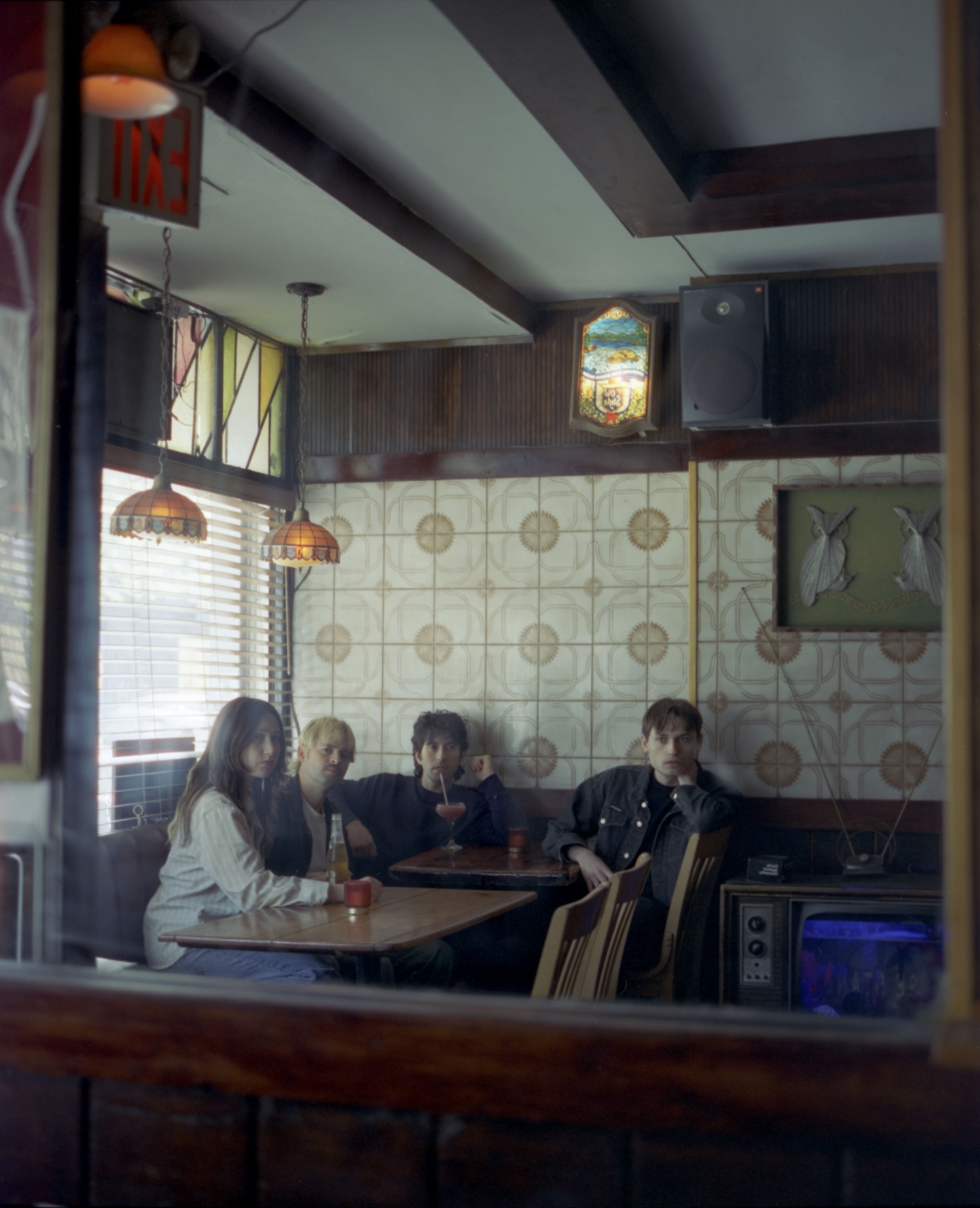
The invitation at the song’s center is what makes “No Troubles Left At All” so enchanting.
Closebye do more than document one person’s recovery; they preserve the instant when heaviness loosens its grip and the future begins breathing again. The song moves with the soft force of a tide, enveloping listeners in its low-lit world until its relief becomes ours as well. Haunting, tender, and quietly radiant, it leaves behind the rarest kind of optimism: hard-won hope that still remembers every shadow it crossed to reach the light.
And increasingly, that renewal belongs to the band as much as the person singing. Closebye have an album already finished, yet their newest songs arrived outside its boundaries and opened another path anyway. They followed because the music asked them to – trusting impulse over timetable, one another over hierarchy, and possibility over certainty. “No Troubles Left At All” may preserve one extraordinary moment of relief, but the larger story is still moving.
For Closebye, getting through the hardest part has created room to imagine what comes next. Atwood Magazine recently caught up with the band to trace this moment of personal and creative reinvention – and how four longtime friends are learning to build their future together, one strange, beautiful song at a time.
— —
:: stream/purchase No Troubles Left At All here ::
:: connect with Closebye here ::
— —
Stream: “No Troubles Left At All” – Closebye
A CONVERSATION WITH CLOSEBYE

Atwood Magazine: Closebye, hello and thank you for your time! For those who are just discovering you today through this writeup, what do you want them to know about you and your music?
Jonah: What’s up, Mitch! For anyone who’s just discovering us, I think the biggest thing I’d want them to know is that we’re a band in the truest sense of the word, and this band is anchored by the friendship and history between us – everything we’ve been through together and a shared vision of where we see the band going. At the risk of sounding a little corny, I hope people feel like they’re being invited into something. The music is inseparable from the relationships behind it, and I think that’s why it feels the way it does. We’re really ambitious, and we see this as a long road rather than a passing moment. We hope people find something of themselves in these songs and decide to come along for the ride.
Who are some of your musical north stars, and what are you most excited about the music you’re making today?
Jonah: We all have our individual influences, but if we’re talking about north stars for the band as a whole, I’d point to Radiohead, The Beatles and maybe The 1975. They’re all bands that have managed to make music that is accessible on this grand pop scale while also building these rich worlds beneath the surface. I love the idea of making music that works on multiple levels like that. I think we’re a band that you can enjoy casually but there’s an opportunity to go deeper if you wish to. And I’m simply excited about the music we’re making because it’s the best music we’ve ever made, and our collaborative dynamic has never been better.
Margaux: I think Jonah nailed it with the north stars for this band. I am most excited by the potential for world building with the music we’re making right now…. Jonah really has a way of tapping into something kind of surreal / uncanny with his songwriting while also making it accessible and inviting… it’s been so fun to shape the songs together and I just feel so inspired by what’s ahead.
It’s been nearly two years since the release of your debut album, Hammer of My Own. What’s your relationship with that album and its songs today?
Jonah: So many feelings about Hammer, but I think it’s a cool album. If you ask me tomorrow I might have a different answer. We started recording it before Margaux and Simon officially joined the band, and Julian and I were a bit lost and unsure about the future of the project. Ian “Skinny” Salazar produced the record, and he brought so much passion and ingenuity to the studio environment, and his energy was definitely the kick in the ass that I needed both creatively and personally at the time. We ended up working on the album for two years, and at times the process was so fun and rewarding and other times it was heartbreaking and frustrating. But I’m proud of those songs and the risks we took in the studio, and the risk we took with the album cover. And It’s been great to see the album connect with people far and wide, and songs like “Two Knocks” and “Pilates” have sort of become our signature live songs. I hope the album continues to reach new people who resonate with it.
“No Troubles Left At All” came right after you had finished your next album, when you were supposed to be taking a break from the studio. What hit you that night, and why did this song feel so immediate?
Jonah: This is true! The timing of it was really funny. I’ve gone through long stretches where I haven’t written at all. Like, I literally didn’t write a single song in 2024. Then it all came rushing back last year. We spent most of 2025 in and out of the studio making our next album, and we finished it this year in February. It felt like the natural conclusion of a long season of writing and recording for the band, and I was at peace with that and ready for the break.
Then one night in March my wife was out of town and I had the apartment to myself for the weekend. It was the first time in a long time that we were apart for multiple days, and I was getting reflective and emotional, thinking about how far we have come, feeling optimistic and proud of both of us. That night “No Troubles” just fell in my lap, I started working on it and couldn’t stop, and because I was home alone, I was able to get crazy and make a racket until 7 am when I finished it. The vocals I recorded that night are the vocals you hear on the finished recording. I think there’s something emotionally potent about that performance because I was experiencing those words in real time. I was writing, singing, and recording all at once. We ended up re-recording most of what I tracked on the demo that night, but we kept those vocals.
When I bounced the demo and sent it to the band, I think we all had the same reaction, mainly that we couldn’t sit on this song for a year or two while we waited for the next album cycle. So it was basically like, “F*** it, here we go again, back to the studio, back on our bullshit,” but in a way it was a healthy realization for us. We don’t have to treat every song like it belongs to a two-year album campaign. If something feels immediate and of the moment, we can just make it and put it out if we feel like it.
Jonah, you’ve said “No Troubles Left At All” is about your first year of sobriety, and the feeling that you’ve made it through the hardest part. How did you find your way into writing from that place – and what does this song mean, for you personally?
Jonah: I feel like the batch of songs I wrote prior to “No Troubles”, and to be honest, most songs I’ve written, have been from the perspective of my lowest points in life. I decided to stop drinking last year, and the early months after I stopped were some of the most painful, because I had to sit with thoughts and feelings I had suppressed for years. That was really hard, but I suppose that night last March, I was reflecting on all the ways in which my life was better than it was all those months ago. So, I think “No Troubles” is quite possibly the first song I’ve ever written from the standpoint of recovery.
The chorus feels almost impossible not to believe: “We got no troubles left at all.” Does that line feel like a celebration to you, or more like something you’re trying to convince yourself is true?
Jonah: A couple of people have asked me this, and they’re surprised when I say that line is earnest. It’s meant to be taken at face value, but it’s not a definitive statement about my entire life. It’s more like a celebratory exhale. Obviously, it could never be fully true. When I zoom out of that moment, pangs of depression, anxiety are still a daily fight, but this song just tries to preserve a feeling of relief that you’ve got some shit figured out.
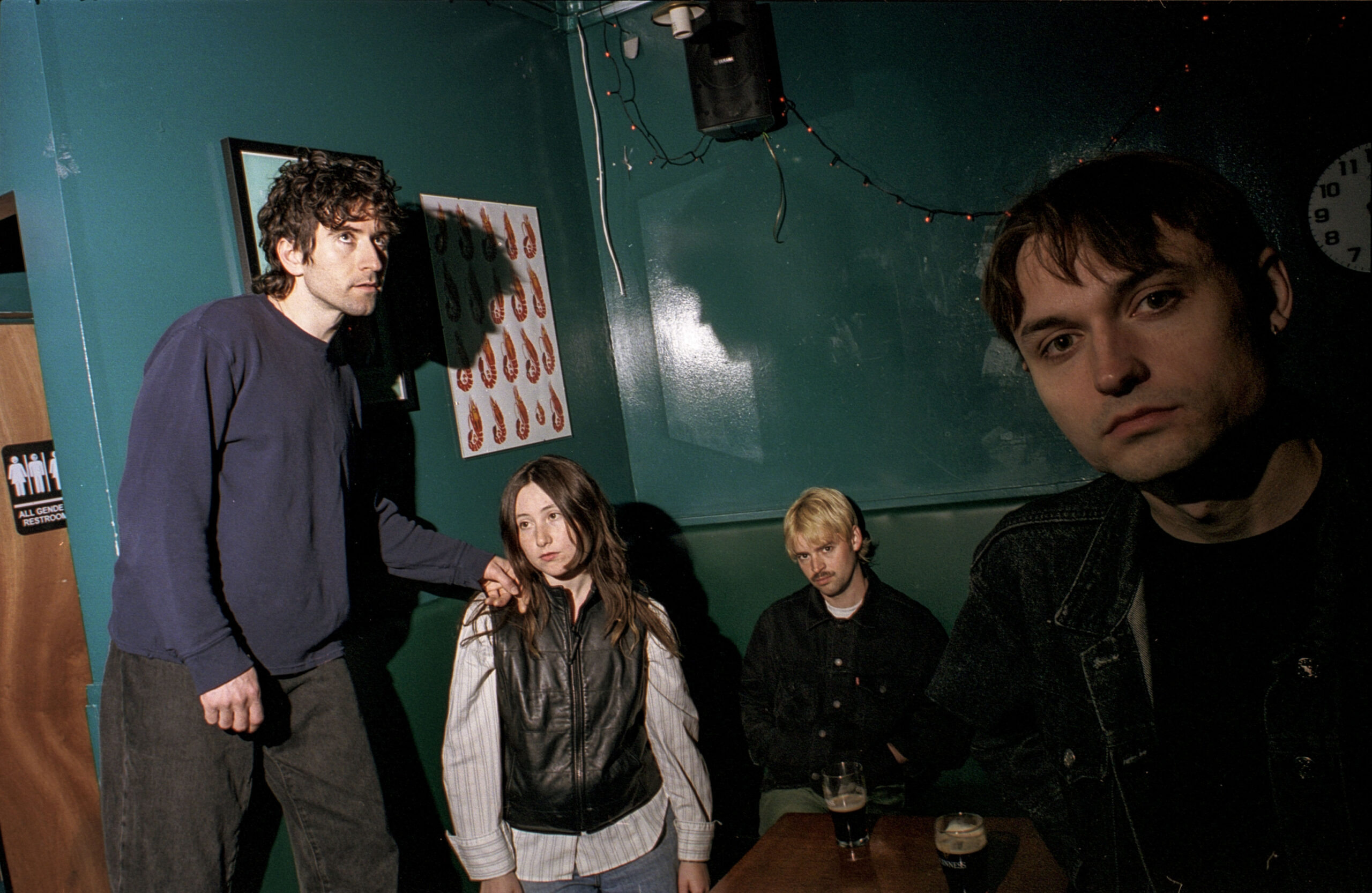
“No Troubles Left At All” and “Ann Arbor” came out of the same creative burst. Why do they feel right together as an A/B single?
Jonah: Both songs emerged within the same two week period, and they just feel inherently related. Both sonically and emotionally. I also think they compliment each other nicely. “No Troubles” is this pithy, upbeat pop song, and “Ann Arbor” is kind of a sprawling ballad. Putting them together as an A/B single felt like a nice way to show two different sides of Closebye.
“Ann Arbor” feels more restless and road-worn, especially in the line, “It’s a real weird time in my life / But when has it not been?” What’s the story behind this song?
Jonah: “Ann Arbor” is more matter-of-fact and directly autobiographical than usual for me as a lyricist. My wife and I were driving from New York to Ann Arbor, and at one point I opened my Notes app and typed, “It’s a real weird time in my life.” Profound poetry, I know.
When I got back to NYC with the title and that single line, the rest of the song came out easily. I think the song speaks to a sort of in-between period where growth and change doesn’t feel dramatic or triumphant but more so just a little painful, maybe a little boring.
These are the first songs you’ve ever self-produced as a band. How did that change the way you listened to each other?
Margaux: It felt so natural… going into it I was really curious how we would handle the tight turn around without a formal producer steering ship but I’m super proud of what we achieved. For me it really reinforced the trust I have in everyone’s taste, vision, and mindset in making it happen. I’m super psyched to do more of this and feel like it’s further opened our capacity to listen to and share ideas with each other.
Simon: For these tracks, Jonah came to us with such compelling demos, it really was about listening to what made those demos special and figuring out how to partially bring them out of that lofi world and fully realize the arrangements. So I think listening to each other in the studio was about everyone tossing the producer hat around, and letting the best ideas stick.
Julian: Having worked with producers on all of our other releases, self producing was a very liberating and inspiring process. It required us to trust in our vision and have faith in our ability to realize it. Proving to ourselves that we can finish something on our own that meets our standards was quite liberating and I think we all feel inspired to work this way more in the future.
Margaux, you directed the “No Troubles Left At All” video. What did you want the visual world of the song to bring out?
Margaux: Firstly I just want to say how pumped I am on getting the chance to do this. I’ve been so visually inspired by the music Jonah’s been writing lately and it was just the coolest thing ever to fully realize the idea I had for a music video. So I really appreciate having the band’s trust in doing that. I think collectively we are the strongest and most committed we’ve ever been to this project, and I wanted to exemplify that through this visual world. I think it’s also important to know that we are really good at doing soccer tricks.
This summer you toured with Kevian Kraemer and Lunar Vacation, and you’re also playing Levitation Festival in the fall. How does it feel to bring this new music into a live setting right now?
Margaux: It feels amazing! I am over the moon. I love playing this music so much, it’s literally my favorite thing to do. I can’t wait to share it with more people and am super grateful for that opportunity.
Simon: I think we all get the most excited to play the songs in our discography with a strong rhythmic backbone, so starting to play “No Troubles” has been super fun. But it’s always a huge question mark how new tracks are going to resonate with people live. I’m pretty excited to get that crowd feedback and energy at these shows. If people don’t like the new songs we know we can always quit music!
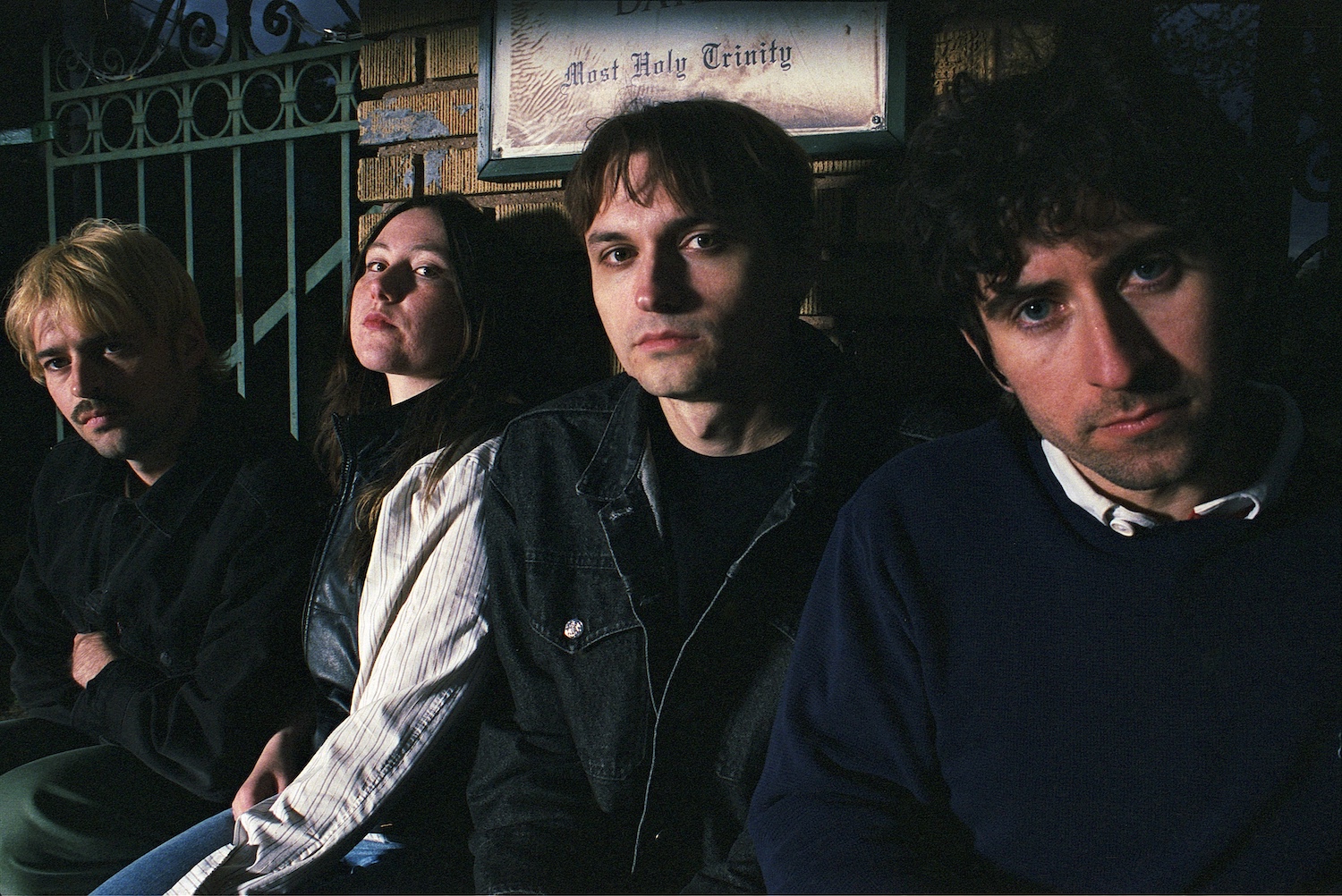
What do you hope listeners take away from “No Troubles Left At All” and “Ann Arbor,” and what have you taken away from creating them and now putting them out?
Jonah: I truly hope people see themselves in these songs. “No Troubles” specifically, I hope it makes people confident when they hear it, and I hope it offers a feeling of renewal after a difficult period, like “my life isn’t over, I survived this and I’m just getting started.” That is how I feel when I hear it now.
In the spirit of paying it forward, who are you listening to these days that you’d recommend to our readers?
Jonah: Some of my current favorites are Kate Davis, Léna Bartels, Robber Robber, Talk Talk, Chanel Beads, Addison Rae, Cutouts, Renny Conti
Margaux: I’ve been loving the new Broken Social Scene album…. I find myself always putting that on… also really into Other Joe who is based in Australia.. I found him last year through Nina Protocol (RIP 😭) and really love his album Flawless. He actually just put out a new record this past week called The Best is Yet to Come so I am excited to dive into that. Boards of Canada are another favorite for me, their new album is in my heavy rotation… Also very obsessed with Sean Mullins and his album The Paradise Lounge. Extremely swagful.
Simon: I’ve been listening to What’s Our Podcast? with Beck and Kyle. They make music sometimes, so maybe that counts. The more musical my life is, the more I seem to listen to podcasts.
— —
:: stream/purchase No Troubles Left At All here ::
:: connect with Closebye here ::
— —
Stream: “No Troubles Left At All” – Closebye
— — — —
Connect to Closebye on
Facebook, 𝕏, TikTok, Instagram
Discover new music on Atwood Magazine
© Conor Henry McNamara
 © Conor Henry McNamara
:: Today’s Song(s) ::
follow our daily playlist on Spotify
:: Stream Closebye ::