Atwood Magazine is excited to share our Editor’s Picks column, written and curated by Editor-in-Chief Mitch Mosk. Every week, Mitch will share a collection of songs, albums, and artists who have caught his ears, eyes, and heart. There is so much incredible music out there just waiting to be heard, and all it takes from us is an open mind and a willingness to listen. Through our Editor’s Picks, we hope to shine a light on our own music discoveries and showcase a diverse array of new and recent releases.
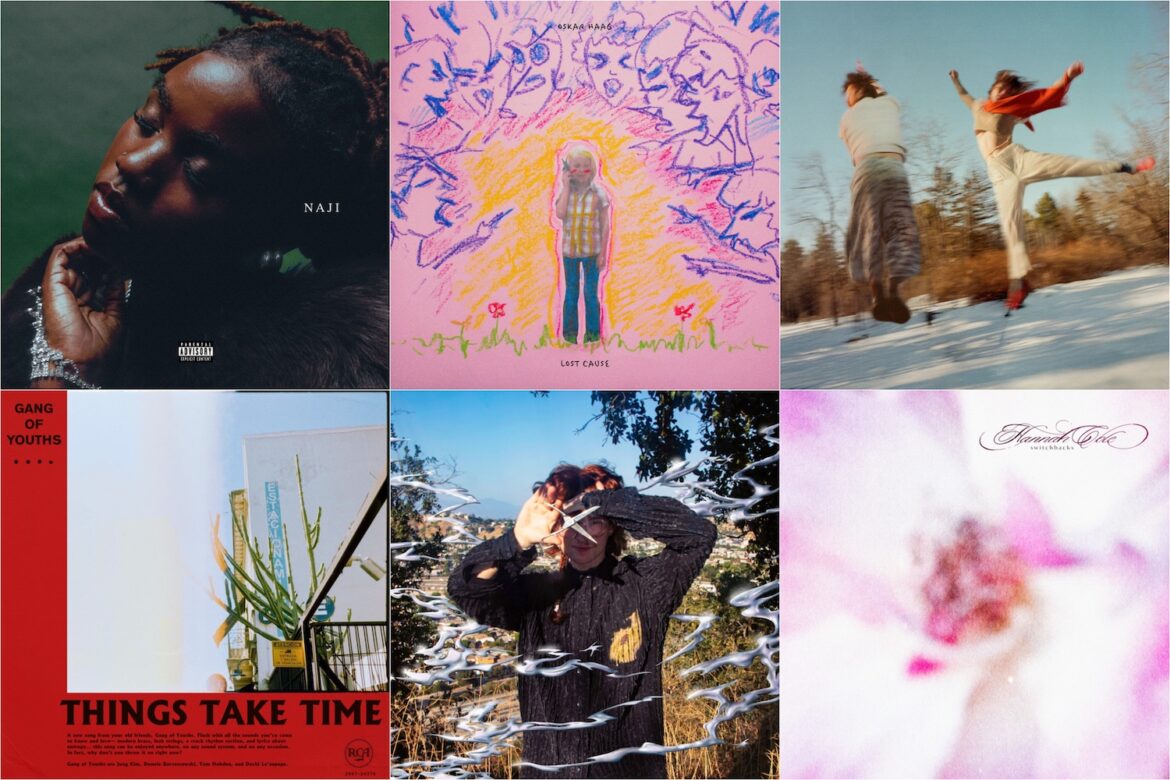
This week’s Editor’s Picks features Kareen Lomax, Oskar Haag, Gang of Youths, Babehoven, Cavetown, and Hannah Cole!

 follow EDITOR’S PICKS on Spotify

“OFFLINE”
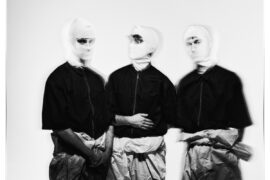
by Kareen LomaxEverybody wants access. “OFFLINE” is the sound of taking it back.
Kareen Lomax draws her boundary at full speed. The Atlanta-raised, Los Angeles-based artist’s electrifying single barrels forward on a hypnotic drum pulse that never seems to loosen its grip, propulsive and physical enough to make disconnection sound like liberation. Against it, Lomax is incandescent. Her voice smolders and surges, aches and roars, carrying a visceral intensity that turns every declaration into something felt in the body. “OFFLINE” is fierce without becoming brittle, enchanting without sacrificing its bite – an intoxicating rush of rhythm, heat, and self-possession from an artist deciding exactly how much of herself the outside world gets to have.
OFFLINE
I took a break from the internet
So I could spend time to connect to
REAL LIFE
You gangsta when you sending text
Get you blocked with the disrespect
OFFLINE
I took a break for my intellect
Got tired of the disconnect from
REAL LIFE
Make you feel like your overslept
Then I’m back like I never left

The premise is direct because the problem is pervasive. Phones vibrate. Notifications multiply. Opinions arrive uninvited. People who once had to knock on your door can now reach into your day almost whenever they please. Lomax’s answer is not to negotiate with the noise but to interrupt the connection entirely. “I think going offline meant realizing that everybody doesn’t need access to me all the time,” she explains. “There’s so much noise constantly coming at us – notifications, opinions, information, people – and at some point you can lose touch with what you actually think or feel. For me, it was about disconnecting from some of that noise long enough to be present in my actual life.”
Presence is an especially potent subject for an artist who has spent years moving through other people’s music. Lomax’s voice has appeared across five Diplo singles, including the UK Top 5 hit “Looking For Me” with Paul Woolford, while her songwriting credits extend to artists including Zayn Malik, Leon Bridges, Maroon 5, and Syd. She has released music with Rudimental, Kavinsky, and AlunaGeorge, too, steadily building a career whose reach has often extended farther than her own name. Now her debut album NAJI, out September 18 via Music is Fun, puts Lomax fully at the center of the frame.
The name itself makes that arrival personal. Naji is Lomax’s first name; Kareen, her middle name, is what most people have always called her and what the public knows through her music. Over time, she began to understand those names almost as different ways of encountering the same person. “Kareen Lomax became the artist, the person people know through the music, and NAJI felt like an opportunity to get underneath that a little bit,” she says. The album opens the door onto family, relationships, faith, grief, and the questions of belonging and self-worth that sharpened after the deaths of her adopted sister in 2020 and her father the following year. Rather than flatten those experiences into one coherent version of herself, Lomax lets the contradictions remain visible.
“There’s a lot of choosing myself on this album and being pretty unapologetic about saying, ‘This is who I am. This is what happened to me. This is what you need to know.’”
“OFFLINE” belongs to the harder edge of that self-reckoning. Producer Daoud – Lomax’s longtime collaborator dating back to their first song together, “Get Right,” from 2021’s Hard Feelings EP – sent her the loop, and its energy immediately disrupted the musical world they had been building. “It was completely different from everything we had been doing for the project, which is what excited me about it,” Lomax recalls. “It felt like a left turn, but in a way that immediately stood out.” The lyric came afterward. As she puts it plainly: “The production told me where to go.”
You can hear why. The beat seems to have its own bloodstream, constantly pulsing underneath the song and pressing Lomax forward. Rather than cushioning her vocal, Daoud’s production gives her something to push against; the tension between that relentless rhythmic motion and the sheer force of her performance creates the track’s singular rush. Lomax moves through the song with tremendous control, stretching phrases until they smolder before snapping back into the beat, then suddenly opening her voice into full-throated bursts of passion. Even when the lyric is about withdrawing, nothing in the performance retreats. “OFFLINE” keeps charging.
Only fuego cause I am the hotstepper
Ain’t no mistake. I am the next era
And they know I’m the one
Cause they 2 and three 3 behind
Not gon rush the process
You gon be alright
Give it to em deep
Now they drownin to survive
Make you see yo
Askin is this really life
The swagger matters. Going offline here is not a wounded disappearance or a retreat from a world Lomax cannot handle; it is a decision made from confidence. She can shut the door because she knows who is standing behind it. Later, she draws perhaps the song’s funniest and sharpest boundary with “I’m still not gonna answer to no algorithm,” turning the faceless machinery deciding what we see, hear, buy, and desire into just another caller she has no obligation to pick up for.
That refusal connects “OFFLINE” to a thread Lomax has been pulling for years. Atwood previously heard it in 2024’s “Remedy,” her radiant self-love anthem built around the declaration “Fragile heart, I’ma tread with it carefully ’cause I love myself, that’s the remedy.” “OFFLINE” arrives with considerably more teeth, but the instinct underneath is related: Protect what is yours. Know what deserves your energy. Build a life that does not require everybody else’s approval.
And I
I feel my system going down slow
You can’t, you can’t
You can’t reach me I’m
OFFLINE
I took a break from the internet
So I could spend time to connect to
REAL LIFE
You gangsta when you sending text
Get you blocked with the disrespect
OFFLINE
I took a break for my intellect
Got tired of the disconnect from
REAL LIFE
Make you feel like your overslept
Then I’m back like I never left
Lomax does not see toughness and tenderness as competing versions of herself. “I can be really tender and sensitive, but I’m also very sure of myself and stubborn about certain things,” she says. “I don’t think those things contradict each other. If anything, I think the toughness sometimes comes from protecting the softer parts of myself.” That distinction unlocks “OFFLINE.” The song’s heat is not a rejection of vulnerability; it is the perimeter around it.
The same duality courses through NAJI. Created over several years between Los Angeles and New York, the album moves through alternative R&B, ambient soul, indie pop, and electronic textures while documenting a life that refused to stay still long enough for Lomax to summarize neatly. She hears herself grieving on some songs, falling in love on others, questioning and growing throughout. “I’m not even the exact same person from song to song,” she says. For a debut album, that lack of fixedness is its own statement: Lomax introduces herself not as a finished identity, but as somebody giving herself permission to contain every version at once.
Align my chakras up like I’m some kinda docta
White girl energy, cant speak before the matcha
Been a while since you seen me
I am not her
My alter ego hella mean you gotta watch her
I meditate daily to deal with you bitches
I’ll sage ya house from the floor to the kitchen
Ain’t taking calls but Ill give you the business
I’m still not gonna answer to no algorithm
Even the album’s creation required that kind of faith. Lomax recorded the project herself, largely in home studios, and admits there were points when she did not know whether it would ever be finished. Grief had helped set the journey in motion, and the closing track eventually brings that history full circle through a voicemail from her late father. NAJI is therefore larger than a declaration of arrival; it is a record about continuing long enough to discover who arrived.
“OFFLINE” captures that process at its most invigorating. Its beat keeps pulsing because Lomax is still moving. Her voice keeps climbing because disconnecting from the noise has not made her smaller; it has returned her attention to the life happening underneath it. The song does not romanticize disappearing. It celebrates choosing where presence belongs.
Everybody wants access. Kareen Lomax is learning that access to her is hers to give – and hers to take away. She cuts the signal, keeps the pulse, and sounds more vividly, viscerally alive with every second the outside world cannot reach her.
OFFLINE
I took a break from the internet
So I could spend time to connect to
REAL LIFE
You gangsta when you sending text
Get you blocked with the disrespect
OFFLINE
I took a break for my intellect
Got tired of the disconnect from
REAL LIFE
Make you feel like your overslept
Then I’m back like I never left
“Lost Cause”
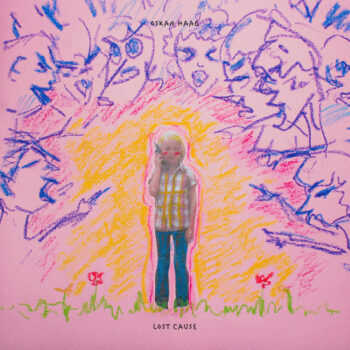
by Oskar HaagAdults called Oskar Haag a lost cause when he was still a child.
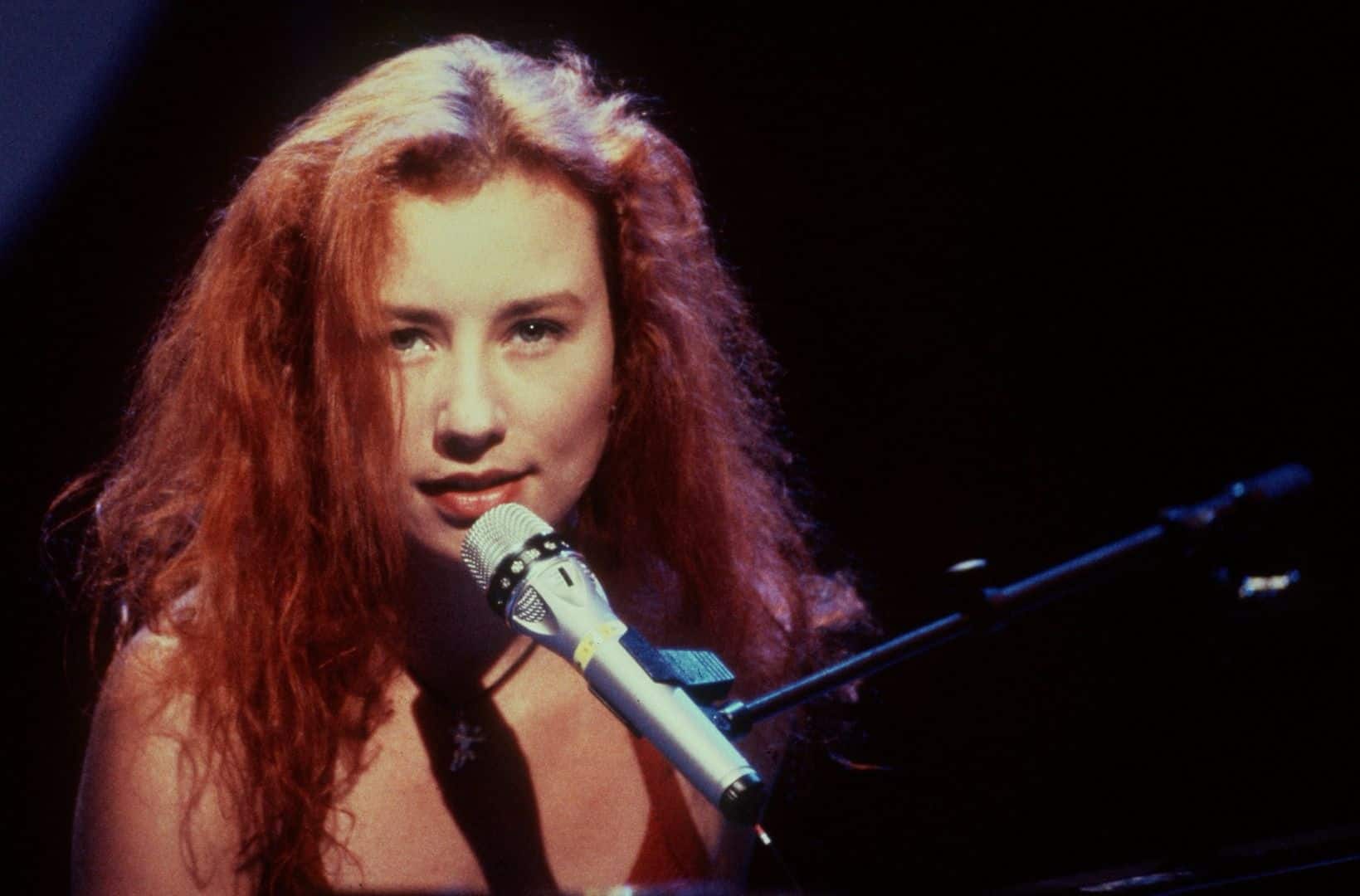
On his spellbinding song “Lost Cause,” he refuses to return the cruelty. The Austrian singer/songwriter’s spectacular incantation answers judgment with empathy, hurt with heat, and condescension with a kind of radiant theatricality that makes the whole thing instantly irresistible. An accordion churns almost nonstop at the song’s center, establishing its whimsical, old-world pulse from the first moments and carrying Haag’s aching, emotionally charged voice through every rise and turn. There is drama everywhere – in his delivery, in the melody’s unexpected flourishes, in the way the arrangement seems to glow brighter the more wounded the words become – but never empty spectacle. “Lost Cause” burns because every bit of its color is attached to something real.
There’s been a robbery in my town
They took all the children
and made them grow up
I’m no good for nothing I’m a lost cause
You say I’m alone I’m not the only one
The robbery Haag describes is devastating precisely because it is so ordinary. Children grow up; adults disappoint them; somebody older decides who a young person is allowed to become. Haag knows the latter intimately. As a teenager, he says authority figures – teachers especially – told him he would never amount to anything and branded him a lost cause. Rather than preserve their verdict as a wound, he eventually found a more complicated way of looking back at the people who handed it down. “I know that I’m not a lost cause, nobody and especially no child is!” Haag says. “Those people who said these things, were also once children who were hurt, so in a weird way, I kind of feel for them.”
His compassion gives “Lost Cause” its most surprising turn. Haag does not soften what happened or pretend those adults did no damage; “How dare you say this to a kid / Just cause you wouldn’t chase your dreams” is an accusation with teeth. Yet instead of leaving them frozen as villains, he peers through their authority and sees the hurt underneath it: “You’re just another broken child / Oh my broken child.” The reversal is breathtaking. A song that could have been pure revenge becomes an act of recognition, asking what happens when wounded children grow into adults who begin passing their own disappointments down.
How dare you say this to a kid
Just cause you wouldn’t chase your dreams
To blame you just would not be right
You’re just another broken child
Oh my broken child
Haag’s own story makes that refusal to shrink all the more striking. Now 20, he grew up in Austria, taught himself piano, guitar, and singing, dropped out of school at 16, and moved to Vienna to pursue music. His ascent came quickly: His 2023 debut Teenage Lullabies, which he wrote and produced himself, reached No. 6 on the Austrian album chart, and he became the youngest artist ever to win an Amadeus Award when he received the listener-supported FM4 Award at 17. Music is only one part of his creative life – Haag is also an actor and dancer who has performed Shakespeare at Vienna’s Burgtheater and appeared in film – but all those disciplines seem to converge in the poised, dramatic physicality of the music he makes.
“I’m not a technically perfect singer and don’t make squeaky clean pop music,” Haag says. “I find beauty in imperfection, I find it hard to stick to one sound, which I also don’t want to, and I’d say I know how to write a good song. My music is all about making people feel something.”
“Lost Cause” proves the point almost immediately. Haag’s voice is not beautiful because it is immaculate; it is beautiful because it sounds alive inside the song. He aches, leans, pushes, and flashes with feeling while the accordion keeps turning beneath him, at once jaunty and urgent. The melody carries a playful European flourish, but the rhythm underneath it never lets the song settle into quaintness. Everything keeps moving. The accordion churns; Haag’s phrasing flares; the arrangement radiates a warmth that makes even the song’s sharpest confrontations feel strangely inviting. It’s catchy without sanding off its strangeness, theatrical without becoming mannered, and emotionally direct without losing its mystery.
Look into the mirror tell me what you see
An emotionless puppet or a man who lives
I can proudly state that I’m a loving man
I know these are things
that you don’t understand
Those lines shift the song from accusation toward self-definition. Haag is no longer merely rejecting somebody else’s description of him; he is naming what survived it. “I can proudly state that I’m a loving man” lands like the song’s quiet manifesto, especially against the sneer implicit in “lost cause.” Loving becomes an assertion of strength. Feeling deeply becomes proof of life. Even the mirror image matters: Haag asks what remains when all those external judgments fall away, then answers by choosing humanity over the numbness those judgments might have produced.
The title itself carries that same reclamation. Haag calls Lost Cause sarcastic because he knows the phrase is untrue, but across the album it grows into something larger: “To me it means being fearless and to trust in yourself. To never let anyone tell you what you can and can’t be. It means being someone that doesn’t fit into their little system and also not wanting to.” His sophomore album – and North American debut – arrives September 25 via Lullaby Records, following 2023’s Teenage Lullabies. Haag describes the new record as a more reflective follow-up and, eventually, realized he was making a coming-of-age album whose very sound should embody “the chaos and beauty of growing up.”
I look directly in your eyes
And I can see through your disguise
I hear you screaming for my help
You’re just another broken child
Oh my broken child
The album’s broader world is already audible in its title track. Lost Cause moves through shimmering pop, rock, psychedelic textures, intimacy, and theatrical flourish, while Haag’s songwriting repeatedly circles vulnerability, individuality, love, and the pressure to become whatever somebody else has decided you should be. The record was initially written and pre-recorded in Haag’s home studio before longtime creative collaborator Lukas Klement helped him expand its sonic character, refining sounds and playing most of the drums. “It was great to work with him, because he always understands what I want,” Haag says. “We speak the same language when it comes to music.” Together, Haag and Klement give the record its warm, organic character.
The warmth matters because “Lost Cause” ultimately refuses the emotional logic of the people who inspired it. Haag could have taken their contempt and reflected it back at them. Instead, he keeps widening the frame until the people who hurt him become legible as people who were hurt themselves. The final verse makes his choice explicit:
There’s been a robbery in my heart
Yes they tried to take it and to tear it apart
But I’m so much stronger I won’t ever fall
Fill me with your hate and take all my love
There is nothing passive about that love. It is defiance dressed in compassion – the decision to remain emotionally open when somebody else has given you every reason to harden. Haag’s accordion may give “Lost Cause” its unmistakable color, and his voice may provide its intoxicating dramatic charge, but the song’s deepest glow comes from what he chooses not to surrender.
I look directly in your eyes
And I can see through your disguise
I hear you screaming for my help
You’re just another broken child
Oh my broken child
They called him a lost cause before he had even finished becoming himself. “Lost Cause” answers with something far more powerful than proving them wrong: Haag looks directly at the people who tried to diminish him, sees the broken children they once were, and refuses to let their hurt decide what kind of man he will become.
“Things Take Time”
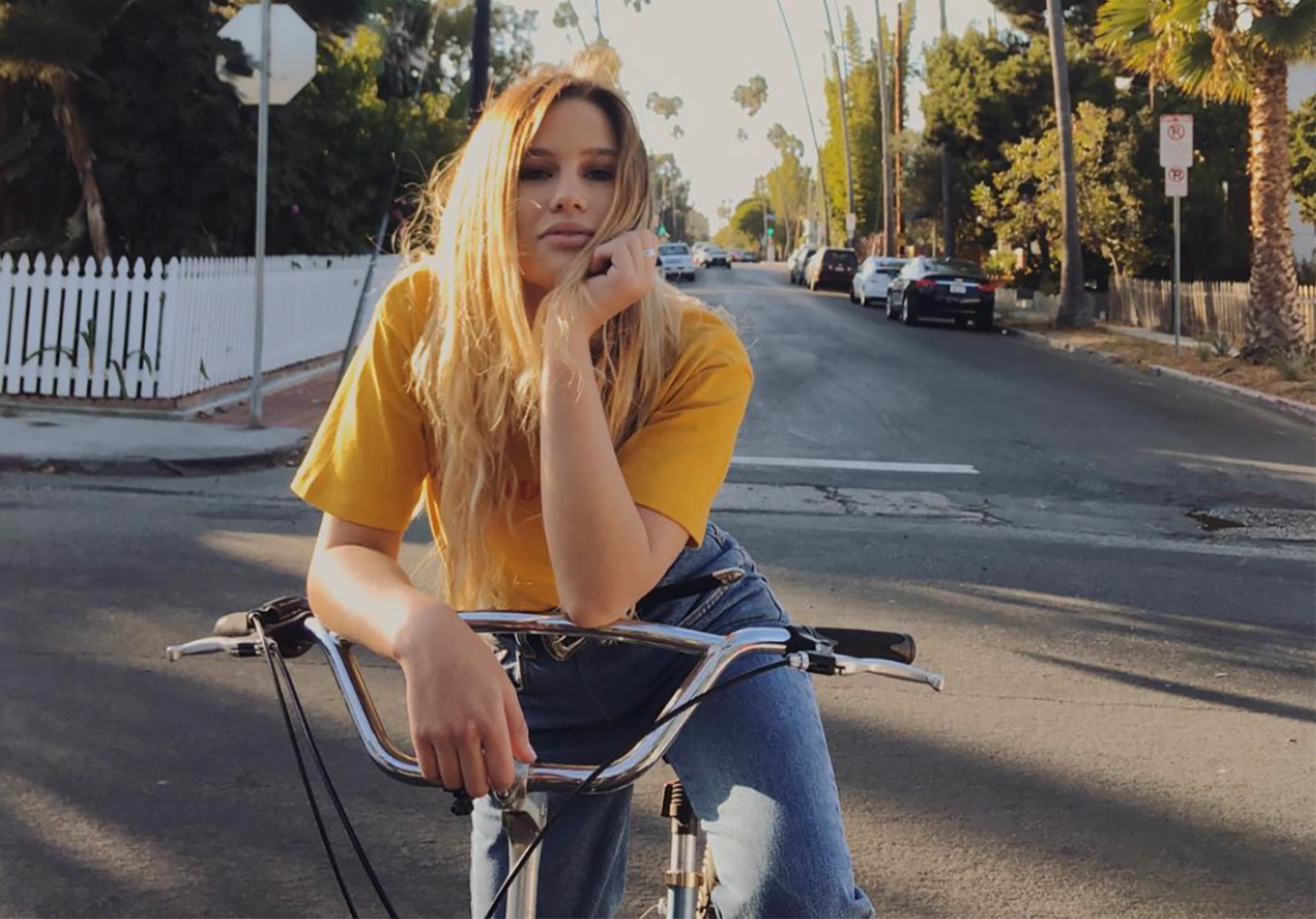
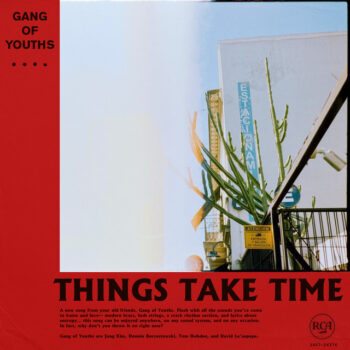
by Gang of YouthsFour years of silence have left Gang of Youths glowing.
Their first new song since 2022’s angel in realtime., “Things Take Time,” is the kind of return that somehow sounds worn-in and brand new at once – a beautifully dreamy, golden-hued reintroduction built less around grandeur than grace. David Le’aupepe’s voice rises from an airy bed of piano and lightly held instrumentation, warm and impassioned without ever disturbing the song’s serenity, while trumpet, strings, and an irresistibly buoyant melody slowly gather around him. The refrain is almost impossibly simple – “Things take time / Take time” – and that simplicity becomes its magic. Gang of Youths have made a smile-inducing singalong about surrendering to forces bigger than ourselves, and it burns bright precisely because nobody seems interested in forcing the flame.
Over the past decade, Gang of Youths have grown from an Australian rock band into one of their country’s most celebrated exports, building a career around emotionally enormous songs, sweeping arrangements, and David Le’aupepe’s deeply personal writing. Their 2017 album Go Farther In Lightness became a major breakthrough, while 2022’s angel in realtime. pushed their ambitions even further: A 67-minute tribute to Le’aupepe’s late father that braided the band’s soaring rock sound with Pacific Island music, orchestral textures, and a searching meditation on grief, family, heritage, and what our loved ones leave behind. By then based in London, Gang of Youths were still reaching outward musically even as the record pulled Le’aupepe more deeply into his own history.
There’s heaven in the suburbs
And if I’m asking what I feel now
Do-do-do
Do-do-do
So high
I kissed the Earth around me once
A thousand times
“Heaven in the suburbs” feels like an apt place for Gang of Youths to reappear. After years spent largely outside the churn of an album cycle, the band return attuned to smaller revelations: Ordinary life, gradual change, the sacred hiding inside what once might have seemed mundane. Tom Hobden says the phrase was present from the song’s earliest stages, “a completely abstract but somehow loaded collection of words” that became a roadmap for where “Things Take Time” wanted to go. “For me, it’s about finding the sacred in the everyday,” he explains. “Perhaps there’s something in there too about the song emerging after a period where we’d all just been getting on with actually living our lives.”
Living, in this case, is part of the writing process. Gang of Youths have never moved especially quickly between records, and Hobden sees those gaps as inseparable from a catalog where the personal and musical remain deeply intertwined. angel in realtime. wrestled with grief, newfound family, and Le’aupepe’s relationship to a heritage he was still coming to understand; four years later, the band are different people with different tastes, instincts, and experiences to metabolize. “Significant things happen, they take time to digest, and eventually they find their way into musical form,” Hobden says. “Maybe patience is less about waiting for something to happen and more about accepting that transformation is already happening while you wait.”
The song embeds that idea directly into its arrangement. Le’aupepe first brought in the piano part and developed the song with drummer Donnie Borzestowski, consciously aiming for something succinct and earnest with a straightforward pop structure. But Gang of Youths quietly bend that structure as “Things Take Time” unfolds: Its verses and choruses stretch longer as the song progresses, allowing time itself to seem as though it is expanding around the listener. The effect is subtle enough to register emotionally before intellectually. Nothing announces the trick. The song simply keeps opening.
Jung Kim’s production gives that expansion room to breathe. Rather than crowding the track with processing, the band keep its foundations organic and dry, allowing melody to bear much of the emotional weight. Hobden’s playful trumpet curls around Le’aupepe’s vocal almost like another singer, while strings gradually deepen the arrangement without swallowing its intimacy. Drums pulse gently beneath them; piano provides the song’s steady center. Even as the instrumentation grows richer, “Things Take Time” retains an extraordinary lightness – serene enough to drift inside, catchy enough that its refrain seems lodged in the body after a single listen.
“It was important for the sonics to be rooted in things that felt very organic,” Kim explains. “I think the goal always was for the instrumentation to be light, so employing very little processing and keeping things very dry was key. This created space so that the focus could be on the melodic aspects of the music which ultimately carry the emotional journey, those being the orchestral elements and Dave’s vocal.”
Restraint itself marks an evolution for a band long associated with emotionally enormous music. Gang of Youths have lost none of their ambition; they have simply discovered how much can happen inside open space. “Things Take Time” still swells, still reaches, still carries the unmistakable ache and uplift of Le’aupepe’s singing, but its power comes through accumulation rather than detonation. A trumpet phrase here, another stretch of melody there, strings entering at just the right moment – each addition nudges the song upward until its warmth feels almost communal.
How long?
Will you become the one you will become?
Another fall in the flow, sometimes
The engine grows around me
Like a stranger or a vine
The question at the song’s center – “How long will you become the one you will become?” – gets to the heart of its relationship with time. Becoming has no finish line. Jung describes the lyric as an open-ended question about the growth we undergo throughout life, carrying both “the dread” of change and “the yearning for it.” “Things Take Time” holds those impulses together without demanding that either one win. Birth gives way to growth, growth to death, death to whatever comes next; even the band describe the song, with characteristic understatement, as being about “the endless loop of birth, growth, death and rebirth which encases all matter and energy or whatever.” The music meets that enormity with a grin instead of a sermon.
It makes “Things Take Time” a particularly beautiful statement of intent for Gang of Youths’ next chapter. Four years away have not produced a band desperate to prove how much they can still do. They return sounding comfortable enough to leave air in the room, confident enough to let a melody repeat, and wise enough to know that a fresh start need not erase what came before it. The song carries history without dragging it behind itself. Everything here seems to move forward naturally, at its own pace.
Jung hopes listeners leave with “a sense of elation, knowing that although we can’t run from time, the passing of it does lead to some good.” “Things Take Time” makes that good audible. Its warmth, gentleness, and infectious refrain turn patience from passive waiting into a quiet act of faith – faith that life is still working on us even when we cannot yet see what it is making.
Four years of silence have left Gang of Youths glowing because those years were never empty. They were living, changing, becoming. Buoyant and quietly triumphant, “Things Take Time” is the radiant sound of finally hearing what all that time made possible.
“Lasagna”
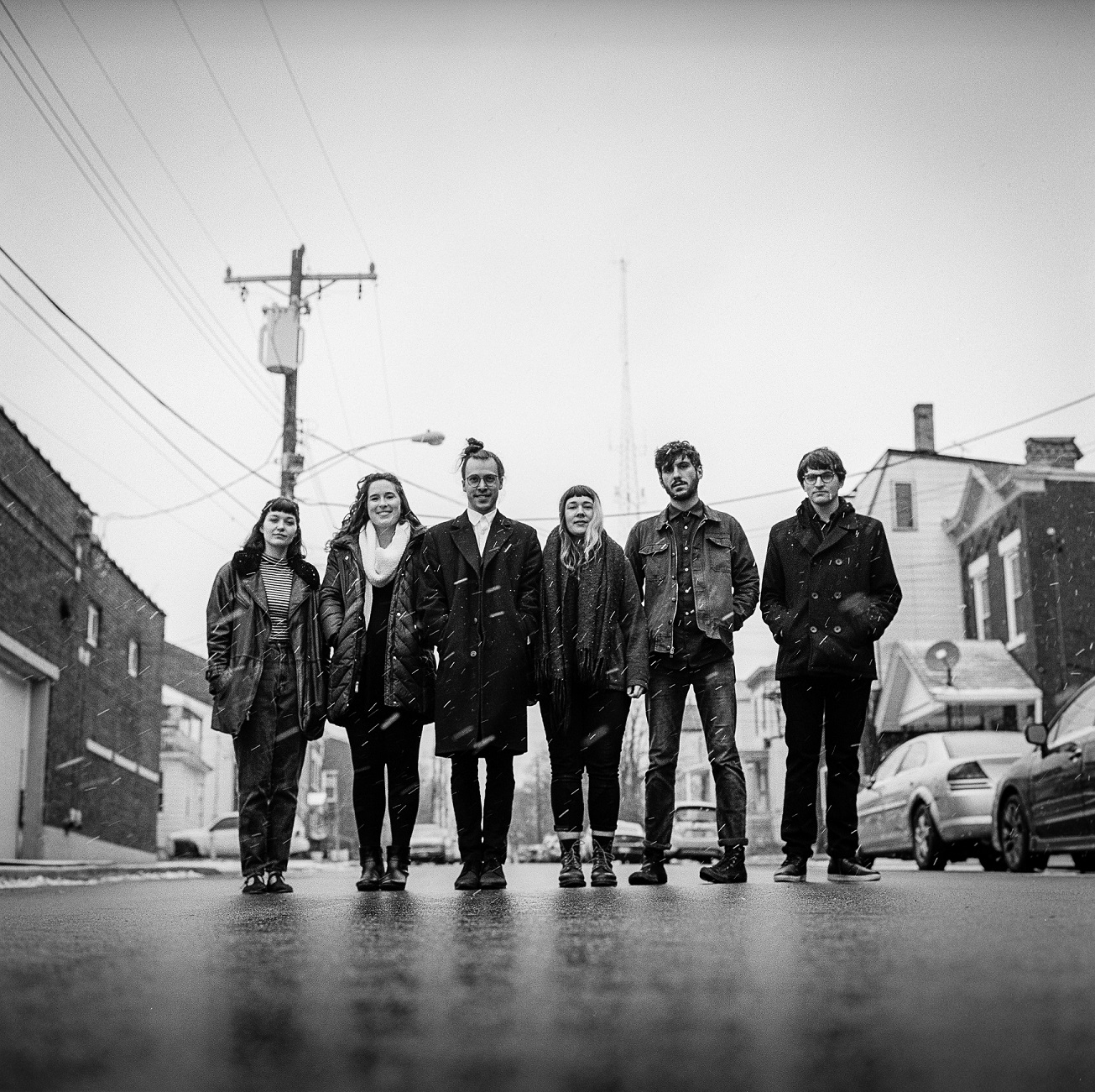
by BabehovenA lasagna bakes on high while two people talk about love and growing up.
By the time Babehoven are done with the scene, intimacy itself has become unreliable. The Hudson, New York duo’s mesmerizing, incandescent “Lasagna” lives in the strange distance that can open between two people who are practically on top of one another: Wanting to be seen, trying to see clearly, and realizing how easily love can distort the view from inches away. Maya Bon and Ryan Albert wrap that uncertainty in one of their most immediately intoxicating songs yet – a feverish alternative rock reverie charged with motion and heat, where lush rhythm guitars glisten and churn beneath a sweet, rosy lead electric line while Bon’s beautiful, spellbinding voice floats through the blaze. The whole thing smolders without ever losing its brightness, pulling you deeper into a relationship whose closeness has become its own kind of fog.
When you talk about love and growing up
Baking lasagna on high
Not so sure if I’m stuck in a rut
Couldn’t bring myself to fly
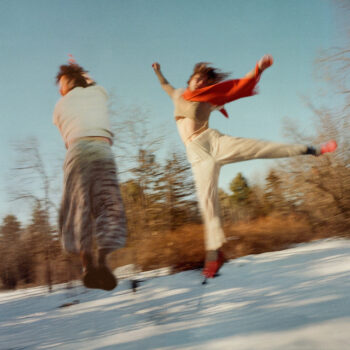
“Sometimes when you’re very close to somebody, you can become so wrapped up in your own idea of them that you’re not necessarily seeing who they actually are,” Bon explains. “You’re seeing your history with them, or your hopes for them, or your fears about them. This song is about that feeling of wanting someone to reveal themselves to you while also realizing that you might be participating in the thing that’s keeping them hidden.”
The tension was already there when “Lasagna” first appeared, years before Babehoven knew what the song would become. Bon began writing it in 2018, when she and Albert had just started dating in Los Angeles. Albert was literally baking lasagna while the two talked about falling in love and growing up; Bon, then 22, was trying to decide whether she could bring herself to fly back to Portland for a release show around her EP Sunk. She was in a dark place and left the song unfinished. Returning to it years later allowed Babehoven to fold the distance between those two moments into the music itself – young love preserved in a kitchen scene, then reconsidered by the people who had actually lived forward from it. “Lasagna” now serves as the first single from the duo’s forthcoming third album, I See Them, I See Me, out September 18 via Double Double Whammy, and its domestic origins make an unexpectedly perfect doorway into a record concerned with perspective, perception, and the limits of knowing another person.
And you say you can change for me
Can you see yourself clearly
I see you like I’m staring through a
Beat up magazine
And I’m reading you between my knees
When you break in two, I’m relieved
Bon’s writing keeps pressing against the gap between proximity and recognition. “Can you see yourself clearly?” is already a loaded question, but “I see you like I’m staring through a / beat up magazine” complicates it further: The other person is visible, yet mediated, creased by memory and expectation. Later, “Just hide it from me / Oh, why don’t you hide it from me” sounds less like a request than an accusation tangled up with resignation. Even the title image carries that contradiction beautifully. Love and adulthood are being discussed over dinner, in the most ordinary shared space imaginable, while a much harder question sits underneath the conversation: How can two people know each other so closely and still misread what they see?
The recording gives that question a body. Babehoven opened their process dramatically for I See Them, I See Me, working across four studios with multiple engineers and live-tracking much of the album with a six-person ensemble. Co-producer Phil Weinrobe encouraged “no playback, no headphones, and no preparation,” forcing the musicians to respond to the room rather than polish every decision after the fact. “Lasagna” also grew from an alternate guitar tuning Bon and Albert picked up through Skullcrusher, while Bon cites Slow Pulp’s Emily Massey as an inspiration for the rhythmic vocalizations that fill the spaces around the melody. Those choices help explain the song’s irresistible charge: The guitars do not sit politely behind Bon; they breathe, flare, and radiate around her, while her voice remains poised at the center, enchanting precisely because it never needs to match their force.
“It made us much more responsive,” Babehoven share of the album’s recording process. “Normally there’s a lot of listening back, adjusting, thinking about what something should be. This was much more about being in the room and responding to each other… If you don’t have headphones and you’re not listening back, you have to trust yourself.”
Driving on the 217,
feeling smaller than I am
Doing all the work I can,
it’s sealed and stamped and back again and
There’s just a way that you wave and wave
Like the wind is on your side
I’ve never had that feeling, no
I don’t know what that feels like
That trust carries even more weight knowing what Bon’s voice has survived. During Babehoven’s first headline tour in 2024, she suffered paralysis of her right vocal cord and spent much of the following year unable to sing, at one point being told she might never recover. Her return to singing helped reshape the spirit of I See Them, I See Me, a record Bon and Albert deliberately approached with more freedom and fun. Hearing her on “Lasagna” now – so steady, luminous, and completely engulfing as the guitars gather heat around her – makes the song’s brightness register as its own small victory. “I have so much gratitude now that I am able to sing again,” Bon says. “To not only sing, but to sing with joy.”
Bon’s joy opens naturally into the larger vision of I See Them, I See Me. Babehoven describe the album through the idea of parallax: Two people can occupy the same reality and experience it differently simply because they are standing in different places. “Lasagna” brings that philosophy down to its most intimate scale – two people sharing a kitchen, a life, and years of history while still trying to understand what the other sees. The song never forces that uncertainty into resolution. Its beauty comes from staying inside the looking, letting those radiant guitars and Bon’s enchanting voice carry all the heat, affection, frustration, and longing that words cannot neatly settle.
By the end, the kitchen scene at the song’s center becomes its own parallax image: Two people sharing the same room, the same meal, the same life, and still looking at each other from different angles. You can know someone so intimately that you stop seeing them clearly – and “Lasagna” finds its beauty in the distance that remains.
Just hide it from me
Oh, why don’t you hide it from me
Uh-huh don’t you hide it from me
Course I know you’re hiding from me
When you talk about love and growing up
Baking lasagna on high
“Big Strong Man”
by Cavetown“My best friend fell in love with a girl and I killed her.”
Cavetown opens “Big Strong Man” with a murder – and slowly reveals the body as a version of Robin Skinner that never felt true. Looking back at teenage masculinity from the other side of that confusion, Skinner revisits the guilt, anger, and alienation of being young and queer while trying to understand what strength was supposed to look like. The song carries that reckoning with extraordinary force. What begins as a tender alt rock reverie gradually swells into a feverish pop rock burn, guitars thickening and churning around Skinner’s steady, spellbinding voice until the whole arrangement seems to buckle under the weight of what he is finally able to name.
My best friend fell in love
with a girl and I killed her
She lies by the tree in the graveyard
where we built a swing in the summer
You looked at me like a stranger
You looked at me like someone you don’t know
You looked at me like a lover
You looked at me like someone you couldn’t let go
You couldn’t let go ohohhohhhhh
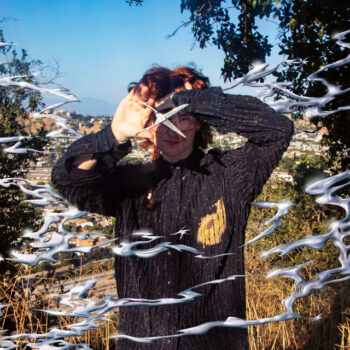
“‘Big Strong Man’ – based on a similar time in my life as ‘Boys Will Be Bugs’ – is about my struggles with the confusing world of teenage masculinity as a young queer person, and how it sucks to feel loved for a version of yourself that isn’t true,” Skinner shares.
For more than a decade, Skinner has built Cavetown into one of alternative music’s most recognizable homes for emotionally candid songwriting, first finding an audience through self-recorded music online before songs like “Boys Will Be Bugs,” “Devil Town,” “Home,” and “Juliet” became touchstones for a generation of young listeners. Now 27 and living in New York, the non-binary singer/songwriter and producer describes their work as a place to write through life as a neurodivergent trans person – a practice that has repeatedly shown them the value of authenticity. “Big Strong Man” arrives shortly after this year’s Running With Scissors, an album Skinner still calls the work he is proudest of, and reaches backward toward an earlier adolescence with a clarity he did not have while living through it.
The music follows that retrospective unraveling in real time. Skinner starts close to the listener, his voice almost eerily composed against a gentler guitar bed, while the lyrics sketch scenes of romantic confusion and emotional dislocation. Then the pressure mounts. Distortion gathers at the edges, the guitars begin to roar, and the track rises into a dense, charged wall of sound that keeps pushing forward instead of offering easy release. Skinner never has to overpower it. His vocal stays dreamy and controlled while the band burns hotter underneath him, creating an intoxicating tension between the person remembering and the memory itself.
I never told him I liked him like that
Stuck straight through my heart
and fell right out the back
He had me in his palm
but I crumbled like sand
Did that make you feel
like a big strong man?
Did that make you feel
like a big strong man?
The title question grows sharper every time Skinner repeats it. “Big strong man” carries all the old assumptions he was trying to decipher as a teenager – toughness, dominance, emotional distance, the performance of certainty – and the song gradually strips their authority away. Its most devastating line comes later: “You loved somebody who never existed.” Love becomes almost impossible to separate from erasure when affection is directed toward a self you know is false, and Skinner writes from the painful space between being wanted and being known. The chorus does not ask for an explanation so much as expose the weakness hiding inside the performance.
Around the time he wrote “Big Strong Man,” Skinner says he was finally “beginning to tie some loose ends together” around difficult experiences from his early teens. Distance gave him a different vocabulary for what had happened – and, crucially, permission to stop carrying responsibility that never belonged to him.
“The moments of realization felt validating and empowering,” Skinner explains. “I felt able to release a weird guilt I had carried for a long time. It felt healing to write about my experience retrospectively with this new context.”
“I think I wanted to release some anger through it,” he adds. “Maybe send some love and validation back to my past self going through the confusion.”
I couldn’t move but sometimes I still miss it
You felt it too but I held your resistance
Lay in my room like I don’t feel the distance
I always knew but I thought that I didn’t
We’re face to face on the floor of my kitchen
You won’t shut up ’bout the girl you’ve been kissing
But you’re holding my hand
like you don’t know the difference
I always knew but you told me I didn’t
You always knew I’m not part of your plan
You loved somebody who never existed
Did that make you feel like a big strong man?
That compassion changes the song’s center of gravity. “Big Strong Man” can rage at the people and expectations that helped create that confusion, but Skinner’s gaze ultimately lands on the younger version of himself who had to survive it. The song’s feverish escalation becomes a form of reclamation: Every guitar that surges harder around his voice gives that buried anger somewhere to go, while his restraint keeps the person beneath it visible. By the final refrain, the title no longer sounds like a standard Skinner is measuring himself against. It sounds hollowed out.
“That strength doesn’t look how I thought it did,” Skinner says. “And if you think you’re already being vulnerable enough with yourself, go deeper.”
“Big Strong Man” does exactly that. Cavetown digs beneath the costume of teenage masculinity and reaches the harder truth underneath it: Strength can mean looking directly at the self you were forced to perform, grieving the love that landed on that false image, and choosing to offer your younger self the recognition you needed then. The guitars may eventually burn at full force, but Skinner’s clearest act of power is quieter and far more lasting – finally seeing that younger person clearly, and loving them as they actually were.
The “girl” buried in the song’s opening was never Skinner’s truth to begin with; “Big Strong Man” gives him the space to finally lay that false version of himself to rest.
I never told him I liked him like that
Stuck straight through my heart
and fell right out the back
He had me in his palm but I crumbled like sand
(I always knew but you told me I didn’t)
Did that make you feel like a big strong man?
(You always knew I’m not part of your plan)
(I always knew)
Did that make you feel like a big strong man?
(You loved somebody who never existed)
(I always do)
“MMA”
by Hannah ColeSuccess becomes dangerous when the chase starts to resemble an addiction –
– when every small win convinces you to put another coin in, every setback raises the stakes, and walking away starts to look harder than losing.
Hannah Cole stares straight into that trap on “MMA,” a spectacularly smoldering reckoning with ambition, self-worth, and the manufactured glamour of the music industry. Las Vegas becomes her perfect arena: Casinos promise impossible luck, fighters absorb real blows for a paying crowd, and bright lights obscure the desert stretching beyond them. “Putting / money in the slot machine / never had a chance so clean / never knowing when to leave,” she sings, caught between hope and compulsion as another line quietly exposes the deeper cost: “I really wish that I could see myself.” For four electrifying minutes, Cole makes that disorientation physical. Thick, sludgy overdriven guitars roar and burn around her dreamy vocal, their enormous weight meeting her lighter delivery in an intoxicating push and pull that is hypnotic precisely because it never loosens its grip.
Rolled my ankle on the stairs up to the house
So old that you could
rip the handrails out the ground
Felt the hubcap hit the sidewalk
Stripped the paint
I really wish that I could see myself
Putting
Money in the slot machine
Never had a chance so clean
Never knowing when to leave
Never knowing when to

The arrangement understands that obsession rarely moves in a straight line. “MMA” surges into walls of distorted guitar, then suddenly opens enough space for the body to register what just hit it before plunging back into the noise. Cole and her longtime partner and collaborator Josef Kuhn built the track together in their home studio, filling it with strange, distinctive details – a peculiar snare sound, jingle bells, dense layers of guitar – while leaving those abrupt changes in pressure intact. Her sweet, almost weightless voice becomes the perfect counterforce to all that abrasion, hovering above the churn instead of competing with it. The contrast makes the song alluring even at its harshest; the listener gets pulled toward the same rush Cole is questioning.
“I knew from the beginning that I wanted the song to be super dynamic,” Cole shares. “I’m really happy with this sort of whiplash effect that we landed on. It reflects my lived experience very well. When you close your eyes and listen to the song, you can feel someone snapping in and out of reality or experiencing these intense highs and lows.”
Nashville-based Cole grew up in Covington, Louisiana and moved to Music City in 2019, gradually developing the meeting point between indie rock, dream pop, grunge, and shoegaze that came into clearer focus on 2024’s Glisten EP. “MMA,” her first single in two years, became the song that crystallized the next stage of that sound. It also gave her a way to write about the pressure underneath it. The track’s melody had lived in a voice memo for roughly a year before Cole and Kuhn finally built the instrumental; she wrote the lyrics that same day, at a point when pursuing music had begun to resemble repeatedly volunteering for disappointment.
“At the time, I felt like I was putting myself in positions to fail over and over again,” Cole explains. “I think it’s easy to get lost in the pressure of needing to be commercially successful in order to feel like what you’re making is good. Now I’ve seen the music industry from a new angle and how so much of the ‘success’ we see is really just manufactured. Having that awareness allowed me to move forward with more peace about where I’m at right now.”
Vegas sharpens that realization into a whole visual language. Cole watches Pereira take a right hook to the face and asks, “Did you know the hits were real in MMA?” She looks beneath a rock and finds a rattlesnake. Red bleeds into a white shirt; trophies pile up on a shelf; the slot machine keeps waiting. The images collapse entertainment, violence, reward, and danger into the same spectacle, until success itself starts looking like a game designed to keep its players inside. Cole’s metaphor gets uglier the longer you sit with it: The little victories keep you betting, competition turns peers into opponents, and eventually you realize the people fighting hardest may simply be providing entertainment for someone with more power.
Saw Pereira take a right hook to the face
Did you know the hits were real in MMA?
In the desert you can count on a big break
I lift a rock and see a rattlesnake
Putting
Money in the slot machine
Never had a chance so clean
Never knowing when to leave
“I think Vegas is the perfect metaphor for the industry, and there are so many images you can draw from it,” Cole says. “Most of the time you’re risking a lot (of time, money, etc.) for very little reward, and the little victories are what keep you addicted to the game. Sometimes you’re so wrapped up in the game that you start getting competitive with those around you until you realize that you’re just a spectacle for people more powerful than you. The lights, the money, etc. are a distraction from all the problems and empty promises that surround the music business.”
The cruel brilliance of “MMA” is that the song itself is addictive. Those guitars are so huge, Cole’s melody so entrancing, and the tension between them so satisfying that the track reproduces the seduction it critiques. You want another hit of the chorus. You want the distortion to crash back in. You know the blows are real and still cannot look away. That contradiction is why “MMA” hits with such force: Cole has written a song about losing perspective inside the pursuit of success, then built a sound immense and intoxicating enough to show exactly how easy it is to stay in the game. “Never knowing when to leave” stops sounding like indecision. It sounds like the mechanism.
Cut and paste magazines to a poster
I watch the red bleed into the white shirt
A hundred little trophies on my shelf
I really wish that I could see myself
Again
See myself
Putting
Money in the slot machine
Never had a chance so clean
Never knowing when to leave
Never knowing when to leave
Out now via Tight Knit Records, Cole’s debut album Switchbacks widens that question across ten songs, tracing the pendulum swing between dreams as ambition and dreams as the distorted memories we carry inside us. Cole wrote every lyric and took her most substantial production role yet, constructing the record with Kuhn between 2024 and 2025 and obsessing over the small recurring details that bind it together: Piano motifs, reverse tape sounds, odd percussion, words reappearing in new contexts. The title comes from the winding mountain roads where drivers honk before blind curves – a fitting image for a career in which you cannot see what waits ahead, but can still announce your arrival. “MMA” sits near the beginning of that journey as one of its most volatile turns, capturing the point where ambition has become so loud that Cole can barely see herself through it.
By the end of Switchbacks, the stakes have shifted. The album gradually moves away from measuring a life through commercial success and back toward the impulse that existed before any scoreboard did: Making music because making music is joyous. Cole describes having to look backward toward childhood memories of singing and playing simply for pleasure in order to understand how she wanted to move forward now. That makes “MMA” essential to the record’s arc. The slot machine has to keep spinning before she can understand why she ever walked into the casino; the blows have to land before she can decide what is actually worth fighting for. Switchbacks does not erase ambition. It puts it back in proportion – another winding stretch of road on the way toward a life where success can come and go, but the love of creating remains hers.
“I hope people hear how much fun we had making these songs,” Cole shares. “It took a while for me to remember that making music is supposed to be fun, that creating is supposed to feel free… Sometimes you have to look backwards in order to move forwards. You have to experience the switchbacks in order to reach the top of the mountain.”
That freedom is Cole’s way out of the casino. The wish buried inside “MMA” – “I really wish that I could see myself” – finally points toward an answer: An artist learning to recognize herself beyond whatever the slot machine pays out.
— — — —

Connect to us on
Facebook, 𝕏, Instagram
Discover new music on Atwood Magazine
Editor’s Picks
follow EDITOR’S PICKS on Spotify