From a patron-saint typo to a synth player who kept showing up with a guitar, Manchester seven-piece MLEKO reflect on the happy accidents, unlikely chemistry, and restless experimentation behind debut EP ‘The Feast of St. Perpetua’ – and the self-described “gub rock” sound they’re continuing to grow into.
by guest writer Esther Akinborewa
Stream: ‘The Feast of St. Perpetua’ – MLEKO
The patron saint of dairy didn’t want to be found, so St. Perpetua’s diary took its place – a failed Google search creeping its way into MLEKO’s debut because the band thought it sounded cool.
Happy accidents had followed the group long before that: A practice session with a song called “Lego Sex,” and a chance encounter that saw a would-be promoter invited to join the band in exchange for MLEKO playing her gig. Each added another layer to the absurd energy that has become inseparable from the seven-piece.
At the heart of their music, that absurdity sits alongside lyricism and instrumentation that feel equally central to MLEKO’s identity. Pieces of each member can be heard in the chord progressions and melodies, their individual tastes blending into a sound they would come to call “gub rock.” Addressing subjects like the continuous nature of life – how it doesn’t stop even when you go – the group don’t shy away from discomfort, using personal experiences to emphasize the meaning of each song and writing instrumental sections that stretch deep into their music.
Taking some time away from their instruments, MLEKO sat down with Atwood Magazine to look back on the journey to The Feast of St. Perpetua, the ways they’ve grown since making it, and the project already taking shape on the other side of their debut.
Looking back on their origins, the group’s bassist Myron Endean shared what initially brought on the desire to be part of a larger group: “Yeah, it was just a little guitar band, but I think it was designed to be larger. When I was younger seeing large bands on stage I’d be like ‘that’s sick, I love that,’ so I think it came from that desire. We didn’t really have a vision when we started, it was like we were just kind of finding our feet as we went along… and as we kind of built people in the sound kind of changed.”
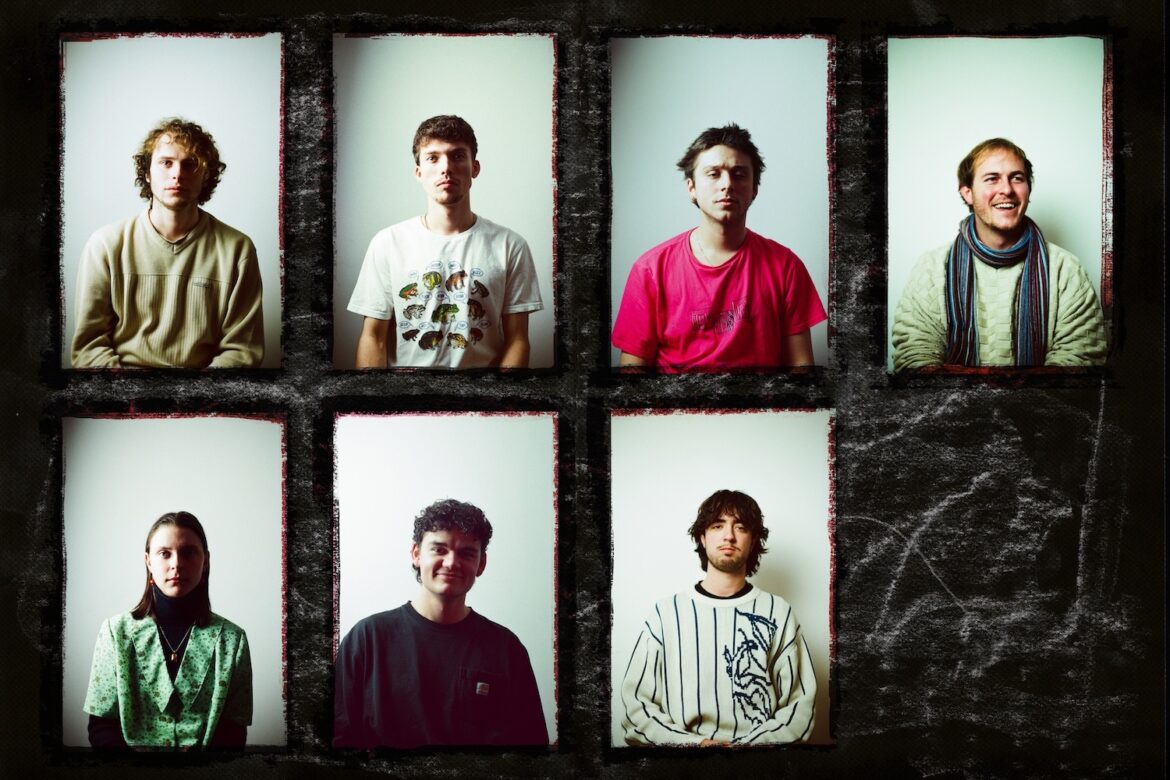
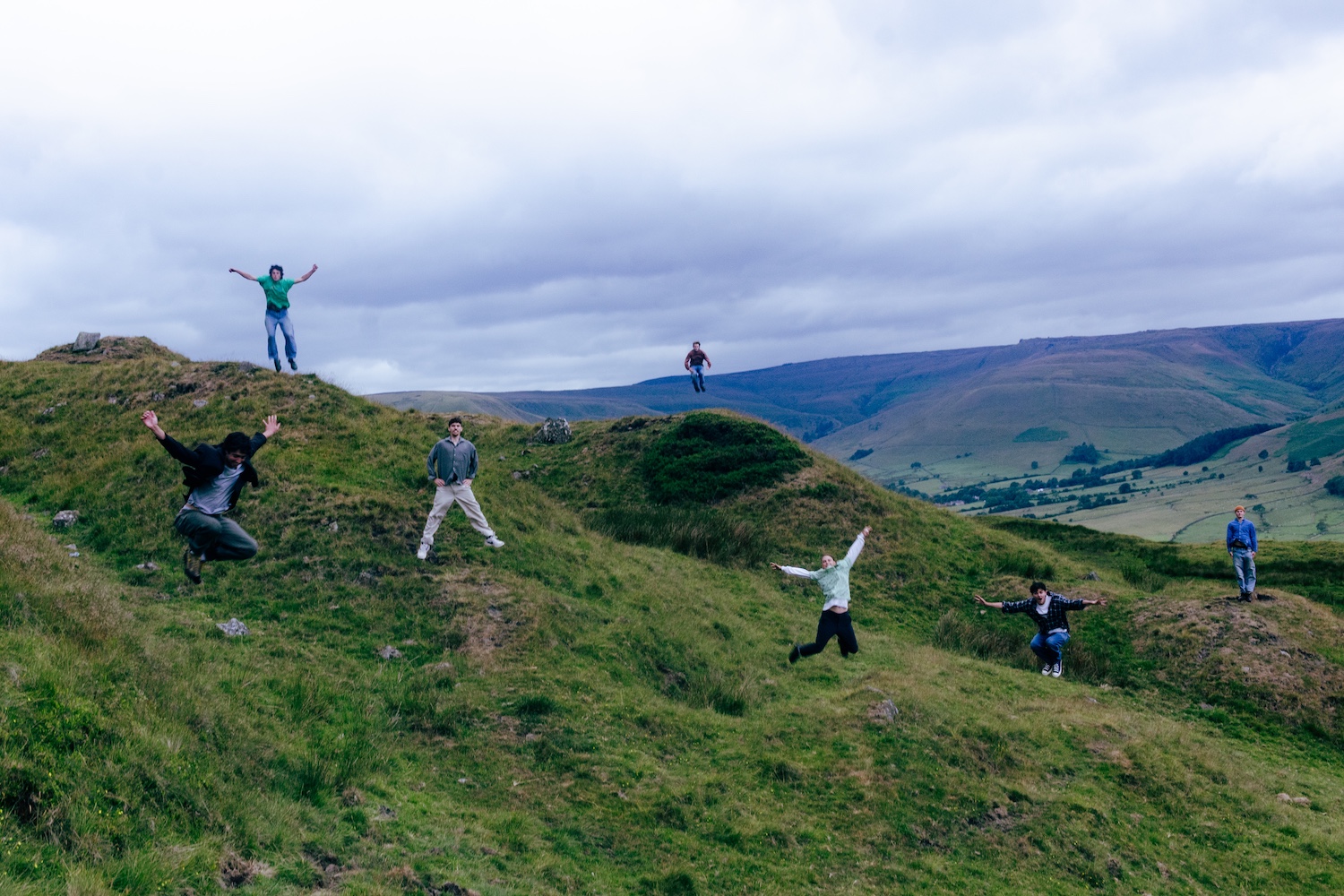
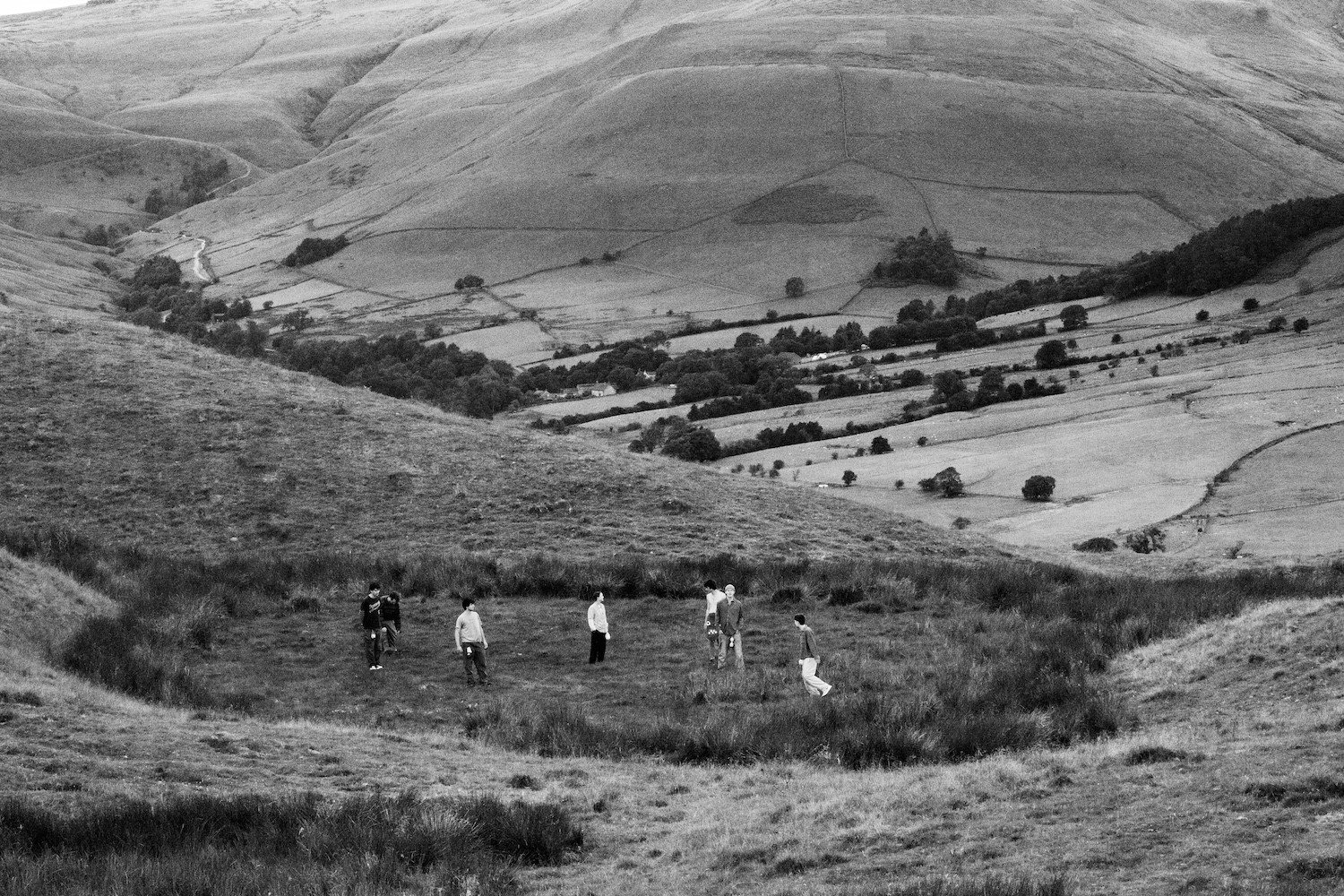
MLEKO comprises vocalist and guitarist Ed Whirledge, guitarists Rory Baker and Bruno Evans, saxophonist Tom Houston, trumpeter Charlotte Nuta, bassist Myron Endean, and drummer Ioan Saul. The Manchester-based seven-piece released their debut EP The Feast of St. Perpetua in May 2026, introducing listeners to their strange mix of instrumental collaboration as they wove intricate compositions together with playful, dark, and introspective lyricism.
Before MLEKO, Endean recalled the jealousy that first made him want to become a musician: “I’d always look very jealous when he was going out to a gig, and I’d have to stay home and go to bed, so when I turned 14 I just started going to a load of gigs, and eventually I was like ‘I want to do that too.’”
Finding people who shared that same goal took time as they continued to create makeshift music while hunting for members with multi-instrumentalist backgrounds. Saxophonist Tom Houston found inspiration through his mother, picking up the instrument at eight years old. Houston reflected on returning to music through the band: “I quit at the end of school and didn’t touch the saxophone for like three years, and then I luckily got asked to join this band. I basically got into music twice…we always had instruments around the house so I picked up guitar as well through my mum.”
Continuing on, he spoke a little about Saul’s background: “Ioan, who’s our drummer, both his parents are music teachers, but he only started playing drums during lockdown. He used to play the violin and viola before that.”
Already familiar with Houston as a friend, Endean saw his background playing the saxophone as one that would benefit the group. Houston was eventually invited to their practice sessions, with guitarist Rory Baker sending him some jazz music to listen to ahead of his first rehearsal. He was introduced to their sound through “Lego Sex,” its name seemingly too absurd not to warrant a return, as he humorously retold the story: “Before I joined I hadn’t played in three years, and I definitely hadn’t played anything close to what we did at the start, it was all jazz and Latin stuff. I remember walking to my first rehearsal, I think Rory had just brought ‘Lego Sex’ to the group. It was my first time playing with MLEKO, and I was like ‘What the f*** is this?’ I remember my housemates asking where I’d been, and I was like, ‘We wrote a song called Lego Sex’… They told me I had to stay in the group.”
The vision of creating a large group wasn’t forgotten, as the members used every opportunity to recruit multi-instrumentalists.
After mentioning her background as a trumpet player, Charlotte Nuta was immediately on the group’s radar while attempting to book them for a gig. Houston laughed at the scenario: “I think it was my first performance with MLEKO, she was in the crowd and wanted to book us for a gig she was putting on, and we were like ‘yeah, we’ll play the gig if you join our band.’ We played the gig, and she came along to rehearsal; we all got on super well and it just stuck. She’s also been playing the keys more in our songs, and it’s given us an extra element.” That flexibility with instruments meant the members didn’t have to limit themselves to just one, adding different touches to their music when needed.
Prior to joining the group, Nuta already had a deep musical history, growing up in a home surrounded by music. Looking back on the differing backgrounds of his bandmates, Houston expanded: “Charlotte, our trumpet player and keyboardist is from probably the most musical family I’ve ever heard of. She did a lot of brass band stuff and ended up moving to Manchester about 10 or 11 years ago for school at a place called Chetham’s; she actually went to the Royal Northern College of Music as well. The rest of us are all kind of self taught really; Rory taught himself guitar, Myron taught himself bass, Ed taught himself guitar and how to sing, so we’re all inspired by all different walks of life.”
When asked how being self-taught impacted their approach to producing music, he continued: “I definitely think it’s helped us be more open to criticism in a way because half the time there’s a bit of imposter syndrome going on, and it’s just like, maybe we don’t know what we’re doing. Now that we’ve done it so much, we’re getting to a point where we’re actually producing really cool stuff. A lot of us can’t read music, and in a way that helps train the ears better; having a combination of classically trained and self taught musicians keeps things fresh.”
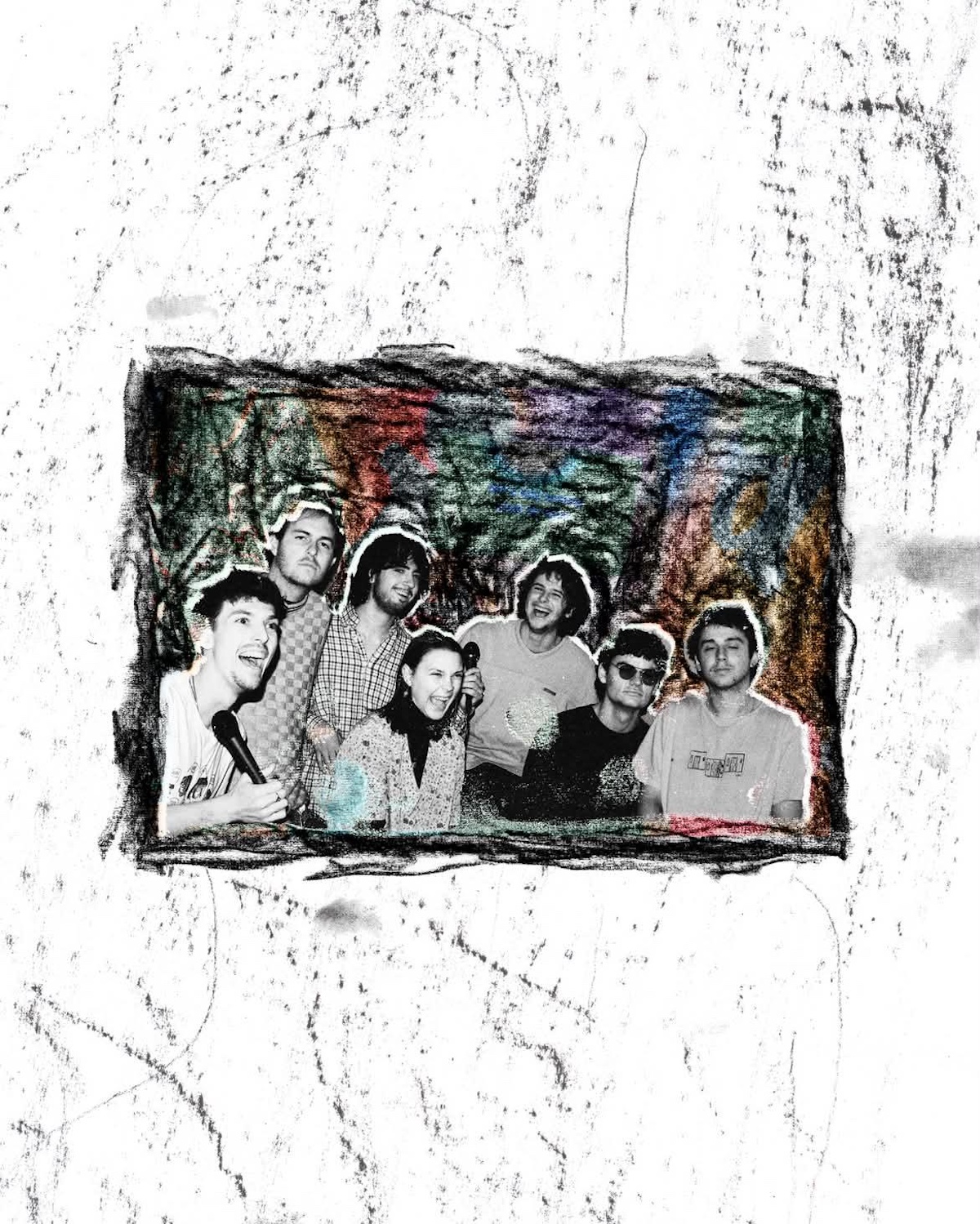
From making their EP to recruiting guitarist Bruno Evans, happy accidents became a recurring part of MLEKO’s development.
Reminiscing on that time, Houston revealed how Evans started playing guitar for them: “We got Bruno in as a synth player, and it just became pretty apparent that he had no interest in playing the synth. He just kind of gradually kept forgetting to bring his synth to the rehearsal and would just show up with a guitar… Now Rory and Bruno have this amazing writing partnership, and they have this awesome intricate interplay between the two guitars that’s so much fun.”
That same sense of interplay extended to the horn section, as Houston smiled before speaking on the dynamic: “I absolutely love when Charlotte joined; we had Hasan at the time as well playing the Viola. We used to call it THC, Tom, Hasan, and Charlotte. That section was just so much fun, we could create all these beautiful melodies and harmonies going on over the top of this kind of angsty guitar music underneath. When Hasan left we were really worried about how that was going to continue, but Charlotte and I made it work… I really love writing horn lines with Charlotte.”
Their multi-instrumentalist nature strengthened MLEKO’s sound the more they played with one another. In such a diverse group, it took time to blend those sounds together into something harmonious. As the lineup grew and changed, Endean became comfortable with that adjustment as the members naturally learned to understand each other as artists: “It takes a while, you get more people in, stuff changes slightly, and I think over time it’s just about learning how it all works. It probably wasn’t until the end of writing the last EP/start of this EP (still in the works) that we really properly understood each other in how we play, and how to get the best from each other. That’s why I say that the last EP we had to do a lot in the studio of being like ‘that’s shit, we need to make some changes’ and all that kind of stuff. For a while these songs just kind of existed for ages, and have just kind of like just changed and flowed, and it was all just a learning process which was nice.”
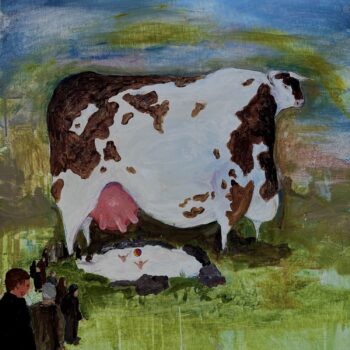
Even the title The Feast of St. Perpetua came from an accident.
While searching online for the patron saint of dairy, Whirledge mistakenly typed “diary,” leading the band instead to St. Perpetua and her diary. They liked the discovery enough to keep it.
Houston explained: “We wanted to name our band after the patron saint of dairy, and I remember Ed typing into Google Patron Saint of diary instead of dairy. There was a whole lot about St. Perpetua’s diary, and not a lot about St. Perpetua and dairy, so it was all a mistake we made before realising it, but we liked it and decided to dress it up and kind of bullshit our way with the name.”
As MLEKO learned to balance beauty and unease, their instrumentation became central to how they communicated meaning. Houston detailed the thinking behind their approach: “Towing the line between pretty and scary has been kind of a big theme up till this point. I think that’s kind of the idea behind most of the music, and lyrically it gets quite political as well as just outright absurd. There’s this sense of want and aspiration that runs through ‘As it goes,’ like a bit of a melancholy spin on that, talking about how life will kind of just go on without you, whether you’re in it or not. There’s a lot of themes in The Feast of St. Perpetua, but the main thing really is the music itself.” Approaching their music this way created space for each track to become its own while still flowing narratively into the next.
Walking through the production of the EP, Endean delved into the writing process and the unconventional structure of their music: “Our songs have quite random structures which is fun, and on first listen it’s like ‘what the hell have you done here?’ In a lot of the songs we try to treat them more as a story than a predictable verse, chorus structure. The oldest song on the EP is ‘Lego Sex’ and then yeah probably ‘Tom’s Tune’ followed pretty soon after. ‘Tom’s Tune’ went through like so many iterations. We had versions on voice notes that were the ending just went round and round. I think it got to a year of playing the song, and we were like nah we’re just gonna change the whole second half of that and write a new section.”
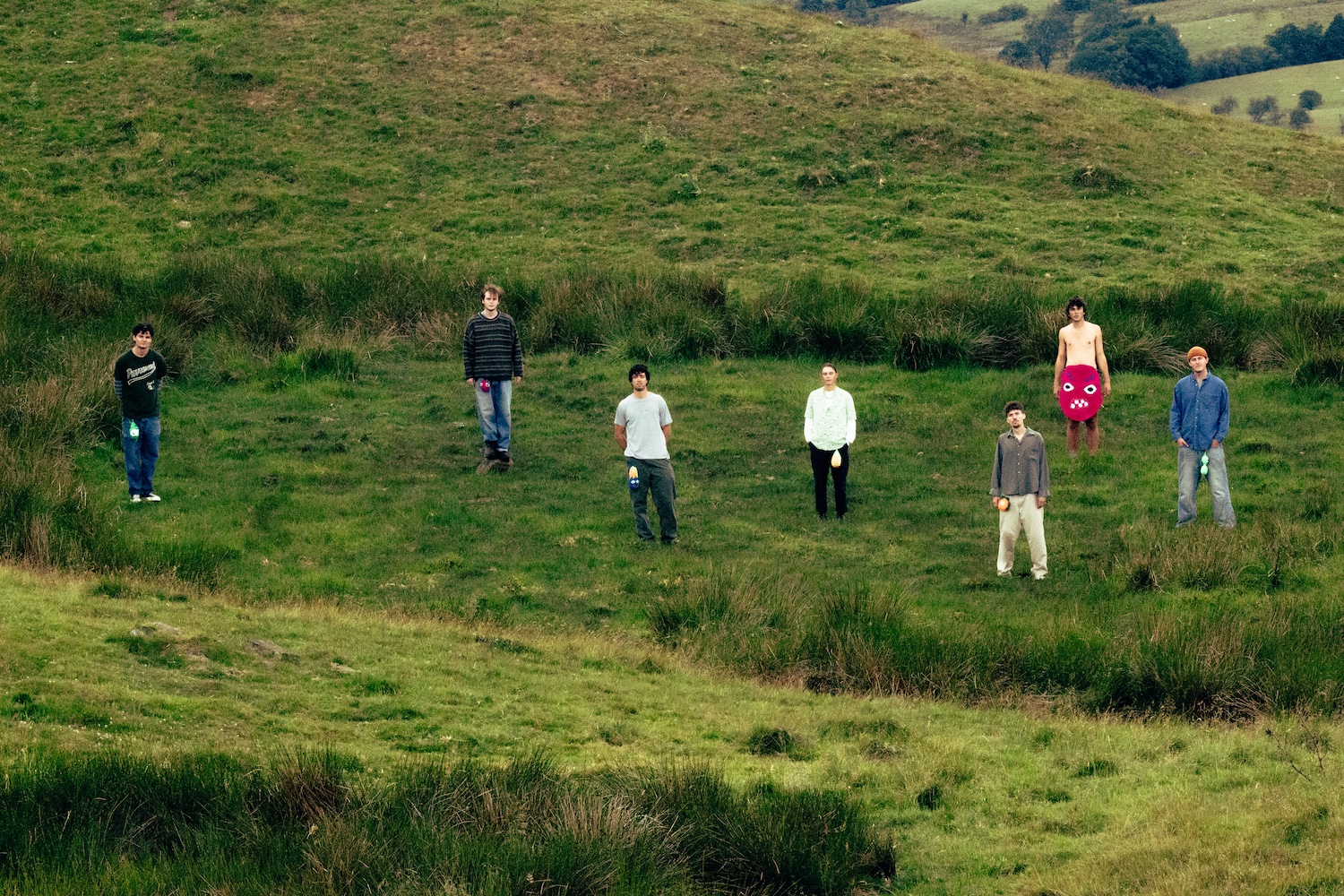
As vocalist and lyricist, Ed Whirledge often writes relatively late in the process, responding to the atmosphere the other members have already built through their instruments.
Houston praised Whirledge’s ability to write into that atmosphere: “He’s very good at just locking himself away and just channeling out lyrics. I think for three of the tracks on the EP, ‘As it goes,’ ‘Gub Rock,’ and ‘Denouement,’ he wrote it all himself, and then the other two he had help from Rory and I.” Cutting in, Endean fleshed out: “Ed wants the lyrics to really make sense with what’s going on instrumentally, so he’ll leave writing till the song has gotten to a kind of finish point so he has an idea of what emotions the instrumental gets across, and then he’ll tap into how he feels about that and kind of link it to wider issues or his personal life.” Emphasizing the lyricism in their songs, drummer Saul spoke up: “It’s always been rooted in something for him, and his approach means everything he sings is sung with conviction, because he has a real link to what he’s making.”
As the conversation shifted to the individual tracks, Endean explained the story behind the haunting opener “Denouement”: “It’s honestly just getting angry at the country we’re living in. There’s this kind of rising introduction that grows into a verse. When it burst into that first chorus Ed was like ‘right, I know exactly what I need to talk about on this,’ and that definitely comes across.” Highlighting how Whirledge uses his voice as an instrument, Endean added: “I think when you create that kind of landscape with music where you plan the whole frequency range, plan it out, build it up again, plan it out…that encourages Ed’s vocal style to lean into that. You can’t be going 100% the whole time, if you want something big you need something small.”
Playing in such an oversaturated industry, comparison is unfortunately expected as musicians develop their sound and form an image that can be identified with them.
Speaking about that pressure, Houston explained how the group learned to find joy in their music instead of letting comparison consume them: “It’s so easy to compare yourself, but we’ve gotten to the point pretty recently to be honest where we’re just really comfortable with writing whatever the hell we want. I think we base a lot of our writing on how much fun it’s going to be to play those songs, and often, the songs that aren’t fun to play, even if they’re good tracks, we take out from the live set cause we’re not excited to play them.”
Endean expressed how inspiring it was to see each member in their element: “I get so much inspiration from the rest of the guys. We’ll be like ‘f*** that’s sick what Tom was doing, or what Charlotte was doing’ or whatever… and then kind of want to do something in that vein. You kind of want to match it and like bring out the best in whatever they’re doing, and that’s what I find the most inspiring.”
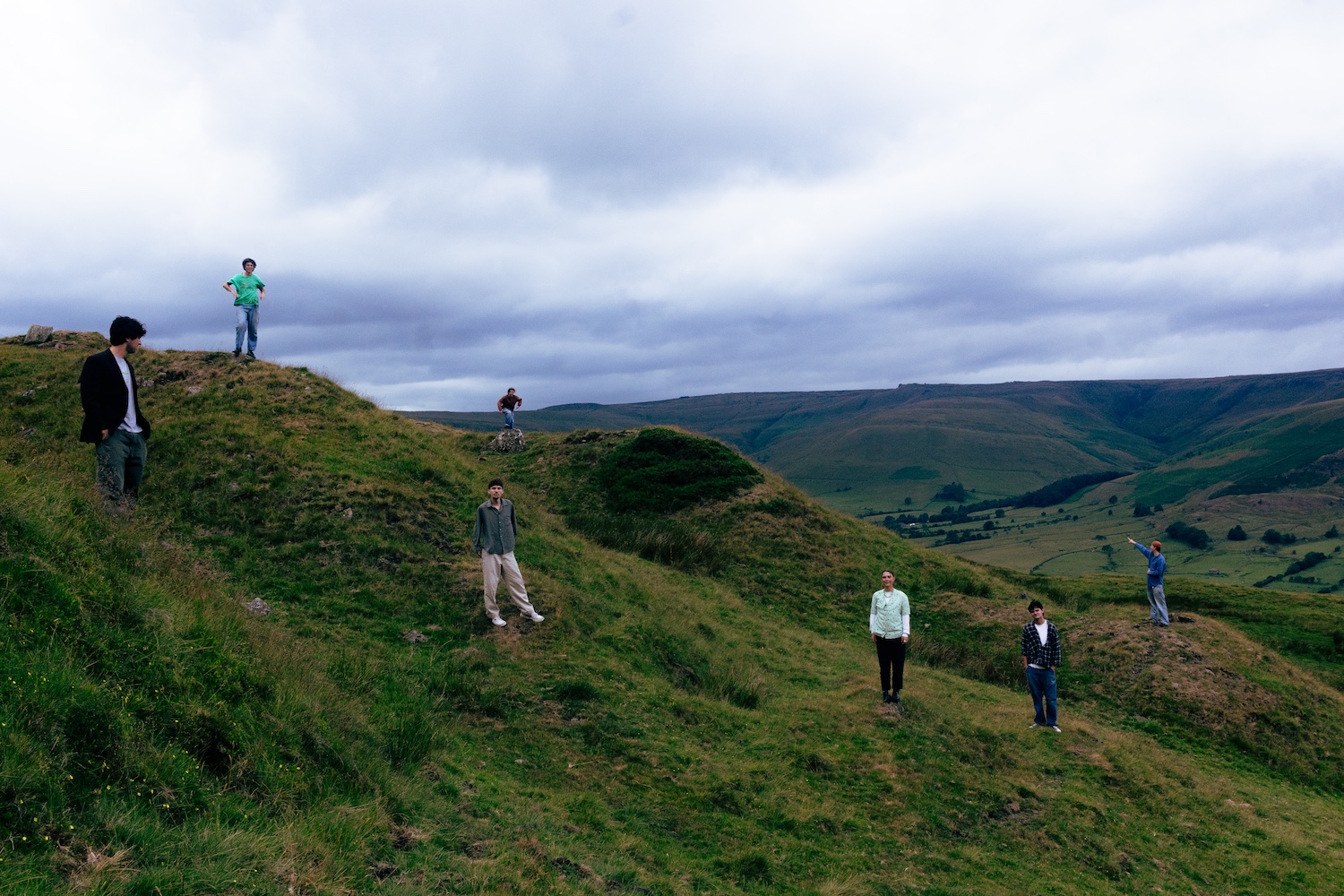
The Manchester scene offered plenty of external inspiration as well, with groups like Shaking Hand and Holly Head among the bands MLEKO admired.
Houston jokingly stated: “We’re always bouncing off other bands in Manchester, and just tryna rip them off basically.” Smiling, he went on, “Honestly, it’s so inspiring, there’s so much nuance and variation in what people are getting up to up here, and it’s a really kind of close knit music scene so there’s plenty of opportunities to watch people in there.”
Their tastes outside the scene varied from member to member. In Houston’s words: “I’m big into my kind of more acoustic singer/songwriter stuff, Bruno is really into mid-west emo, Rory’s super into math rock… It’s just a big old mix and I think that kind of comes across in our music… It makes for an interesting blend.”
Circling back to the EP, the members were enthusiastic to discuss their love for final track “Tom’s Tune,” with Endean unpacking the ever-changing nature of the song: “We were constantly changing it which made it feel fresh, and we just kept changing it until we stopped getting bored of it, and now we… I think we can play it so many times now and not get bored of it. I expect it’ll be album two and we’ll be playing ‘Tom’s Tune.’” Houston elaborated: “I just love how it bursts out in a really heavy riff in the middle-ish verse and transitions to this happy section before the really dark outro, and it’s just… every time I listen to that, I’m like, ‘Yeah we cooked, that was good.’”
Saul continued the praise for the song: “Also being able to record some acoustic bits. I think that’s the only bit of acoustic guitar in the EP. It felt like a tune where we very much got to try out lots of different things, which made the recording process more exciting than the others cause there was so much to play around with.”
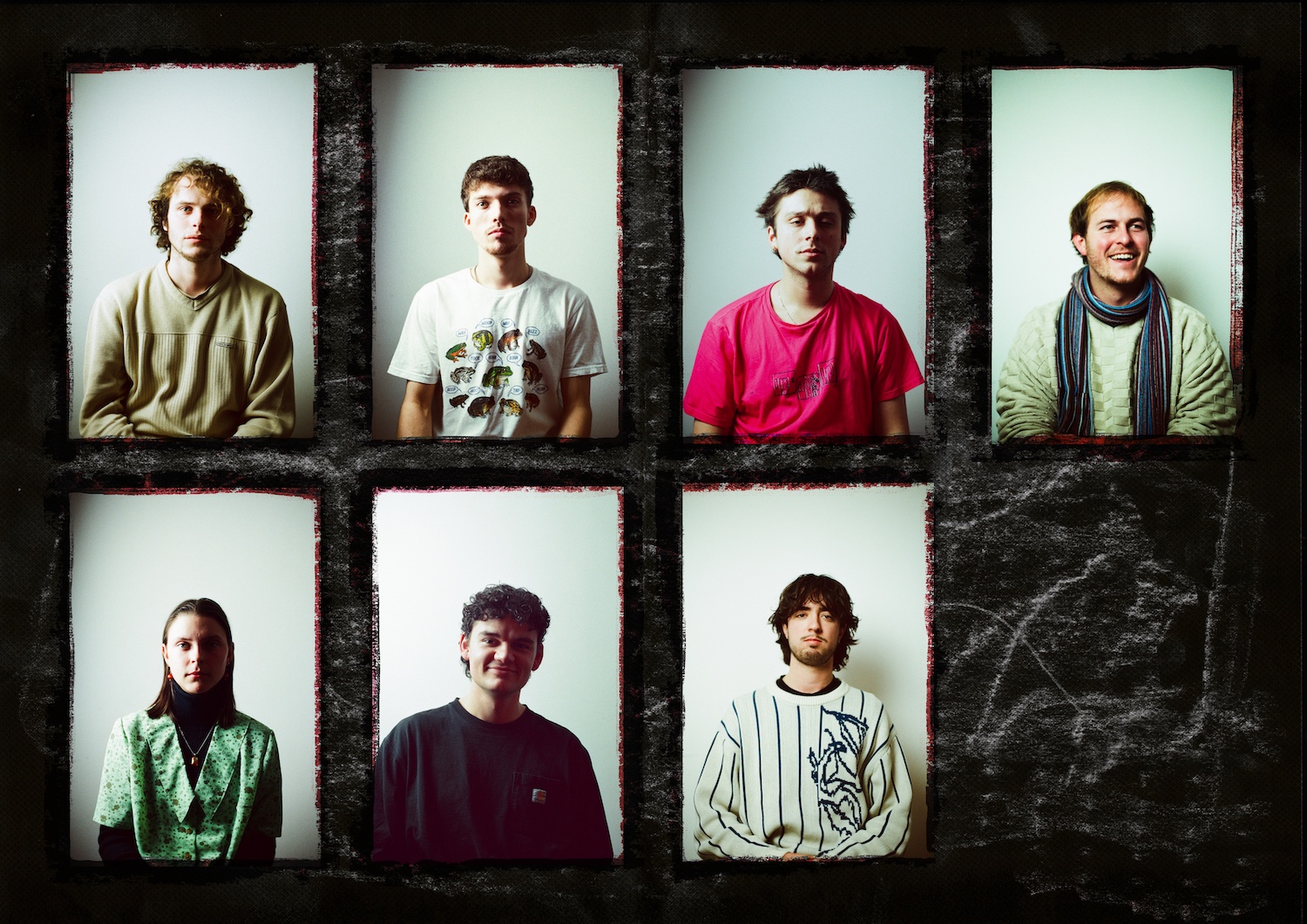
Making The Feast of St. Perpetua required the group to lean on experimentation as they figured out what worked for them.
Still in the works, their next project reflects a more solid understanding of the group’s sound and what they want to express, as Saul filled Atwood in on the current process: “It’s a new kind of direction for us, and it definitely feels a lot more like MLEKO. The EP we’re working on is a reflection of our sound and where we’re at now, but I also think it will hopefully sound more different and unique in comparison to the first EP.” Echoing his point, Endean nodded: “I think it’s just… you can tell everyone’s been playing for longer. Everything works really nicely… It’s like a slightly different direction, more complicated and more melodic at the same time.”
Growing more confident as a group after their debut, MLEKO learned to fuse their differing musical tastes into something distinct to them. Looking back on the process of The Feast of St. Perpetua, Saul reflected on that development as he looked to the future: “We cherry picked a little bit since we have a lot of different music tastes, and then brought all these different things into the sound which then turned into a slightly unique or MLEKO sound… I think that’s the lovely thing about being in a group of seven.”
— —
Based in the Irish Midlands, Esther Akinborewa got into journalism craving for a space to share her enthusiasm for the people behind the art. Her goal has always been to create a place for passion without restraints. As a writer of fiction, her writing style is an ode to her love of literature and desire to understand the human experience through melodies and words. Reflecting her love for music playing instruments was inevitable starting out with piano, and later venturing into guitar and violin (whilst running away from music theory). On most days you’ll find her putting on a good CD (probably Nothing But Thieves – Broken Machine), and writing a Substack draft she’ll forget about and then post a couple months later.
— —
:: stream/purchase Feast of St. Perpetua here ::
:: connect with MLEKO here ::
— —
— — — —
Connect to MLEKO on
Facebook, TikTok, Instagram
Discover new music on Atwood Magazine
 © Charlie Smith
🖼️ © Charlie Ashton
 © Charlie Smith
🖼️ © Charlie Ashton
:: Stream MLEKO ::