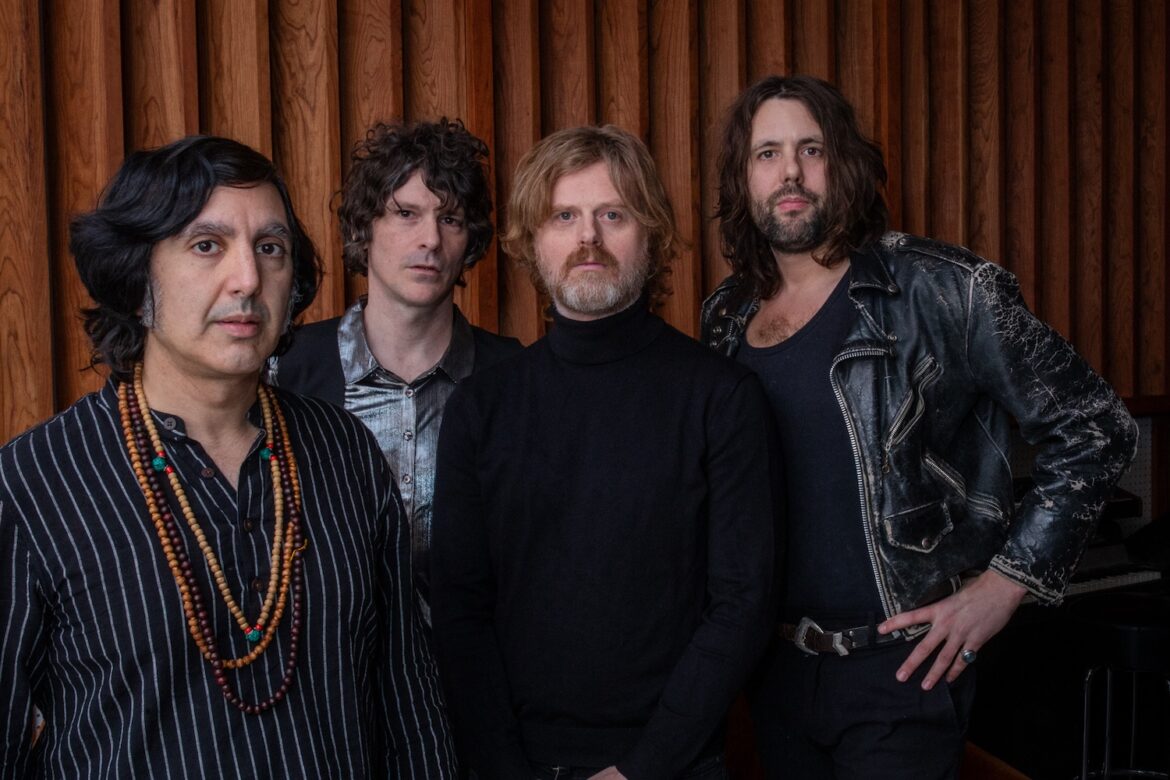
Montreal psych-rock band Elephant Stone confront personal grief and political fury on ‘ASHA,’ a tender and restless album that reckons with fear, disillusionment, and the pain of letting go without ever surrendering its belief in hope. Frontman Rishi Dhir sits down with Atwood Magazine to discuss the losses that shaped the music, the dangerous allure of easy answers, and the love that keeps him searching for light in a darkening world.
Stream: “I Got A Pill” – Elephant Stone
I’m sick of everything evil.
* * *
Rishi Dhir has every reason to be angry.
Twenty years into his journey with Montreal psych-rock band Elephant Stone, the singer/songwriter and sitarist finds himself confronting a world increasingly consumed by fear, hatred, and political upheaval, even as profound personal losses have shaken his own. His mother died, and a dear friend took his own life. At the same time, Dhir watched his children grow older and begin charting their own paths, confronting him with the painful inevitability of change and the passage of time.
Dhir channels all this turmoil into ASHA, Elephant Stone’s tender and restless tenth studio album – a deeply personal record born of grief and disillusionment, yet driven by an enduring belief that hope can survive even the darkest of times.

I got a way to make you feel all alright
Just take this pill then
you’ll all be flying high
Nothing to do and nothing to give in to
It’s just as easy as walking in two by two
To the left, to the right
To the trenches you go into
You know you gotta fight (alright)
– “I Got a Pill,” Elephant Stone
Released August 28 via Elephants On Parade, ASHA takes its name from Dhir’s late mother – a name that means “hope” in Sanskrit. The dedication is intimate, but the music reaches far beyond one man’s mourning. Across its nine songs, Dhir and his bandmates take aim at political opportunists, reckon with death and absence, and search for reasons to believe in a future worth fighting for.
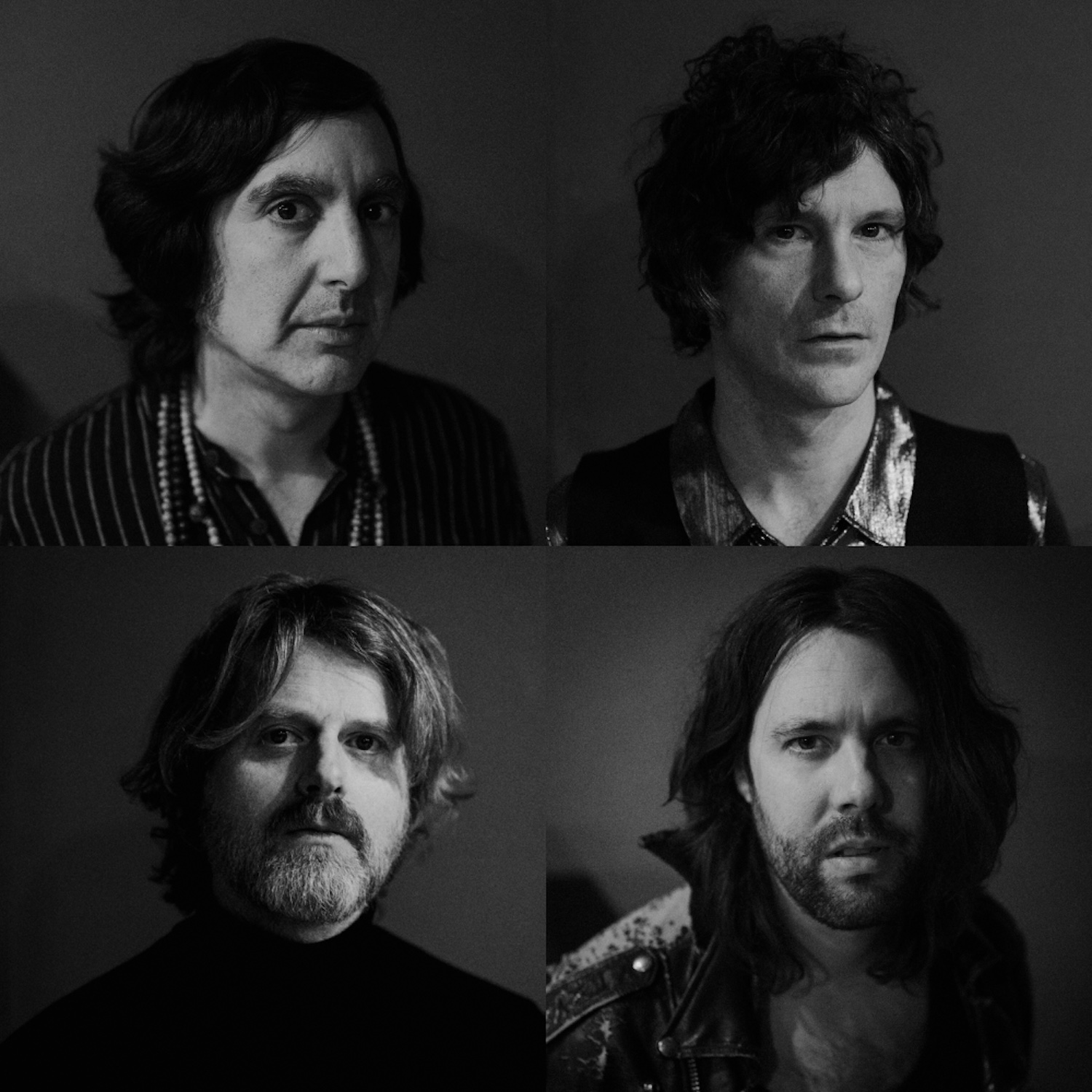
Founded in Montreal in 2006, Elephant Stone have spent two decades carving out a distinctive musical identity, weaving Indian classical traditions into hypnotic psychedelic rock and richly melodic pop songwriting. Alongside longtime bandmates Miles Dupire (drums), Robbie MacArthur (guitar), and Jason Kent (multi-instrumentalist), Dhir has built an adventurous catalog that stretches from their Polaris Prize-longlisted 2009 debut The Seven Seas to 2020’s dystopian, environmentally conscious Hollow and beyond. His creative ambitions have only grown with time: Having gradually assumed greater control of the recording process, Dhir produced, engineered, and mixed ASHA himself at Sacred Sounds, his Montreal home studio, bringing his increasingly uncompromising musical vision to life on his own terms.
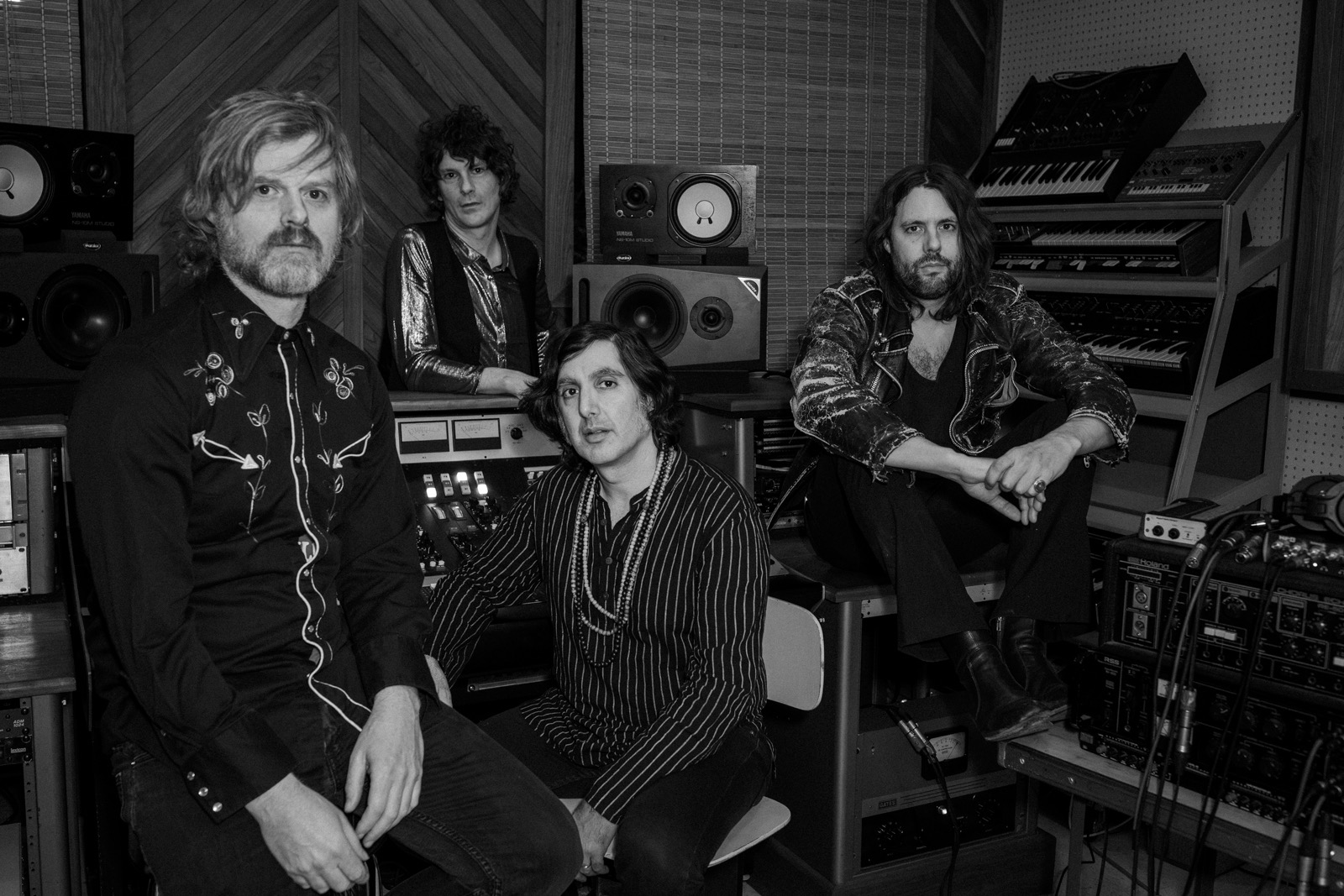
For this album, Dhir found inspiration in an unexpected place: The dramatic interplay of darkness and illumination in Baroque painting.
“I love Caravaggio’s mastery of contrast, and I wanted to bring that to my music,” he tells Atwood Magazine. That push and pull announces itself almost immediately. Opener “Here Comes The Rising Sun” reaches toward renewal even in the face of suffering – “We rise yet again through grief and pain” – only for the fuzzed-out “Everything Evil” to come roaring in with a sub-two-minute blast of proto-punk fury. The shift from perseverance to outrage is more than a change of pace; it captures the conflicting emotions coursing through a record that refuses to look away from the world, no matter how painful the view.
“Songwriters are empaths. We observe what’s happening around us and process our feelings through songs,” Dhir explains. On “Everything Evil,” that sensitivity erupts into furious disbelief as he condemns those who exploit the very people they claim to serve: “They sell you freedom / But they still hold the key to the door.” It’s a pointed indictment of power masquerading as liberation, and “Fascists Killed Yer Rock ‘N’ Roll” carries that frustration even further. Driven by crushing guitars, a heavy, deliberate rhythm, and subtle flourishes of sitar, the song confronts authoritarianism with the weight of history behind it. “They blame outsiders for all yer hard times just as they pull the rug,” Dhir sings, exposing a familiar cycle of scapegoating and betrayal. Yet even amid the song’s suffocating intensity, a flicker of defiance survives: “We know yer game, we’ve all heard that song.”
They’ll say it’s freedom, they have all control
Sell ya out in the end
So when you’re left here standing with nothing
You’ve got nothing to defend
The streets are all empty,
the sound is now so cold
Fascists came and killed yer rock n roll
Songwriters are empaths. We observe what’s happening around us and process our feelings through songs.
* * *
That same sinister machinery takes on an altogether more seductive form in “I Got A Pill,” one of ASHA‘s most captivating and unsettling songs.
Where “Fascists Killed Yer Rock ‘N’ Roll” confronts the threat head-on, “I Got A Pill” invites us inside the deception itself. “It’s about the darkness of our current time, and our belief that there’s a way through it,” Dhir says, adding one final word for emphasis: “Hope.” Sitar, tabla, and Hammond organ weave through the song’s infectious and charming psychedelic rock, wrapping its menacing message in an almost irresistibly warm musical invitation. “I got a pill to make you feel all alright,” Dhir sings, only for another voice to reveal the chilling truth beneath the promise: “He’s got a pill to come and take your life.” This call-and-response exposes the distance between what powerful people promise and what they actually intend. The song’s greatest trick is how effortlessly its buoyant melody draws us toward the very danger its lyrics warn against.
But there’s another layer to “I Got A Pill” that makes its message even more disturbing. Dhir initially imagined the song from the perspective of a demagogue promising simple solutions to complicated problems, only to abandon his followers once he’d gotten what he wanted. Yet in developing the accompanying music video with director Adam Traynor, he began to consider the other side of that relationship: the frightened, overwhelmed person who desperately wants to believe that someone, somewhere, has an answer. “After a call with Adam Traynor, the director, and explaining the song, I started seeing it from the perspective of the other person too: Completely overwhelmed by the world and just wanting a pill to take the pain away. Either way, it’s not a happy ending,” Dhir shares. It’s a crucial distinction, one that reveals the vulnerability beneath political manipulation. The song recognizes that desperation can leave people especially susceptible to those who promise to take their suffering away.
Traynor brings that contradiction to extraordinary life in the song’s surreal music video, populating a brightly colored, children’s-show-inspired fantasy with handcrafted puppets and an unsettlingly cheerful mascot. Its sugary imagery evokes the innocence of Saturday morning cartoons, even as the narrative spirals into something increasingly grotesque. What begins as a whimsical invitation gradually reveals itself as a nightmare of conformity and control. The contrast is as absurd as it is effective: Behind every reassuring smile lurks the possibility of manipulation, and every promised escape carries a price. It’s a wonderfully twisted visual companion to a song whose most frightening observation is also its most recognizable – that the easiest answers are often the ones we should question most.
Yet for all the righteous anger animating ASHA, its deepest emotional wounds are far more intimate.
“Parallel and Contrary Motion” brings Dhir’s grief into devastating focus, tracing the painful distance between losing someone and learning to live without them. The song grew from his friendship with Christian Dorey, who struggled with anxiety and depression before taking his own life. Over dreamy acoustic textures, a rumbling bass line, and sweeping psychedelic melodies, Dhir wrestles with the permanence of absence: “I let you go but I could never let you leave.” It’s a heartbreaking contradiction, capturing the impossible desire to hold onto someone who is already gone. Later, “In my dreams I can still feel you near” finds him reaching across that distance, discovering how memory can preserve a connection even as it reminds us of everything we’ve lost. Here, the record’s larger philosophical questions become painfully personal.
This sorrow echoes through the album’s more introspective moments, where Dhir keeps searching for a foothold in a world that won’t stop shifting. The hard-hitting “Broken Arrow” finds him lost and reaching for another person as “a light, a rock, a reason,” while the enchanting, piano-driven “A Beautiful Fate” wrestles with regret before arriving at the startling declaration, “Thankful because it’s a wonderful fate.” There’s no such certainty in “Sleepwalking In Prague,” whose wandering narrator moves through a city of ticking clocks and gathering crowds, wondering whether he’s found “Freedom, joy, or just fear.” And on the beautifully spellbinding closer “Spirit, Take Me Away,” featuring Amy Millan, longing becomes a desperate plea: “How long must I keep on wandering / What is there left to say?” Together, these songs deepen ASHA‘s portrait of a man learning to accept what he cannot control without losing his capacity to love.
Beyond the individual stories they tell, these nine songs reveal a band with an extraordinary feel for emotional depth and musical expression.
Sitar and electric guitars curl around one another, melodies drift through a dreamy psychedelic haze, and lush, enveloping arrangements suddenly erupt into bursts of distortion and thunderous rhythm. There’s a beautiful fluidity to it all, an understanding of when to let the music breathe and when to let it roar. At its gentlest, ASHA feels almost weightless, drawing us into delicate passages of aching intimacy; at its most ferocious, it hits with the full force of emotions too overwhelming to contain. Elephant Stone navigate these extremes with remarkable sensitivity, giving every feeling its own space and allowing the music to speak as powerfully through restraint as it does through sheer intensity.
And beneath all that sonic beauty lies a remarkably openhearted exploration of what it means to be alive in a world that can feel increasingly difficult to understand. Dhir’s lyrics move between the forces threatening our collective future and the deeply personal questions that emerge when life changes beyond recognition. “Who will I be?” he wonders on “Broken Arrow,” a question that resonates far beyond the circumstances of any single song. These are the uncertainties we all carry, the fears we struggle to articulate, and the connections we cling to when everything else seems fragile. ASHA gives those experiences a place to exist together, embracing the messiness of being human with compassion and an extraordinary musical imagination. It’s a profoundly moving journey, as comforting as it is confronting, and one that invites us to discover our own meaning within its many layers. These songs may begin with Dhir’s life, but they leave room for ours.
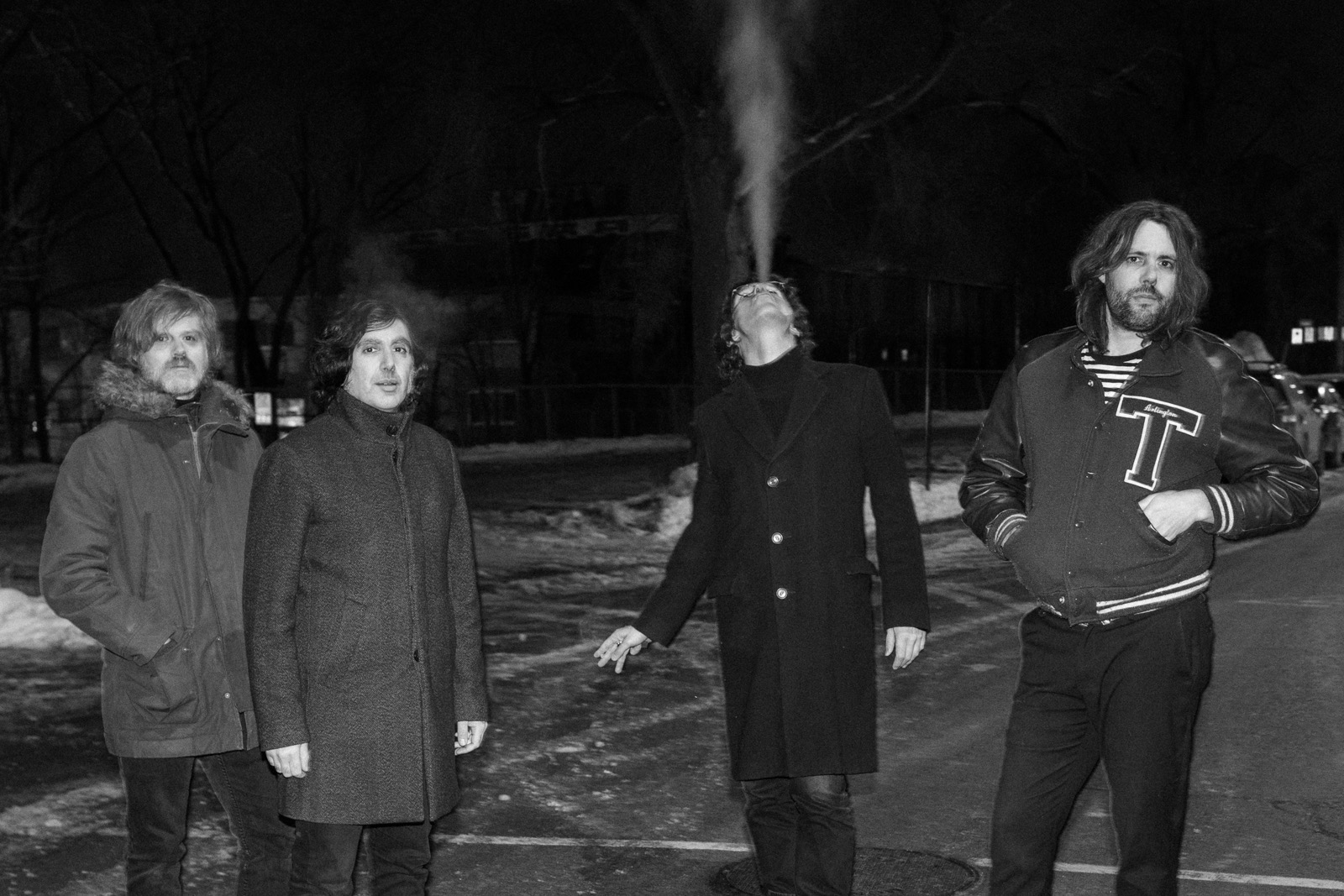
Only after completing ASHA did Dhir fully recognize the emotional journey he’d created.
Listening back to the album with his wife, he heard a progression that reflected far more than the individual circumstances behind its songs. “I heard a narrative arc: Innocence, suffering, depression, loss, acceptance, finality. But there’s always hope shining through,” he recalls. It’s a revealing insight into a record that carries so much sorrow without surrendering to despair. Twenty years into Elephant Stone’s story, Dhir has created music that confronts the ugliness of the present while holding fiercely to the people, memories, and ideals that give life its meaning.
Perhaps that’s what makes ASHA so affecting. Its anger comes from a place of love, its sorrow from the depth of human connection, and its defiance from the conviction that even a wounded world remains worth believing in. Atwood Magazine recently caught up with Rishi Dhir to explore the personal losses and political anxieties behind Elephant Stone’s tenth record, the haunting duality of “I Got A Pill,” and how an artist who’s spent decades searching for transcendence found renewed purpose in the struggle between darkness and light. Read our interview below, and listen to ASHA wherever you get your music.
Dhir may be sick of everything evil, but he refuses to let it have the final word.
— —
:: stream/purchase ASHA here ::
:: connect with Elephant Stone here ::
— —
Stream: ‘ASHA’ – Elephant Stone
A CONVERSATION WITH ELEPHANT STONE

Atwood Magazine: For those who are just discovering Elephant Stone today through this writeup, what do you want them to know about you and your music?
Elephant Stone (Rishi Dhir): Thanks for having me. I guess that we’ve been around for 20 years and have a new album, ASHA.
Elephant Stone have been making music for twenty years now. How do you feel ASHA captures who you are today, especially as the band's tenth studio release?
Elephant Stone: I say this about all my releases, but I really do think this is our strongest and most mature release to date. This album means a lot to me.
Elephant Stone: Sometimes the world feels very dark. I like to think there is always hope, and I want to remind people of that.
You've described this album as a meditation on grief, hope, and the darkness of these times. What do you think you were trying to understand through these songs?
Elephant Stone: Songwriters are empaths. We observe what’s happening around us and process our feelings through songs. I lost a dear friend to suicide during the writing of this album. We’re witnessing the genocide of Palestinians. We see the continuous rise of fascism. I see my children grow up and start defining their own path. I lost my mother. I had a lot to process, and I did it through these songs.

Sometimes the world feels very dark. I like to think there is always hope, and I want to remind people of that.
* * *
“I Got A Pill” is a song about demagogues, fear, and easy fixes that are really just control dressed up as relief. What's the story behind this song?
Elephant Stone: This song kind of works from two angles. My initial thought was that it was about someone offering easy answers to complex issues: “Just follow me and I’ll take care of everything.” But once he has what he needs, he leaves town and leaves the mess for you to live with. After a call with Adam Traynor, the director, and explaining the song, I started seeing it from the perspective of the other person too: completely overwhelmed by the world and just wanting a pill to take the pain away. Either way, it’s not a happy ending.
The chorus is so insidious: “I got a pill to make you feel all alright,” followed by the darker answer beneath it – “he's got a pill to come and take your life.” How did you want the song to hold that tension between comfort and danger?
Elephant Stone: The demagogue offers an easy solution, but his minions, doing the real dirty work, know what he actually wants.
Elephant Stone: It’s about the darkness of our current time, and our belief that there’s a way through it. Hope.
The “I Got A Pill” music video is such a trip – these handcrafted puppets, bright colors, cereal-box fantasy, and a kind of children's-show cheerfulness curdling into something much more sinister. What was your first reaction when you saw that world come to life?
Elephant Stone: It far exceeded anything I could have imagined. Adam and Diabolo Puppets created something truly magical.
What did you want the “I Got A Pill” video to bring out in the song that maybe the recording alone couldn't?
Elephant Stone: When I collaborate with another artist, I want their vision to come through. I did my part with the song. Then it’s their turn to tell the story.
Some of the album's other singles, “Fascists Killed Yer Rock 'N' Roll” and “Everything Evil,” help build out the record's world. Can you share a bit more about these two songs, and your vision for the album as a whole?
Elephant Stone: As I mentioned, these songs are me working through what’s happening around me. These are challenging times, with a lot of evil around, and I’m sick of it. I’m sick of everything evil.
Elephant Stone have always blurred Western psych-pop and Indian classical tradition, but ASHA feels especially urgent and heavy. How did you want this album to sound as a complete body of work?
Elephant Stone: I’ve been making records for almost 30 years. At each stage I’ve learned something. In the past few years I’ve been able to take more control over the recording process, recording and now mixing my own albums. I wanted the album to have this darkness, thematically and sonically, but also have light. I’m a big fan of the Baroque art movement. I love Caravaggio’s mastery of contrast, and I wanted to bring that to my music. I sound so pretentious, sorry:)
You produced, engineered, and mixed ASHA yourself at Sacred Sounds. What does having that kind of control allow you to access creatively?
Elephant Stone: I’m able to take as long as I need until what’s coming out of the speakers matches what I’m hearing in my head.
There's so much anger and political anxiety on this record, but also real tenderness and hope. How do you keep those emotional poles in conversation with each other?
Elephant Stone: This music is a pretty honest representation of me. If you know me, you know I can get lost in my thoughts but will also love and support you with everything I’ve got.
What can you share about the larger emotional journey of ASHA beyond the singles?
Elephant Stone: A few weeks after finishing the album, my wife and I had a listening session, some gummies and drinks involved. I heard a narrative arc: innocence, suffering, depression, loss, acceptance, finality. But there’s always hope shining through.
What do you hope listeners take away from ASHA, and what have you taken away from creating this music and now putting it out?
Elephant Stone: I hope they connect with it and find their own meaning.
In the spirit of paying it forward, who are you listening to these days that you'd recommend to our readers?
Elephant Stone: The new Charli xcx. Solid.
— —
:: stream/purchase ASHA here ::
:: connect with Elephant Stone here ::
— —
Stream: “I Got A Pill” – Elephant Stone
— — — —

Connect to Elephant Stone on
Facebook, 𝕏, TikTok, Instagram
Discover new music on Atwood Magazine
© Bowen Stead
 © Bowen Stead
:: Stream Elephant Stone ::