Adam Rubenstein channels the anxiety and isolation of life behind a screen into a surging rock catharsis on “Don’t Mean Much,” a fiercely melodic plea for real human connection that keeps tightening its grip until Vernon Reid’s searing guitar solo blows the tension wide open. In conversation with Atwood Magazine, a principal songwriter behind Split Lip and Chamberlain traces the creative reinvention and restlessness behind his third solo album, ‘Firebreak,’ a record that keeps reaching through change, distance, and doubt toward the people and ideas worth holding onto.
Stream: “Don’t Mean Much” – Adam Rubenstein ft. Vernon Reid
The more life passes through a screen, the easier it becomes to confuse visibility with closeness.
Urgent and electrically charged, Adam Rubenstein’s “Don’t Mean Much” lives inside that fracture, watching likes, filters, cloud connections, and endless comparison erode the relationships they promise to sustain. Driven by a restless rock pulse that keeps climbing until it bursts open, the song gives digital disconnection a physical weight and makes the need for genuine human contact impossible to ignore.
It’s a song about being seen everywhere and known nowhere – a dynamic, clear-eyed reckoning with the emotional cost of living at a remove from one another.
It don’t mean much
All this stuff we’re floating up
Connected through a cloud
While on the ground we’re breaking up
I had a short exchange
My words in disarray
Like pleasantries for enemies
No wonder I’m so down
I haven’t turned around
I’ve only seen my friends
Through a lens of clarendon
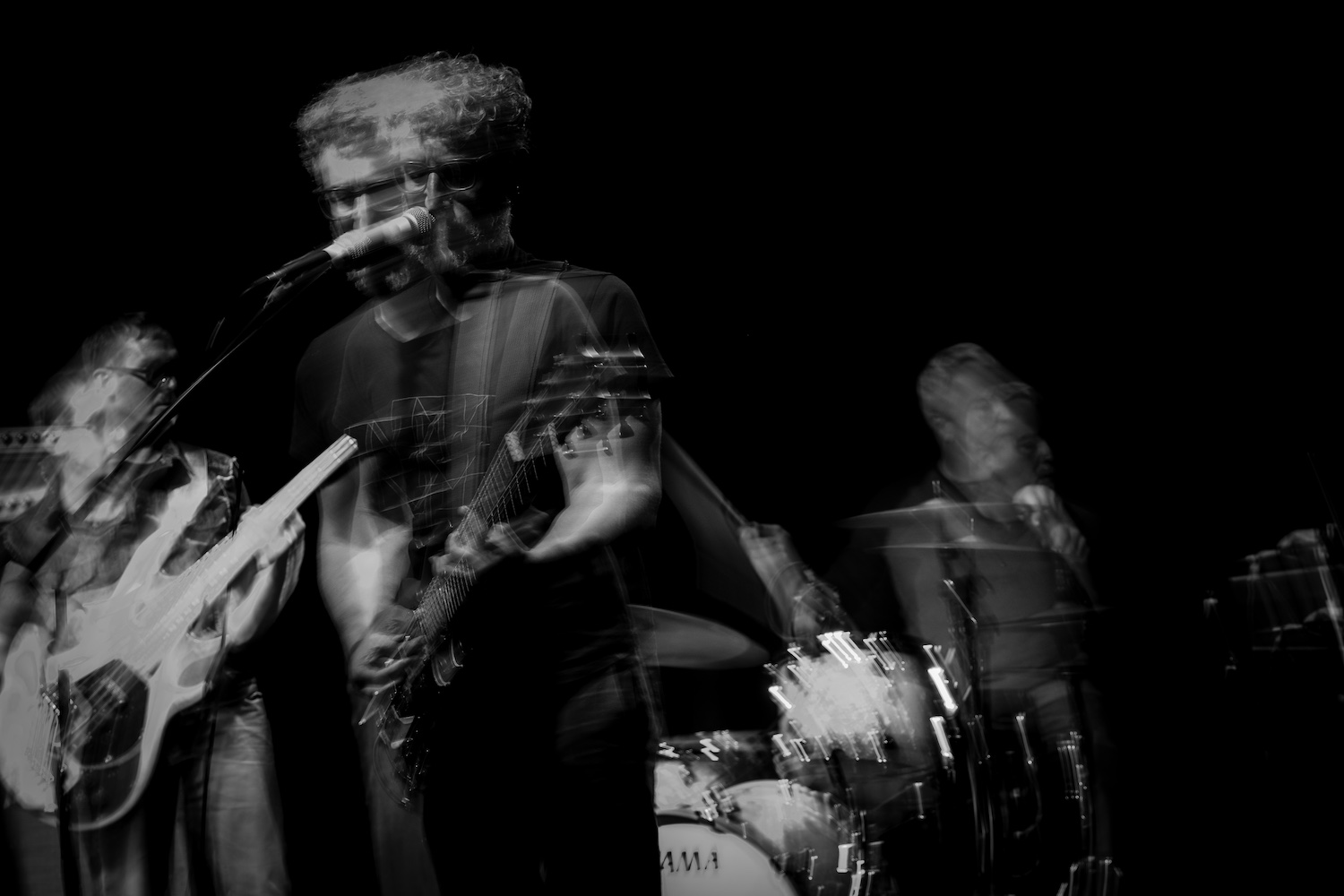
Atwood Magazine is proud to be premiering the music video for “Don’t Mean Much,” a feverish, spirited song with anxiety coursing through its veins. Taken from Adam Rubenstein’s recently released album Firebreak (August 14, 2026 via Spartan Records), the track barrels forward on electric guitars and mounting tension before surrendering its final stretch to Living Colour’s Vernon Reid, whose unmistakable lead guitar solo sends the whole performance into a frenetic, roaring release. Rubenstein conceived that closing section as a jam from the start – and Reid, one of his longtime guitar heroes, gives the song exactly the kind of untamed ending it demands.
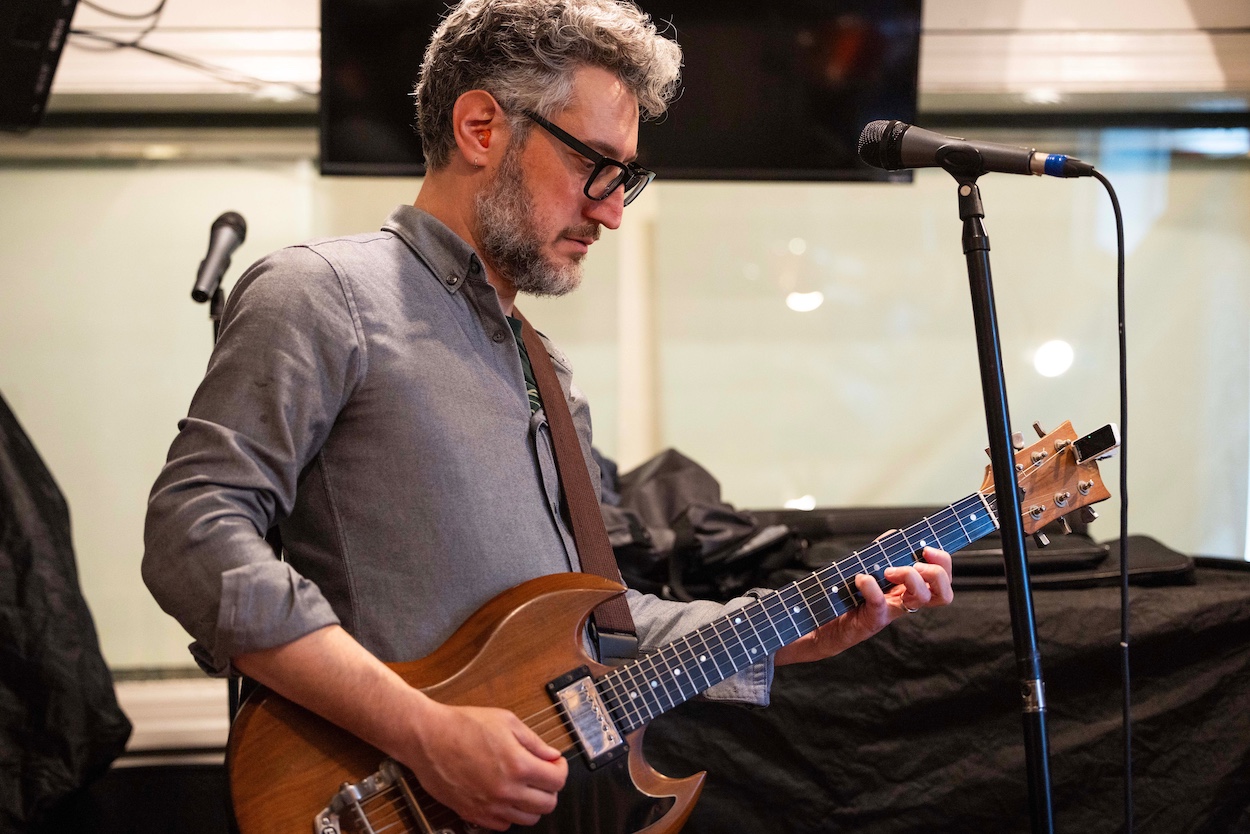
Rubenstein reaches this chapter with a musical history that stretches across several distinct worlds. He came up in the Midwest hardcore scene as a principal songwriter in Split Lip and later Chamberlain, helping push the latter toward the melodic, emotionally open rock that would define much of his career. Along the way, he built a parallel life as a composer for film, television, and commercial projects while continuing to write outside the boundaries of any one band. Even in his solo work, the heavier instincts never fully disappear; they remain embedded in the music’s tension, dynamics, and sense of release.
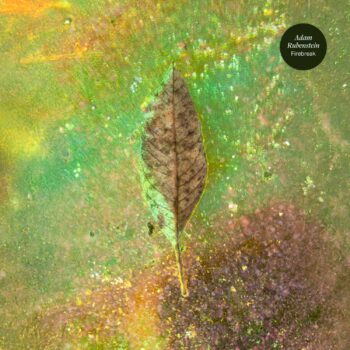
Firebreak catches him in the midst of another reinvention. After more than two decades in New York, Rubenstein relocated to Cincinnati, bringing with him years of unfinished ideas and a growing need to make another record under his own name. The move sharpened that impulse into action, giving him both distance from an old life and a new vantage point from which to examine it. A decade after his previous solo album, he emerges here as an artist still hungry to begin again – carrying the weight of where he’s been without letting it dictate where he goes next.

Years of adaptation give “Don’t Mean Much” its deeper sting: Rubenstein knows how much can shift around a person, and how easily the bonds that anchor a life can fray in the process.
The song’s sharpest lines collapse an enormous technological system into the smallest units of everyday life. “Connected through a cloud / While on the ground we’re breaking up,” Rubenstein sings, before the language gets even more personal: “I’ve only seen my friends / Through a lens of clarendon.” A few lines later, the endless scroll has curdled into self-comparison – “I’ve liked your ugly art / But I don’t like myself” – and suddenly the problem reaches beyond how we communicate. “Don’t Mean Much” catches the way an online life can distort our relationships with other people and, eventually, with ourselves.
It don’t mean much
All this stuff we’re floating up
With wires and optic lights
It don’t seem right
To offer love
Those references belong to an earlier era of social media, but time has only made their implications harder to dismiss. The vocabulary may date the song’s origins; the emotional trap underneath it has proved far more durable. Rubenstein’s own relationship to that trap is where “Don’t Mean Much” started.
“Don’t Mean Much” began as part of Rubenstein’s annual RPM Challenge, a self-imposed writing exercise he’s undertaken each year since Covid. Like several ideas that eventually found their way onto Firebreak, the song spent years waiting for the right home. Its long gestation ultimately gave Rubenstein the distance to revisit an anxiety that had been following him well beyond the writing session itself.
“Truth be told I wrote the skeleton of this several years back, at a time when social media was a bit more in its infancy,” he tells Atwood Magazine. “I suffer from anxiety which is largely an imagined construct, and the song is sort of note to self – a reminder that what we see out there on the grid is often fictional and not worth our time worrying about.”
Filled so many hearts
I’ve liked your ugly art
But I don’t like myself
I couldn’t do as well
So much to compare
I’ve forgotten how to share
The world I’ve seen
Outside this submarine
Still down again I go
To quiet depths below

Rubenstein’s writing keeps pulling those abstractions back down to earth.
The cloud becomes a place where connection can fail; a filter becomes the distance between friends; a screen full of approval becomes another surface against which to measure yourself. “We’ve become reliant on devices in the sky to stay unreliably connected,” he explains. “And at the same time, we often sacrifice true human connection, when we interface solely through cyberspace. Certainly many of our relationships with friends and family have suffered without us even realizing. On the surface it may feel like we have these amazing tools and we’re keeping in better touch, but I struggle to decipher if that’s always true.”
It don’t mean much
All this stuff we’re floating up
Connected through a cloud
While on the ground we’re breaking up
The arrangement gives all of that unease somewhere to go. “Don’t Mean Much” keeps pressing forward rather than settling into its doubts, its electric guitars gathering force around Rubenstein until the final section blows the doors open. Vernon Reid enters as both collaborator and catalyst, scattering flashes of guitar through the song before taking command of its closing minutes with a solo that sounds gloriously uncontained. The release works because the pressure has been building from the beginning: After so much lyrical claustrophobia, Reid’s guitar finally breaks free.
For Rubenstein, hearing that eruption inside one of his own songs carried another kind of charge. “Yeah, having Vernon aboard is a pinchable life moment for me,” he says. “There’s no higher compliment than when one of your heroes likes your song enough to want to contribute. Vernon is eternally prolific and always busy, so we did this remotely. The mad scientist that he is, he sent me a whole slew of tracks to choose from. I actually had to pare it down and it was difficult. He offers some flourishes throughout the track, but culminates with a trademark mind-boggling Vernon lead in the final section. I got admittedly a little emotional when I popped the first stem into the session. There are millions of guitarists out there, but nobody plays quite like him. He’s unmistakable.”
Director Dave Morrison approaches the same tension from the visual side, using a large convex lens to bend, warp, and mediate Rubenstein’s image throughout the video. It’s an apt device for a song preoccupied with all the filters standing between one person and another, while the performance itself keeps Rubenstein firmly at the center. He gives Morrison the credit readily: “I really had no vision for it. My immensely talented friend Dave Morrison dreamed the whole thing up. He had this big convex lens which serves as the perfect thematic device throughout.” The production ultimately widened beyond Morrison and Rubenstein themselves. “It’s always awkward performing a song in that way but Dave coaxed me out of my shell, and I think the performance feels pretty natural,” Rubenstein adds. “It felt good when we filmed it at least! Vernon had his daughter film him at the end, and Dave added some amazing VFX to tie it all together.”

“Don’t Mean Much” sits naturally inside Firebreak, a record repeatedly concerned with what survives when familiar structures fall away.
Its creation carried its own productive divide: Rubenstein captured much of the album’s live-band energy in New York alongside trusted collaborators, then completed the remaining work largely on his own after relocating to Cincinnati. Communal performances and solitary finishing sessions pull against each other throughout the record, lending its songs an immediacy that never completely shakes their underlying introspection.
The title track gives the record’s many changes a single governing image. “Firebreak” arrived last, recorded largely in Rubenstein’s Ohio basement studio, and its title proved capacious enough to hold both the turmoil beyond his walls and the transition accompanying his move. “Lyrically the song deals with the idea that as on fire as the world might seem, eventually the ashes have a way of settling, and we’re able to forge a better path forward,” Rubenstein says. “Admittedly it was meant to be a bit of a political song, but I think the theme stretches beyond those boundaries, and maybe subconsciously I wrote it as a bit of a self-prescribed motto – that in trying times it’s important to remember there’s always a moment where things reset. This record personally feels like a reset button in a lot ways.”
Across Firebreak, Rubenstein keeps approaching change from a different angle. Opener “Still” plants him in unfamiliar ground, its pedal steel and recurring images of roots, seeds, dirt, and growth framing relocation as both rupture and possibility: “I want to root, want to grow, want to be someone else / On this flowering hill.” “Slow As You Go,” meanwhile, brings the passage of time into the family home. Written as a love letter to his daughter, its gently circling language watches childhood accelerate while a parent wishes, impossibly, for the machinery to slow: “Don’t run so fast that I can’t catch you / Chasing the unknown.”
Elsewhere, Firebreak extends beyond Rubenstein’s immediate present. “If We Reach the Shore” reaches into family history through the story of his Holocaust-survivor grandfather, while “Choosing Sides” confronts the seduction of political tribalism and the comfort of inherited scripts. “Barriers” closes the record by looking toward Rubenstein’s late cousin Ronnie Caldwell of the Bar-Kays, imagining connection across racial division through music itself. Its final lines reach for a meeting place “Where music lives inside / Where brotherhood can thrive / Past those barriers” – an ending that leaves the album searching for common ground rather than surrendering to fracture.
The search for common ground makes “Don’t Mean Much” more than an isolated warning about screens.
Across an album shaped by relocation, parenthood, history, distance, and reinvention, Rubenstein repeatedly asks what allows a person to remain connected while life redraws the map around them. Here, the threat comes from a technology built to make connection effortless – and the answer lies in recognizing the difference between contact and communion.
By the end of Firebreak, all of that upheaval has left Rubenstein looking forward rather than backward. What he wants to pass along to the listener is bound up with the same creative impulse that carried him through this chapter in the first place. “I hope folks find some source of hope in the songs,” he shares. “Thematically there’s a lot on this record both musically and lyrically that addresses reinvention and change. I believe as long as one finds those moments where you’re so excited about an idea that you can’t sleep – then you never grow old. I certainly felt that way many times making the record, and I hope that sentiment transfers to the listener.”
Atwood Magazine caught up with Rubenstein to dig deeper into “Don’t Mean Much,” the surreal thrill of hearing one of his guitar heroes tear through its finale, the move and relationships that helped shape Firebreak, and what success, creativity, and reinvention mean after decades spent making music on his own terms.
The more life passes through a screen, the more urgently “Don’t Mean Much” asks us to remember what can’t be contained inside one: The irreplaceable closeness of actually knowing one another. Watch its music video exclusively on Atwood Magazine, and catch up with Adam Rubenstein in our full interview below!
— —
:: stream/purchase Firebreak here ::
:: connect with Adam Rubenstein here ::
— —
Stream: ‘Firebreak’ – Adam Rubenstein
A CONVERSATION WITH ADAM RUBENSTEIN

Atwood Magazine: Adam, hello and thank you for your time! For those who are just discovering you today, what do you want them to know about you and your music?
Adam Rubenstein: My origin story begins in the punk scene, and I’m a product of some magical years touring in the ‘90s. Myself and my friend David were the principal songwriters in Split Lip and later Chamberlain, and most of my opportunities and successes trace back to that band in one way or another. Over the years I’ve become a bit of musical chameleon – composing for film, TV, commercial projects, and have just completed my 4th solo record (my first under the moniker Adam Dove). My solo work I suppose fits somewhere in the singer-songwriter bin, but somewhere in the DNA of the music I think you’ll hear my heavier lineage poking it’s head out.
With us being decades into your career across Split Lip, Chamberlain, and your solo work, can you recommend a couple deeper cuts or personal highlights from your catalog for Atwood’s crate-digging audience to sink their teeth into?
Adam Rubenstein: There are of course a lot of Split Lip and Chamberlain songs that were pivotal to my personal growth, but a newer song, “Not Your War,” might be my favorite in our catalog. It’s the lead track from our 2020 record Red Weather, an album I think a lot of folks missed during the covid years. It was such a fun record to make, free from egos and the tension of our youth. This song felt like a nice bridge from our teenage angst into adulthood – and for that reason I think a cathartic tune for many of the guys.
As for solo work, “Sunday Season” is an important one for me from my 2013 record Excavator. I moved to New York City in the early 2000s, and remember writing this one on the rooftop of my East Village apartment building. It deals with staying true to one’s self and ambitions despite the relentless gravitational pull of the city and all of its obstructive temptations. Strangely I never seem to tire of playing it.
Who are some of your musical north stars, and what are you most excited about the music you’re making now?
Adam Rubenstein: Elvis Costello, Elliott Smith, Fugazi, The Police are probably at the top of my list. But I try very hard not to borrow from my heroes. I think when you go down the road of attempting to capture the sonics of artist A or B, it’s a likely fail. Ultimately when you sound like yourself you get the best results. I’m most excited about this new record because I came into the studio with a batch of ideas in various forms of completion, and with some incredible collaborators just let the recording process play out, without overthinking the arrangements. I’m clinically guilty of that. It may sound trite, but this feels like my most honest effort to date.
Firebreak is your first solo album in a decade. You’d been accumulating songs for years before your move from New York to Cincinnati finally helped bring the record into focus. Why did this become the moment to return to your solo work?
Adam Rubenstein: I was in a bit of a panic at that time of making this record. I lived in New York for over 20 years, and I’d known for some time that relocating was creeping up and out of my control. My favorite music makers and collaborators live in the city and I wanted to capture something with my people, before I regretted not having done so. But it was also time to finally release a new album. For the last decade I’ve been focused on my composing work, plus some Chamberlain projects.

At its core, Firebreak wrestles with change – relocation, fatherhood, creative identity, time passing, and learning how to live inside a new chapter. What does the album’s title mean to you, and how does it capture the record as a whole?
Adam Rubenstein: “Firebreak” was the last song recorded for the album. I tracked it mostly in solitude in my basement studio here in Ohio. Lyrically the song deals with the idea that as on fire as the world might seem, eventually the ashes have a way of settling, and we’re able to forge a better path forward. Admittedly it was meant to be a bit of a political song, but I think the theme stretches beyond those boundaries, and maybe subconsciously I wrote it as a bit of a self-prescribed motto – that in trying times it’s important to remember there’s always a moment where things reset. This record personally feels like a reset button in a lot ways.
Today we’re premiering the music video for “Don’t Mean Much,” a song about searching for genuine human connection in an increasingly virtual world. What’s the story behind this one?
Adam Rubenstein: That’s pretty much it. Truth be told I wrote the skeleton of this several years back, at a time when social media was a bit more in its infancy. I suffer from anxiety which is largely an imagined construct, and the song is sort of note to self – a reminder that what we see out there on the grid is often fictional and not worth our time worrying about.
The line “Connected through a cloud / while on the ground we’re breaking up” feels like the song’s central tension. What were you wrestling with when you wrote that – and what does that lyric evoke for you now?
Adam Rubenstein: There’s an obvious double entendre there in that metaphor. We’ve become reliant on devices in the sky to stay unreliably connected. And at the same time, we often sacrifice true human connection, when we interface solely through cyberspace. Certainly many of our relationships with friends and family have suffered without us even realizing. On the surface it may feel like we have these amazing tools and we’re keeping in better touch, but I struggle to decipher if that’s always true.
You’ve said you wanted “Don’t Mean Much” to end in this frenetic jam, and brought in Vernon Reid to take the reins. What was it like collaborating with him for your song, and what did he bring to the track?
Adam Rubenstein: Yeah, having Vernon aboard is a pinchable life moment for me. There’s no higher compliment than when one of your heroes likes your song enough to want to contribute. Vernon is eternally prolific and always busy, so we did this remotely. The mad scientist that he is, he sent me a whole slew of tracks to choose from. I actually had to pare it down and it was difficult. He offers some flourishes throughout the track, but culminates with a trademark mind-boggling Vernon lead in the final section. I got admittedly a little emotional when I popped the first stem into the session. There are millions of guitarists out there, but nobody plays quite like him. He’s unmistakable.
What was your vision for the “Don’t Mean Much” video, and how do you feel the video adds to the song’s experience?
Adam Rubenstein: I really had no vision for it. My immensely talented friend Dave Morrison dreamed the whole thing up. He had this big convex lens which serves as the perfect thematic device throughout.
It’s always awkward performing a song in that way but Dave coaxed me out of my shell, and I think the performance feels pretty natural. It felt good when we filmed it at least! Vernon had his daughter film him at the end, and Dave added some amazing VFX to tie it all together.
Do you have any definitive favorite songs or personal highlights off this new record?
Adam Rubenstein: The lead track “Still” is a special one for me as it felt therapeutic. I wrote it as my departure from the east coast was imminent. It’s a song about moving and starting over, and coming to terms with the anxiety around that – building new relationships, and maintaining existing ones. Fittingly my pal Travis Talbert, at the time a new Cincy friend, plays some inspired pedal steel on it.
Firebreak moves between live-band performances recorded in New York and songs you finished largely on your own in Cincinnati, while bringing in friends and collaborators from different chapters of your life. How did that balance between collaboration and solitude shape the album you ultimately made?
Adam Rubenstein: In my view, I suppose that’s ultimately for the listener to decide. I like to think it adds a unique tension to the songs. I had these high-energy performances recorded with lots of feeling and joy, but had to replace all of the scratch vocals here alone. Without someone on the other side of the glass cheering you on, it’s a challenge to give a full-throated performance. I hope I managed to give it my all, but I do hear the dichotomy when I listen back. I think those two sides of the coin give the record a subtly unique quality.
What do you hope listeners take away from “Don’t Mean Much” and Firebreak, and what have you taken away from creating this music and finally putting it out into the world?
Adam Rubenstein: I hope folks find some source of hope in the songs. Thematically there’s a lot on this record both musically and lyrically that addresses reinvention and change. I believe as long as one finds those moments where you’re so excited about an idea that you can’t sleep – then you never grow old. I certainly felt that way many times making the record, and I hope that sentiment transfers to the listener.
Personally, I’m very proud of the record. Figuring out what qualifies as success at my age is something a wrestle with daily. Ultimately, I reached the finish line, people listened, complimented, maybe even bought a record – and all of that qualifies as an achievement for me. Plus, I’m still having a blast performing new songs and old. I’m inspired and already dreaming up the next record.

In the spirit of paying it forward, who are you listening to these days that you’d recommend to our readers?
Adam Rubenstein:
- Filters – Bayonne
- Celestun – Carl Broemel, Tyler Ramsey
- Curium Perficio – Anthrax
- Thrasher – Brandon Flowers
- o/i – Peter Gabriel
— —
:: stream/purchase Firebreak here ::
:: connect with Adam Rubenstein here ::
— —
Stream: “Don’t Mean Much” – Adam Rubenstein ft. Vernon Reid
— — — —
Connect to Adam Rubenstein on
Facebook, 𝕏, Instagram
Discover new music on Atwood Magazine
© Mike Rudy
 © Mike Rudy
:: Stream Adam Rubenstein ::