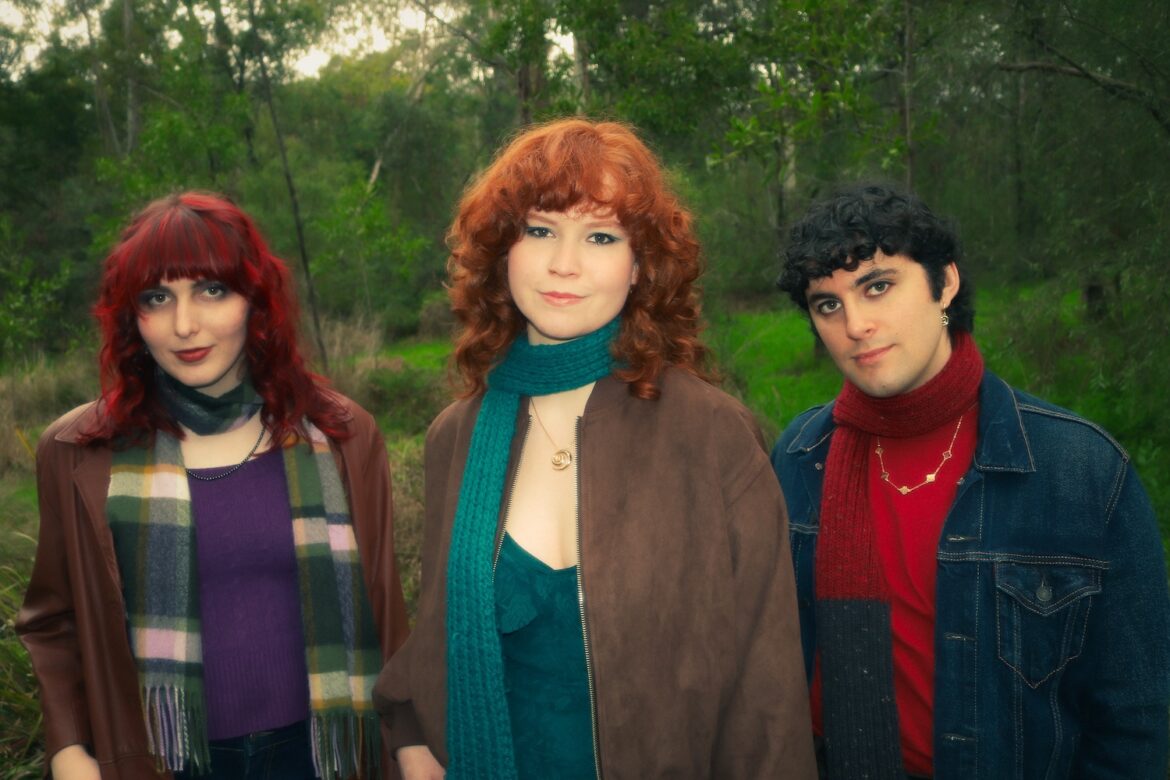
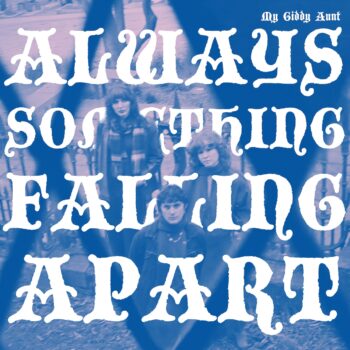
Australian indie rock trio My Giddy Aunt channel the rolling crises of the 2020s into “Always Something Falling Apart,” a feverish protest anthem that meets generational dread with gallows humor, communal release, and the stubborn resolve to keep caring.
Stream: “Always Something Falling Apart” – My Giddy Aunt
Every headline asks us to absorb another disaster and somehow carry on as though the ground beneath us were steady.
The world demands grief, outrage, action, and ordinary productivity all at once. Before one crisis has even settled into the body, another arrives to crowd it out, until dread becomes part of the daily routine. We keep going to work, making plans, and trying to imagine a future while the present keeps warning us how fragile it all is.
Raucous, breathless, and fiercely alive, My Giddy Aunt’s “Always Something Falling Apart” answers that impossible demand with gallows humor and pounding momentum, its chorus built for yelling until dread loosens its grip. The Australian indie trio have written a protest anthem for everyone still getting out of bed and daring to care while the world frays around them.
And these days, it’s fraying faster than ever.
Never-ending fires
Headless inner liars
Early morning risers
Chewing on their rivals
What to do?
And motorcycle riders
Stealing copper wire
For climate change deniers
And other perfect buyers
What went wrong?
Oh, there’s always something falling
Always something falling
Always something falling apart
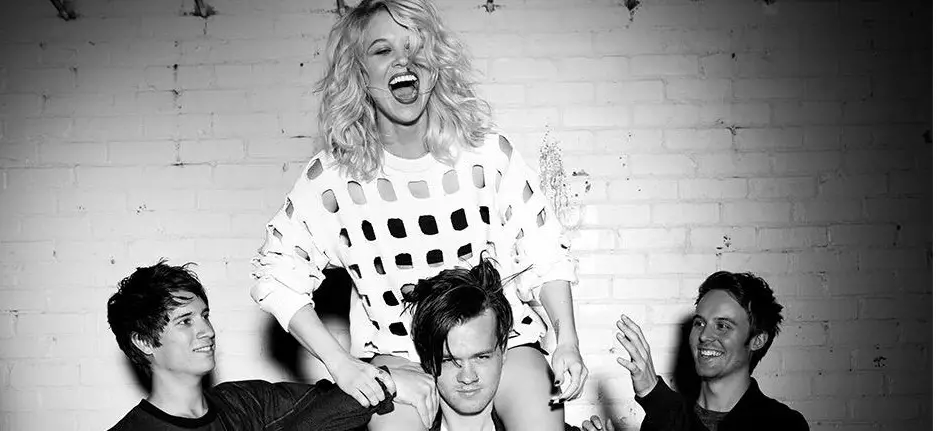
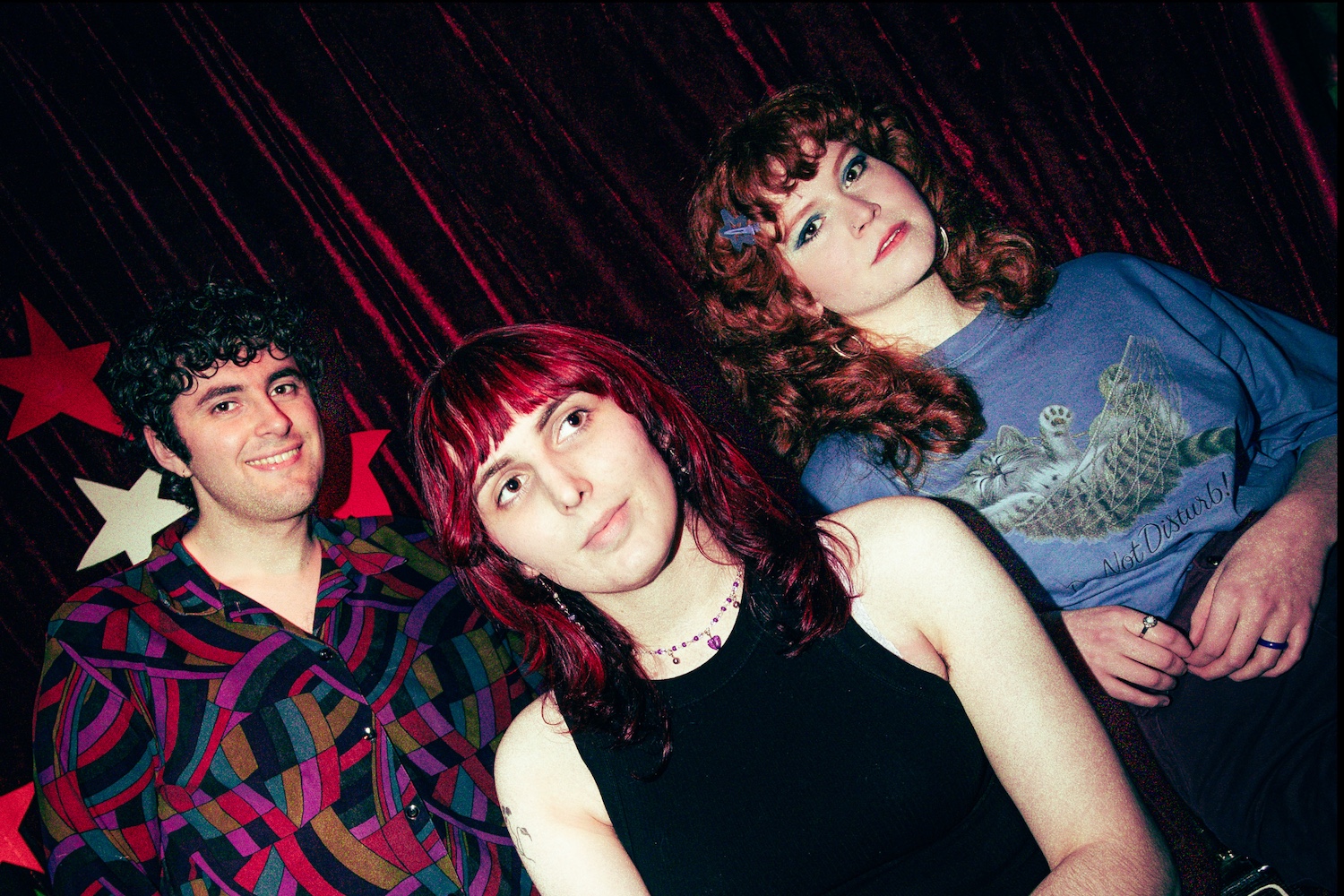
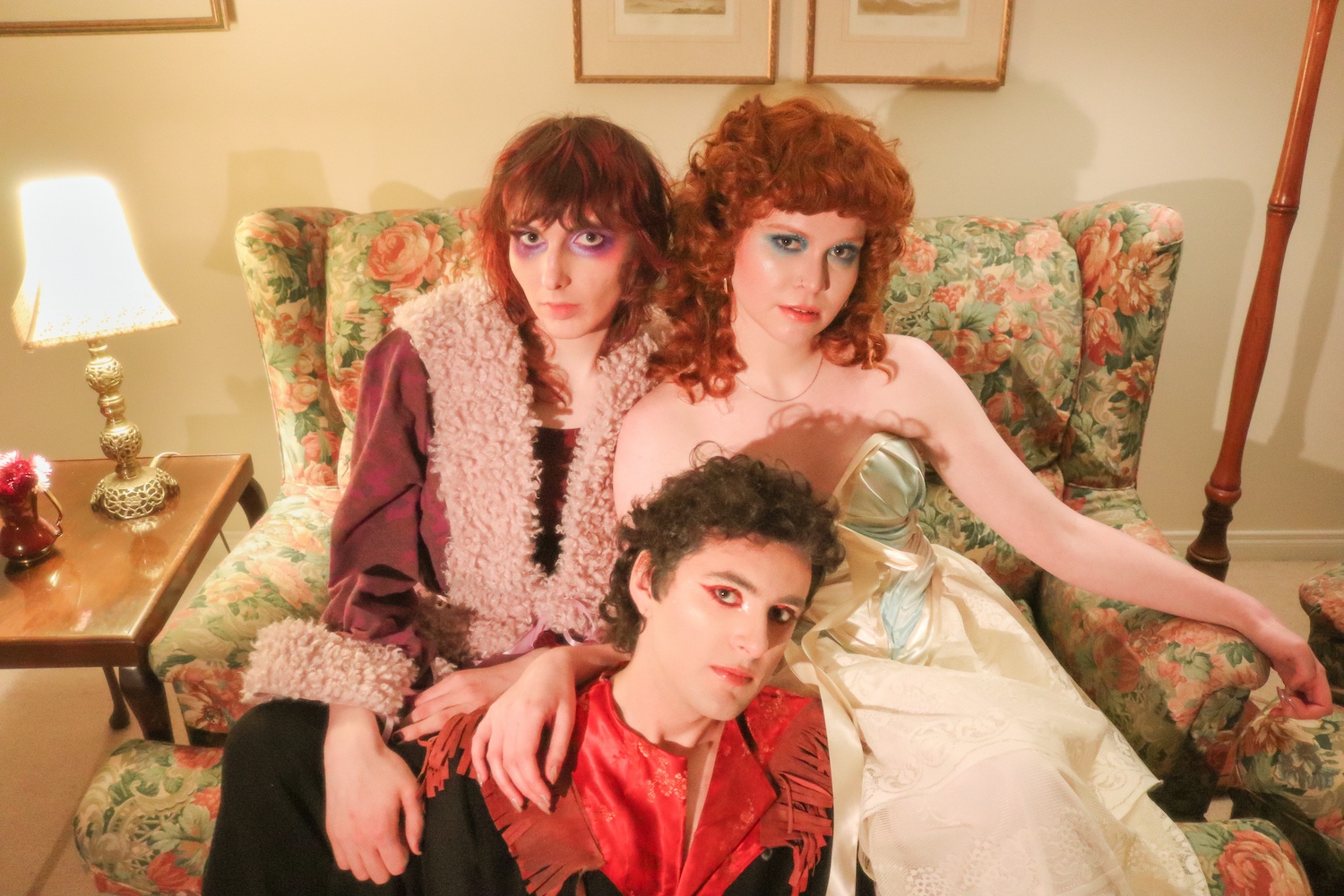
Atwood Magazine is proud to be premiering “Always Something Falling Apart,” an explosive, feverish, and emotionally charged reckoning with life in the 2020s. Based in Naarm / Melbourne, Australia, My Giddy Aunt make raucous, folk-tinged indie rock with a theatrical streak and a deep allegiance to their queer, neurodivergent, and local creative communities. The trio of Rory Vagg (vocals, guitar), Océane Federow-Yemm (vocals, bass), and Lulu Perry (guitar, keyboards) began writing together in high school and officially formed My Giddy Aunt in 2021, steadily making a name for themselves through electrifying live performances and quirky, thoughtful songs that bring wit and whimsy to loneliness, self-expression, and queer life.
Arriving July 31, “Always Something Falling Apart” is My Giddy Aunt’s first new music since their 2024 debut album, 8 Billion Characters in the Worst Movie Ever, and the opening charge from their four-song sophomore EP of the same name, out August 28. Where their first record filtered the world through a colorful cast of outsiders, this new chapter moves closer to the pressures crowding their own lives. Nearly two years older and sharper in their sense of purpose, My Giddy Aunt have narrowed their scope, strengthened their core songcraft, and emerged with greater confidence in the band they have become.
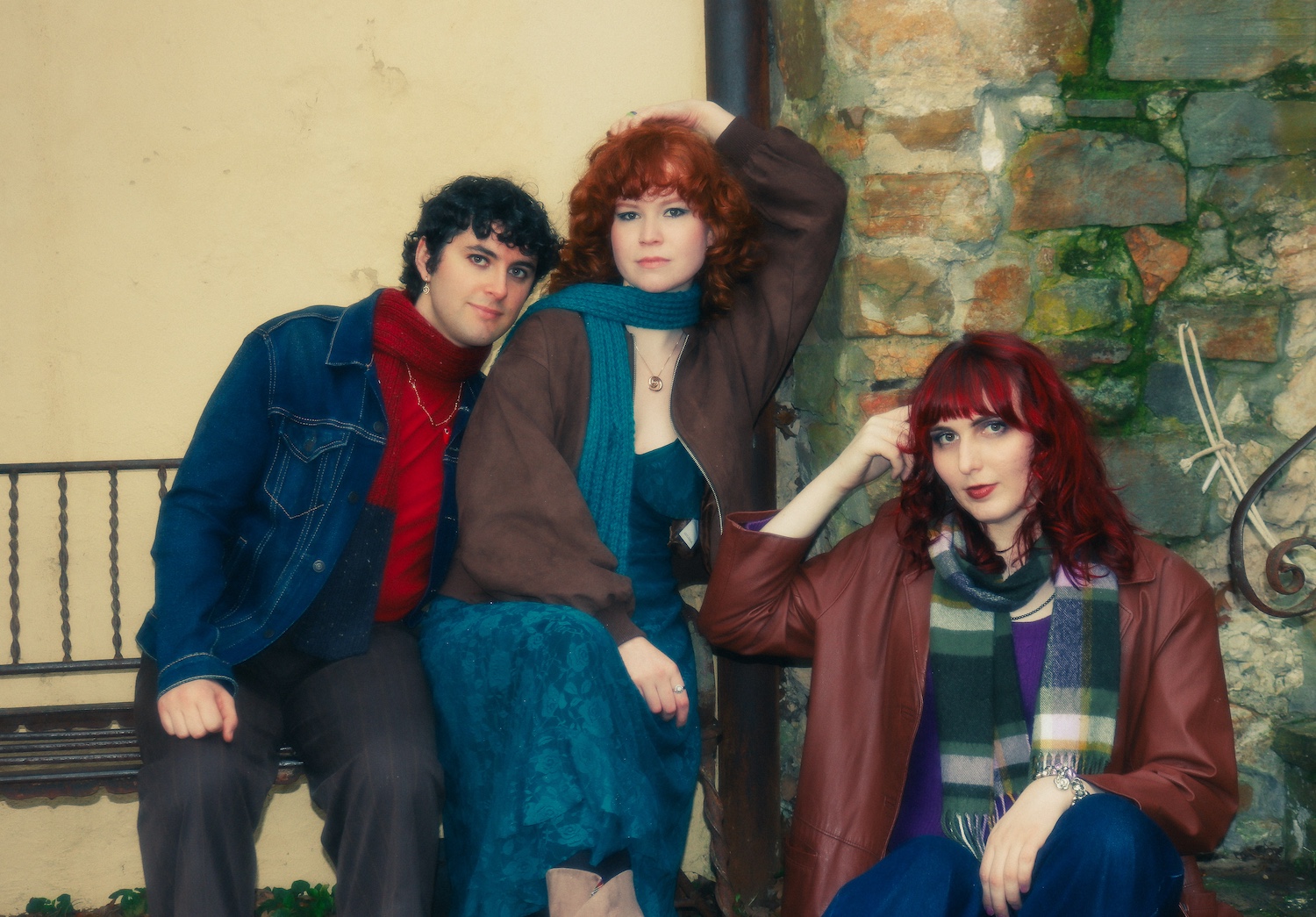
“Always Something Falling Apart” makes that newfound confidence instantly audible.
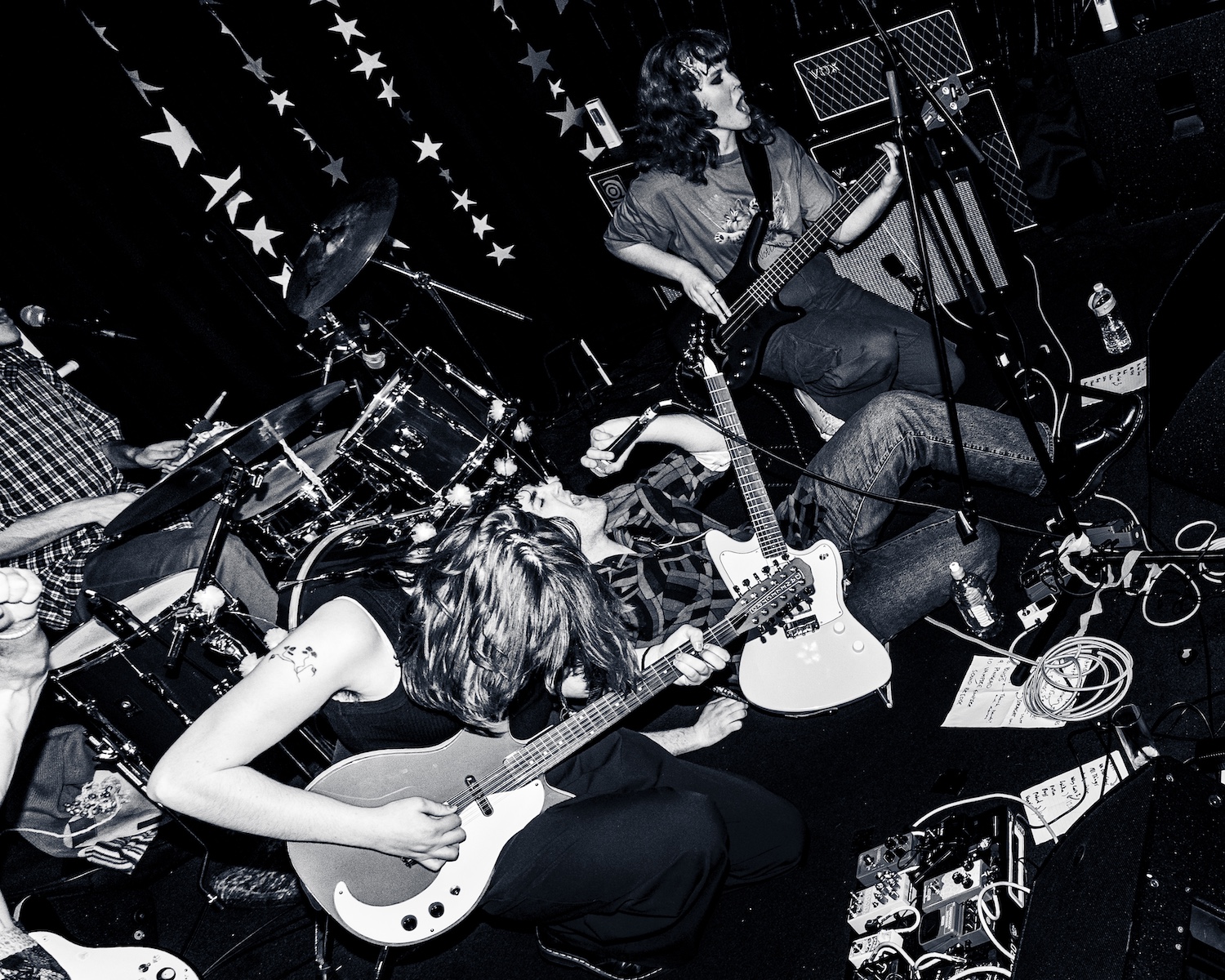
A taut, insistent pulse gives Vagg’s half-spoken verses the force of a public address delivered while the room is already burning. He rattles through never-ending fires, copper-wire thieves, climate change deniers, killers, frauds, and our “modern shiny cage,” each image landing with enough wit to make the surrounding horror cut even deeper. Behind him, the band keep widening the frame: Drums push against the beat, guitars and piano gather in bright, unruly layers, and the song rises from nervous propulsion into a riptide without ever losing its grip.
You can’t get out of bed
‘Cause something dances in your head
And it sings you songs of dread
‘Til your legs feel full of lead
And you just rot
Your body’s turning red
From the things that you’ve been fed
Too much violence and bloodshed
Makes anyone feel dead
Oh, it’s true
Oh, there’s always something falling
Always something falling
Always something falling apart
The velocity is central to the song’s politics. My Giddy Aunt give private panic a public outlet, transforming the pressure of daily life into motion, noise, and a shared release that can hold anger without surrendering to it. At the center of that surge sits a question their generation can no longer afford to ignore: How much future is left to plan for?
“I think a key part of the experience of being in our generation is a constant thought in the back of your mind of, like, how many years have we got left? 50, 80?” Vagg tells Atwood Magazine. “So initially the song was capturing that little voice in the back of your head, which I think is very relatable to our whole generation.”
Perry brings that question down to the scale of an individual life. “Yeah, the urgency of thinking, wow, okay, I need to push the things I want to do in my life forward, because we don’t have the reassurance that previous generations have had that the world is even going to be there as it exists today in 10 years’ time, let alone 50,” she says.
“It’s absolutely our most political song,” Vagg continues. “For me, I think that there’s generally something escapist about the music that we make, so there’s an interesting element of, like, how do you make it so that people dance and they don’t cry about it? It’s escapism, but it’s not devoid of the same themes and feelings that we deal with in our real, everyday life.”
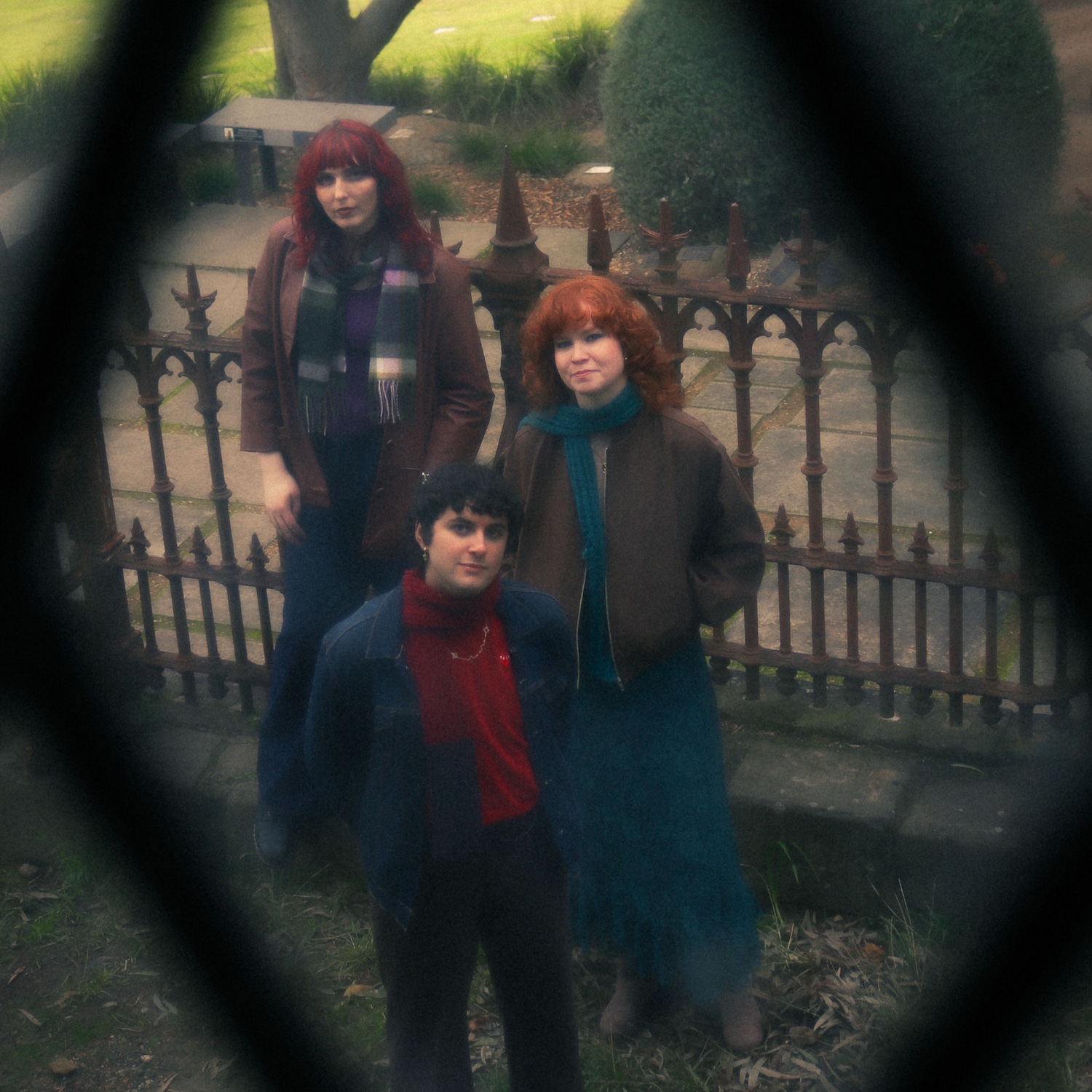
My Giddy Aunt sharpen that dread through absurdity.
Those aforementioned “never-ending fires” and climate change deniers share space with copper-wire thieves, braided Vikings, and the wonderfully bleak revelation that modern collapse comes with “so much beige.” Each joke exposes the ridiculousness of being expected to function normally inside conditions that are anything but.
“If you can’t laugh, then you’ll cry,” Vagg says. “And that’s not to say that you should do nothing, it just stops the wallowing.”
The joke keeps the door open long enough for the politics to enter.
“I think it’s a more digestible form of activism, in a way,” Federow-Yemm adds. “It lets people see the absurdity in a lot of the hypocrisy around us, how ridiculous things are.”
There were killers in the stone age
Frauds on every history page
And Vikings sat and did their braids
Before they entered battle rage
With a song
From the first war ever waged
To our modern shiny cage
We’ve always died for time on stage
Only now there’s just more beige
So much beige
The song refuses paralysis by making participation part of its answer. My Giddy Aunt channel private panic into a collective physical release – a place to dance, shout, laugh, and reclaim enough energy to keep caring once the music ends.
“Once you’re done with the gig, get educated, take it seriously and fight it, but while you’re at our show, we’re gonna have fun,” Vagg says. “That’s the place to have fun.”
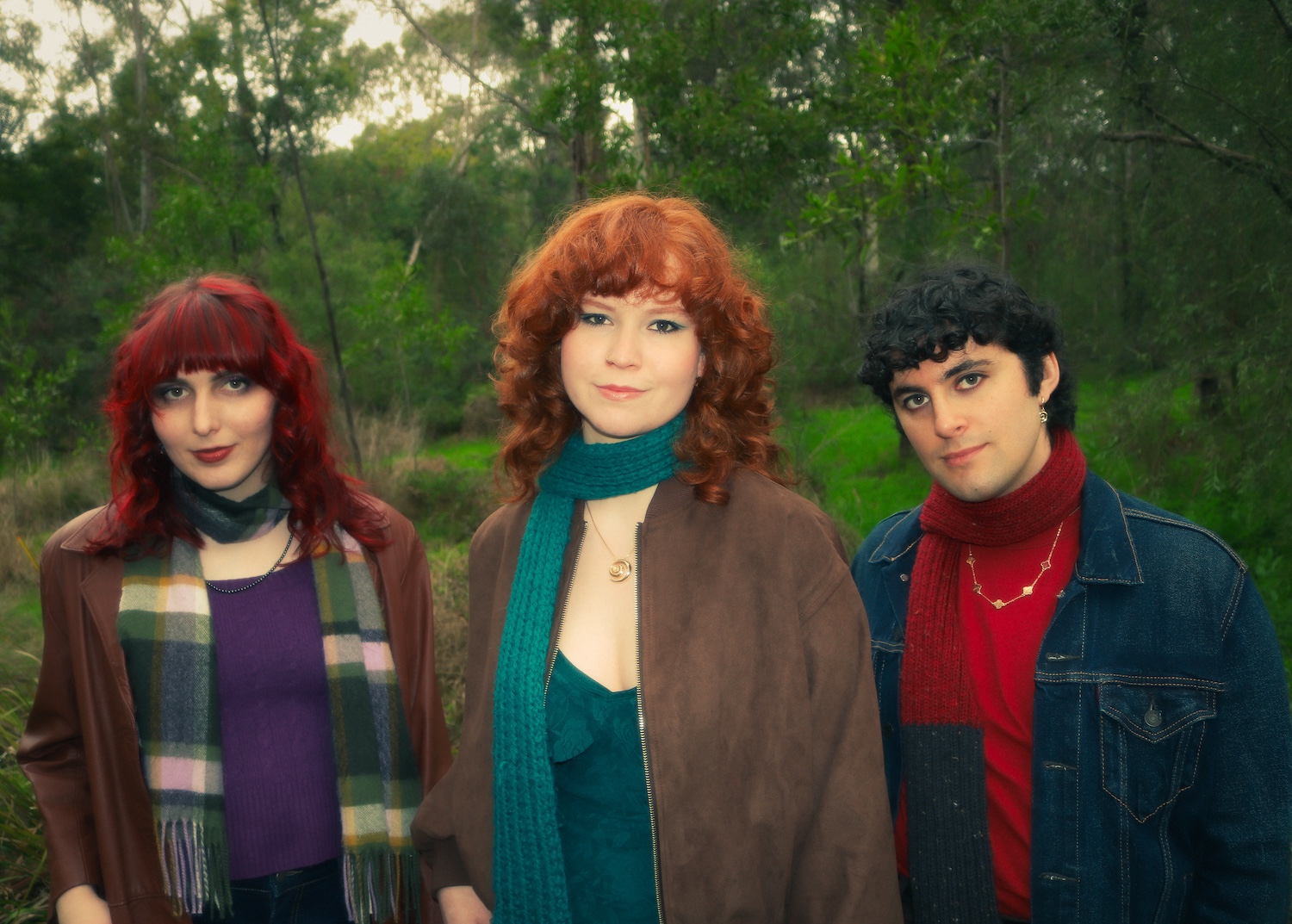
The tension between protest and escape powers “Always Something Falling Apart.”
It names collapse without softening or sensationalizing it, meeting a generation’s exhaustion with the blunt honesty of people who are scared, angry, and still expected to keep moving. My Giddy Aunt answer that instability with wit, volume, and collective motion, reminding us that even when the world refuses to steady itself, we do not have to carry its weight alone. Their humor keeps the horror bearable enough to confront, while the song’s feverish momentum transforms isolated dread into a roomful of voices.
In a decade defined by rolling crisis, that honesty lands hard. “Always Something Falling Apart” captures the impossible contradiction of modern life: We are asked to plan for the future while watching its foundations buckle in real time. It is raw because it refuses false reassurance, real because its dread lives alongside workdays, laughter, and the stubborn need to keep going, and relatable because so many of us recognize that pressure in our own lives. My Giddy Aunt make room for joy inside the emergency, offering release without retreat and connection without pretending the danger has passed.
Atwood Magazine recently sat down with My Giddy Aunt to discuss the queer and neurodivergent community at the center of their music, the lessons that reshaped them after their debut album, their growing confidence as a band, and the humor, urgency, and organized chaos behind this new chapter.
Stream “Always Something Falling Apart” exclusively below, and step into an anthem for everyone trying to keep their footing while the ground beneath us refuses to stay still.
Oh, there’s always something falling
Always something falling
Always something falling apart…
— —
:: stream/purchase Always Something Falling Apart here ::
:: connect with My Giddy Aunt here ::
— —
Stream: “Always Something Falling Apart” – My Giddy Aunt
A CONVERSATION WITH MY GIDDY AUNT
Atwood Magazine: Lulu, Océane, and Rory, for those who are just discovering My Giddy Aunt today through this premiere, what do you want them to know about you and your music?
Océane Federow-Yemm: I’d like to think that when people discover our band, they stumble upon an eclectic but welcoming community that makes music for all the queer, neurodivergent or just all-round creative and theatrical critters out there. We’re not interested in making music solely to further our careers- this really is a passion project, and it’s focused on the local scene and community.
Lulu Perry: The neurodivergent perspective is perhaps the strongest undercurrent across our music. There’s a really prevalent theme on our last album of feeling like an outsider navigating trying to make sense of the world, which has only made more sense to us as time has gone on and we’ve learned about our own neurodivergence. So I hope someone discovering our music might resonate with some of those themes. We always have a hard time defining our music in terms of genre, but I feel there’s a strong authorial voice across our songs that acts as the connective tissue. I can say that because I’m not the main songwriter!
It’s been almost two years since your debut album came out. What’s your relationship with 8 Billion Characters in the Worst Movie Ever and its songs today?
Océane Federow-Yemm: I’ve actually grown fonder of the album as time has gone on. It’s easy to forget to take a step back and think of how proud you are of the actual music itself.
Rory Vagg: Yeah, over time, you start to be able to appreciate it more as a fan than as the person who made it. It’s less coloured by the experiences that you had making it.
Lulu Perry: We grew enormously, I think, as musicians and sort of self-engineers making that project because it took so long to come together. We took a lot from being able to record a lot of it together in a studio. That ended up forming the backbone of the process for the new EP, because we really wanted to get these live-in-a-room performances that we could then build on. I love the organic push and pull. My question for you, Rory, is do you feel like the Characters concept has run its course?
Rory Vagg: I don’t think it’ll ever fully go away. I think it’s a good device for songwriting. It’s not out of the picture, but will there be a sequel? Never say never, but probably not.
Who are some of your musical north stars, and what are you most excited about the music you're making today?
Lulu Perry: As much as we ostensibly make rock music, there’s also always been an admiration for folk artists and the songcraft of folk – the ability to tell stories solely through lyrics and melody, which I hope also comes through in the songs on this EP. The original demos of these songs are just Rory and an acoustic guitar, and this track in particular was essentially a country song about how shitty the world is right now. But it’s definitely through a rock lens. We’ve always been very inspired by guitar bands like Big Thief, The Smiths and The Strokes, and a lot of classic rock like Bruce Springsteen and Fleetwood Mac. Listening to The Police makes me excited about making rock music. The drum part for the single borrows a lot from Stewart Copeland.
Océane Federow-Yemm: I’m most excited about the confidence in our style that’s emerging. In the past, we’ve felt really confined by genre, but I think we’re growing into a more unique sound that sort of balances everything we like.
You’ve described your upcoming EP Always Something Falling Apart as more down-to-earth than the debut album’s colorful cast of outsiders. What changed in the world of My Giddy Aunt as you started writing and recording these new songs?
Rory Vagg: I think the most boring answer is we’re all older. We’ve gained a slightly better sense of ourselves and our limits. I think part of how you see that is in the fact that this is an EP and not an album. One of the things that we learned through making the album is that it’s really tough.
Océane Federow-Yemm: We’ve learned a lot about what not to do, like not trying to record seven full songs in one day. The whole band thing feels a little less rock star and a little more passion for the music itself. We’ve all got more commitments now than we did initially and I think in a way that’s forced us to really digest what we’re making, and curate more carefully when and how we do things.
Lulu Perry: Yeah, I would say we definitely wanted to narrow the scope of this so that we could really focus in on a sound, like Océane was describing. Don’t get me wrong, it’s not like the four songs on the EP sound exactly the same as each other – far from it. But in comparison to Characters, it’s a bit less grandiose and extravagant, and more about the reality of things and how we’re feeling about things. We wanted to start with the core songcraft. Once we had these four songs that we were really happy with, and you could play them on an acoustic guitar and they would translate really well, then we got to build the elements on top of that foundation. One of the things that we learned was, could we be very good rock musicians, folk musicians, disco musicians…
Rory Vagg: funk musicians, jazz musicians…
Lulu Perry: …At all the same time? Probably not. And so maybe we should stick to what we think we are.
Today we’re premiering the EP’s title track “Always Something Falling Apart,” a song that feels huge, anxious, funny, and exhausted all at once. What’s the story behind it?
Rory Vagg: I think a key part of the experience of being in our generation is a constant thought in the back of your mind of, like, how many years have we got left? 50, 80? So initially the song was capturing that little voice in the back of your head, which I think is very relatable to our whole generation.
Lulu Perry: Yeah, the urgency of thinking, wow, okay, I need to push the things I want to do in my life forward, because we don’t have the reassurance that previous generations have had that the world is even going to be there as it exists today in 10 years’ time, let alone 50.
Rory Vagg: It’s absolutely our most political song. For me, I think that there’s generally something escapist about the music that we make, so there’s an interesting element of, like, how do you make it so that people dance and they don’t cry about it? It’s escapism, but it’s not devoid of the same themes and feelings that we deal with in our real, everyday life.
I love the opening flood of images – “never-ending fires,” “headless inner liars,” “motorcycle riders stealing copper wire,” “climate change deniers.” How did you find the song’s balance between absurdity and very real dread?
Rory Vagg: That’s a great question. It has a very simple answer: If you can’t laugh, then you’ll cry. And that’s not to say that you should do nothing, it just stops the wallowing.
Océane Federow-Yemm: I think it’s a more digestible form of activism, in a way. It lets people see the absurdity in a lot of the hypocrisy around us, how ridiculous things are.
Lulu Perry: It’s certainly something we’ve done in our songs a few times, where you’ve got happy-sounding songs about these heavy topics, like You Lost or Laika. They’re major-key songs that you want to sing along to.
Rory Vagg: There’s a fine line between making light of this very real feeling and giving in to the sadness of it. I think that’s very Gen Z. You can see it in a lot of our humour, struggling to strike the balance between acknowledging the elephant in the room and pretending that it’s not there.
There’s a verse where you sing, “You can’t get out of bed / ’Cause something dances in your head / And it sings you songs of dread.” How did you want the song to capture that physical heaviness of living through everything happening around us?
Lulu Perry: The bits that jump out to me in terms of conveying heaviness musically are the half-time verses. It’s something we did a little bit with Bugs as well. You get to the half-time and it’s like trudging your feet through mud, you know. Then you get to a sprint in the chorus, but it’s so brief, and then you’re back in the mud and you have to keep trudging through. That’s the push and pull that we wanted to achieve by recording it all together.
Océane Federow-Yemm: I think we create a sense of anxiety with how the drums slightly rush against the rest of the band, it has a kind of heart-pumping urgency to it. By the end, it feels like your heart’s been racing the whole time, it starts skipping beats and you have to fizzle out and take a breath.
Lulu Perry: Yeah, and with the guitar solo, everything builds and builds and suddenly crashes to a stop. That probably speaks for itself, musically. Although, it was all quite unintentional. We were just following what was exciting to us, but it does really align lyrically.
The last verse zooms all the way out, from “killers in the stone age” to our “modern shiny cage.” Why did you want to place this current feeling of collapse inside a much longer human history?
Rory Vagg: Well, it gives you that camaraderie. We’re going through this now and people before us have gone through it. People probably had a very similar feeling to this in the Cold War. But the thing about the Cold War was that it ended. With climate change, there’s no way around it. It feels inevitable, it’s happening. So while I’m sure it’s true that if you were to ask someone from any year in the past, they would resonate with the idea of things falling apart, it’s also uniquely bad right now.
Even with all that anxiety, “Always Something Falling Apart” still feels like a shout-along anthem - especially with the chorus’ blunt refrain. How do you think about making music that lets people scream into the mess rather than just sit inside it?
Océane Federow-Yemm: I think it’s basically more productive to have a piece of music or art that encourages people to embrace the reality of what’s happening together, to see some light in it. It doesn’t have to be doom and gloom. Otherwise, you end up being kind of alone in it.
Rory Vagg: In the original form of the song, the idea was catharsis. That ability to be able to scream it out so that you can still get up and go to work tomorrow or whatever. So then I think one of the things that went into the arrangement was that idea of chaos and calamity, and that’s how you get like four guitar parts at the same time on top of the piano thing. But then I think that that idea is always intriguing to us is, yeah, the organised chaos.
Lulu Perry: I loved just listening to the voice memo of you playing it because it evoked all these feelings, even without the chaotic arrangement elements involved.
Rory Vagg: And the verse melody, we did change that from a conventional melody to a more half-spoken, diatribe kind of thing. It’s more of a speech than a melody.
Lulu Perry: Exactly, yeah, we made it more chant-like, which probably adds to the shout-along nature of it.
What do you hope listeners take away from “Always Something Falling Apart,” and what have you taken away from creating it and now putting it out?
Rory Vagg: It’s hard to say. I think some people will get a fun time out at a gig listening to it, others will feel a push of urgency, and someone might get some anger out yelling along to it in their car. Once you’re done with the gig, get educated, take it seriously and fight it, but while you’re at our show, we’re gonna have fun. That’s the place to have fun. I feel like any time we’ve tried to make a confident prediction on how someone will feel about something, it’s usually not correct because we’re too close to it. But you can guarantee that they will take away something.
Lulu Perry: To be fair, being neurodivergent tends to make us not so good at predicting what the average person is going to think about something. In terms of what we’ve taken away from it, definitely a sense of satisfaction that we’ve got a new song that’s so much fun to play live. It’ll get even better once people get to know it, because as a smaller artist, there’s nothing quite like the feeling of people singing along to music that wouldn’t exist had you not created it.
In the spirit of paying it forward, who are you listening to these days that you’d recommend to our readers?
Rory Vagg: I’ve been listening to our friend Tilly Vickers Willis’ album, Silver Halide Film. It’s very, very good. I love trip hop-inspired sounds and there isn’t much of that going around, so it’s cool to see a new project drawing on those references.
Océane Federow-Yemm: I’ve had Charlotte Bridie’s new single “DUI” on repeat since it came out. It’s so catchy and beautifully sung. It’s the perfect song to drive to (sober, of course).
Lulu Perry: Her and her band are incredible performers, too. The great drumming you hear on this single was performed by her drummer, Jono Stanton. After I saw them play live, I knew we had to steal Jono for ourselves! On the topic of protest music, Dougal from The Sunken Sea has been writing about this sort of stuff for a long time, you know? With songs like Is it Living and Funeral Pyres, he writes about these broader social issues in really creative and interesting ways.
— —
:: stream/purchase Always Something Falling Apart here ::
:: connect with My Giddy Aunt here ::
— —
Stream: “Always Something Falling Apart” – My Giddy Aunt
— — — —
Connect to My Giddy Aunt on
Facebook, 𝕏, TikTok, Instagram
Discover new music on Atwood Magazine
© courtesy of the band
 © courtesy of the band
:: Stream My Giddy Aunt ::