Drawing on punk’s rebellious roots and rock ’n’ roll’s most celebrated eras, Burlington indie rock band Brunch explores the contradictions of music history while carving out a playful sound of its own.
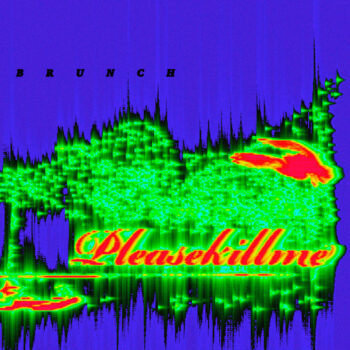
Stream: “Please Kill Me” – Brunch
I think every so often you need someone to shake up the scene, retroactively putting a spin on yesterday’s music and getting people to see it in a new light.
* * *
Rock ’n’ roll history is often remembered through its larger-than-life characters, legendary venues, and stories of rebellion.
But behind the mythology of the CBGB scene and artists like Johnny Thunders and the New York Dolls lies a more complicated history, one filled with excess, contradiction, and self-destruction. It’s this tension between the romanticized image of rock stardom and the reality behind it that fascinates Burlington, Vermont-based four-piece Brunch. Rather than simply recreating the sounds of generations past, the band approaches its influences with curiosity, questioning the stories and cultural memories that continue to shape how we understand rock music.
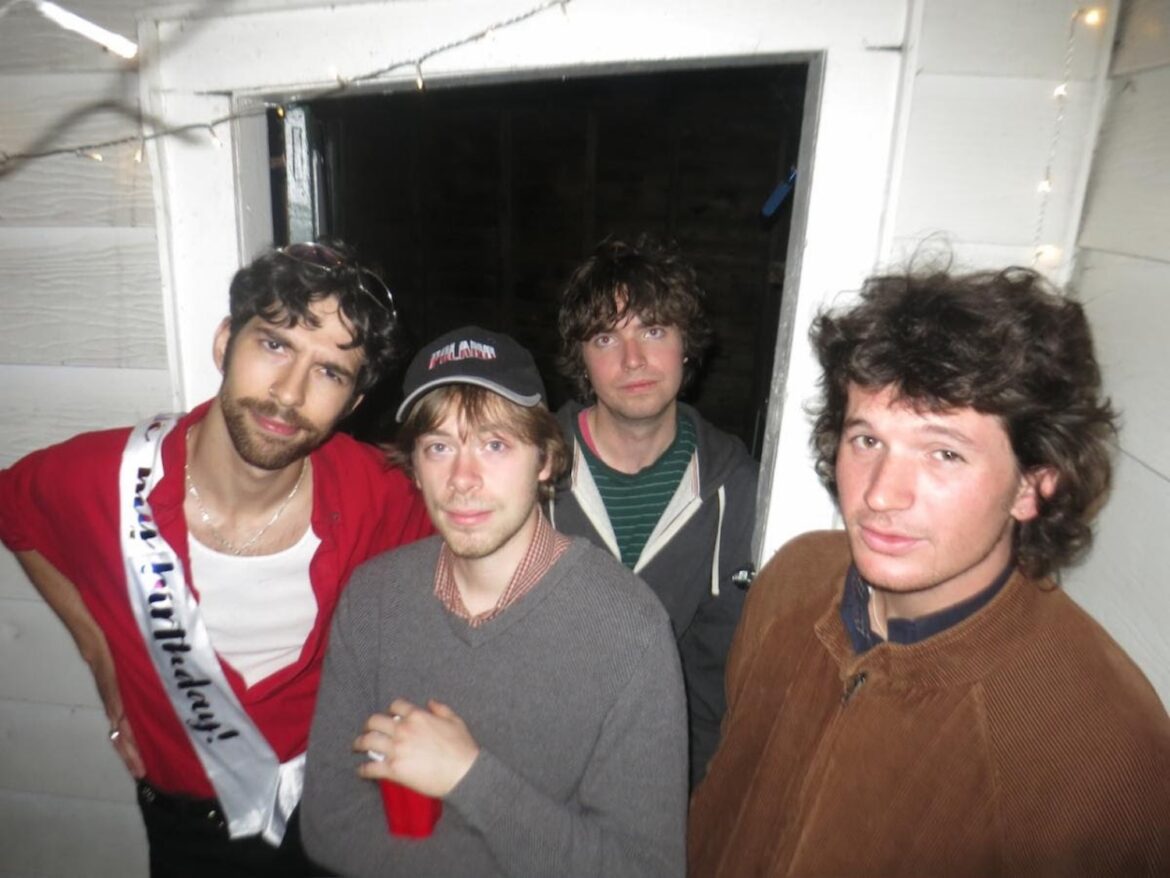
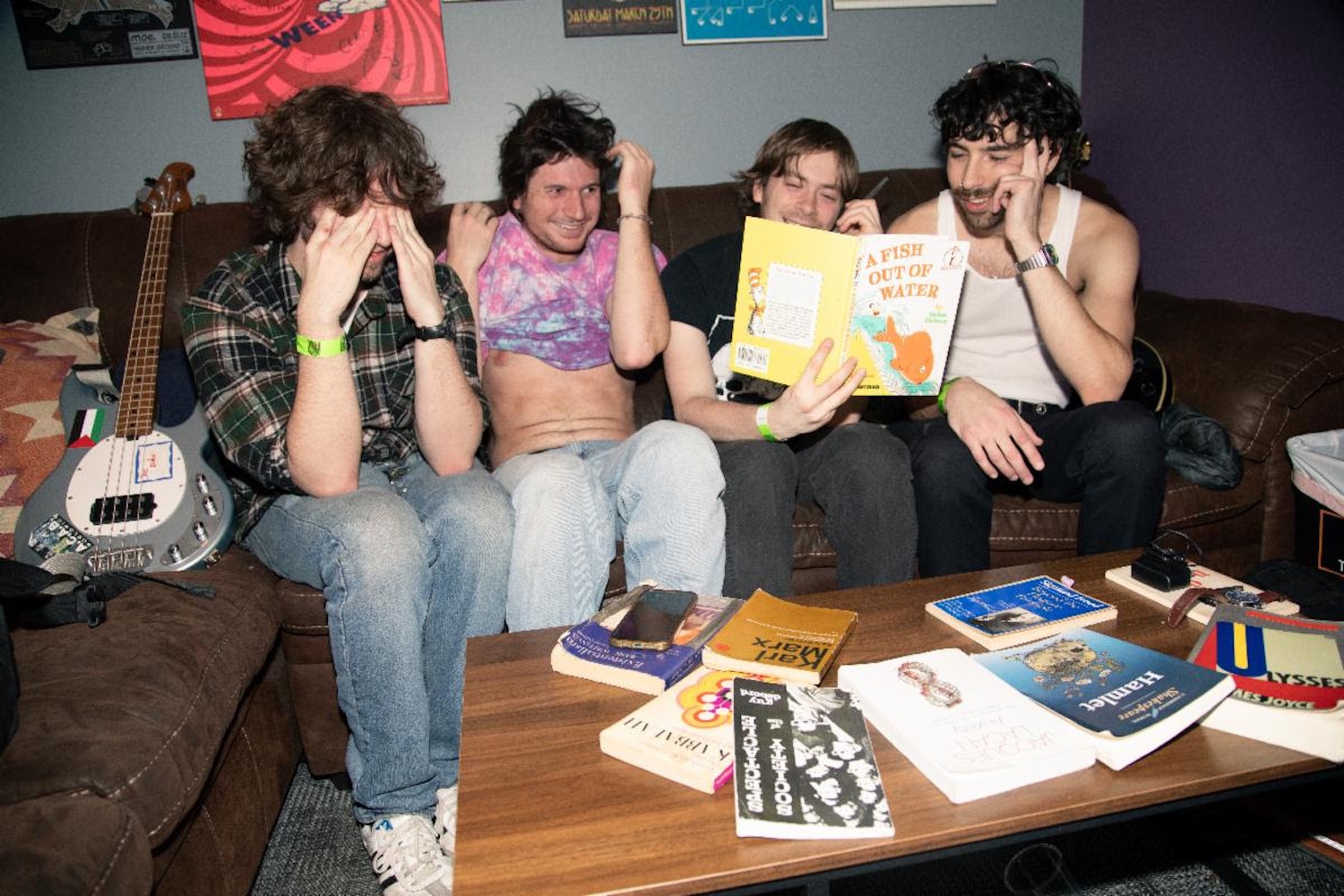
Composed of Philip Bern (guitar), Cameron Mincar (guitar and vocals), Mason Kosman (bass and vocals), and Ayden Flanigan (drums), Brunch emerged from Burlington’s eclectic music community during the uncertainty of the COVID-19 pandemic. Bern first met Mincar in a philosophy class at the University of Vermont and Kosman through its philosophy club – a fitting beginning for a band so fascinated by the contradictions of rock ’n’ roll history. Drawing from punk, alternative rock, psychedelic pop, and beyond, the group brings together musical influences from different decades in unexpected ways. That approach is particularly evident in its latest double release, “Please Kill Me” and “Man Alive,” where vintage instrumentation meets a more contemporary sensibility. Experimenting with instruments like the Mellotron, Moog bass synthesizer, and Solina string synthesizer, Brunch creates arrangements that move between nostalgic warmth, psychedelic textures, and darker atmospheric passages.
While “Please Kill Me” draws on the grandeur of Phil Spector’s Wall of Sound and the melodic sensibilities of ’60s psychedelic pop, its playful exterior gives way to a more pointed examination of longing and the stories we tell ourselves about the past. “Man Alive,” meanwhile, takes a darker, more synth-driven direction, using layered textures and dreamy arrangements to explore the frustration and uncertainty Bern experienced during a difficult Vermont winter. Though distinct in their musical approaches, both tracks reflect Brunch’s interest in taking familiar sounds and ideas somewhere unexpected. We caught up with Bern to discuss the band’s formation, its fascination with rock history, the creative process behind the latest releases, and the influences shaping its evolving sound.
— —
:: stream/purchase Please Kill Me / Man Alive here ::
:: connect with Brunch here ::
— —
A CONVERSATION WITH BRUNCH
Atwood Magazine: Who doesn’t love a good weekend brunch?! How did you come up with the band’s name?
Philip Bern: We were going around and around in a circle coming up with random names, and I think Cam [guitar, vocals] said Captain Brunch and I said Brunch and it just sounded right to us. Especially in 2022, coming out of the pandemic, going back to brunch was sort of identified with a naive vision of “going back to normal” that ignored the ways that the world was already messed up before the pandemic, and that in certain ways wasn’t worth going back to. So it’s a bit tongue in cheek, a bit serious but mostly silly, so it felt just about right for the band.
You possess a distinct nostalgic ‘80s / ‘90s punk rock sound. How was your music style developed?
Philip Bern: All of us are huge music fans and we’re always pulling from all corners, every decade, etc. Our songwriting evolves pretty concurrently with whatever we’re listening to at the time. When I’m writing music, I’m thinking about what would I want to listen to; what music could I pull out of the air right now, and that’s almost always directly tied to whatever I’ve had stuck in my head for the past week or two. The interesting thing happens when I bring in an idea to band practice, and that little bit of a song meshes around with what everyone else has been listening to and what’s been bouncing around in their skulls. Everybody adds their sonic signature to the mix. As for the 80s/90s sound, I think I was just listening to a lot of the Cure and Radiohead when we recorded these songs, and you can’t really get more ‘80s and ‘90s than that. That time period was sort of the moment in which the rock canon was crystallized, which also had the effect of opening up a lot of space to play around with sonic elements, which is something we love doing. For example, throwing some Mellotron, a tape sampler from the ‘60s, on top of a Moog bass synthesizer from the 2000s, and then maybe a Solina string synthesizer from the ‘70s. I find that so much of where we locate genre isn’t really in songwriting elements as much as it is in little sonic signifiers; e.g. guitar tones, drum sounds, reverb types, keys and string choices, etc. So it’s been really fun to look back at all those things from the perspective of 2026 and pick and choose what to throw in.
Your double release of “Please Kill Me” and “Man Alive” explores myths and what happens when those myths begin to collapse, touching on rock and roll, identity, memory, and love. Can you talk about the different myths you are examining through these songs, and what motivated you to explore the tension between sentiment and the reality of how our cultural memories evolve?
Philip Bern: “Please Kill Me” was inspired by the book of the same name, the classic punk oral history book, which I read once in high school and again last summer. What that book does really well is make the CBGB punk scene look so cool, creatively and socially, but not necessarily admirable or worthy of imitation. A lot of those guys burnt themselves out and didn’t come out the other side alive. There was some incredible art that came out of that scene, but also so much self-destruction. That tension was something I really wanted to explore, and Johnny Thunders of the New York Dolls, who I’ve always loved, was the perfect lens to explore it through. And the Dolls were revolutionary musically, but only by resurrecting the style of rock and roll that had been popular maybe 15 years before, putting their own spin on it and bringing out the sexy and dangerous elements of rock and roll that had maybe been sanitized and commercialized by the time they came around. I think every so often you need someone to shake up the scene, retroactively putting a spin on yesterday’s music and getting people to see it in a new light. I’d like to think all good stories, maybe all stories in general, come from a place of tension and internal contradictions, and so this one kind of just hit deep for me.
As for “Man Alive,” that one was a little more personal. I was reading a lot of poetry at the time, and it was the dead of winter in Vermont, which is a pretty tough time for anyone. I tried to assemble some words that were fitting how I was feeling, which was stuck, but knowing that the only way to go was through. It’s another one of those contradictions working themselves out. I felt split between a bunch of things, and was reconciling with the fact that there’s no going back to where you were; the best you can do is keep your head up and hold on right through.
The visuals for “Please Kill Me” are set at the Devil's Bowl Speedway and you guys mention that it was one of the craziest, loudest days you have ever experienced together. What inspired the video’s concept and what was it like filming it?
Philip Bern: Devil’s Bowl is right on route from Burlington to New Jersey where I’m from, so I see it all the time when I’m driving up or down. And I’ve been there a bunch of times for races, once even with Mason [bass, vocals]. I’ve thought for a while about shooting a music video there, and this was the perfect opportunity. We didn’t really know what to expect walking in, but it turned out the owners were super nice and let us do our thing there, walking around, shooting on the track after the race, etc. The race itself was loud as hell, and there was a big accident, which took a while to clean up off the tracks, although thank god everyone was unharmed. I think most of all we just had a great day at the races, which comes off in the video.
“Man Alive” centers around opposing forces like light and darkness, and dreams and reality. Why were these contrasts important to the story you wanted to tell?
Philip Bern: Can’t have one without the other. They’re defined by their opposites, like everything else. David Lynch is one of those guys who really got that, and I read his book Catching the Big Fish about a year ago. Maybe all great artists get that. Who knows?
As a Burlington, Vermont-based foursome, how did you all meet, and what has your experience been like navigating the music scene there?
Philip Bern: At the time we formed we were all going to UVM, and I met Cam through a philosophy class and Mason and our first drummer Mike through the philosophy club there. Mike moved to Utah and Mason knew Ayden through an English class, so we’ve all got that sort of background and passion for critical thinking there. I think we like mostly to apply that attitude of curiosity and exploration to music, which is our first love. In the heady days of early 2022, we were just coming out of pandemic lockdowns and I didn’t have many friends, and it was great to meet some people with similar interests and music tastes. It helps that they were all killer on their instruments too, which inspired me to lock in and really learn to express myself on guitar.
Burlington is a college town, which means it’s such a transitory place. I feel like I’ve lived through 5 or 6 different Burlingtons, including the music scene. At its best, it’s full of people who are dedicated to making great art. There’s no shortage of great musicians to be found, in all sorts of different genres. The small size of the town means everyone knows each other and can be seen at all sorts of shows, from jam bands to hardcore. At its worst, the rents are so high that almost all the local music venues have shut down, and touring bands don’t stop by so often anymore. But like I said, I’ve seen it change so much, and I think it’s at the crest of a downswing right now, but it’s bound to come back up.
Who are some of your biggest musical influences?
Philip Bern: It really depends what we’re listening to at the time. But I’d say when we first started, the idea was something similar to Viagra Boys with a bit of Muddy Waters, Modest Mouse, and Foo Fighters thrown in. These days I’ve been really inspired by a lot of Memphis & Muscle Shoals soul music, along with some glam rock stuff. But my deepest influences have got to be The Stooges and the Cramps, who I keep returning to again and again.
Mason’s biggest influence on bass is At the Drive-In. Cam says his influences these days are Duster, Camping in Alaska, Flaming Lips, Placebo, Gary Numan. I think I can say pretty confidently though that his lifelong musical influence is Green Day.
I understand you recently played a live show at Purgatory in Brooklyn. What was that experience like for you, and how did the energy of the room shape the performance?
Brunch: It was great! We had a ton of new folks come out and they seemed to love it, so hopefully we get down there a lot more often.
What’s next for Brunch?
Brunch: Hopefully a new album, but who knows what the future holds…
Who are some artists on your current playlist you can recommend to our readers?
Philip Bern: Gilla Band, Primal Scream, Clarence Carter, James Carr, The Staple Singers, Big Star
Cameron Mincar: Duster, Camping In Alaska, Flaming Lips, Placebo, Gary Numan.
Mason Kosman: Florry, Pretty Girls Make Graves, Acetone
— —
:: stream/purchase Please Kill Me / Man Alive here ::
:: connect with Brunch here ::
— —
Stream: “Please Kill Me” – Brunch
— — — —
Connect to Brunch on
Facebook, TikTok, Instagram
Discover new music on Atwood Magazine
 © Mary Kate McGuirk
🖼️ © Cameron Mincar
 © Mary Kate McGuirk
🖼️ © Cameron Mincar
:: Stream Brunch ::