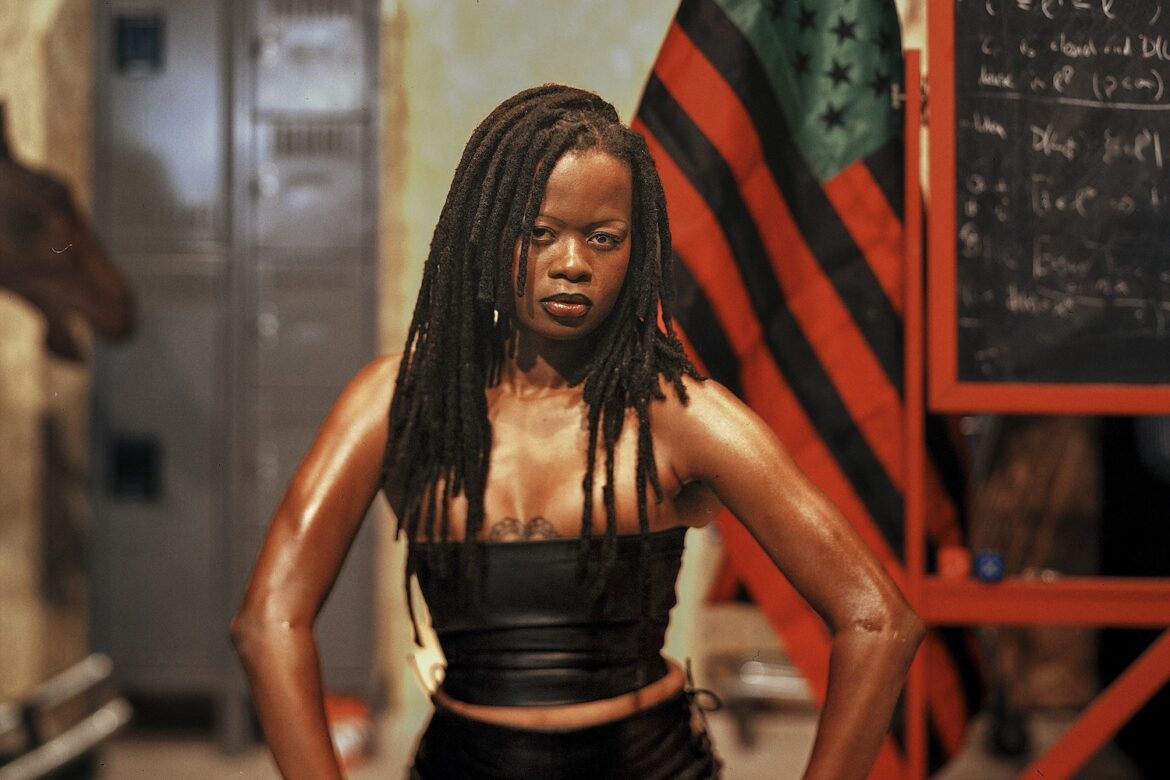
On their unflinching sophomore album ‘CUNTRY,’ Cleo Reed delivers a timely address from inside the weight of modern American life – crafting a deeply present, achingly raw collection of songs rooted in labor, the body, and survival. In conversation with Atwood Magazine, Reed opens up about the stories and shared struggles that animate their music – and what it means to stay human inside a system that asks so much and gives so little.
Stream: “Women At war” – Cleo Reed
“This country is in a state of dysfunction.”
There’s no grand reveal or tidy thesis hidden within Cleo Reed’s words – just a truth they’ve come to know through personal experience, through years spent moving across America and sitting with what it asks of the people who live and work inside it. It’s a truth that sits heavy in the body – familiar and frustrating, existential and unavoidable – felt in the strain of daily life, the erosion of care, and the quiet ways people learn to carry on anyway.
The grass ain’t greener
and the fare ain’t cheap
Gimme salt and lime
In the land of the free
haze in the air
getting harder to breathe…
– “Salt n’ Life,” Cleo Reed
This lived understanding, shaped by watching systems bend and bodies absorb the impact, becomes the emotional backbone of Reed’s music – and the animating force behind their raw, restless, and deeply human sophomore album CUNTRY. Rather than diagnosing America from a distance, Reed exists inside its contradictions, exposing them from within. They moves through work, pleasure, grief, faith, and freedom with effortless grace and unfiltered honesty – their songs aching with the weight of the world one moment, then opening into joy and release the next.
From that tension emerges a singular, genre-defying work – one that is candid and unfiltered, intimate yet unmistakably communal, and wholly of the present moment. CUNTRY speaks to a problem so many of us feel but struggle to name, mirroring life as it’s actually lived in 2020s America: Unpredictable and exhausting, tender and still full of possibility.
In that way, CUNTRY stands as a “state of the cuntry” address – a powerful reckoning with the cultural, political, and emotional realities shaping daily life now, delivered with clarity and care, and an unflinching commitment to the truth.
Cleo Reed refuses to look away from the chaos all around us, and neither should we.
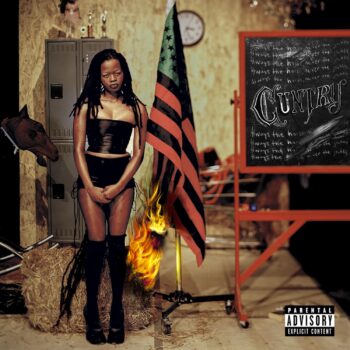
Independently released July 17, 2025, CUNTRY is a breathtakingly bold and sprawling statement of purpose from New York-based multi-disciplinary artist Cleo Reed (née Ella Josephine Julia Moore), a student of Black underground sound and intention whose work stretches far beyond the bounds of a single medium – living at the intersection of music, performance, and participatory art. Raised between Uptown NYC and DC, Reed’s relationship with music has always been rooted in practice and community, shaped by classical percussion training at Harlem School of the Arts, punk guitar and songwriting with Pretty Sick, and formal studies in sound engineering and sound design at Berklee College of Music. That expansive foundation shapes their approach as an artist today, where songs exist not in isolation, but alongside installation, bandleading, instrument-making, and embodied performance – each discipline feeding into the next with intention and care.
Since the release of their 2023 debut Root Cause – a profoundly personal introduction centered around their own history, identity, and lineage – Reed has widened their lens, expanded their scope, and, to some extent, redefined their artistry. “My first record was really focused on my feelings, in my personal ancestry,” they tell Atwood Magazine. “This one keeps my ancestry at the heart, but tries to articulate a sign of the times. I’ve really been craving more music that centers current events.”
That impulse to speak to the present shapes CUNTRY at every level. Written over the past three and a half years, the album took form as Reed traveled across the United States, gathering stories and sensations from Wyoming, Brooklyn, Atlanta, Gainesville, New Orleans, and beyond. Structured as a double LP, the record moves between two complementary worlds: One grounded in the lineage of American work songs – blues, soul, folk, and country – and the other pushing toward a more electronic, rap-forward terrain. Together, the dueling sides reflect the binaries that have long defined Reed’s life and perspective, from North to South, tradition to futurism, interior reflection to collective address. Rather than flattening those tensions, CUNTRY holds them in motion, allowing contradiction, community, and lived experience to shape the work as it unfolds.
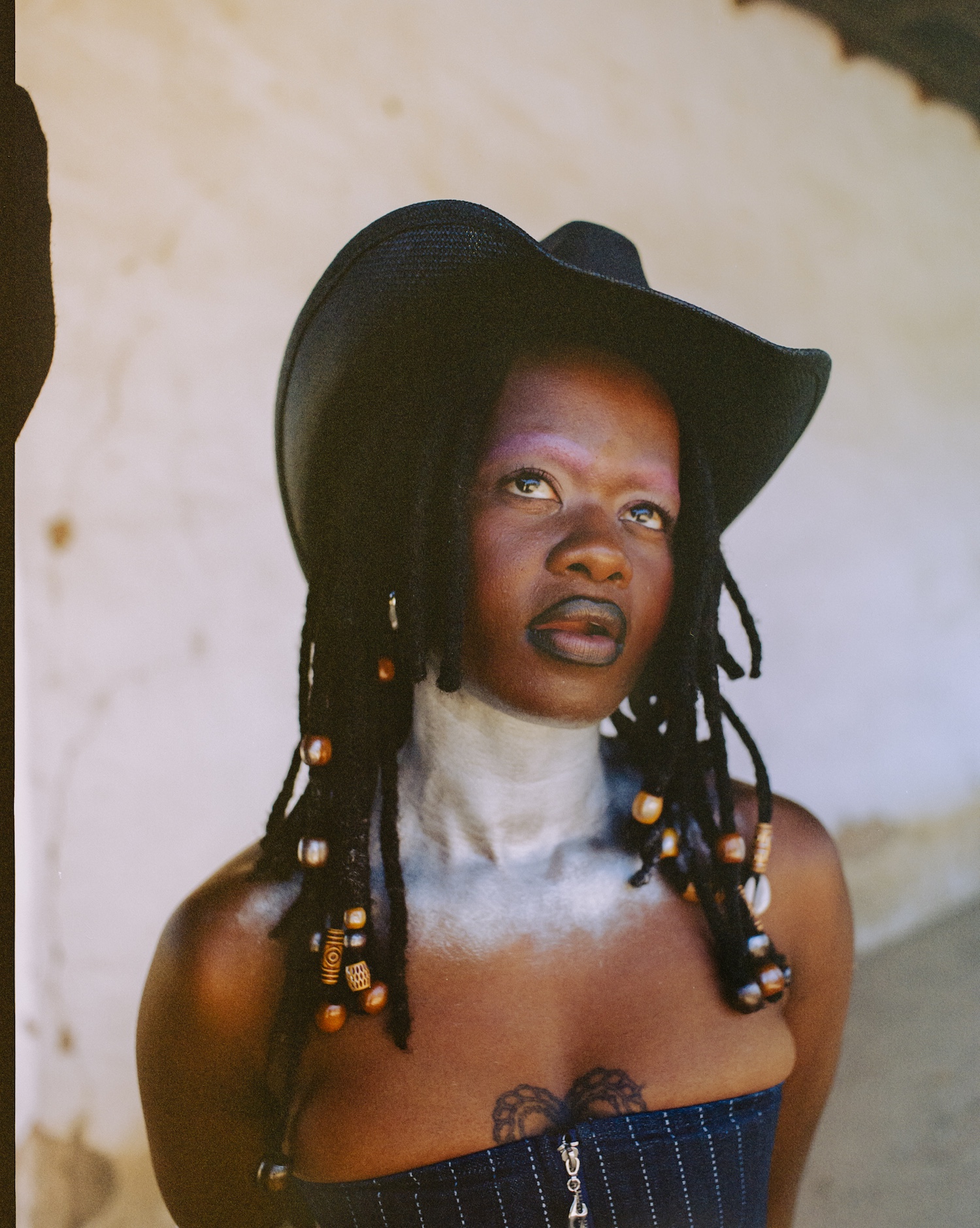
“I conceptualized this album with the intention to create a ‘state of the cuntry,’ if you will,” Reed says.
“An address where I respond to the chaos and hell-making that happens here. This album is very current, and I don’t think there’s any other time that I could’ve written it. It is a folk rap album that tells stories of American labor, empirical agenda, and intends to hold space for the working class to understand the ways in which we have been exploited or have participated in the exploitation of others. It also deals with the body, particularly the Black Femme Body.”
“I always feel really seen when music speaks to the times, so I attempted to do that in this record,” they add. “I definitely had a vision to write with the most specificity that I could. I find the more personal I get, the more relatable it can feel for everyone. Not much changed in the process of finishing it, other than the fact that I came into contact with so many beautiful artists, and tried to keep their voices centered in the process of still sharing my own story. There were so many events that had occurred… in Gaza, in the US. This is the chaos that I’m speaking to. This country is in a state of dysfunction.”
When Reed says the album is about labor, they aren’t speaking in metaphor. They’re speaking from the identity they were taught to inhabit. “When I was raised, I always saw myself as a worker,” they explain. “I learned that when I would leave school, but I would become a part of the workforce in some way. So when I went to college, I worked so many jobs. I worked at J.Crew, the Apple store, Trader Joe’s… and enduring this kind of labor has changed me.” That personal history informs CUNTRY’s larger mission and message – not as a sidebar, but as the body-level proof of what “dysfunction” actually feels like day to day, and what it costs.
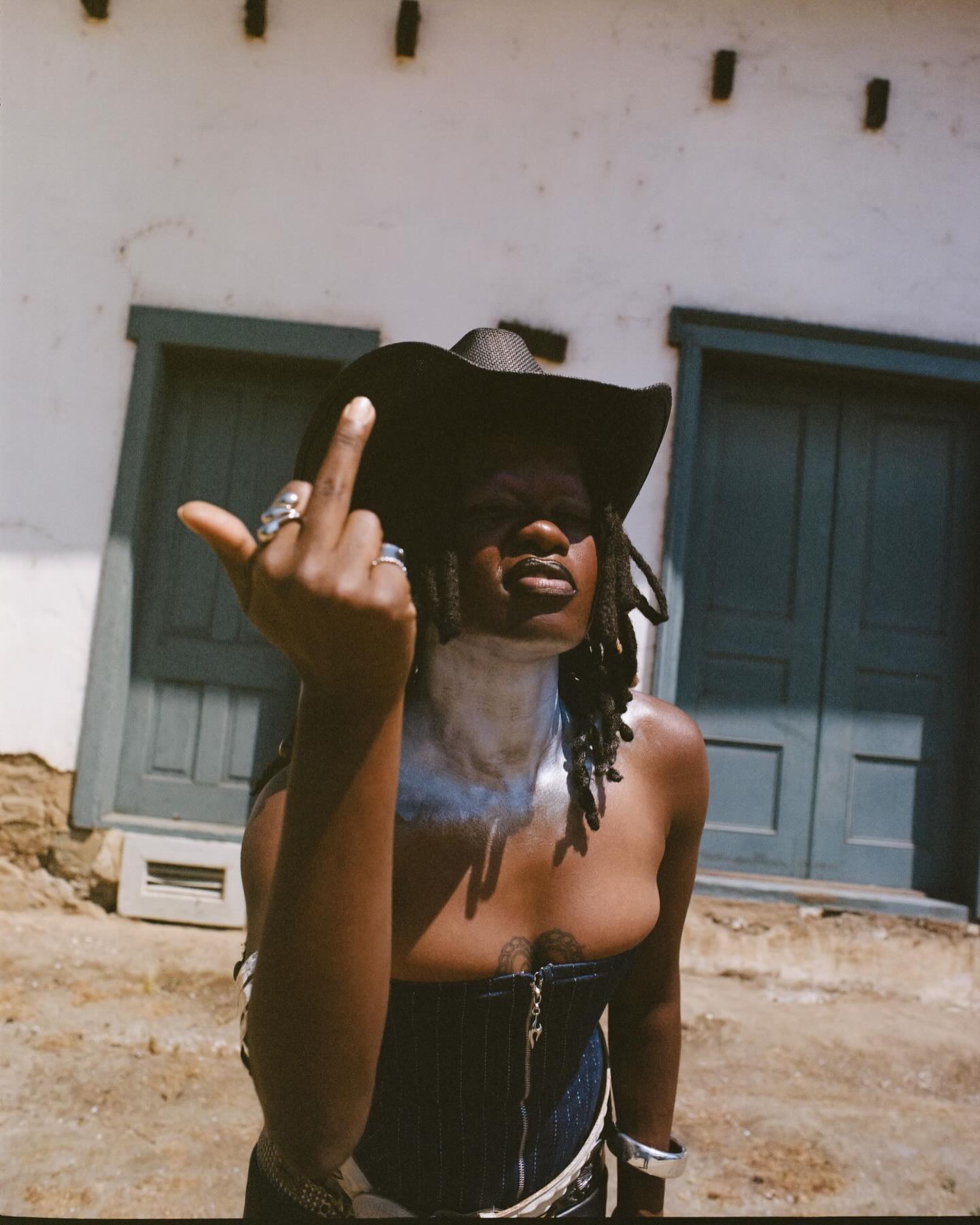
Even the album’s title – as powerful as it is provocative – carries dual weight.
“I’ve always known about this word ‘cuntry,’” Reed shares. “I feel like it’s a portmanteau of c*nt and country. The project is focused on labor, both on the body and the workplace. I think this word channels both of those energies really well.” In Reed’s hands, CUNTRY isn’t provocation for its own sake; it’s a naming, a compression, a way of holding the body and the nation in the same word without flinching.
That same instinct – to treat tradition as living practice – runs through the record’s genre-defying shape. “I think joining folk and rap music feels more similar than it may seem,” they say. “I think Black fan rap is modern, folkloric music, and I think folk music can always be timely. Since I love both of these genres so much, I tried to work with them fluidly. When I was in Atlanta, I worked on rapping. When I was in Wyoming, I worked on folk music.” CUNTRY doesn’t toggle between influences as aesthetic choices; it moves through them as terrain – the same way a life moves through places, pressures, and versions of the self.
And because the record is an address, it’s also communal by design – a project built to hold other voices without losing the thread of their own. Across the album, Reed invites a wide community of collaborators into that conversation, including billy woods, Elliott Skinner, Momo Boyd of Infinity Song, Isa Reyes, Iwewe, Malaya, Kyle Kidd, and Matthew Jamal – reinforcing CUNTRY’s sense of shared authorship and collective presence.
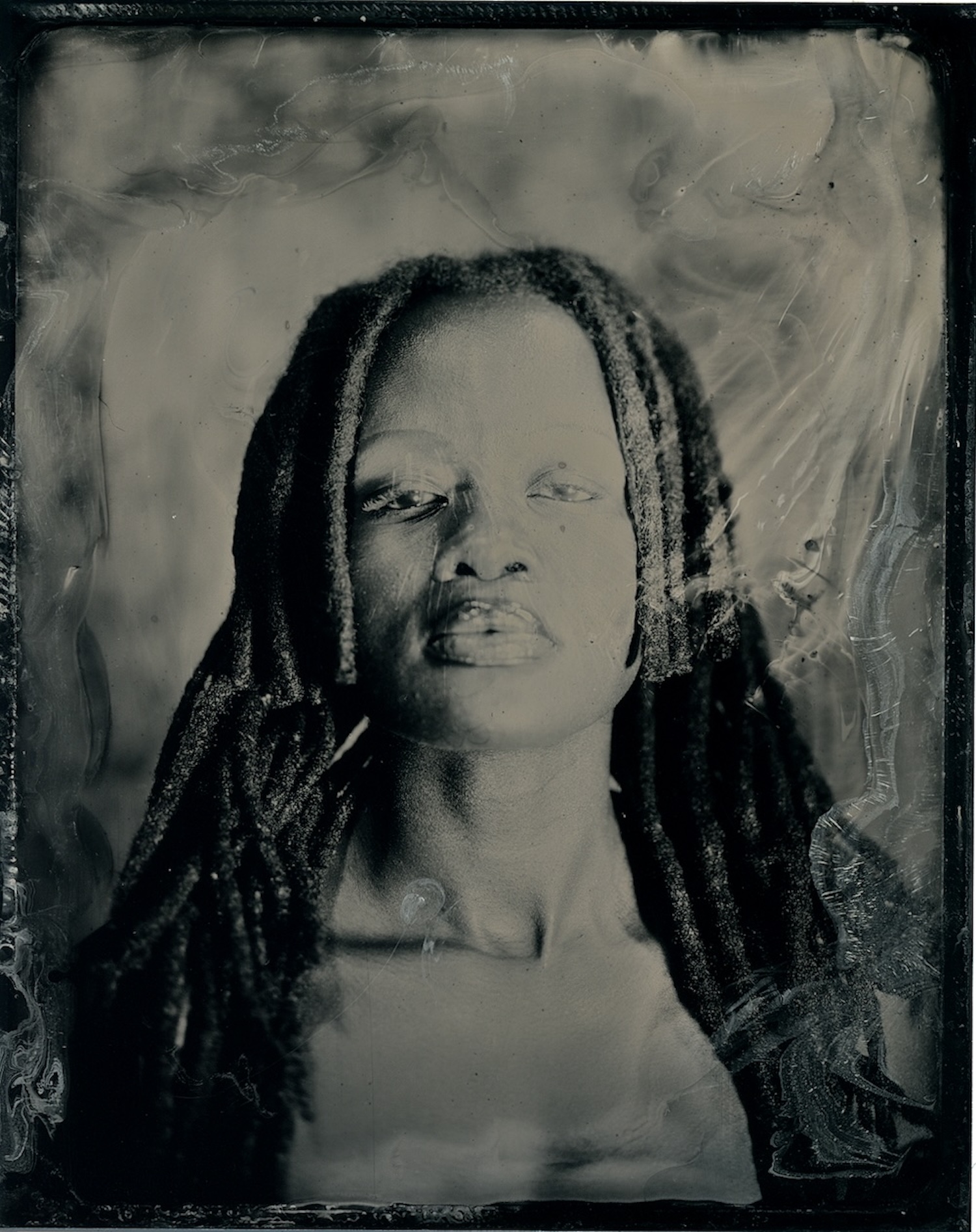
Across its fourteen tracks, CUNTRY unfolds less like a collection of statements than a series of lived responses –
– its songs flowing freely between rage and relief, grief and pleasure, stillness and release. Reed allows each track to hold its own emotional weather, resisting neat resolution in favor of honesty and authenticity. Some moments feel heavy with the weight of history and labor; others crack open into dance, satire, intimacy, and joy. Taken together, the record moves like life itself – uneven, contradictory, and unapologetically human – inviting listeners not just to hear these stories, but to recognize themselves inside them.
The eight-minute opener “Salt n’ Lime” arrives as both invitation and indictment – a sprawling, unflinching thesis that sets the terms for everything that follows. Reed has described it as the album’s core, and it earns that weight immediately, moving through exhaustion, indulgence, reckoning, and resistance without ever settling into comfort. Over its long arc, the song captures the grind of survival and the rituals we use to endure it – work blurring into pleasure, pleasure blurring into escape, the body caught in the middle.
Lyrically, Reed names the stakes with devastating clarity, returning again and again to the line: “The grass ain’t greener / and the fair ain’t cheap / Gimme salt and lime / In the land of the free / haze in the air / getting harder to breathe…” It’s a refrain that feels at once conversational and crushing: A bar-room chant turned political reality, where the promise of freedom collapses under the weight of labor, debt, and exhaustion. Elsewhere, they sharpen the critique with a worker’s eye: “Life on the clocks like eating with your eyes,” they sing, distilling the cruelty of time, productivity, and desire into a single, indelible image. By the time “Salt n’ Lime” finally loosens its grip, CUNTRY has already made its position clear: This is a record that will not rush, will not soften, and will not look away.
White collar crimes on the company dime
Couldn’t catch a break on company time
Life on the clocks like eating with your eyes
I might find god, I might go for a hike
More brown liquor
I chase my pain
I’m bitter my the hour
I stake my claim
I’m hanging by the nail
My body’s on a scale
And work is really jail
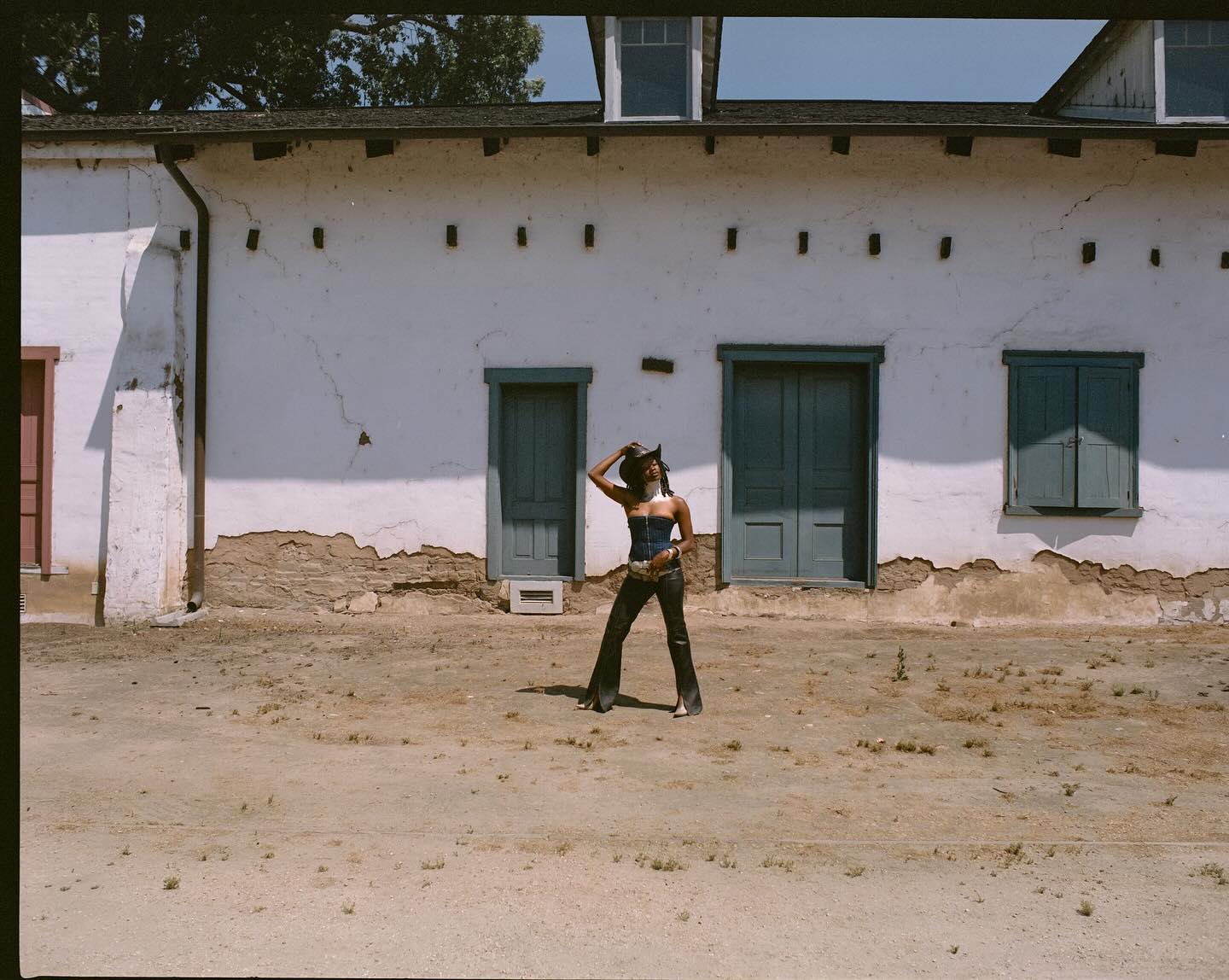
If “Salt n’ Lime” names the conditions, “I Been Out Here Hustlin’” lives squarely inside them. Framed as a modern field song, it taps into a lineage of labor music that has always existed to be sung through work, not about it from a distance. Reed approaches the tradition with reverence and precision, grounding the song in repetition, rhythm, and endurance – the kinds of musical structures meant to accompany motion rather than comment on it. Placed so early in CUNTRY, this song also clarifies the album’s stakes, anchoring the record in labor as lived reality rather than abstraction.
Where “I Been Out Here Hustlin’” names the rhythms of survival, “Women At War” turns its attention to the body as contested ground. Written quickly and instinctively, the song emerges less as reaction than recognition – a statement Reed describes as unavoidable. “From the moment I wrote the song, the words ‘Women At War’ have been ringing in my mind,” they share. “I hope people walk away knowing that the definitions that are held for womanhood can be beautiful, flawed, and damaging all at once.”
Inspired by visionary women like Loretta Lynn, Dolly Parton, and Beyoncé, “Women At War” carries that lineage forward not as homage, but as affirmation. “I feel deeply that the women are at war,” Reed says. “For me, this song affirms that statement.” As the final song written for CUNTRY, it lands with a sense of urgency and resolve – proof not of deliberation, but of how close to the surface these questions remain. In the context of the album, “Women At War” doesn’t interrupt the record’s momentum; it intensifies it, insisting that any reckoning with labor, power, and survival must also reckon with the bodies most often asked to bear their weight.
If “Women At War” names the battlefield, “Always the Horse, Never the Jockey” asks who is expected to carry it. Rooted in Black Southern folk tradition, the song centers the figure of the mule – laboring, enduring, absorbing force without recognition – and returns again and again to a stark, steadfast refrain: “I woke up in spite of fear / I didn’t ask to be here.” Sung like a mantra, the line becomes both survival tactic and quiet protest, articulating what it means to persist inside systems you did not choose.
“It is a harrowing realization to notice and understand that the systems seen in the United States are intentionally designed to fail us,” Reed reflects. “Each day, I’ve seen who chooses to ride right past the dysfunction in search of industry. I can’t help but admit that I feel more in relation to the horse itself than the jockey.” In CUNTRY, this identification is not defeatist; it’s clarifying. By aligning theirself with the laboring body rather than the figure of control, Reed hones the album’s ethical center, refusing aspiration narratives that rely on someone else carrying the weight.
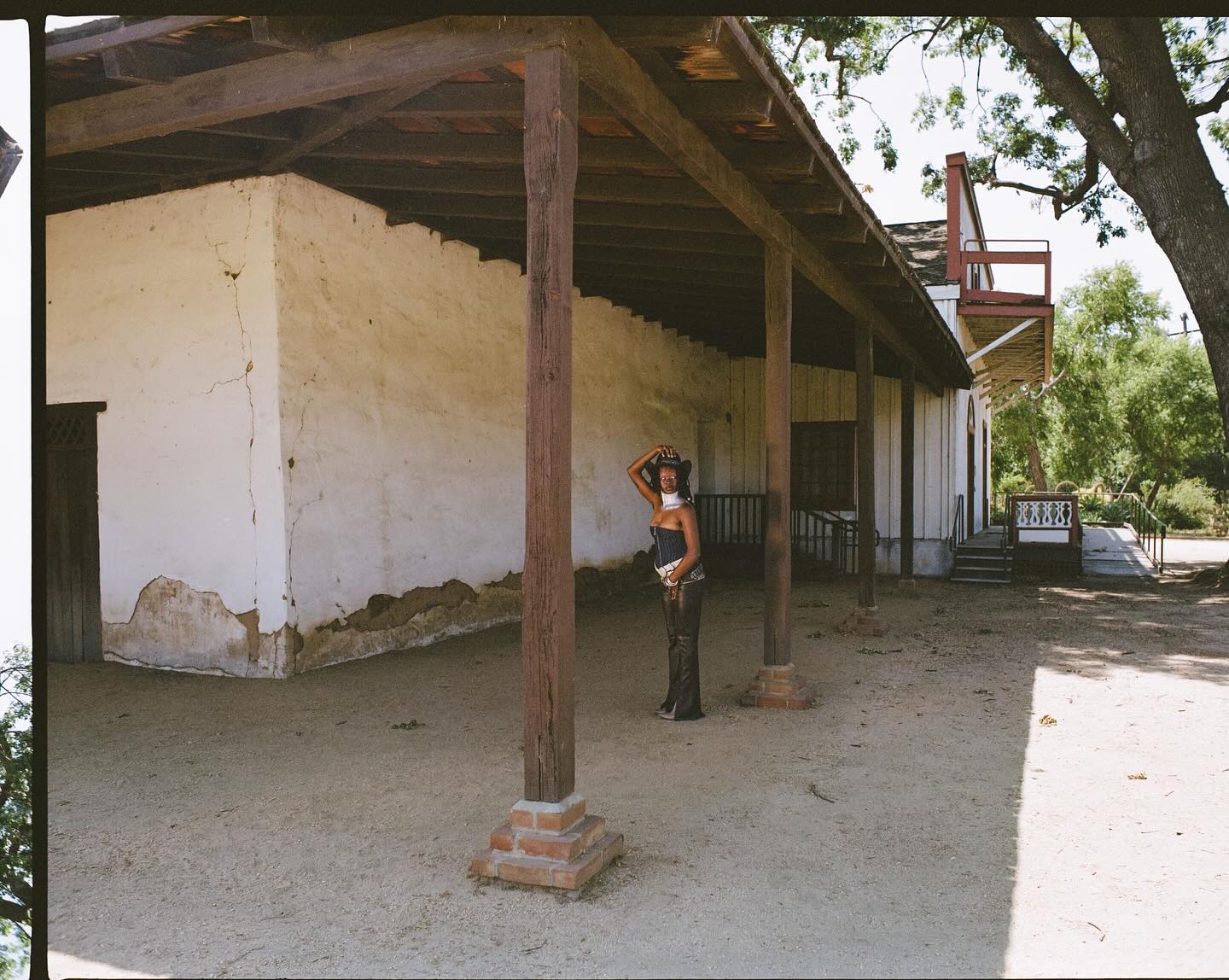
That clarity opens the door for “Americana” and “Da Da Da,” which Reed theirself describes as “the thesis of the record.” Where earlier songs confront labor and endurance head-on, these tracks widen the lens, interrogating culture, value, and extraction with humor, groove, and bite. “‘Americana’ is about how we as Black Femmes give the culture away,” Reed explains. “We swag people out with very little retribution.” Written and produced in Atlanta, the song moves with swagger and critique in equal measure, transforming celebration into question – who benefits, who is seen, and who is expected to keep giving?
“Da Da Da,” meanwhile, feels deliberately unruly – “my ode to the public school cafeteria and the hoedown throwdown, all at once,” as Reed puts it (also: “My Black girl Hannah Montana moment”). Funky, playful, and free, it avoids solemnity without abandoning seriousness, making space for joy not as escape, but as survival strategy. In the context of CUNTRY, these moments matter: They insist that resistance doesn’t always sound like struggle, and that pleasure itself can be a form of clarity.
That balance between rigor and release collapses into confrontation on “Strike!”, a track that abandons subtlety in favor of urgency. Featuring billy woods, the song reads like a breaking point – less commentary than eruption – channeling collective exhaustion into something bolder and harder to ignore. It’s the album’s most overtly militant moment, but it never loses sight of the human cost beneath the call to action. Here, CUNTRY doesn’t ask for reform; it names refusal.
That refusal carries directly into “No Borders,” the album’s most explicitly communal statement. Created with collaborators from Nepal, the Philippines, Poland, Brazil, Colombia, and the United States – artists Reed met through the now-defunct 1B program – the song dissolves the idea of isolation altogether. “Every single person on the song is from a different country,” Reed shares. “It’s really nice to hear everyone joining in on a communal message in the work.” Born out of collective grief and reflection in the wake of Gaza in October 2024, “No Borders” doesn’t flatten difference – it amplifies it, allowing many voices to coexist without hierarchy.
Here, CUNTRY reaches its furthest point outward, transforming the album’s central premise into lived practice. The “state of the cuntry” Reed imagines is not bounded by geography or nationhood, but by shared conditions – bodies under pressure, systems in collapse, people still finding ways to speak, sing, and stand together.

Taken as a whole, CUNTRY unfolds not as a manifesto, but as a series of responses – to labor, to history, to culture, to the body, to the present moment itself.
Across fourteen tracks, Cleo Reed resists simplification, allowing contradiction, joy, rage, tenderness, and community to exist side by side. The album does not offer solutions or closure; instead, it offers recognition – a naming of what so many feel but struggle to articulate.
In that way, CUNTRY stands as exactly what Reed set out to make: A “state of the cuntry” address delivered from inside the chaos, grounded in real-life experience and collective voice. It is music that does not look away – and in doing so, invites listeners to stay present, accountable, and human alongside it.
“I feel particularly emotional because there’s a sort of grief that comes with understanding what we have to leave behind in order to finish something like this,” Reed shares. “I’ve made a lot of sacrifices, lost friends, family. I’ve also found a deeply present community of storytellers and activists who have supported me through it all.”
“I would say that the journey to making this album started before my time. From Beaumont, Texas in the 1800s to NYC today. This album is inspired by my ancestors, as well as my understandings of migration and hustle. I want to thank them and thank God for using me as a vessel to tell these stories. In each track, I ask, ‘how much of myself can I sell to get to where I wanna be?’”
“I hope anyone can find a piece of themselves within the lyrics, the music,” they add. “I’d like to think that the collaborations can allow people to unravel and disarm themselves a bit more in their day-to day.”

In a decade where the systems haven’t softened but tightened their grip, CUNTRY remains devastatingly present, enduring as a living document of survival.
It’s music for the days we clock in, burn out, keep going, and still search for one another inside it all – music that does not belong to a single year or moment of crisis, but to a longer continuum of pressure that has only intensified, asking more of bodies, communities, and spirits while offering little relief in return. Reed meets listeners within that reality, not with answers or escape routes, but with recognition – a shared language for living, working, grieving, and enduring together. In refusing to look away, the record becomes something steadier than commentary: A companion for the present tense, and a testament to the people still standing within it.
Experience the full record below, and join Atwood Magazine as Cleo Reed takes us track-by-track through the music and meaning of CUNTRY – a stunning album built to live alongside us, now and for years to come.
— —
:: stream/purchase Cuntry here ::
:: connect with Cleo Reed here ::
— —
Stream: ‘CUNTRY’ – Cleo Reed
:: Inside Cuntry ::

— —
Salt n’ Lime
My take on a bar song. Gets drunker yet more cognizant as it continues. My thesis for the album.
I Been Out Here Hustlin’
A Field Song, for our modern workers. Made this with a childhood friend, Isa Reyes, who is a loop pedal aficionado. Very distinguishable from the other tracks.
Women At War
The mix of a journal entry and a freestyle. What a privilege to make. Inspired by favorite rap songs from last year (Doechii, Glorilla, SZA).
Ninelives
It’s like when you walk into a bar in NOLA and hear people playing their own jazz, their own downtempo. Reminds me of that. Loved make the drums. Sampled Keenyn Omari, one of my fav musicians ever.
Tally the Bill
Wrote this in an intimate jam, then it turned into something so much sweeter. I didn’t tell any of the vocalists that I wouldn’t be the lead, or the loudest voice. It was worth it! Featuring Momo Boyd, HRLUM, Malaya, Kyle Kidd, Isa Reyes, the best femmes I know.
Sleep Song
Odetta. Odetta. Odetta.
Always The Horse, Never the Jockey
As a working artist, I’ve related to the workhorse at many points in my life. My Mom did rodeo, and I’ve always loved a good duet. IWEWE was the perfect person. It was our first time meeting, and our second take (a live take!)
Americana
I’ve been trying to flex my beatmaking skills for some time now. This song is about giving the culture away, and about being queer. What a blessing its been to see it in the world.
Da Da Da
My Black girl Hannah Montana moment. Lol. Love this song!!! It just keeps going.
Wash All Over Me
My ’80s slow jam. Boylife and I had fun making this. I tried to give y’all vocalsssssss
Baseball
Wrote this after VP Kamala Harris lost the election.
Strike! (ft. Billy Woods)
Inspired by End of Empire. Made the beat, lost my mind about. Reminds me of the book “How to Go Mad Without Losing Your Mind” by Lamar Jurelle Bruce.
No Borders (ft. Krantinaari and Pushpa Palachoke)
Most organic song I’ve ever had the pleasure of making. Born out of our thoughts on Gaza in October 2024. Really moving to make.
Nona’s Jam
Named after Nona Hendryx, a living legend. Makes me feel the freedom underneath my feet.
— —
:: stream/purchase Cuntry here ::
:: connect with Cleo Reed here ::
— — — —
Connect to Cleo Reed on
Facebook, 𝕏, TikTok, Instagram
Discover new music on Atwood Magazine
© Amandla Baraka
 © Amandla Baraka
Cuntry
an album by Cleo Reed