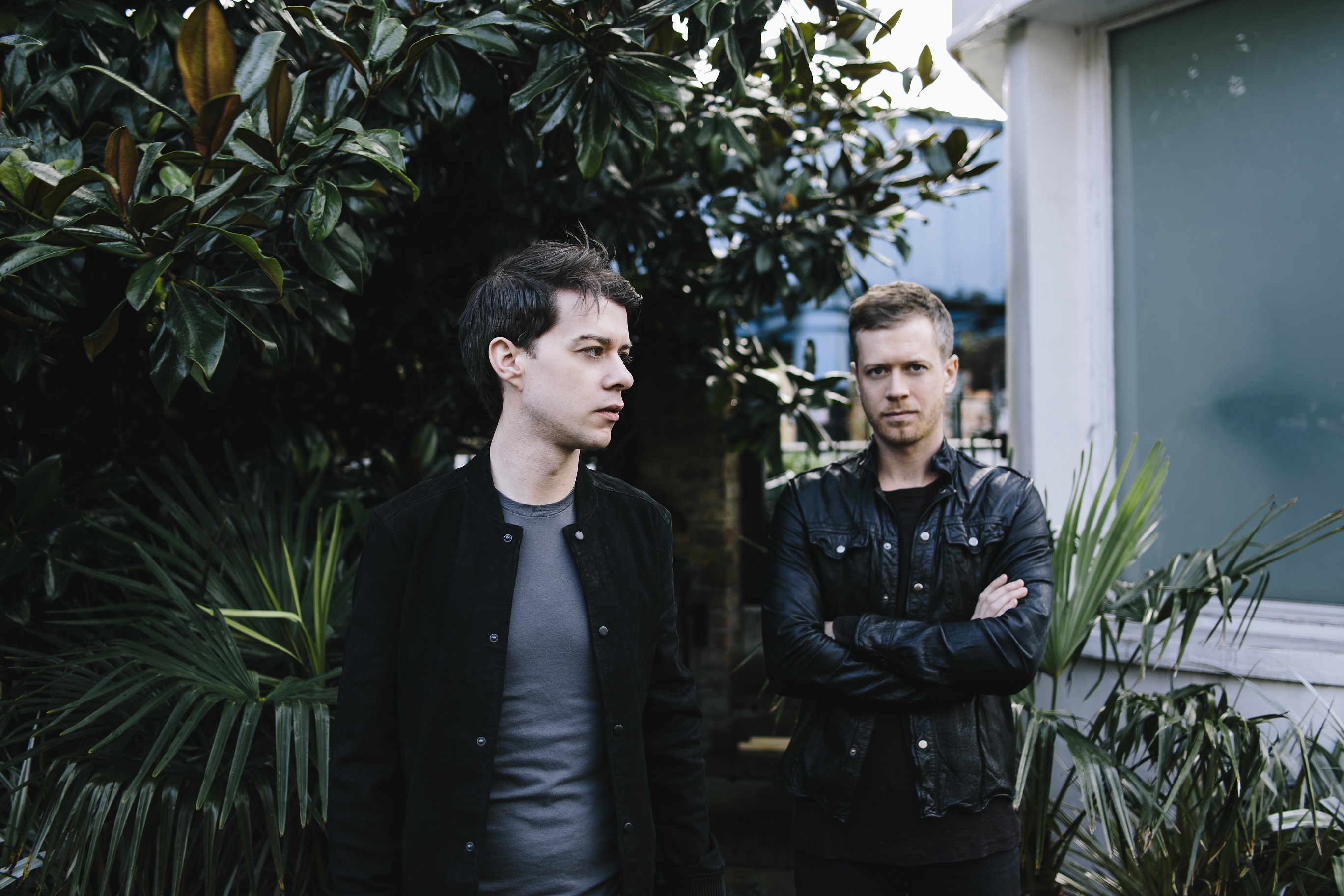
Atwood Magazine is excited to share our Editor’s Picks column, written and curated by Editor-in-Chief Mitch Mosk. Every week, Mitch will share a collection of songs, albums, and artists who have caught his ears, eyes, and heart. There is so much incredible music out there just waiting to be heard, and all it takes from us is an open mind and a willingness to listen. Through our Editor’s Picks, we hope to shine a light on our own music discoveries and showcase a diverse array of new and recent releases.
This week’s Editor’s Picks features total tommy, Park National, Zzz., Florentenes, mary in the junkyard, & DR DR!

 follow EDITOR’S PICKS on Spotify

“Butterknife”
by total tommyThere’s a line in total tommy’s “Butterknife” that feels like a gut punch wrapped in silk: “Fighting with a butterknife / Putting me on trial for my self pity crime.” It’s soft, almost sweet – and then it slices you open. That’s the magic of Jess Holt’s alter ego, total tommy. Seductive, dreamy, and dramatic, her first release since 2024’s debut album bruises is an intimate upheaval: A slow-burning unraveling that rises from a murmur to a fever pitch, with Holt’s haunting vocals giving way to a hypnotic swirl of guitars and crushing emotional release.
Headless, left you on your own
Sorry for the seconds I’m not home
I wanna waste the time with you
Next week will be better
Know I said that back in June
You said my setback’s costing you a lifetime
Habits from a past life coming back around like
Circling a street light
Fighting with a butterknife
Putting me on trial for my self pity crime
A standout follow-up to one of Atwood Magazine’s 2024 Albums of the Year, “Butterknife” builds on total tommy’s reputation for baring it all – for channeling pain and reflection into songs that ache in the gut and echo in the soul. “Call me out, I’m selfish / Hanging off the edge of my own death wish,” she sings in the chorus, her voice cracking open over a bed of grungy alt-rock heat. It’s a self-reckoning, not a plea for sympathy. There’s no attempt to escape accountability – only an honest depiction of internal chaos bleeding into the relationships that matter most, delivered in a storm of searing, spellbinding overdrive.
Call me out I’m selfish
Hanging off the edge of my own death wish
Lock jaw, skin crawl, heavy chest
Just tryna catch my breath
When you’re calling me out
’cause I’m so selfish
“‘Butterknife’ was written about a moment I had where I finally stopped for a second after an argument with a friend, and realised I’d been so caught up in my own stuff that I’d completely missed a huge thing they were going through,” Holt tells Atwood Magazine. “It really put everything into perspective and made me check in on my friends more.”
The metaphor of the butterknife cuts in more ways than one – a symbol of dull resistance, of trying to fight but not knowing how. Holt’s lines “Circling a street light / Fighting with a butterknife” suggest a pattern of avoidance and misguided effort, of being stuck in old habits that only seem to graze the surface of deeper wounds. She isn’t trying to excuse herself; she’s trying to understand herself, even if it means acknowledging her own blind spots and contradictions.
Can only drive on automatic
Make you shift the gears to land it
Burn out like your favourite candle
Always been too hot to handle
Sorry for the way I am
I didn’t mean to shut you down but
It’s been getting so damn loud
I’m craving what I’m drowning out
You said my setback’s costing you a lifetime
Habits from a past life coming back around like
Circling a street light
Fighting with a butterknife
Putting me on trial for my self pity crime
That self-awareness continues in moments like “Sorry for the way I am / I didn’t mean to shut you down / But it’s been getting so damn loud / I’m craving what I’m drowning out” – a stunning admission of overstimulation and emotional withdrawal, where the desire to connect is overwhelmed by the noise inside. Holt’s vocal delivery here is breathtaking, teetering on the edge of collapse before bursting wide open.
“‘Butterknife’ was a real breakthrough songwriting moment for me,” she says. “It’s about grappling with feeling selfish for pursuing what can be a really ego-driven artform at times and the strain it puts on relationships. Being a musician sometimes feels like a bit of a ‘death wish,’ because it’s literally an all-in, live-and-breathe kinda thing. I love what I do so much, and it made me realize that the moment you start sharing music with the world and it’s no longer just for yourself, you have a role to play in not just adding to the noise, but doing something constructive with it.”
That duality – of noise and clarity, ego and empathy – is the beating heart of “Butterknife.” total tommy doesn’t pretend to have it all figured out; instead, she gives us the messy truth in its most honest, unguarded form. The result is intoxicating, entrancing, and unforgettable – a confessional anthem that hits like a storm, then leaves you sitting in the quiet, feeling just a little more seen.
Call me out I’m selfish
Hanging off the edge of my own death wish
Lock jaw, skin crawl, heavy chest
Just tryna catch my breath
When you’re calling me out
’cause I’m so selfish
“Your Mom's House”
by Park NationalThere’s a heartbreak that lives in the quietest places – in backseat memories, in fading t-shirts, in the still of a suburban morning when you’re not sure if you’re awake or still inside the dream. Achingly vulnerable and deeply exposed, “Your Mom’s House” is one of those places – a gut-wrenching glimpse into Park National’s inner world that churns and charms all at once. It’s one of the most vulnerable and exposed songs of his career – unflinchingly honest, stripped back, and emotionally bare: A tender, aching confession wrapped in Midwest emo textures, where every line cuts deeper than the last. It’s intimate, it’s raw, and it hits like a punch to the chest – not with brute force, but with honesty that lingers.
On the dash of Grandma’s old Corolla
A Radiohead CD
If there was one thing you taught me
It’s how to disappear completely
Like the dreams I had in high school
Thought I’d be on your TV
We’ll see
‘Cause I’m wearing all of my t-shirts
that I thought I outgrew
I didn’t think I’d feel so sorry
that things ended like they did
I was just a kid, caught in my own shit
Wasted emotions
Thought I was above you
And just ’cause I can’t love myself
doesn’t mean I can’t love you

Liam Fagan, the Chicago-born artist behind Park National, has always had a gift for turning emotional static into melody. On his sophomore LP You Have To Keep Searching, that gift has sharpened into something undeniable. “You Have To Keep Searching is an album of transformation,” Fagan shares.
“It essentially was created in my effort to capture these heightened moments of emotional clarity, fleeting and intense, over a long and definitive time in my life. It represents musically where I’ve been, through sounds that have long drawn me to the craft and bled through in my songs, while exploring new territory with my writing and recording. It’s the most ambitious homemade record I’ve ever worked on and my first full-length vinyl release. It’s been a dream come true to make and share these songs with people.”
“Your Mom’s House” is one of the album’s emotional centerpieces – a song built on coming-of-age regrets, self-awareness, and a kind of spiritual unraveling. Fagan’s lyrics bleed with sincerity and shame, with love that lingers even when it’s no longer returned. “I was just a kid, caught in my own shit / Wasted emotions / Thought I was above you,” he sings in the chorus, his voice breaking under the weight of hindsight. “And just ‘cause I can’t love myself doesn’t mean I can’t love you.” It’s an absolutely devastating realization – one that turns self-loathing into something almost noble. There’s no bravado here, just emotional reckoning laid bare.
The song drifts like a memory, moving through snapshots and sensory fragments: A Radiohead CD on the dash, 7am drives past old houses, dreams you can’t quite remember, but can’t shake either. The second verse lands like a flashback you didn’t ask for: “Can we slow down? / We’re going twenty over on a residential street / We’re driving past your mom’s house / And it’s 7 in the morning / And I wake up in my bedroom from some kind of f*ed up dream.” It’s all blurry, messy, too close to home.
Can we slow down?
We’re going twenty over on a residential street
We’re driving past your mom’s house
And it’s 7 in the morning
And I wake up in my bedroom
from some kind of f*ed up dream
Can I go back to sleep?
‘Cause I’m wearing all of my t-shirts
that I thought I outgrew
I didn’t think I’d feel so sorry
that things ended like they did
I was just a kid, caught in my own shit
Wasted emotions
Thought I was above you
And just ’cause I can’t love myself
doesn’t mean I can’t love you
By the bridge, Fagan is in motion – physically, emotionally – trying to leave it all behind but knowing he’ll carry the imprint forever. “Now I’m driving with my memories in the backseat / And I’m rolling down all of my windows in attempt to air this out,” he sings, grasping for closure in the cold air. “Just because I hate myself doesn’t mean that I hate you.”
It’s not just the words that hurt – it’s the spaces between them. Fagan doesn’t over-explain or overdramatize; instead, he trusts the weight of a line to do its work. The quick beat of silence after “Can I go back to sleep?” hits as hard as any chorus, while the repeated refrain “Just ’cause I can’t love myself doesn’t mean I can’t love you” feels less like a lyric and more like a revelation – something you whisper to yourself when no one else is listening. In these moments, “Your Mom’s House” becomes more than a memory; it becomes a reckoning.
“Your Mom’s House” doesn’t just tell a story – it opens a wound. But in that rawness, there’s a kind of healing. A kind of truth. A coming-of-age. A moment of clarity, fleeting and intense, just like the album it comes from. And that’s Park National’s power: He takes the feelings you buried years ago and gently, fearlessly brings them to light.
But now I’m driving
with my memories in the backseat
And I’m rolling down all of
my windows in attempt to air this out
But I see it now
I can just be strong
Forget it and move on
with you in the rearview
And just because I hate myself
doesn’t mean that I hate you
And just ’cause I can’t love myself
Just ’cause I can’t love myself
doesn’t mean I can’t love you
“Somebody Else”
by Zzz.Zzz. sings like his life depends on it – and maybe, in that moment, it does. “Somebody Else” is a full-body ache turned emo-pop anthem: visceral, volatile, and loud in all the best ways. Built on crashing drums, surging guitars, and an absolutely gripping vocal performance, this is Zzz. at his boldest – spilling his guts in a way that leaves us stunned and breathless. He holds the end of each chorus line – “somebody ellsssee…” – with aching, unfiltered intensity, stretching his voice until it shakes with feeling. And then the drums hit, pounding like a racing heart, echoing every beat of longing and desperation.
I’m up in the mountains
and you’re across the world
where the clubs are the loudest
And I’m chasing my dreams
tryna walk on the clouds sometimes
I know that sounds childish
And I’m always worried
you’ll find somebody else…
So I hope you know
that I’m not somebody else
Girl I’m not somebody else (I’m not, I’m not)
I’m not somebody else (I’m not, I’m not)
Written with pop-punk legend John Feldmann (Blink-182, Avril Lavigne), “Somebody Else” aches loudly and proudly inside and out. Zzz. doesn’t hold back as he navigates the friction between love and ambition: “I’m up in the mountains and you’re across the world where the clubs are the loudest / And I’m chasing my dreams tryna walk on the clouds – sometimes I know that sounds childish.” It’s confessional and conflicted, a burst of honesty wrapped in hooks that cut deep.
“‘Somebody Else’ is a reminder to someone that you love that no matter who else they search for, that person will never be able to love the same way you can,” Zzz. tells Atwood Magazine. “This is a personal experience of mine that I believe connects with the world, which is exactly why I wrote this very song. It explains a real-life situation of mine that other people can connect with. This is one of my favorite songs, as well as my first release with one of my favorite producers, John Feldman.”
I feel like you’re something
even at time when you
feel like you’re nothing
I feel like I’m burning,
maybe I miss you too much,
maybe I’m learning
And I’m always worried you’ll find somebody else
So I hope you know that I’m not somebody else
Girl I’m not somebody else (I’m not, I’m not)
I’m not somebody else (I’m not, I’m not)
What starts in fear ends in fire. “Girl, I’m not somebody else,” Zzz. repeats like a mantra, a promise, a plea. His voice breaks, the guitars wail, and the whole thing collapses into a final swell of emotion and noise. For all its sonic punch, this song is built on vulnerability – and in that vulnerability, Zzz. finds his power. “Somebody Else” isn’t just a breakup anthem or a late-night cry for reassurance; it’s the sound of an artist laying himself bare and daring you to feel as much as he does.
Born Sam Zelaya in Gainesville and now based in Miami, Zzz. has always made music from the heart – and “Somebody Else” is him at his most raw, restless, and real.
“Fuel for the Flame”
by FlorentenesIt starts with a spark – a couple lines of lead guitar – and before long, you’re engulfed. Florentenes’ “Fuel for the Flame” is a raging indie rock inferno: Blistering and breathless, explosive and all-consuming, it’s the kind of high-octane anthem that doesn’t just demand attention – it grabs you by the collar and roars. Frontman William Smith sings like a fire’s at his heels, his voice fierce and impassioned over an urgent beat, vicious riffs, and guitar solos that scream skyward. This is music made to be felt in the chest – loud, raw, and ready to blow.
lets go back where we began,
you never kept slight of hand from me,
the visionary,
how come we fought then we danced,
then i’d just sit while you pranced,
with him, not me,
it was so so so discretionary,
i don’t know you but i like you,
thought to himself oh what a right fool,
you’d never guess what came back to me,
i know i’m secondary
you’re gonna come way way down
with a heavy load of sobriety in the morning
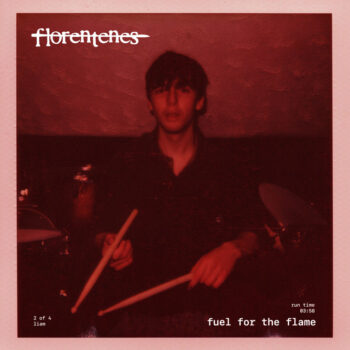
One of the oldest songs in the Manchester-based band’s catalogue, “Fuel for the Flame” holds a special place in Florentenes’ story – written by Smith when he was just 16 as a way to process the emotional chaos of adolescence. “Simple words just can’t quite describe the melting pot of teenage emotions in the same way that music can,” he tells Atwood Magazine. That intensity bleeds into every second of the track, from its searing instrumental attacks to the palpable release that comes with each impassioned line.
Florentenes explode in the chorus, turning internal turmoil into a full-body eruption. “You’ll never know, and never go where you wanted to / Just find another story to brew…” Smith belts, his voice nearly cracking under the strain. It’s a visceral cry of frustration and disillusionment, answered by pounding drums and soaring guitar lines that churn and burn with righteous abandon. “It comes and goes, just stay composed / So stop this train, or feel ashamed / My life’s your only claim – ’cause you’re just fuel for the flame.” It’s a thrilling moment of clarity and catharsis, when the storm inside finally breaks free.
you’ll never know, and never go
where you wanted to,
just find another story to brew,
i feel it go, and feel it flow,
through blood and bones,
it comes and goes, just stay composed,
so stop this train, or feel ashamed,
my life’s your only claim,
cause youre just fuel for the flame
There’s something especially arresting about how unfiltered this song feels – like a pressure valve released at just the right moment. You can practically hear the history baked into it: the dorm room demos, the shout-it-til-you-mean-it gigs in sweaty Northern venues, the way the band have grown around it without sanding down its edges.
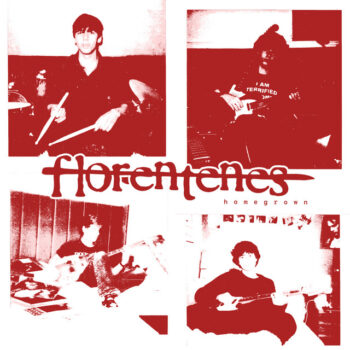
Made up of William Smith (vocals, songwriting), Luke Holding (lead guitar), Harry Stubbs (bass), and Liam Fiddy (drums), Florentenes have carved out their name across the UK through electrifying live sets and a fiery sonic blend that’s equal parts charm, concept, and grit. Their second EP HOMEGROWN captures the full spectrum of their sound – and “Fuel for the Flame” stands tall as its emotional ignition point. This isn’t just one of the first songs they wrote; it’s one of the truest expressions of who they are.
Call it an anthem. Call it a release. Either way, “Fuel for the Flame” is the kind of track that reminds you why we turn to music in the first place: To scream when we can’t speak. To burn off what we’ve buried. To feel everything, all at once.
i don’t know you but i like you,
thought to himself oh what a right fool,
you’d never guess what came back to me,
i know i’m secondary
youre gonna come way way down
with a heavy load of sobriety in the morning
you’ll never know, and never go
where you wanted to,
just find another story to brew,
i feel it go, and feel it flow,
through blood and bones,
it comes and goes, just stay composed,
so stop this train, or feel ashamed,
my life’s your only claim,
cause youre just fuel for the flame
“drains”
by mary in the junkyardSlipping down the drain never sounded so intimate – or so alive. mary in the junkyard’s latest single is a fragile, ferocious fever dream: A hard-hitting alternative outpouring built on hypnotic guitars, primal rhythms, and Clari Freeman-Taylor’s effervescent, emotionally searing voice. She sings hot on the mic in a kind of spellbound state – every breath quivering, every line teetering between confessional and cathartic. “drains” is intense. It’s raw. It’s rugged. It’s everything that makes mary in the junkyard one of the UK’s most exciting bands right now – a title they continue to earn, not chase.
I’ve been looking all over for you
In all of the drains of the city
I’ve been looking for words to describe you
I don’t even know what you are to me
You’re a bright light,
a white noise, a long corridor
A red moth in my room flying at my head
A wise woman at the bar crying, quiet
A gentle riot
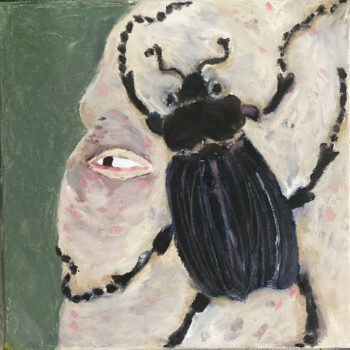
Released as their first single of the year, “drains” finds the London-based trio of Freeman-Taylor (vocals, guitar), Saya Barbaglia (bass, viola), and David Addison (drums) digging deep – literally and figuratively. “I am curious about the bowels of the city,” Freeman-Taylor tells Atwood Magazine. “All of the rain and the waste in London goes into mysterious sources, we have a wonderful array of pipes and underground networks below our feet! You get rained on and it disappears through the ground, we never see our piss and shit and rubbish ever again which is amazing! We don’t see what’s below but there are many pipes and caves, and my friend once said, ‘If you bury yourself, I will dig you out again.’ I wanted to immortalize it because it made me feel so warm.” That evocative phrase becomes the song’s haunting, heartfelt bridge – a moment of promise wrapped in anguish, vulnerability, and unconditional love: “If you bury yourself, I will dig you out again / That’s what lovers do.”
At once visceral and poetic, “drains” captures the overwhelming flood of city life and the quiet ache of longing for connection. “This song is the most similar lyrically to our first song ‘Tuesday,’” Freeman-Taylor explains, “because it was written at a similar time, when I had just moved to London and was quite affronted with the pace of life – trying to stay afloat in a vast ocean of people. You find your way somehow and it’s wonderful to be part of. But it can be draining – maybe our energy falls out of us and goes down all of the pipes too.”
But I only came here to feel my body
I am a ghost, where are my bones?
How can you blame me for not being sorry?
My birthday card got lost in the post
And it’s a bright light, a white noise, a long corridor
A red moth in my room flying at my head
A wise woman at the bar crying, quiet
A gentle riot
There’s an almost sacred weight to the imagery she conjures: “You’re a bright light, a white noise, a long corridor / A red moth in my room flying at my head / A wise woman at the bar crying, quiet / A gentle riot.” It’s cryptic and kaleidoscopic – part love letter, part identity crisis, part existential scream.
“A lot of the lyrics are addressed to a mysterious and hidden someone – it is, I think about the search for connection with others,” Freeman-Taylor muses. “We can pass each other by so fast sometime that real friendship is so so precious. I really value my conversations with people I love, and that can be hard to find good friends especially at first when you move somewhere. Much love to the kindred spirits.”
And yes, there’s a scream – a real, guttural one – waiting at the end of the track. “I think it’s quite a cathartic rocky tune,” Freeman-Taylor says. “I hope people find it cathartic and fun and groovy and enjoy the scream at the end.”
But if you bury yourself, I will dig you out again
That’s what lovers do
If you hurt yourself, I will take you under my wing
I’m your lover and I’m loving you
If you bury yourself, I will dig you out again
That’s what lovers do
If you hurt yourself, I will take you under my wing
I’m your lover and I’m loving you
I’m your lover and I’m…
mary in the junkyard continue to defy easy categorization, embracing contradiction and curiosity as core tenets of their artistry. “I think we all are really curious about so much music,” she reflects. “We have the rock trio setup usually, but we love to play a lot of different genres. I think that’s really going to come through on our album. Saya and I come from classical string musician backgrounds, but we really also love electronic music. On our upcoming EP, we’ve got a viola/cello/very sparse drums track about the River Thames. I would call our sound ‘playful and scratchy and emotional’ or ‘doing whatever we feel like at the time.’”
That freedom – so unapologetic and unfiltered – is part of what makes “drains” hit so hard – not just sonically, but spiritually. It’s a song about being lost and being found. About sinking and surviving. About friendship, food, city pipes, and the quiet rituals of care that tether us to each other. It’s messy and human and utterly magnetic. Come for the chaos; stay for the scream.
Tryna stay well fed but it’s exhausting
When nothing I do is from feeling
I feel like this every weekend
But I’ll get over it, I’ll get over it
I’m tryna stay well fed
but I’ve been slipping down the drain
And I’m talking to you now
but I don’t feel sane
I feel like this every day
But I’ll get over it, I’ll
aaarrrtggggghhhh
“Vultures”
by DR DRThere’s a point when you stop chasing the crowd and start seeing clearly – not just who’s around you, but who’s really there. “Vultures” hits that moment like a lightning strike to the chest. Manchester’s DR DR deliver a fiery reckoning through searing guitars, pounding drums, and frontman Fred Farrell’s unrelenting vocal howl – a mix of rage, release, and radiant self-ownership. It’s the kind of song that scorches and soothes at once, heavy with pain but alive with purpose.
Call off the dogs
I’ve been running for days
And I can’t keep this up
You killed me once
Why kill me twice
Oblivion…
Where were you when
the walls were falling down
And the lights
Were going out
All this sweet time
We’re wasting

A standout off the band’s new VULTURES EP, “Vultures” channels inner turmoil into raw, unfiltered sound. Farrell wrote the track in the aftermath of a personal low point – a time when his world collapsed and those he thought were friends vanished into the shadows.
“The song is reflection on a very difficult time in my life,” he tells Atwood Magazine. “The realisation that you don’t have as many friends as you thought is a very sad feeling. Knowing you wasted time and energy on the wrong people – all this sweet time we’re wasting. After battling with mental health problems for a long time, I started to notice that a lot of ‘friends’ were only there for me in the good times and when they needed something. These ‘friends’ would take and take, but when I was broken, most in need of help, ‘where were you when the vultures came around?’
That line, delivered in a storm of lead guitar wails, rings out like a shot to the chest. “Where were you when the vultures came around?” Farrell cries in the chorus, his voice teetering between accusation and devastation. “I was laying on the ground / All this sweet time we’re wasting.” That repeated refrain is both a lament and a gut punch – the clarity that comes when the dust settles and you’re left counting the cost of misplaced trust.
“The song is becoming comfortable with what you have,” Farrell explains. “It’s being content with your circumstances. We may not be rich (yet), and we may each have a handful of close friends, but we’re at a point in our lives where that’s what’s most important to us – the people who care about us, not the idea of who we could be.”
There’s strength in that shift – in letting go of the performance and embracing the real. For DR DR, “Vultures” is more than catharsis; it’s a reclamation of identity and intention. “Playing this song together makes us feel sexy and powerful,” Farrell says. “We own who we are, and we know who we want to continue to be no matter where this journey takes us. We’re in it together.”
Soaring and scorched, “Vultures” doesn’t flinch from the dark – it roars through it. DR DR have delivered a moment of explosive, heavy alternative rock that hits hard and leaves a lasting scar. It’s charged, it’s churning, it’s vicious, and it’s vulnerable. They aren’t here to play nice – they’re here to burn down the illusion and walk out of the wreckage with their heads held high.
DR DR have screamed their truth, scorched the silence, and now emerge stronger. “Vultures” is their battle cry.
— — — —

Connect to us on
Facebook, Twitter, Instagram
Discover new music on Atwood Magazine
Editor’s Picks
follow EDITOR’S PICKS on Spotify