Atwood Magazine is excited to share our Editor’s Picks column, written and curated by Editor-in-Chief Mitch Mosk. Every week, Mitch will share a collection of songs, albums, and artists who have caught his ears, eyes, and heart. There is so much incredible music out there just waiting to be heard, and all it takes from us is an open mind and a willingness to listen. Through our Editor’s Picks, we hope to shine a light on our own music discoveries and showcase a diverse array of new and recent releases.
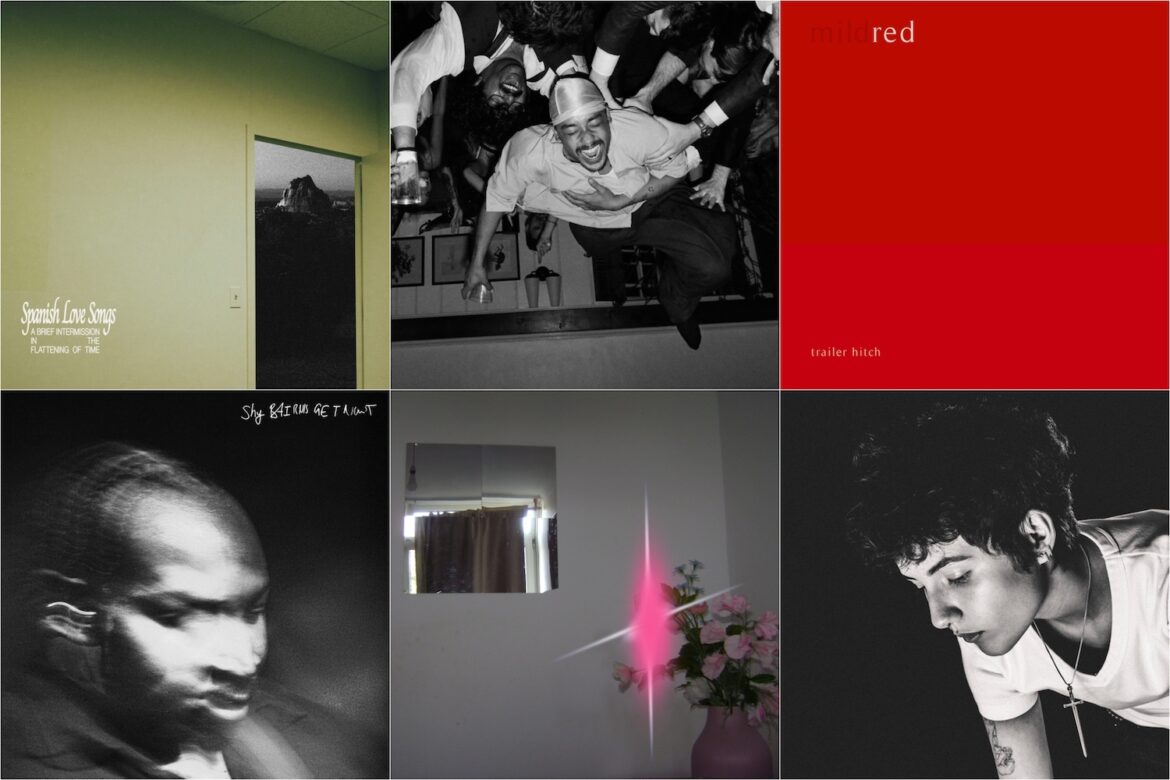
This week’s Editor’s Picks features Bartees Strange, Spanish Love Songs, Dijon, Deadbeat Girl, Dutch Interior, and mildred!

 follow EDITOR’S PICKS on Spotify

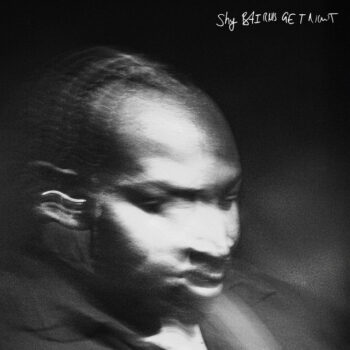
Shy Bairns Get Nowt
by Bartees StrangeThere’s a different kind of heat radiating off Bartees Strange this winter – a quiet, smoldering intensity that doesn’t announce itself so much as seep into your bloodstream. Shy Bairns Get Nowt feels like a small reckoning disguised as an EP, and nowhere is that transformation more vivid than in its bookends: The brooding opener “BTNY” and the soul-soaked exhale of “Ain’t Nobody Making Me High.”
It’s wild, honestly, to hear how deeply Strange sinks into feeling here. After the artistic maximalism and emotional enormity of Horror – a record that towered over the top of 2025 – these six songs feel unarmored. Human. Tender in their rawness. Each one leans toward the light not by force, but by honesty. And as the year closes, I can’t think of a more powerful note for him to end on.
“BTNY” opens the EP like a low-burning confession, soft and smoky, heavy with remembrance and the weight of all the things we didn’t do for love. His voice stays close to the mic – hushed, aching, but unwavering – as he sifts through lineage, heartbreak, and the echoes that outlive our choices. Are we the ghosts of our parents after all? The question hangs in the air like fog. “The song just feels true,” Strange tells Atwood Magazine. “In my life I’ve had love and I’ve lost it. More than once… But there’s something to the legacy of love in one’s life. Your loves, the love you experienced through your parents, the patterns and traumas associated with it all.”
You can hear that truth in every breath. “BTNY” is gentle, but never light; it burns with the quiet devastation of hindsight – of remembering too late, of longing too much, of carrying emotional inheritances you never signed up for. It’s a stunning beginning, a song that smolders rather than erupts.
But “Ain’t Nobody Making Me High” is where Strange goes full soul man – unfiltered, unguarded, and absolutely glowing. This is the most soulful he’s ever sounded, a modern blues traveler cutting straight to the bone with a voice that charms, churns, and charges all at once. The groove is classic, timeless; his delivery is pure feeling. You can hear every ache, every truth, every hard-earned piece of wisdom.
He wrote it from a deeply personal place: “I wanted to write something about my life. Sort of the story of a modern day, black, rambling man or blues traveler,” he shares. “Felt nice to write something that felt like where I am in this current stage of my life.”
And you feel that weight – not heaviness, but maturity. A groundedness. A man taking stock.
Recorded with Hovvdy, Tamara Hope, and Tommy King, the song came together quickly and intuitively. “Horror is very produced and there’s bells and whistles all over it,” Strange says. “This is more direct. It just is what it is. Songs, to the point.”
That clarity is the magic: Stripped of production fireworks, Strange lets his voice and writing carry the heat. And they do so, effortlessly.
What ties Shy Bairns Get Nowt together, though, is what it represents for him. These songs weren’t meant to sit on a hard drive; they were meant to signal a shift. “With these songs I felt like they had something special in them I hadn’t really done before,” he tells us, “and it felt important to me that they come out sooner rather than later. Maybe to signify that I’m thinking in a new direction already.”
He’s not hiding the intention: “I think this is the moment in my ‘legacy’ where I transform into something else. Something that’s nothing more and nothing less than who I am. Not perfect, just Bartees. Good enough.” There’s so much beauty in that simplicity. These songs don’t posture or perform. They don’t reach for grandeur. They sound like a man shedding the last traces of expectation and stepping directly into himself.
“BTNY” carries the smoke and the memory; “Ain’t Nobody Making Me High” carries the soul and the swagger. Together, they frame an EP that feels like a turning point – a doorway Strange walks through with softness, strength, and a renewed sense of self. For an artist who began the year confronting inner monsters on Horror, closing it with this kind of warmth feels quietly monumental. Shy Bairns Get Nowt is smaller in scale, but emotionally seismic.
It’s Bartees Strange at his most human. His most honest. His most soulful. A reminder that sometimes the boldest artistic move isn’t the loudest – it’s the truest. If this is the beginning of his next chapter, we’re witnessing a remarkable evolution in real time.
“Cocaine & Lexapro”
by Spanish Love Songs ft. Kevin DevineThere’s a glow to “Cocaine & Lexapro” that warms the ears just as it does the mind, body, and soul. For a song built on self-recrimination, chemical crutches, and the slow realization that your body won’t bounce back forever, it sounds strangely tender – earnest, buoyant, and quietly luminous, like streetlights on a foggy night. Spanish Love Songs and Kevin Devine turn what could have been pure self-loathing into something smoldering and humane: A confession that still believes in the possibility of getting better, even as it asks, who gives a f* about landing?
Well, I don’t miss my friends
I miss a time and a place
Mostly just the age
When I was living okay and living cheap
Beaumont truck stop casino
I’m near-prone and tapping on Keno
Warm cocktails, cocaine, and Lexapro
Early dementia, help me get back to sleep
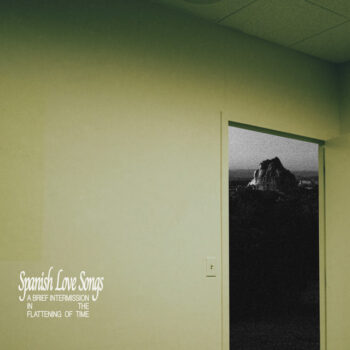
“Cocaine & Lexapro” is the emotional center of the recently-released A Brief Intermission in the Flattening of Time, a four-song cul-de-sac of a record that finds Spanish Love Songs returning not just to the studio, but to themselves. Frontman Dylan Slocum calls the EP “a return to myself in a quite literal storytelling sense,” and you can feel that directness in every line; these songs are less opaque than No Joy, more linear in their storytelling, more at peace with being, as he puts it, “imperfect snapshots of a moment.” Where the band once buried their dread in frenetic punk catharsis, they now lean into space, atmosphere, and cinematic scope – and “Cocaine & Lexapro” is the clearest distillation of that shift.
The title started as a dark joke between Slocum and his brother, a sequel to “Beer & Nyquil (Hold It Together)” that would pit two equally “damaging substance combinations” against each other. It stuck because it hit too close to home: “There’s a real tension between the idea of using one chemical responsibly to try to battle your depression/anxiety and then poisoning your body with another because you want to feel good or have fun for once,” he explains. Written ten years after “Beer & Nyquil,” this song looks back at those so-called good days with a wince and a wince disguised as a smile – older, more self-aware, still just as tempted. “It’s a song about feeling older, missing some idealized version of the good days (even though I was likely miserable in the good days too), and reckoning with who I am and the choices I make,” he says. “How do you balance wanting to enjoy the moment because life is terribly short with the notion that it might not be as short as you think, and that one day you might reap the consequences of your poor decisions.”
You said a problem’s not a problem
’til you call it by name
Pilot’s still a pilot
’til he crashes the plane
I swear I have control
just like a universe expanding
Try not to think about landing
You hear all of that push-and-pull in the chorus, where Slocum sings, you said a problem’s not a problem ’til you call it by name, pilot’s still a pilot ’til he crashes the plane… Landing, for him, is both the pilot touching down and the comedown off whatever you’ve taken to get through the night. He’s brutally clear about the denial at the heart of it: As long as you haven’t “crashed,” you can keep pretending you’re fine. But the band cushions that honesty in glowing guitars, a spacious rhythm section, and synth textures that make the whole thing feel widescreen and weightless. It’s intimate and epic all at once – the kind of song that makes you want to close your eyes and drive, even as it quietly warns you about the cost of never slowing down.
Kevin Devine’s presence deepens that ache. Spanish Love Songs “don’t exist without Kevin Devine,” Slocum says, and you can hear the reverence in how they leave space for him. Devine takes what Slocum had demoed as “an angry, contrarian second verse” and turns it, in Dylan’s own words, “into something delicate and full of pathos.” His verse doesn’t argue; it empathizes, tracing the same cycles of self-sabotage with a softer touch that somehow hurts more. The song becomes a dialogue between two narrators who recognize the same destructiveness in themselves, both clinging to the illusion of control, both aware it can’t last forever.
Two-star hotel lobby breakfast
Last seen just outside of Memphis
I write down the town and the room I’m staying in
You know I won’t remember if I don’t
‘Cause every night is an occasion
And I’m so goddamn easily persuaded
Say I just need some brand new entertainment
And help me write my own name on the cake
Across A Brief Intermission in the Flattening of Time, Spanish Love Songs lean into that kind of vulnerability and self-knowledge. Slocum describes this EP as the first time he’s ever felt truly confident as a songwriter – not because he assumed everyone would love the songs, but because he “walked away knowing that I did my job and understanding the things I’m good at.” You can hear that confidence in the way “Cocaine & Lexapro” lets its emotions breathe: There’s no need to shout when the lyrics already cut this deep. For all its references to decay and bad decisions, this song glows with something resembling hope – or at least recognition. As Slocum says, the band just wants people to “find one thing in it that makes them feel a little less alone in the world.”
“Cocaine & Lexapro” does exactly that. It looks the worst parts of ourselves in the eye – the avoidance, the coping mechanisms, the refusal to name the problem – and wraps them in warmth instead of contempt. It’s smoldering, cinematic, and strangely comforting, a reminder that even when you’re spiraling, you’re not doing it alone. In a catalog already stacked with gut-punch singalongs and existential slow-burners, this feels like one of Spanish Love Songs’ most quietly devastating songs yet – a late-era classic in the making.
You said a problem’s not a problem
’til you call it by name
Pilot’s still a pilot
’til he crashes the plane
I have the self-control
of a universe expanding
Who gives a f* about landing?
“HIGHER!”
by DijonElectrifying doesn’t even begin to cover what “HIGHER!” does to a room – or to your body. After seeing Dijon ignite Terminal 5 last week, and then watching him detonate the song again on SNL just days later, I feel like the track has rewired something in me. Hearing it live, you don’t just listen; you absorb it. You breathe it in. It hits your chest like a jolt. It lifts you off the floor. It’s joy and ecstasy and heat and motion – all channeled through one of the most fearless artists working today.
“HIGHER!” is Dijon at his most euphoric, a dizzy, delirious release that captures everything his sophomore album Baby stands for: Love as combustion, devotion as adrenaline, the “mania of domesticity” transfigured into a full-body exaltation. On the album, it’s a breakthrough; in the room, it’s a miracle. “Gotta say, gotta say… watching you blow up – ballooning!” he cries, and the world seems to expand right alongside him. The beat lurches forward in ecstatic bursts, the arrangement spirals upward, the whole thing heaves with breath and sweat and awe. It sounds like a heart mid-leap – like someone discovering, in real time, just how much higher love can take them.
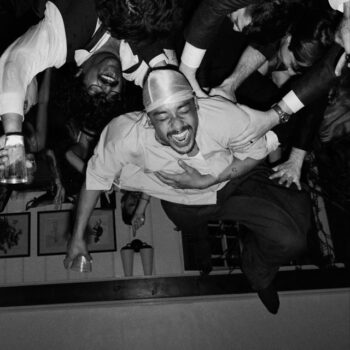
“Just stay in my view, my love, ’cause you bring it all higher…” He sings it like a revelation, and the crowd shouts it back like gospel.
If Absolutely was chaos and longing and rupture, then Baby is urgency and embodiment – intimacy in motion. Made at home with his closest collaborators, the album fuses cinematic R&B, domestic devotion, and that unmistakable Dijon electricity into something unguarded and alive. “HIGHER!” sits at the epicenter of that heatwave: A love-drunk carousel spinning so fast you lose your balance, yet somehow land softer than you expect. Dijon’s voice – trembling, raw, ecstatic – becomes an instrument of pure ascent, lifting everything around it.
And the physicality of it is breathtaking. The song moves like bodies colliding in a too-small kitchen; like laughter spilling into a cry; like desire overtaking whatever exhaustion came before it. It’s sweaty and bright and entirely unselfconscious – the sound of letting love move through you so fully it becomes its own weather system. Onstage, those impulses double; you can see the music in the way his band leans, shouts, dissolves, and reforms around him. It’s communion. It’s combustion. It’s magic.
What astonishes me most is how hopeful it feels. Amid the mania, the noise, the ecstatic blur, “HIGHER!” is a song that believes in love’s ability to heal – to lift, to restore, to resurrect. “Two times… let it move right through you… it’s healing me… this is a love… HIGHER…” That’s not metaphor; that’s lived experience erupting in real time.
The more I sit with Baby, the more “HIGHER!” emerges as one of Dijon’s defining triumphs – a song that crystallizes the fever dream, the devotion, the delirium, and the emotional gravity of this album. It’s ecstatic. It’s overwhelming. It’s alive in a way very few songs dare to be, and easily one of the year’s most unforgettable moments – a pure, unfiltered rush of feeling, a high-voltage jolt of life that reminds you just how high great music can take you.
And when you hear it live?
Forget higher.
It takes you somewhere holy.
“Soft”
by Deadbeat GirlThere’s something volcanic simmering under the surface of “Soft.” It’s an emotionally charged indie rock fever dream – aching, impassioned, relentless – a song that churns from the inside out, its visceral lyrics slicing straight through the armor so many of us learn to wear. Deadbeat Girl tears into the pressure to be harder, louder, harsher, less feeling, less fragile, less anything that might be mistaken for softness. And in doing so, they transform that softness into something powerful, defiant, and unmistakably alive.
“Soft” is a highlight of the band’s new EP Self-Destructor – a six-track, deeply introspective collection exploring self-destruction, insecurity, and the tangled work of learning to accept yourself – where Deadbeat Girl (Val Olson) digs fearlessly into love, gender, identity, and all the messy in-between spaces they inhabit. And yet this track feels like its own epicenter: Raw nerve, bare truth, confession sharpened into catharsis.

When we get intimate
You’re just not into it
I’m not like all of the freaks
Out on the internet
Depraved and sickening
Look like you’re done with it
I guess i’m just not your type
Well, you like idiots
It’s rooted in a real experience – and a real wound. “I was once in a relationship where my partner at the time made me feel like I was too soft or not masculine enough,” they share. “They felt I was ‘not aggressive enough’ or ‘too emotional.’ I feel like a common experience for masculine presenting non-men is the expectation to act within the negative stereotypes of a cis-man in society… People should be able to be who they are without feeling sorry or explaining themselves.”
You feel every ounce of that shame, anger, and reclamation radiating through the song. The guitars snarl and shimmer, the drums pulse like a clenched jaw, and Val Olson’s voice arrives with a beautiful, bruised clarity – wounded, yes, but refusing to collapse. I’m just too soft… it’s not my fault. The line stings because it’s true, because it’s lived, because softness is too often mistaken for weakness when, in fact, it takes a staggering amount of strength to keep feeling in a world that keeps telling you to stop.
Play the part
Can’t change my heart
I wish I was more aggressive
End the night and you’re defensive
I’m not rough like all your exes, no
I’m just too soft
To get you off
I’m just too soft
I’m just too soft
But what makes “Soft” so special is that it doesn’t stay in the wound. It fights back – subtly, slyly, with a kind of tongue-in-cheek self-awareness that refuses to let pain define the narrative. Deadbeat Girl tells us the song is about “self-reflection and self-empowerment… meant to resonate with listeners but not to be taken too seriously.” It’s catharsis with a grin; a scream wrapped in a melody you can dance to; a reclamation delivered with enough grit and swagger to shake off someone else’s judgment.

That sense of empowerment courses through Self-Destructor as a whole, where Deadbeat Girl leans into vulnerability as a form of resistance, exploring insecurity, yearning, and identity with a grounded intensity. “I believe this EP is for yearners, those who feel insecure, and those who are constantly fighting a battle in their head,” Val says.
‘Cause when we try to kiss
All you can do is flinch
And this has gone for too long
for me to try to quit
We fight
You think you’re right
Said goodbye
Out of spite
Last night
You saw me cry
But baby you got it wrong,
I wasn’t made to break
And “Soft,” in particular, feels like an anthem for anyone who’s ever been made to feel “too much” or “not enough” at the same time. It’s indie rock as self-liberation – charged, cathartic, ruthlessly honest, and unafraid to hurt out loud. Deadbeat Girl turns softness into a weapon, vulnerability into voltage, emotional sensitivity into something seismic.
By the time the chorus crashes back in, it’s impossible not to feel the shift: Softness isn’t the problem; someone else’s narrowness is. And in naming that truth, Deadbeat Girl leaves a mark that lingers long after the final note.
I wish I was more aggressive
End the night and you’re defensive
I’m not rough like all your exes
I wish I was more impressive
You don’t talk and I’m depressive
You think that I’m just obsessive, no
I’m just too soft
To get you off
It’s not my fault
I’m just too soft
“Play the Song”
by Dutch Interior“I can’t go on without it. I will scream and shout it…” From its very first note, Dutch Interior’s “Play the Song” is soul-stirring alt-folk at its finest: Soft, aching, and smoldering, a reverie suspended between memory and melody, glowing with gentle humanity. The LA band’s latest single feels like it’s breathing with you – warm, organic, tender, curling into the quiet corners of your life and illuminating them from within. It’s one of those small miracles that brings joy to whatever room it inhabits.
What perhaps hits hardest is the acoustic guitar pattern – dreamy, hypnotic, effortlessly emotive – a progression that lights a fire in your heart without ever raising its voice. It’s delicate, yes, but it carries weight; it holds space. It becomes the perfect vessel for Noah Kurtz to pour his heart out, weaving sentiment and melody into something quietly transcendent. Every strum feels like a step forward, every shift like a pulse, every phrase like a hand reaching out in the dark.

Released in late October, “Play the Song” is the California band’s first release since Moneyball, their acclaimed third LP (and first via Fat Possum) that stitched slowcore, folk, and experimental indie rock into one wide-ranging tapestry. Seven months removed, the band’s relationship to that record feels alive and ever-changing: “Songs are like living things in that they evolve and reveal new parts of themselves as time passes and things change,” they tell Atwood Magazine. They’re proud of where Moneyball has taken them – artistically and publicly – but they’re already looking ahead, already chasing the next thread. And you can hear that forward momentum in this track: A new tenderness, a new clarity, a new quiet sense of awe.
The song itself was born from curiosity – from Noah Kurtz’s fascination with why certain songs stick. “I’ve always been curious why certain songs sometimes just stick, and why you feel an instant connection to and obsession with it,” he says. “I wrote it pretty quickly one night… it’s pretty funny to write a song about a song.” That sense of lightness mixed with longing permeates every lyric: Play the song, the only one that I can sing along… holding on to every little strum. It’s about addiction to feeling, to familiarity, to the singular comfort of a melody that meets you exactly where you are.
They call the track “an homage to those songs that come around every once in a while and grab you in a very specific but unexplainable way” – the ones you binge on repeat, the ones that become memory, muscle, ritual. The band admit their most recent obsession was Horse Jumper of Love’s “Gates of Heaven,” a song that quietly rewires your mood just by existing. In that same spirit, “Play the Song” captures the tenderness and mystery of music attachment – the alchemy of a sound becoming a feeling you can’t let go of.
As always with Dutch Interior, there’s a democratic intimacy behind the scenes: “Each member individually writes songs before surrendering them to the band to turn into something cooperatively owned,” they explain. That collective trust is part of the magic; you can hear it in the way the song sways, breathes, and settles. It’s a group exhale, a shared quiet, a piece of music that feels lived-in even on first listen.
By the time the chorus returns – gentle, yearning, patient – the song has already done its work. It has held you, lifted you, soothed some small corner of the world inside you. It’s soft without being fragile, nostalgic without being saccharine, simple without being slight.
“Play the Song” is Dutch Interior at their most human: A warm, aching reminder of how music can anchor us, reshape us, and arrive right when we need it most. It’s one of the year’s quiet standouts – a softly luminous folk gem that lingers long after the last strum fades.
“Trailer Hitch”
by mildredThere’s a warm light flickering inside mildred’s “Trailer Hitch,” glowing through the fog like a lantern someone left burning for you. Dreamy and dusted with grit, the Oakland band’s alt-country reverie feels both feverish and soft-spoken, hypnotizing in its drift and quietly devastating in its emotional undercurrent. It’s the kind of song whose softness can take over a whole room, settling in the air like a long exhale you didn’t realize you were holding, filling the space with a slow, stirring ache you don’t fully feel until it’s already deep in your chest.
What mildred do so beautifully here is balance the familiar with the slightly surreal. The indie rock quartet of singers and songwriters Jack Schrott, Henry Easton Koehler, Matt Palmquist, and Will Fortna work in textures that feel worn and lived in, yet there is a haze hanging over everything, as though the song is unfolding inside a memory you are trying to hold steady. Schrott’s voice drifts like someone singing through a fever dream, and the band wraps him in a soft scrim of guitar, dust, breath, and hush. The effect is softly spellbinding: A song that moves like headlights passing through Montana fog, carrying tender dread, worn out joy, and all the unspoken ghosts tucked into its imagery.
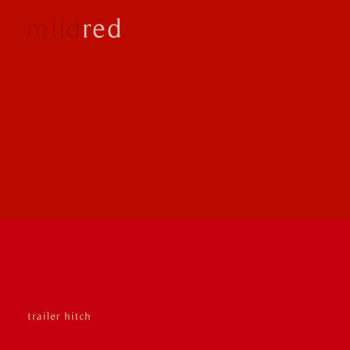
mildred have spent this first year of their recorded life sketching out a world that feels both intimate and expansive, beginning with this October’s mild and now continuing with its companion EP red. The Northern California foursome have technically been playing together far longer – first as friends, then as roommates, then as a band almost by accident – but these two twin EPs mark their first true steps into the wider world. mild gathered the softer, rounder edges of their songwriting, while red leans into something a little sharper, a little more angular, a little more haunted by the strange beauty of their shared imagination. “Trailer Hitch,” written more recently than many of the tracks that appear across both releases, feels like a bridge between where they started and where they are headed, capturing the early spark of a band finding its footing and its voice all at once.
The story behind “Trailer Hitch” is as evocative as the song itself. The seed came from a trip the band took to Will’s family cabin in Montana, where antlers and taxidermy perched above them and a broken trailer hitch sat in the yard like an omen. There was a pond. There was stillness. There was a sense that the familiar had tilted just enough to feel strange. “I think the song is about the eeriness that can well up and make familiar elements of your life look suddenly a little deformed,” mildred share. “The feeling that something is coming to an end, but not knowing what that thing is.”
That mood resonated with the Kelly Reichardt film Old Joy, which threads through the song like a ghost. The climactic line from the movie, sorrow is just worn out joy, appears in the lyrics because it felt true to the emotional fog the band found themselves in. “Old Joy” is about friendship, distance, longing, and the subtle ache of realizing that something once shared has shifted shape. “Trailer Hitch” lives in that same liminal space. A place where nostalgia and melancholy blur, where connection feels fragile, where the landscape around you becomes a mirror for whatever you are afraid to name.
I jumped into the little pond
There I was looking at the big frog
Knock off Hall brand cough drop
Dead eyes, thumbs up, oh god
Talking to the wall about grandma
Talking to the fog about grandpa
Interstitial, interstitial something
Iiiiiiii, when the trailer hitch breaks,
interstitial something
Iiiiiiii, when the trailer hitch breaks,
interstitial something
The lyrics drift between specificity and dream logic, capturing the strange poetry that rises out of stillness. Everything feels slightly tilted, slightly too vivid. You can feel the fever under the taxidermy.
What makes mildred such a compelling young band is their creative democracy. They call themselves four singers, four songwriters, and four equal parts, a line that feels both literal and spiritual. Each member writes songs before surrendering them to the group, allowing the band to mold them cooperatively until the final version becomes something fully shared. “Playing together is the most important part of our creative process,” they explain. “Barely fleshed out songs that slowly get finished through multiple practices, or until the other bandmates force the main writer to finish a song we like.” That camaraderie is audible in every line of “Trailer Hitch.” You can hear the trust. You can hear the ease. You can hear the way these songs breathe because they were born in living rooms and stitched together between dinners.
Compared to the softer, more rounded edges of their debut EP mild, the songs on its companion EP red feel a little sharper, a little more angular, a little less melancholic. “Trailer Hitch” was written more recently than some of the older tracks that appear on the two releases, and mildred note that it points toward the newer spaces they have been exploring. If mild captures the gentler beginnings, red is the flicker of heat that follows. Both EPs trace the arc of a young band finding its footing and figuring out where their collective voice wants to go.
Floating through that room after a pure sweat
Twelve point buck dropped lung dead
Picturing you curled up on the couch close
Polypropylene sleeved photos
To want to come apart and have you hold me
To want to feel that you can feel the same thing
He buttoned up his coat then looked back
Sorrow’s just worn out joy, I won’t forget that
“Trailer Hitch” sits in the center of that arc like a glowing anchor. It is eerie, tender, and deeply human. It is the feeling of walking across a dark field toward a porch light and not being sure what you will find when you get there. It is the fog of grief and the warmth of memory. It is the ache that comes from knowing something is shifting even when you cannot say what.
And maybe that is why the song hits so deeply. It does not try to resolve its own uncertainty. It just inhabits it. Softly. Grittily. Beautifully. “Trailer Hitch” captures mildred at their most evocative and their most human, and it stands as one of the year’s most quietly arresting songs.
Iiiiiiii, when the trailer hitch breaks,
interstitial something
Iiiiiiii, when the trailer hitch breaks,
interstitial something
— — — —

Connect to us on
Facebook, Twitter, Instagram
Discover new music on Atwood Magazine
Editor’s Picks
follow EDITOR’S PICKS on Spotify