Atwood Magazine is excited to share our Editor’s Picks column, written and curated by Editor-in-Chief Mitch Mosk. Every week, Mitch will share a collection of songs, albums, and artists who have caught his ears, eyes, and heart. There is so much incredible music out there just waiting to be heard, and all it takes from us is an open mind and a willingness to listen. Through our Editor’s Picks, we hope to shine a light on our own music discoveries and showcase a diverse array of new and recent releases.
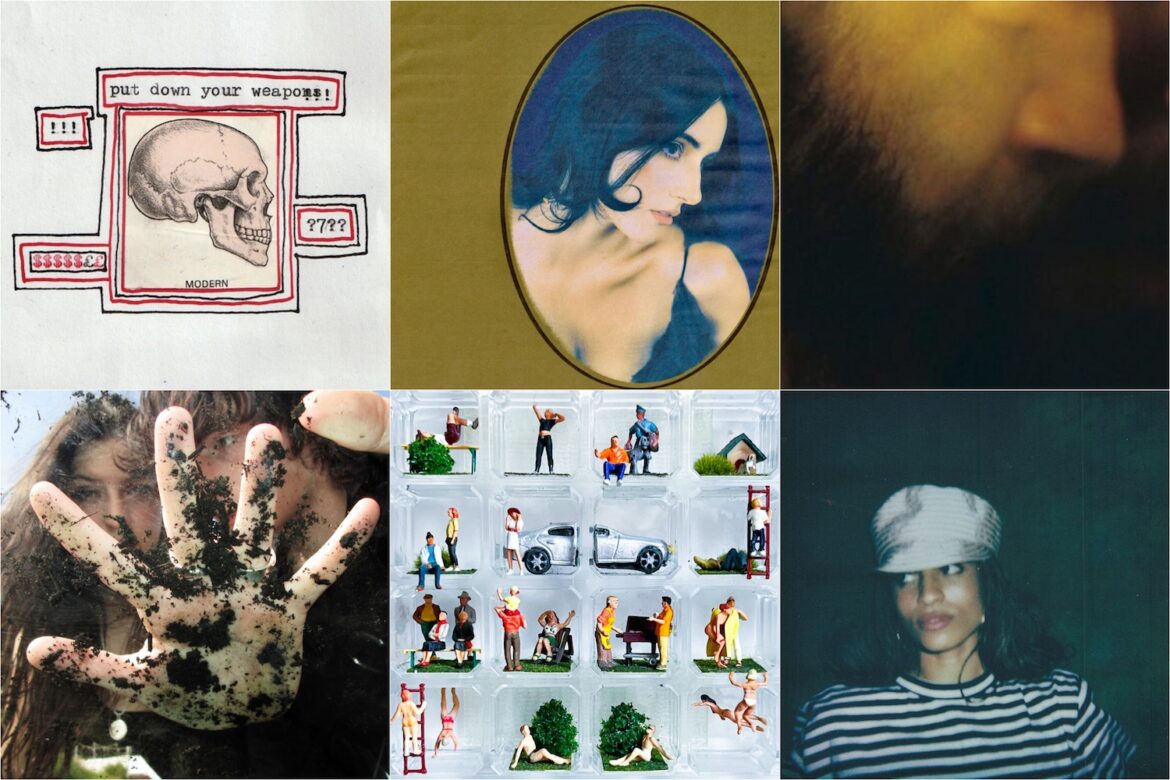
This week’s Editor’s Picks features Witch Post, DM Arthur, TOLEDO, Sly Jr., Chelsea Jordan, and Lucia!

 follow EDITOR’S PICKS on Spotify

“Changeling”
by Witch PostThere’s something instantly unsettling – and equally alluring – about “Changeling.” It doesn’t just arrive; it emerges, charged and churning like a fever dream you’re not sure you want to wake up from. As one of the latest offerings from Witch Post, the track works on two levels at once: As a thrilling introduction to Alaska Reid and Dylan Fraser’s new project, and a statement of intent that suggests something far bigger is already taking shape. If this is the spell they’re casting now, 2026 can’t come soon enough.
Once knew a changeling
Julie was her name
Foxglove and roses
Painted tears on her face
I knew she was restless
I knew she was strange
Then she tried to consume me
And we were never the same

I’ve been a longtime fan of Alaska Reid’s work – from her mid-2010s indie rock band Alyeska to her later solo material – and “Changeling” feels like a genuinely electrifying new chapter in her artistic story. Witch Post doesn’t dilute what made those projects compelling; it sharpens it. The sound is widescreen and volatile, all grinding guitars and emotional gravity, but there’s a strange elegance beneath the noise – a sense of folklore bleeding into modern life, of something ancient brushing up against the present.
Since introducing themselves earlier this year (their debut EP Beast released in mid-August), Witch Post have arrived with grit and vulnerability, friction and fire. “We’re trying to do something different from our solo projects with Witch Post,” Reid tells Atwood Magazine. “We’re chasing the otherworldly and slightly fantastical.” That pursuit is audible in every corner of “Changeling,” from its chant-like unison vocals to its uneasy tension – a quality Fraser sees as the band’s defining strength. “Solo stuff is fun and limitless, but it’s a different type of refinement being in a band,” he explains. “You take each other’s ideas and refine them to something that fits both of us… I think the best work can come from that kind of collaboration.”
Once knew a changeling
But she never cared
When dogs would bite her
She’s combing her hair
I knew she was restless
I knew she was strange
Then she tried to consume me
We were never the same
The band’s name itself carries the weight of history and myth. Drawn from 17th-century English carvings meant to ward off witches, Witch Post embraces the symbolism rather than resisting it. “Witches are interesting as they are time travelers,” Reid says. “I think being a songwriter and musician has that same binary of being ancient and modern… We like to borrow from all different time periods and find the magic in connecting up all these things.” This sense of temporal blur – of pubs, folklore, buses, foxglove, and roses all existing on the same plane – is central to “Changeling.”
The song was sparked by literature as much as lived experience. Reid traces its origin to Christina Rossetti’s Goblin Market, and the idea of a veil between worlds. “Dylan and I wanted to sing in unison almost like a chant,” she says. “I think it adds to the strangeness of the song because people don’t really do that without at least a harmony.” That strangeness is the point. As charged and churning as it is softly stirring, the track feels possessed by contrast – modern and timeless, intimate and mythic. This comes even further into view in lines like “Foxglove and roses painted tears on her face” set against “She gets on the bus I take every day.”
Lyrically, “Changeling” resists easy answers. “I knew she was restless, I knew she was strange. Then she tried to consume me, and we were never the same.” For Reid, the song is part-exorcism, part-document. “We’ve been using the band to explore other topics, characters and stories… That’s when we write some really cool things and bring in the fantasy elements.” It’s less diary, more spellwork – a way of understanding something by mythologizing it.
We were never the same
Two dreamers…
We were never the same
Two dreamers…
I’ve buried the hatchet
Can now hear her name
She gets on the bus I take everyday
I study her hair and her face on the pane
And all I can think is we were never the same
As the first glimpse of Witch Post’s follow-up to Beast, “Changeling” doesn’t so much expand that world as refract it. “They’re two sides of the same coin,” Fraser says simply. And yet this side feels sharper, stranger, more confident in its darkness – a grunge-flecked anthem touched by something spectral.
“Changeling” is thrilling because it trusts its unease. It doesn’t resolve the tension it creates; it invites you to live inside it. To bask in the fervor. To sing along to the unsettling. Witch Post are clearly less interested in explaining the magic than in letting it work – and as far as introductions go, this one feels unforgettable.
“Fire & Soap”
by DM ArthurSometimes a song doesn’t ask anything of you – it just grins, reaches out a hand, and pulls you along. Drifting in like a breath of fresh air, DM Arthur’s folksy, feel-good “Fire & Soap” is an instant earworm whose easy charm, gentle swing, and sing-along warmth make it as smile-inducing as it is comforting and quietly galvanizing. Light on its feet and tender at its core, the song moves with an easy, kinetic charm that invites sing-alongs without ever losing its emotional weight. It simmers as it soothes, pairing bright acoustic strums with a chorus that feels like a friend – simple, melodic, and deeply human.
Did you play too hard?
And the car won’t start
But It’s a brand new day
Another work of art
Wash the damage off
Burn it into smoke
Baby all you needs
A little fire and soap

“Fire & Soap” is the title track off DM Arthur’s recently released Fire & Soap, Pt. 2 EP, the second half of a companion release that caps a prolific and quietly defining year for the Glaswegian singer/songwriter. Recorded live to tape at Middle Farm Studios in rural Devon with producer Peter Miles, the Fire & Soap EPs find Arthur distilling years of movement, reflection, and self-reckoning into a warm, folk-forward sound shaped by intimacy and intention. A longtime presence in the UK folk and indie circuit, Arthur has steadily carved out a space of his own – one rooted in rich melodies, lived-in storytelling, and an emotional openness that feels both timeless and urgently of the moment. Together, his latest EPs mark a period of consolidation and clarity, following years of steady growth – arriving as a confident bridge between his early releases and the debut album he’s now preparing to bring into the world.
Arthur’s songwriting has always thrived on emotional candor, and “Fire & Soap” is no exception. His songs, he says, are a place where he can be “brutally honest” with himself – a refuge amid the noise and unease of the world. “With the state of the world we find ourselves currently living in and all the shithousery that goes with it, I hope my music is a space where people can come to feel less alone and find some peace in all my imperfections,” he shares. In that honesty, there’s an open-hearted generosity: A desire for the music to feel like a shared space, somewhere listeners can “feel less alone and find some peace” inside imperfection. That ethos hums through every line of “Fire & Soap,” whose central refrain – “wash the damage off / burn it into smoke” – lands like a small but powerful act of self-forgiveness.
Drag your restless heart
Lay it next to mine
Surgeon in the dark
Oh What did you find
Wash the damage off
Burn it into smoke
Baby all you needs
A little fire and soap
Arthur frames the Fire & Soap project as a balance between intensity and release: Fire as the force that shapes us, soap as the cleansing that follows. The title track sits squarely at that intersection, embracing resilience without denial and movement without erasure. It’s about accepting the mess, tending to the bruises, and continuing forward anyway – “coming to terms with life and the present moment for what it is,” as Arthur puts it, and learning to meet that reality without judgment. “It’s about all the imperfections we have, all the imperfections the world around us has, coming to terms with that and accepting it without judgement or discourse. It’s about despite not everything always going our way, we can still be resilient and rise up.”
Hold up it’s not that bad
To grow up and act your age
Sometimes you might get sad
But hold up it’s not that bad
That spirit of connection and acceptance extends beyond the song itself. “My hope is for people to find connection wherever they can,” Arthur shares. “With this most recent recording experience I’ve realised that the most joy comes from the actual creative process of creating something that never existed before and that perfection is a wasted endeavour.”
There’s a quiet wisdom in how “Fire & Soap” carries its message. Nothing is overexplained, nothing forced. Instead, the song trusts melody, repetition, and warmth to do the work – a reminder that healing doesn’t always arrive with grand declarations. In a moment that often feels loud and unrelenting, its gentleness feels like a choice – and a gift. Sometimes, all you need is a little fire and soap.
With your belly full
Are you a raging bull?
Now your cheeks are red
Why’s the world so cruel
Wash the damage off
Burn it into smoke
Baby all you needs
A little fire and soap
“Nothing Yet”
by TOLEDOThere’s a hush to “Nothing Yet” that feels intentional, like TOLEDO are leaving the lights on low as the year winds down. Warm, gentle, and quietly searching, the Brooklyn duo’s final single of 2025 drifts in like a dream you don’t want to wake from, steeped in questions about faith, loss, and whatever waits on the other side of knowing. It’s a song that doesn’t rush to answers, content instead to sit with uncertainty, beauty, and the ache of not quite seeing the sign you’re waiting for.
Released December 3, “Nothing Yet” arrives as a soft, reflective capstone to a busy year that saw TOLEDO release their Inertia EP, spend months on the road, and deepen their bond as collaborators and storytellers. Rather than closing the year with something declarative, the band chose restraint – a song that feels suspended between endings and beginnings, offering stillness where momentum once lived. It’s less a conclusion than a quiet pause, a moment to breathe before the next chapter takes shape.

Driving in your car with a busted lip
Two cracked knees and my left hand bit
I cant tell if this is it
In dreams I saw an old man cry
He was hanging on too hard to life
Took one step off a chair and died
I took his keys and I said goodbye
That sense of liminality is baked into the song’s origin. “Nothing Yet” began as what the band describe as a “bizarre apocalyptic dream – not a nightmare,” one that carried “an overall feeling of peace but also sadness.” The opening verse mirrors that dream word-for-word, while the rest of the song fills in the emotional gaps left behind once the dreaming stopped. An old man appears, first as a passing figure, “sort of an NPC,” but his presence lingers, growing heavier with each return – suggesting a deeper, more personal connection that remains unresolved. “Will these characters meet again somewhere else?” the band wonder, leaving the question deliberately unanswered.
I try to pretend I’ll see him again
But as sure as the hard day is long
I look to the light and I see only sky
And that old lonely feeling comes on
The song unfolds slowly, letting space do as much work as melody, its weight accumulating quietly rather than arriving all at once. Sonically, “Nothing Yet” leans into TOLEDO’s gift for atmosphere – lush, dreamy, and quietly cinematic, with a dusted, old-soul glow that feels both timeless and intimate. The song unfolds in hushed, romantic strokes, drawing from a lineage that nods toward Lord Huron’s mythic Americana, Hovvdy’s tender minimalism, and even a touch of Lana Del Rey’s faded grandeur, while still sounding unmistakably their own. As the band share, they were consciously reaching for an “old sound” in certain sections, letting warmth, space, and restraint guide the arrangement – with unexpected internal touchstones like Dolly Parton shaping the emotional palette. The result is a world that feels lived-in and suspended in time, where softness carries weight and every detail serves the song’s quiet sense of wonder.
Lyrically, “Nothing Yet” circles the unknowable with a tender kind of patience. Its closing questions – “Well, what will we find in that black velvet night? / When we loosen our light? / When we say our goodbyes?” – are, in the band’s words, “rudimentary questions about the afterlife,” sparked by moments of unexpected beauty, like looking down at Mexico from an airplane window and feeling the weight of existence press in all at once. It’s not about conclusions, but contemplation – about standing at the edge of meaning and admitting you don’t have the answers.
I was waiting on a drink that never came
The one that takes the bite away
The one that makes my spirit sing
And keeps me smiling like a sea of diamonds
No, it’s not for lack of trying
But the way I live it feels like dying
I’ve seen the walls shining
Even the song’s title reflects that posture of waiting. The phrase “Nothing Yet” is never sung outright, instead arriving almost by accident, born from an onstage hesitation: “This one is called… um… well nothing, yet.” The words stuck because they fit. Waiting on a sign of a higher power. Looking for clarity. Seeing only sky. Nothing yet.
As a year-end offering, “Nothing Yet” feels especially poignant. It doesn’t demand attention or resolution – it invites reflection. TOLEDO released the song, they say, “to hold folks over while we work our butts off on the next big batch of songs,” but it resonates as something more lasting than a placeholder. It’s a reminder that uncertainty doesn’t have to be empty, that waiting can be meaningful, and that sometimes the most honest thing you can say – at the end of a long year, or a long road – is simply this: not yet.
So I try to pretend I’ll see him again
But as sure at the hard day is long
I look to the light and I see only sky
And that old lonely feeling comes on
It’s holding me in its palm
Well, what will we find
In that black velvet night?
When we loosen our light?
When we say our goodbyes?
“put down your weapons”
by Sly Jr.“Come on lay down your weapons, it’s coming any second.” Sly Jr.’s “put down your weapons” doesn’t ease in; it pulls you straight into a moment of quiet panic and tenderness, where the end of the world feels close enough to touch and the only instinct left is to reach for someone you love. It’s apocalyptic on its face, yet strikingly gentle in its delivery as Landon Jacobs turns dread into urgency, and urgency into care.
Come on lay down your weapons
It’s coming any second
The world is over isn’t it?
I say it far too often
This life’s a precious coffin
Or it all happens in my head
We’re running out of oxygen so give it
7 minutes
Say you love someone
We’re looking at the silhouette it’s making
7 days left
Find and hug someone

Released as a standalone single back in February, “put down your weapons” is the kind of song that sneaks into your day and then refuses to let go. Even as it spirals through extinction and countdowns, the track keeps its focus on connection: “We’re running out of oxygen, so give it 7 minutes, say you love someone.” That countdown could feel theatrical in the wrong hands, but Landon Jacobs – best known as the frontman for indie juggernauts Sir Sly, and now the mastermind behind the cleverly titled Sly Jr. – delivers these words like a quiet plea; not performative despair, but a sincere attempt to re-center the heart when the world feels too loud. The stakes are impossibly high, but the response is intimate and human. He grounds big, existential fear in small, meaningful acts – a hug, a confession, a moment not wasted.
That balance between fear and tenderness is what gives the song its weight. “put down your weapons” isn’t interested in spectacle or collapse; it’s about choosing presence over paralysis, softness over surrender. As Jacobs explains, “This isn’t the first time I’ve written a song about the end of the world, and it surely won’t be the last. It’s probably the most positive spin I’ve ever had on the subject though. If time is running out, I truly believe I’m spending every minute the right way lately. That’s a very different perspective than I’ve had most of my life and it’s one I’m super grateful for.” There’s a clarity in that perspective – not denial, not escapism, but an insistence on living deliberately, even when everything feels uncertain.
Stale bread and dirty water
The days are getting hotter
I wrote a letter in the sand
For anybody after
They’ll know we shared some laughter
Here in the shadow of the end
We’re running out of oxygen so give it
7 minutes
Say you love someone
We’re looking at the silhouette it’s making
7 days left
Find and hug someone
What makes “put down your weapons” feel so essential – and so end-of-year worthy for me – is its refusal to wallow, choosing tenderness and hope where panic might otherwise take over. There’s a maturity in Jacobs’ shift – not denial, not escapism, but a conscious decision to live toward something. In his release-day note, he pushes that idea even further: “Released another song about the end of the world, but this time it’s about spending the time left in a way that matters… I only feel a sense of urgency to live a life that I’m proud of alongside people who make each moment more special.”
And maybe that’s why the chorus lands the way it does: Not as a hook, but as a moral. “Say you love someone. Find and hug someone.” In a world trained to clench, “put down your weapons” dares to soften – and in doing so, it becomes its own quiet act of resistance. I’ve written about Jacobs’ Sly Jr. era before – the way marriage, fatherhood, sobriety, and perspective have reshaped his songwriting into something steadier, warmer, and more grateful – and this track feels like that evolution distilled. It doesn’t erase the fear; it simply refuses to let fear be the final word.
“level out”
by Chelsea JordanGrief doesn’t arrive all at once. It comes in waves, in good days and bad days, in moments where you think you’re finally okay and others where everything comes rushing back. Chelsea Jordan’s “level out” lives inside that push and pull, capturing the emotional whiplash of healing with tenderness, patience, and remarkable honesty. Warm and quietly devastating, the song sits with uncertainty rather than rushing toward resolution, tracing the slow, uneven process of learning how to feel steady again.
Written in the aftermath of what Jordan describes as her “first real breakup,” “level out” emerged as a necessary act of processing. “I wasn’t too sure of it then,” she reflects, “but I know now that’s the reset I had been needing.” The song moves through that realization in real time, acknowledging both the moments of relief and the days when grief takes over completely. “Some days were really good post breakup,” she says. “But then there were some days that crying was all I could do.” Instead of smoothing those extremes into something neat, “level out” lets them coexist, honoring the nonlinearity of loss.
Monday I hold my head high
Tuesday I’m dragging my feet
Wednesday I think I’ll be fine
Thursday, I’m just tryna breathe
Oh, it’s all so green

That tension sits at the heart of the song’s central question: When will the highs and lows level out? It’s not asked for effect, but out of genuine longing. For Jordan, the song reflects “the various waves of emotion that come and go during the grieving process,” especially the doubt that lingers after you’ve made a difficult but necessary choice. Seeing a familiar car or hearing a shared song can undo hours of progress in an instant, pulling you back into the ache of wondering whether you made the right decision. “When I was in the thick of it,” she admits, “all I wanted to know was when I’d feel okay again.”
Some days I think that I’m better off
‘Til a car passes that looks just like yours
Don’t get me started on our favourite songs
Just one line, there’s a lump in my throat
When will the highs and lows level out?
Sonically, “level out” mirrors that emotional ebb and flow. It begins with restraint, anchored by gentle instrumentation and Jordan’s warm, expressive voice, before gradually opening into something fuller and more expansive. There’s an intimacy to the production that makes the song feel lived-in and immediate, as if the listener is sitting beside her while the emotion passes through. Nothing is overstated. Every swell feels earned.
That closeness is no accident. Jordan wrote the song alongside longtime collaborators Jamie Gelman and Ryan Baer, the same creative partners she credits with helping shape her identity as an artist. “Chelsea Jordan, the artist, wouldn’t exist without the people I started making music with six years ago,” she says. Writing “level out” together felt both cathartic and clarifying. “Being able to leave the studio with all that emotion in the physical form of a song is probably one of the best feelings in the world,” she shares. “It was the most honest I had been in my writing, and that was such a relief.”
Oh, I try not to bother my friends
By bringing you up all the time
Call up Riley for a laugh, or my father to ask
For some love and sage advice
Oh, it’s all so green
Just your ghost and me
Some days I think that I’m better off
‘Til a car passes that looks just like yours
Don’t get me started on our favourite songs
Just one line, there’s a lump in my throat
When will the highs and lows level out?
Released earlier this fall as her first single since signing with Arista Records, “level out” marks a meaningful step forward without sacrificing vulnerability. Rather than announcing herself with spectacle, Jordan leads with emotional truth. “This song isn’t just about breakups,” she explains. “It can be about grieving the loss of anyone or anything.” That openness has already resonated deeply, with listeners finding their own experiences reflected in its gentle persistence.
What “level out” ultimately offers isn’t closure, but companionship. It doesn’t promise that the pain will disappear, only that it will change, soften, and eventually make room for something lighter. In sharing it, Jordan says she’s fallen back in love with songwriting itself, reminded of why she creates in the first place. As the song cycles through its days, doubts, and small moments of hope, it becomes a quiet reassurance: healing may not be linear, but it is possible. Sometimes, all you can do is keep going, trust the process, and believe that in time, things will level out.
Know one day
I won’t think about you, feel safe without you
The little things
Will start to slip from my memory
Watch your face get blurry
The way that you breathed
The way you felt when you were inside of me
How you kissed me, consoled me when I ruined things
The best memories are the last ones to leave, so this week
Monday I hold my head high
Tuesday I’m dragging my feet
Wednesday I think I’ll be fine
Thursday, I’m just tryna breathe
“Wash you clean”
by LuciaBy the time December rolls around, some songs feel less like statements and more like places to rest. “wash you clean” arrives like a final exhale at the end of a long year – hushed, heavy, and quietly luminous. There’s a shadow to it, a bruise beneath the surface, but also a sense of release in letting the ache run its course. Soft and dreamy without ever drifting away, it unfolds with an earned stillness, offering catharsis not through resolution, but through care. Lucia doesn’t rush pain toward meaning; she lets it breathe.
Wash you clean
Holding onto New York summer
Your knees have both turned green
Rolling ‘round in grass and broken bottles
As you scream
Blood is dripping down and making
It’s own little stream
Scared of what you’ve seen

Lucia Zambetti’s voice is a breathtaking emotional anchor – aching, intimate, and impossibly close. She sings as if she’s standing right beside you, tracing memory and grief in careful, deliberate strokes: “Holding onto New York summer / Your knees have both turned green / Rolling ’round in grass and broken bottles.” There’s innocence here, but it’s fragile. By the time she reaches “Scared of what you’ve seen,” the scene has already begun to darken, shifting from carefree motion into the weight of awareness. What starts as softness slowly gives way to sorrow, tension blooming beneath the surface.
That friction sits at the heart of “wash you clean.” The song isn’t about a single moment, but about watching someone change – and realizing you can’t stop it. As Lucia explains, the track grew out of “a couple of dissolved friendships,” shaped by the experience of observing someone “internalize the world around them… and ultimately become scared of the world.” Her lyrics trace that transformation with quiet precision, moving from openness toward self-protection, from wonder toward restraint. It’s grief filtered through love – not explosive, but devastating in its restraint.
Broken all your seams
I’ve got a friend with pins and needles
Does it fast and clean
You won’t feel a single thing
Your eyes, they really gleam
Only for fluorescent lights
You’re starting to get mean
‘Cause they broke the machine
Lucia elaborates on that arc with striking clarity, framing “wash you clean” as a song about watching someone you love retreat inward in the name of survival: “I wrote ‘Wash You Clean’ about watching someone you care about so deeply build such restraints around themselves in regret for who they were in the past. It’s about how this obsession with healing oneself is so obsessive that it can lead to a life where everything out of their control feels dangerous. The song starts off describing a situation of excitement – ‘holding onto New York summers’ – the most exciting part of my youth was intertwined with reckless and careless adolescent decisions. I wrote this from a perspective of looking at a friend. This first verse captures that recklessness that leads up to the realization, the tragic event, the pinnacle that starts their journey looking within themselves. I love that ‘scared of what you’ve seen’ comes up twice in the song. It doesn’t describe what this friend has seen – it’s a vision of some sort. ”
She continues, “This same friend goes on to realize they’ve hit rock bottom and they need to start helping themselves therapeutically. The fluorescent lights resemble this disinfected, white-walled place they’ve gotten to, in contrast with the previous visions of green and summer. That’s when the machine comes in, creating this new persona of someone whose creativity that intertwined with their recklessness is being taken from them on such a technical level. The title of ‘Wash You Clean’ comes from a cultural and intimate practice of bathing someone else — cleaning up someone else’s mess because they can’t do it themselves, out of a place of respect and commiseration.”
The act of washing becomes the song’s central metaphor, carrying layers of meaning that stretch across faith, care, and intimacy. Lucia draws from a deeply personal well here, shaped by religion, family ritual, and memory. “The act of washing is deeply embedded in my understanding of respect and love and sanctity,” she shares, recalling baptism, bathhouses, and the vulnerability of tending to another person. In the song, washing isn’t about erasing the past. It’s about helping someone shed what the world has pressed into them – “a sign of respect and care in a vulnerable time,” even when you can’t follow them all the way through.
“wash you clean” appears on Lucia’s debut EP In Love & war, released in mid-November via R&R, and stands as the project’s emotional low point and quiet center of gravity – the moment where tenderness gives way to exhaustion, and illusion finally breaks. Lucia calls it “definitely the saddest” song on the record, marked by what she and her collaborators refer to as the “blown-out, crash-out” bridge (a massive moment of catharsis). Within the EP’s broader themes – love, conflict, devotion, memory, and the violence of the world beyond our doors – this track holds space for anger, grief, and despair without trying to tidy them up or resolve them. As she reflects, those feelings are not failures of strength, but proof of humanity: “These emotions are a reminder that I am a human being.”
Wash you clean
Holding onto New York Summer
Your knees have both turned green
Scared of what you’ve seen
What makes “wash you clean” so affecting is its refusal to rush pain toward meaning; every choice – lyrical, sonic, emotional – is deliberate. Lucia doesn’t offer answers; she offers presence. “Every decision I make for each song I create is deeply intentional,” she says, and that care is felt in this track’s restraint, its patience, its trust in silence. “wash you clean” feels restorative not because it heals you outright, but because Lucia understands us where we are.
As a year-end listen, “wash you clean” feels exactly right – dark but gentle, heavy but human, leaving you changed in small, quiet ways. It’s a stunning entry point into Lucia Zambetti’s world, and a powerful reminder that sometimes the most profound release comes not from letting go, but from staying with what hurts long enough to let it wash you clean.
— — — —

Connect to us on
Facebook, Twitter, Instagram
Discover new music on Atwood Magazine
Editor’s Picks
follow EDITOR’S PICKS on Spotify